Meaning and absorption · Lesson 9 of 11
Flow: How to Get Absorbed in What You Do
Learn what flow is and how to set up a small stretch, one clear goal and visible progress so absorbing time happens more often.
 Video coming soon
Some days an hour disappears while you are busy with something you care about. That is flow. In this lesson you learn what it is, how to set up your day so it can happen more often, and what to do when life feels flat instead.
What flow is
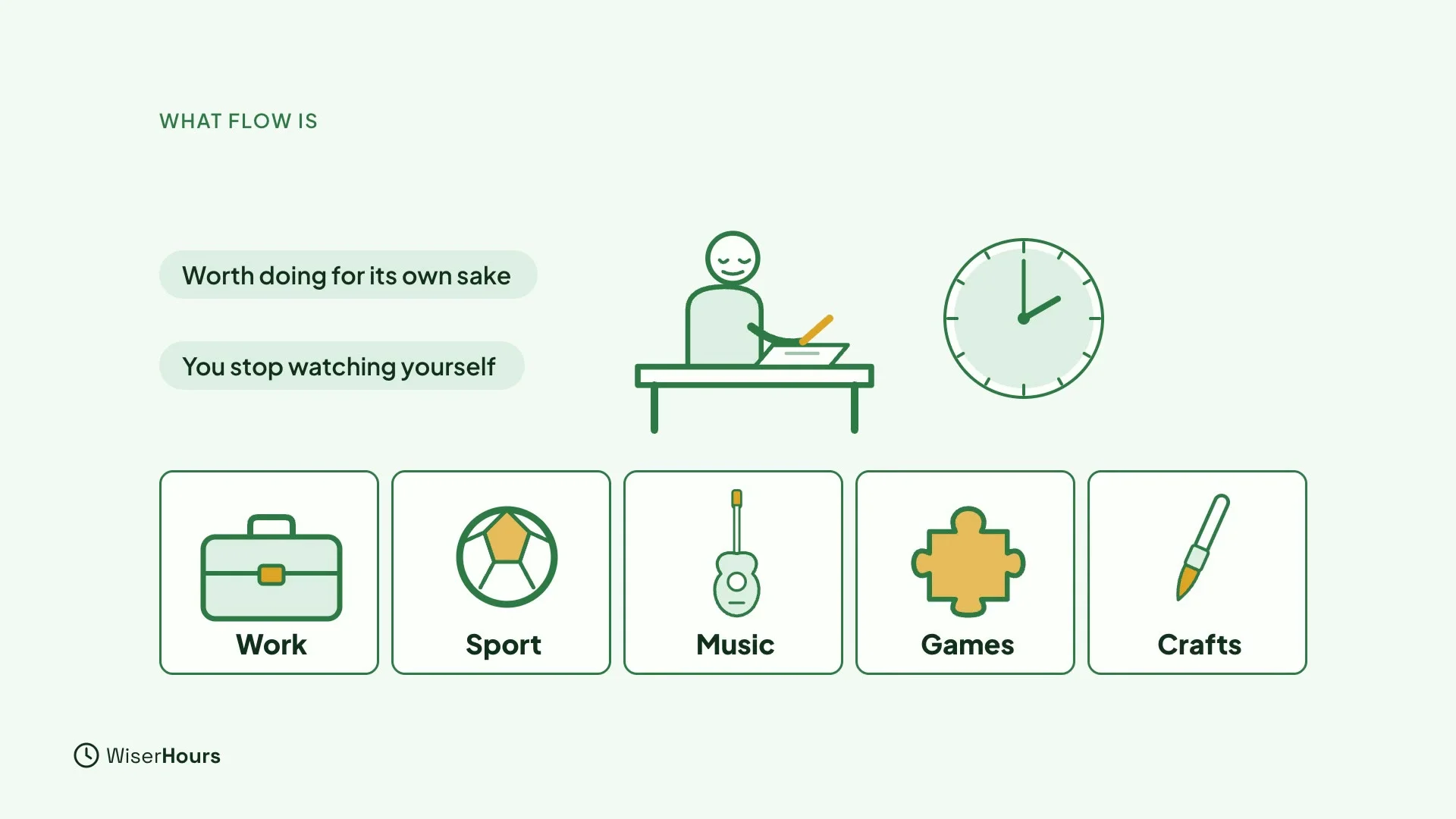
flow stateflow state: Complete absorption in a challenging task, with action and awareness merging, less self-consciousness and time seeming to pass differently. Mihaly Csikszentmihalyi named it; it tends to appear when a task stretches your skills and gives clear feedback.Full entry in the glossary is complete absorption in an activity that is worth doing for its own sake. Time seems to pass differently, and you stop watching yourself. People find it in work, sport, music, games and crafts: anything that holds your full attention.
 (opens the full-size picture)
You can’t switch it on
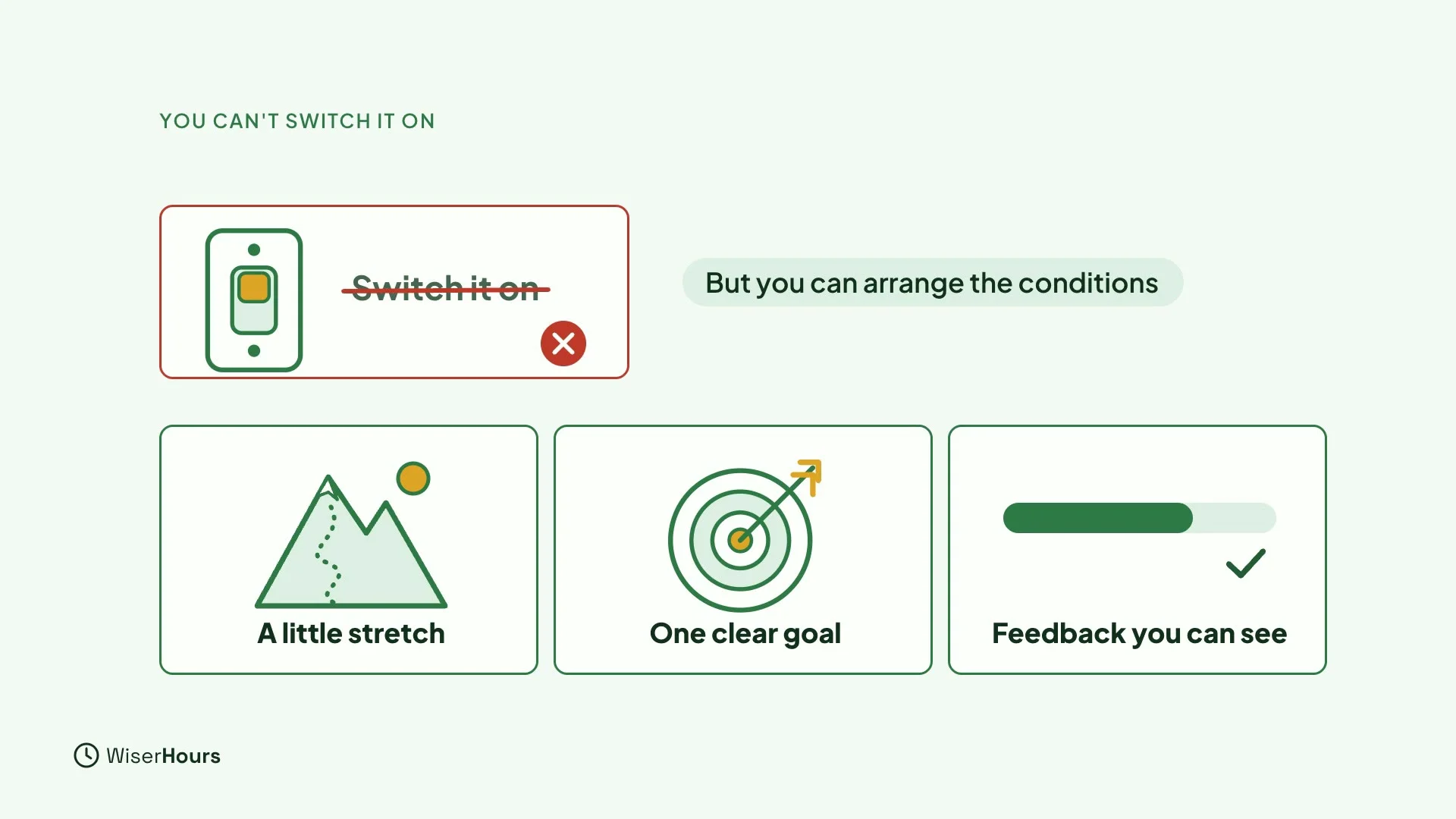
Flow is not a button you can press. What you can do is arrange the conditions around it. There are three: a challenge that stretches your skill a little, one clear goal, and feedback you can see as you go.
 (opens the full-size picture)
The stretch
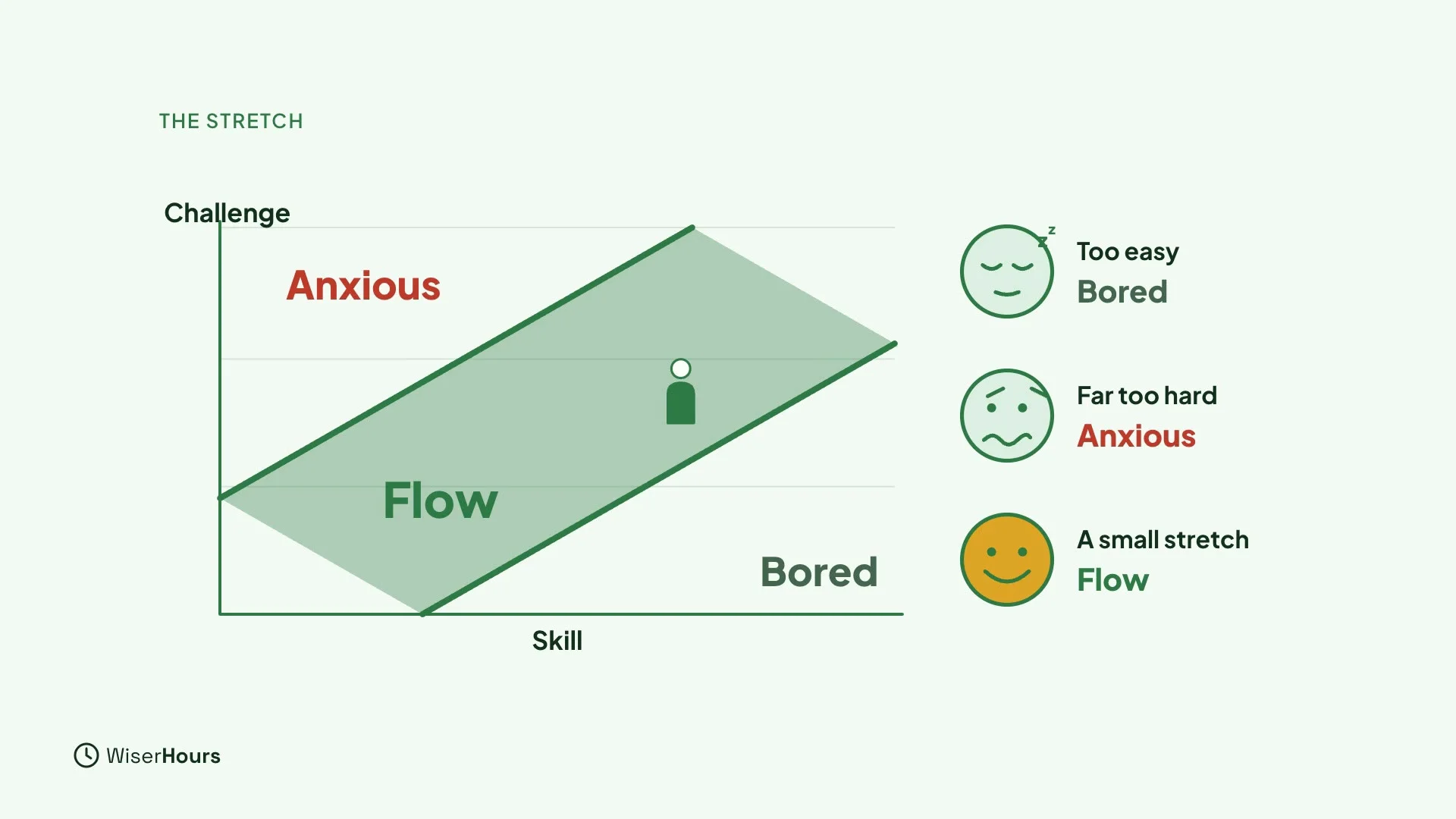
The first condition matters most. When a task is too easy, you get bored. When it is far too hard, you get anxious. Flow sits in between, where the task asks a bit more than usual, but not more than you have.
 (opens the full-size picture)
One goal, and feedback you can see
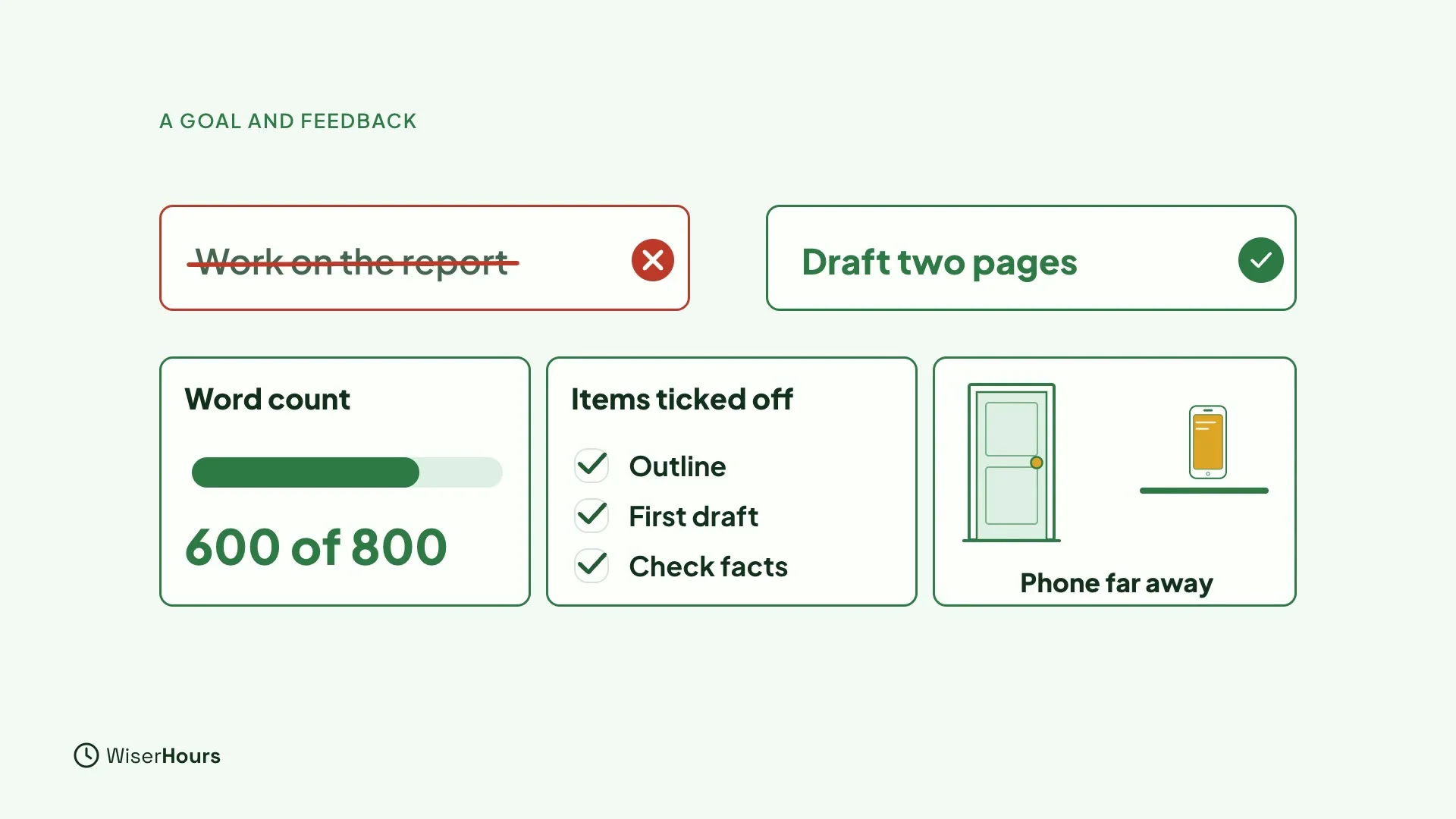
Give the task one goal you could say out loud. Not “work on the report”, but “draft two pages”. Then choose something that visibly changes as you work, like a word count or items ticked off a list. And protect the time: close the door and put your phone out of reach, because interruptions break flow quickly.
 (opens the full-size picture)
When life feels flat
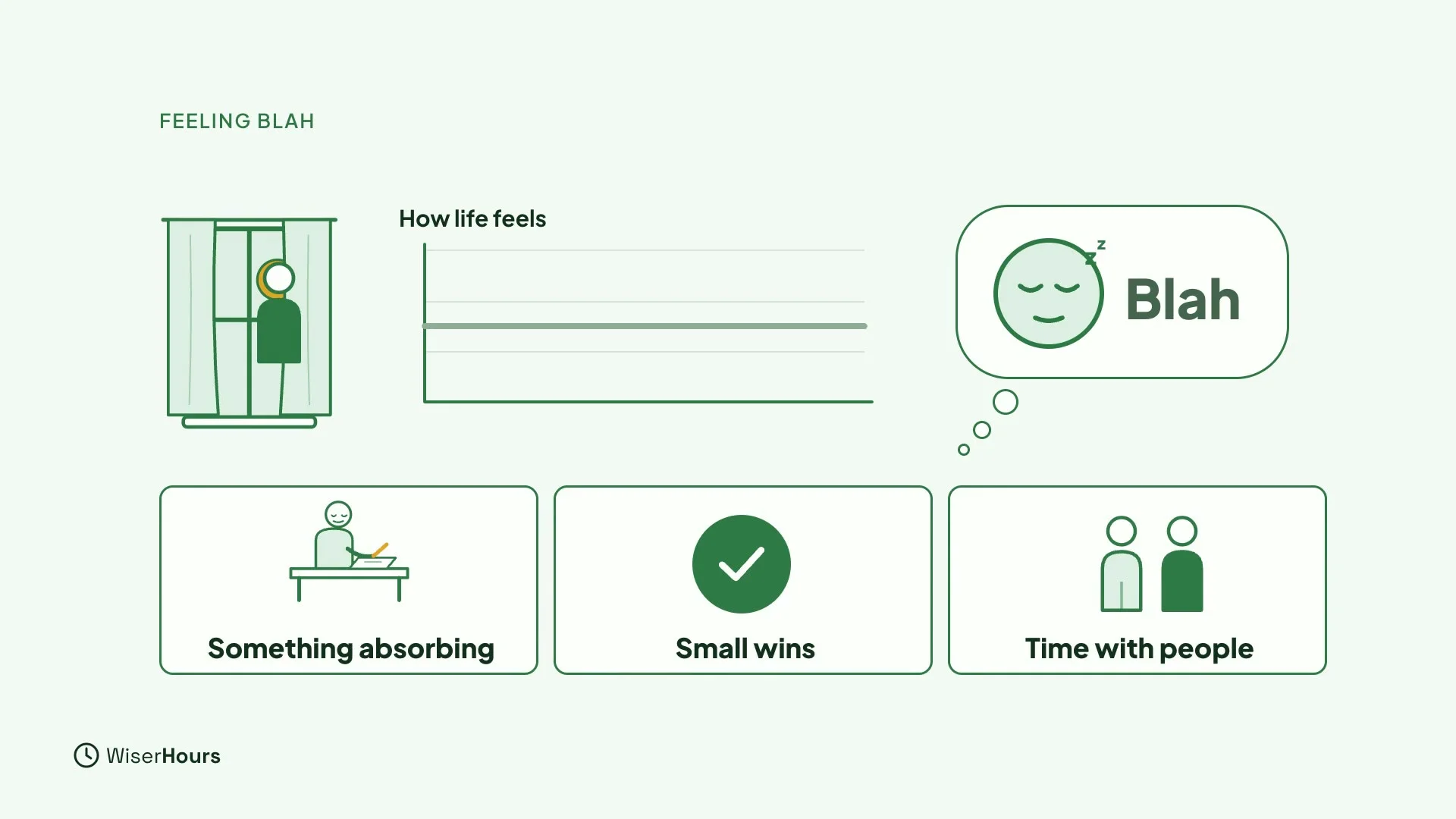
Flow also matters for a feeling many people know: languishing. It is when life feels flat and aimless, but you are not depressed. You are just not doing well. Three low-risk steps can help: something absorbing, small wins you notice, and time with people.
 (opens the full-size picture)
Honest limits
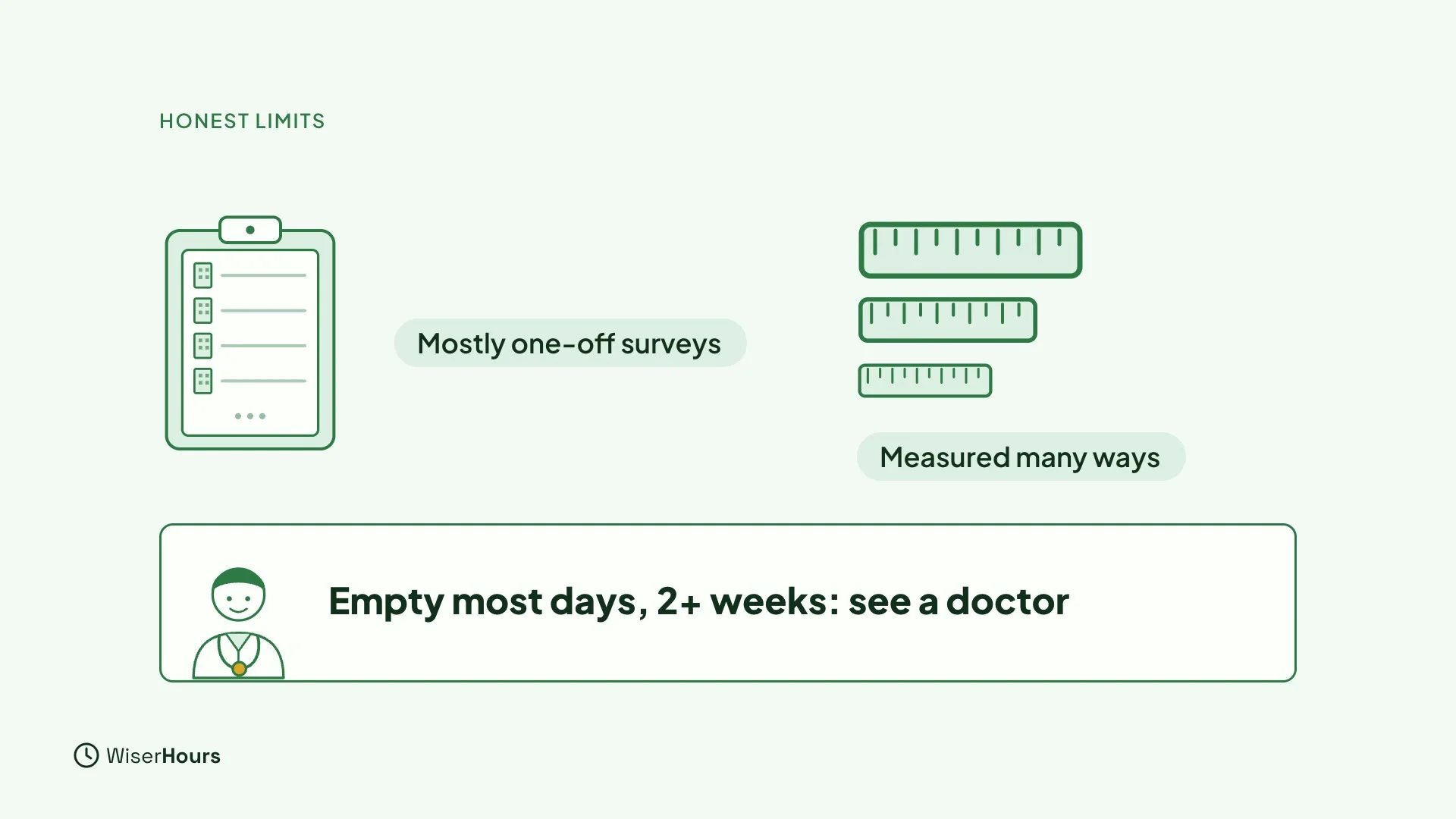
Research links more flow with better wellbeing and better work, but most of the studies are one-off surveys. That makes it hard to say what causes what. Researchers also still disagree on how to measure flow, and it has been measured in many different ways.
When to see a doctor
Flow is a pleasant habit, not a treatment. If you have felt empty or lost interest in things on most days for two weeks or more, talk to a doctor. In a crisis, call your local emergency number.
 (opens the full-size picture)
YOUR TURN
Read more
- Flow State Explained: the conditions for flow and what the research does and does not show.
- Languishing: The Feeling of “Blah”: why flat is not the same as depressed, and small steps to move through it.
Read the full lesson script
In this lesson, you'll see what flow is, why getting absorbed in something can make your days feel better, and how to set up the conditions for it, even in ordinary work.
Flow is complete absorption in an activity worth doing for its own sake. Time seems to pass differently, and you stop watching yourself. People find it in work, sport, music, games and crafts.
You can't switch flow on. But you can arrange the conditions for it. There are three: a challenge that stretches your skill a little, one clear goal, and feedback you can see as you go.
The first condition matters most. When a task is too easy, you get bored. When it's far too hard, you get anxious. Flow sits in between, where the task asks a bit more than usual, but not more than you have.
Next, give the task one goal you could say out loud. Not "work on the report", but "draft two pages". Then pick something that visibly changes as you work, like a word count or items ticked off a list. Protect it from interruptions, too.
Flow also matters for a feeling many people know: languishing. It's when life feels flat and aimless, but you're not depressed. You're just not doing well. Absorbing activities, small wins and time with people are low-risk ways out.
A word of caution. Research links more flow with better wellbeing and work, but most studies are one-off surveys, and researchers still disagree on how to measure it. And if you've felt empty or lost interest most days for two weeks or more, talk to a doctor.
So remember: flow is complete absorption in something worth doing. You can't force it, but you can set up a small stretch, one clear goal and visible progress. And absorbing activities help when life feels flat. Before the next lesson, pick one activity that absorbs you and block thirty minutes for it, without interruptions. Next, you'll see how comparison and social media affect happiness.
MAKE IT A SMALL WIN
Finished this lesson?
Mark it complete to save your progress on this device.