What lifts it · Lesson 6 of 11
Kindness and Giving: Does Helping Others Make You Happier?
See what research says about kind acts and spending on others, how big the lift is, and how to fit small kind acts into your week without burning out.
 Video coming soon
Many of us feel good after helping someone. This lesson looks at what research says about that feeling: whether kindness really lifts the person giving, how big the lift is, and how to fit it into an ordinary week.
Spending on others
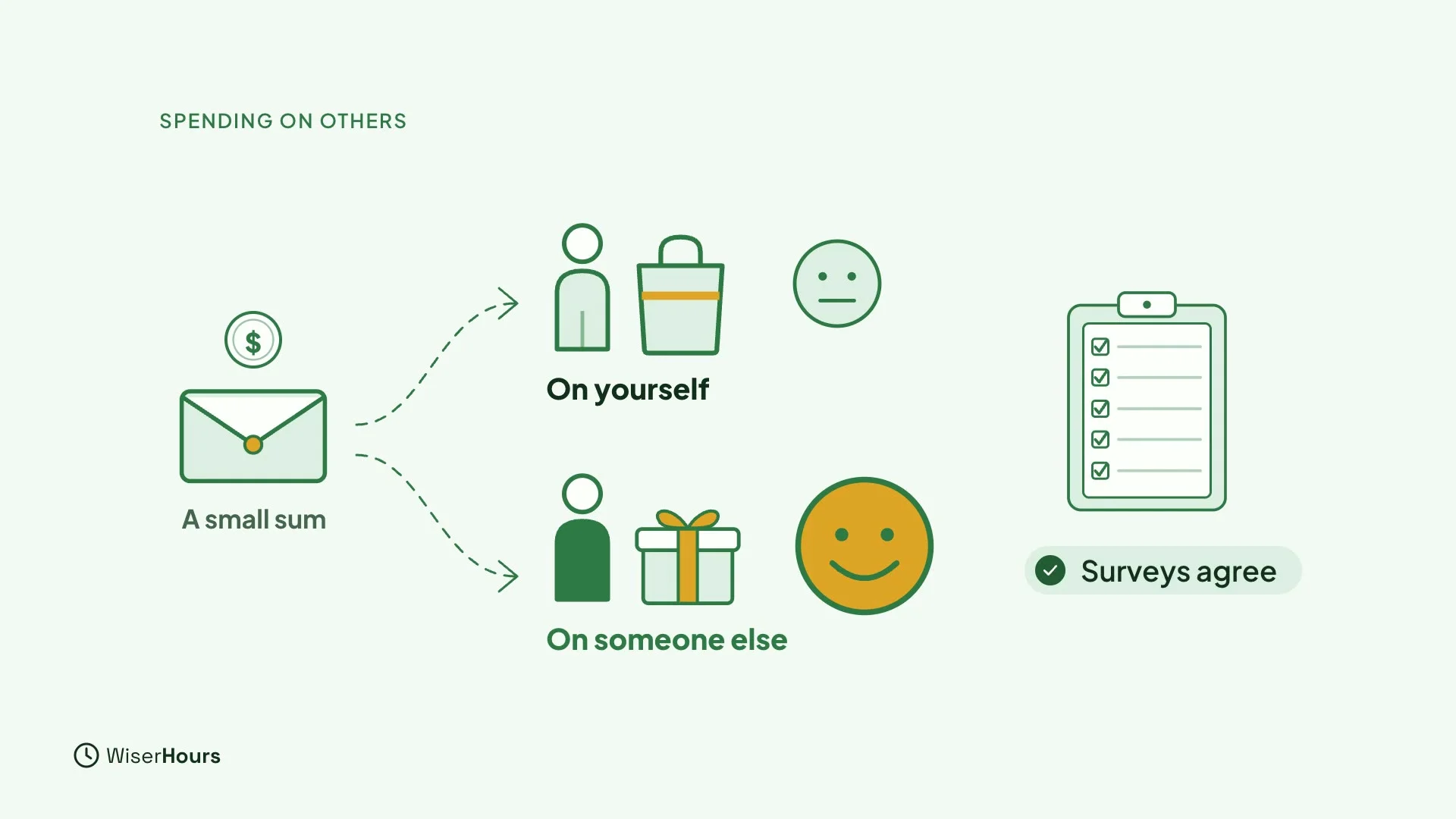
In one experiment, people were given a small sum of money to spend, either on themselves or on someone else. Those who spent it on someone else were happier afterwards. In surveys, too, people who spend more of their income on others tend to be happier. Surveys cannot prove cause, but they point the same way as the experiment.
 (opens the full-size picture)
A real lift for the giver
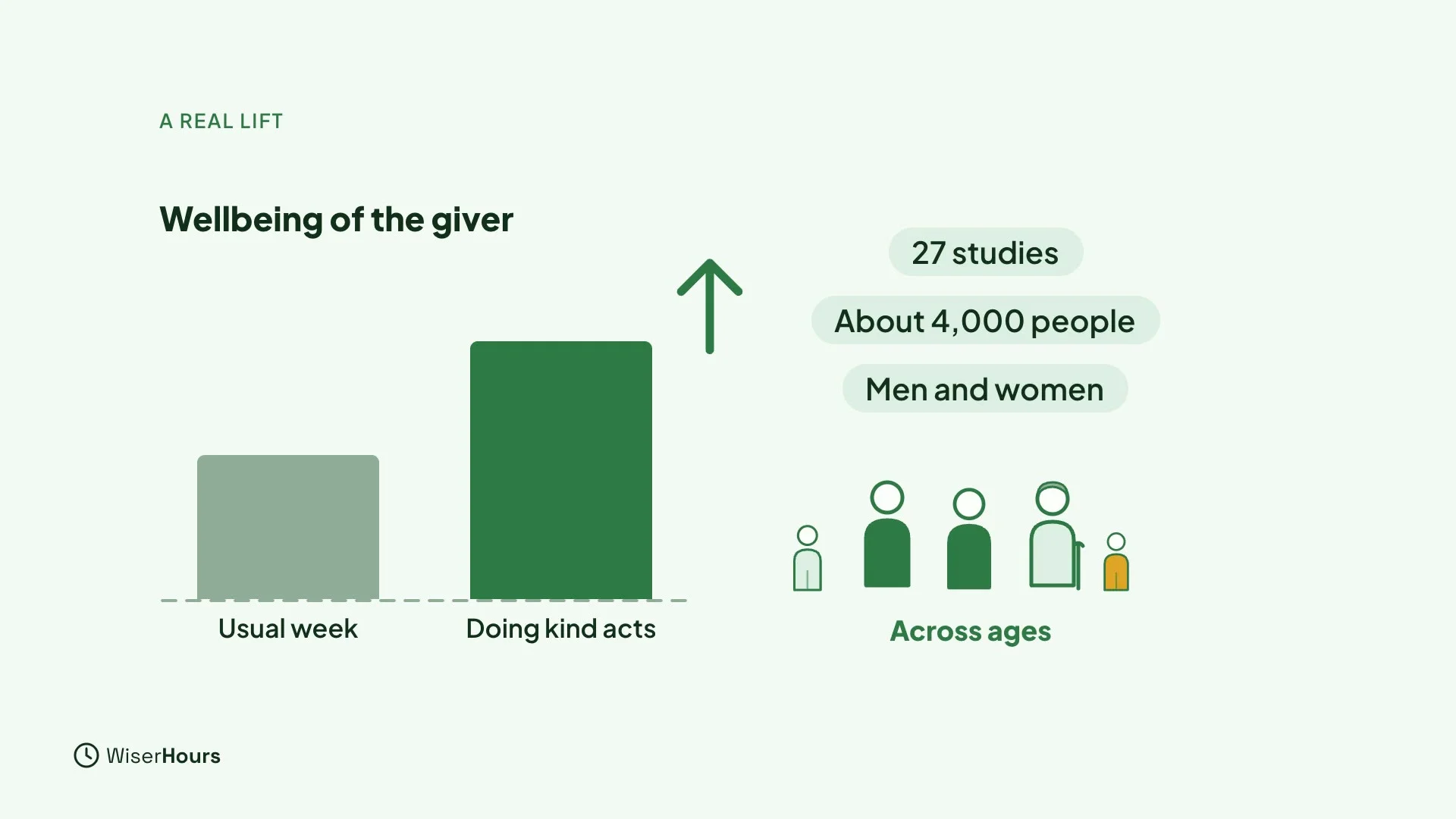
A review of 27 studies, with about 4,000 people, found that doing kind acts gives a small to medium lift in wellbeing for the person doing them. It showed up across ages and for both men and women.
 (opens the full-size picture)
More acts, more lift
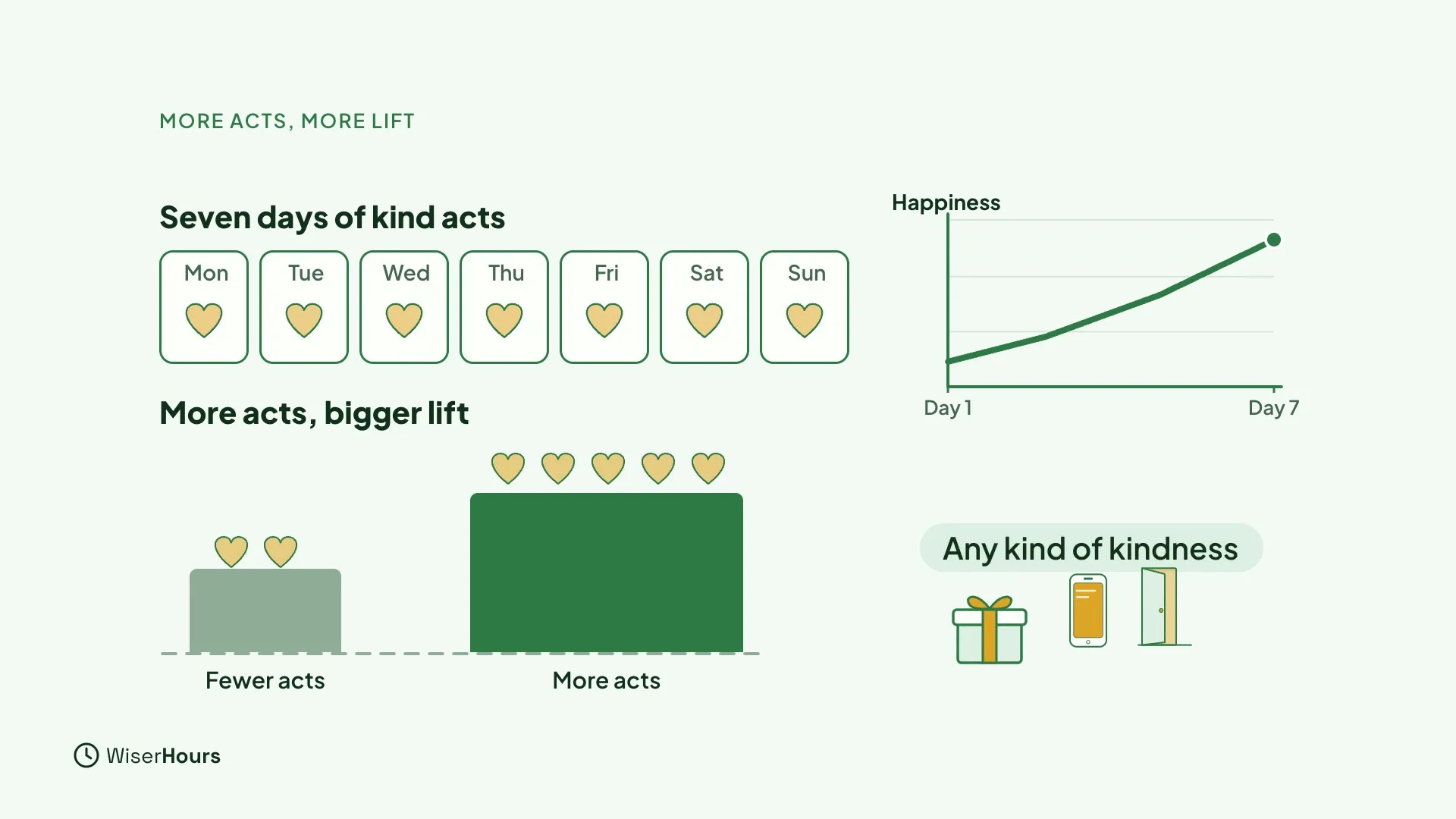
In a week-long experiment, people who did kind acts for seven days became happier, and the more kind acts they did, the bigger the lift. It did not seem to matter much which kind of kindness they chose.
 (opens the full-size picture)
Small counts
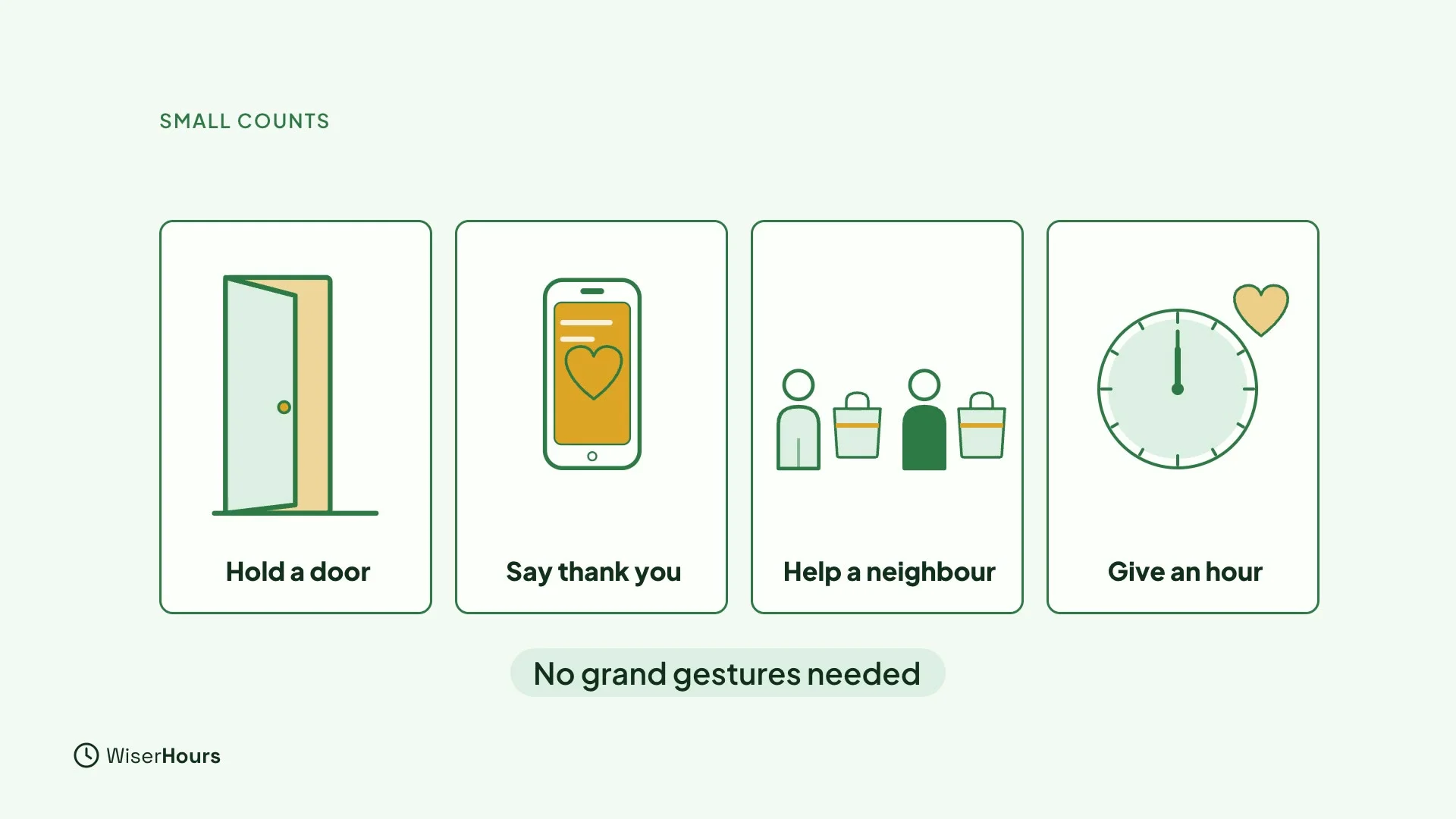
You do not need grand gestures. Small, everyday acts count: holding a door, sending a thank-you message, helping a neighbor carry shopping, or giving an hour of your time.
 (opens the full-size picture)
Keep it kind to you
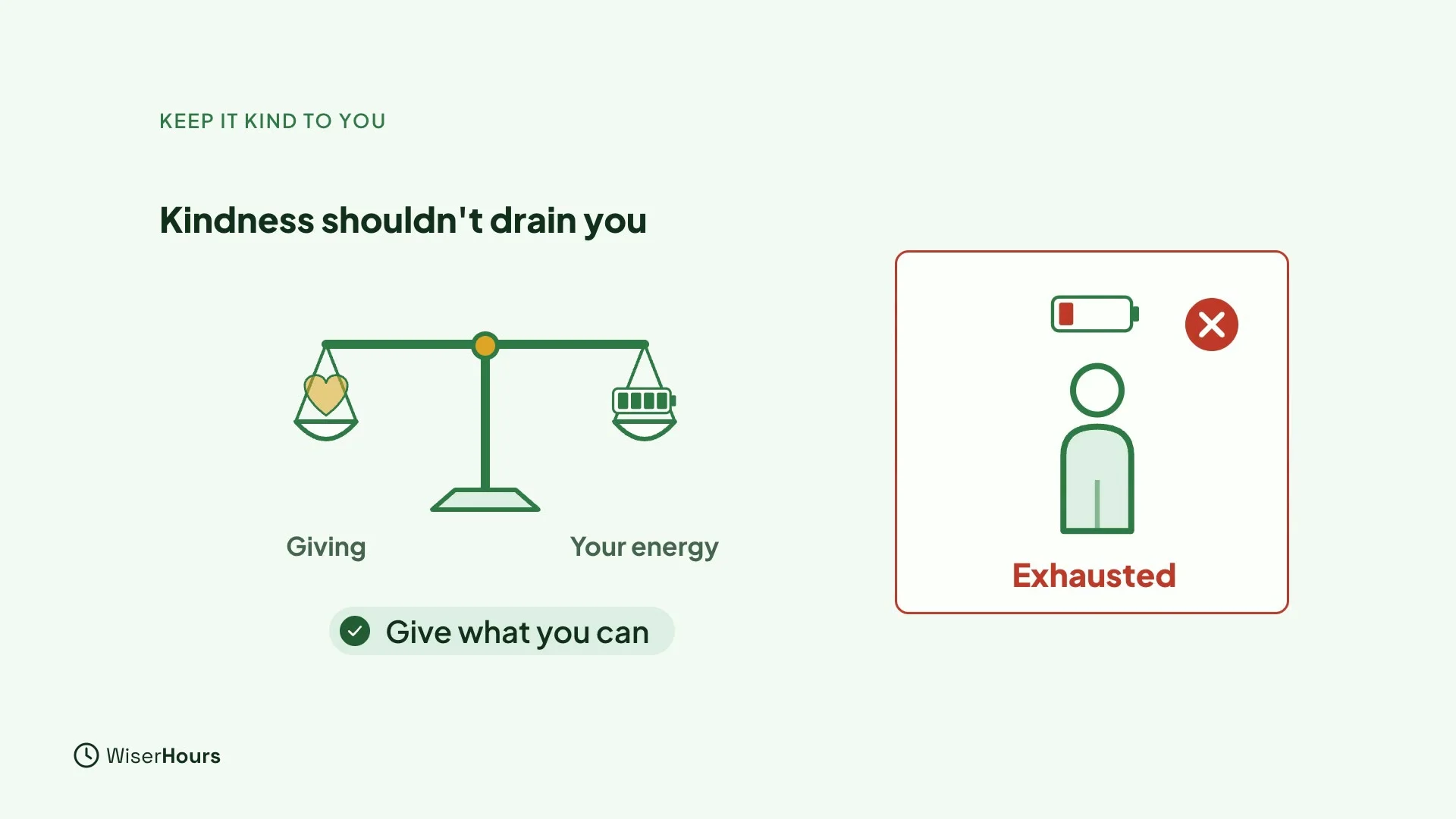
Kindness should not drain you. Give what you can afford in time and money, and say no when you are stretched thin. Kindness that leaves you exhausted or resentful stops feeling good, so looking after your own energy is part of doing this well.
 (opens the full-size picture)
Plan it in
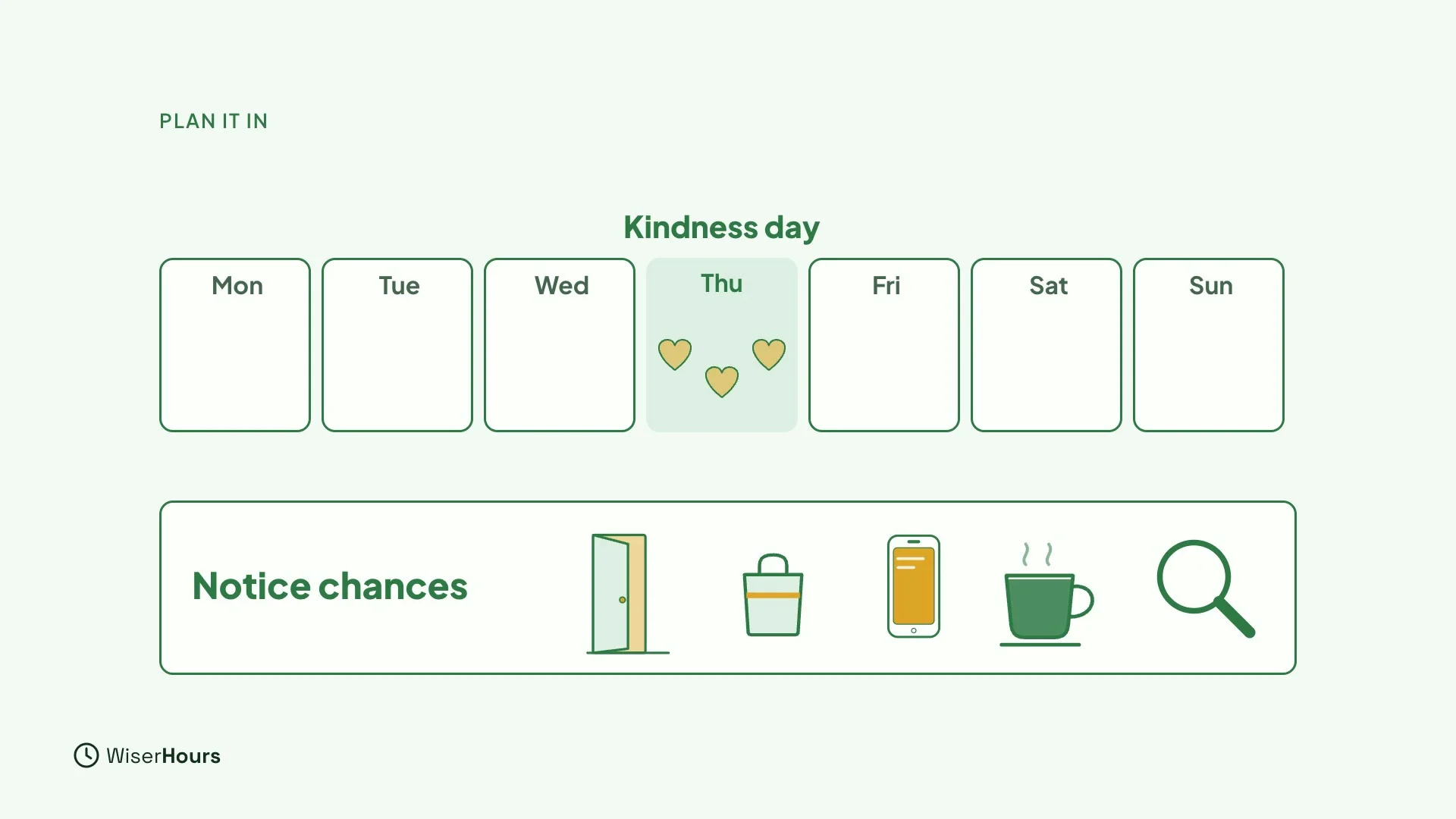
One simple way to start is to plan a few small kind acts into one day of the week. Planning them can help you notice chances you would otherwise miss, like a neighbor with heavy bags or a friend who could use a message.
 (opens the full-size picture)
YOUR TURN
Read more
- How to Find Your Purpose: A Practical, Low-Pressure Guide: how helping others connects to a sense of meaning.
Sources
- Spending money on others promotes happiness. Science, 2008. doi.org/10.1126/science.1150952
- Happy to help? A systematic review and meta-analysis of the effects of performing acts of kindness on the well-being of the actor. Journal of Experimental Social Psychology, 2018. doi.org/10.1016/j.jesp.2018.02.014
- A range of kindness activities boost happiness. The Journal of Social Psychology, 2019. doi.org/10.1080/00224545.2018.1469461
Read the full lesson script
In this lesson, you'll see what research says about kindness and giving: whether helping others really makes you happier, how big the effect is, and how to fit it into an ordinary week.
In one study, people were given a small sum of money to spend, either on themselves or on someone else. Those who spent it on someone else were happier afterwards. In surveys, too, people who spend more of their income on others tend to be happier.
A review of twenty-seven studies, with about four thousand people, found that doing kind acts gives a small to medium lift in wellbeing for the person doing them. It showed up across ages and for both men and women.
In a week-long experiment, people who did kind acts for seven days became happier, and the more kind acts they did, the bigger the lift. It didn't seem to matter much which kind of kindness they chose.
You don't need grand gestures. Small, everyday acts count: holding a door, sending a thank-you message, helping a neighbour carry shopping, or giving an hour of your time.
Kindness shouldn't drain you. Give what you can afford in time and money, and say no when you're stretched thin. Kindness that leaves you exhausted or resentful stops feeling good.
One simple way to start is to plan a few small kind acts into one day of the week. Planning them can help you notice chances you'd otherwise miss.
So remember: spending on others and small kind acts tend to make you happier. The lift is small to medium, and it grows with practice. And kindness should fit your life, not drain it. Before the next lesson, do one small, unplanned kind act, and notice how you feel afterwards. Next, you'll learn to savor good moments.
MAKE IT A SMALL WIN
Finished this lesson?
Mark it complete to save your progress on this device.