Traps and your plan · Lesson 10 of 11
Comparison, Social Media and Forced Positivity
See how highlight reels and pressure to be happy can lower your mood, and how to cut back on scrolling and let feelings sit.
 Video coming soon
Two habits can quietly pull your happiness down: comparing yourself with other people, and pushing yourself to look on the bright side all the time. In this lesson you see what the research says about each one, and what you can do instead.
Highlight reels
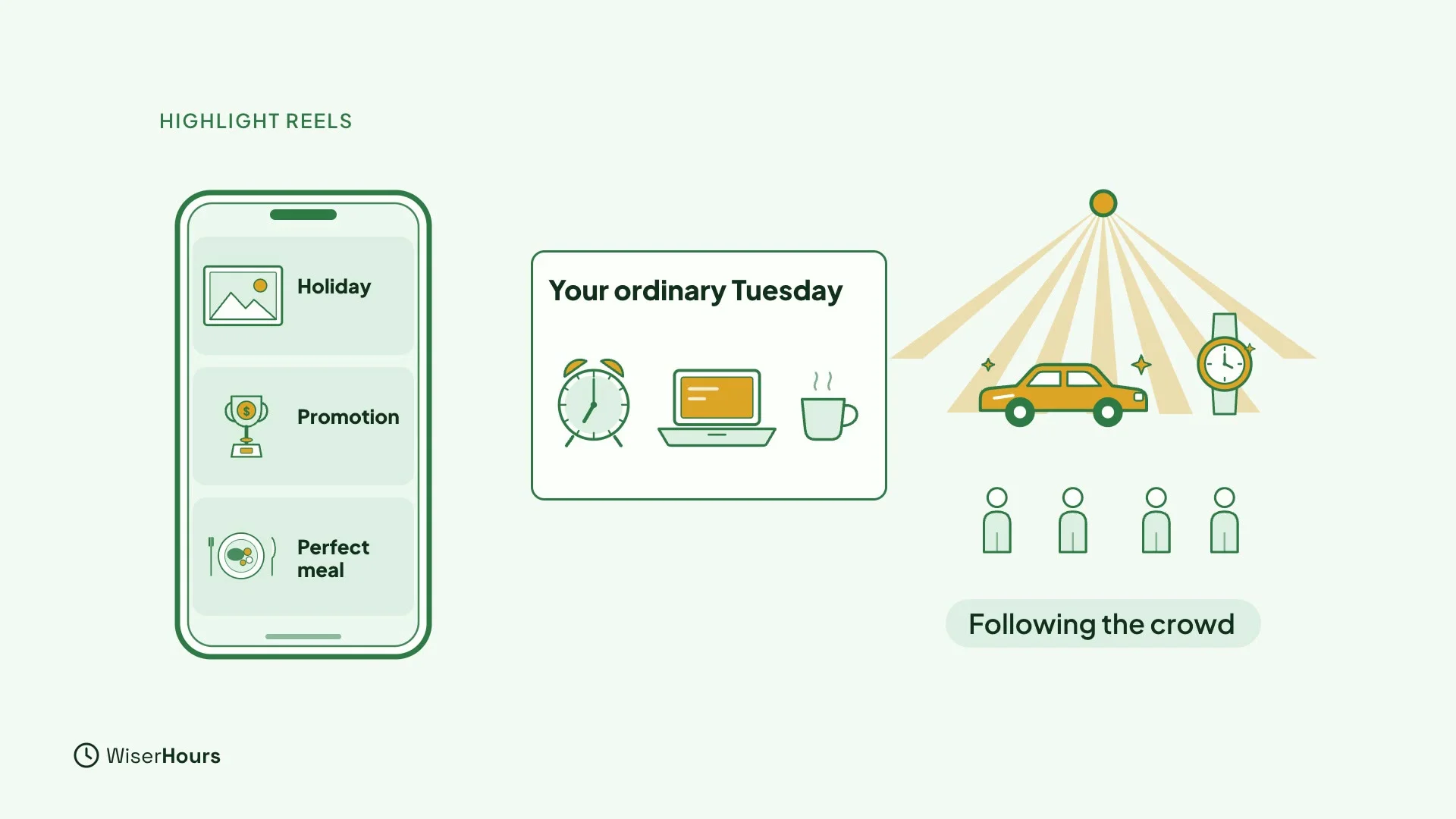
Feeds show other people’s best moments: the holiday, the promotion, the perfect meal. We then compare that with our own ordinary Tuesday, which is not a fair match. Visible spending works in a similar way. What people choose to show often follows what the people around them show, not what makes them happier.
 (opens the full-size picture)
Does using social media less help?
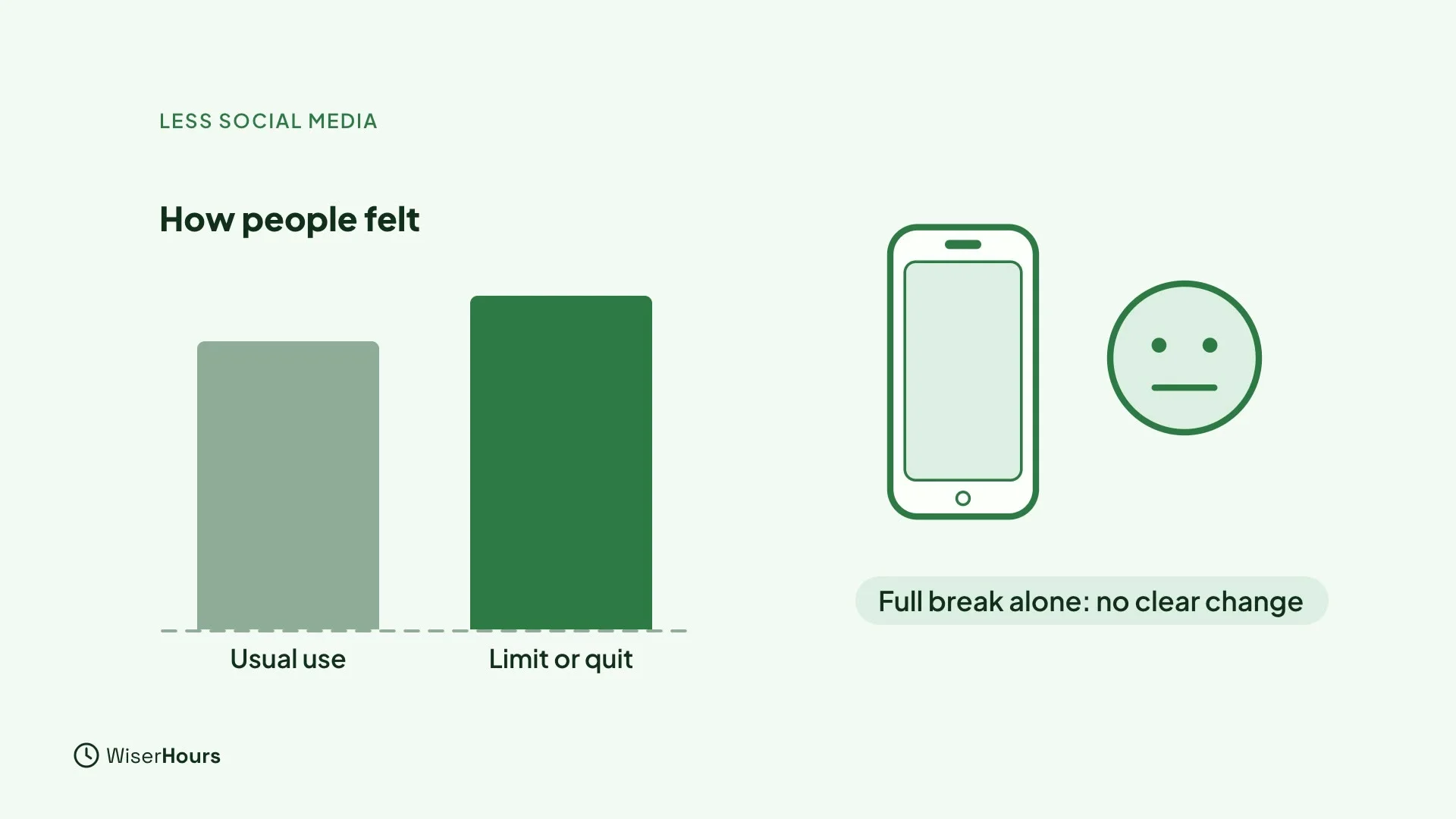
Reviews of many trials found that limiting or quitting social media lifts wellbeing slightly at best. Taking a full break, on its own, showed no clear change in mood. So it is worth a try, but do not expect it to change your life.
 (opens the full-size picture)
Where the time goes
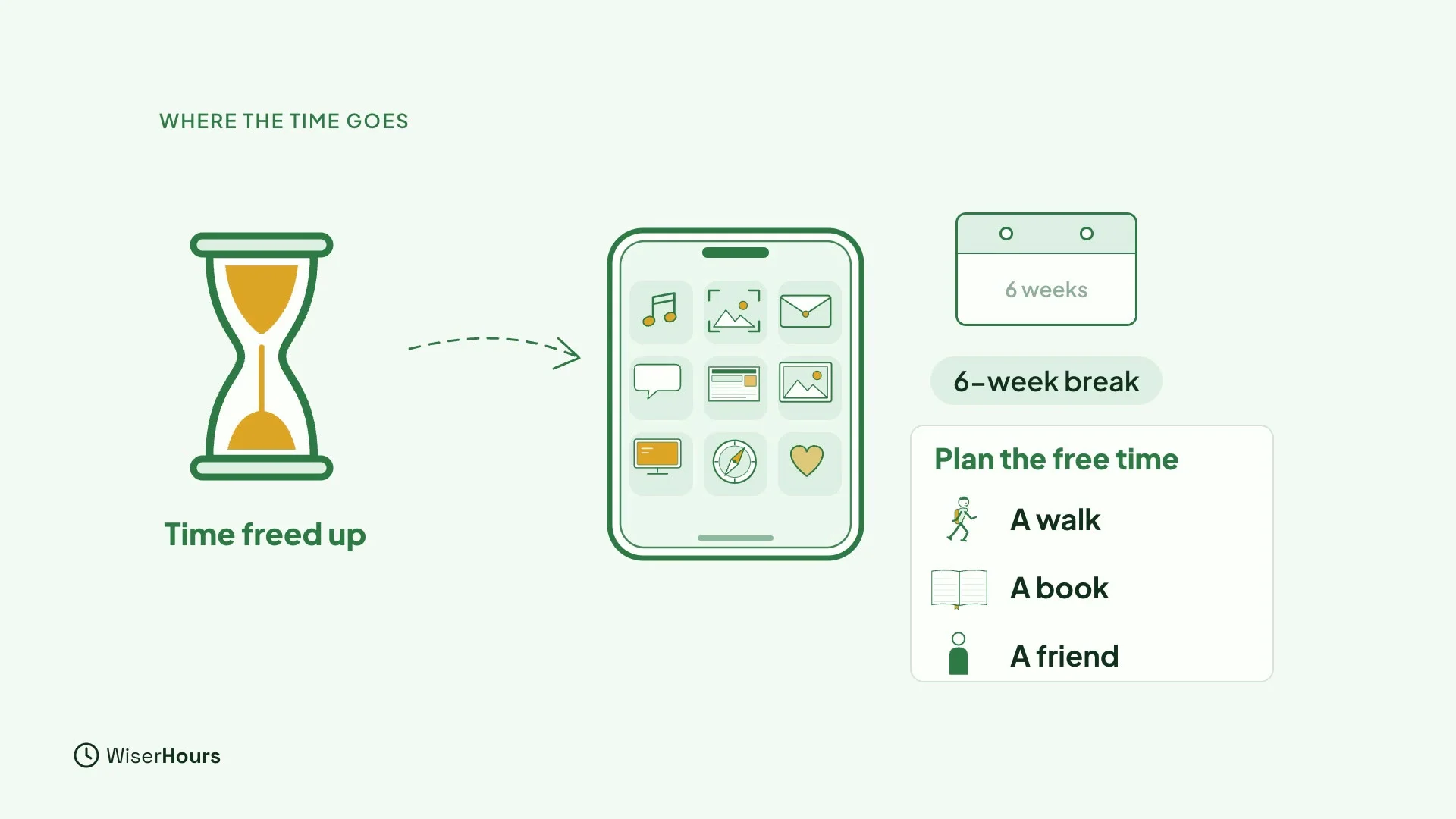
One reason is that freed-up time often slides into other apps. In one large trial, people who took a six-week break from one app spent the freed time on other phone apps instead. So decide in advance what you will do with the time.
 (opens the full-size picture)
Start light
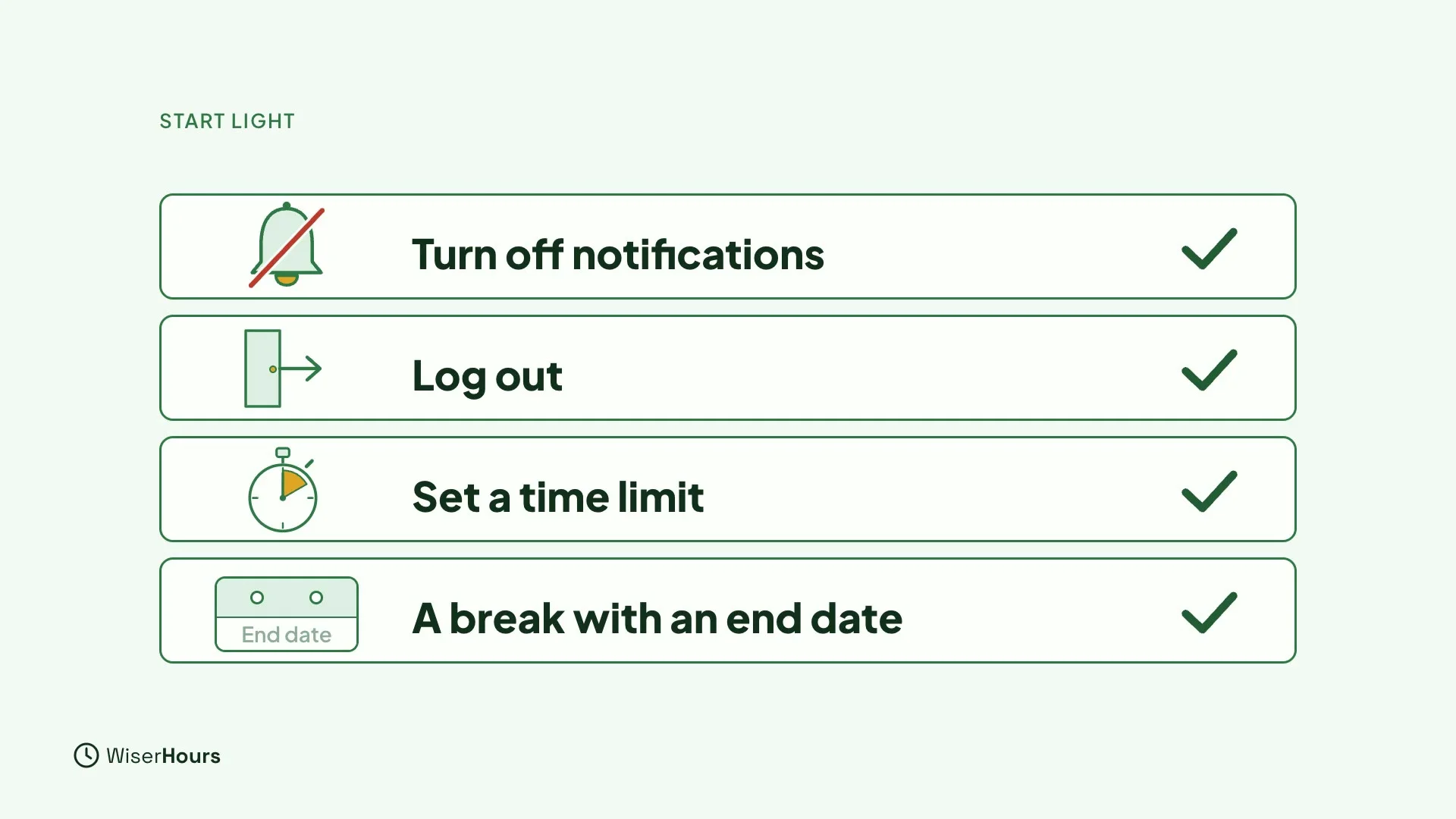
If you want to cut back, start light. Turn off notifications, log out, set a time limit, or move the app off your home screen. Then try a break with an end date, rather than quitting forever on day one.
 (opens the full-size picture)
The trap of forced positivity
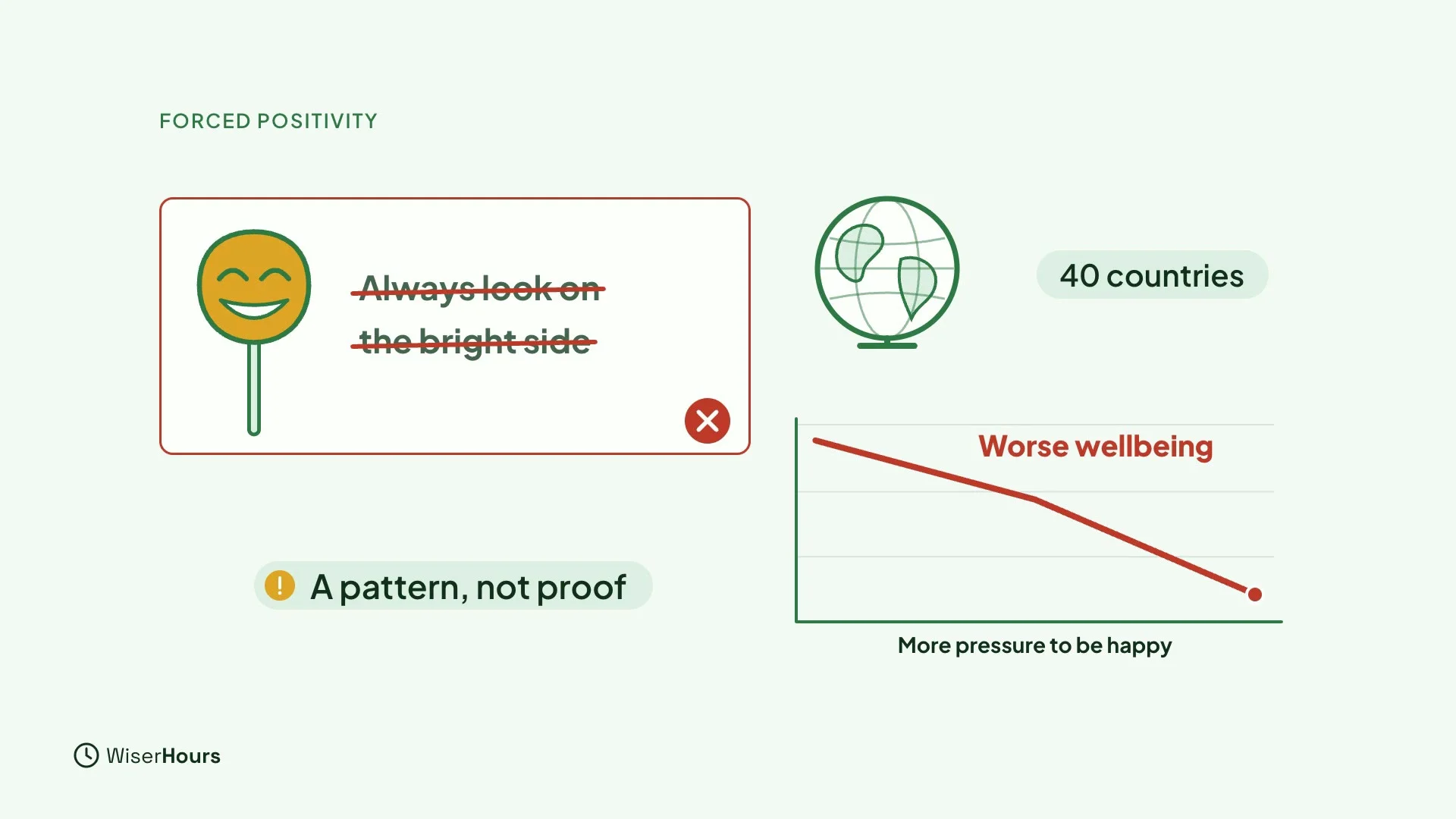
The second trap is pressure to be happy all the time. In a survey across forty countries, people who felt more pressure to be happy and not sad reported worse wellbeing. A survey like this cannot show cause and effect, so it is a pattern, not proof. But it is worth knowing.
 (opens the full-size picture)
Let feelings sit
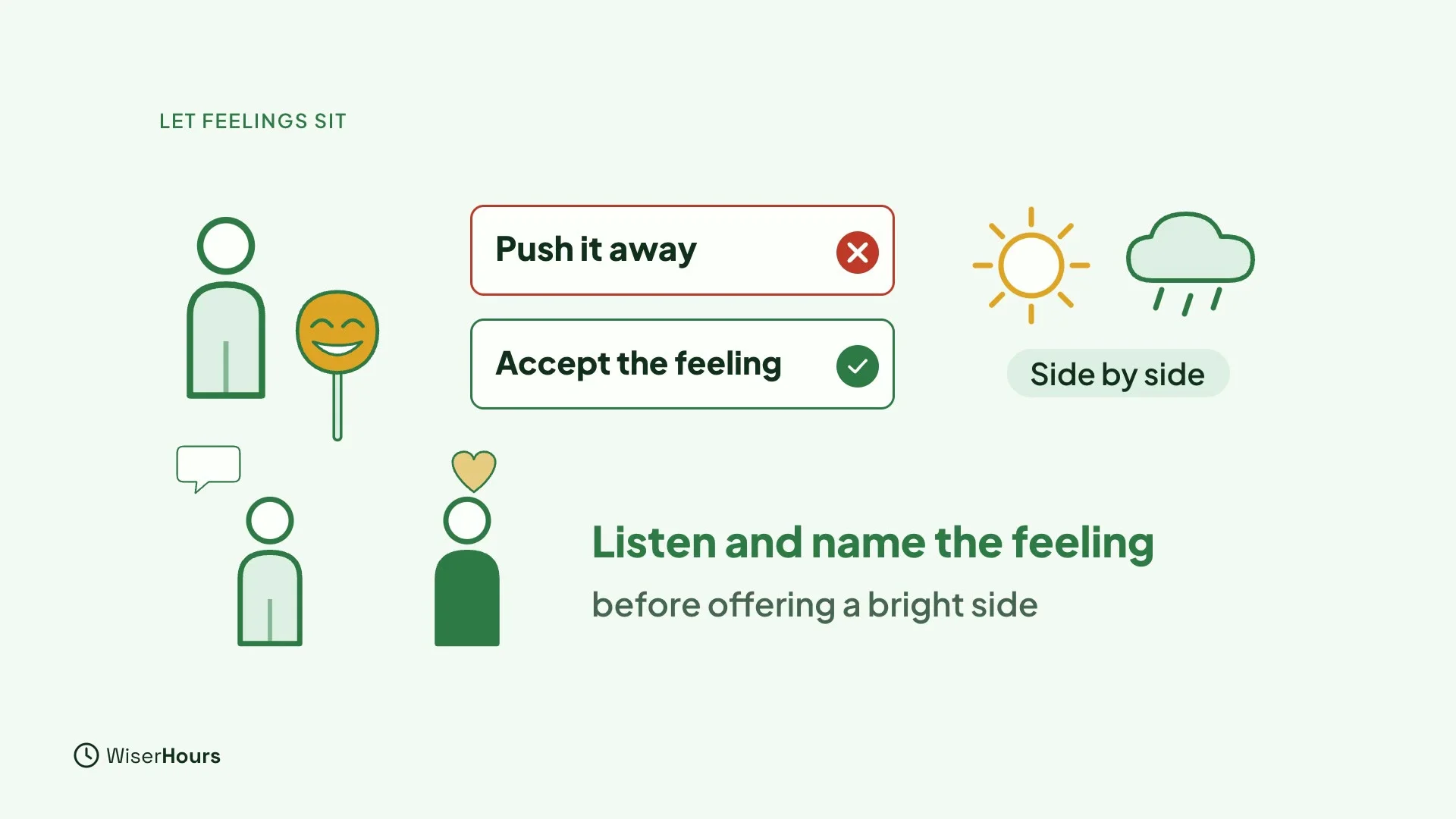
Hiding feelings, and judging yourself for having them, are both linked to more distress. Accepting a bad feeling is linked to less. Optimism still helps, as long as it sits beside the hard feeling instead of replacing it. When a friend is struggling, listen and name the feeling before offering a bright side.
 (opens the full-size picture)
When to get help
Ordinary sadness is part of life. If you have felt low or lost interest most days for two weeks or more, see a doctor. In a crisis, call your local emergency number.
YOUR TURN
Read more
- How to Quit Social Media (or Just Use It Less): light first steps and what the trials found.
- Toxic Positivity: When Looking on the Bright Side Does Harm: the survey, and what to say to a struggling friend.
- Conspicuous Consumption vs. Quiet Wealth: why visible spending misleads.
- Does Money Buy Happiness?: where comparison fits into money and happiness.
Read the full lesson script
In this lesson, you'll see how comparing yourself with others, social media, and the pressure to always look on the bright side can quietly pull your happiness down, and what to do instead.
Feeds show other people's best moments: the holiday, the promotion, the perfect meal. We compare that with our ordinary Tuesday. Visible spending works the same way: what people show often tracks what the people around them show, not what makes them happier.
So does cutting back on social media help? Reviews of many trials found that limiting or quitting it lifts wellbeing slightly at best. Taking a full break, on its own, showed no clear change in mood.
One reason is that freed-up time often slides into other apps. In one large trial, people who took a six-week break from one app spent the freed time on other phone apps instead. So decide in advance what you'll do with the time.
If you want to cut back, start light. Turn off notifications, log out, set a time limit, or move the app off your home screen. Then try a break with an end date, rather than quitting forever on day one.
The second trap is pressure to be happy all the time. In a survey across forty countries, people who felt more pressure to be happy and not sad reported worse wellbeing. The study can't show cause and effect, but the pattern is worth knowing.
Hiding feelings, and judging yourself for having them, are both linked to more distress. Accepting a bad feeling is linked to less. Optimism still helps, as long as it sits beside the hard feeling instead of replacing it. And when a friend is struggling, listen and name the feeling before offering a bright side.
So remember: feeds show highlight reels, not real life. Cutting back helps a little, especially if you plan the freed-up time. And let hard feelings sit beside the good ones. Before the next lesson, notice one moment of comparison this week, and swap that scroll for something on your own list. Next, you'll plan your own happiness experiments.
MAKE IT A SMALL WIN
Finished this lesson?
Mark it complete to save your progress on this device.