What happiness is · Lesson 1 of 11
What Happiness Means and How Researchers Measure It
Learn what researchers mean by happiness, how the 0 to 10 ladder question measures it, and what a short course can honestly do for you.
 Video coming soon
In this first lesson you will see what researchers mean by happiness, how they measure it and what a short course like this can and can’t do for you. A clear definition matters because it tells you what you are actually trying to improve.
Two kinds of happiness
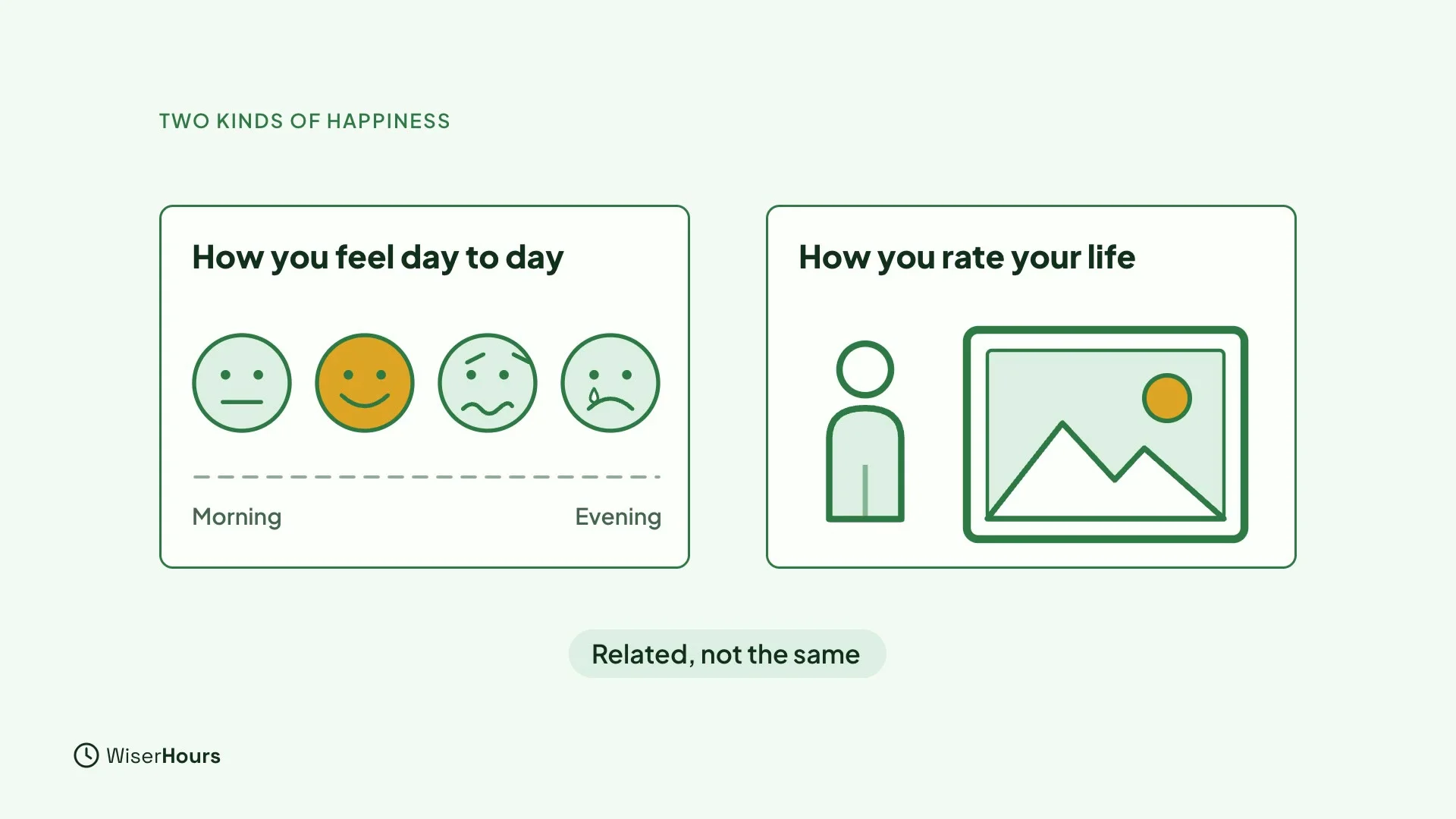
Researchers split happiness into two parts. The first is how you feel through the day: calm, cheerful, stressed or sad. The second is how you rate your life as a whole, when you step back and think about it.
A good day and a good life are related, but they are not the same thing. You can have a calm, pleasant Tuesday and still feel your life is not going where you want. You can also have a stressful week and still rate your life highly.
 (opens the full-size picture)
The ladder question
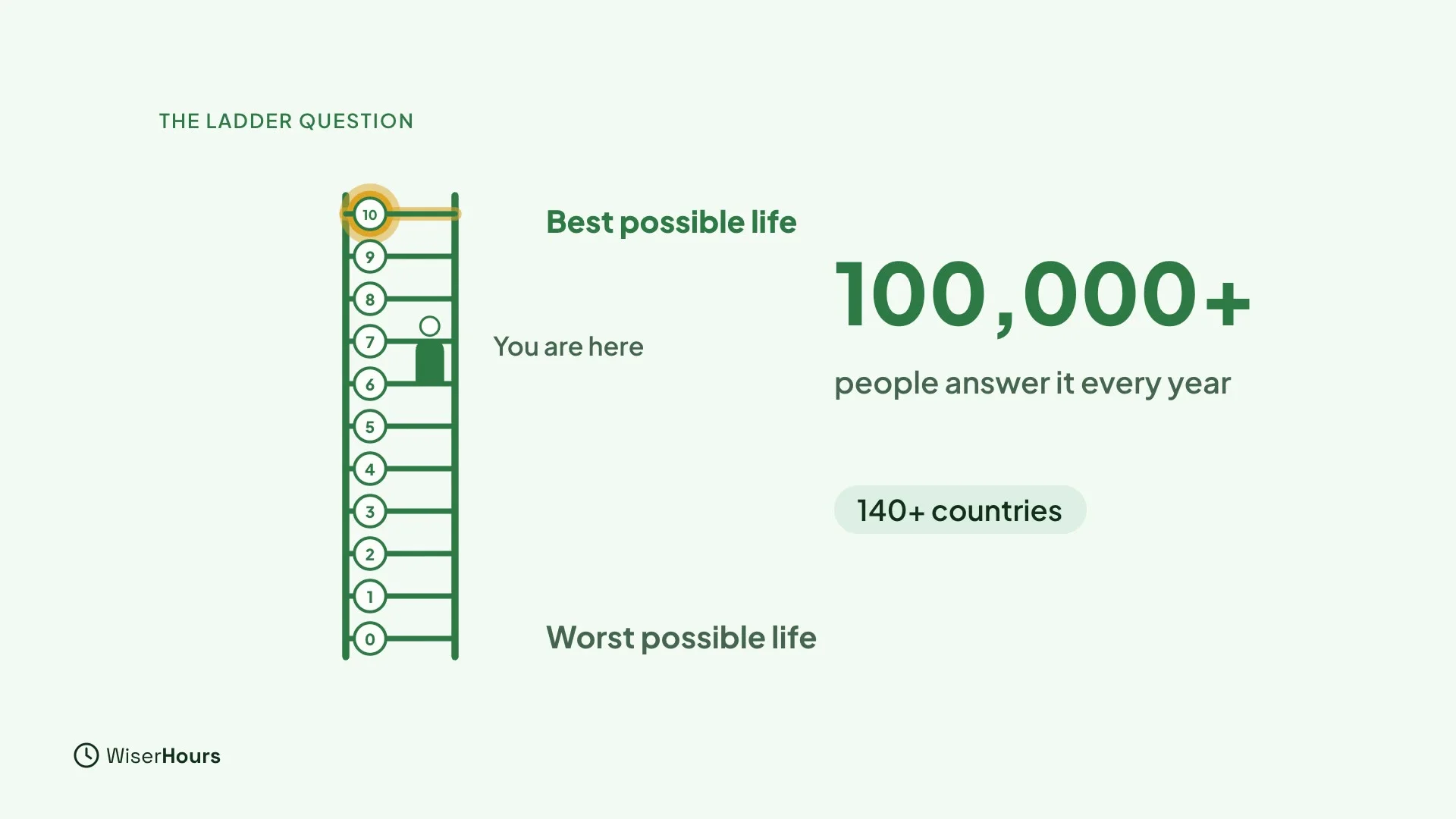
To measure the second part, world surveys use one simple question. Imagine a ladder with steps from 0 at the bottom to 10 at the top. The top is the best possible life for you, and the bottom is the worst. Which step are you on right now?
More than 100,000 people in over 140 countries answer this question every year, so it gives researchers a common yardstick. You will use it yourself in the exercise below.
 (opens the full-size picture)
Five ingredients of wellbeing
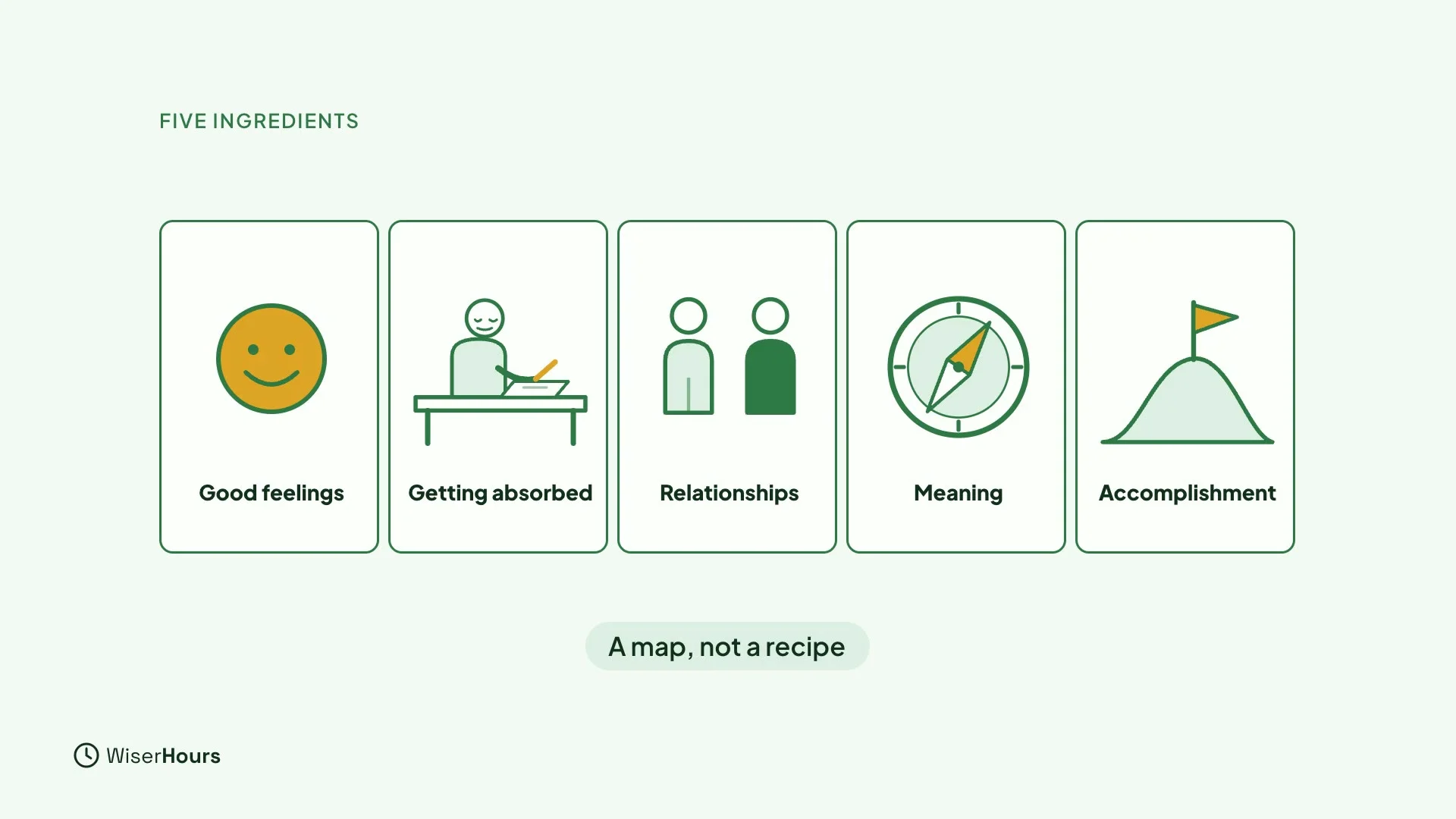
One well-known model lists five ingredients of wellbeing: good feelings, getting absorbed in what you do, relationships, meaning and a sense of accomplishment. In one survey, scores on the five mostly moved together with plain overall happiness.
That makes the list useful as a map of where good days can come from. If one ingredient feels thin lately, you know where to look. It is not a proven recipe, though, and nobody has shown that raising one ingredient will lift the rest.
 (opens the full-size picture)
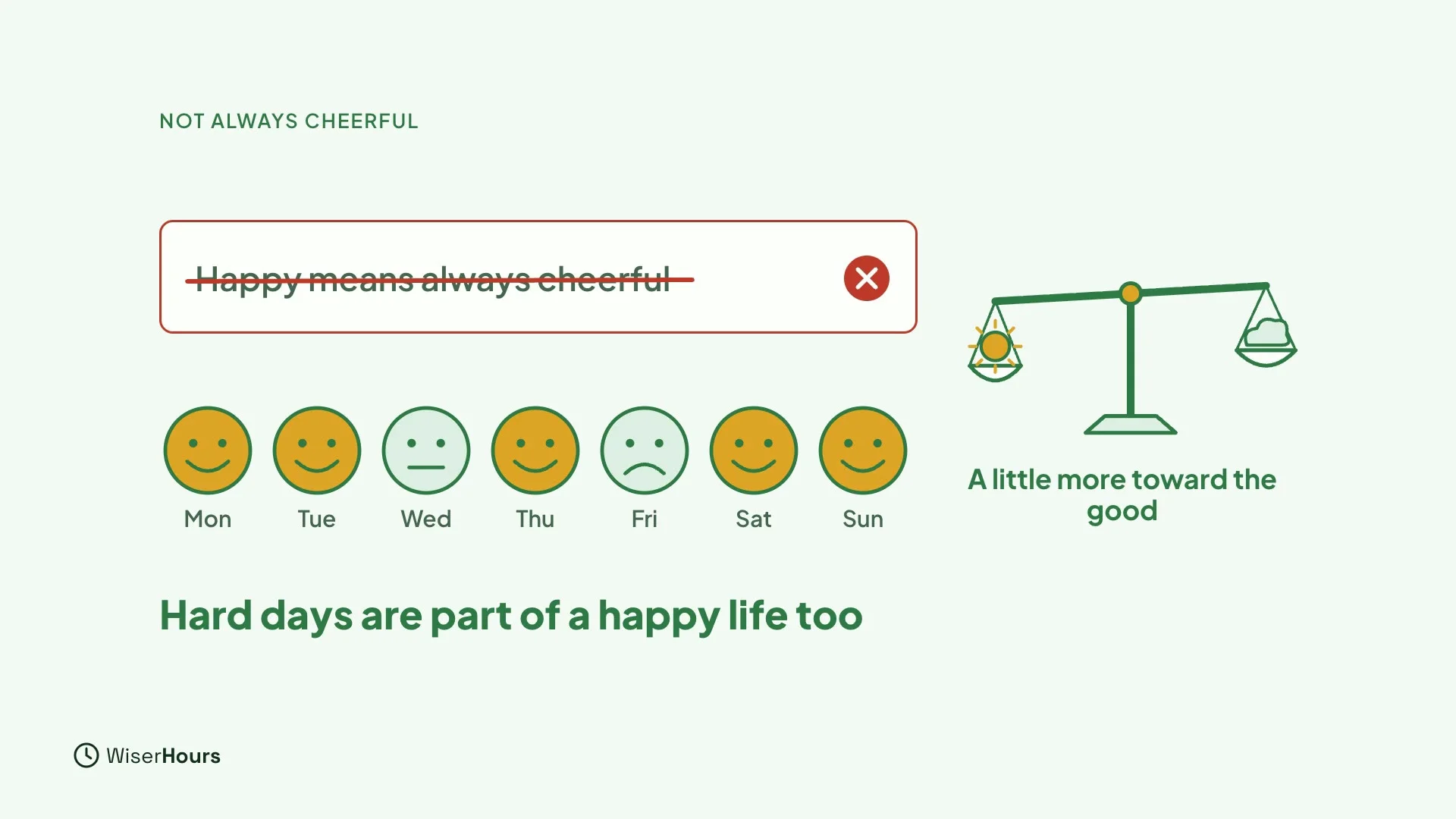
Happy does not mean always cheerful
Being happier does not mean feeling good all the time. Sad, angry or worried days are part of a normal life, even a happy one. Hard feelings often carry useful information, so switching them off is not the goal.
The aim of this course is smaller and more realistic: to tilt your days a little more toward the good.
 (opens the full-size picture)
An honest note about size
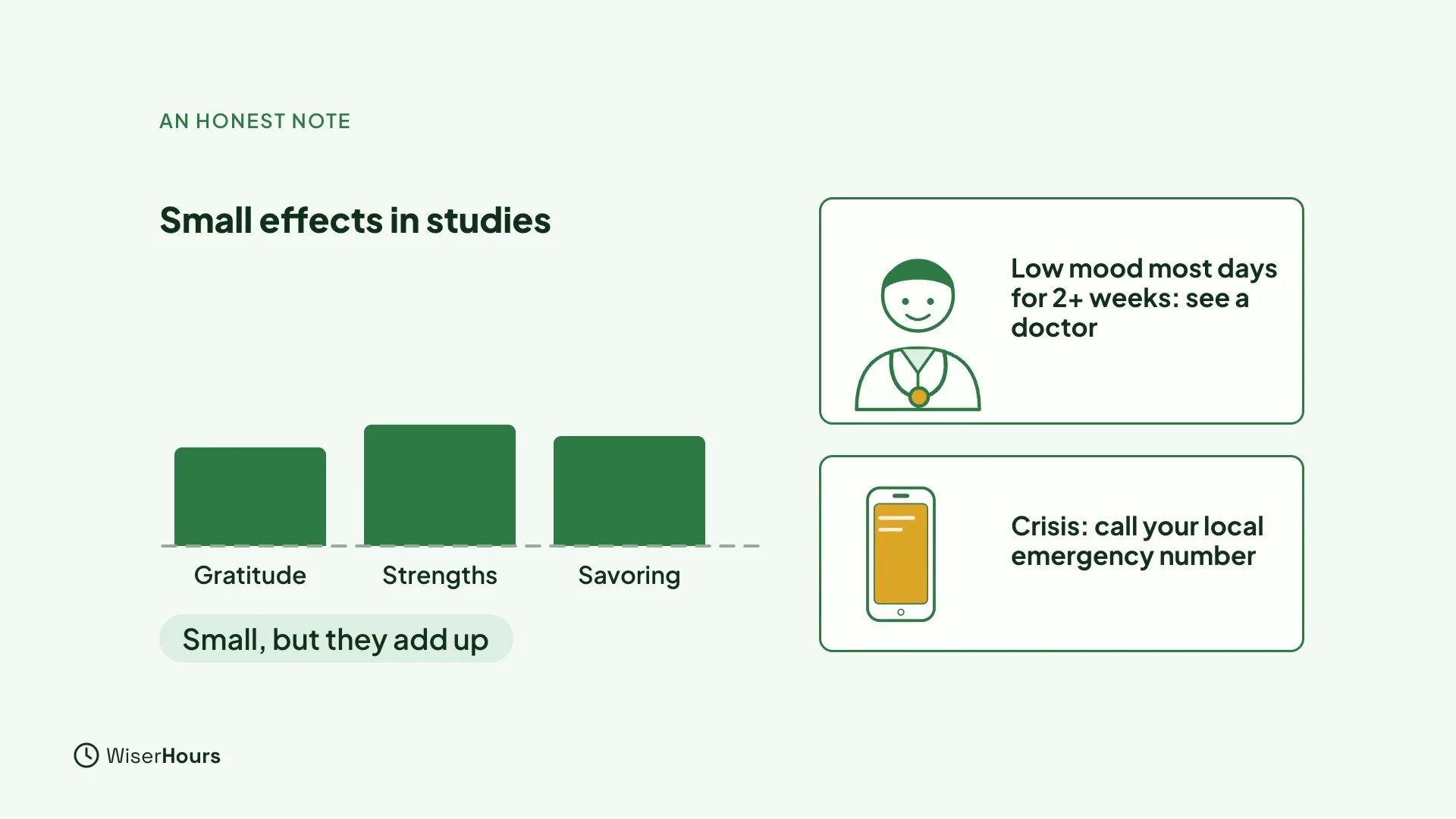
Most ideas in this course have small effects in studies, not life-changing ones. Small effects can still add up over weeks, which is why the course asks you to try things, not just read about them.
This course is not a treatment
If low mood fills most of your days for more than two weeks, talk to a doctor. In a crisis, call your local emergency number.
 (opens the full-size picture)
The road ahead
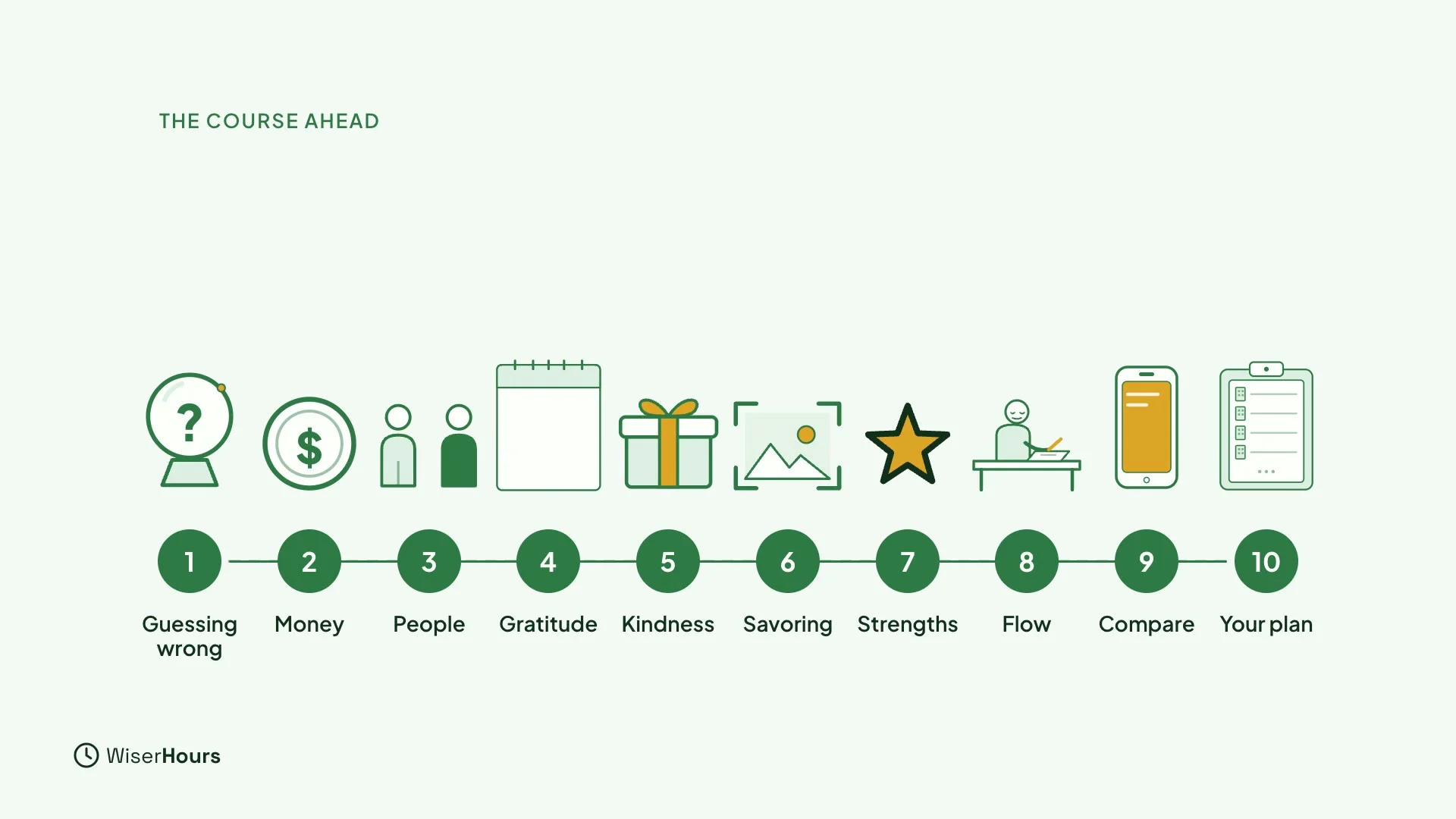
The course starts with why we guess wrong about what will make us happy, and what money can and can’t do. Then it covers relationships, gratitude, kindness, savoring and your strengths. After that come flow, comparison and social media. Finally, you plan your own happiness experiments.
 (opens the full-size picture)
YOUR TURN
Read more
- The PERMA Model Explained: the five ingredients in more detail, and what critics say about them.
- What Is a Sense of Purpose?: how researchers define purpose, one of the ingredients of a good life.
Sources
- World Happiness Report, frequently asked questions (the ladder question and the number of people surveyed): https://worldhappiness.report/faq/
Read the full lesson script
Welcome to The Science of Happiness. In this first lesson, you'll see what researchers mean by happiness, how they measure it, and what a short course like this can and can't do for you.
Researchers split happiness into two parts. The first is how you feel through the day: calm, cheerful, stressed or sad. The second is how you rate your life as a whole, when you step back and think about it. A good day and a good life are related, but they're not the same thing.
To measure the second part, world surveys use one simple question. Imagine a ladder with steps from zero at the bottom to ten at the top. The top is the best possible life for you, and the bottom is the worst. Which step are you on right now? More than a hundred thousand people in over a hundred and forty countries answer it every year.
One well-known model lists five ingredients of wellbeing: good feelings, getting absorbed in what you do, relationships, meaning, and a sense of accomplishment. In one survey, scores on the five mostly moved together with plain overall happiness. So treat them as a map of where good days come from, not a proven recipe.
Being happier doesn't mean feeling good all the time. Sad, angry or worried days are part of a normal life, even a happy one. The aim of this course is to tilt your days a little more toward the good, not to switch off the hard feelings.
Here's an honest note. Most ideas in this course have small effects in studies, not life-changing ones. Small effects can still add up over weeks. And this course isn't a treatment. If low mood fills most of your days for more than two weeks, talk to a doctor. In a crisis, call your local emergency number.
Here's the course. You'll see why we guess wrong about what makes us happy, and what money can and can't do. Then relationships, gratitude, kindness, savoring and your strengths. After that, flow, comparison and social media. Finally, you'll plan your own happiness experiments.
So remember: happiness has two parts, how you feel and how you rate your life. Five ingredients point to where good days come from. And the effects are small, but they add up. Before the next lesson, rate your life today on the zero to ten ladder, and write down one thing that pulls your number up. Next, you'll see why we so often guess wrong about what will make us happy.
MAKE IT A SMALL WIN
Finished this lesson?
Mark it complete to save your progress on this device.