What lifts it · Lesson 4 of 11
Relationships and Loneliness: Why Connection Matters
Learn why relationships keep showing up in happiness research, what loneliness really is, and small steps to feel more connected.
 Video coming soon
In this lesson you will see why relationships come up again and again in happiness research, what loneliness really is and small ways to feel more connected. You will also learn to treat big headlines about loneliness with care.
The longest study
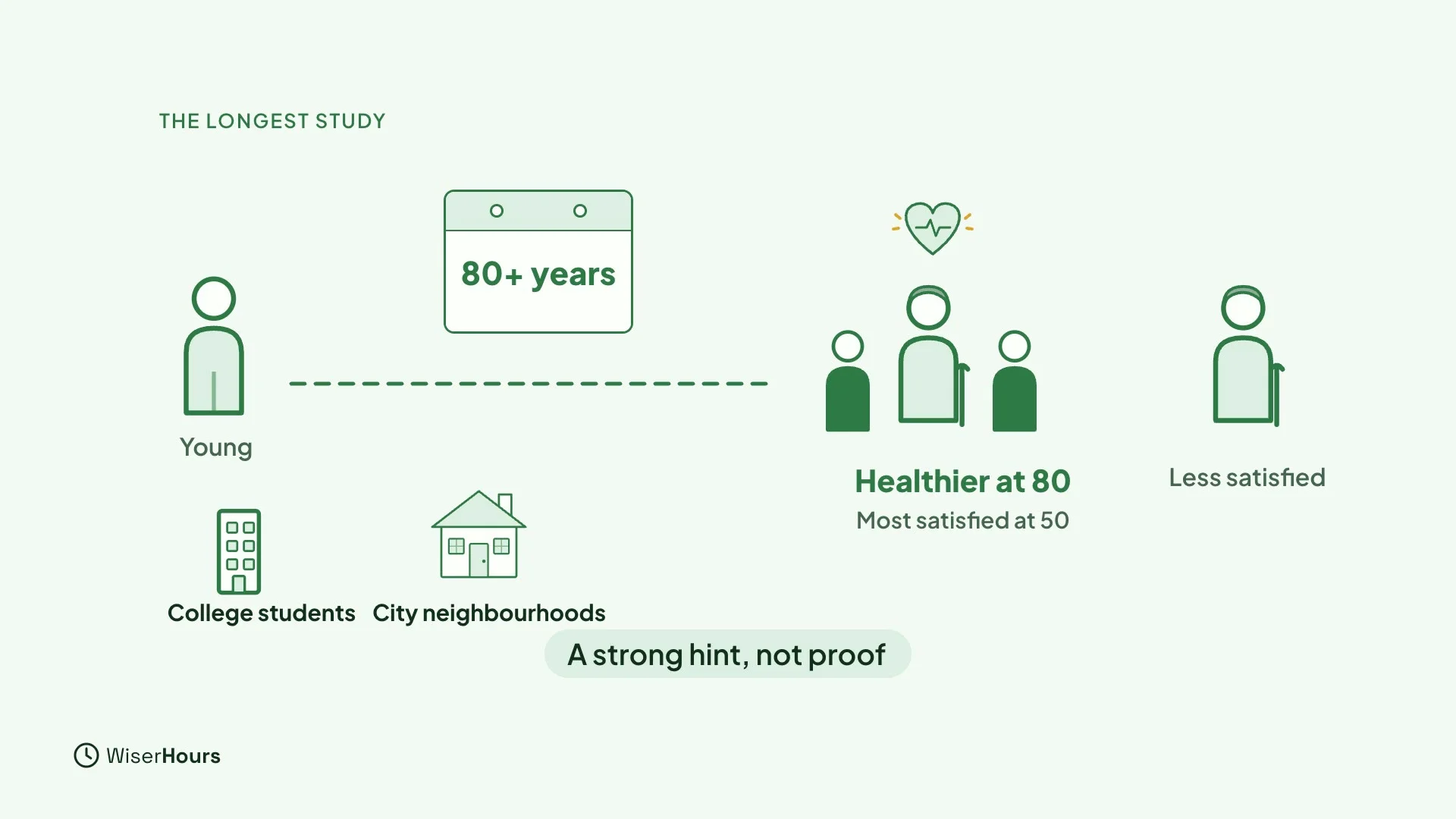
One study has followed the same group of men for over 80 years, starting with college students and young men from poor city neighborhoods. Those who were most satisfied with their relationships at 50 were healthier at 80.
It is only men, from one country, so it is a strong hint rather than proof, but it fits a wider pattern. Relationships are also one of the five ingredients of wellbeing from the first lesson.
 (opens the full-size picture)
What loneliness is
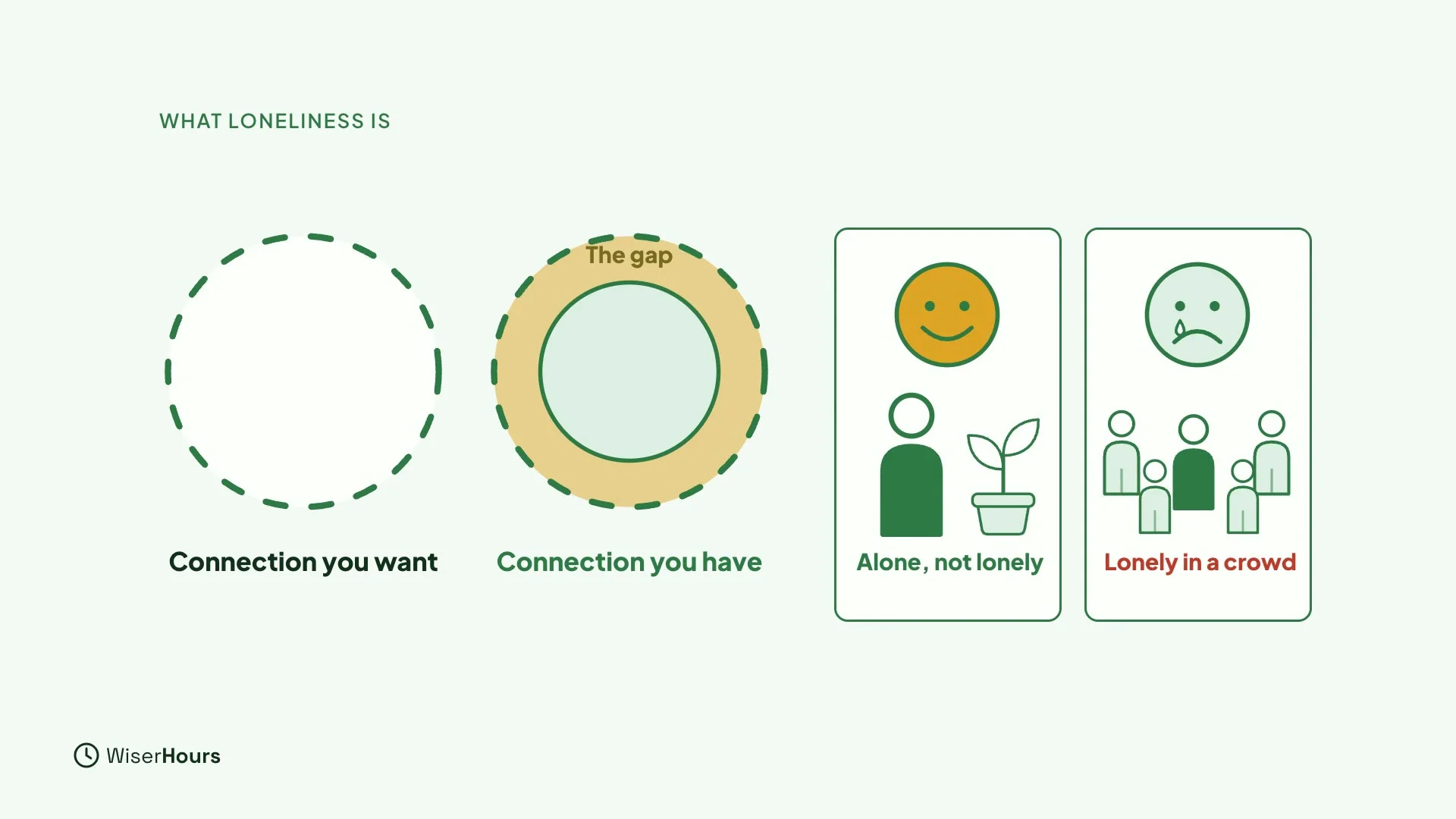
Loneliness is not the same as being alone. It is the gap between the connection you want and the connection you have. You can live alone and feel fine, or feel lonely in a busy office.
 (opens the full-size picture)
How common it is
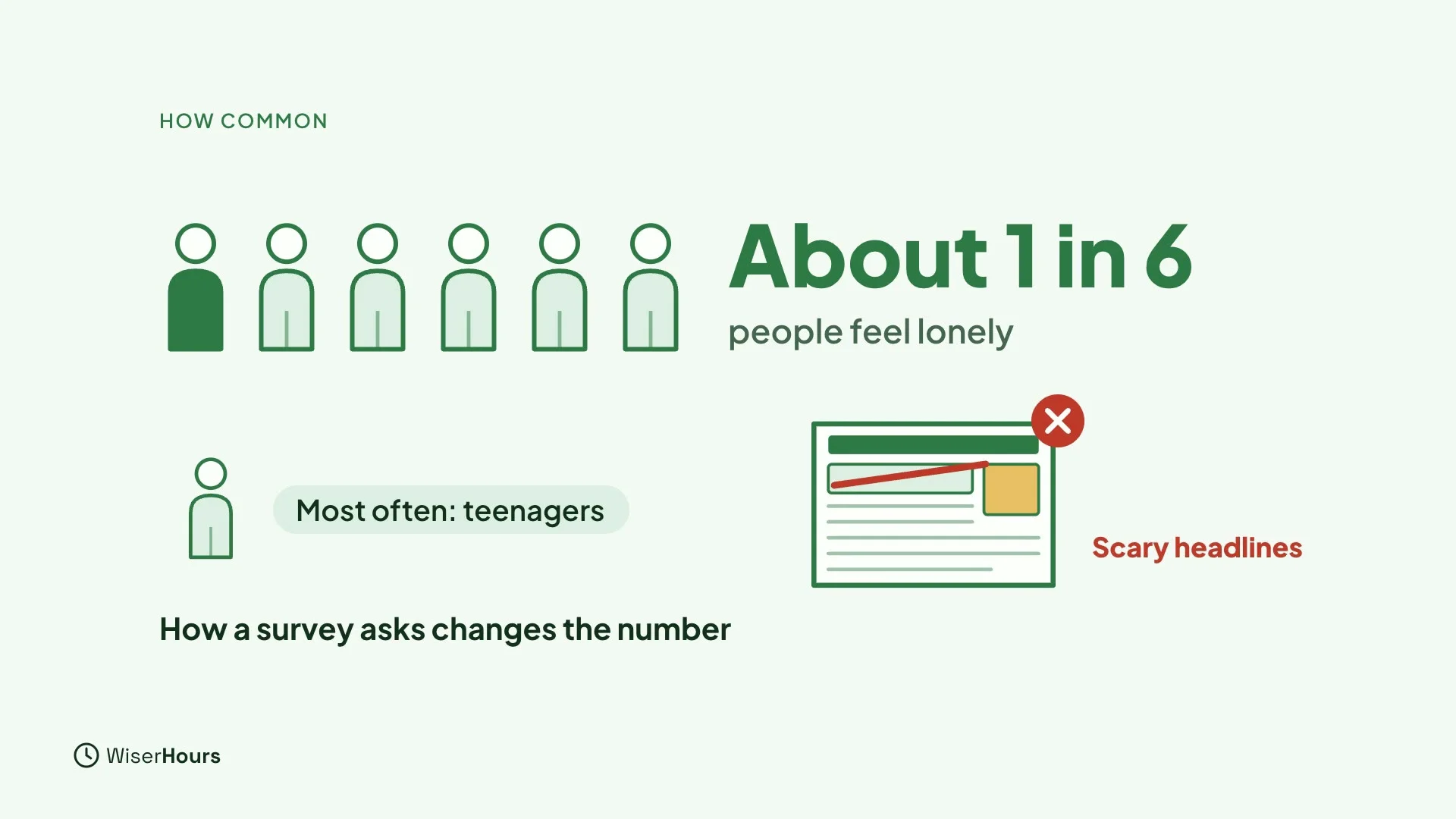
Loneliness is common. A worldwide estimate puts it at about 1 in 6 people, and teenagers report it most often. How a survey asks the question changes the number a lot, so be careful with scary headlines.
 (opens the full-size picture)
The cigarette myth
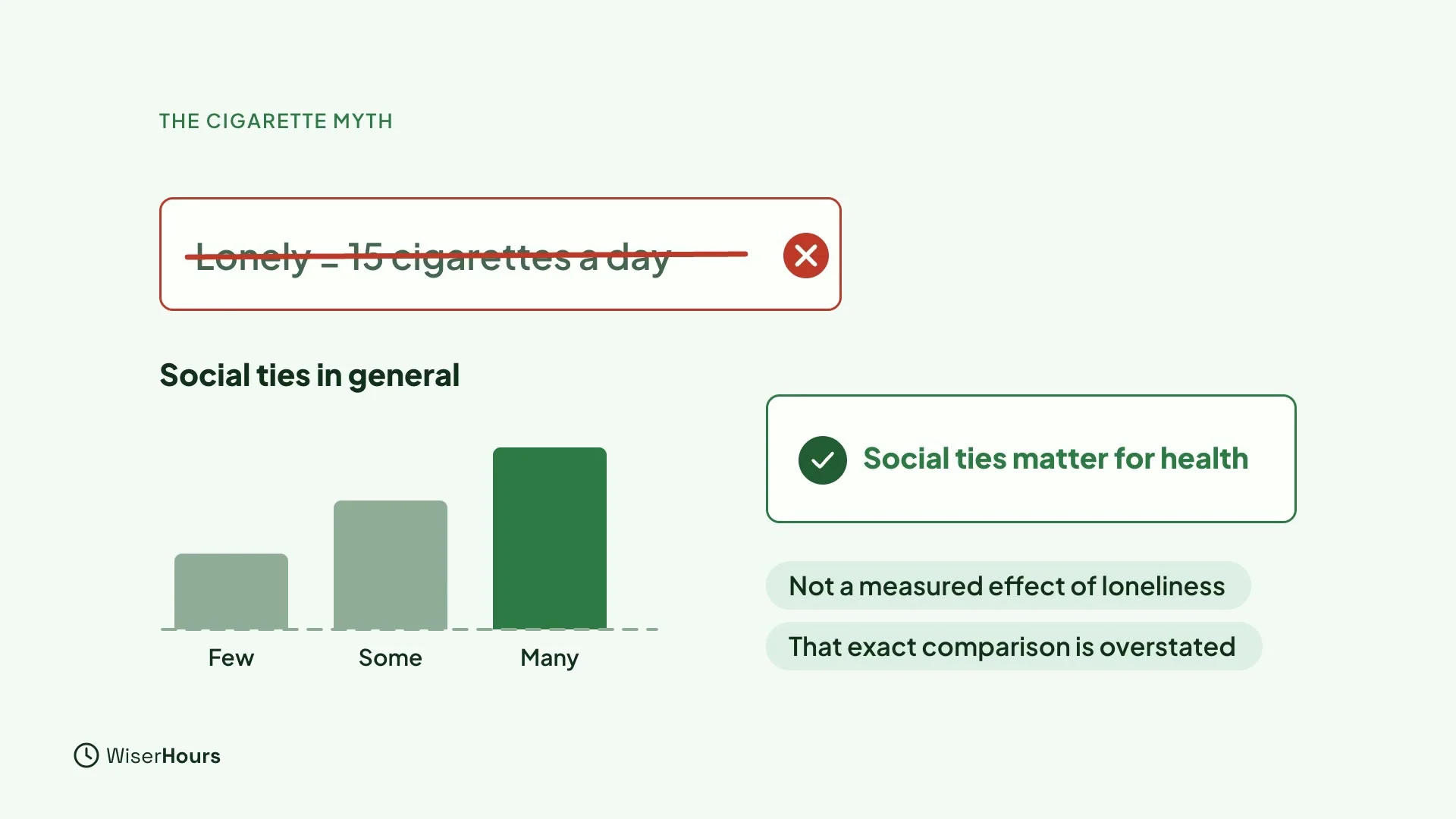
You may have heard that loneliness is as deadly as smoking 15 cigarettes a day. That number comes from a chart about social ties in general, not a measured effect of loneliness. Social ties do matter for health, but that exact comparison is overstated.
A good habit with headlines
When a number sounds shocking, ask what was actually measured. Here it was social ties in general, not loneliness itself.
 (opens the full-size picture)
Two kinds of missing connection
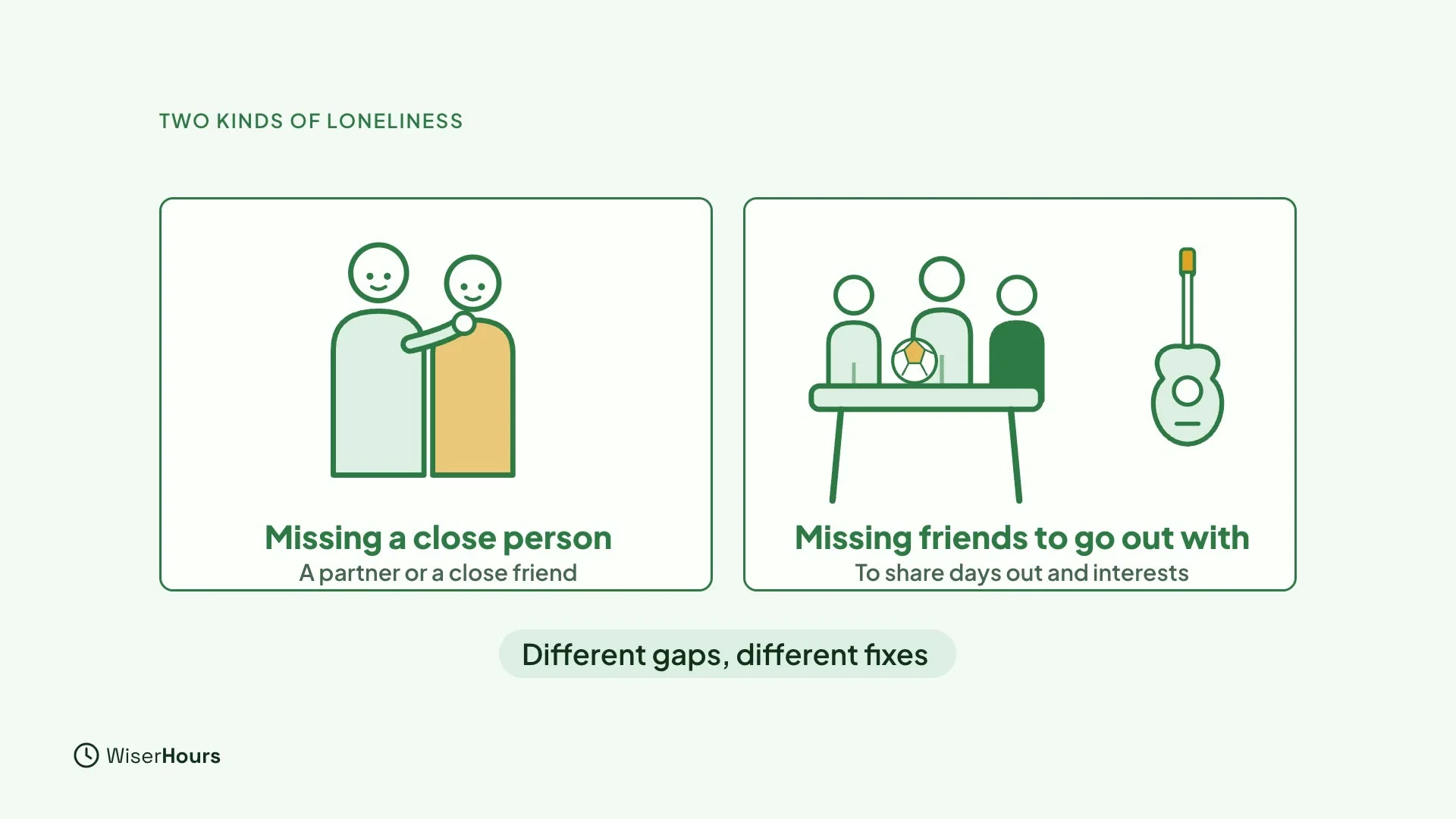
It helps to know which connection is missing. Some people lack one close person, like a partner or a close friend. Others have that, but no friends to go out with or share interests with. Each needs a different fix.
 (opens the full-size picture)
Small steps
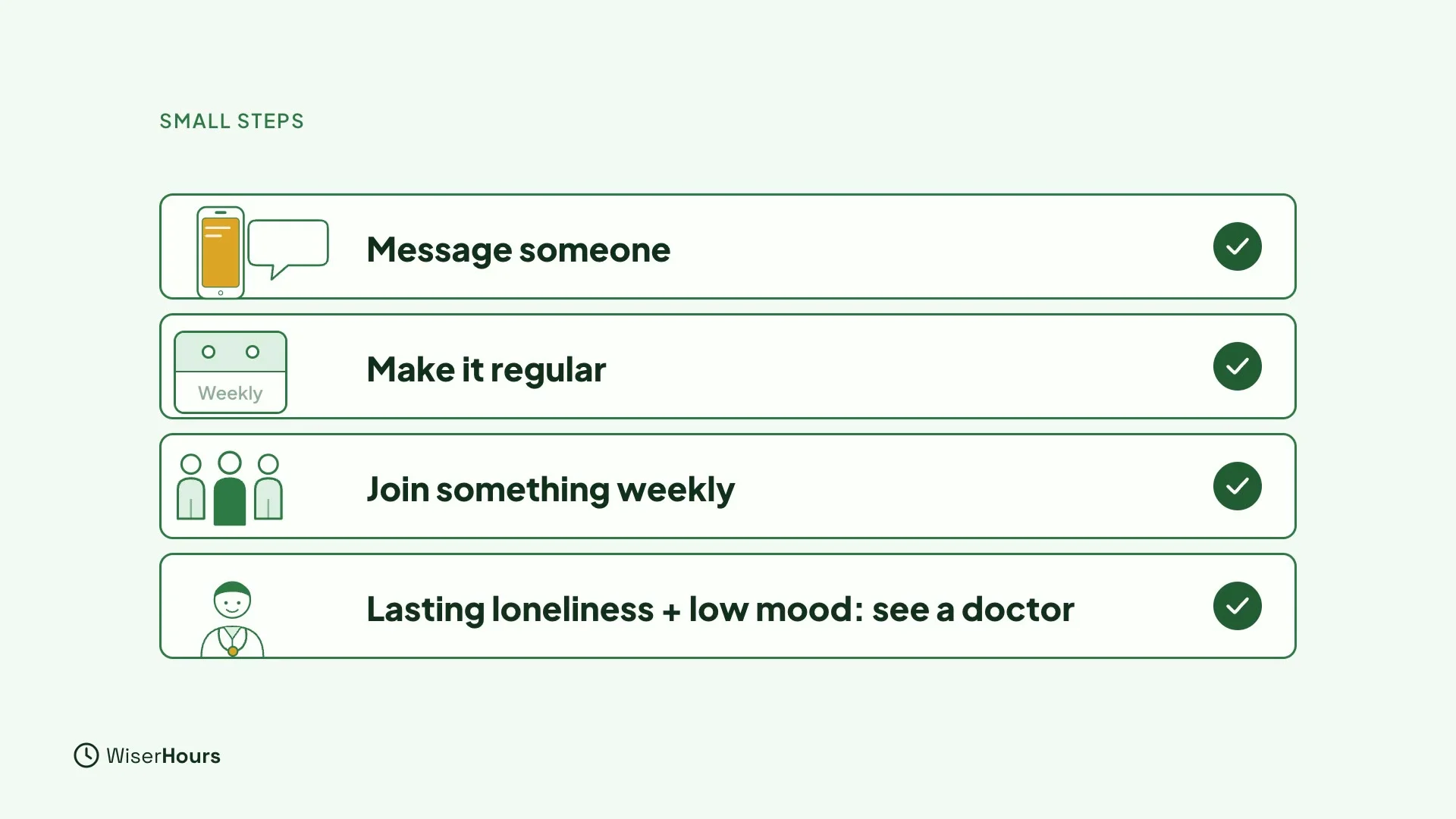
Connection grows from small, regular contact. Send a message to someone you have lost touch with. Turn a one-off chat into a regular walk or call. Join something that meets every week, so you see the same faces.
If loneliness lasts and comes with low mood, talk to a doctor.
 (opens the full-size picture)
YOUR TURN
If you feel lonely and low for most days over two weeks, see a doctor. If you may be in danger, call your local emergency number.
Read more
- Loneliness Explained: What It Is, Why It Hurts, and How Common It Is: the two kinds of loneliness, how surveys differ, and where the 15 cigarettes claim came from.
- The PERMA Model Explained: relationships as one of five elements of wellbeing.
Sources
- Grant Study, the long-running study of adult development: https://en.wikipedia.org/wiki/Grant_Study
Read the full lesson script
In this lesson, you'll see why relationships come up again and again in happiness research, what loneliness really is, and small ways to feel more connected.
One study has followed the same group of men for over eighty years, starting with college students and young men from poor city neighbourhoods. Those who were most satisfied with their relationships at fifty were healthier at eighty. It's only men, from one country, so it's a strong hint rather than proof, but it fits a wider pattern.
Loneliness isn't the same as being alone. It's the gap between the connection you want and the connection you have. You can live alone and feel fine, or feel lonely in a busy office.
It's common. A worldwide estimate puts it at about one in six people, and teenagers report it most often. How a survey asks the question changes the number a lot, so be careful with scary headlines.
You may have heard that loneliness is as deadly as smoking fifteen cigarettes a day. That number comes from a chart about social ties in general, not a measured effect of loneliness. Social ties do matter for health, but that exact comparison is overstated.
It helps to know which connection is missing. Some people lack one close person, like a partner or a close friend. Others have that, but no friends to go out with or share interests with. Each needs a different fix.
Connection grows from small, regular contact. Send a message to someone you've lost touch with. Turn a one-off chat into a regular walk or call. Join something that meets every week, so you see the same faces. And if loneliness lasts and comes with low mood, talk to a doctor.
So remember: relationships keep showing up in research on a good life. Loneliness is a gap, not a head count. And connection grows from small, regular contact. Before the next lesson, send a short message to someone you haven't talked to in a while. Next, you'll see what gratitude can and can't do.
MAKE IT A SMALL WIN
Finished this lesson?
Mark it complete to save your progress on this device.