What lifts it · Lesson 7 of 11
Savoring: How to Make Good Moments Last Longer
Learn to notice good moments on purpose and make the feeling last, with five small habits you can try today, and one thought to watch out for.
 Video coming soon
Most good moments slip by while we are busy. In this lesson you will learn to savor them: to notice them on purpose and make the good feeling last a little longer.
What savoring is
Savoring means noticing a good experience on purpose, and responding in ways that deepen it or make it last. A good meal, a sunny walk, a kind word: most of these pass by without us really taking them in, especially when a phone is in our hand. Savoring is the skill of catching them before they go.
 (opens the full-size picture)
Three directions
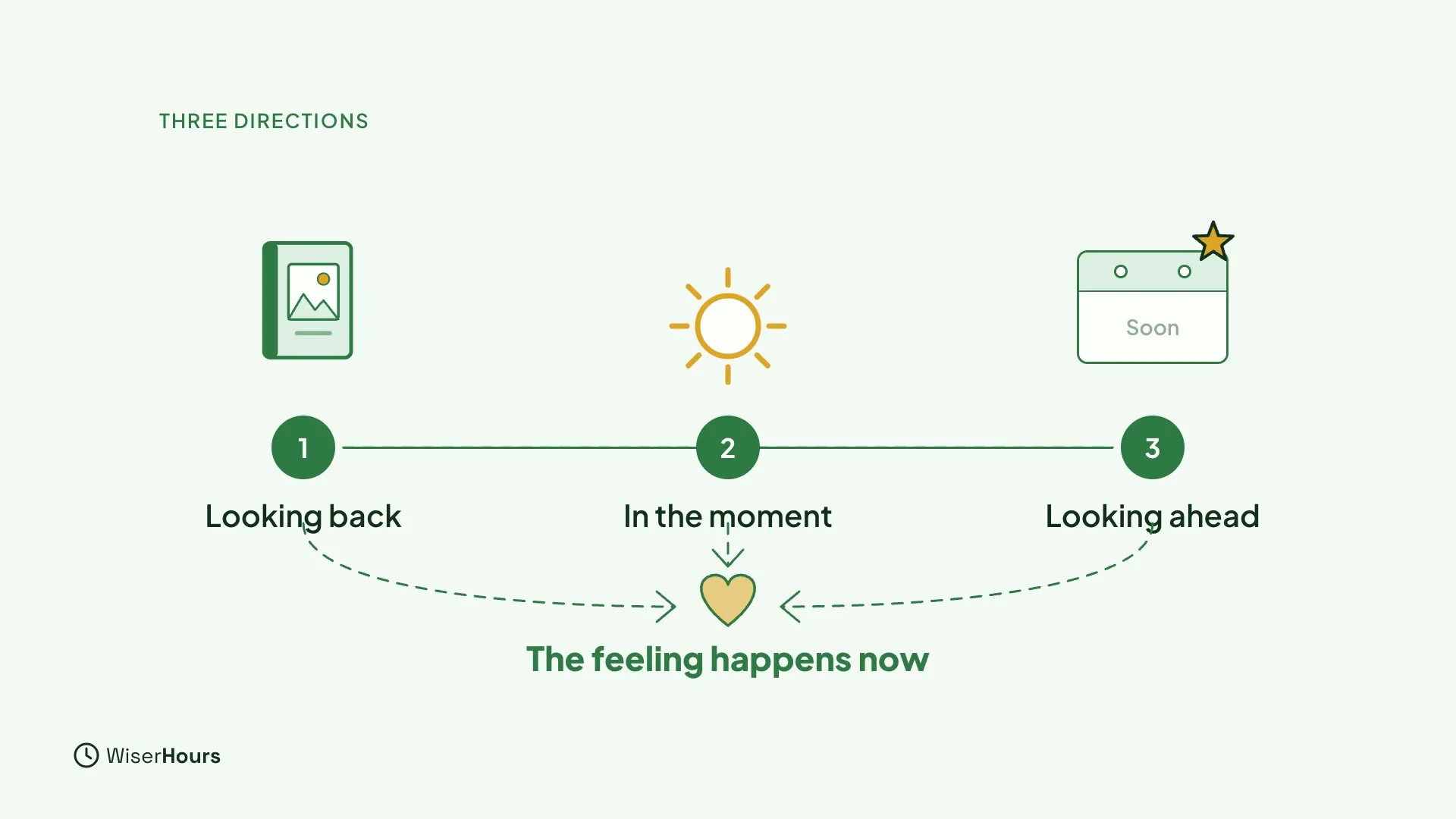
You can savor in three directions. Looking back, you enjoy a good memory. In the moment, you enjoy what is happening now. Looking ahead, you enjoy something you are looking forward to. Whichever way you look, the good feeling happens now, in the present. So a happy memory or a plan for the weekend can lift you today, with no need for anything big to happen.
 (opens the full-size picture)
What the studies found
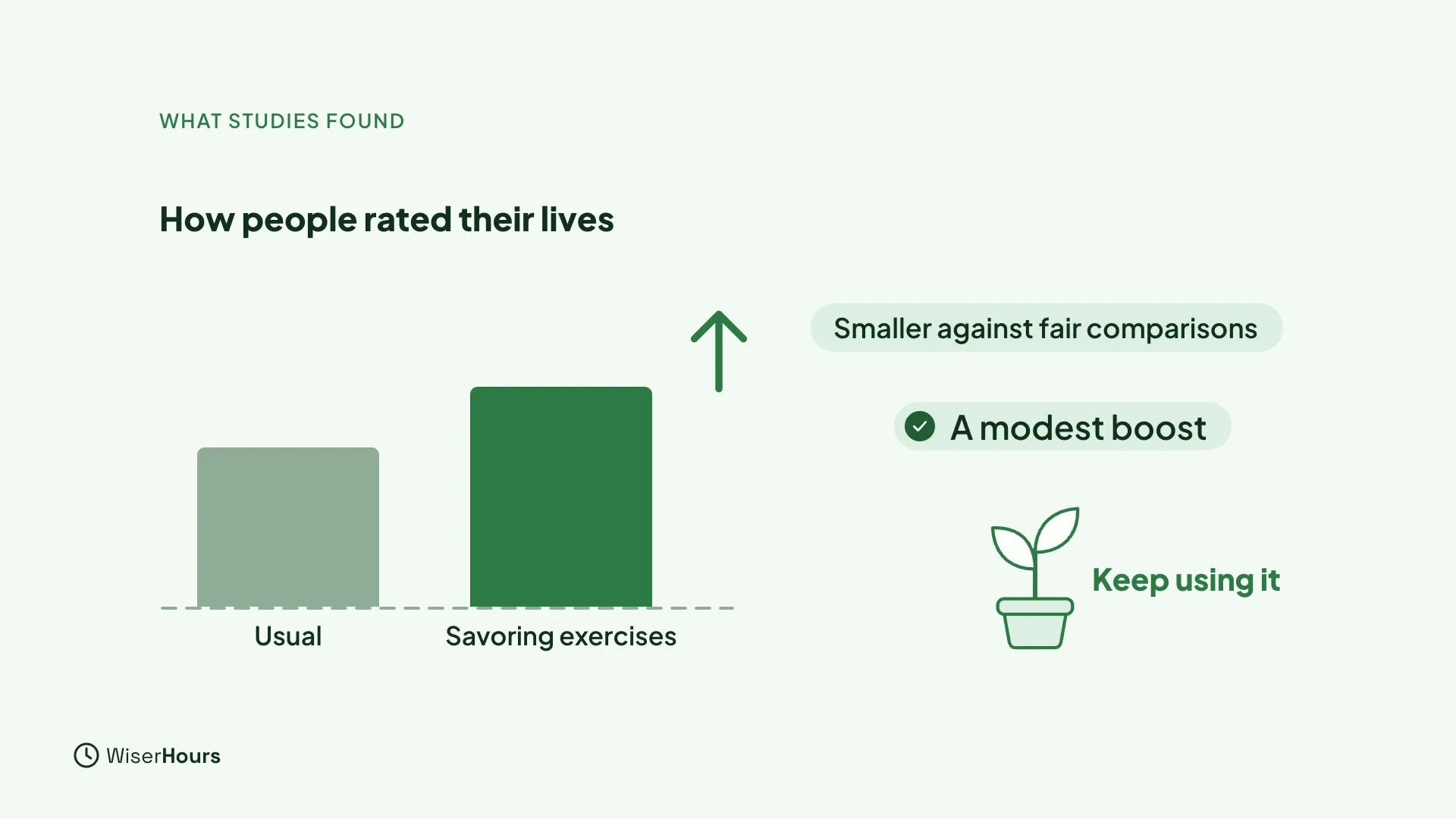
In trials, short savoring exercises lifted how people felt about their lives. The gain was smaller against fair comparisons, and most programs were short, so treat savoring as a modest boost that you keep using, not a one-time fix.
 (opens the full-size picture)
Pause, sense, share
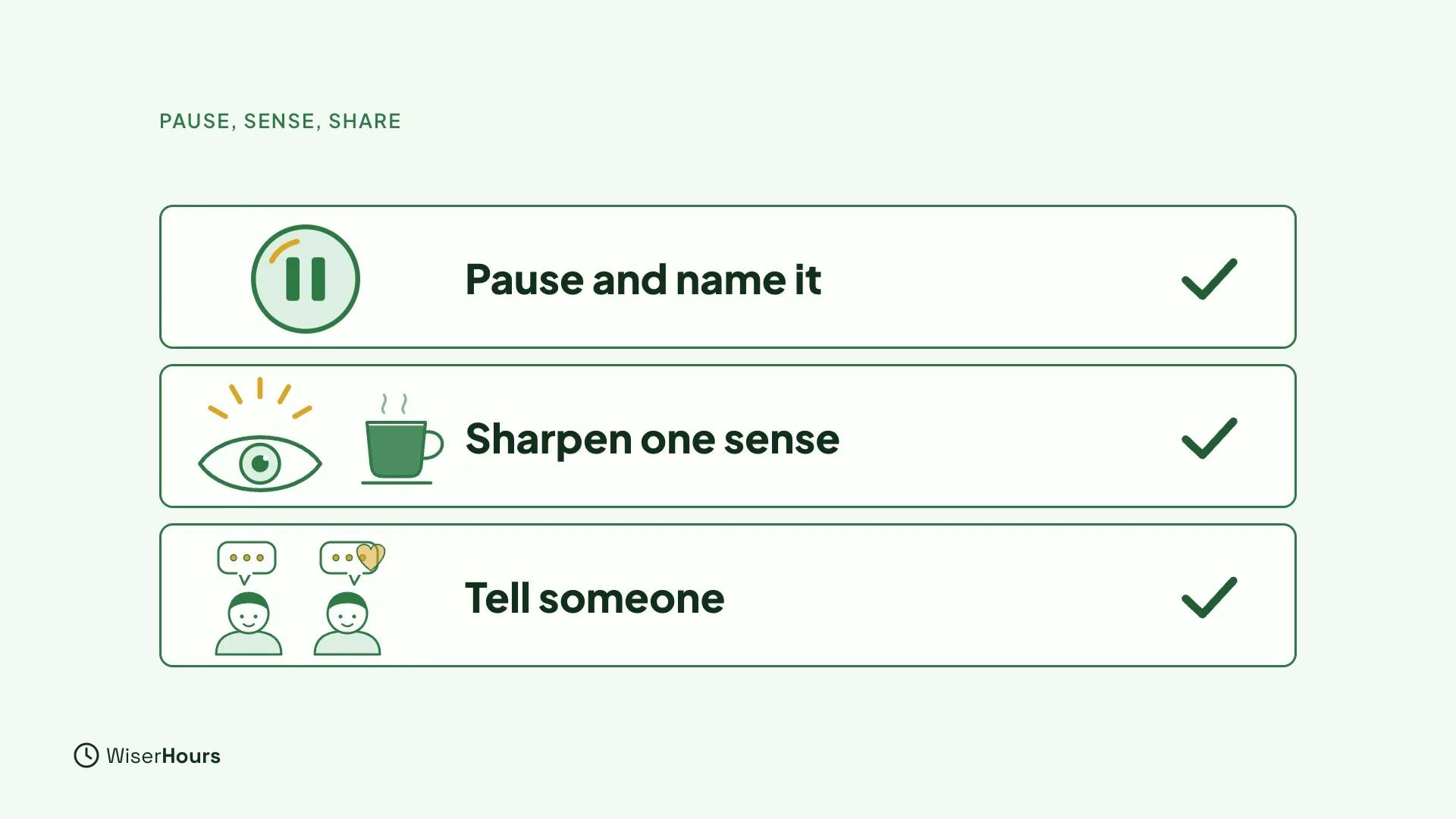
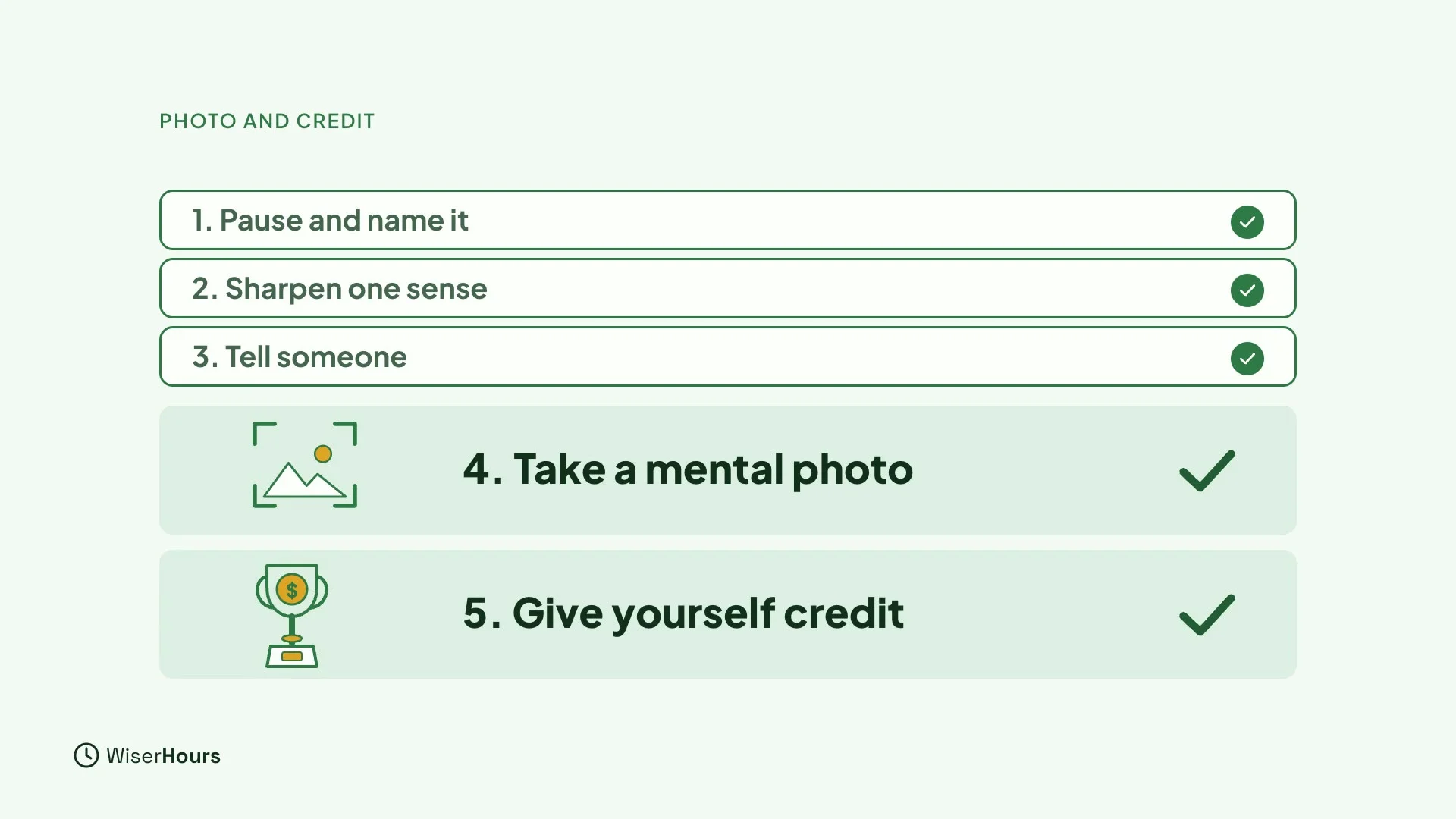
Here is how to do it. First, pause and name the good moment to yourself. Second, sharpen one sense: the taste of your coffee, the warmth of the sun. Third, tell someone about it. Sharing good news is linked to feeling better, especially when the listener is truly interested.
 (opens the full-size picture)
A mental photo, and credit
Fourth, take a mental photograph: look closely, as if you will want to remember this exact scene later. And fifth, give yourself credit when the good thing is something you worked for. You earned that feeling, so let yourself enjoy it. Many of us skip this step and move straight on to the next goal.
 (opens the full-size picture)
Watch for the killjoy thought
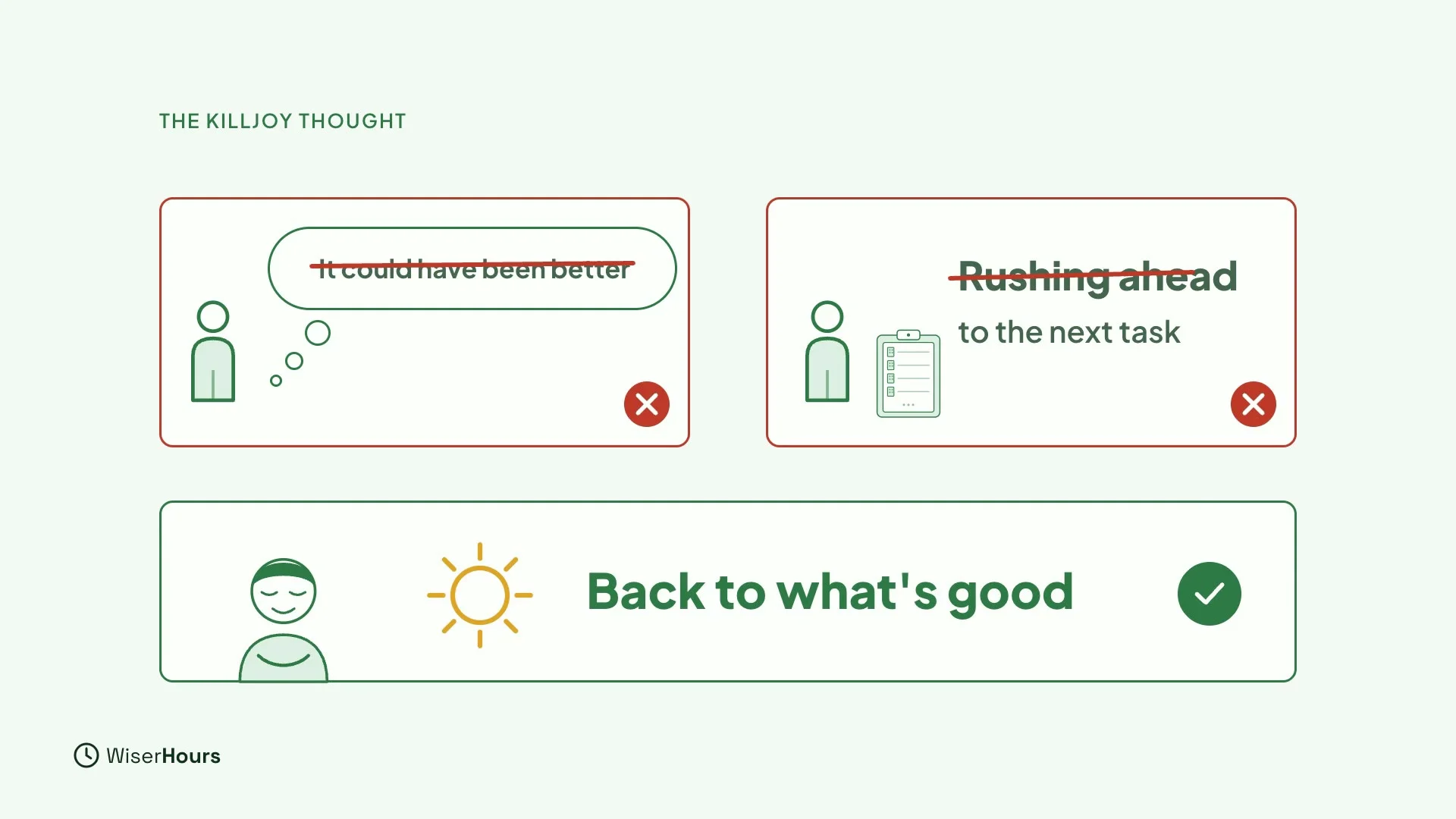
The killjoy thought is noticing how the moment could have been better, or rushing ahead to the next task. It quietly shrinks the good feeling. You do not need to argue with the thought. When you catch it, simply come back to what is good right now: the warmth, the taste, the company.
 (opens the full-size picture)
Not a rule to feel good
You do not have to feel happy all the time. Savoring is only about noticing the good moments that are already there.
YOUR TURN
Read more
- Savoring: The Practice of Noticing Good Moments While They Happen: the full research and the strategies in more detail.
Read the full lesson script
In this lesson, you'll learn to savor good moments: to notice them on purpose and make the good feeling last a little longer.
Savoring means noticing a good experience on purpose, and responding in ways that deepen it or make it last. A good meal, a sunny walk, a kind word: most of these pass by without us really taking them in.
You can savor in three directions. Looking back, by enjoying a good memory. In the moment, by enjoying what's happening now. And looking ahead, by enjoying something you're looking forward to. Whichever way you look, the good feeling happens now.
In trials, short savoring exercises lifted how people felt about their lives. The gain was smaller against fair comparisons, and most programs were short, so treat it as a modest boost that you keep using.
Here's how to do it. First, pause and name the good moment to yourself. Second, sharpen one sense: the taste of your coffee, the warmth of the sun. Third, tell someone about it. Sharing good news is linked to feeling better, especially when the listener is truly interested.
Fourth, take a mental photograph: look closely, as if you'll want to remember this exact scene later. And fifth, give yourself credit when the good thing is something you worked for.
Watch out for the killjoy thought: noticing how the moment could have been better, or rushing ahead to the next task. When you catch it, come back to what's good right now.
So remember: savoring means noticing good moments on purpose. You can look back, stay in the moment, or look ahead. And small habits, like a mental photograph or telling someone, make good feelings last. Before the next lesson, pick one ordinary pleasure tomorrow and savor it for thirty seconds. Next, you'll put your strengths to work.
MAKE IT A SMALL WIN
Finished this lesson?
Mark it complete to save your progress on this device.