Meaning and absorption · Lesson 8 of 11
Strengths and Meaning: Using What You Do Best
See how using your strengths and knowing your values can make days feel more worthwhile, what the research can and can't promise, and how to start.
 Video coming soon
Doing what you are good at, and what matters to you, can make ordinary days feel more worthwhile. In this lesson you will see how to find your strengths and your values, and what the research can and can’t promise.
Find your strengths
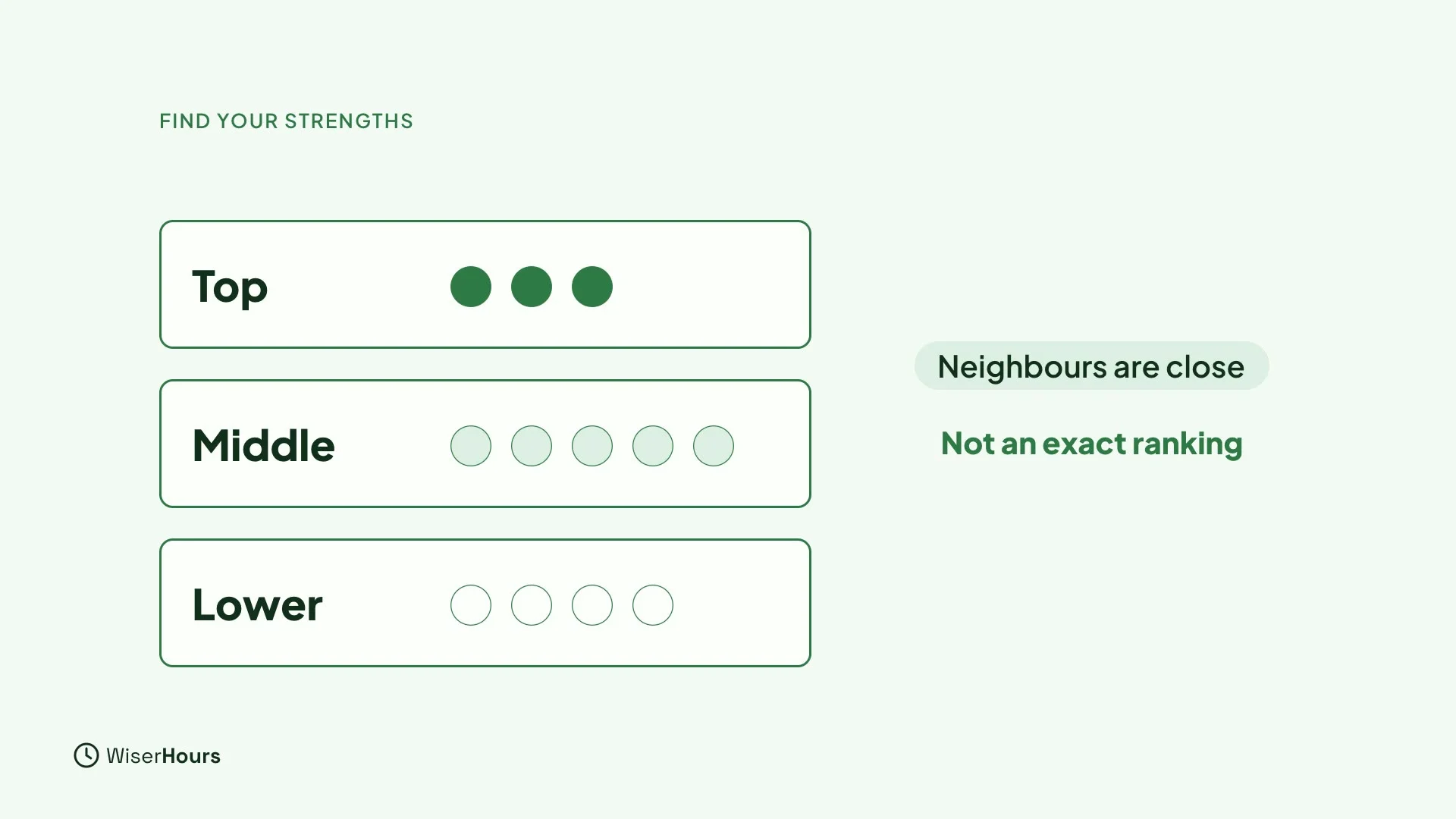
A free online survey ranks 24 character strengths, like curiosity, kindness, humor and perseverance. It takes 10 to 15 minutes. Read your results in rough bands, top, middle and lower, and not as an exact ranking, because neighboring strengths are often close.
 (opens the full-size picture)
Use one in a new way
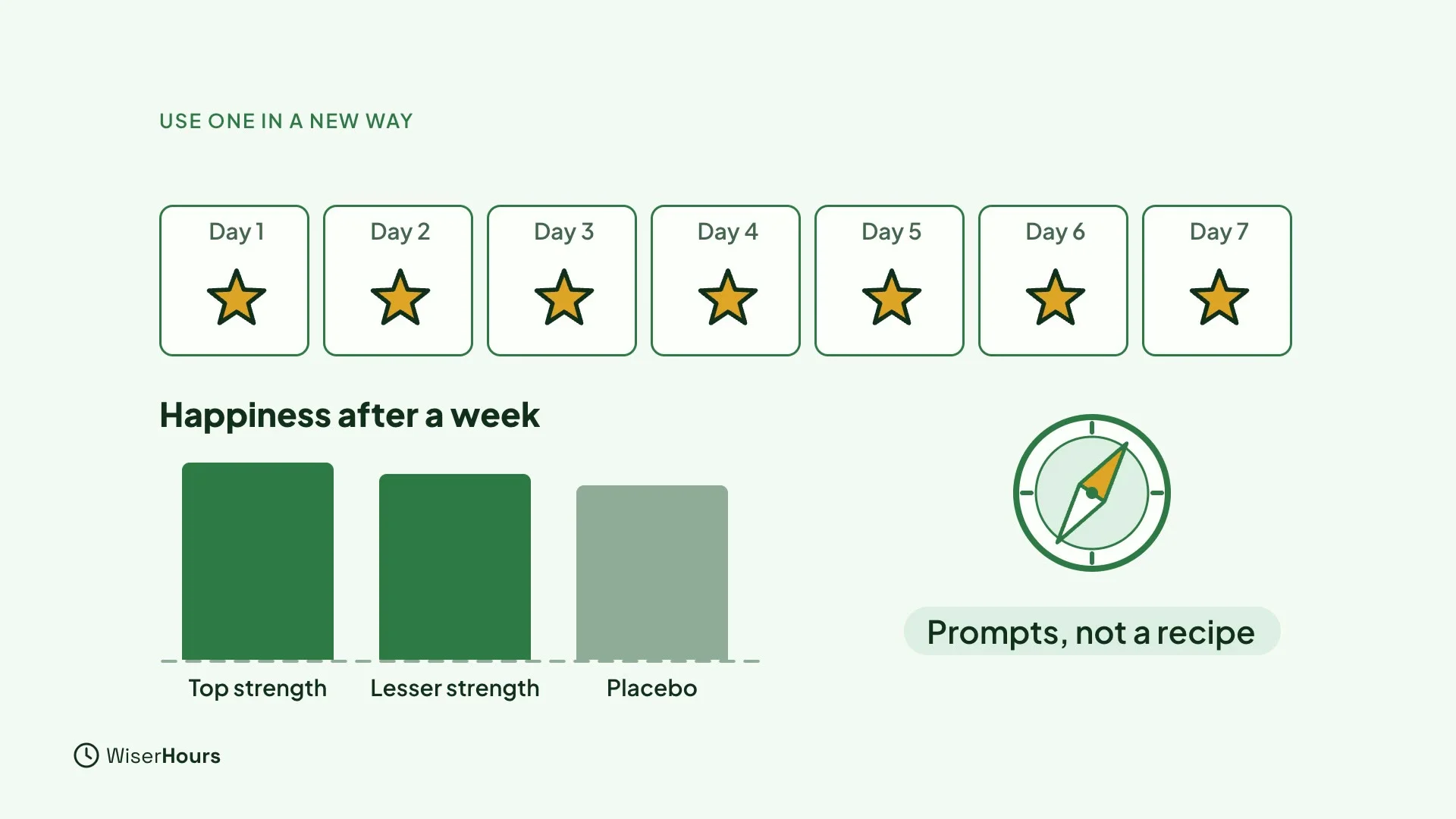
In trials, people who used a top strength in a new way each day for a week became a little happier. But using a lesser strength, or even a placebo exercise, sometimes worked about as well. A placebo exercise is a task meant to feel like an activity without the key ingredient. So treat your results as prompts, not a recipe.
 (opens the full-size picture)
Small effects
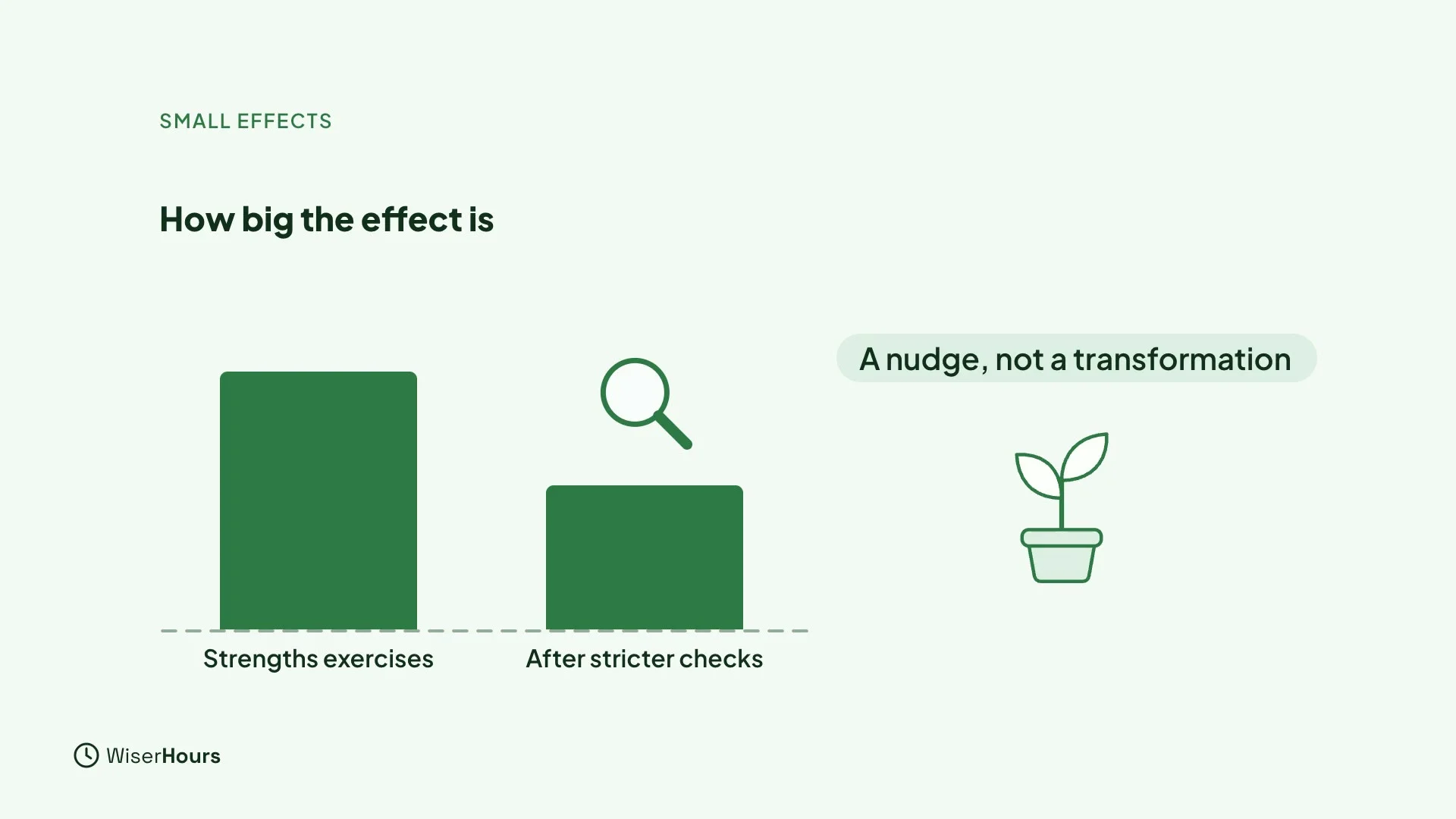
Reviews find small effects for strengths exercises, and smaller still once weaker studies are accounted for. That is still worth having, as long as you expect a nudge, not a transformation.
 (opens the full-size picture)
Know your values
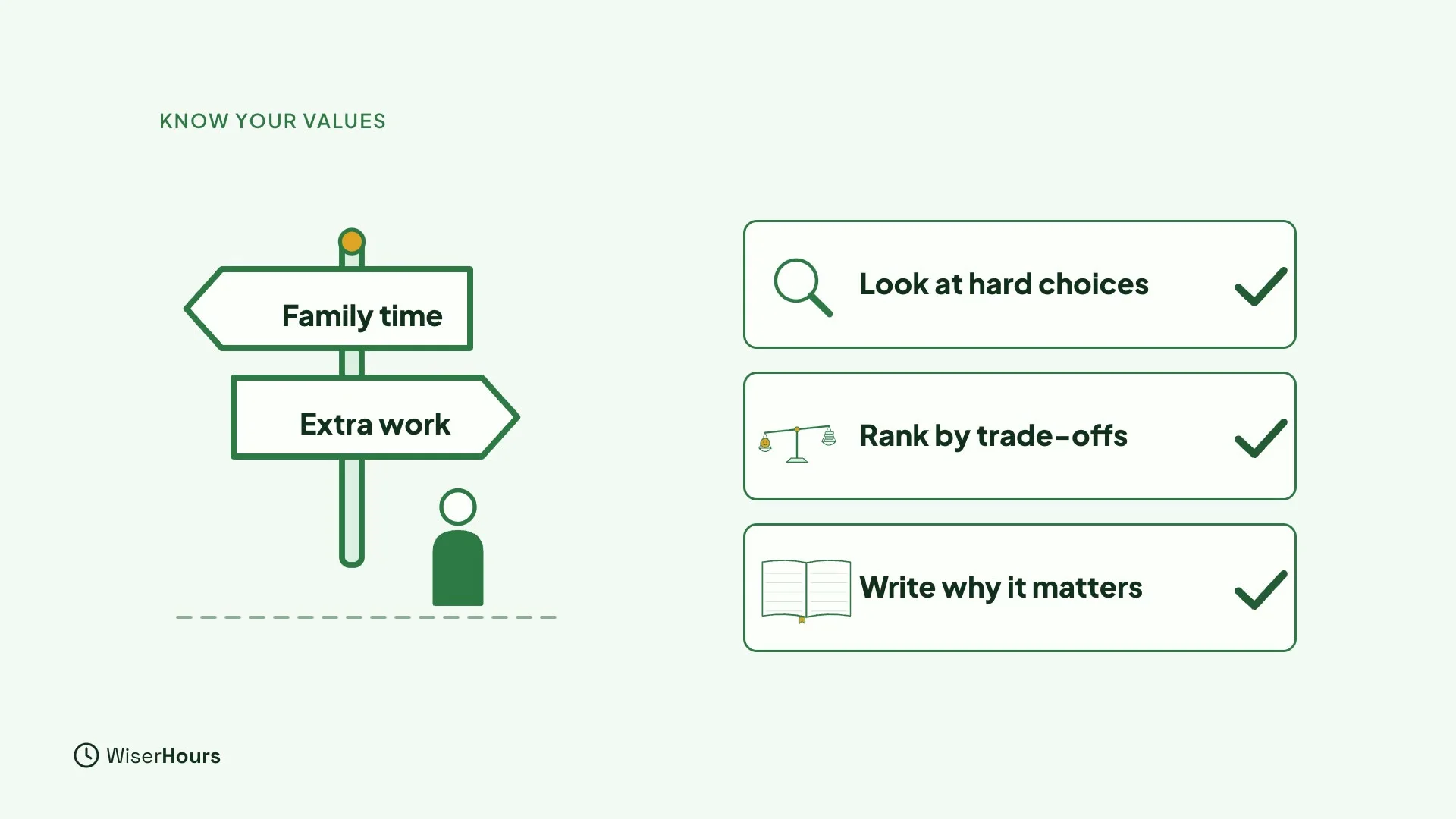
Values work quietly in the background until two of them pull in different directions, like family time and extra work. So look for your values in hard choices you have made. Then rank them by forcing trade-offs, and write down why each one matters to you.
 (opens the full-size picture)
Purpose is not one calling
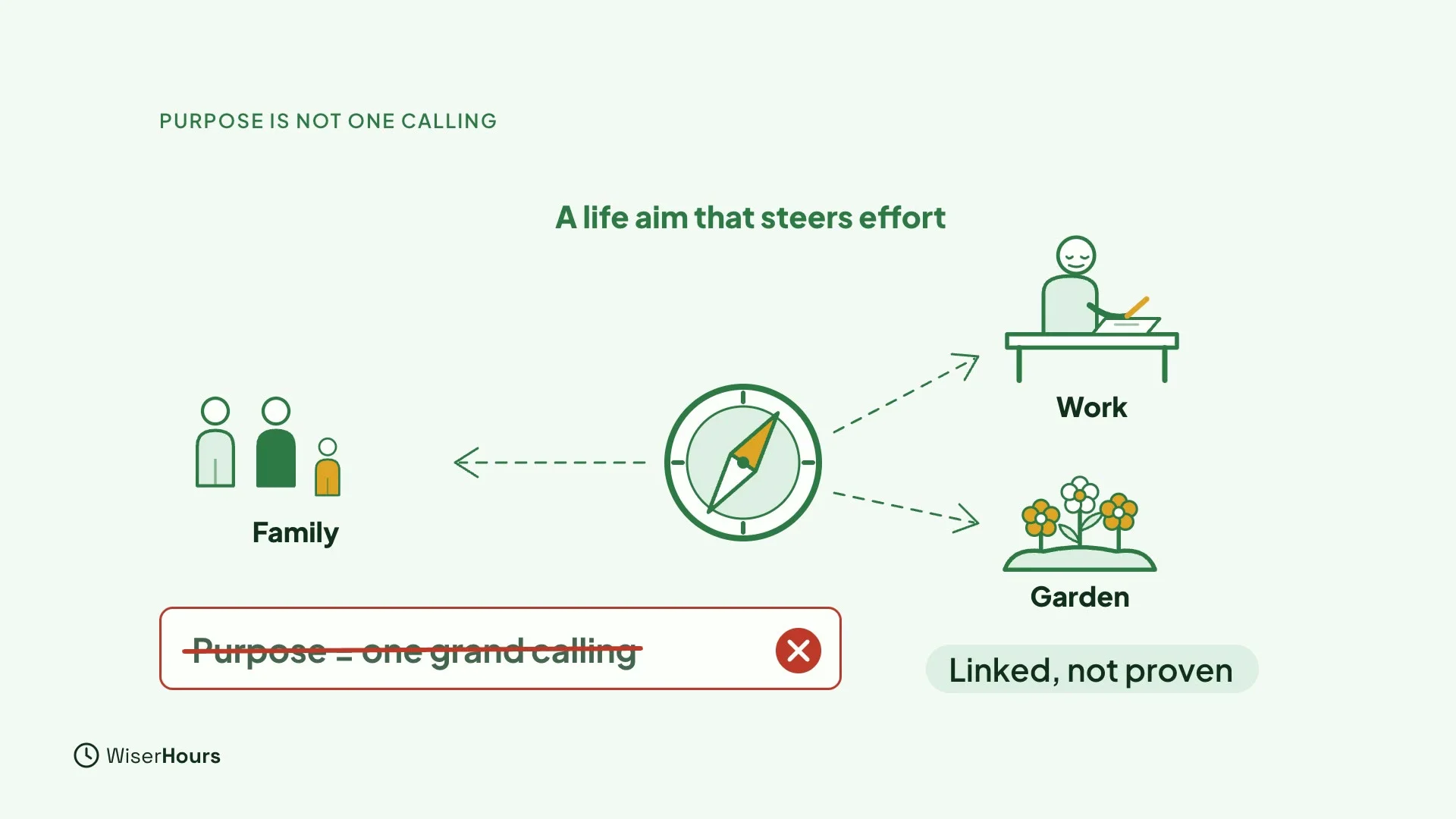
Psychologists describe a sense of purpose as a life aim that steers your effort. Most people have several small purposes, not one grand calling: family, work, a garden. Having a purpose goes with more life satisfaction, though the research cannot prove that finding one will make you happier.
 (opens the full-size picture)
Build it in small steps
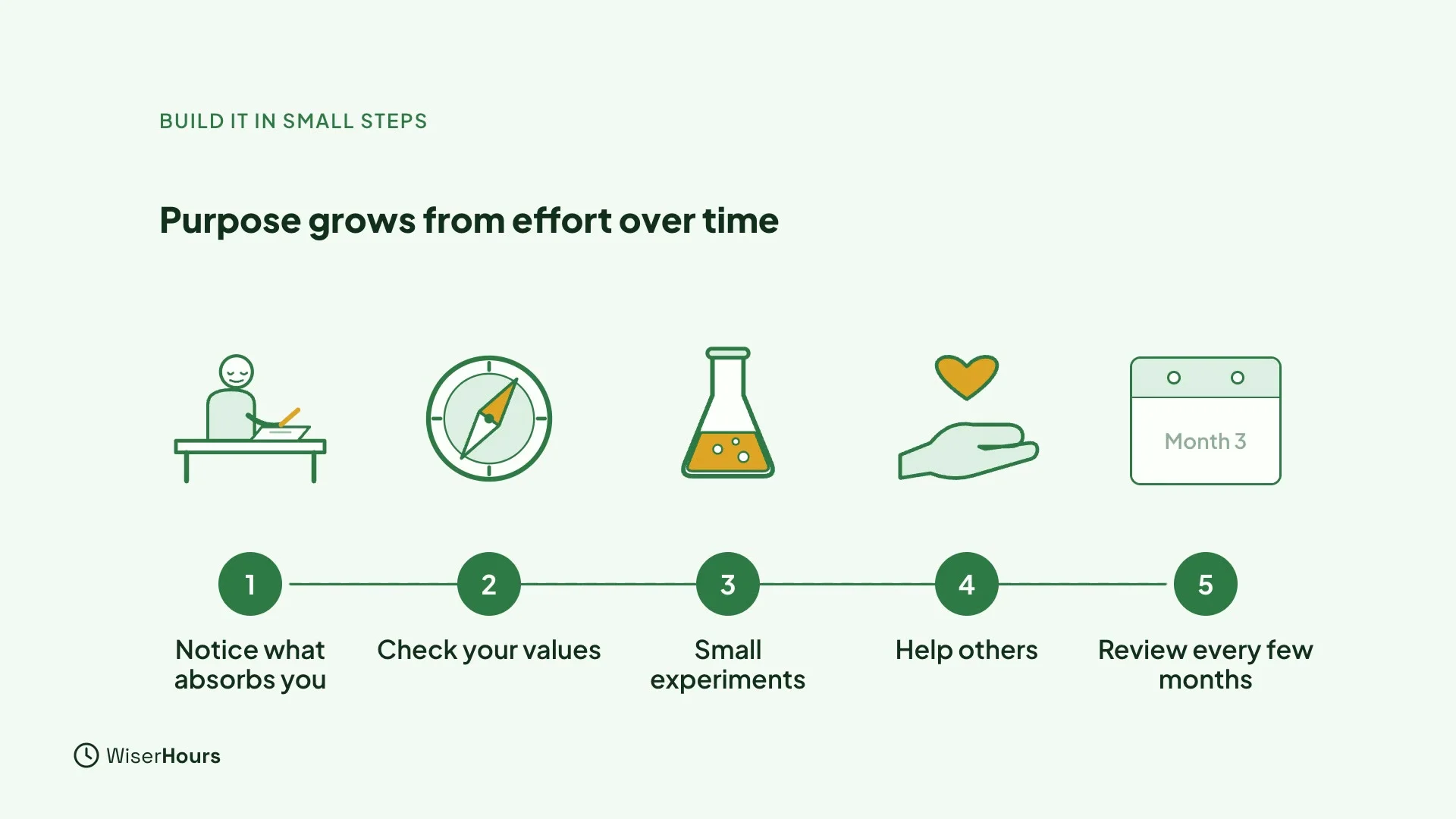
Purpose often grows from effort over time. Notice what absorbs you, check it against your values, test it with small experiments, and add a way to help other people. Then review it every few months.
 (opens the full-size picture)
YOUR TURN
Read more
- Character Strengths: Using the VIA Survey to Do More of What Fits You: how to take the survey and read the results.
- How to Identify Your Core Values: A Step-by-Step Exercise: the values exercise in full.
- What Is a Sense of Purpose? A Research-Based Definition: what researchers mean by purpose.
- How to Find Your Purpose: A Practical, Low-Pressure Guide: the five small steps in more detail.
Read the full lesson script
In this lesson, you'll see how using your strengths and knowing what matters to you can make ordinary days feel more worthwhile, and what the research can and can't promise.
A free online survey ranks twenty-four character strengths, like curiosity, kindness, humour and perseverance. It takes ten to fifteen minutes. Read your results in rough bands, top, middle and lower, not as an exact ranking, because neighbouring strengths are often close.
In trials, people who used a top strength in a new way each day for a week became a little happier. But using a lesser strength, or even a placebo exercise, sometimes worked about as well. So treat your results as prompts, not a recipe.
Reviews find small effects for strengths exercises, and smaller still once weaker studies are accounted for. That's still worth having, as long as you expect a nudge, not a transformation.
Values work quietly in the background until two of them pull in different directions. So look for your values in hard choices you've made. Then rank them by forcing trade-offs, and write down why each one matters to you.
Psychologists describe a sense of purpose as a life aim that steers your effort. Most people have several small purposes, not one grand calling. Having a purpose goes with more life satisfaction, though the research can't prove that finding one will make you happier.
Purpose often grows from effort over time. Notice what absorbs you, check it against your values, test it with small experiments, and add a way to help other people. Then review it every few months.
So remember: use a strength in a new way, and expect a nudge, not a miracle. Find your values in your hard choices. And grow purpose in small steps. Before the next lesson, pick one of your strengths and use it in a new way this week. Next, you'll see how getting absorbed in what you do lifts your days.
MAKE IT A SMALL WIN
Finished this lesson?
Mark it complete to save your progress on this device.