What happiness is · Lesson 3 of 11
Money and Happiness: What It Can and Can't Buy
See how strong the link between money and happiness really is, where money helps most, and which questions to ask before you spend.
 Video coming soon
In this lesson you will see what research says about money and happiness: how strong the link really is, why lottery winners are a useful test and where money helps most. The findings are averages from large groups, not promises for any one person.
A real but weak link
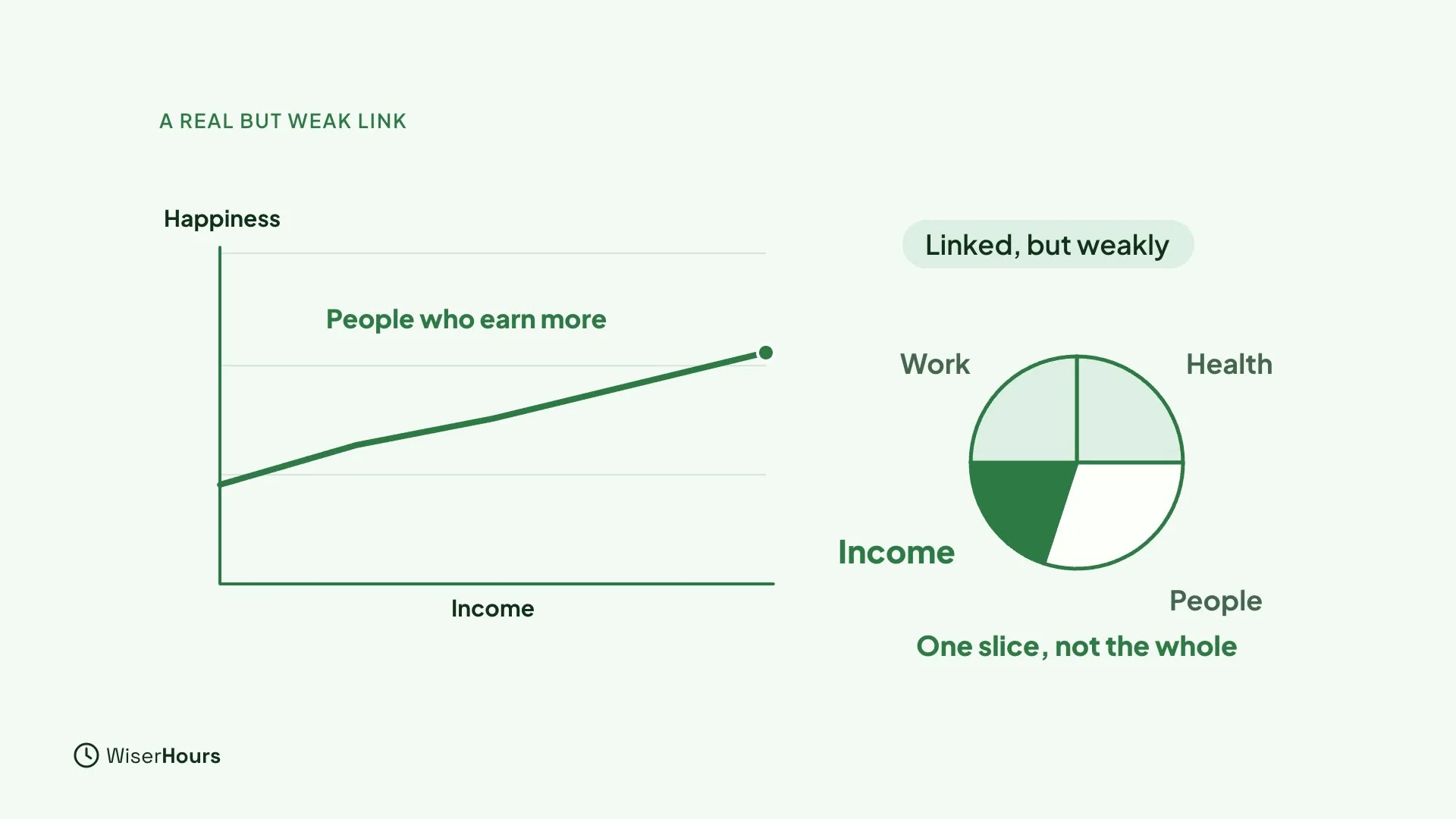
Money and happiness are linked, but weakly. In large surveys, people who earn more tend to feel a little better day to day, and they rate their lives a bit higher. Income is one part of a good life, not the whole of it.
 (opens the full-size picture)
The plateau myth
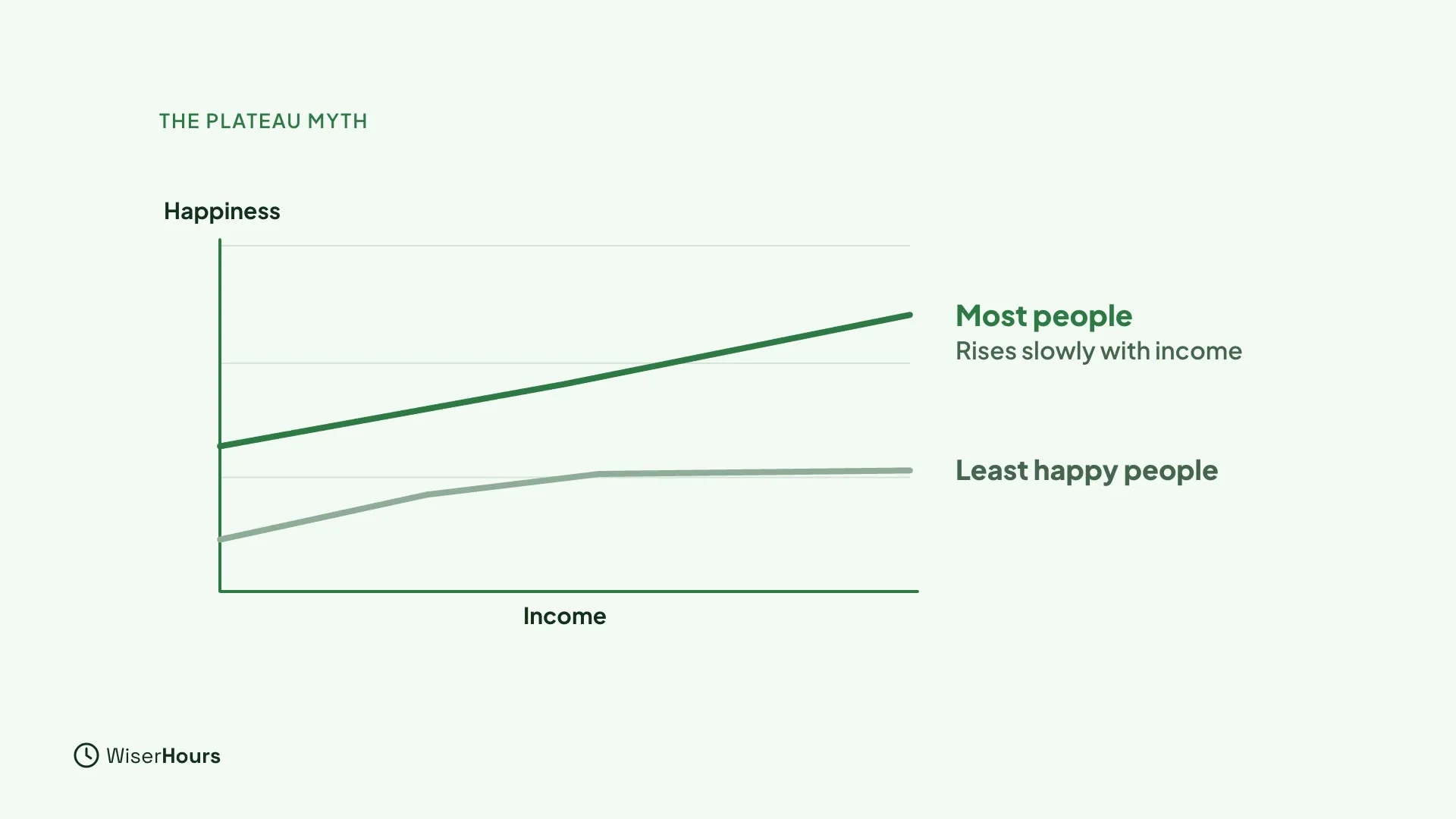
You may have heard that happiness stops rising above a certain income. That idea came from one well-known study. Later, rival research teams rechecked the data together. The flat line showed up only for the least happy people. For most people, day-to-day happiness kept rising slowly with income.
 (opens the full-size picture)
What lottery winners tell us
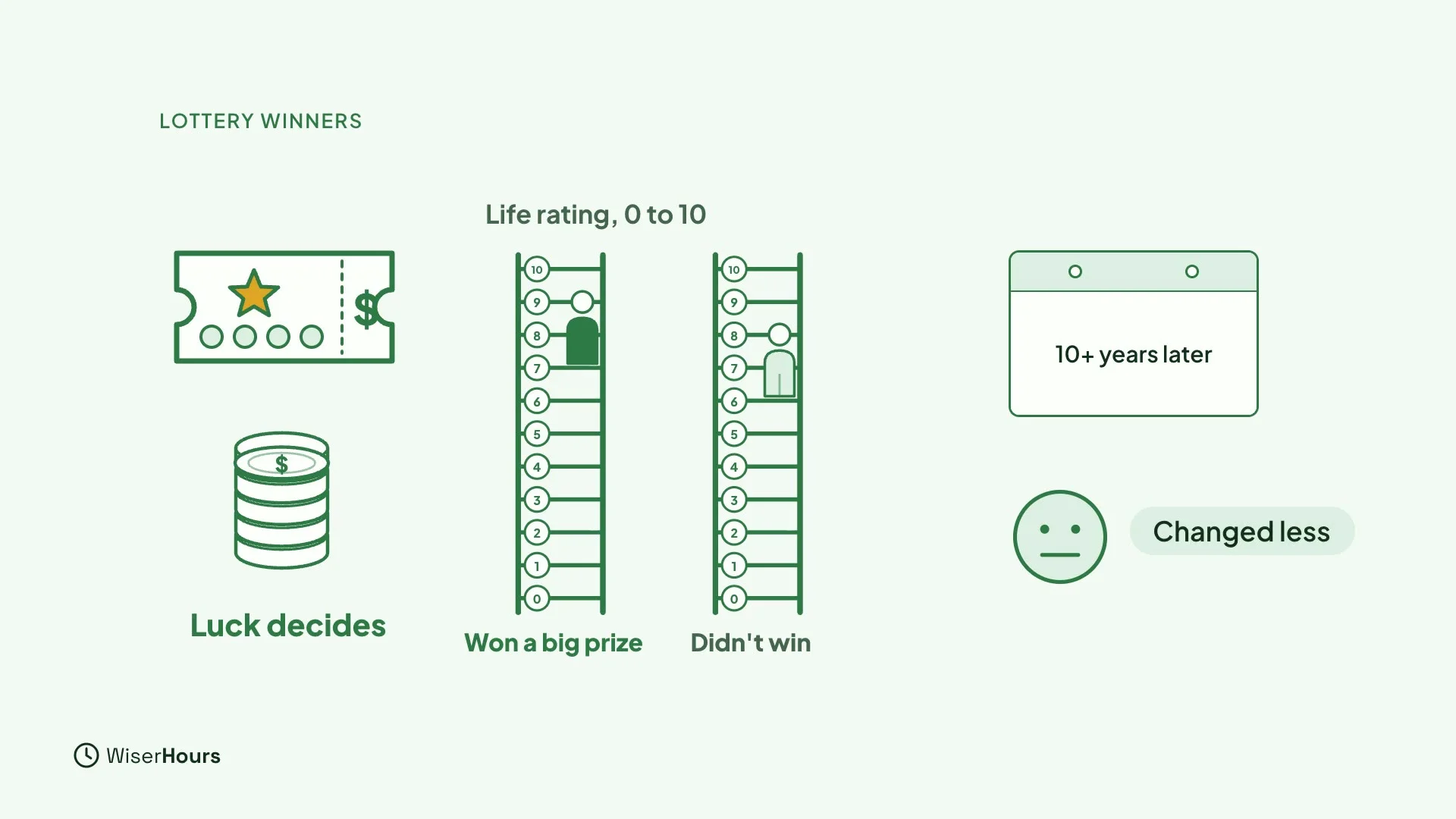
Lottery winners make a good test, because luck decides who gets the money. In one large study, people who won big prizes rated their lives higher than similar players who didn’t, and the difference lasted for over a decade. Their everyday mood and mental health changed less.
In other words, a big win lifted how people judged their lives more than how happy they felt from hour to hour. That echoes the two kinds of happiness from the first lesson.
 (opens the full-size picture)
How money helps
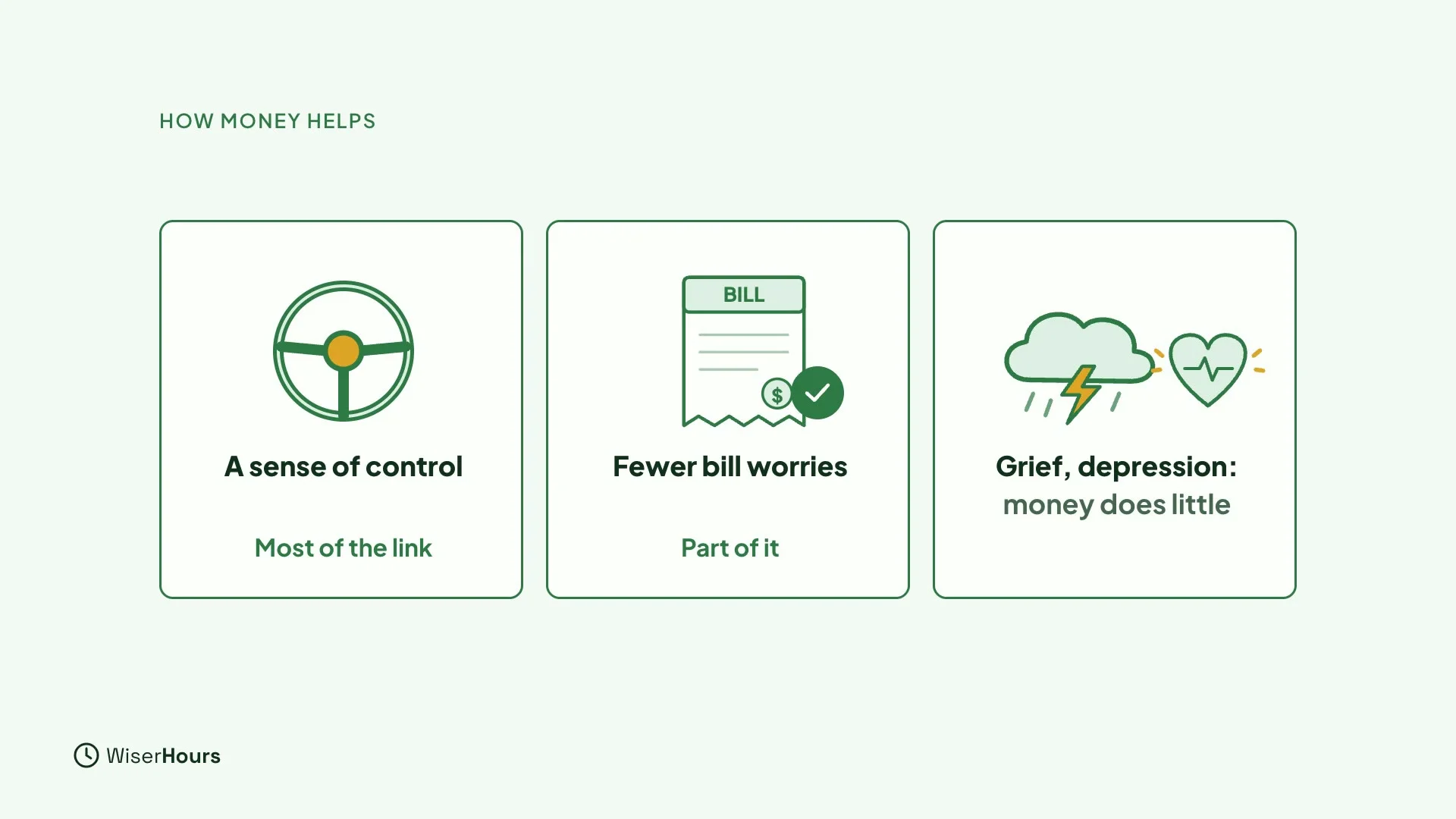
Why does money help? In the data, most of the link ran through a sense of control over your life, and part of it through fewer worries about paying bills. Money can make hard days easier, but it does little for problems like grief or depression.
 (opens the full-size picture)
Money as a scorecard
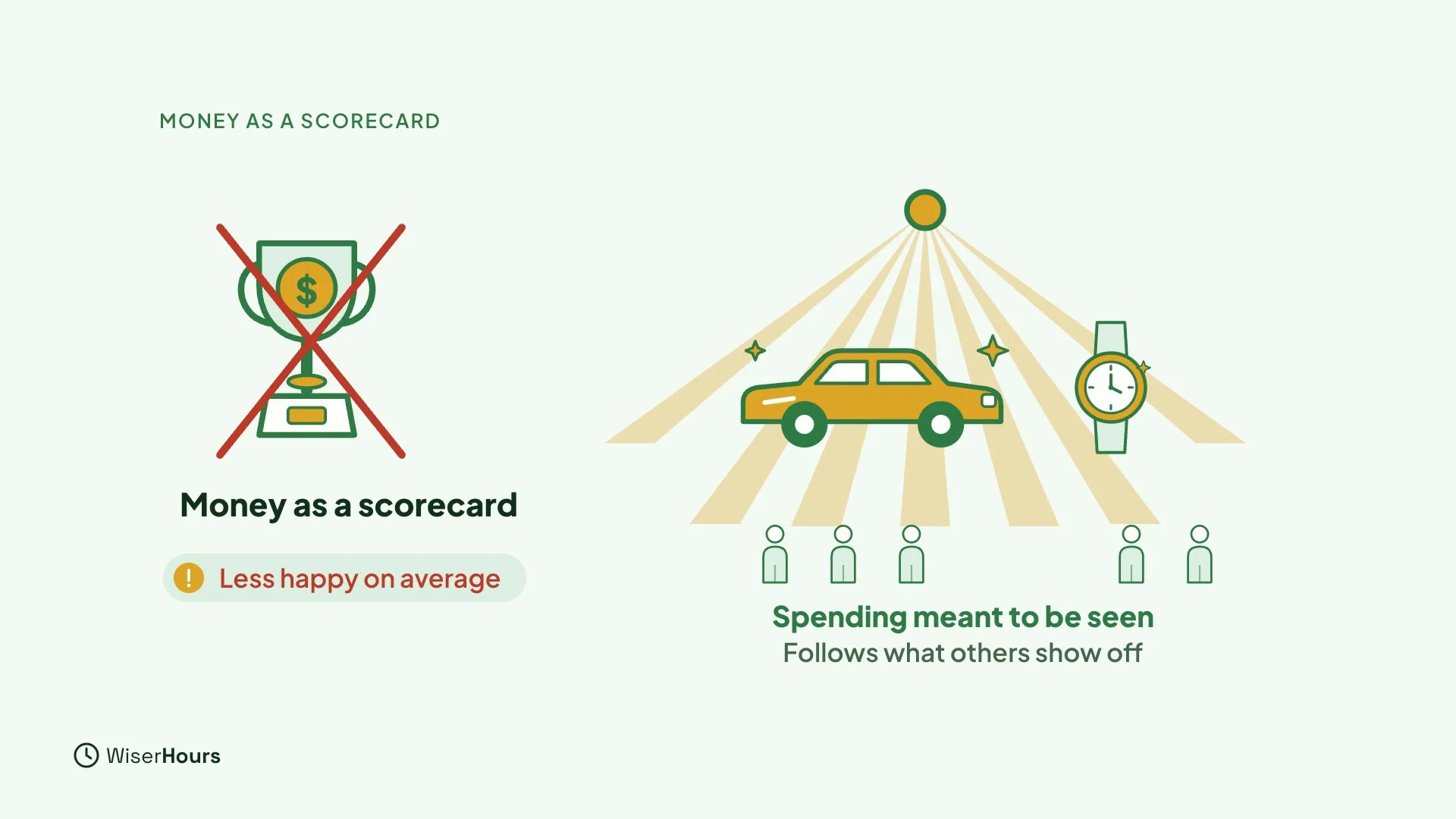
One more finding. People who most strongly saw money as a measure of success were less happy on average, and at no income level did that view go with more happiness.
Spending meant to be seen, like flashy cars or watches, often tracks what the people around us show off, not what makes us happier.
 (opens the full-size picture)
Better questions about money
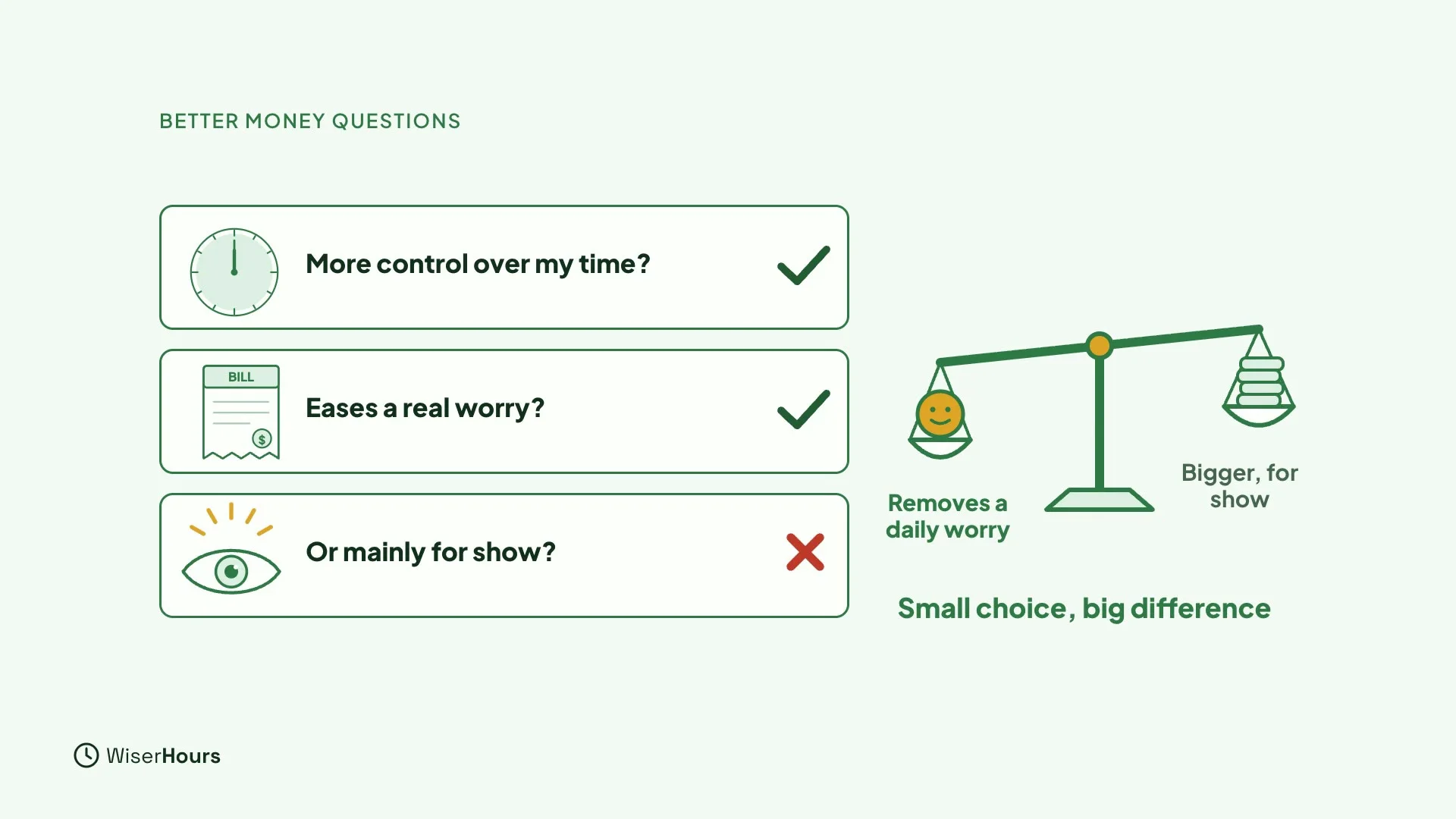
So when you think about money and happiness, ask better questions. Would this raise or purchase give me more control over my time, or ease a real money worry? Or is it mainly for show? A smaller choice that removes a daily worry can matter more than a bigger one that doesn’t.
 (opens the full-size picture)
YOUR TURN
This is general education, not personal financial advice. If money worries are weighing on you, a qualified professional can look at your own situation.
Read more
- Does Money Buy Happiness? How the Research Has Evolved: the plateau debate, lottery winners and what the data can and can’t say.
Read the full lesson script
In this lesson, you'll see what research says about money and happiness: how strong the link really is, why lottery winners are a useful test, and where money helps most.
Money and happiness are linked, but weakly. In large surveys, people who earn more tend to feel a little better day to day, and they rate their lives a bit higher. Income is one part of a good life, not the whole of it.
You may have heard that happiness stops rising above a certain income. That idea came from one well-known study. Later, rival research teams rechecked the data together. The flat line showed up only for the least happy people. For most people, day-to-day happiness kept rising slowly with income.
Lottery winners make a good test, because luck decides who gets the money. In one large study, people who won big prizes rated their lives higher than similar players who didn't, and the difference lasted for over a decade. Their everyday mood and mental health changed less.
Why does money help? In the data, most of the link ran through a sense of control over your life, and part of it through fewer worries about paying bills. Money can make hard days easier, but it does little for problems like grief or depression.
One more finding. People who most strongly saw money as a measure of success were less happy on average, and at no income level did that view go with more happiness. And spending meant to be seen, like flashy cars or watches, often tracks what the people around us show off, not what makes us happier.
So when you think about money and happiness, ask better questions. Would this raise or purchase give me more control over my time, or ease a real money worry? Or is it mainly for show? A smaller choice that removes a daily worry can matter more than a bigger one that doesn't.
So remember: money and happiness are linked, but weakly. Most of the link runs through control and fewer worries. And money spent for show rarely adds much. Before the next lesson, name the one money worry that takes up the most room in your head, and write one small step to ease it. Next, you'll see why relationships matter most.
MAKE IT A SMALL WIN
Finished this lesson?
Mark it complete to save your progress on this device.