Traps and your plan · Lesson 11 of 11
Your Happiness Experiments: A Two-Week Plan
Turn what you have learned into two small experiments, measure whether they help, and keep what works for you.
 Video coming soon
This is the last lesson, so now you turn what you have learned into a plan. You will choose two small experiments to run over the next two weeks, and a simple way to tell whether they help you.
Why treat ideas as experiments
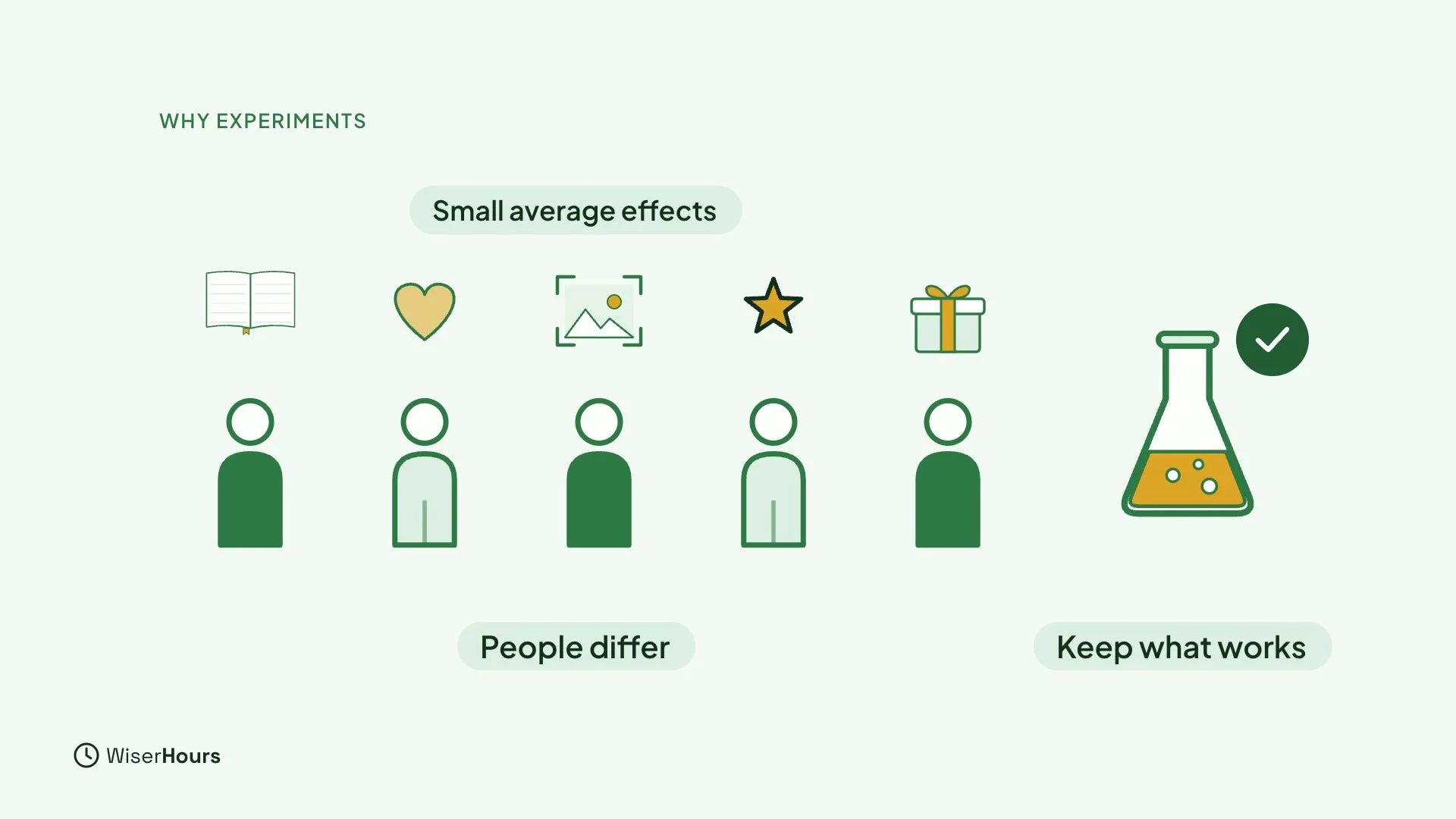
Every idea in this course has small average effects, and people differ. What works well for one person may do little for another. So instead of trying everything at once, treat each idea as an experiment and keep what works for you.
 (opens the full-size picture)
Pick two
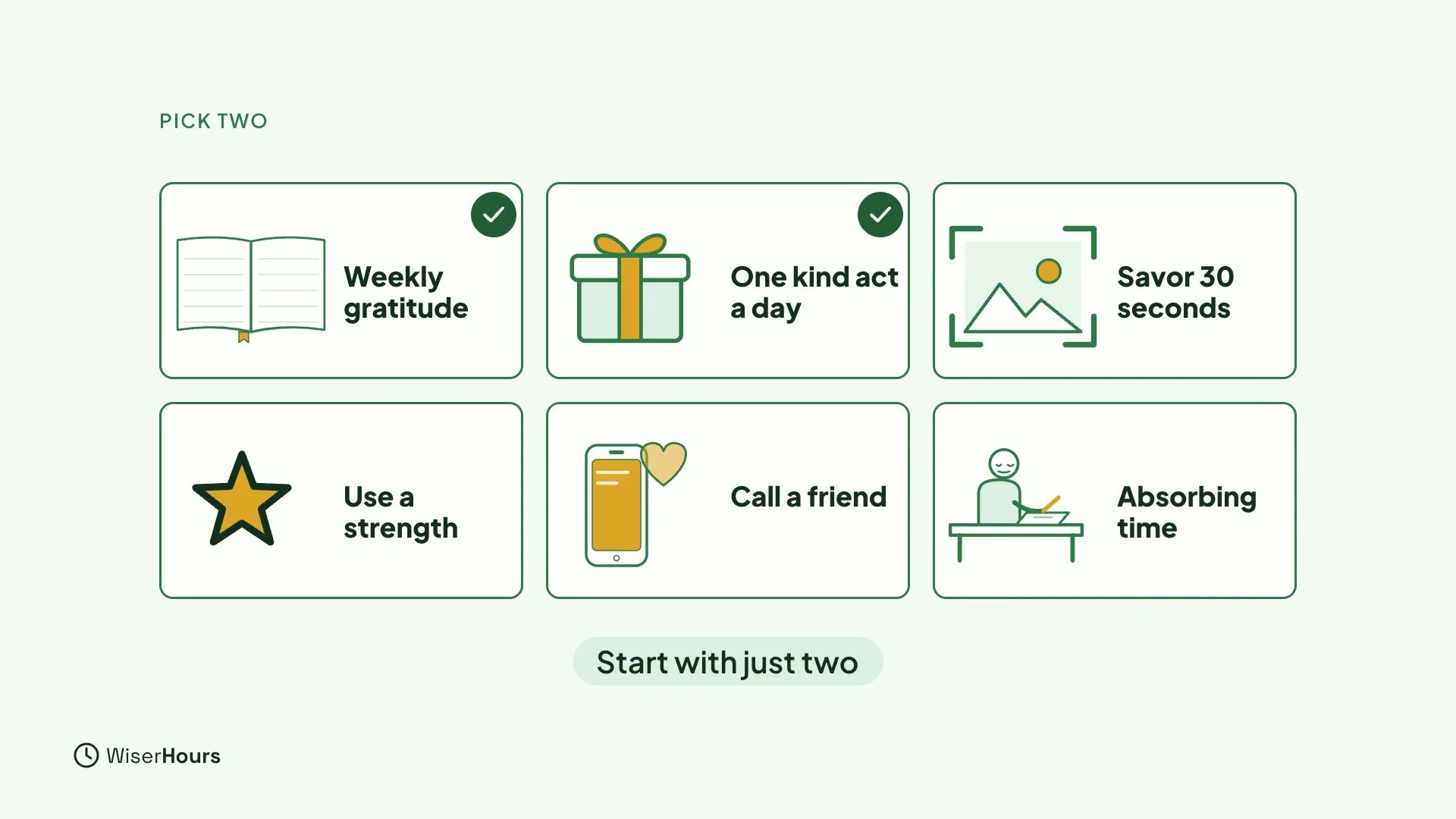
Start by picking two. Choose from what you have learned: a weekly gratitude list, one small kind act a day, thirty seconds of savoring, using a strength in a new way, a regular call with a friend, or a protected block of absorbing time. Two is enough. More than that and each one gets less attention.
 (opens the full-size picture)
Make each one concrete
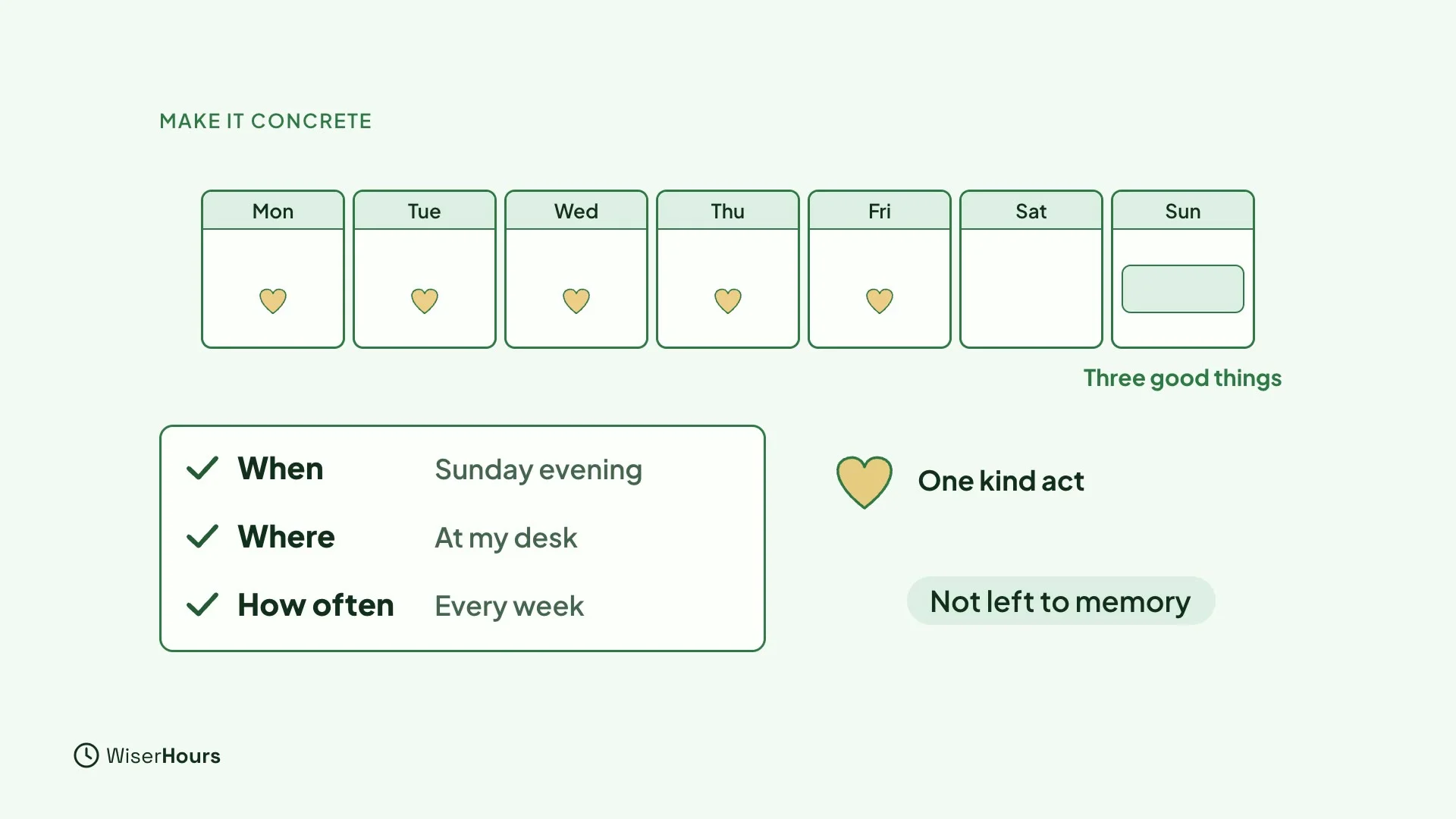
Make each one concrete. Decide when, where and how often. For example, every Sunday evening, at your desk, write three good things from the week and why they happened. Then put both experiments in your calendar, so they do not depend on remembering.
 (opens the full-size picture)
Measure simply
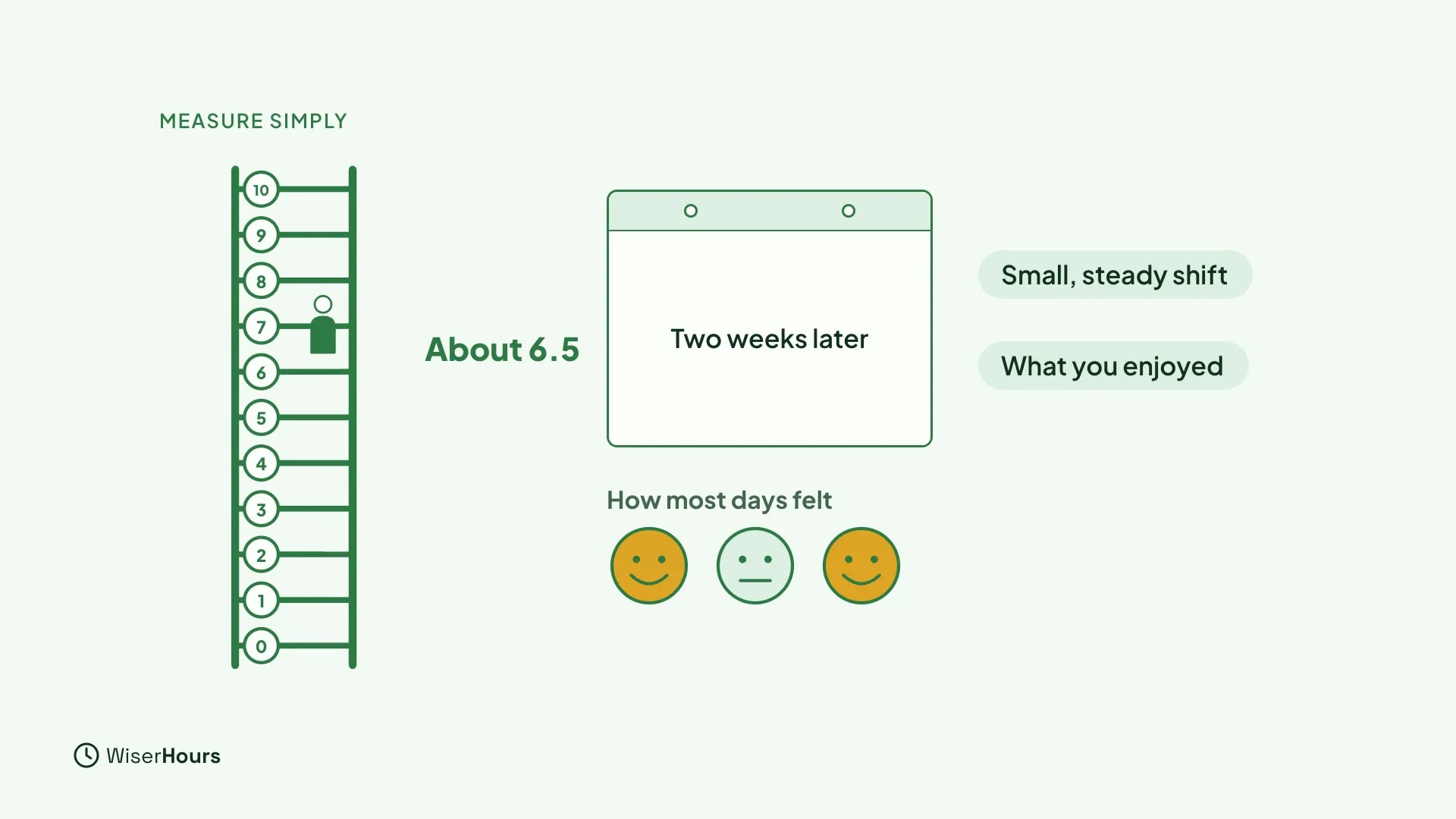
Before you start, rate your life on the zero to ten ladder, and note how most days have felt. After two weeks, rate it again. Do not expect a big jump. Look for a small, steady shift, and notice which experiment you actually enjoyed.
 (opens the full-size picture)
Keep, change or swap
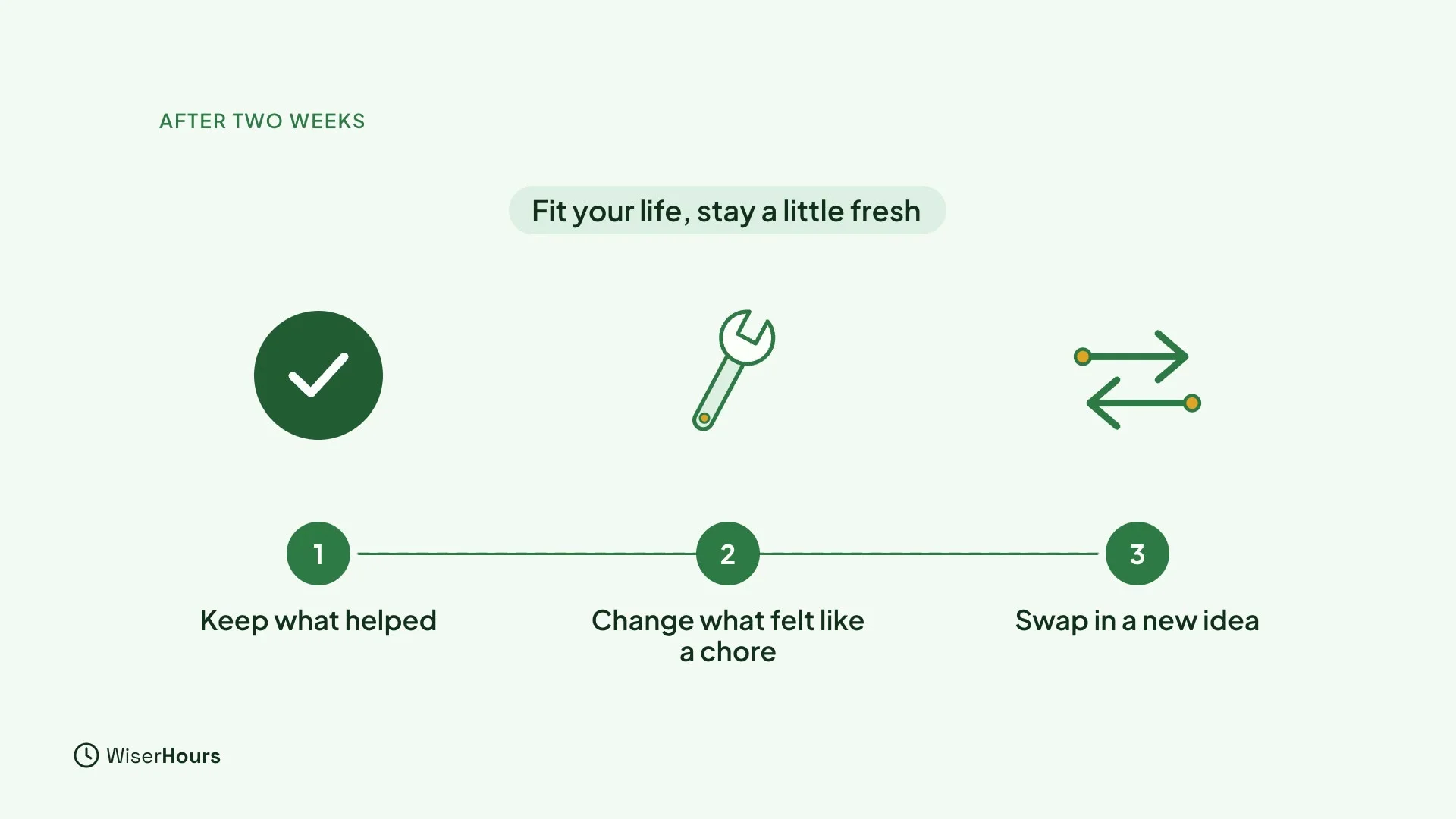
After two weeks, keep what helped, change what felt like a chore, and swap in a new idea if nothing changed. Happiness habits work best when they fit your life and stay a little fresh.
 (opens the full-size picture)
When to get help
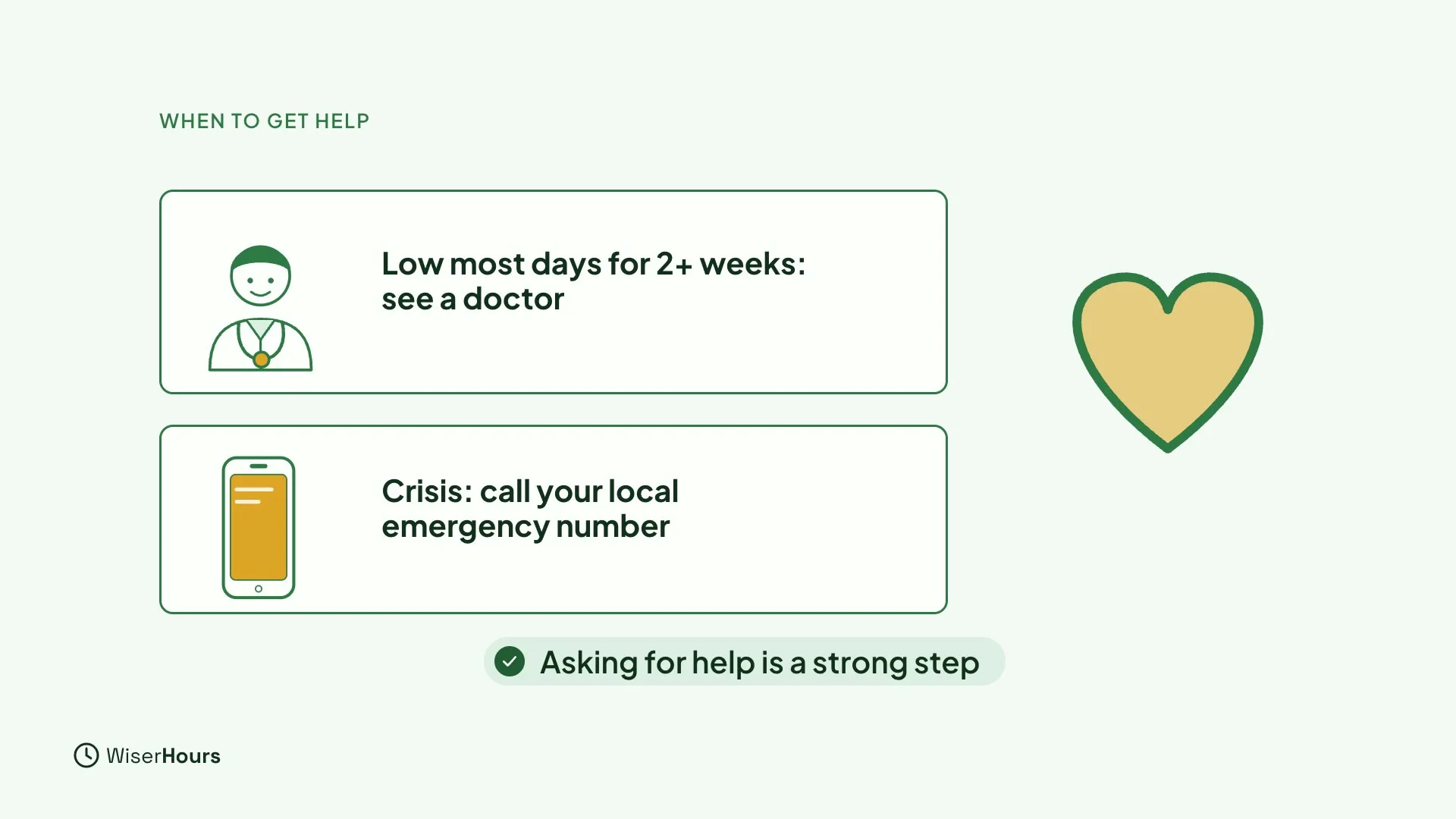
These experiments are for ordinary ups and downs. If you have felt low, empty or lost interest most days for two weeks or more, talk to a doctor. In a crisis, call your local emergency number. Asking for help is a strong, sensible step.
 (opens the full-size picture)
YOUR TURN
My two-week happiness plan
Well done for finishing the course.
Read more
- The PERMA Model Explained: five elements of wellbeing to help you choose your experiments.
- Gratitude Journaling: how to keep a weekly gratitude list that does not turn into homework.
- Savoring: simple ways to make good moments last.
- Languishing: what to do when life feels flat, and when to see a doctor.
Read the full lesson script
In this last lesson, you'll turn what you've learned into a simple plan: two small happiness experiments you can run over the next two weeks, and a way to tell whether they help you.
Every idea in this course has small average effects, and people differ. What works well for one person may do little for another. So instead of trying everything at once, treat each idea as an experiment and keep what works for you.
Start by picking two. Choose from what you've learned: a weekly gratitude list, one small kind act a day, thirty seconds of savoring, using a strength in a new way, a regular call with a friend, or a protected block of absorbing time.
Make each one concrete. Decide when, where and how often. For example, every Sunday evening, write three good things and why they happened. Put both experiments in your calendar, so they don't depend on remembering.
Then measure, simply. Before you start, rate your life on the zero to ten ladder, and note how most days have felt. After two weeks, rate it again. Don't expect a big jump. Look for a small, steady shift, and notice which experiment you actually enjoyed.
After two weeks, keep what helped, change what felt like a chore, and swap in a new idea if nothing changed. Happiness habits work best when they fit your life and stay a little fresh.
One last reminder. These experiments are for ordinary ups and downs. If you've felt low, empty or lost interest most days for two weeks or more, talk to a doctor. And in a crisis, call your local emergency number. Asking for help is a strong, sensible step.
So remember: treat happiness ideas as small experiments. Pick two, make them concrete, and measure simply. And keep what works for you. Before you finish, choose your two experiments and put them in your calendar for the next two weeks. Well done for finishing The Science of Happiness.
MAKE IT A SMALL WIN
Finished this lesson?
Mark it complete to save your progress on this device.