What happiness is · Lesson 2 of 11
Why We Guess Wrong About What Will Make Us Happy
See why we expect events to hit harder and last longer than they do, and learn habits for making better guesses about your own life.
 Video coming soon
Almost every big choice rests on a guess about how you will feel afterwards. In this lesson you will see why those guesses are so often wrong, and how to make better guesses about your own life.
We expect too much, for too long
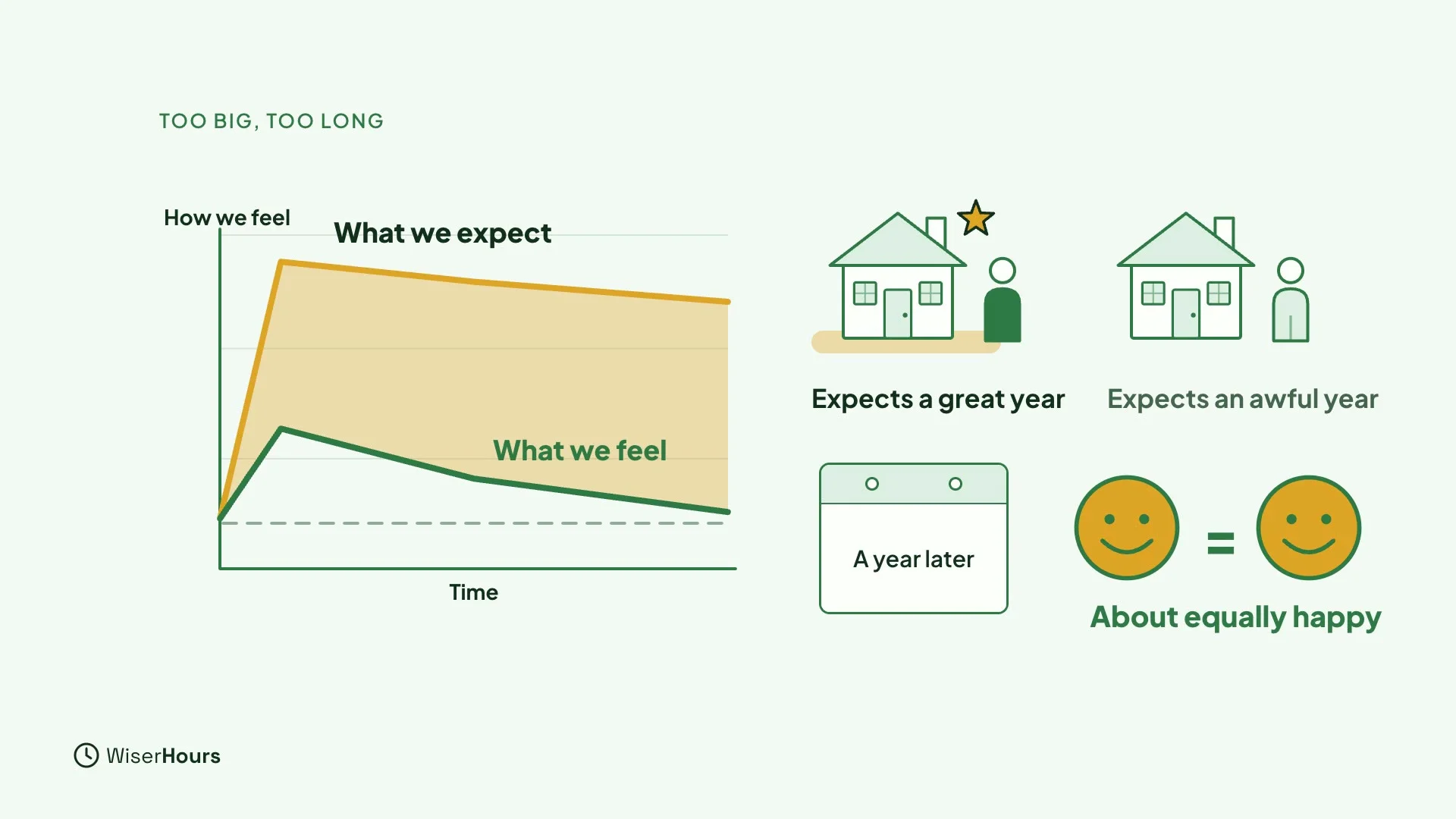
When we imagine a future event, we expect it to hit harder and last longer than it really does. In one study, students waiting to hear which campus house they would live in expected a great year or an awful one, depending on the house. A year later, both groups were about equally happy.
Researchers call this the impact bias. The bump we picture is taller and wider than the one we actually feel.
 (opens the full-size picture)
We focus on one detail
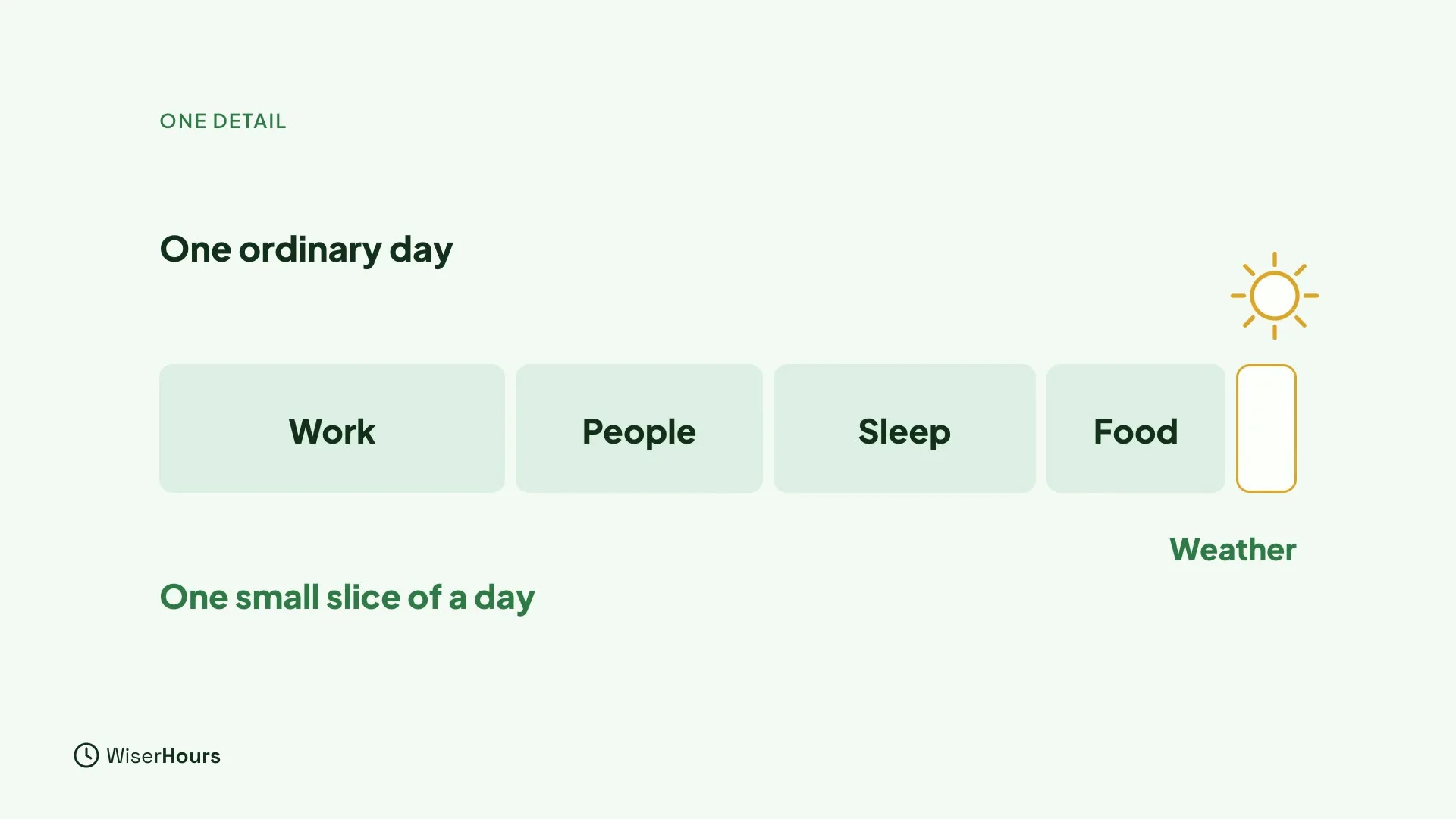
Part of the reason is that we focus on one detail and forget the rest of life. In another study, people expected those living in sunny California to be happier than people in the colder Midwest. In fact, their life ratings were about the same.
Weather is just one small part of a day. Work, people, sleep and food fill far more of it, and they come with you wherever you live.
 (opens the full-size picture)
We bounce back
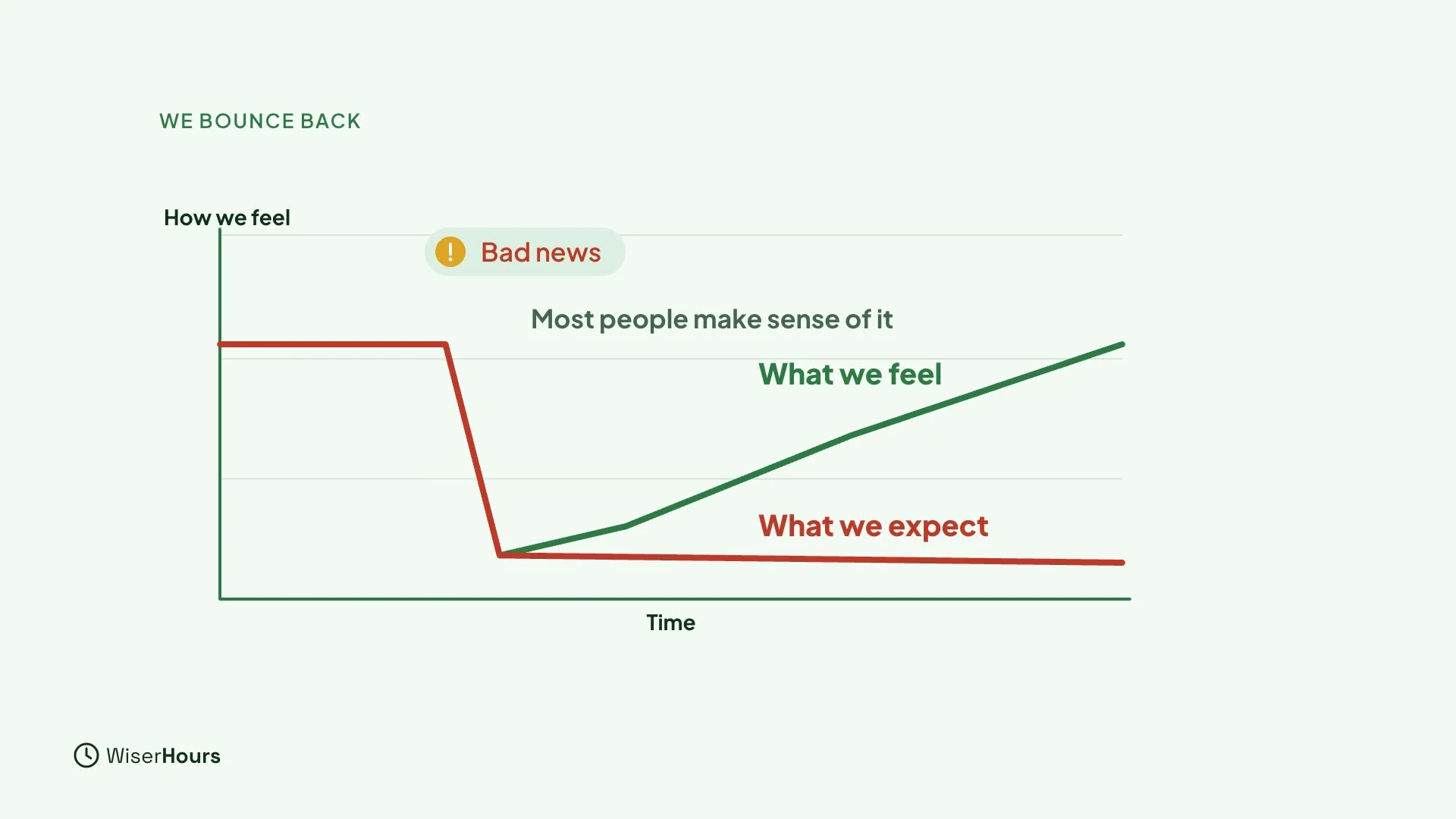
We also forget how well we cope. After bad news, most people slowly make sense of what happened and find a way forward. When we picture a setback in advance, we leave that part out, so we expect to feel worse for longer than we do.
 (opens the full-size picture)
We get used to things
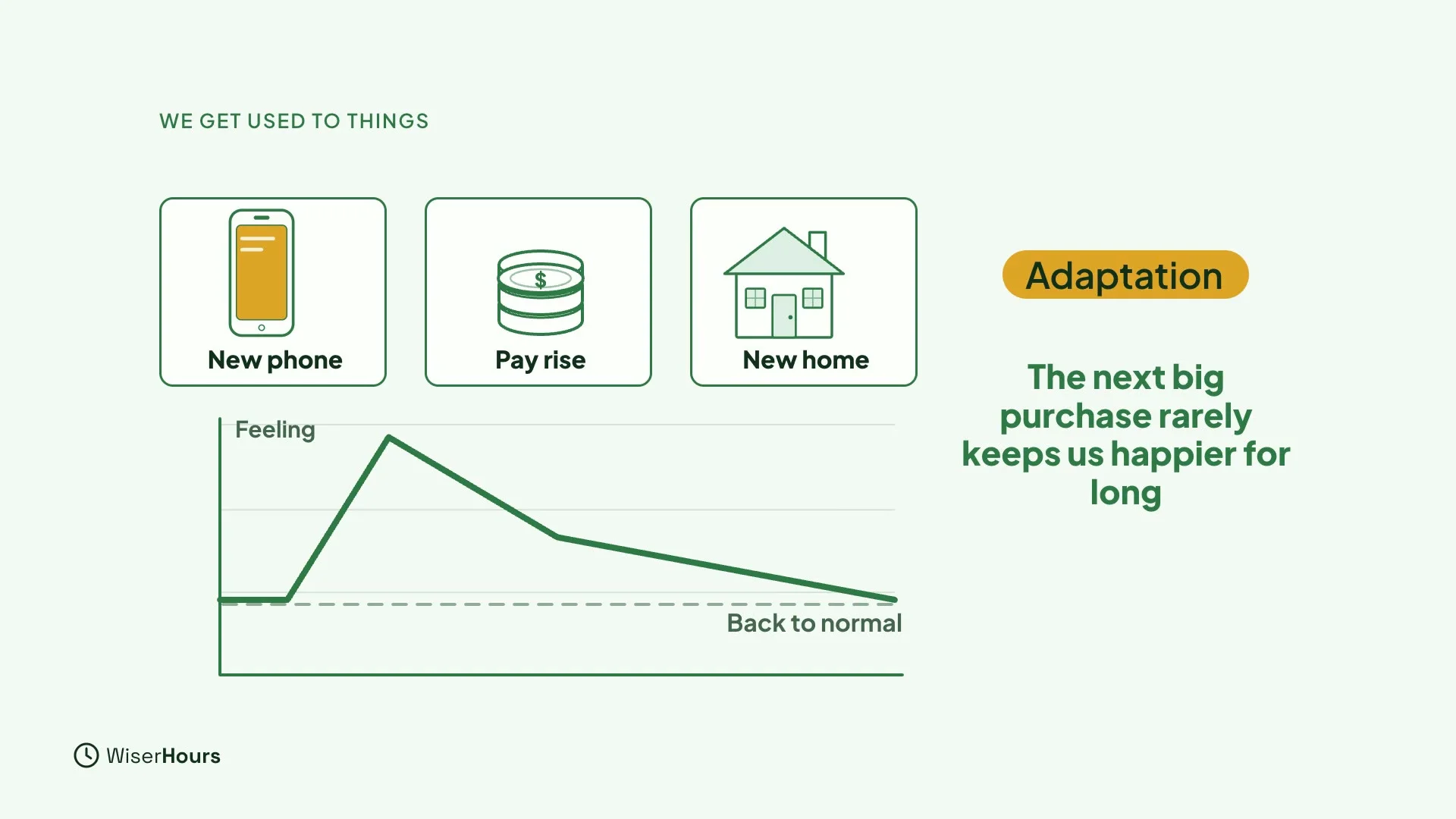
We also get used to change. A new phone, a pay rise or a new home feels great at first, then slowly becomes normal. Researchers call this adaptation, and it is one reason the next big purchase rarely keeps us happier for long.
 (opens the full-size picture)
But not everything fades
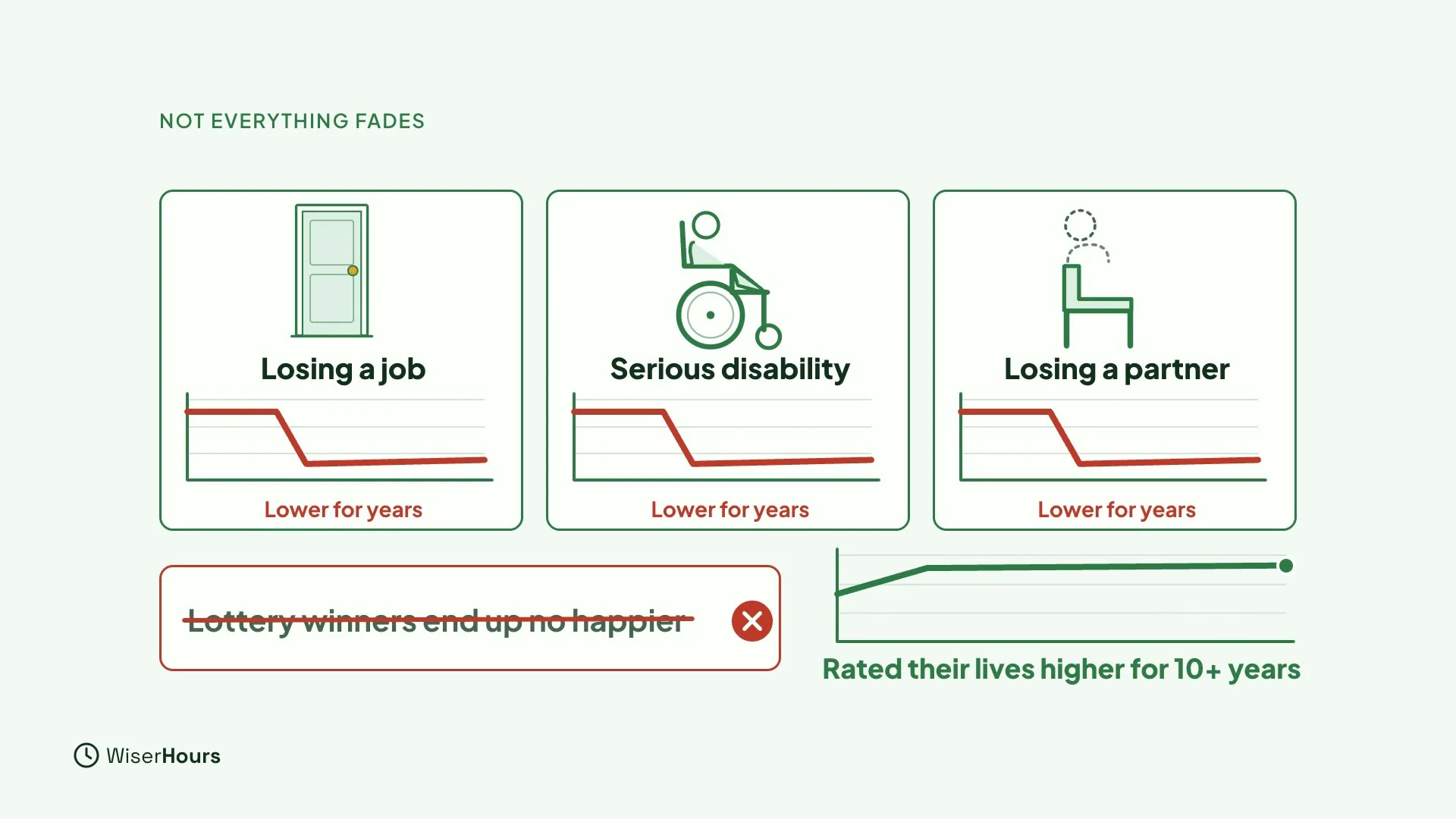
Adaptation has limits. Large studies that followed the same people for years found that losing a job, a serious disability or losing a partner can lower wellbeing for years.
The old claim that lottery winners end up no happier came from a tiny study. In a larger study, big winners rated their lives higher for over a decade. So “you always get used to it” is not true either.
 (opens the full-size picture)
How to guess better
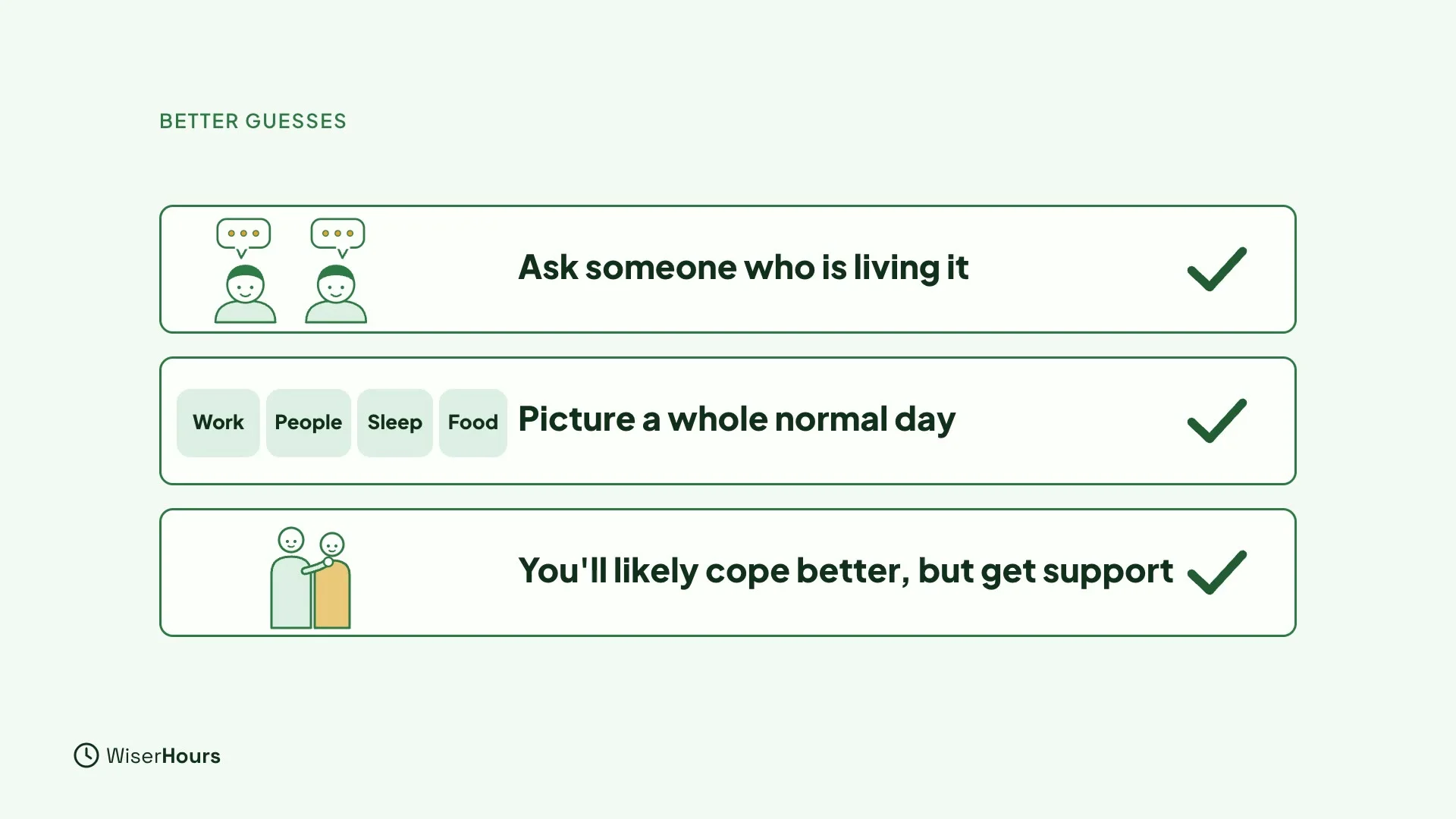
Before a big choice, ask someone who is already living it how their ordinary days feel. Picture a whole normal day, not just the highlight. And when something goes wrong, remember that you will probably cope better than you expect, but reach out for support after a real loss.
 (opens the full-size picture)
YOUR TURN
Read more
- The Midlife Crisis: Myth, Reality, and the Happiness U-Curve: what surveys show about life satisfaction across the years, and where studies disagree.
- Analysis Paralysis: why hunting for the best option can lead to more regret, and how to decide anyway.
Sources
- Affective forecasting, overview of the impact bias and the campus house and California studies: https://en.wikipedia.org/wiki/Affective_forecasting
- Hedonic treadmill, overview of adaptation and the limits of adaptation: https://en.wikipedia.org/wiki/Hedonic_treadmill
- Does Money Buy Happiness? on this site, for the larger lottery study.
Read the full lesson script
In this lesson, you'll see why we so often guess wrong about what will make us happy, and how to make better guesses about your own life.
When we imagine a future event, we expect it to hit harder and last longer than it really does. In one study, students waiting to hear which campus house they'd live in expected a great year or an awful one, depending on the house. A year later, both groups were about equally happy.
Part of the reason is that we focus on one detail and forget the rest of life. In another study, people expected those living in sunny California to be happier than people in the colder Midwest. In fact, their life ratings were about the same. Weather is just one small part of a day.
We also forget how well we cope. After bad news, most people slowly make sense of what happened and find a way forward. When we picture a setback in advance, we leave that part out, so we expect to feel worse for longer than we do.
And we get used to change. A new phone, a pay rise or a new home feels great at first, then slowly becomes normal. Researchers call this adaptation, and it's one reason the next big purchase rarely keeps us happier for long.
But adaptation has limits. Large studies that followed the same people for years found that losing a job, a serious disability, or losing a partner can lower wellbeing for years. And the old claim that lottery winners end up no happier came from a tiny study. In a larger study, big winners rated their lives higher for over a decade.
So how do you guess better? Before a big choice, ask someone who's already living it how their ordinary days feel. Picture a whole normal day, not just the highlight. And when something goes wrong, remember that you'll probably cope better than you expect, but reach out for support after a real loss.
So remember: we expect events to hit harder and last longer than they do. We focus on one detail and forget the rest of life. And we get used to most changes, but not all. Before the next lesson, think of something you once expected to change everything, and ask yourself how long that feeling really lasted. Next, you'll see what money can and can't buy.
MAKE IT A SMALL WIN
Finished this lesson?
Mark it complete to save your progress on this device.