What lifts it · Lesson 5 of 11
Gratitude Journaling: A Small Lift and a Weekly Habit
Learn what a gratitude journal can and can't do for your mood, how often to write, and how to keep it specific so it never turns into homework.
 Video coming soon
Gratitude journaling is a popular happiness exercise, and a well-studied one. In this lesson you will see what a gratitude journal can and can’t do, and how to keep one that does not turn into homework.
What a gratitude journal is
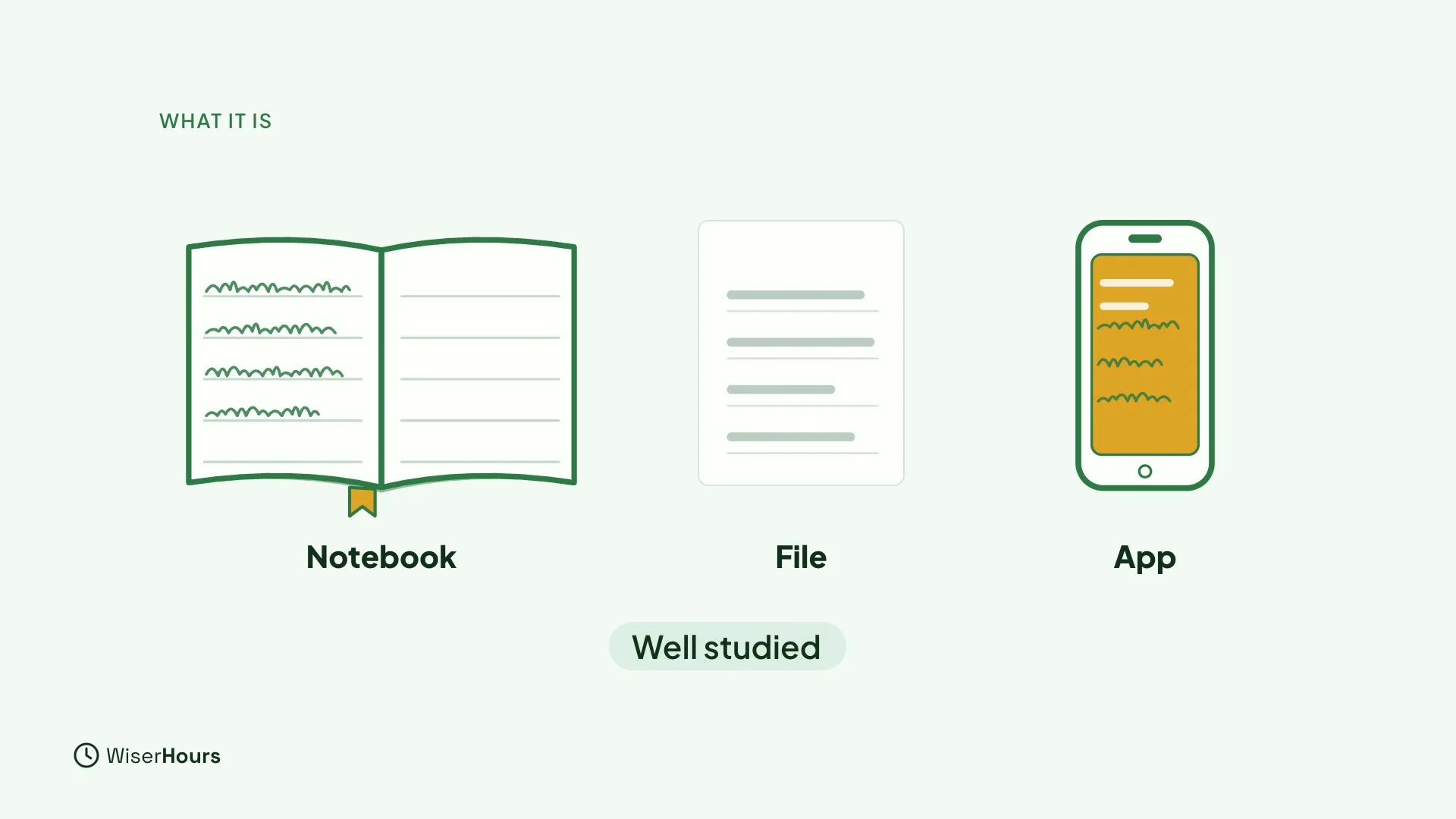
A gratitude journal is simply a place where you regularly write down things you are thankful for. It can be a notebook, a file on your computer or a note on your phone. The tool does not matter. The habit of looking for what went well does.
 (opens the full-size picture)
A small lift, but a real one
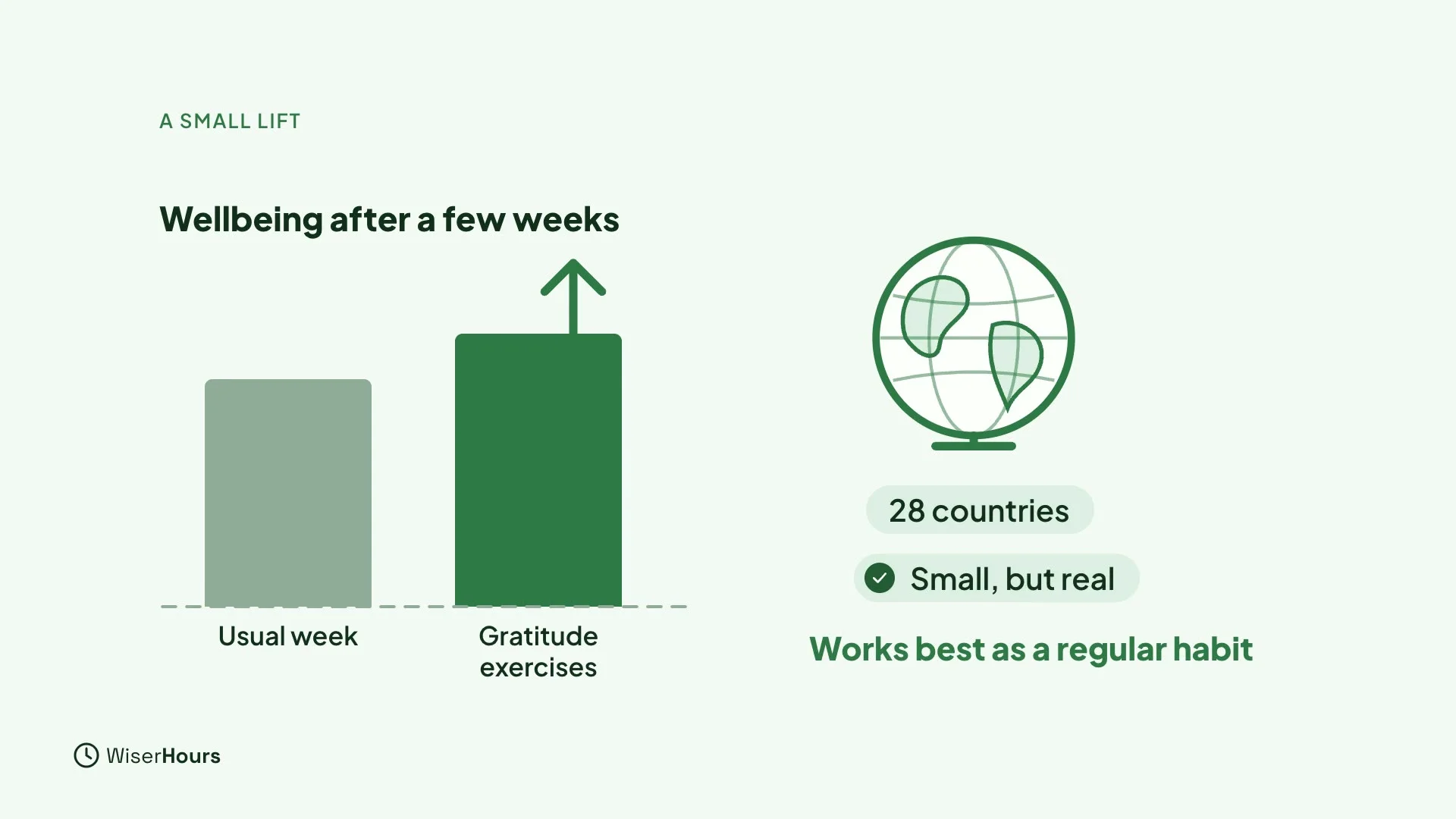
So does it work? A large review of studies from 28 countries found a small average lift in wellbeing for people who did gratitude exercises, compared with people who did not. It is small, but real. It also works best as a regular habit, not as a one-off.
 (opens the full-size picture)
Always ask: compared with what?
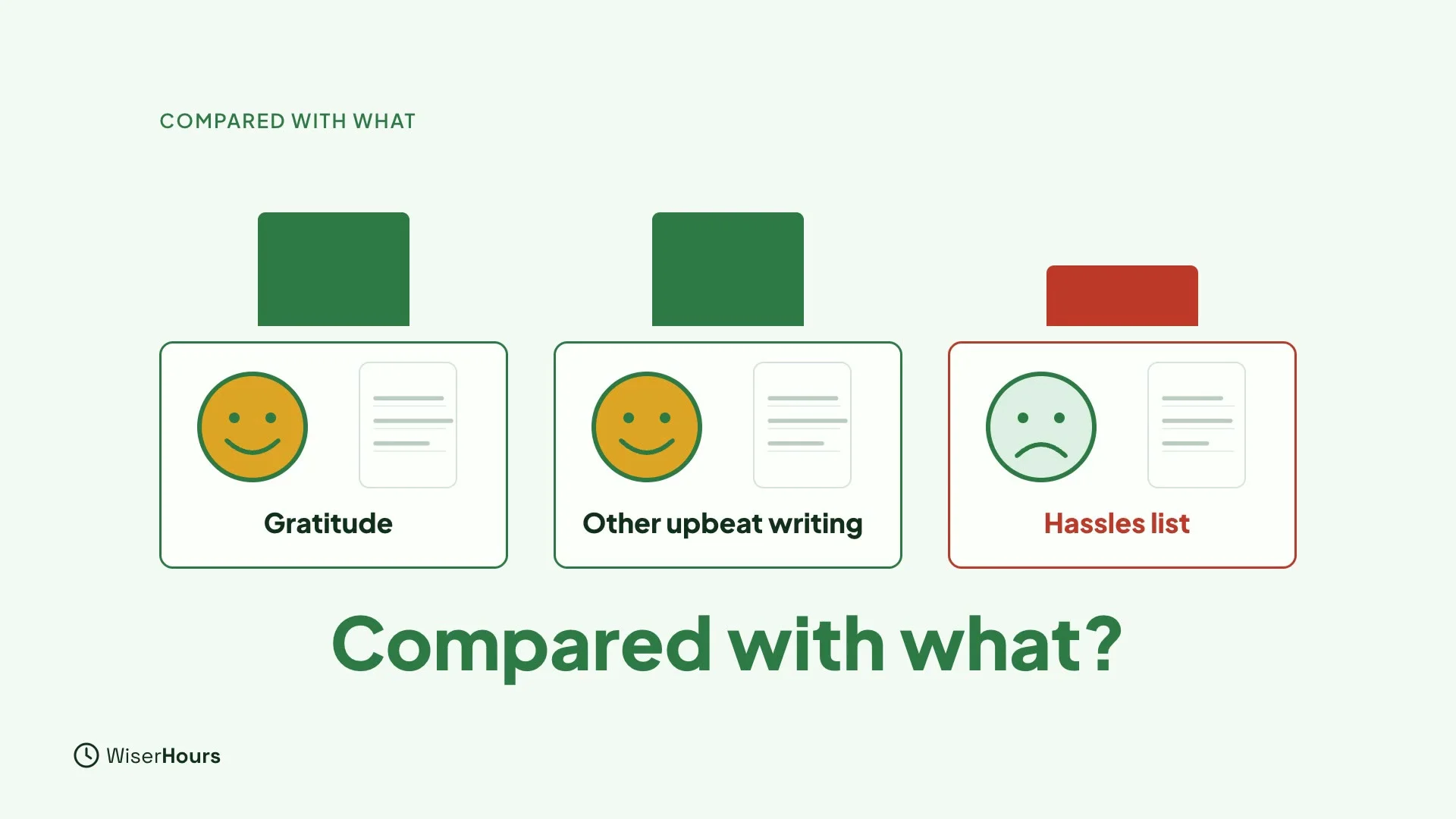
Here is the catch. Against other upbeat activities, gratitude did about as well, not better. And some of the famous early results compared gratitude with writing down daily hassles, which may itself lower your mood. A weak comparison makes any exercise look strong.
 (opens the full-size picture)
Not a treatment for low mood
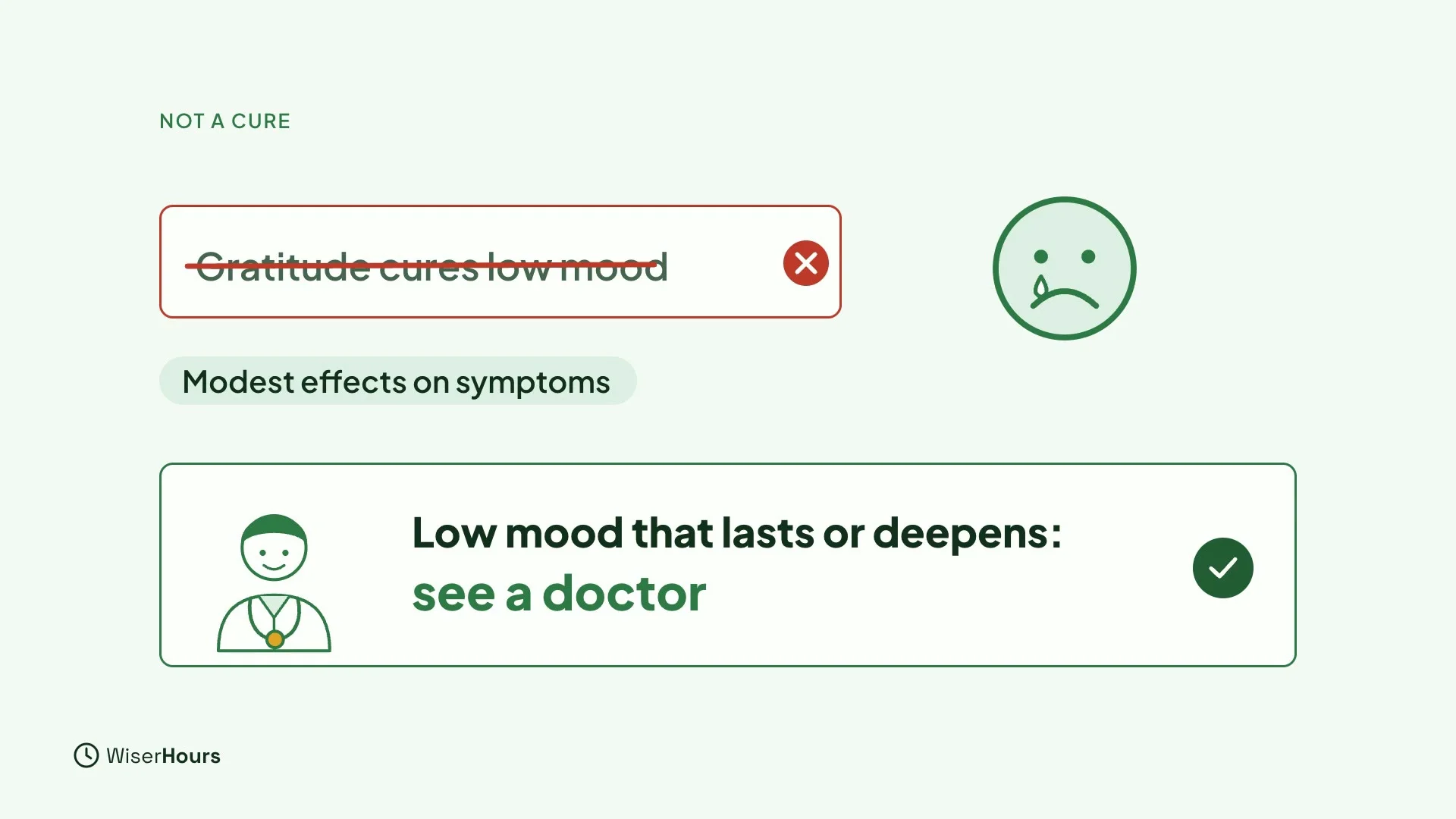
Gratitude is not a treatment for depression or anxiety. Reviews found only modest effects on those symptoms. A journal is a pleasant extra, not a replacement for care.
When to see a doctor
If low mood lasts or gets deeper, see a doctor or another health professional. Do not try to write your way out of it.
 (opens the full-size picture)
How often to write
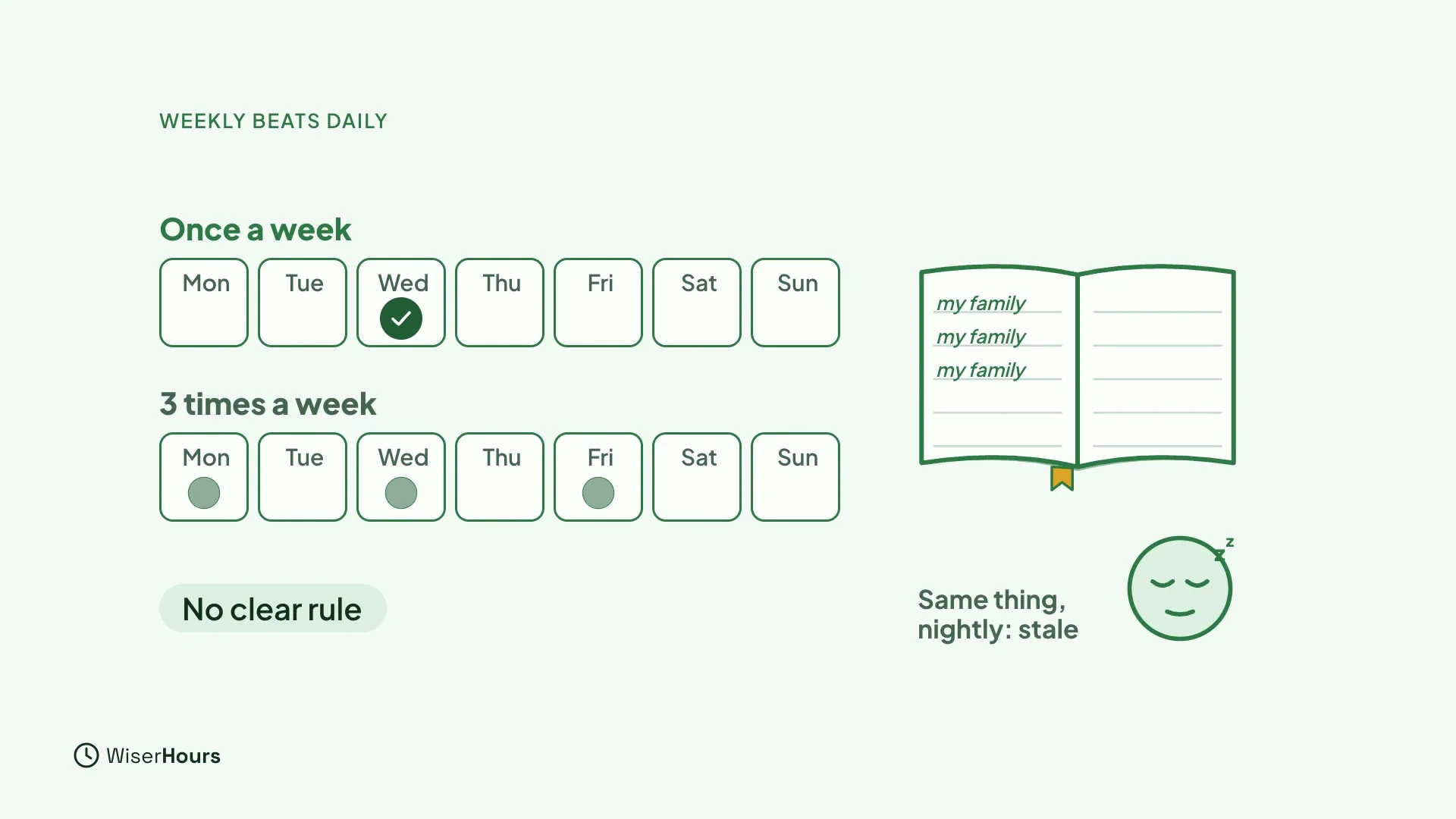
In one small study with students, happiness rose when people wrote once a week, but not when they wrote three times a week. Later reviews found no clear rule, so treat this as a hint, not a law. Once a week is a sensible place to start. Writing the same thing every night can also go stale, because the good feeling fades when the list never changes.
 (opens the full-size picture)
How to do it well
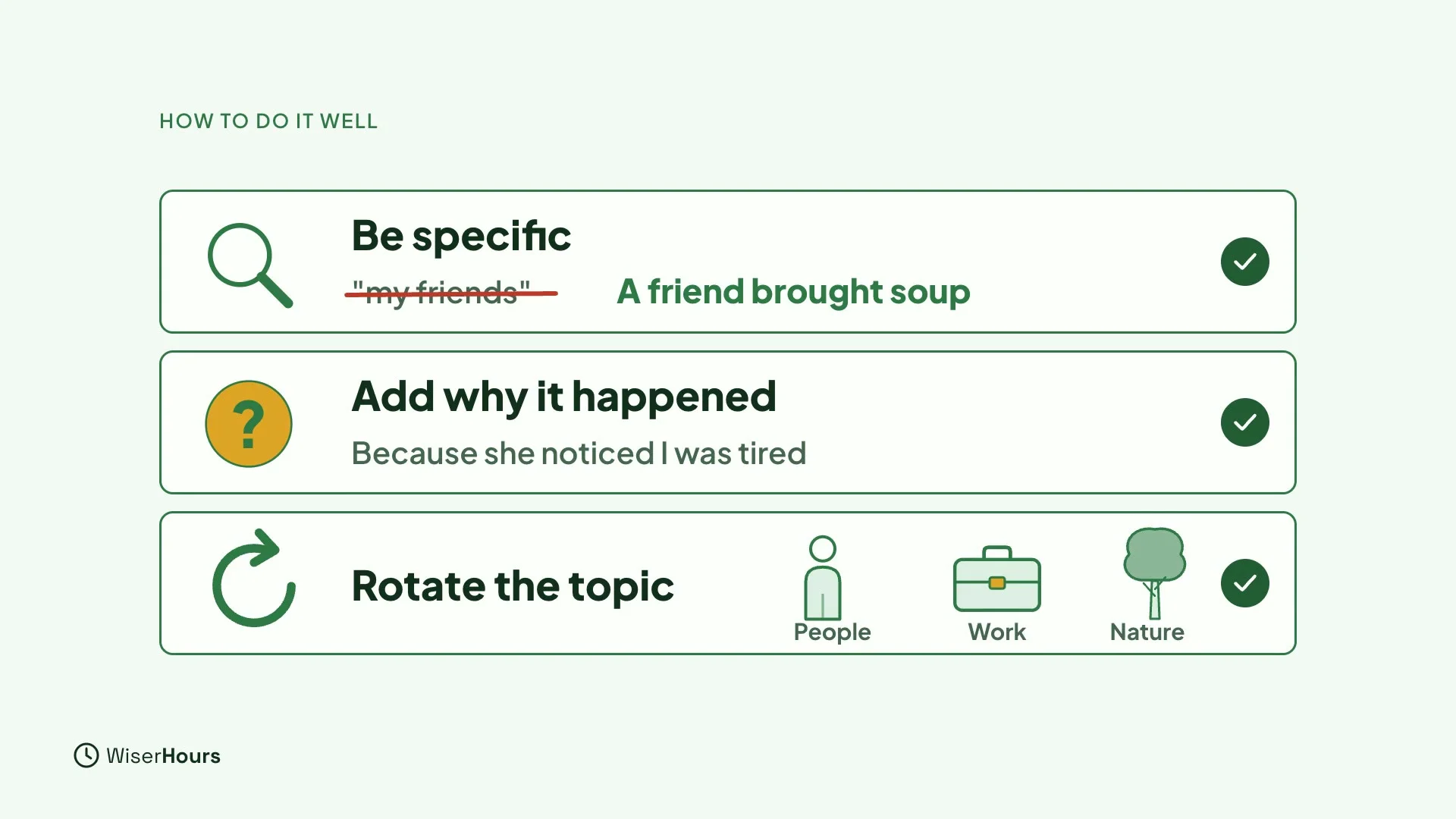
Three simple habits make a journal work better:
- Be specific. Write “a friend brought soup”, not “my friends”.
- Add why it happened. For example, “because she noticed I was tired”.
- Rotate the topic. People one week, work or nature the next.
List a handful of good things each time, not a long list.
 (opens the full-size picture)
YOUR TURN
Read more
- Gratitude Journaling: What the Research Shows and How to Do It Well: the full evidence and more ways to do it.
Read the full lesson script
In this lesson, you'll see what gratitude can and can't do for your happiness, and how to keep a gratitude journal that doesn't turn into homework.
A gratitude journal is simply a notebook, file or app where you regularly write down things you're thankful for. It's a popular happiness exercise, and a well-studied one.
So does it work? A large review of studies from twenty-eight countries found a small average lift in wellbeing for people who did gratitude exercises. Small, but real. It works best as a regular habit, not a one-off.
Here's the catch. Against other upbeat activities, gratitude did about as well, not better. And some famous results compared it with writing down daily hassles, which may itself lower your mood. So always ask: compared with what?
Gratitude isn't a treatment for depression or anxiety. Reviews found only modest effects on those symptoms. If low mood lasts or deepens, see a doctor instead of writing harder.
How often? In one small study with students, happiness rose with writing once a week, but not three times a week. Later reviews found no clear rule, so once a week is a sensible place to start. Writing the same thing every night can go stale.
To do it well, list a handful of specific good things, not big general ones. Add why each one happened. And rotate the part of life you write about: people one week, work or nature the next.
So remember: gratitude gives a small, real lift, about as much as other upbeat habits. Once a week is a good start. And specific beats general. Before the next lesson, write down three specific good things from this week, and why each one happened. Next, you'll see what kindness and giving can do.
MAKE IT A SMALL WIN
Finished this lesson?
Mark it complete to save your progress on this device.