After the week · Lesson 11 of 11
When to See a Doctor About Sleep, and Your Sleep Plan
Know the signs that poor sleep needs a doctor, not more tips, and put the seven habits of the course into one simple plan you can keep.
 Video coming soon
In this final lesson you learn when poor sleep needs a doctor, rather than more tips. Then you put the whole week together into one simple plan. This course is general information, not medical advice. For your own health, talk to a doctor or other health professional.
What insomnia is
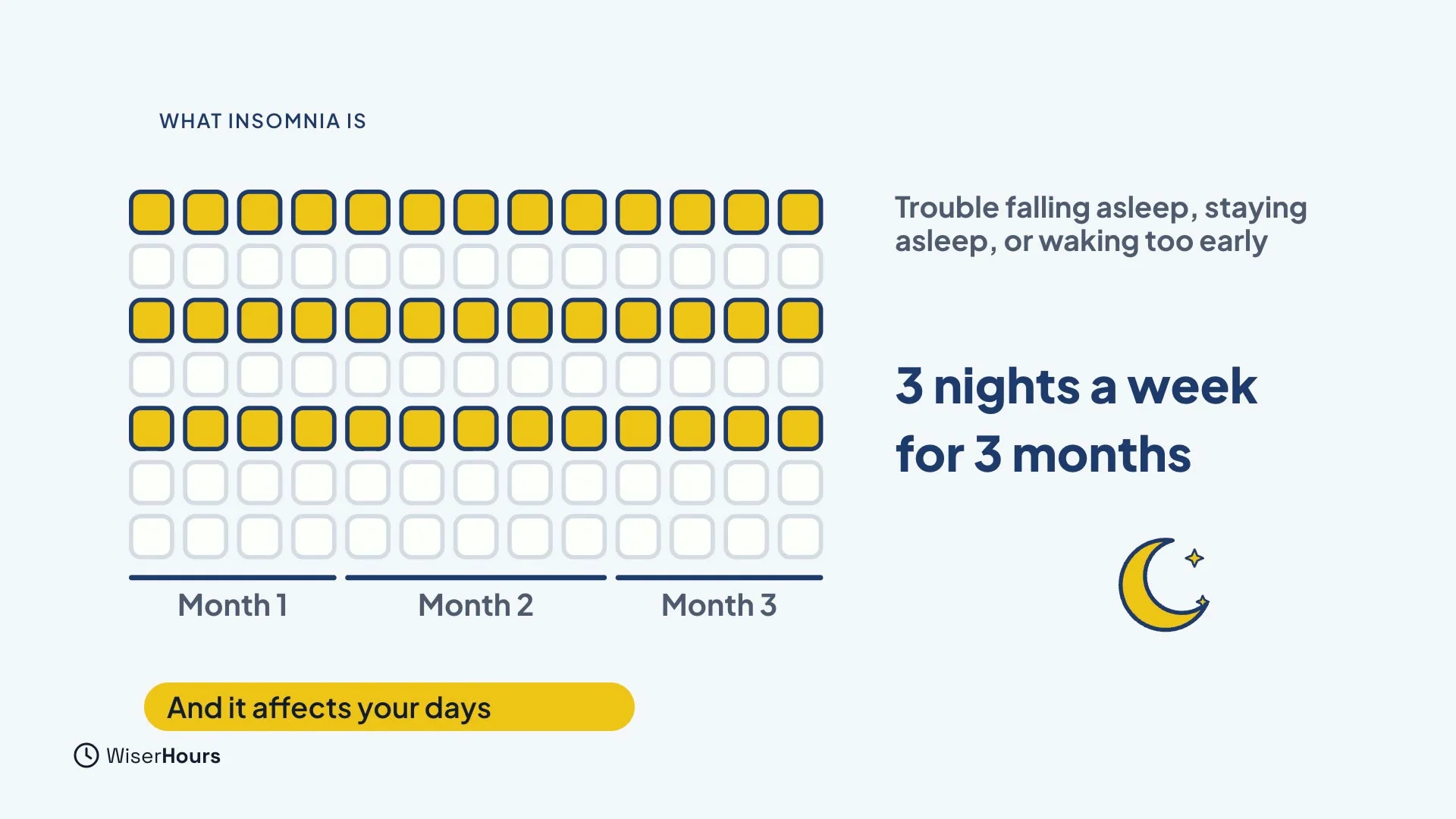
Everyone sleeps badly sometimes. insomniainsomnia: Trouble falling asleep, staying asleep or waking too early despite having the chance to sleep, with effects on how you feel or function during the day. It is called chronic when it lasts for months; short spells after stress are common.Full entry in the glossary means trouble falling asleep, staying asleep, or waking too early, on at least three nights a week for at least three months, even when you have the chance to sleep, and it affects your days. One bad week is not insomnia. A pattern that lasts is worth a conversation with a doctor.
 (opens the full-size picture)
A talking therapy first
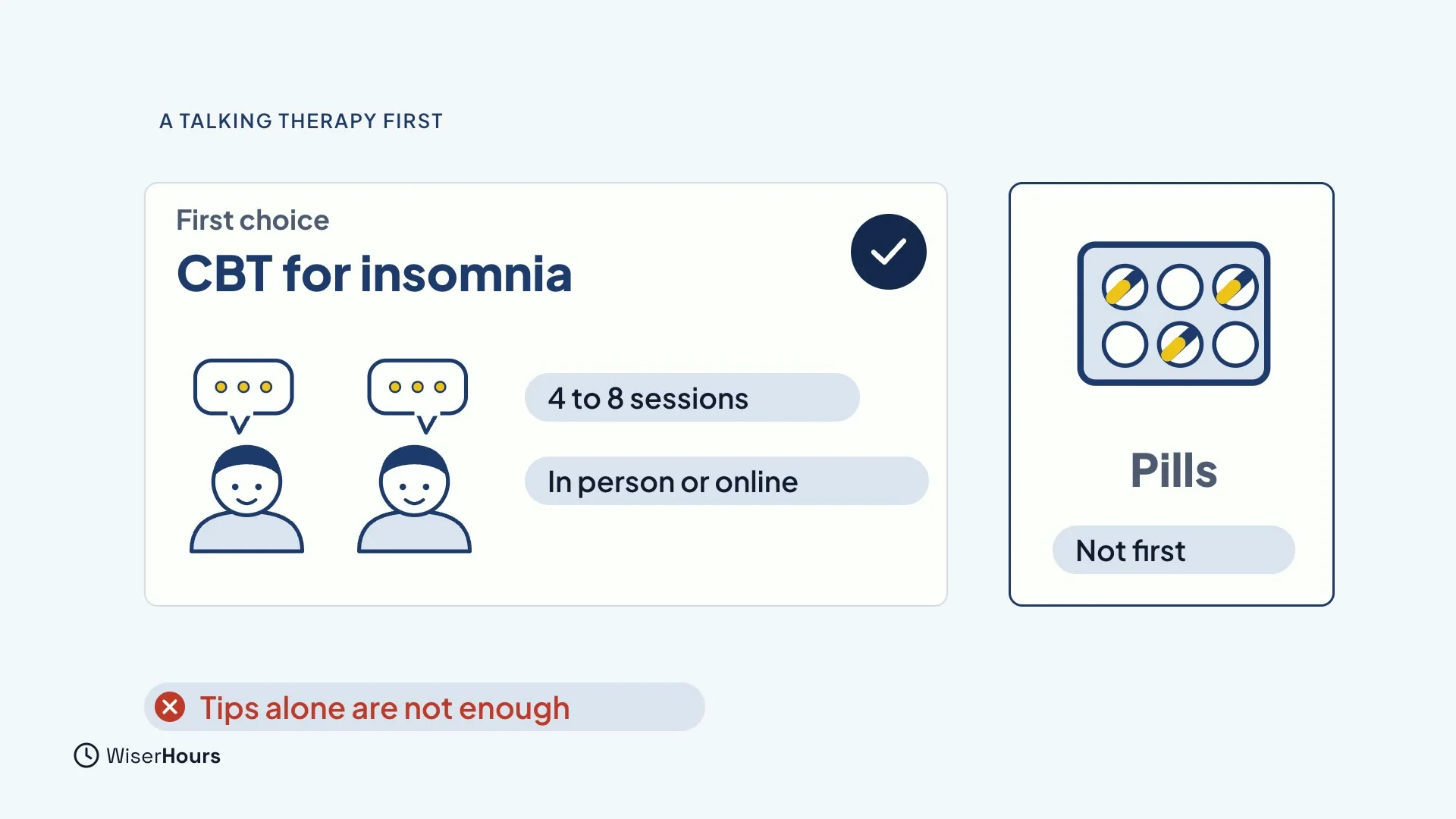
The first choice for long-term insomnia is not a pill. It is a talking therapy called CBT-ICBT-I: Cognitive behavioral therapy for insomnia: a structured program that changes sleep schedules, habits and the thoughts that keep people awake, delivered over several sessions. Guidelines recommend it as the first treatment for chronic insomnia, and parts of it need a clinician's guidance.Full entry in the glossary, cognitive behavioral therapy for insomnia, usually four to eight sessions, in person or online. Sleep tips on their own are not enough to treat it, which is why the habits in this course are a start and not a cure for long-term insomnia.
 (opens the full-size picture)
Snoring and gasping
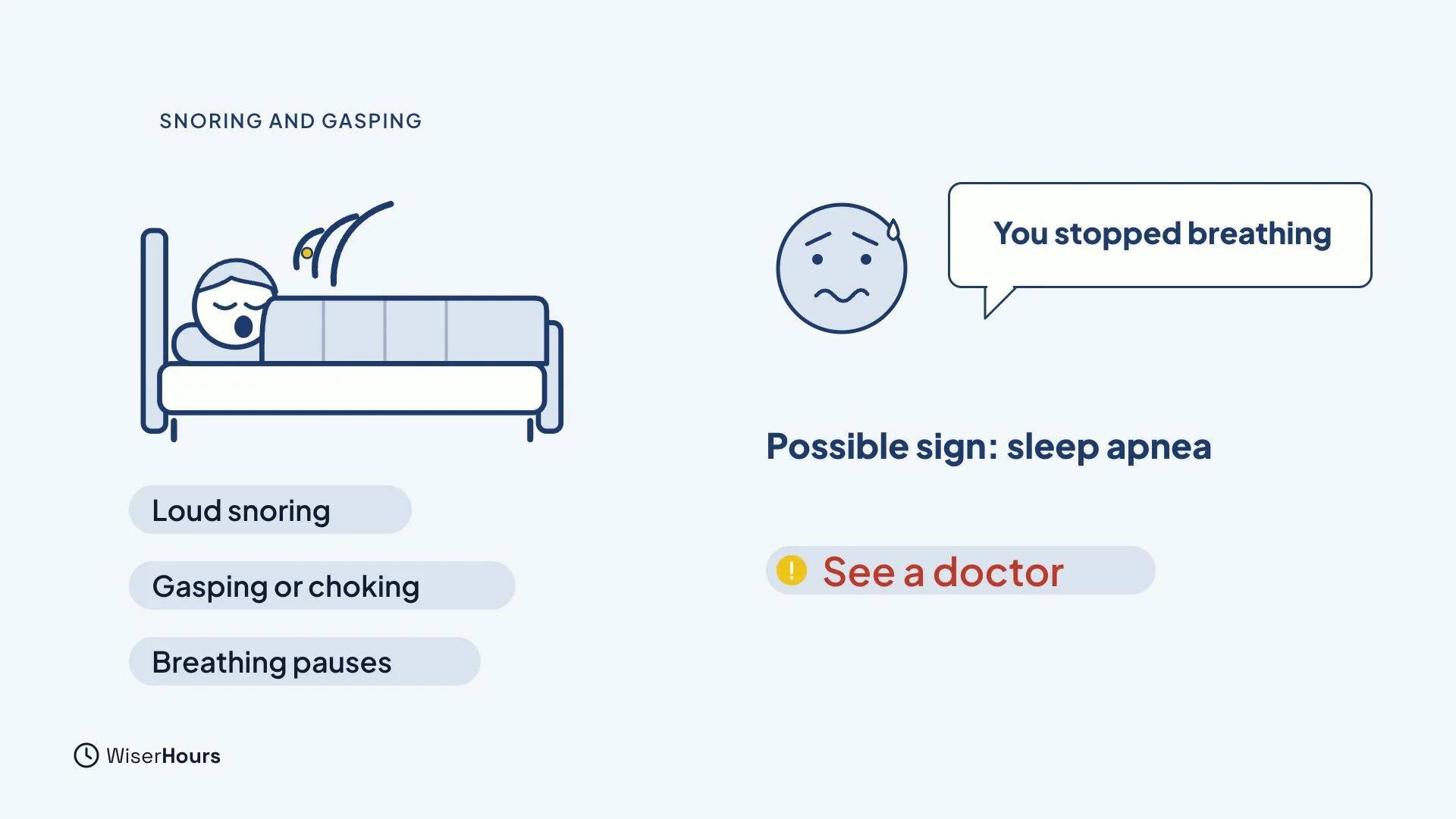
See a doctor about loud snoring, gasping or choking in your sleep, or pauses in your breathing. These can be signs of sleep apneasleep apnea: A condition in which breathing repeatedly stops and starts during sleep, often with loud snoring, gasping and daytime sleepiness. It needs a sleep test and a doctor to diagnose; a phone or watch alert can prompt a test but cannot rule it in or out.Full entry in the glossary. You may not know until someone tells you, so ask a partner or family member if they have noticed.
 (opens the full-size picture)
Other reasons to see a doctor
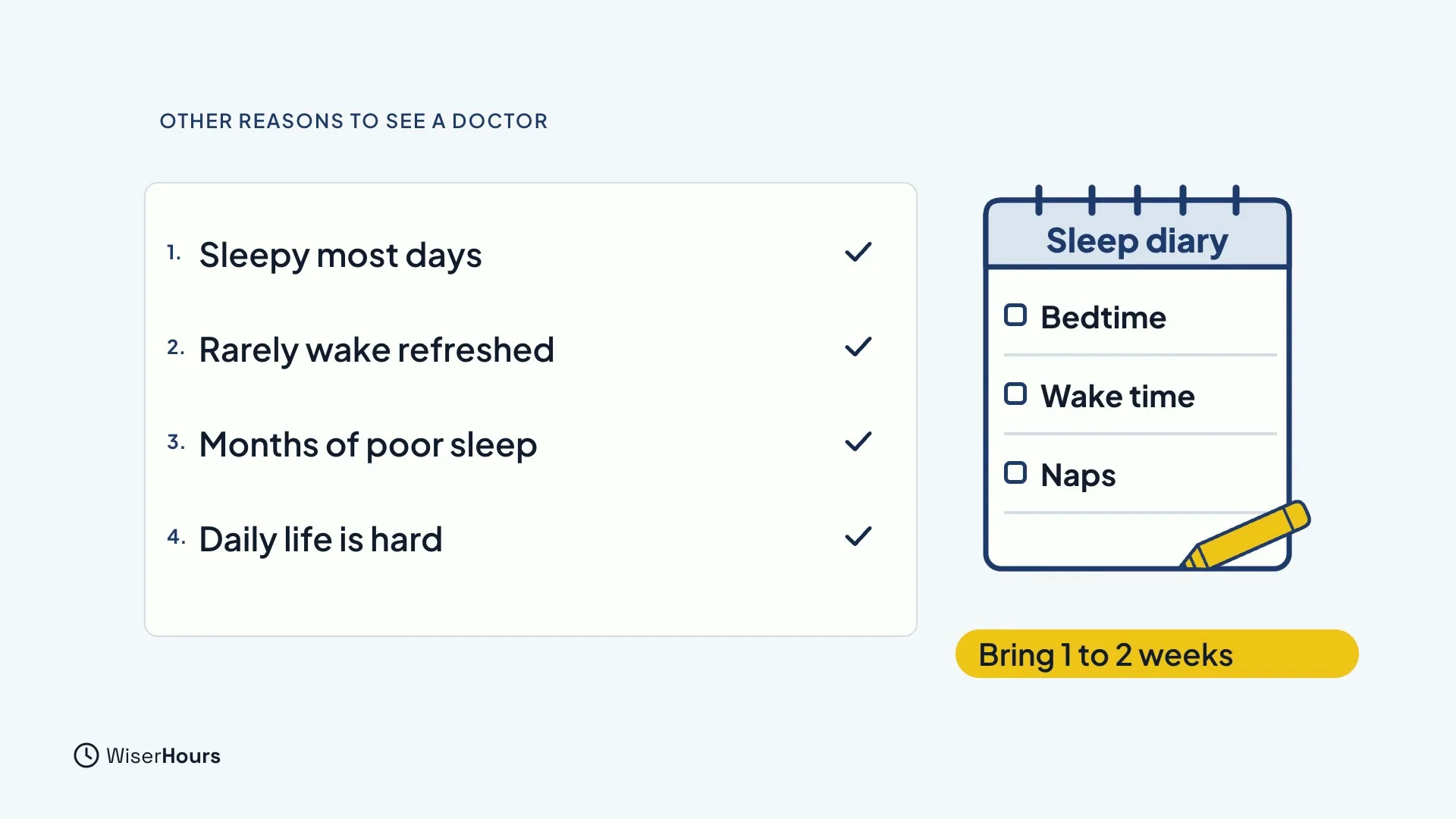
Also see a doctor if you are sleepy on most days, rarely wake up refreshed, or poor sleep has gone on for months or makes daily life hard. Keep a sleep diary for one or two weeks, and take it with you.
 (opens the full-size picture)
Stay safe
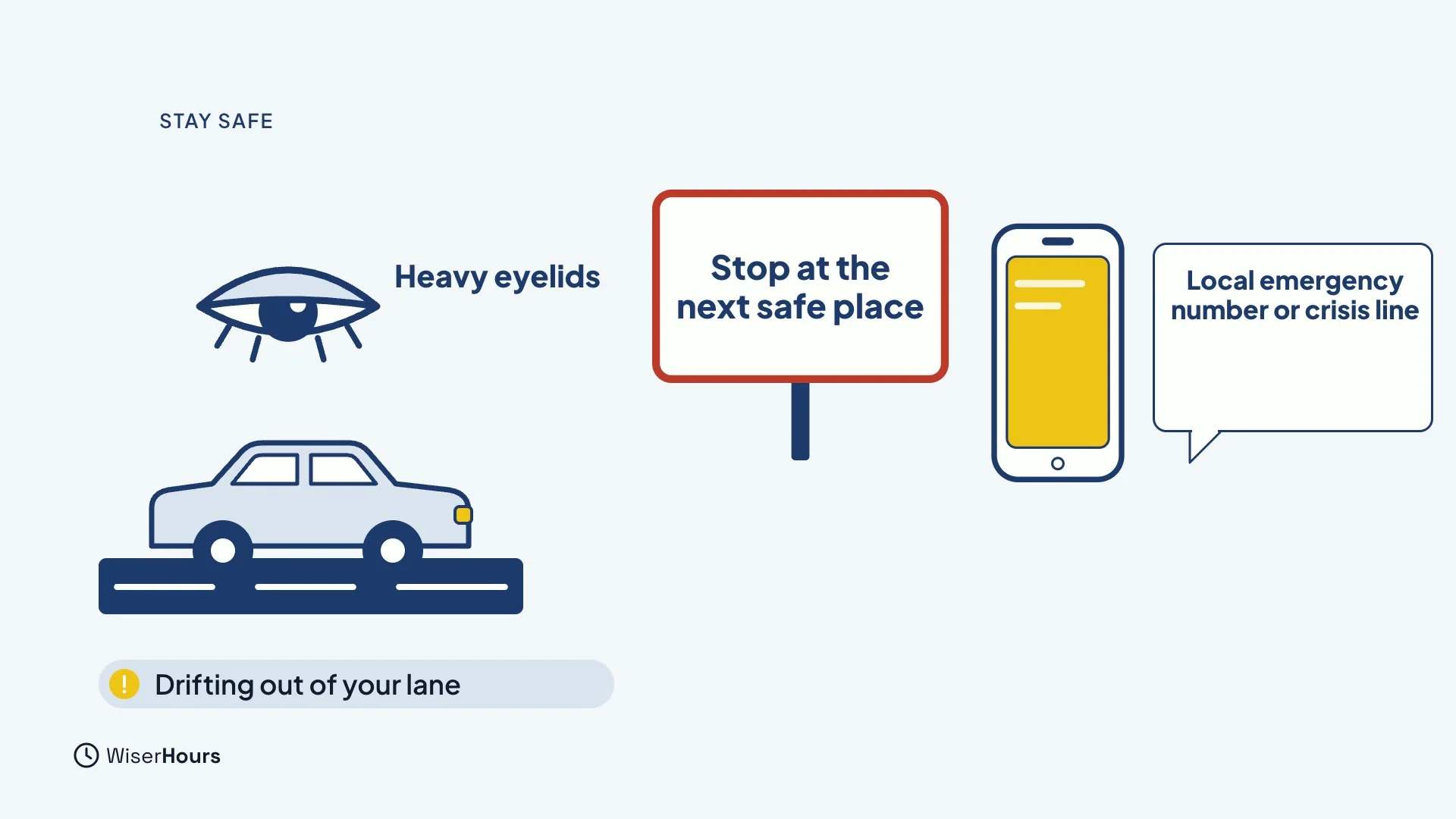
Never drive when you are drowsy. If your eyelids feel heavy, or you drift out of your lane, stop at the next safe place.
If low mood or thoughts of harming yourself are keeping you awake, contact your local emergency number or a crisis line straight away. For example, in the US you can call or text 988, and in the UK you can call Samaritans on 116 123. For other countries, Find A Helpline lists free helplines, and your local emergency number connects you to urgent help.
 (opens the full-size picture)
Your sleep plan
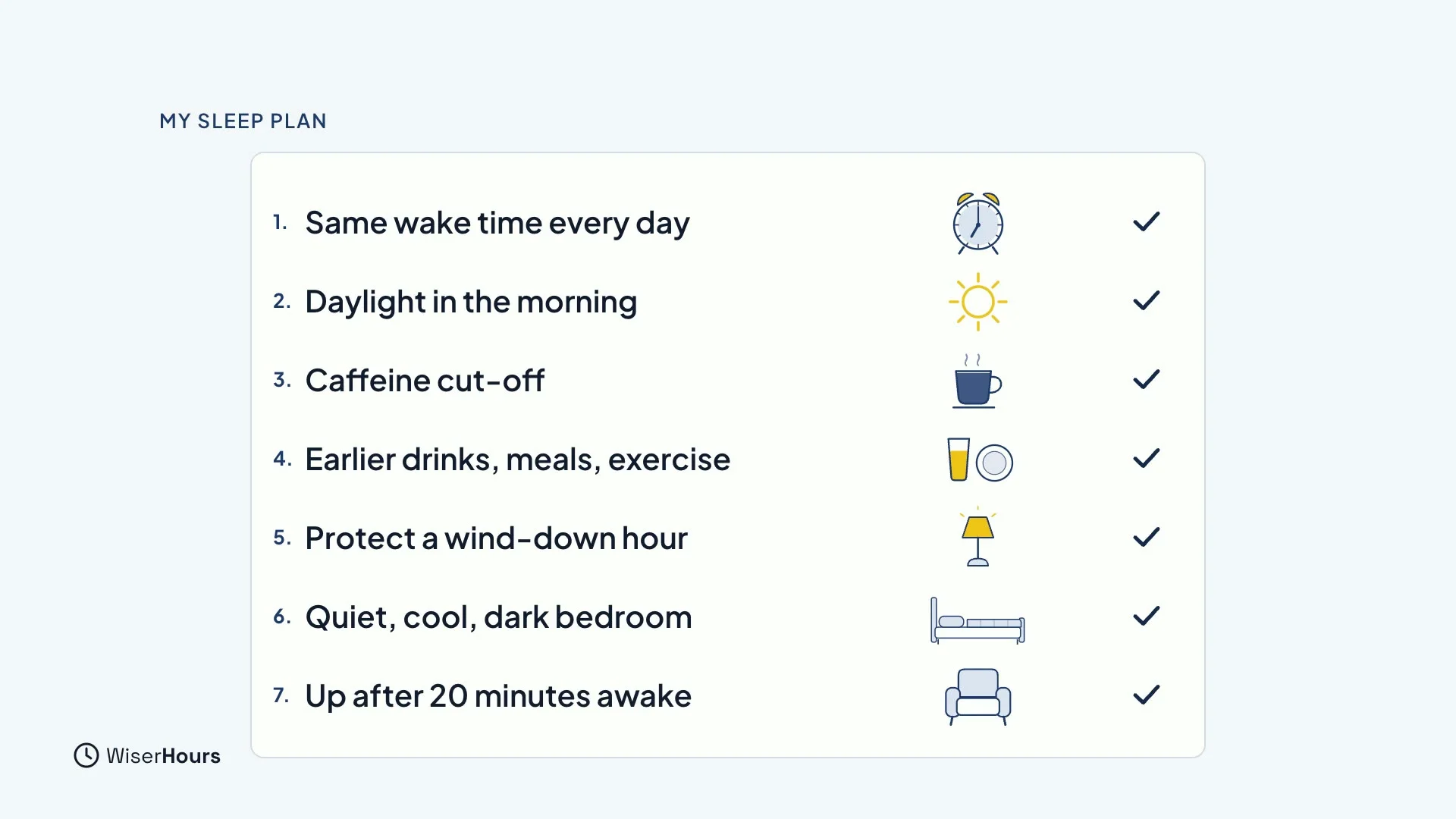
Now your plan. These are the seven habits from this course. Keep them steady and see how you feel. If you are a shift worker, a new parent or a carer, treat them as aims to work toward, not a standard to fail. If you have a health condition, talk to your doctor before you change your routine.
 (opens the full-size picture)
My sleep plan
YOUR TURN
Congratulations, you have finished Sleep Reset in 7 Nights.
Read more
- Insomnia Explained: types, causes and when to see a doctor.
- How to Sleep Better: the full guide behind the seven habits.
- Why Am I Always Tired?: common causes of tiredness, and when to see a doctor.
Read the full lesson script
In this final lesson, you'll learn when poor sleep needs a doctor, rather than more tips. Then you'll put the whole week together into one simple plan.
Everyone sleeps badly sometimes. Insomnia means trouble falling asleep, staying asleep, or waking too early, on at least three nights a week for at least three months, even when you have the chance to sleep, and it affects your days.
The first choice for long-term insomnia isn't a pill. It's a talking therapy called CBT for insomnia, usually four to eight sessions, in person or online. Sleep tips on their own aren't enough to treat it.
See a doctor about loud snoring, gasping or choking in your sleep, or pauses in your breathing. These can be signs of sleep apnea. You may not know until someone tells you.
Also see a doctor if you're sleepy on most days, rarely wake up refreshed, or poor sleep has gone on for months, or makes daily life hard. Keep a sleep diary for one or two weeks, and take it with you.
Never drive when you're drowsy. If your eyelids feel heavy, or you drift out of your lane, stop at the next safe place. And if low mood or thoughts of harming yourself are keeping you awake, contact your local emergency number or a crisis line straight away.
Now, your plan. One: keep one wake time every day. Two: get daylight in the morning. Three: stick to your caffeine cut-off. Four: move drinks, big meals and hard exercise earlier. Five: protect a wind-down hour. Six: keep your bedroom quiet, cool and dark. And seven: if you can't sleep, get up after twenty minutes.
So remember: insomnia that lasts needs a doctor and a talking therapy, not just tips. Loud snoring with gasping needs a check. And your seven habits, kept steady, are your plan. This course is general information. For your own health, talk to a doctor. As your final task, fill in your sleep plan on the lesson page. Congratulations, you've finished Sleep Reset in 7 Nights.
MAKE IT A SMALL WIN
Finished this lesson?
Mark it complete to save your progress on this device.