Nights 1 to 3 · Lesson 3 of 11
Morning Daylight and Dimmer Evenings for Better Sleep
Learn how light sets your body clock, and use morning daylight and a dim last hour before bed to help your sleep.
 Video coming soon
Your body has a clock that helps decide when you feel alert and when you feel sleepy. In this lesson you learn how light sets that clock, and how to use it. This is general information, not medical advice.
Light sets the clock
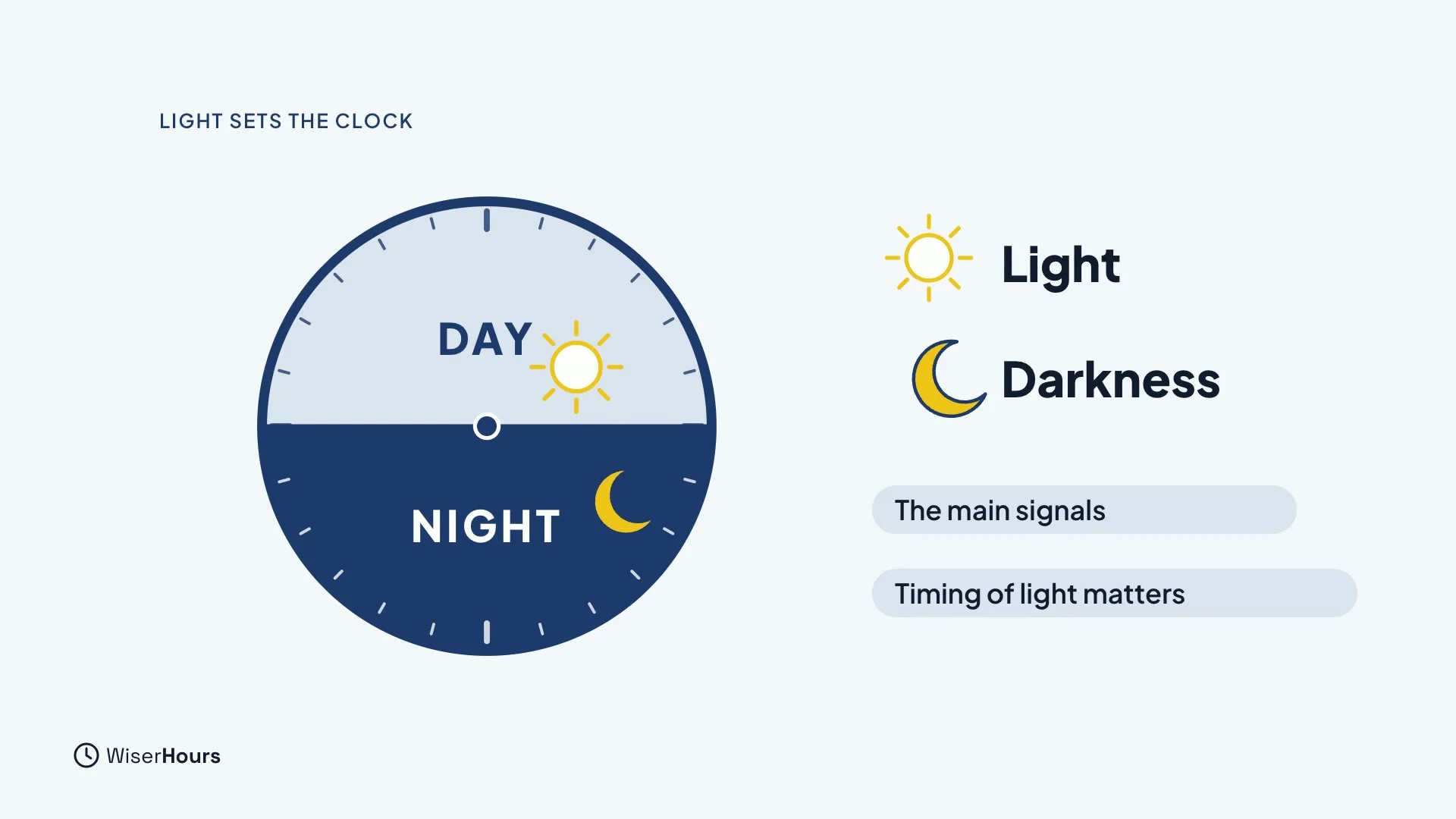
Light and darkness are the main signals that set your body clock. That is why the timing of light matters so much: the same lamp or the same sunny window can help or hurt, depending on the hour.
 (opens the full-size picture)
Morning light and evening light
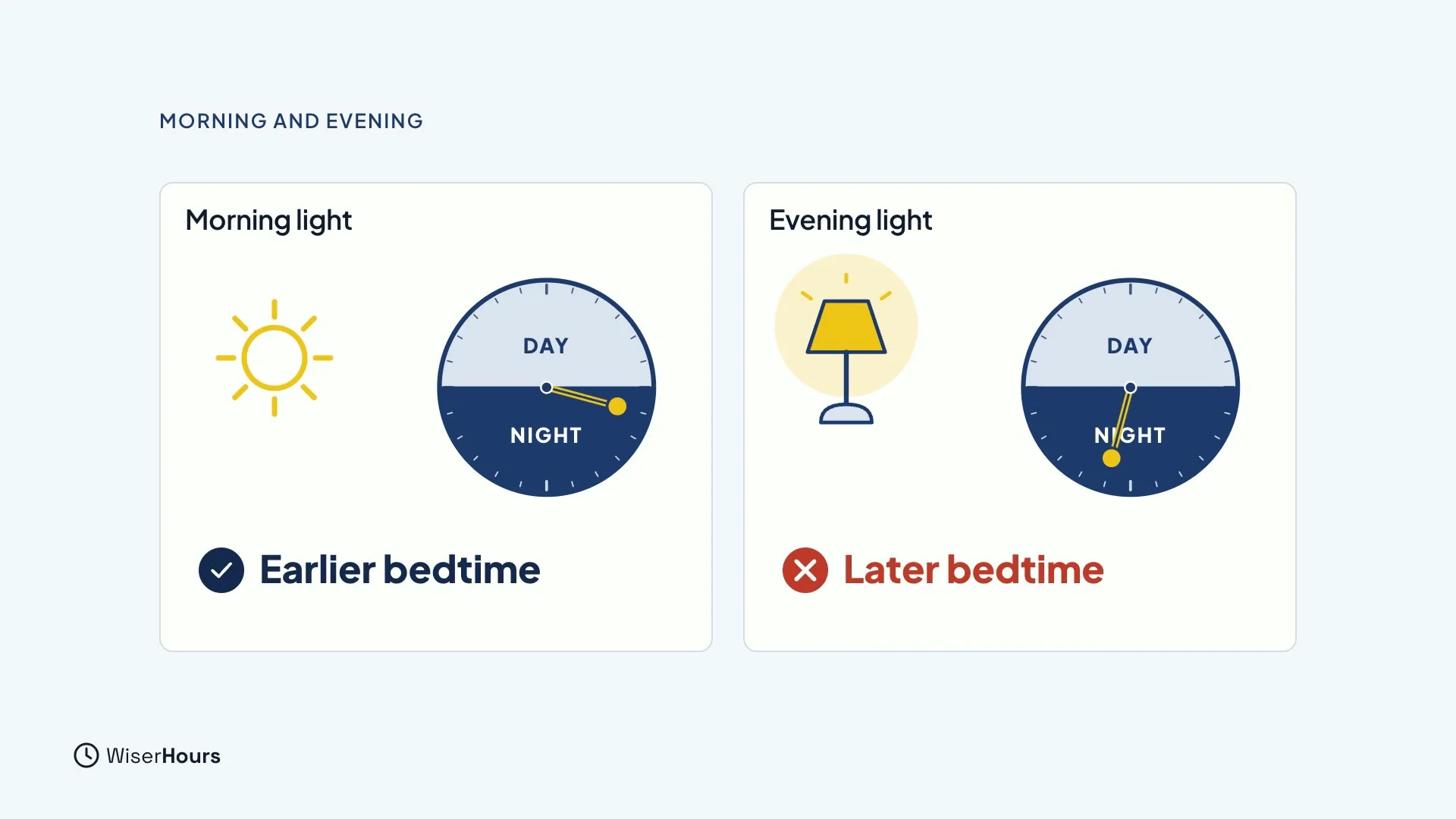
Morning light tends to move your clock earlier, so sleepiness comes earlier at night. Evening light tends to move it later, so bedtime drifts later.
 (opens the full-size picture)
A small camping study
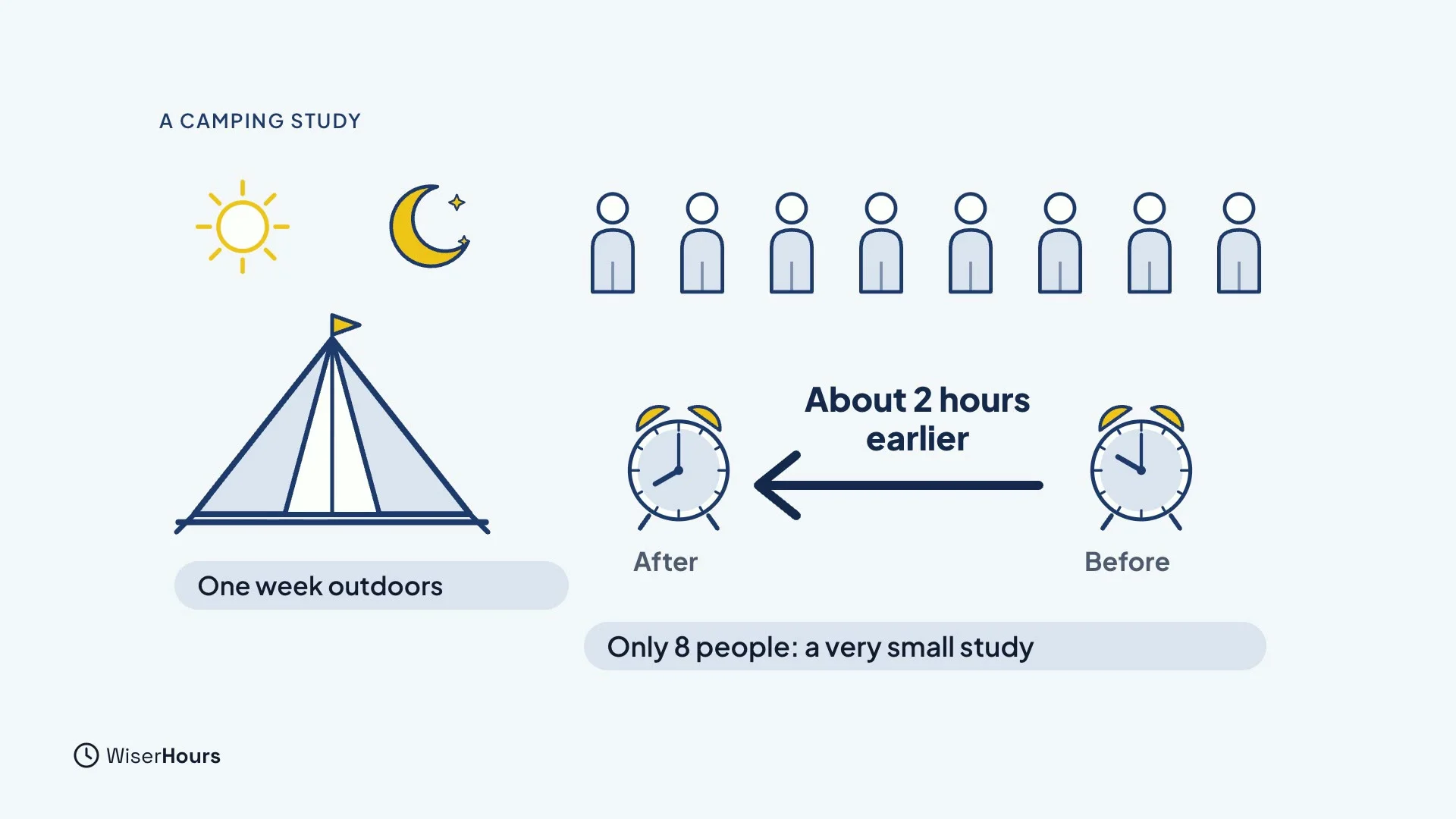
In one small study, eight adults spent a week camping with only natural light. Their body clocks moved about two hours earlier. Eight people is a very small study, but it shows how strong light can be.
 (opens the full-size picture)
Get outside, and move
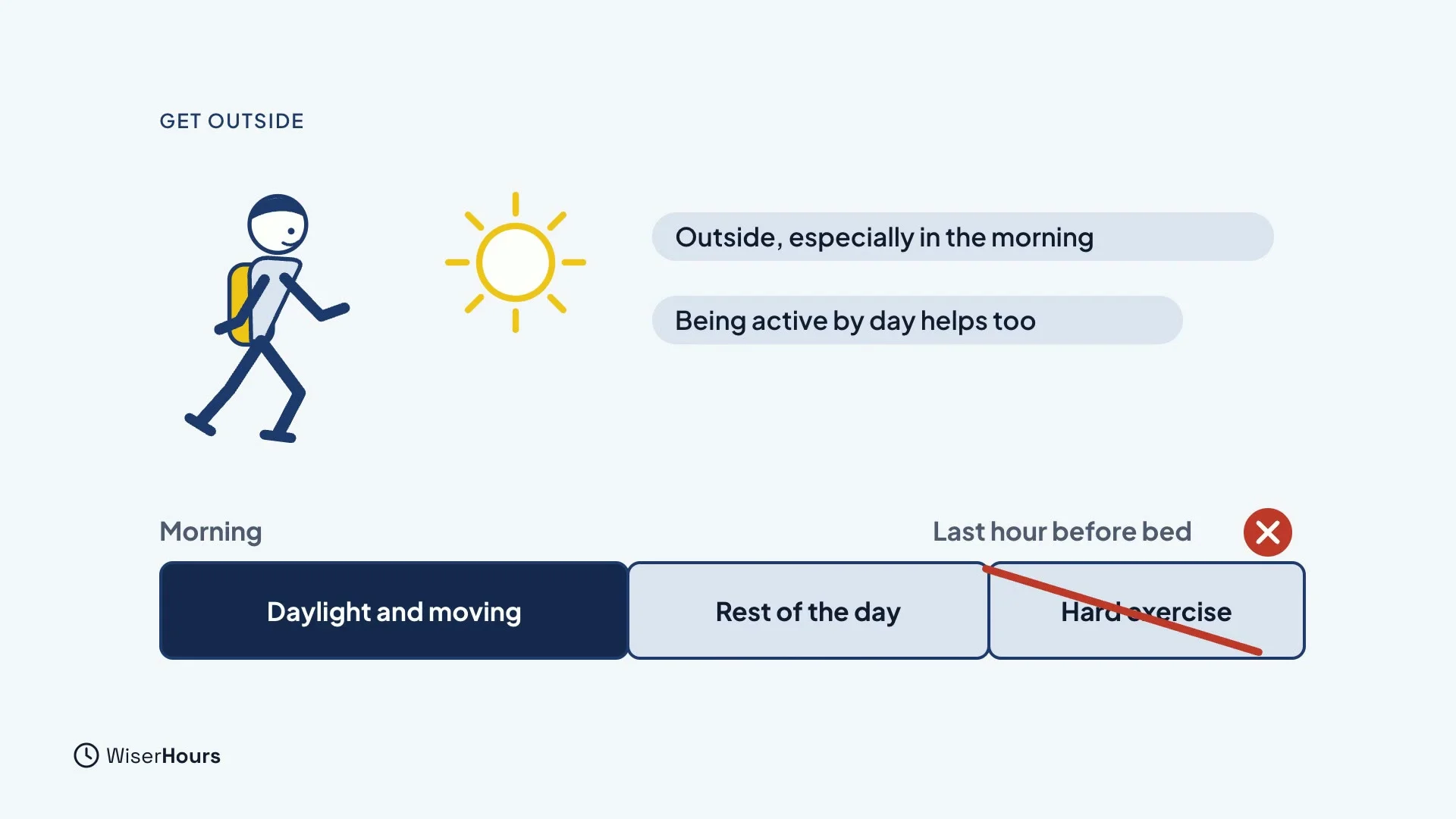
So spend some time outside in daylight every day when you can, especially in the morning. Being active during the day helps too. Just avoid hard exercise in the hour before bed.
 (opens the full-size picture)
Dim the evening
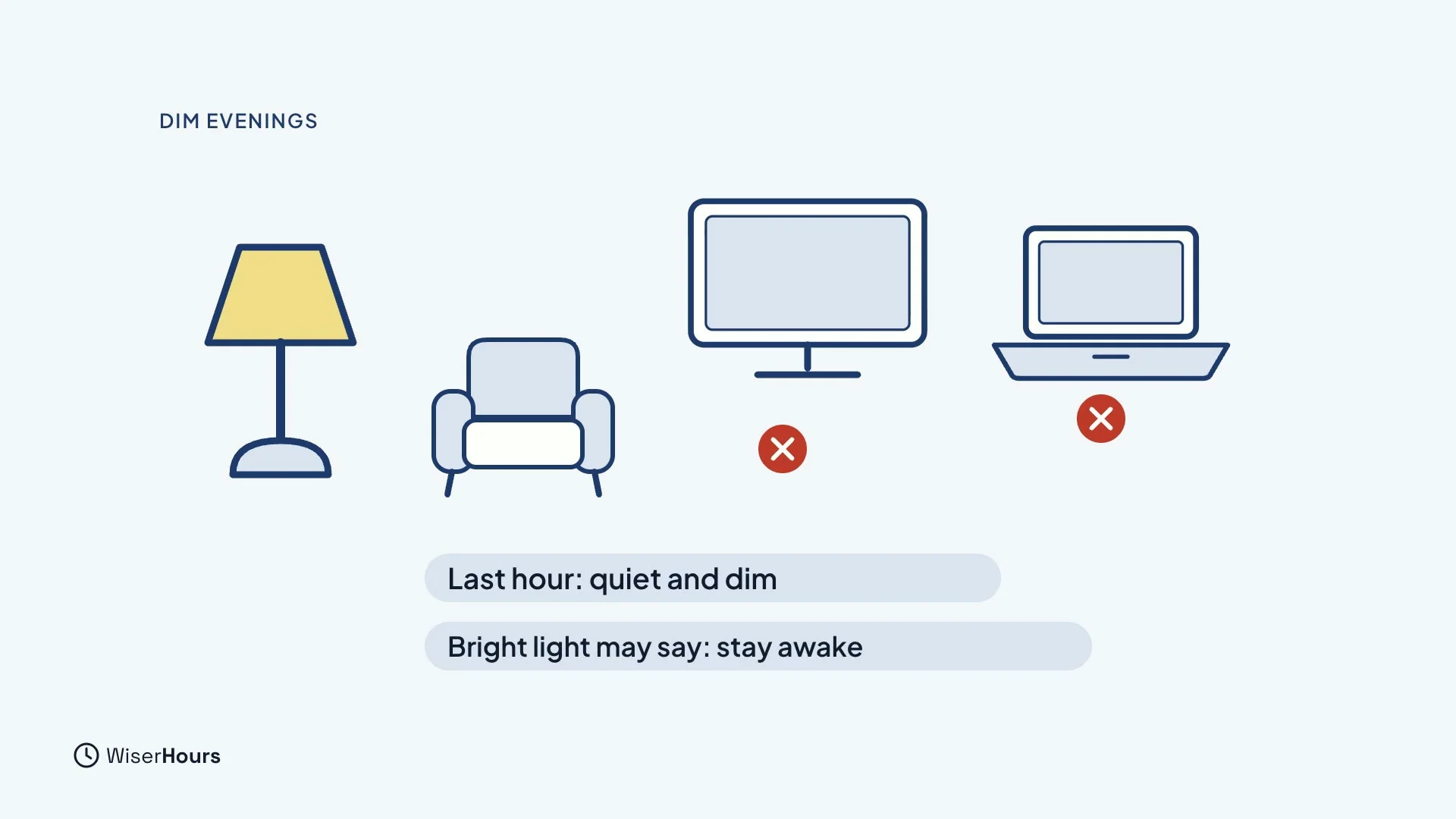
In the evening, do the opposite. Make the last hour before bed quiet, without bright lights or big screens. Bright light then may signal your brain that it is time to be awake.
 (opens the full-size picture)
Larks, owls and everyone between
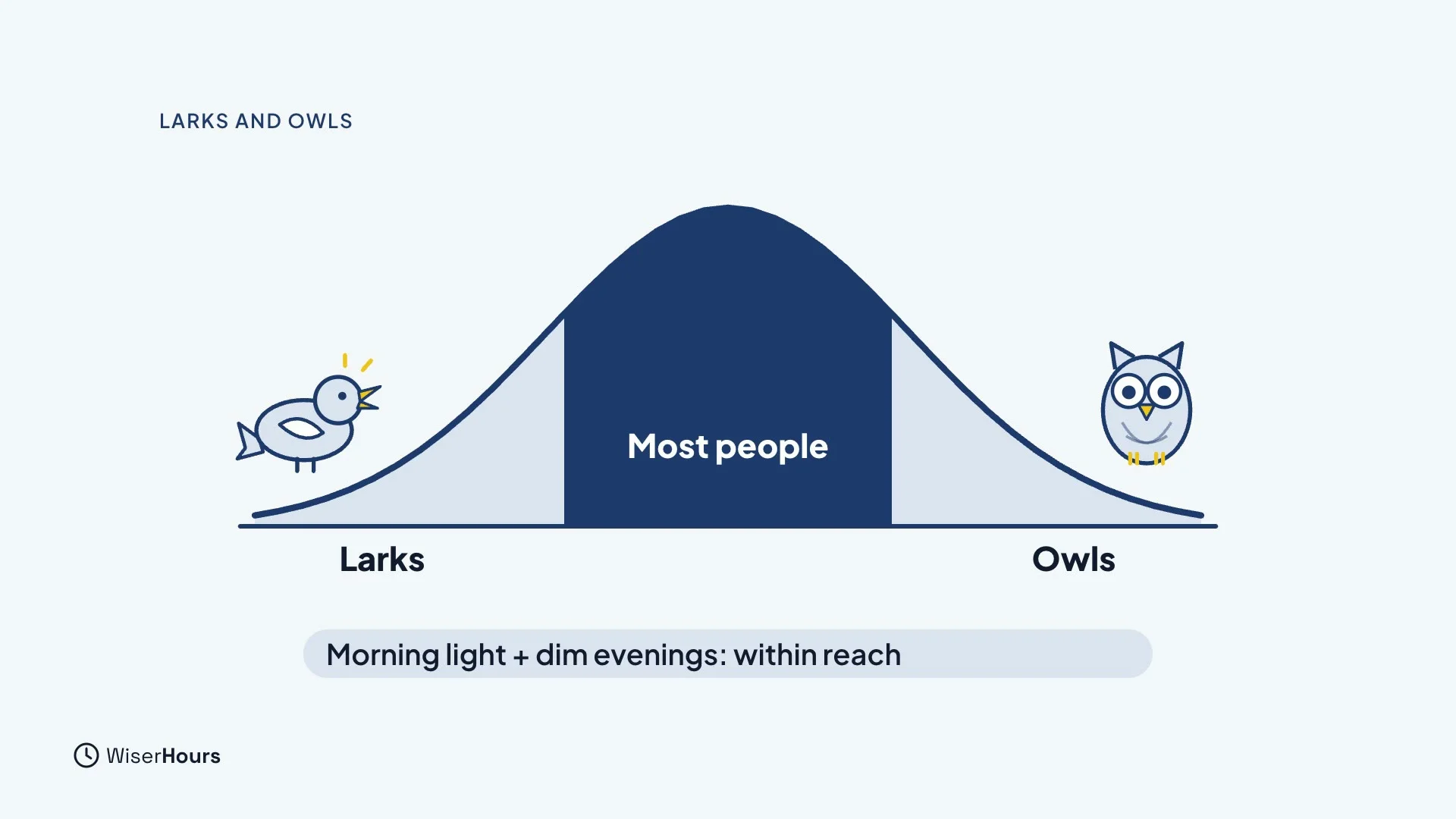
Some people are natural early larks, others are night owls, and most are somewhere in between. You cannot change your type completely, but more morning light and dimmer evenings are within your reach.
 (opens the full-size picture)
Working nights or flying across time zones?
If your days and nights are not the usual way round, treat these steps as aims, not a test. The jet lag article below looks at timing light after travel.
YOUR TURN
Read more
- Chronotypes Explained: larks, owls and the types in between
- How to Sleep Better: light, exercise and the evening hour in one guide
- How to Beat Jet Lag: how timing light helps after travel
Read the full lesson script
Your body has a clock that helps decide when you feel alert and when you feel sleepy. In this lesson, you'll learn how light sets that clock, and how to use it.
Light and darkness are the main signals that set your body clock. That's why the timing of light matters so much.
Morning light tends to move your clock earlier, so sleepiness comes earlier at night. Evening light tends to move it later, so bedtime drifts later.
In one small study, eight adults spent a week camping with only natural light. Their body clocks moved about two hours earlier. Eight people is a very small study, but it shows how strong light can be.
So spend some time outside in daylight every day when you can, especially in the morning. Being active during the day helps too. Just avoid hard exercise in the hour before bed.
In the evening, do the opposite. Make the last hour before bed quiet, without bright lights or big screens. Bright light then may signal your brain that it's time to be awake.
Some people are natural early larks, others are night owls, and most are somewhere in between. You can't change your type completely, but more morning light and dimmer evenings are within your reach.
So remember: light is the main signal for your body clock. Morning light moves it earlier, and evening light moves it later. So get outside in the day, and keep your last hour dim. Before the next lesson, spend some time outside in daylight tomorrow morning, and dim the lights in your last hour tonight. In the next lesson, you'll find your caffeine cut-off.
MAKE IT A SMALL WIN
Finished this lesson?
Mark it complete to save your progress on this device.