After the week · Lesson 9 of 11
Catching Up After Short Nights: How to Repay Sleep Debt
Learn why one lie-in will not repay sleep debt, and how earlier bedtimes and a steady wake time help you catch up after short nights.
 Video coming soon
Busy weeks happen to everyone. In this lesson you see what happens when you build up a sleep debt, and the best way to catch up. The research here comes mostly from short lab studies in healthy adults, so treat it as a guide, not a promise.
What sleep debt is
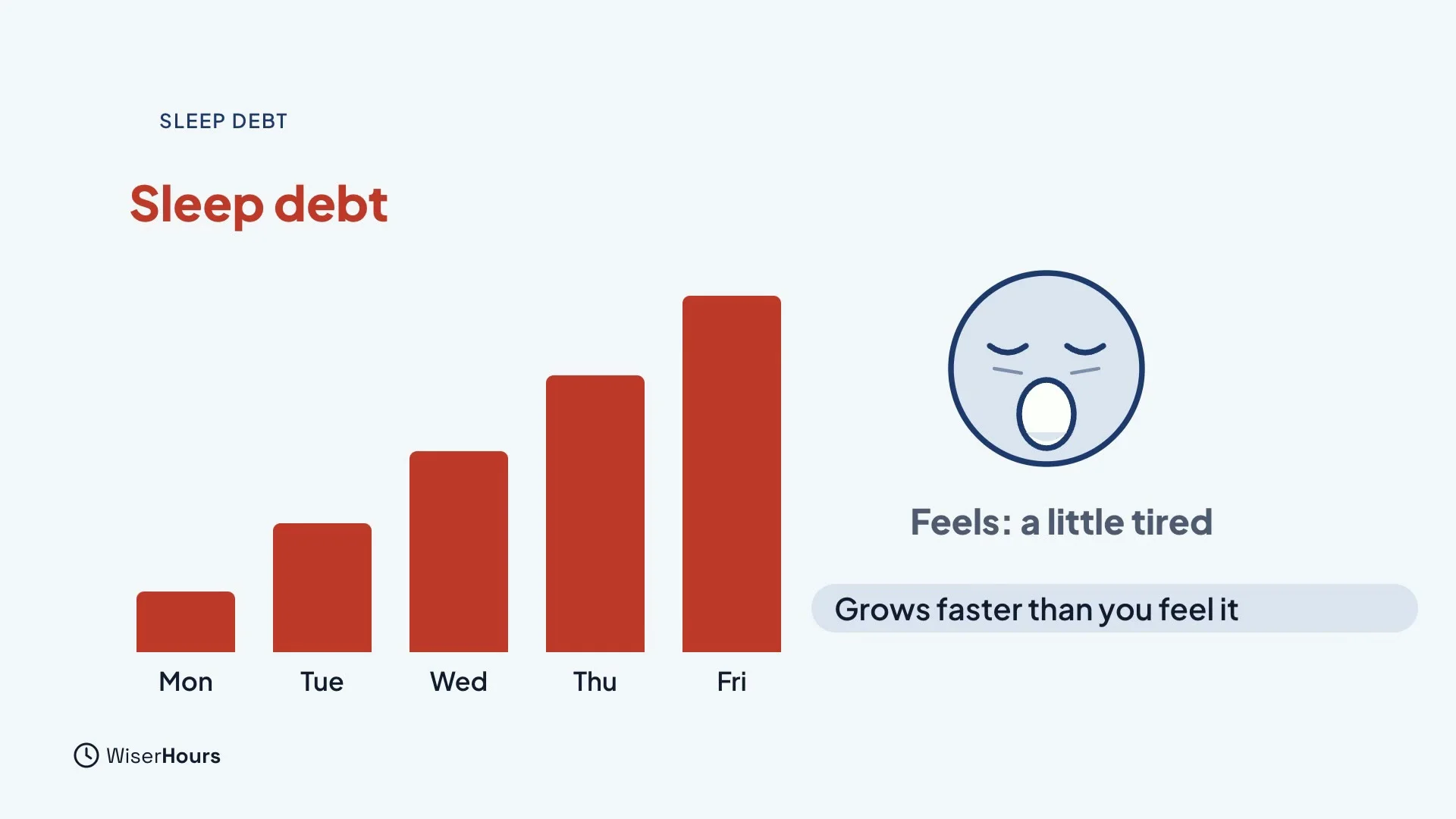
Sleep debt is the shortfall that builds when you sleep less than you need, night after night. Each short night adds a little more, and it grows faster than you feel it. By Friday you may only feel “a little tired” while the debt is much bigger than that. This is why “I feel fine” is a poor test of whether you slept enough.
 (opens the full-size picture)
One long night is not enough
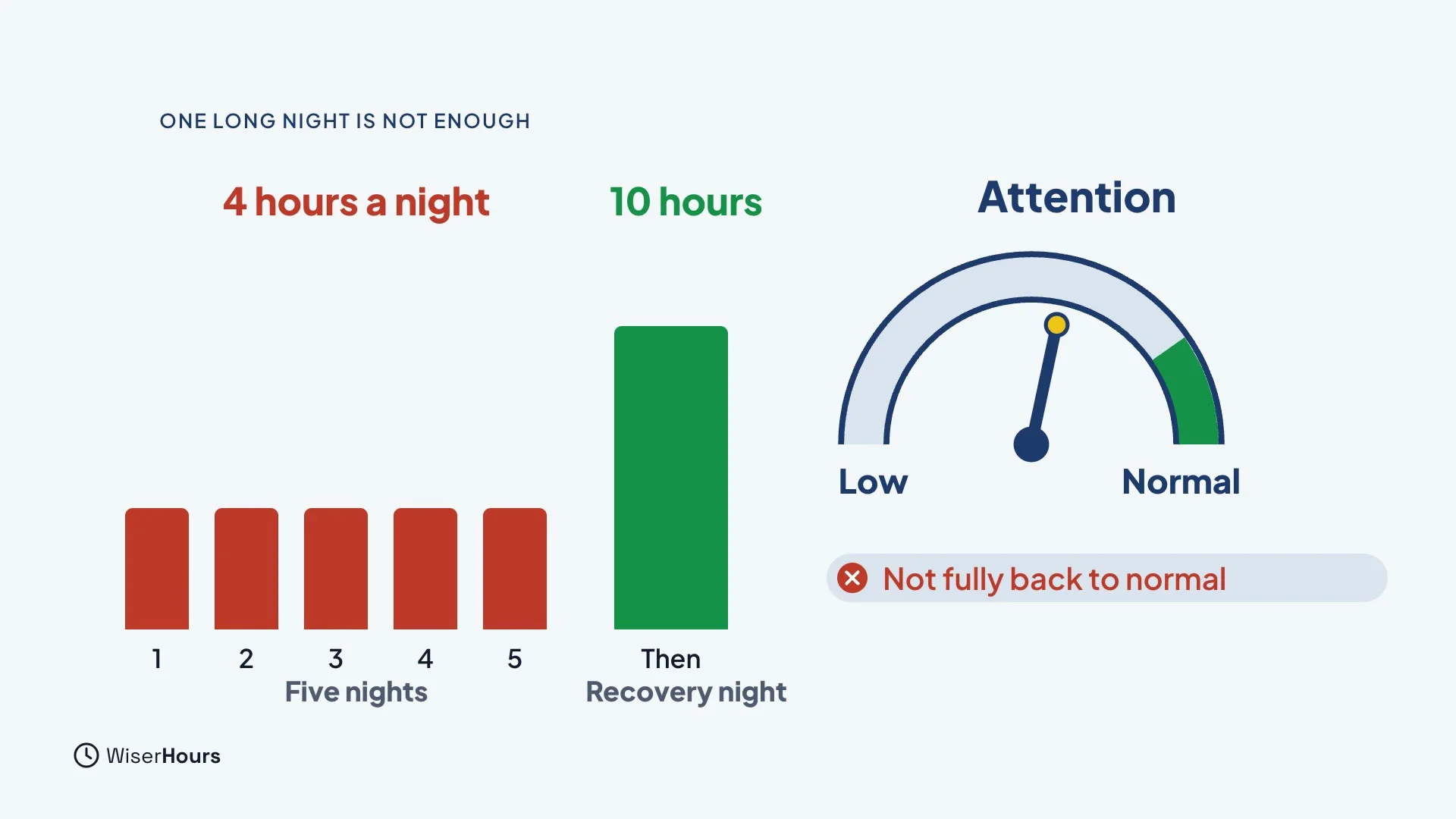
In one lab study, people slept just four hours a night for five nights. Afterwards, even a ten-hour recovery night did not bring their attention fully back to normal. One big night of sleep helps, but it does not wipe the slate clean.
 (opens the full-size picture)
The weekend trap
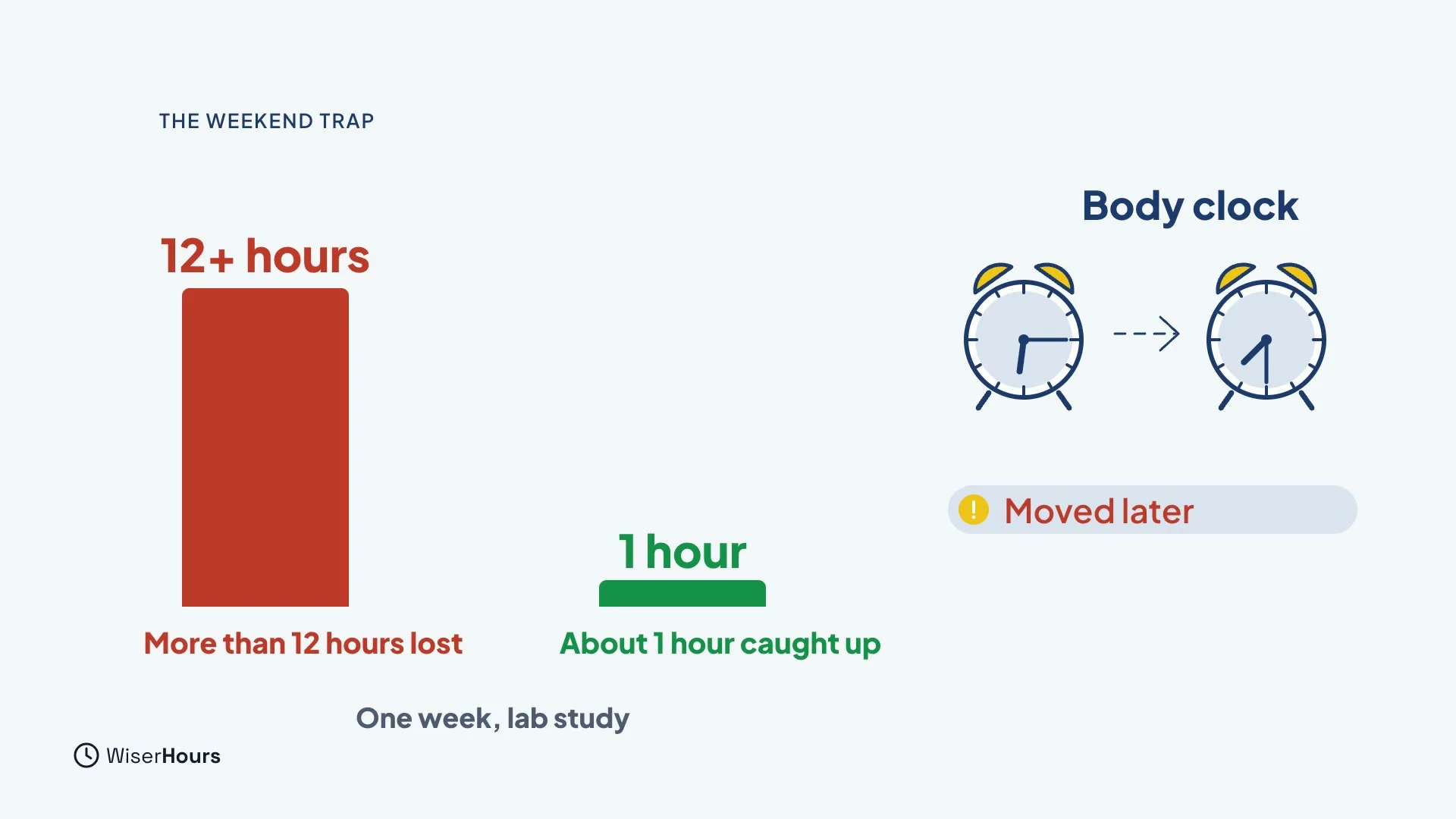
In another study, people slept five hours a night during the week, then slept as much as they liked at the weekend. Across three nights, they slept only about an hour more than usual, against more than twelve hours lost. Their body clocks also moved later, which can make the next week harder.
 (opens the full-size picture)
Repay it slowly
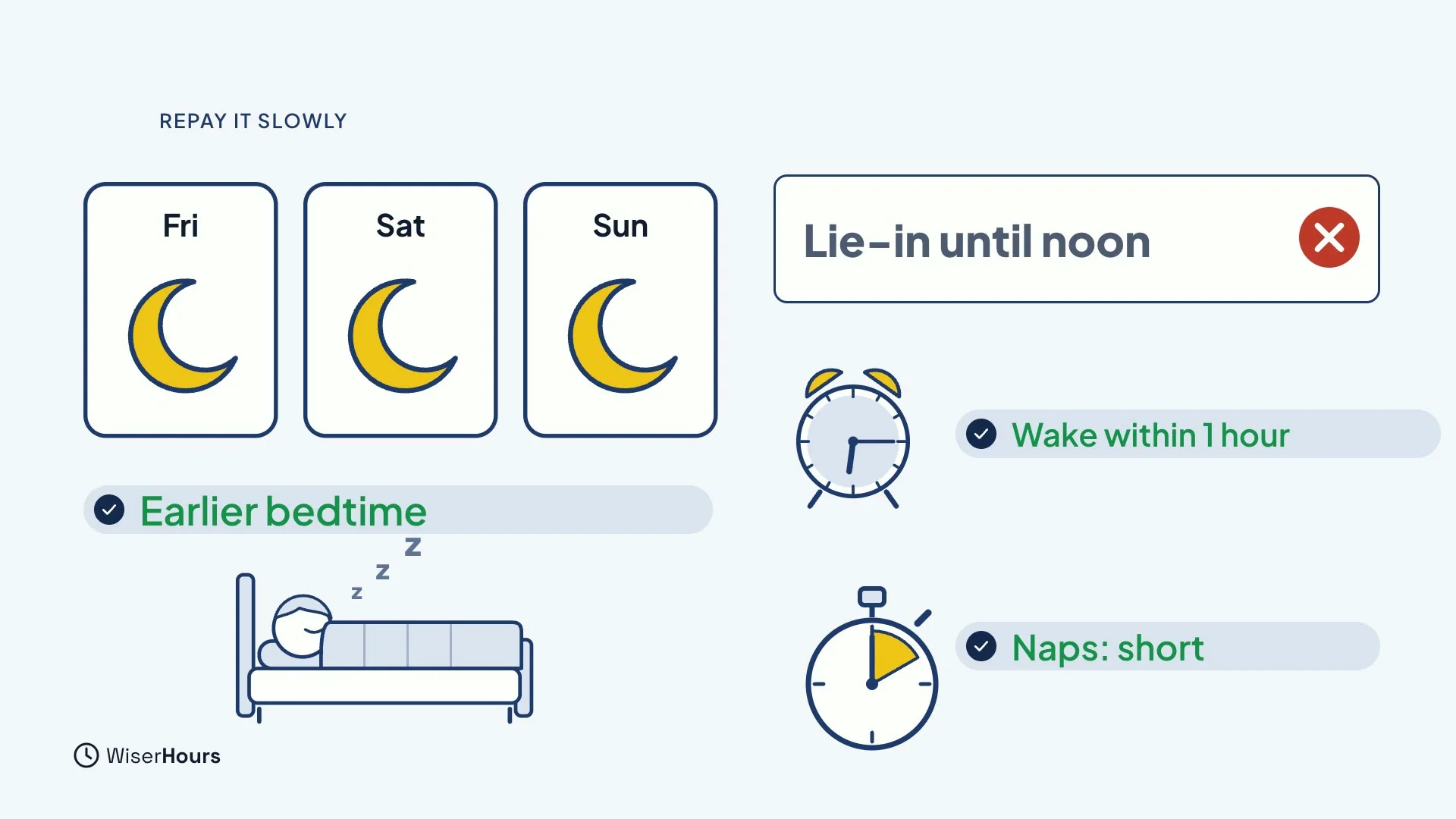
So repay it slowly. Go to bed a bit earlier for several nights, rather than having one long lie-in. Keep your weekend wake time within about an hour of your weekday one, and keep naps short. This fits what you learned on Night 1: a steady wake time protects your body clock.
 (opens the full-size picture)
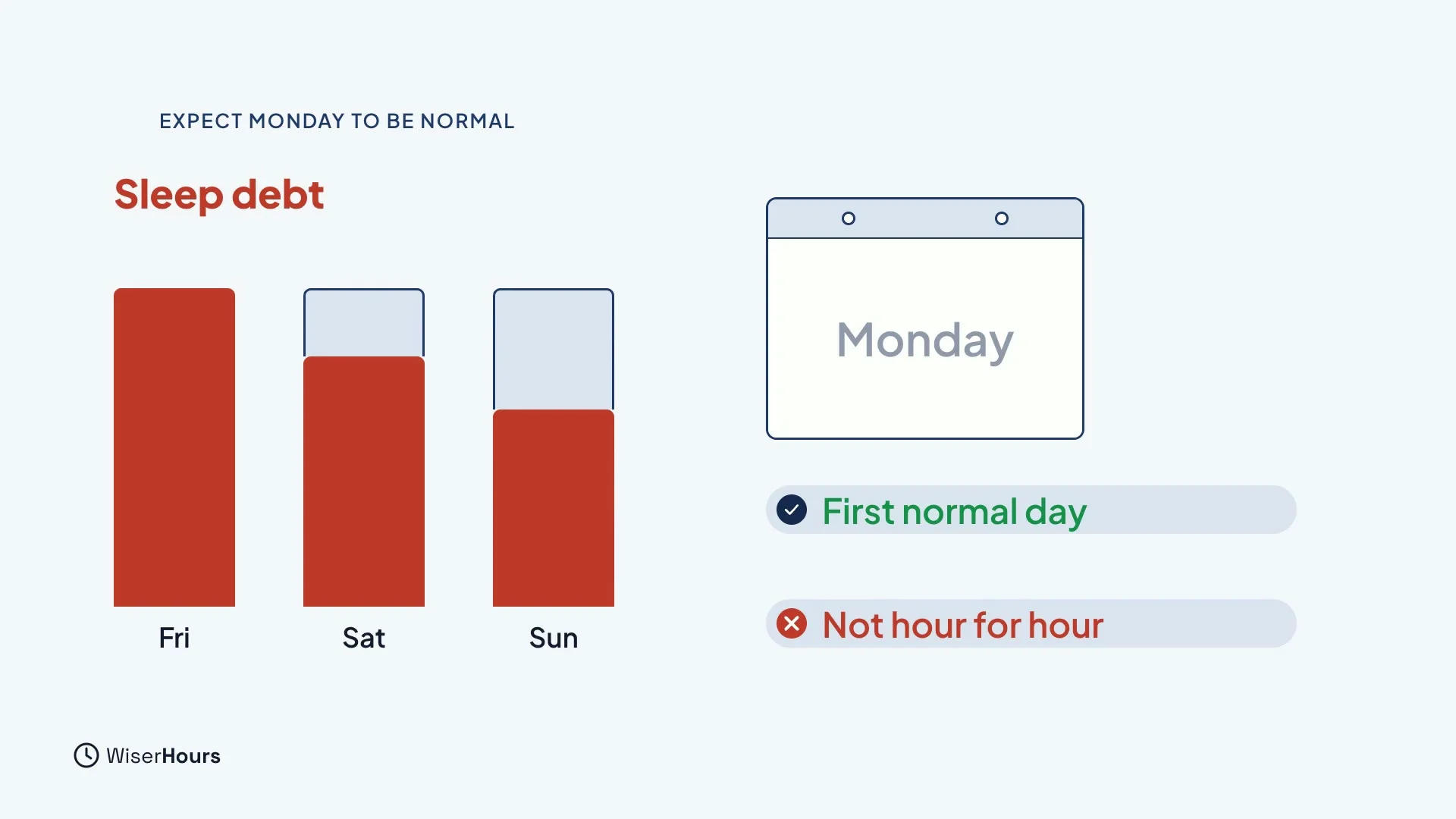
Expect Monday to be normal, not recovered
After a short week, expect Monday to be your first normal day, not a fully recovered one. You can repay sleep debt, but not hour for hour, and not in one weekend.
 (opens the full-size picture)
Stop it growing
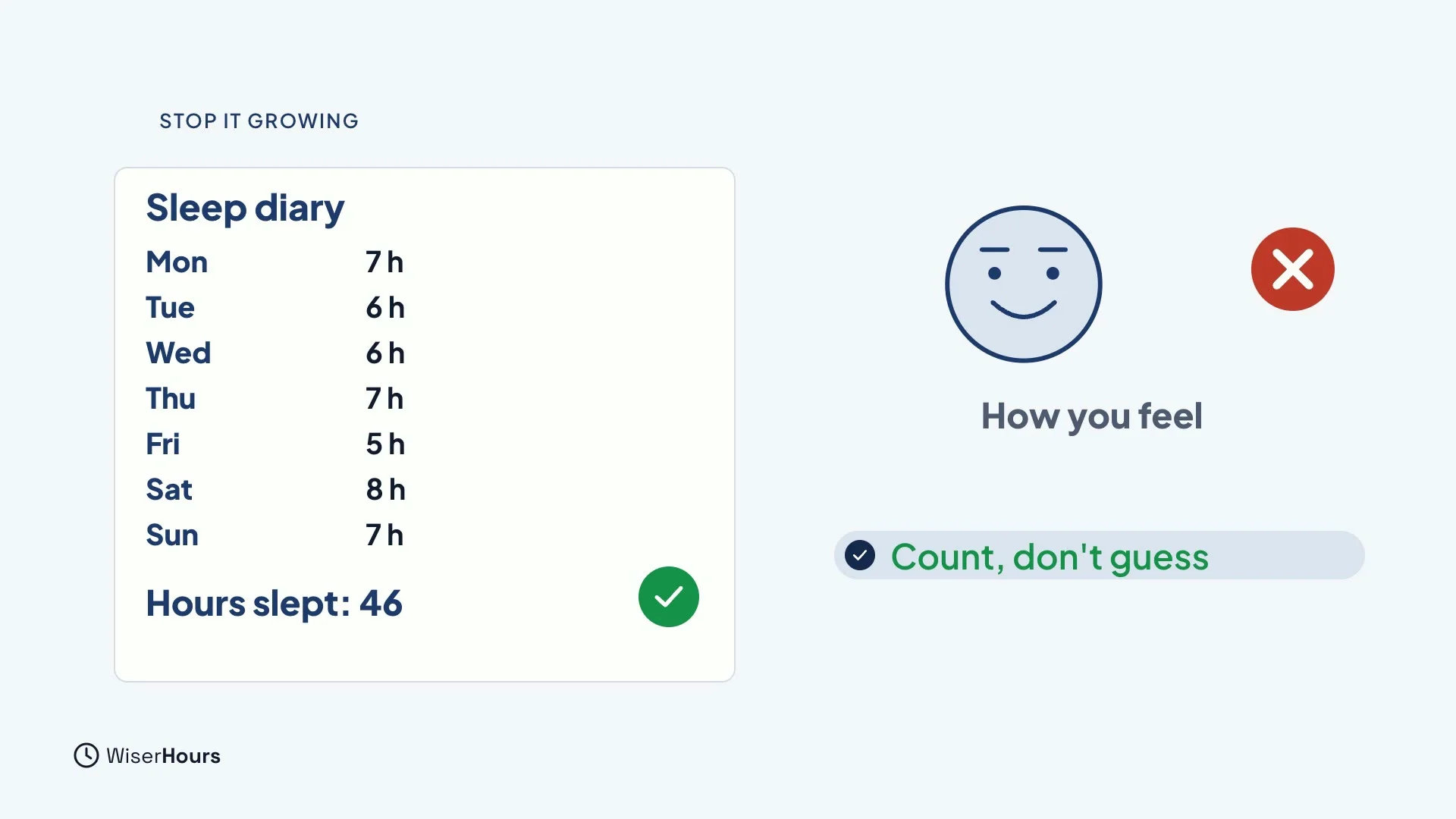
The best plan is to stop the debt from growing. Count your hours in your sleep diary instead of trusting how you feel. A week of numbers shows you quickly whether you are really getting the 7 or more hours adults need.
 (opens the full-size picture)
Drowsy at the wheel
After short nights, never drive when you are drowsy. If you feel your eyelids getting heavy, stop at the next safe place.
YOUR TURN
Read more
- Sleep Debt Explained: the lab trials behind this lesson, and what recovery really takes.
Read the full lesson script
Busy weeks happen to everyone. In this lesson, you'll see what happens when you build up a sleep debt, and the best way to catch up.
Sleep debt is the shortfall that builds when you sleep less than you need, night after night. It grows faster than you feel it.
In one lab study, people slept just four hours a night for five nights. Afterwards, even a ten-hour recovery night didn't bring their attention fully back to normal.
In another study, people slept five hours a night during the week, then slept as much as they liked at the weekend. Across three nights, they slept only about an hour more than usual, against more than twelve hours lost. Their body clocks also moved later.
So repay it slowly. Go to bed a bit earlier for several nights, rather than having one long lie-in. Keep your weekend wake time within about an hour of your weekday one, and keep naps short.
After a short week, expect Monday to be your first normal day, not a fully recovered one. You can repay sleep debt, but not hour for hour, and not in one weekend.
The best plan is to stop the debt from growing. Count your hours in your diary, instead of trusting how you feel.
So remember: sleep debt builds faster than you feel. You can't repay it in one weekend. So go to bed earlier for a few nights, and keep your wake time steady. Before the next lesson, after your next short night, plan an earlier bedtime instead of a lie-in. In the next lesson, you'll see what sleep trackers and sleep aids can and can't do.
MAKE IT A SMALL WIN
Finished this lesson?
Mark it complete to save your progress on this device.