Nights 4 to 7 · Lesson 7 of 11
Make Your Bedroom Quiet, Cool and Dark
Set up your bedroom for sleep: check light, noise, temperature and comfort, fix the one that bothers you most, and keep the bed for sleep.
 Video coming soon
Your bedroom can help you sleep, or keep you awake. In this lesson you set it up for sleep. You do not need new furniture or gadgets: you look at the room one thing at a time and fix the one that bothers you most. This is general information based on public-health guidance, not medical advice.
Quiet, cool and dark
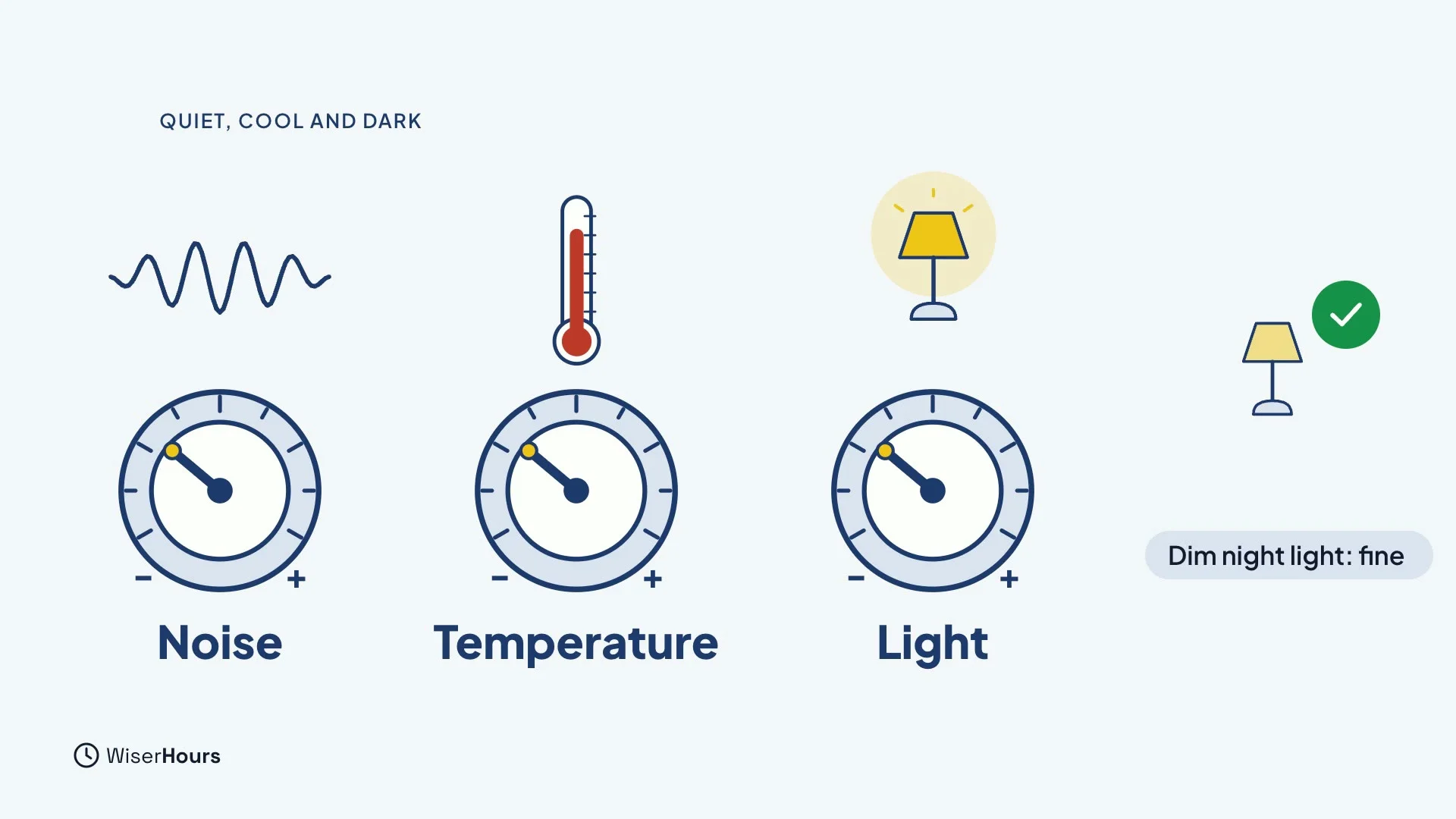
Health agencies recommend a bedroom that is quiet, cool and dark. Picture three dials, for noise, temperature and light, all turned down a little. A dim night light is fine if you need one, for example to find your way to the bathroom.
 (opens the full-size picture)
What keeps people awake
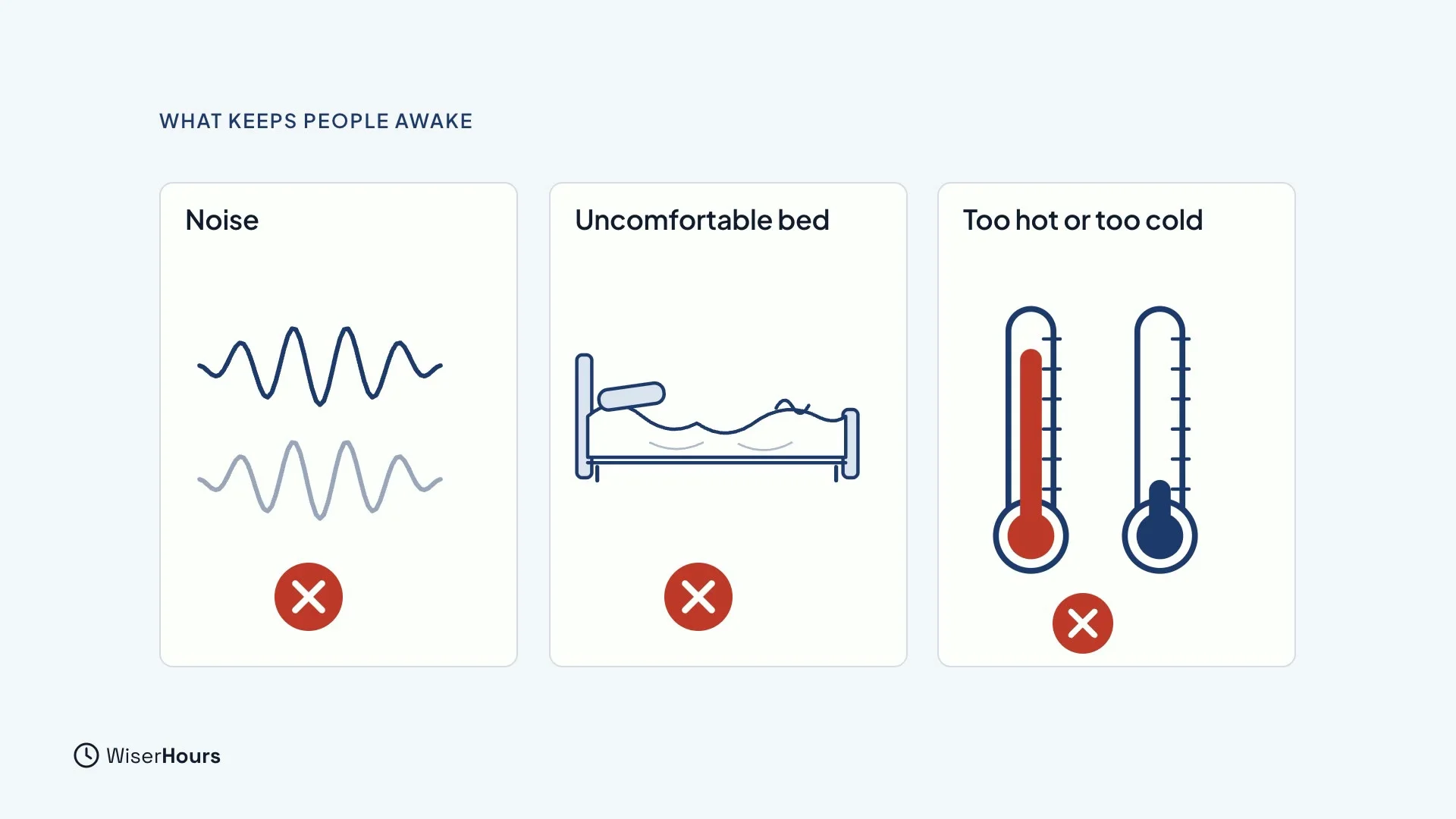
Common causes of poor sleep include noise, an uncomfortable bed, and a room that is too hot or too cold. These are ordinary, fixable things, which is why the bedroom is a good place to start. For a longer list of what can disturb sleep, see the article on insomnia below.
 (opens the full-size picture)
Fix one thing at a time
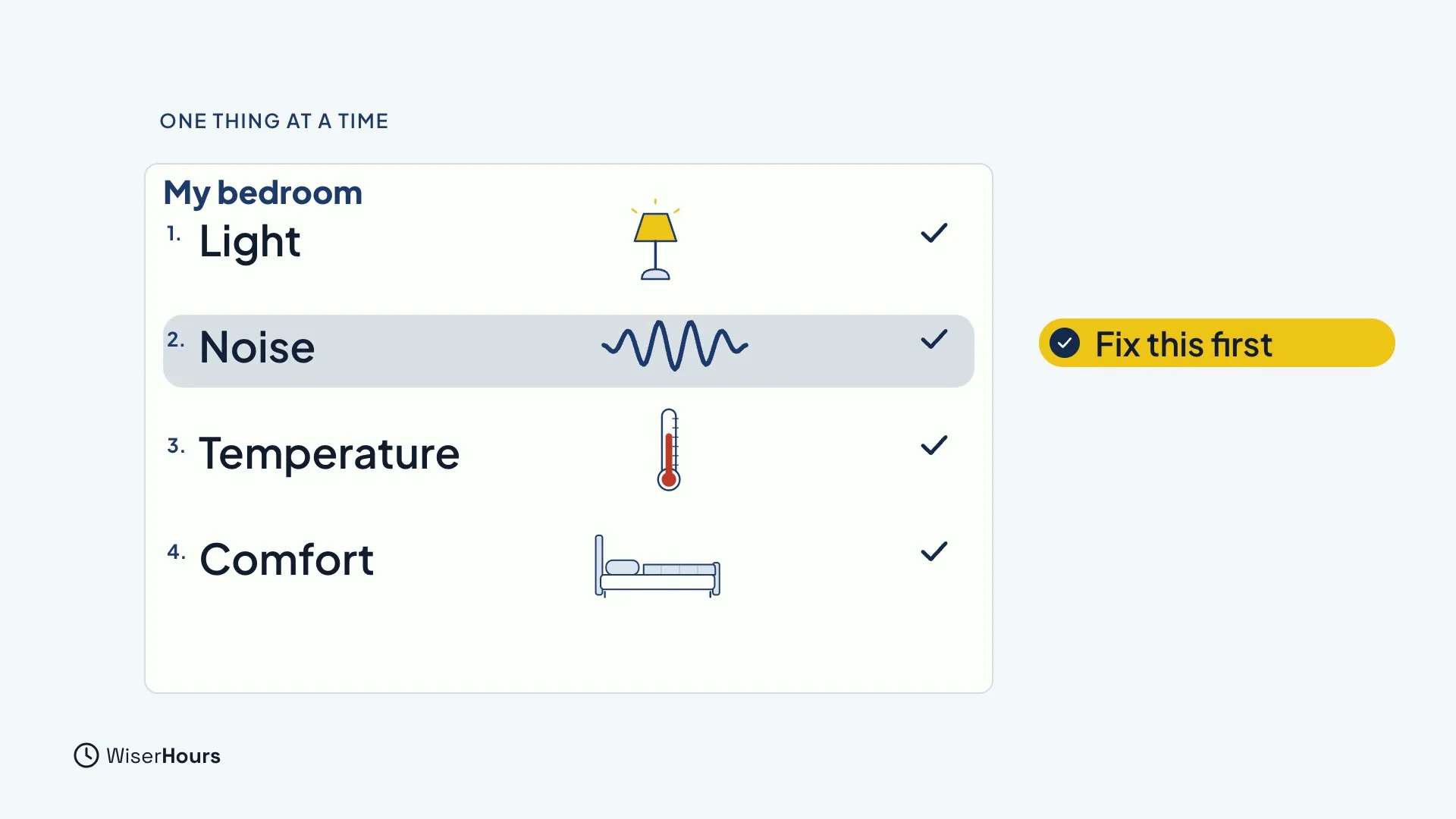
Walk around your room, or lie in the bed, and check four things: light, noise, temperature and comfort. Do not try to change them all tonight. Choose the one that bothers you most and fix that first. For example, if street light comes through the window, a curtain or an eye mask may be enough.
 (opens the full-size picture)
Keep the bed for sleep
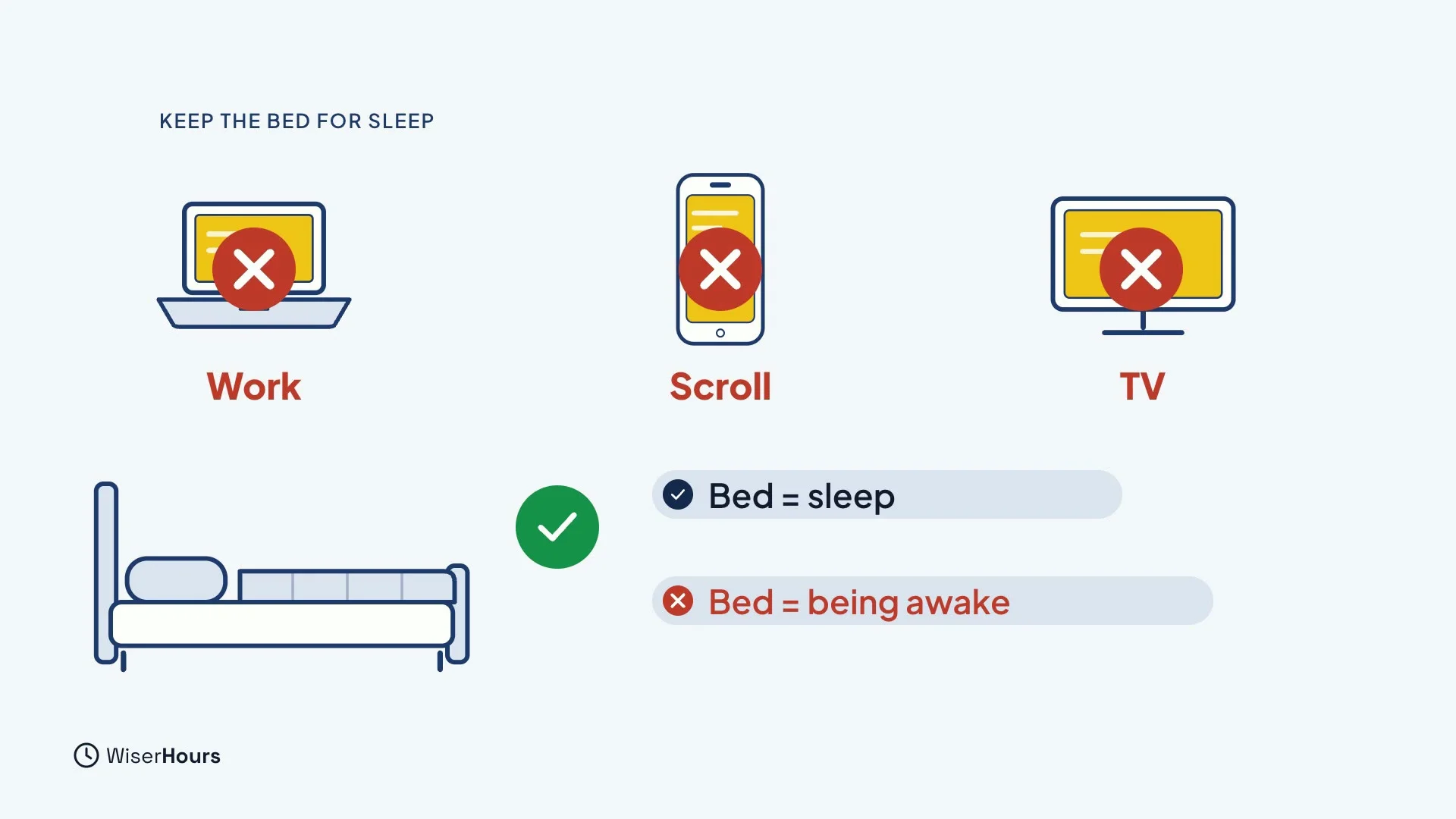
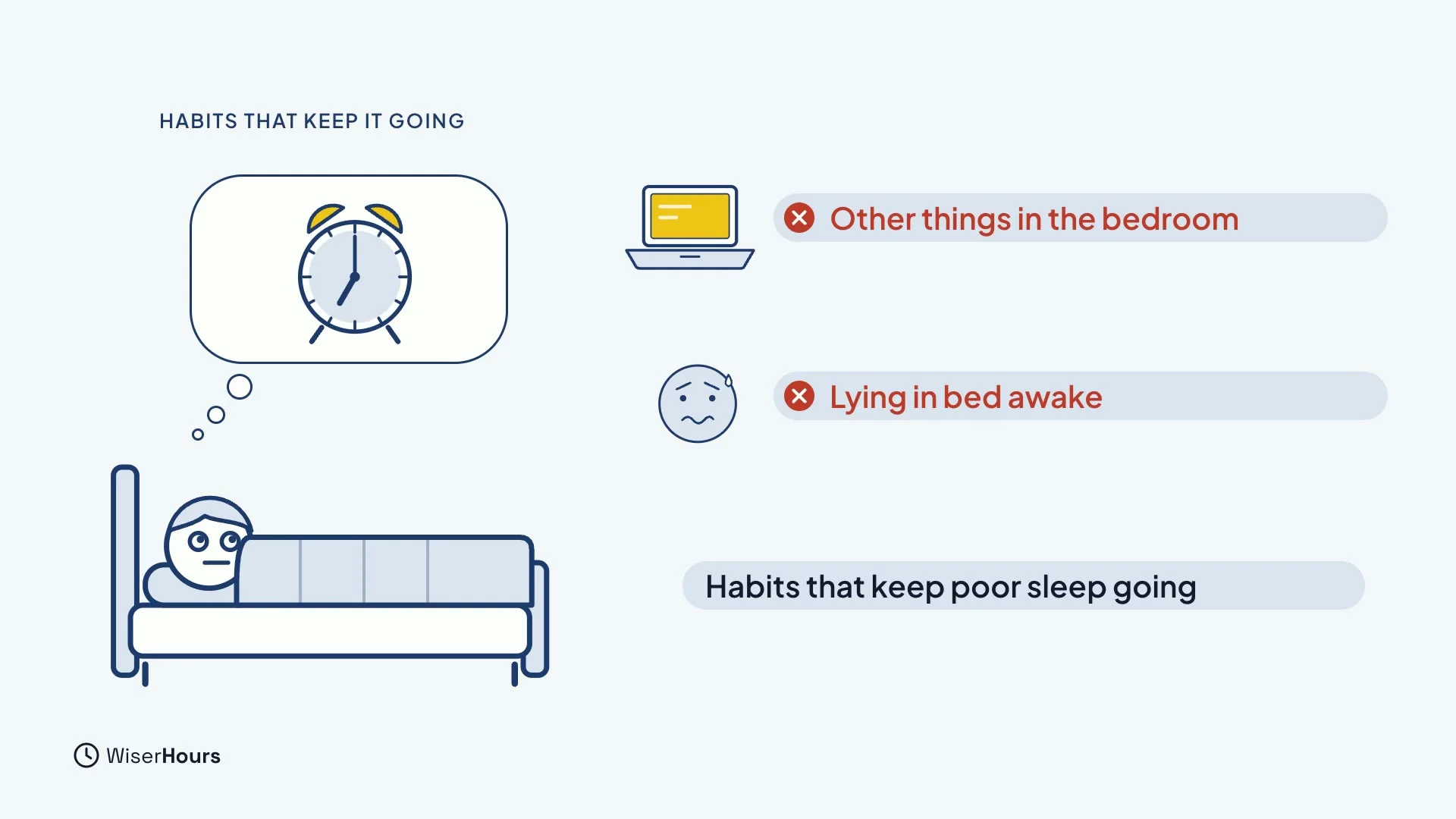
Keep your bed for sleep and sex. If you work, scroll on your phone or watch TV in bed, the bed can start to feel like a place for being awake. You want the opposite: when you get into bed, your body learns that this is where sleep happens.
 (opens the full-size picture)
 (opens the full-size picture)
What you can control
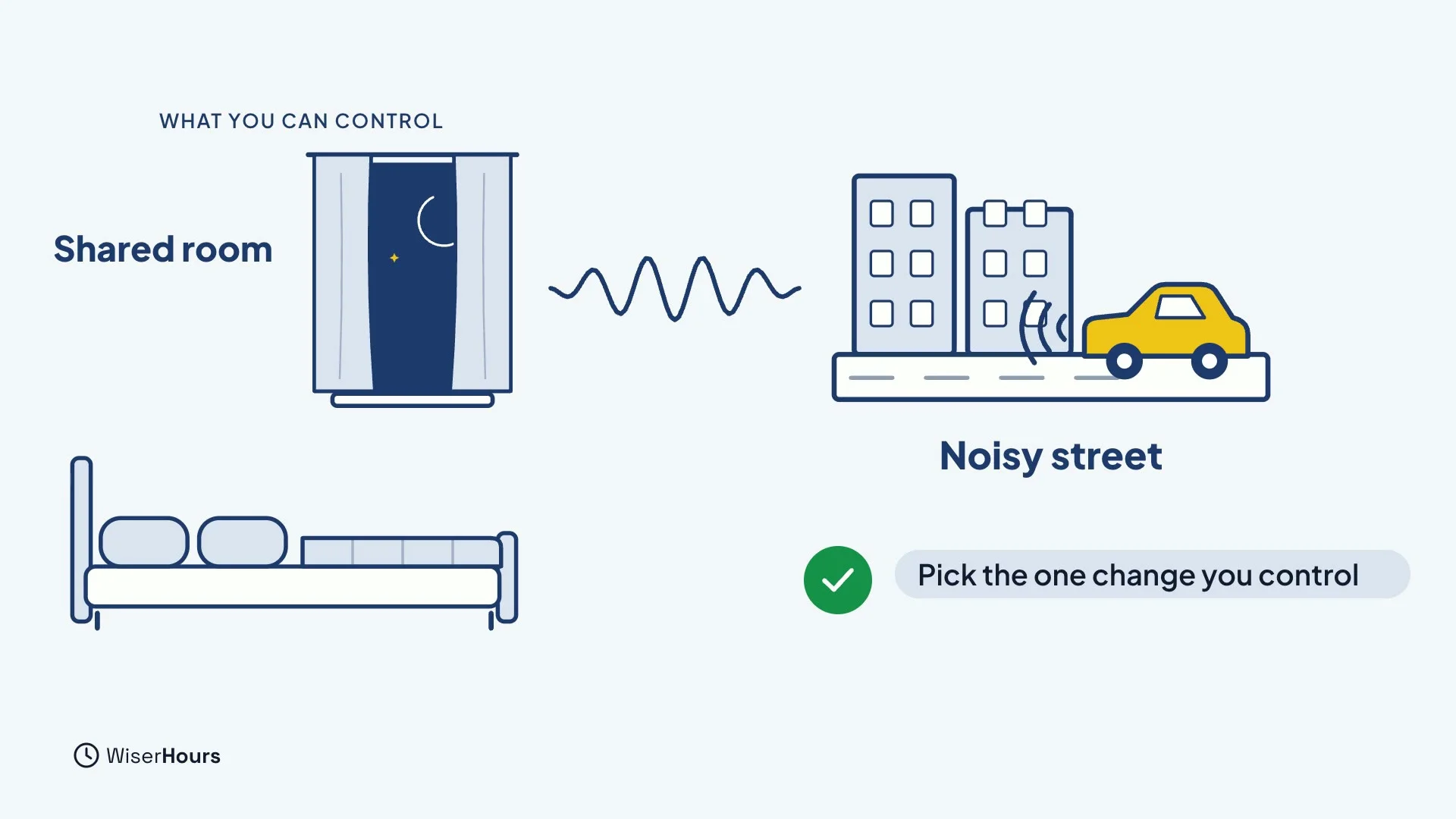
You may share a room, or live on a noisy street, and then you cannot fix everything. That is fine. Pick the one change that is in your control, and leave the rest. One small fix is better than a long list you never start.
 (opens the full-size picture)
A note on the evidence
The quiet, cool, dark advice comes from public-health guidance, not from large trials of bedroom changes. Treat it as a sensible starting point. If poor sleep continues, the last lesson explains when to see a doctor.
YOUR TURN
Read more
- How to Sleep Better: the full list of evidence-based habits, including the bedroom.
- Insomnia Explained: common causes of poor sleep, and when to see a doctor.
Read the full lesson script
Your bedroom can help you sleep, or keep you awake. In this lesson, you'll set it up for sleep.
Health agencies recommend a bedroom that's quiet, cool and dark. A dim night light is fine if you need one.
Common causes of poor sleep include noise, an uncomfortable bed, and a room that's too hot or too cold.
Look at your room one thing at a time: light, noise, temperature and comfort. Fix the one that bothers you most first.
Keep your bed for sleep and sex. If you work, scroll or watch TV in bed, the bed can start to feel like a place for being awake.
Doing other things in the bedroom, and staying in bed while awake, are among the habits that can keep poor sleep going.
If you share a room, or live somewhere noisy, you may not be able to fix everything. Pick the one change that's in your control.
So remember: aim for a quiet, cool, dark bedroom. Keep the bed for sleep. And fix one thing at a time. Before the next lesson, fix the one thing in your bedroom that bothers you most. In the next lesson, you'll learn what to do when you can't sleep.
MAKE IT A SMALL WIN
Finished this lesson?
Mark it complete to save your progress on this device.