Nights 4 to 7 · Lesson 6 of 11
A Wind-Down Hour and the Phone: Better Sleep Habits
Build a calm last hour before bed, keep your phone out of reach and use a short to-do list to settle a busy mind.
 Video coming soon
The hour before bed can make or break your night. In this lesson you build a simple wind-down hour, and deal with the phone. This is general information, not medical advice.
A quiet hour
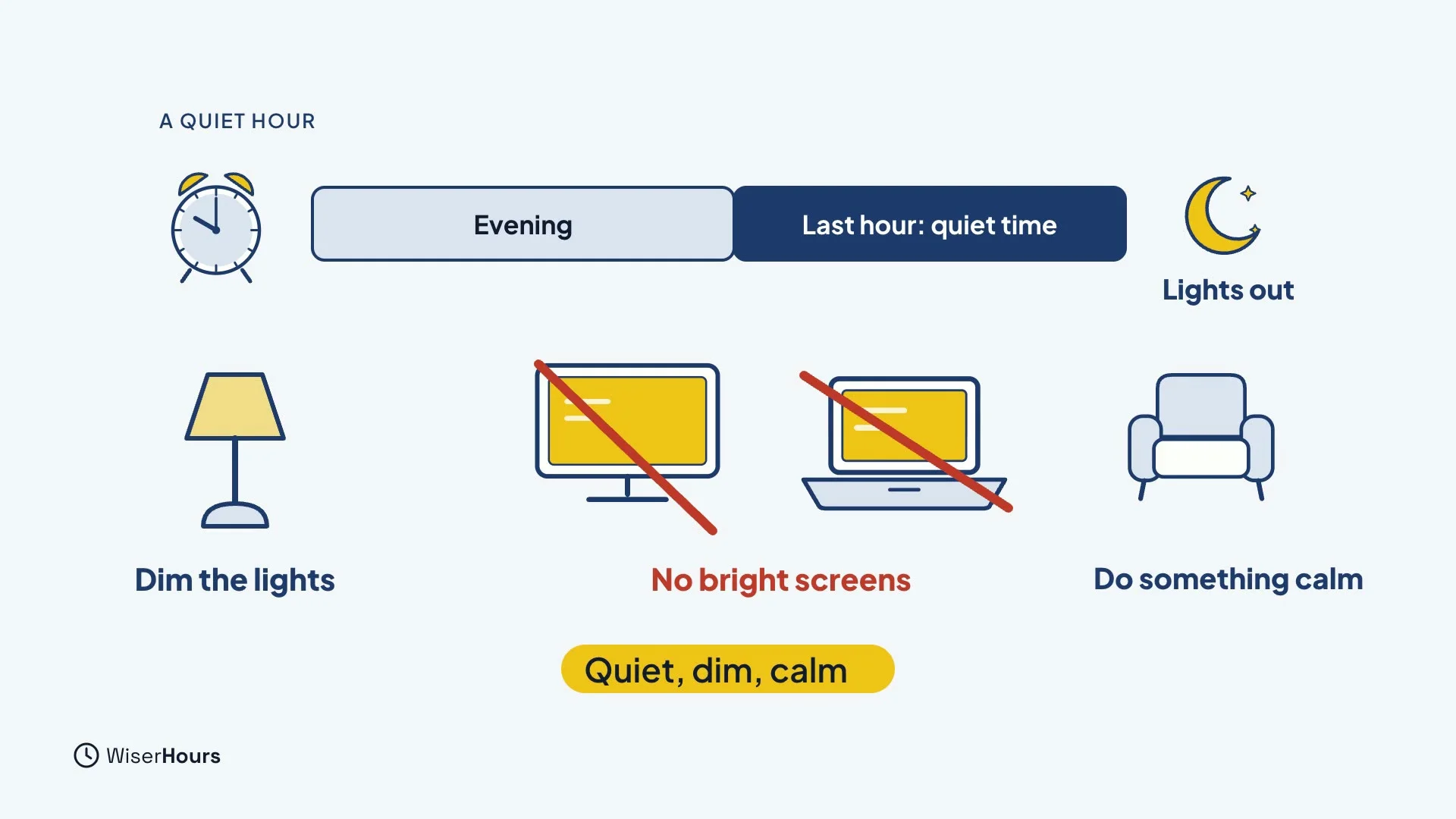
Health agencies suggest using the last hour before bed as quiet time, without bright light from TVs or computers. Dim the lights, and do something calm.
 (opens the full-size picture)
The phone
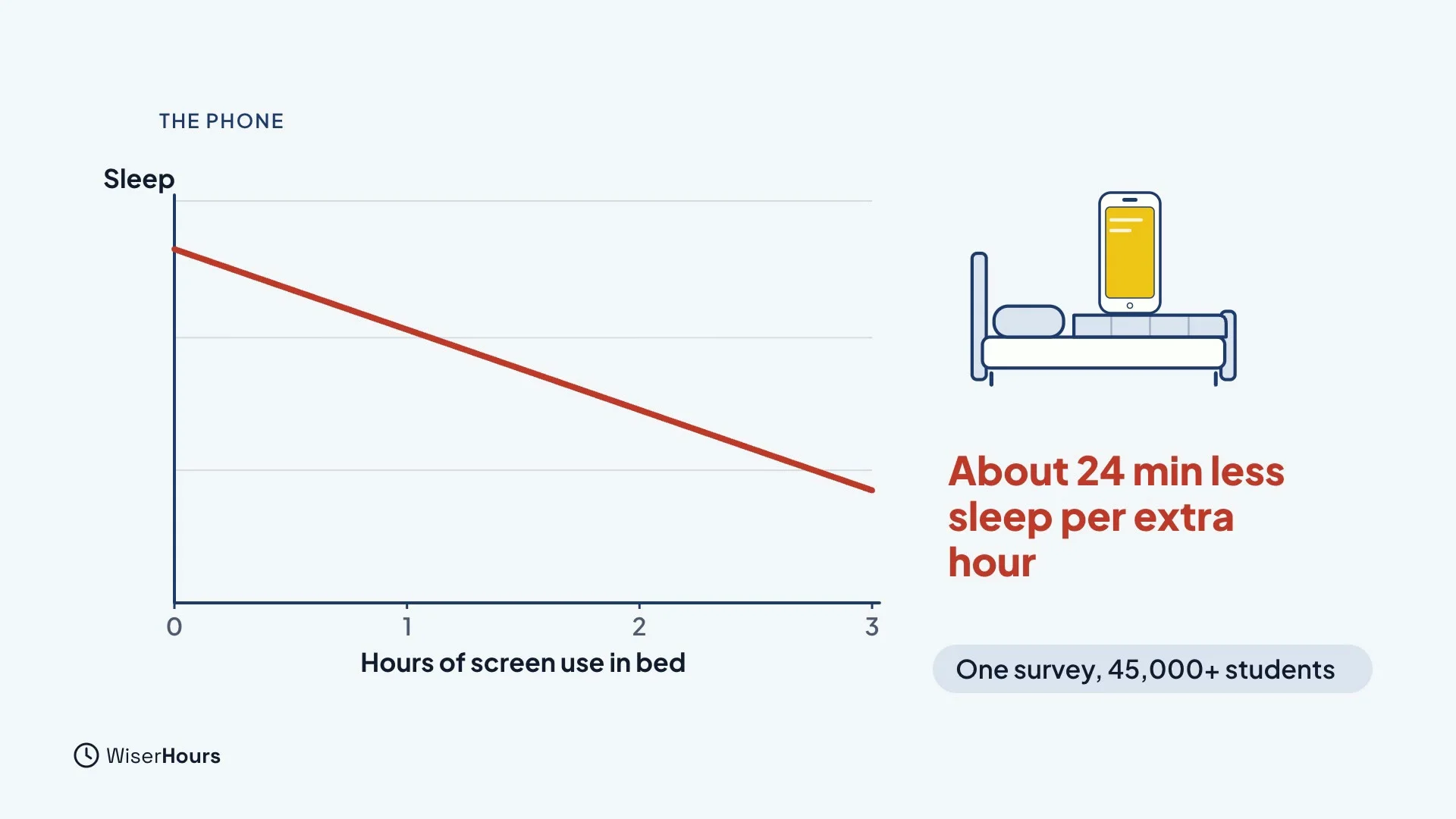
Phones are the hardest part. In a survey of more than 45,000 students, each extra hour of screen use in bed went with about 24 minutes less sleep. The researchers think the screen mostly replaces sleep time, whatever you are doing on it. This was one survey of students, and a survey shows a link, not proof of cause.
 (opens the full-size picture)
Put it out of reach
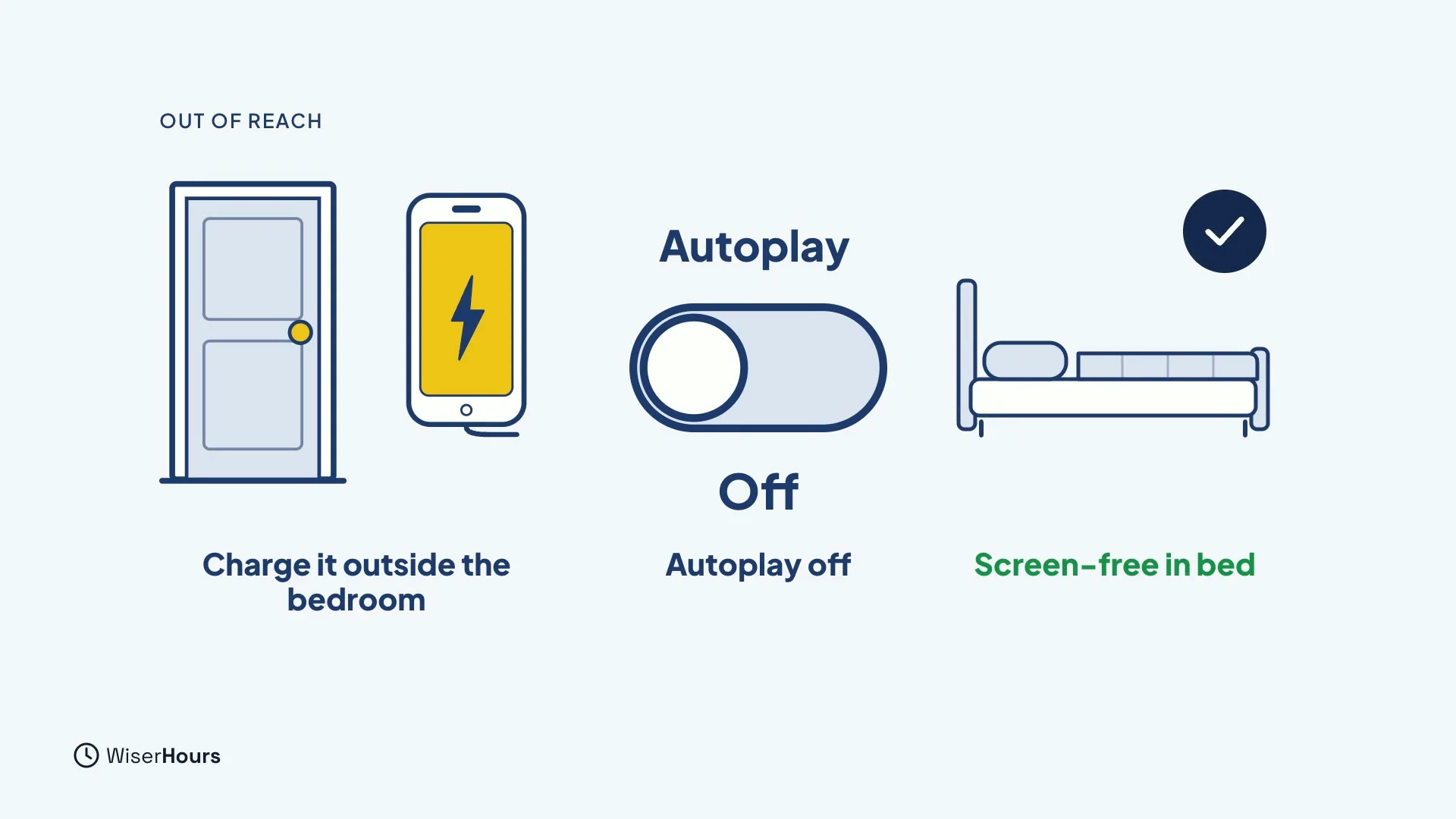
So put the phone out of reach. Charge it outside the bedroom, and turn off autoplay. If you protect just one screen-free stretch, make it the time between getting into bed and falling asleep.
 (opens the full-size picture)
What if the phone is your alarm?
If you need a phone nearby, for an alarm or for a child or relative, you do not have to give up that safety. Aim for the phone to be out of arm’s reach and face down, and try the screen-free stretch between getting into bed and falling asleep.
Write tomorrow’s to-do list
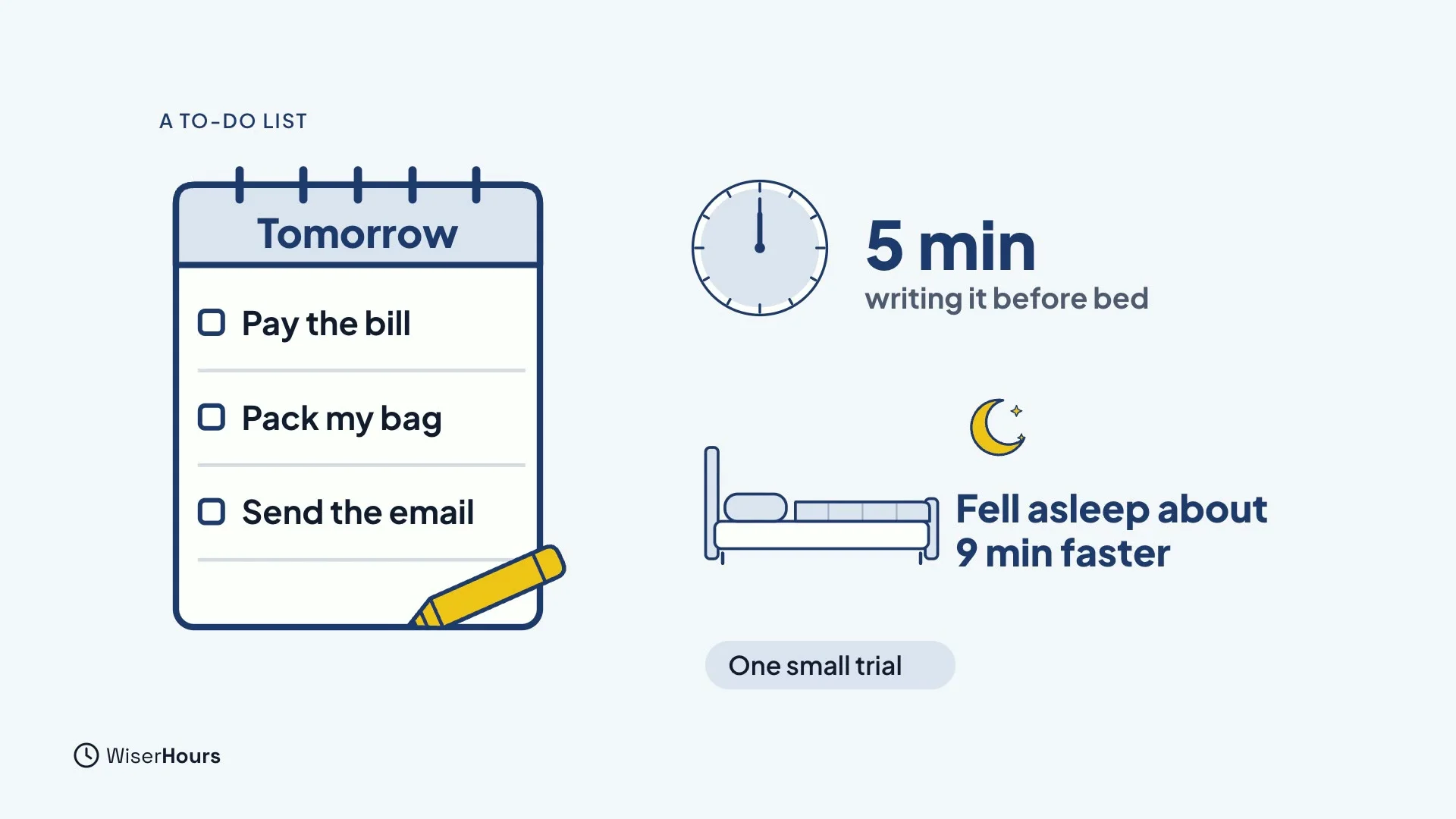
Busy mind? Try writing tomorrow’s to-do list. In one small trial, people who spent five minutes writing a to-do list before bed fell asleep about nine minutes faster than people who listed tasks they had already done. It was one small trial, so treat it as something to try.
 (opens the full-size picture)
Make room for your own time
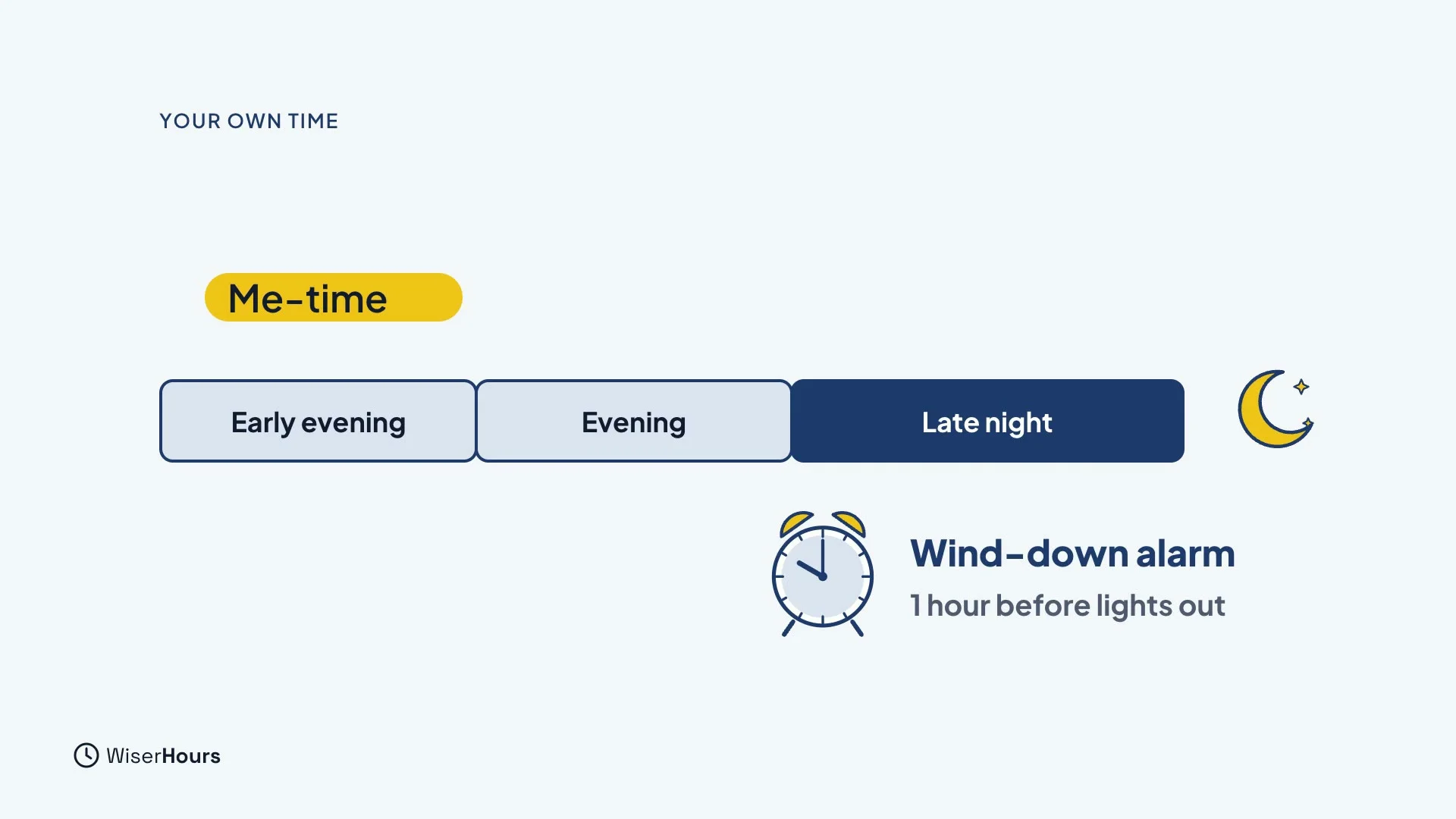
Many people stay up late because the evening is the only time that feels like their own. If that sounds like you, try moving some of that me-time earlier, and set a wind-down alarm an hour before lights out.
 (opens the full-size picture)
An example evening
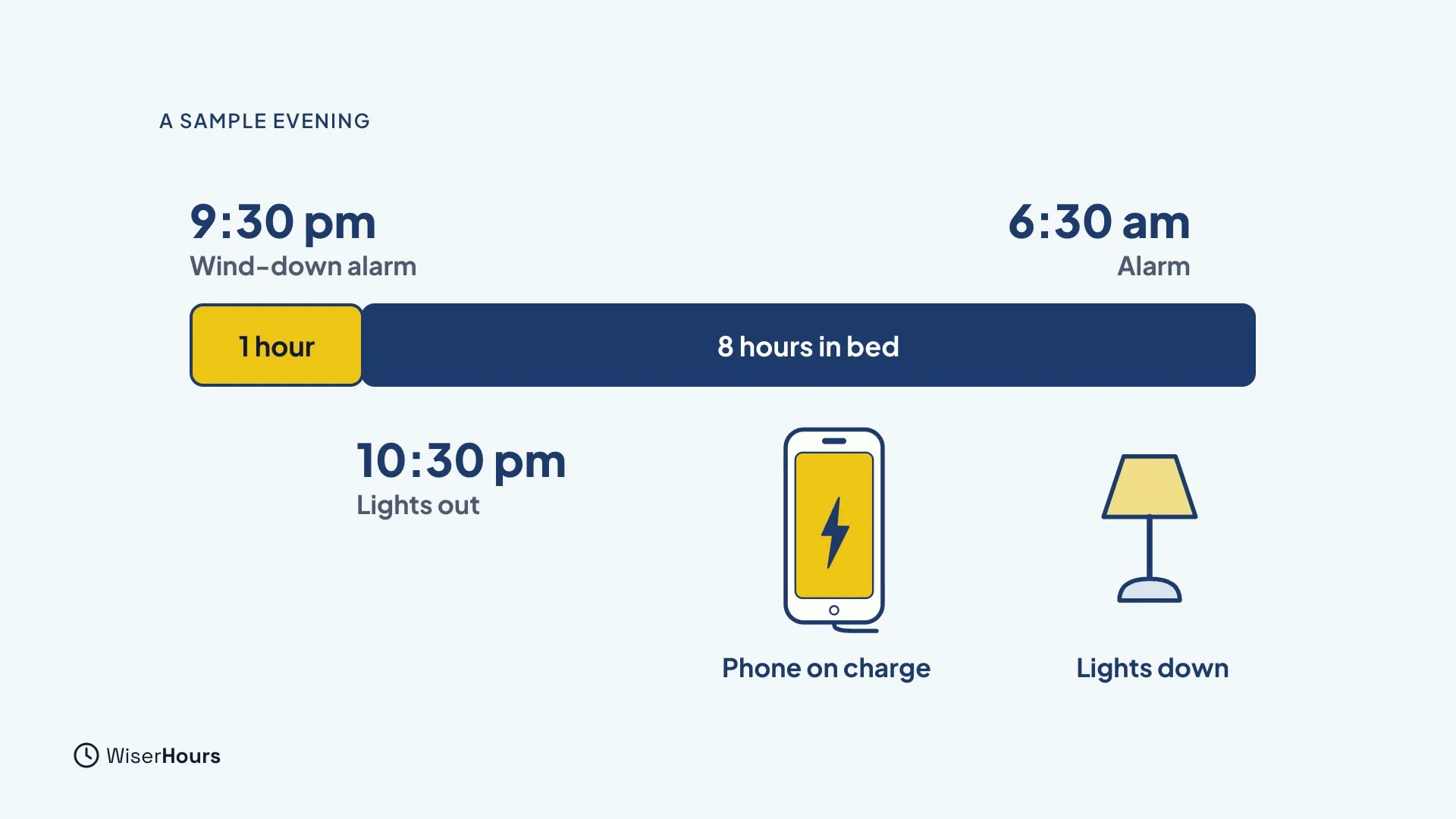
For example, with a 6:30 alarm and eight hours in bed, lights out is 10:30, so the wind-down alarm goes off at 9:30. Then the phone goes on charge, the lights go down, and the calm hour begins.
 (opens the full-size picture)
Your own times will differ. Use the lights-out time you worked out on Night 1, and count one hour back from it.
YOUR TURN
Read more
- How to Sleep Better: the quiet-hour advice from health agencies
- Revenge Bedtime Procrastination: why we stay up late for “me time”, and what to do about it
- How Much Screen Time Is Too Much for Adults?: what the research says about screens
Read the full lesson script
The hour before bed can make or break your night. In this lesson, you'll build a simple wind-down hour, and deal with the phone.
Health agencies suggest using the last hour before bed as quiet time, without bright light from TVs or computers. Dim the lights, and do something calm.
Phones are the hardest part. In a survey of more than 45,000 students, each extra hour of screen use in bed went with about 24 minutes less sleep. The researchers think the screen mostly replaces sleep time, whatever you're doing on it.
So put the phone out of reach. Charge it outside the bedroom, and turn off autoplay. If you protect just one screen-free stretch, make it the time between getting into bed and falling asleep.
Busy mind? Try writing tomorrow's to-do list. In one small trial, people who spent five minutes writing a to-do list before bed fell asleep about nine minutes faster than people who listed tasks they'd already done.
Many people stay up late because the evening is the only time that feels like their own. Try moving some of that me-time earlier, and set a wind-down alarm an hour before lights out.
For example, with a 6:30 alarm and eight hours in bed, lights out is 10:30, so the wind-down alarm goes off at 9:30. Then the phone goes on charge, the lights go down, and the calm hour begins.
So remember: make the last hour quiet and dim. Keep the phone out of reach, especially in bed. And a short to-do list can settle a busy mind. Before the next lesson, set a wind-down alarm an hour before lights out, and write tomorrow's to-do list. In the next lesson, you'll set up your bedroom for sleep.
MAKE IT A SMALL WIN
Finished this lesson?
Mark it complete to save your progress on this device.