Before you start · Lesson 1 of 11
Why Reset Your Sleep: How Much Adults Need
See how much sleep adults are advised to get, why feeling fine can fool you, and how a week of one habit a night works.
 Video coming soon
Many of us treat sleep as the thing we cut when life gets busy. In this lesson you see how much sleep adults are advised to get, why feeling fine can fool you, and how the next seven nights will work. This course is general information, not medical advice.
How much sleep adults need
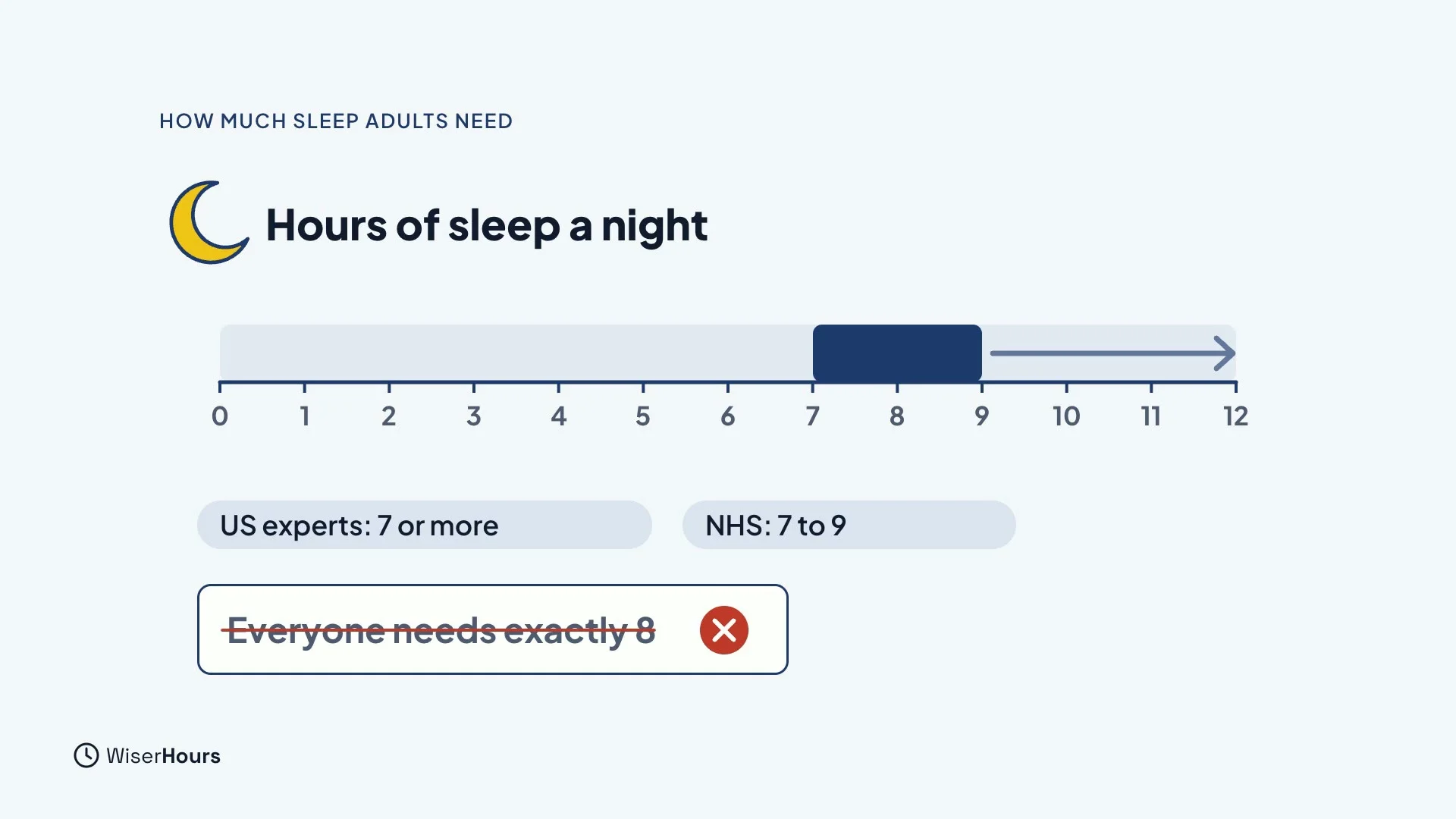
Sleep experts in the US say adults should sleep seven or more hours a night on a regular basis. The UK’s NHS says seven to nine. That is a range, not one magic number, and no expert panel says that everyone needs exactly eight hours.
 (opens the full-size picture)
Time asleep needs more time in bed
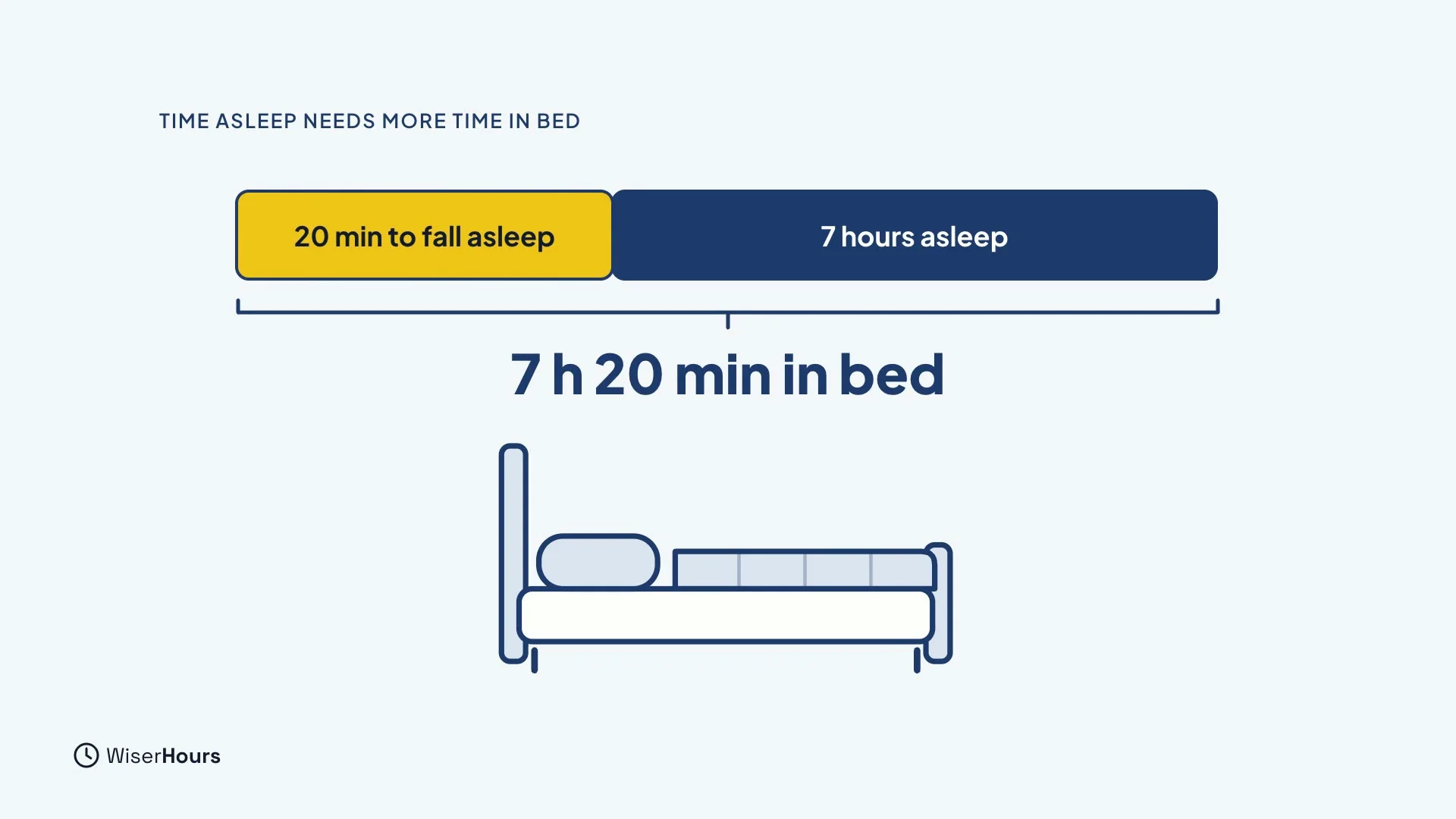
Seven hours of sleep needs more than seven hours in bed, because falling asleep takes time. If you usually take twenty minutes to drift off, that time comes on top. So the bed-time you plan has to be longer than the sleep you want.
 (opens the full-size picture)
Feeling fine can fool you
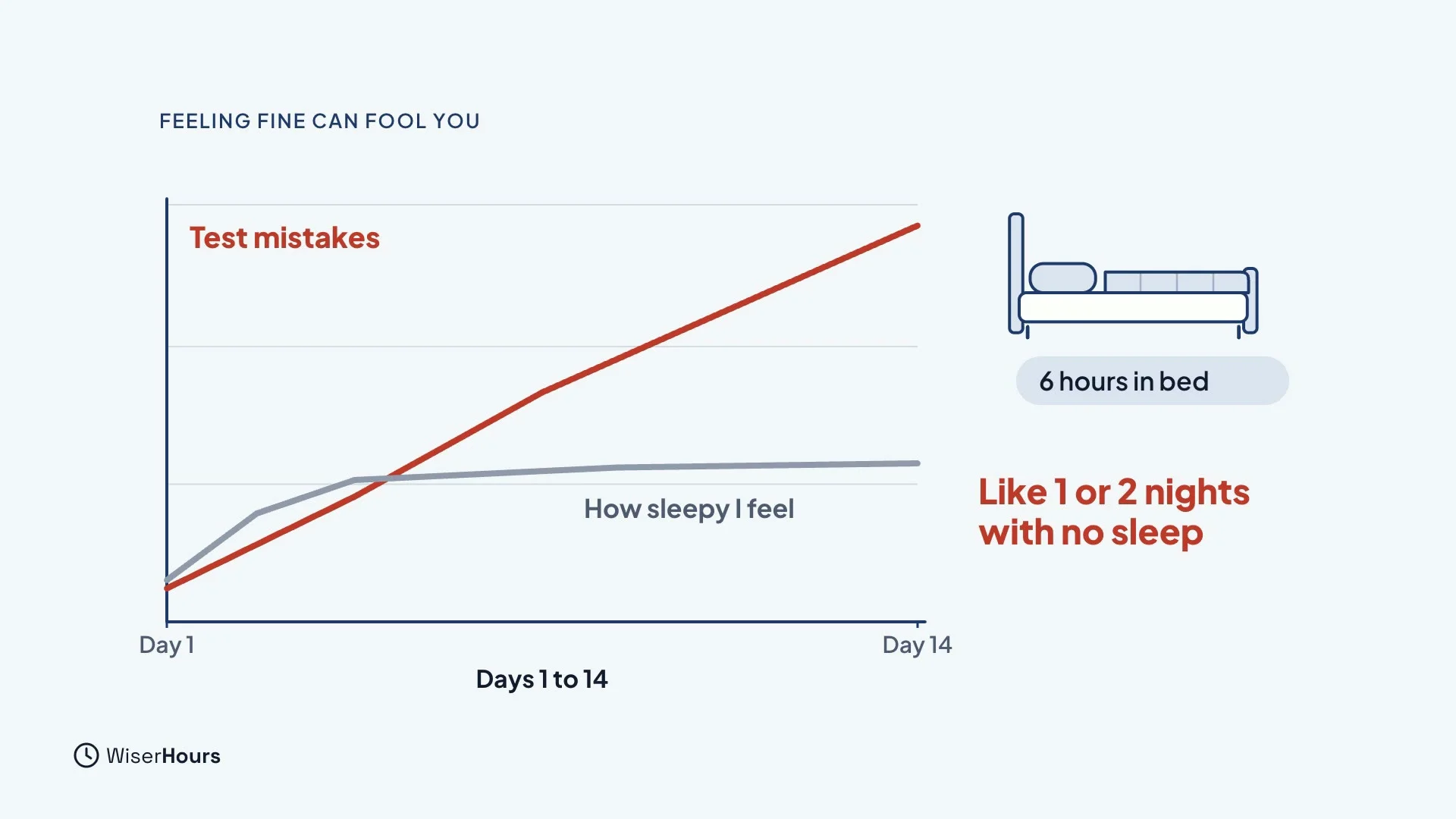
Here is the catch. How sleepy you feel is a poor guide to how well you are doing. In one lab study, healthy adults spent six hours a night in bed for two weeks. Their test results kept getting worse, but they felt only a little sleepier after the first few days. By the end, their results looked like those of people who had missed one or two full nights of sleep.
 (opens the full-size picture)
This was one lab study of healthy adults, so treat it as a warning sign, not a rule for everyone.
Watch your days instead
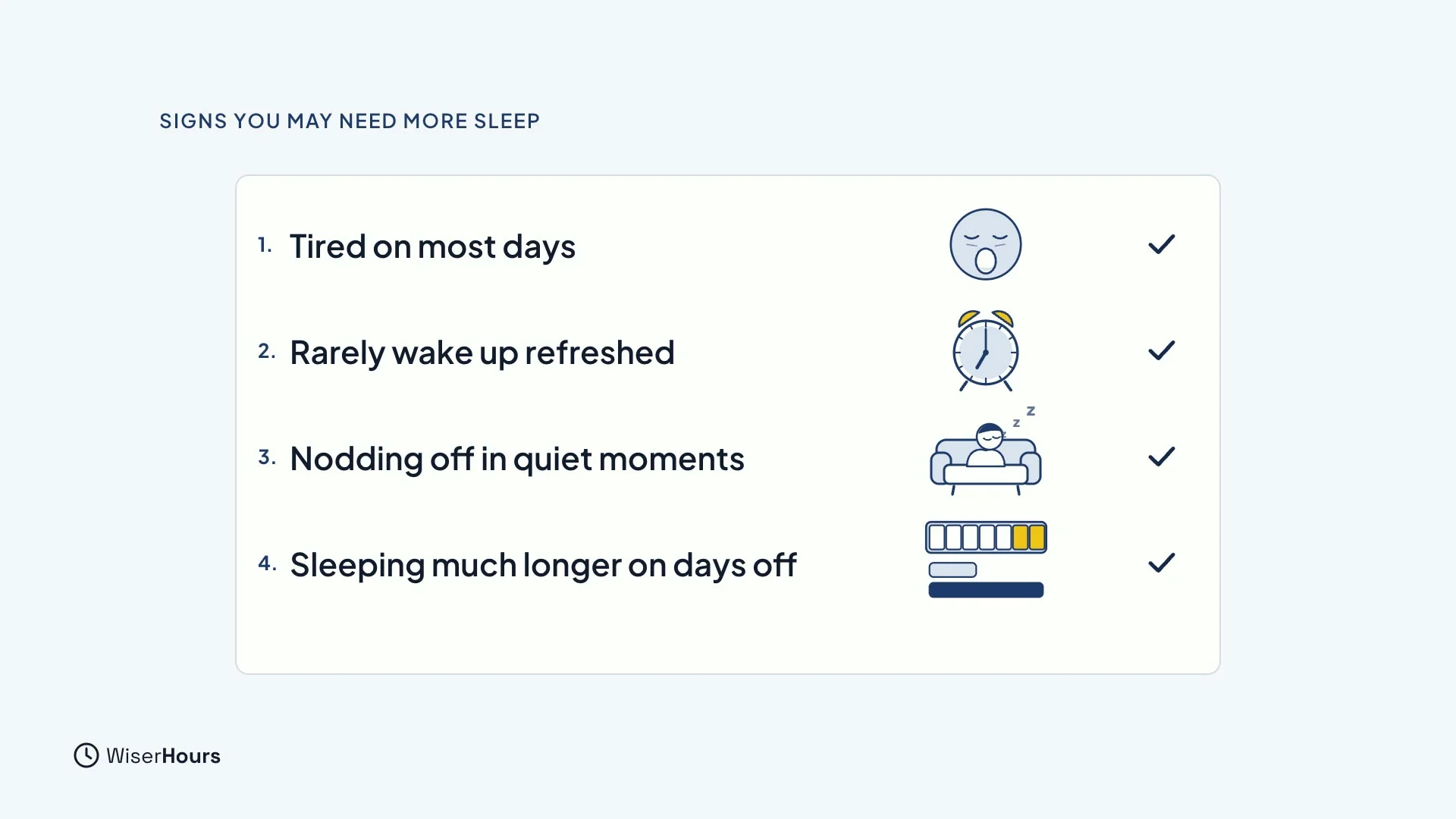
So look at your days. Signs you may need more sleep include:
- feeling tired on most days
- rarely waking up refreshed
- nodding off in quiet moments
- sleeping much longer on your days off
 (opens the full-size picture)
How the week works
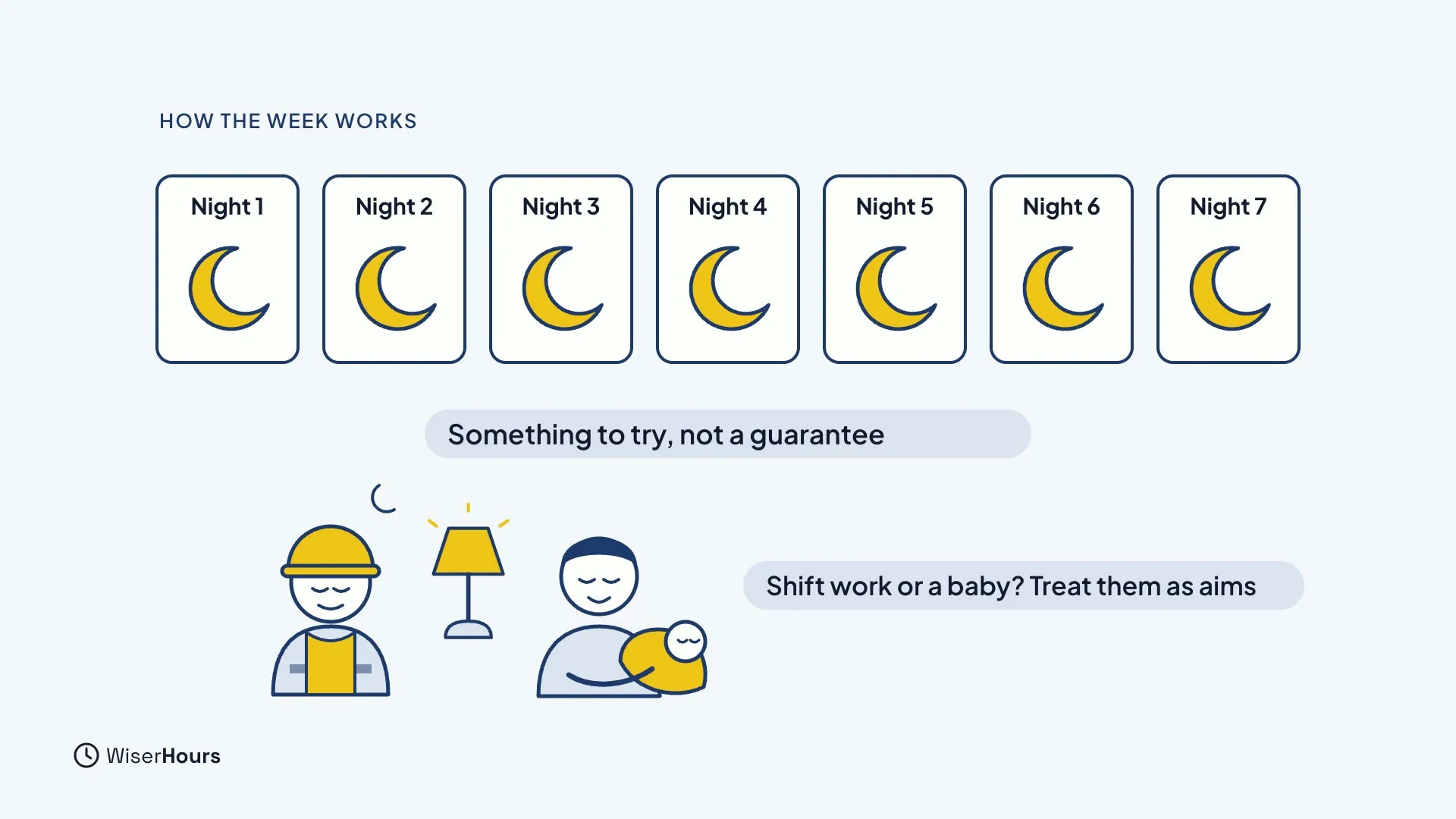
This course gives you one change a night for seven nights, starting with the best-tested habits. Most everyday sleep advice comes from public-health guidance and short studies, so treat each habit as something to try, not a guarantee.
 (opens the full-size picture)
Shift work or a baby?
If you work shifts or care for a baby, a fixed routine may not always be possible. Treat every step in this course as an aim, not a standard you can fail.
The week ahead
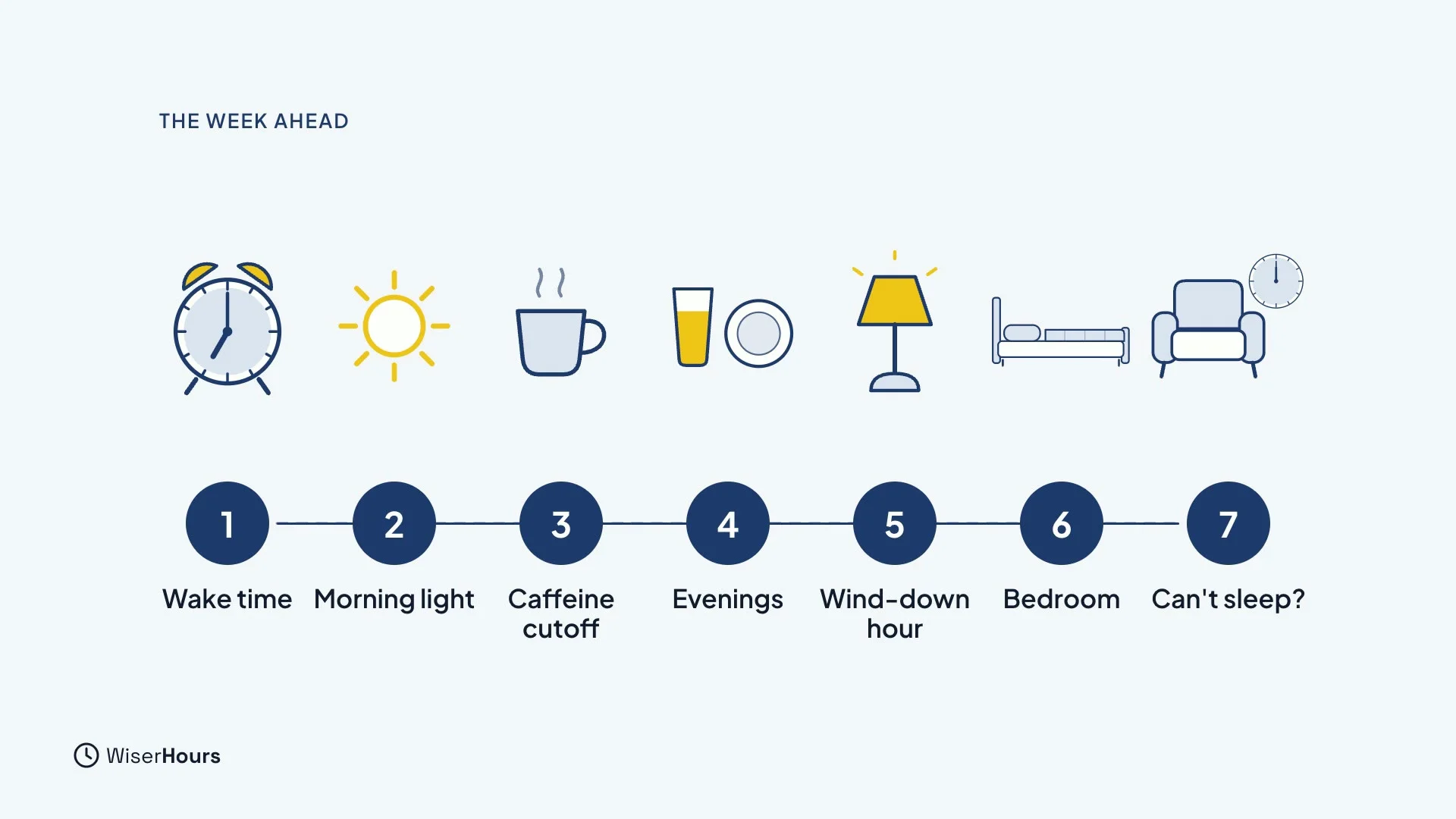
Here is the plan:
- Night 1: fix your wake time.
- Night 2: get daylight in the morning.
- Night 3: find your caffeine cut-off.
- Night 4: look at alcohol, late meals and exercise.
- Night 5: build a wind-down hour.
- Night 6: set up your bedroom.
- Night 7: learn what to do when you can’t sleep.
 (opens the full-size picture)
YOUR TURN
Read more
- How Much Sleep Do You Really Need?: what the research says about the range
- Sleep Debt Explained: why short nights add up
- How to Sleep Better: the habits this course is built on
Read the full lesson script
Welcome to Sleep Reset in 7 Nights. In this first lesson, you'll see how much sleep adults really need, why feeling fine can fool you, and how the next seven nights will work. This course is general information, not medical advice.
Sleep experts in the US say adults should sleep seven or more hours a night on a regular basis. The UK's NHS says seven to nine. That's a range, not one magic number. No expert panel says that everyone needs exactly eight.
Seven hours of sleep needs more than seven hours in bed, because falling asleep takes time. If you usually take twenty minutes to drift off, that time comes on top.
Here's the catch. How sleepy you feel is a poor guide. In one lab study, healthy adults spent six hours a night in bed for two weeks. Their test results kept getting worse, but they felt only a little sleepier after the first few days. By the end, their results looked like those of people who had missed one or two full nights of sleep.
So look at your days instead. Signs you may need more sleep include feeling tired on most days, rarely waking up refreshed, nodding off in quiet moments, and sleeping much longer on your days off.
This course gives you one change a night for seven nights, starting with the best-tested habits. Most everyday sleep advice comes from public-health guidance and short studies, so treat each habit as something to try, not a guarantee. If you work shifts or care for a baby, treat the steps as aims.
Here's the week. On night one, you'll fix your wake time. On night two, you'll get daylight in the morning. On night three, you'll find your caffeine cut-off. On night four, you'll look at alcohol, late meals and exercise. On night five, you'll build a wind-down hour. On night six, you'll set up your bedroom. And on night seven, you'll learn what to do when you can't sleep.
So remember: most adults need seven or more hours of sleep. Feeling fine is a poor test, so watch your days. And you'll change one habit a night. Before the next lesson, start a simple sleep diary. Write down when you went to bed, when you woke up, any naps, and how alert you felt. In the next lesson, you'll fix your wake time.
MAKE IT A SMALL WIN
Finished this lesson?
Mark it complete to save your progress on this device.