Nights 4 to 7 · Lesson 5 of 11
Alcohol, Late Meals and Evening Exercise: Sleep Habits
See how alcohol, heavy late meals and hard evening exercise affect sleep, and how to move them earlier in the evening.
 Video coming soon
Some evening habits feel relaxing but work against your sleep. In this lesson you look at alcohol, late meals and evening exercise, and at one simple fix for all three. This is general information, not medical advice.
The nightcap myth
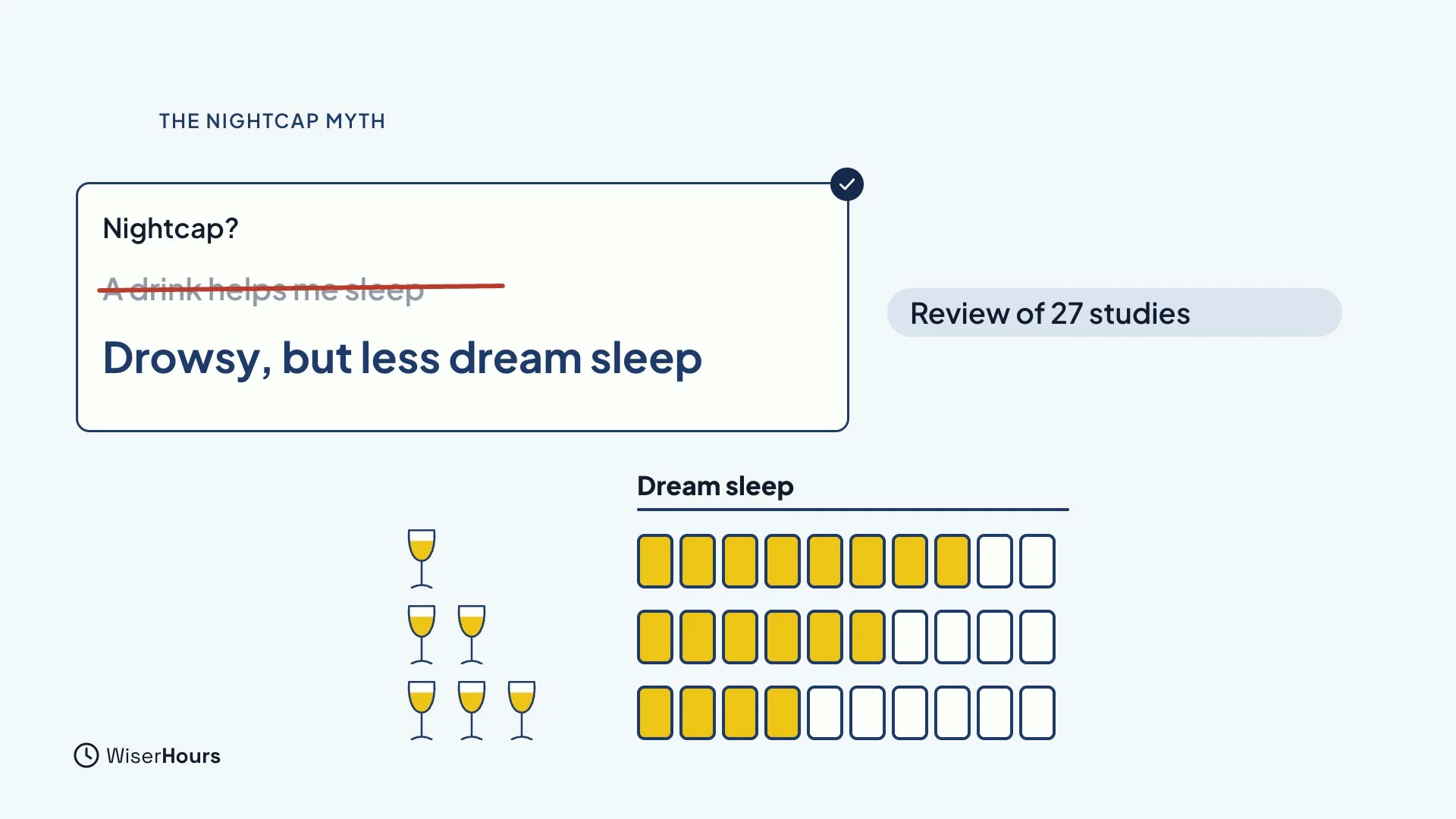
Many people think a drink helps them sleep. It can make you drowsy, but a review of 27 studies found that even about two drinks reduced dream sleep, also called REM sleep. More alcohol disrupted sleep more.
 (opens the full-size picture)
Avoid it before bed
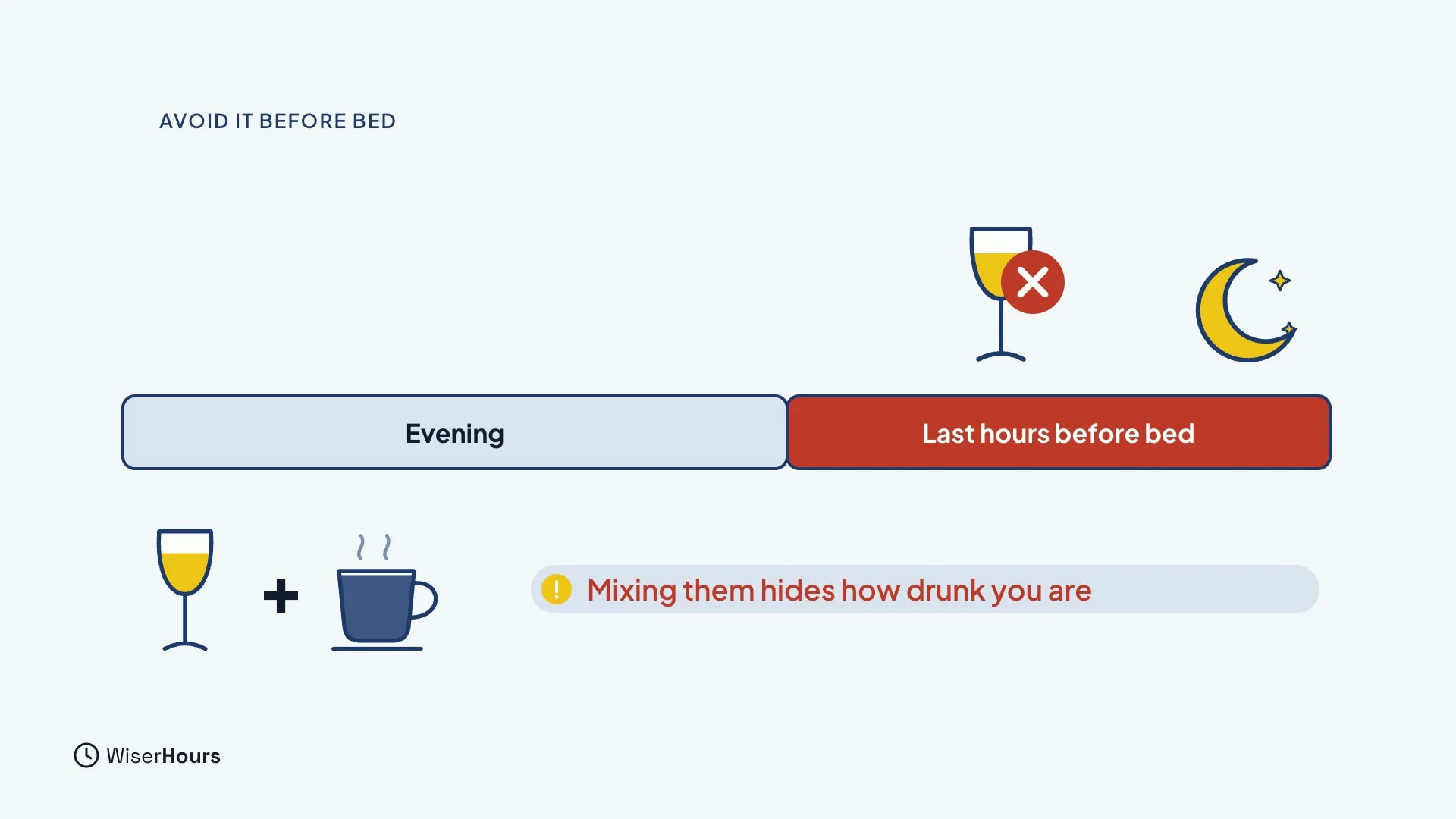
So it is best to avoid alcoholic drinks before bed. And alcohol does not cancel out caffeine. Mixing them can make it harder to tell how drunk you are.
 (opens the full-size picture)
Coffee does not sober you up
Because mixing alcohol and caffeine hides how drunk you are, never use coffee to decide you are fit to drive. Never drive when you are drowsy or have been drinking.
Late meals
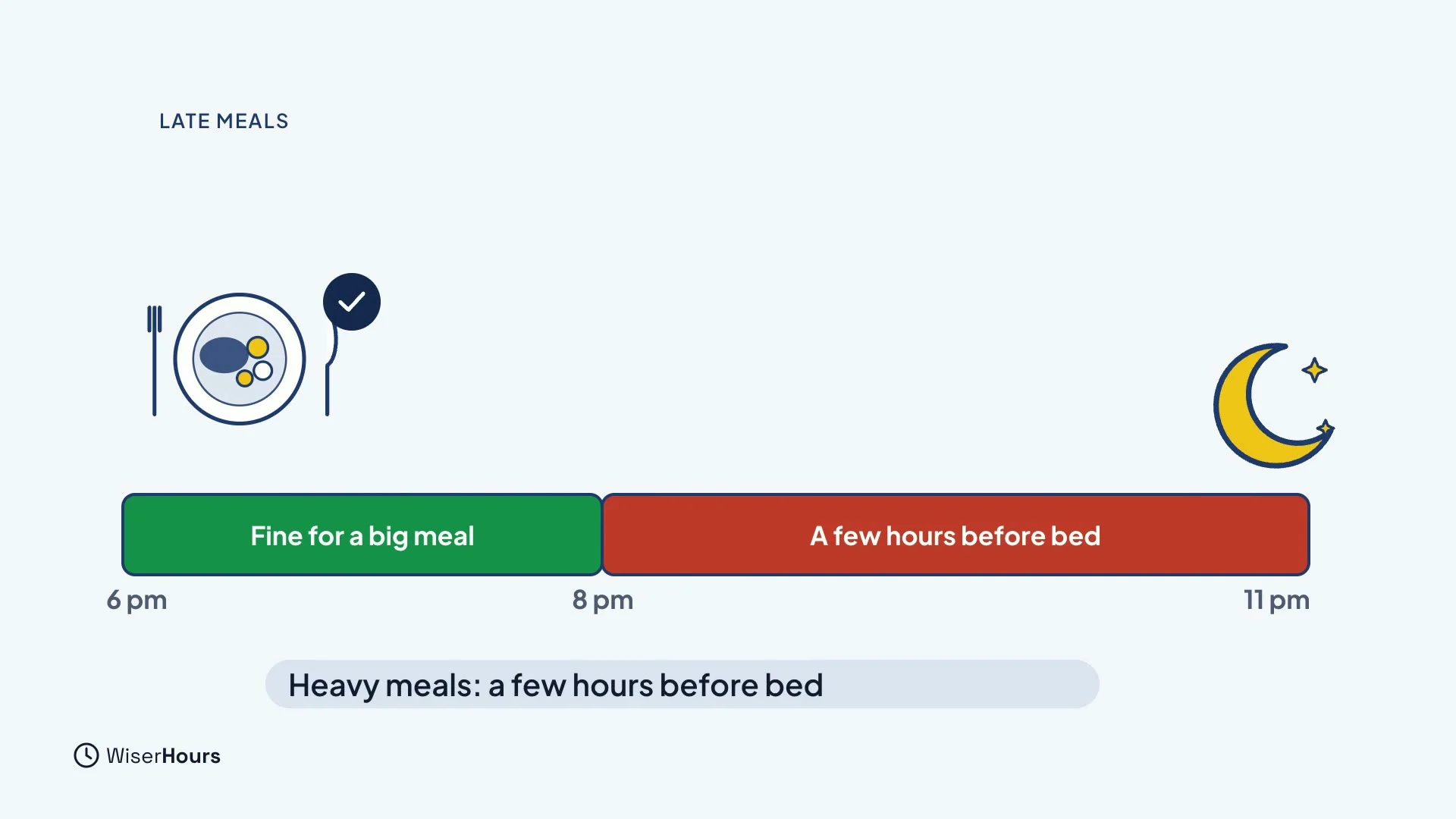
Food matters too. Try not to eat a heavy meal within a few hours of bedtime.
 (opens the full-size picture)
Evening exercise
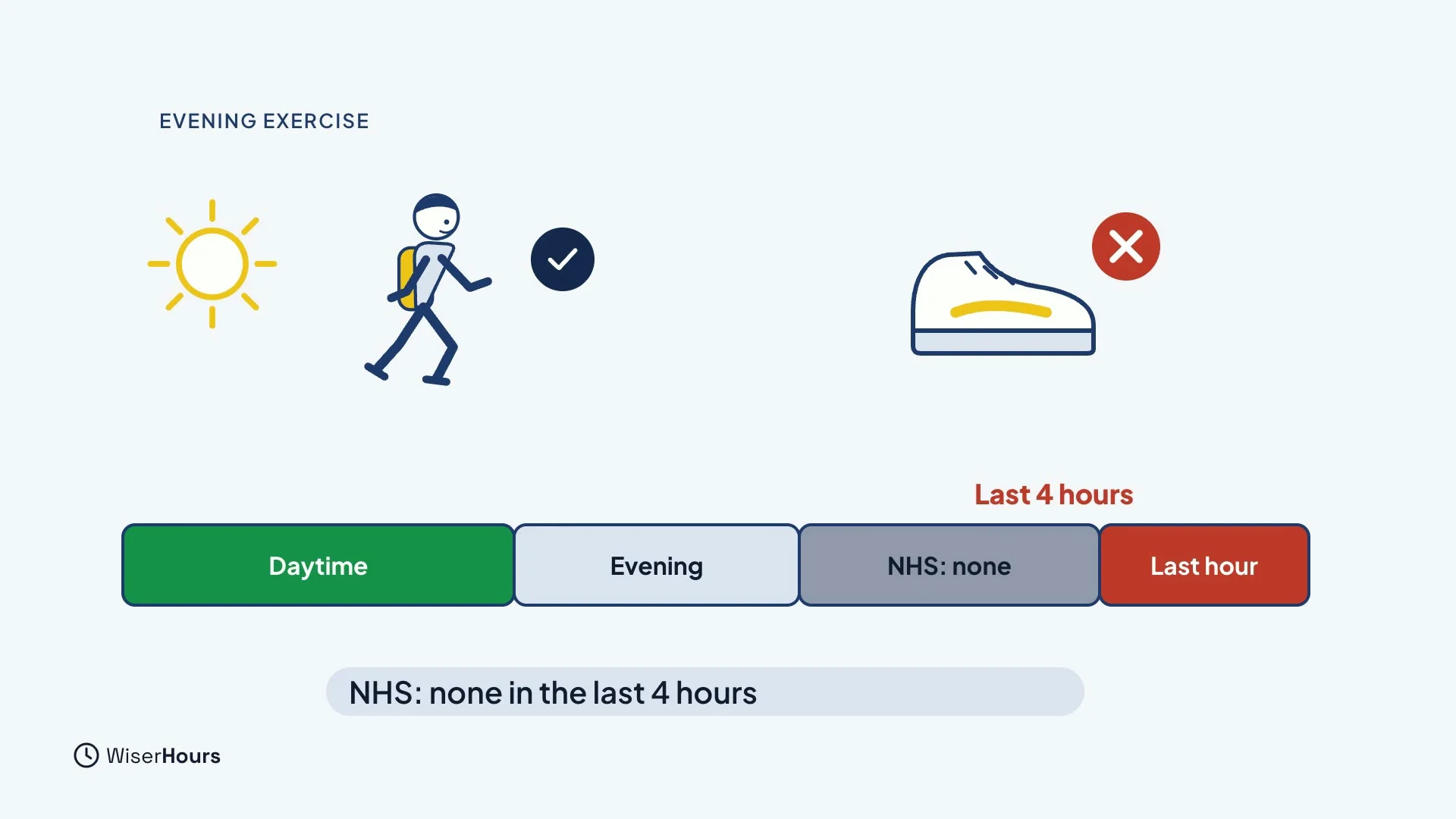
Being active during the day can help your sleep. Just avoid intense exercise in the hour before bed. The NHS is stricter, and suggests no exercise in the four hours before bed.
 (opens the full-size picture)
Move it earlier
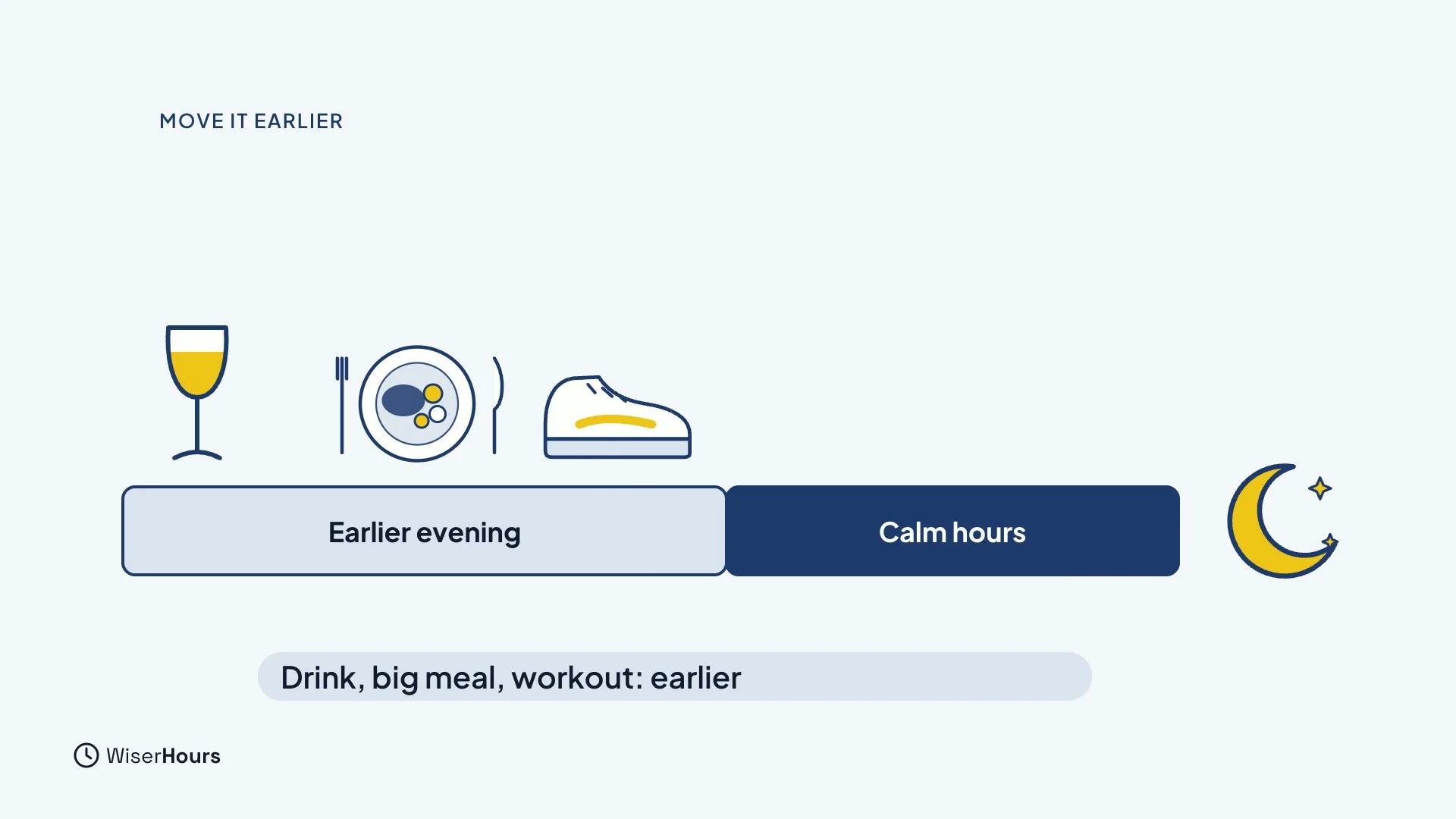
The simplest fix is to move things earlier. Have your drink, your big meal and your workout earlier in the evening, and leave the last hours calm.
 (opens the full-size picture)
Something to add
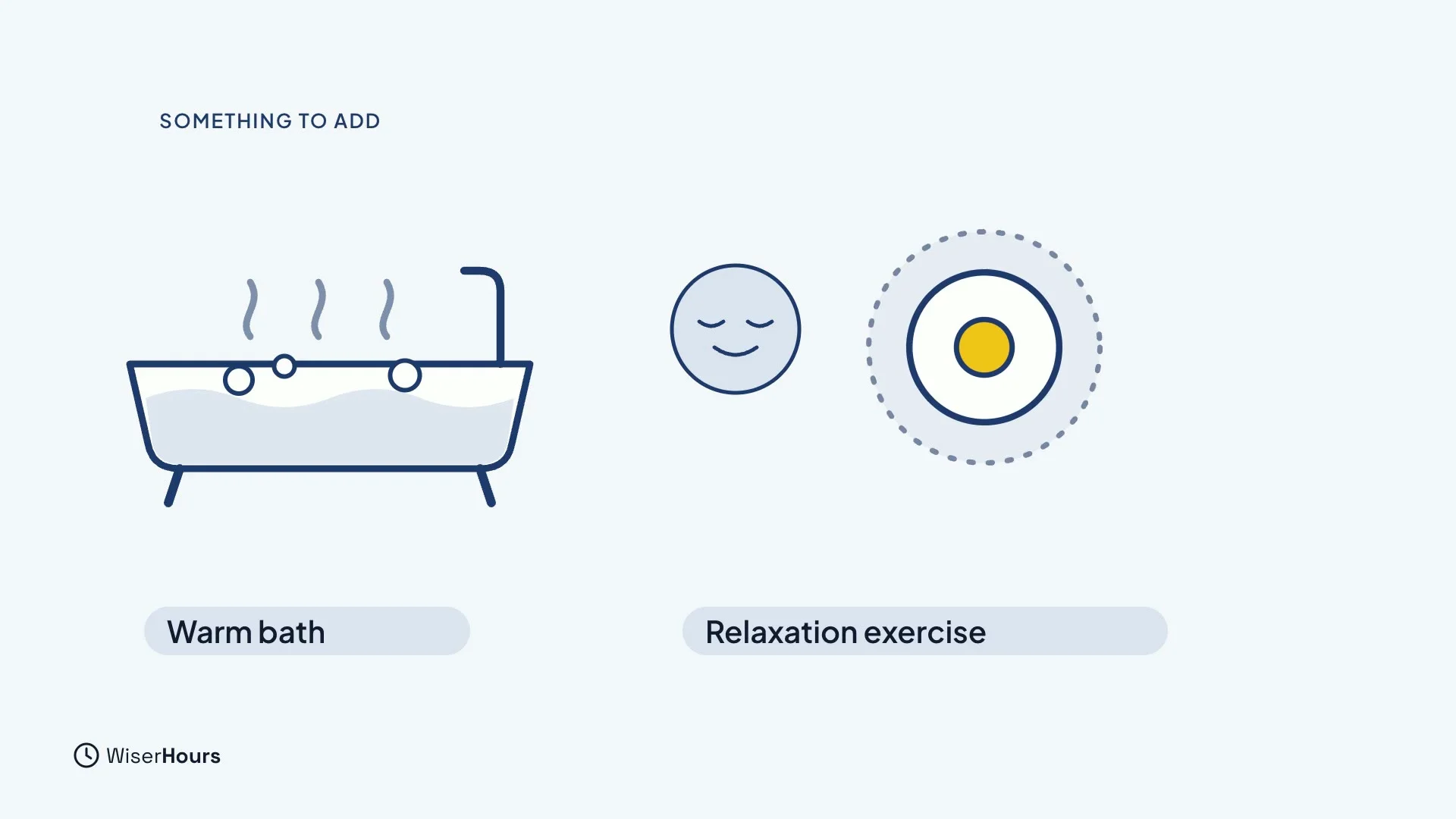
There is also something you can add. A warm bath, or a relaxation exercise, before bed is part of the same public-health advice.
 (opens the full-size picture)
YOUR TURN
Read more
- How to Sleep Better: alcohol, meals, exercise and the other habits together
- How Late Is Too Late for Coffee?: the caffeine side of your evening
Read the full lesson script
Some evening habits feel relaxing, but work against your sleep. In this lesson, you'll look at alcohol, late meals and evening exercise.
Many people think a drink helps them sleep. It can make you drowsy, but a review of 27 studies found that even about two drinks reduced dream sleep. More alcohol disrupted sleep more.
So it's best to avoid alcoholic drinks before bed. And alcohol doesn't cancel out caffeine. Mixing them can make it harder to tell how drunk you are.
Food matters too. Try not to eat a heavy meal within a few hours of bedtime.
Being active during the day can help your sleep. Just avoid intense exercise in the hour before bed. The NHS is stricter, and suggests no exercise in the four hours before bed.
The simplest fix is to move things earlier. Have your drink, your big meal and your workout earlier in the evening, and leave the last hours calm.
There's also something you can add. A warm bath, or a relaxation exercise, before bed is part of the same public-health advice.
So remember: alcohol may make you drowsy, but it makes sleep worse. Keep heavy meals a few hours from bedtime. And keep hard exercise out of your last hour. Before the next lesson, move tonight's drink, big meal or workout earlier. In the next lesson, you'll build a wind-down hour, and deal with your phone.
MAKE IT A SMALL WIN
Finished this lesson?
Mark it complete to save your progress on this device.