Nights 1 to 3 · Lesson 2 of 11
Fix Your Wake Time: Count Back to Lights Out
Pick one wake time for every day and work out your lights-out time by counting back seven hours plus the time you take to fall asleep.
 Video coming soon
Tonight’s change is simple, and it is one of the most useful. You will pick one wake time for every day, and work out when to turn the lights off. This is general information, not medical advice.
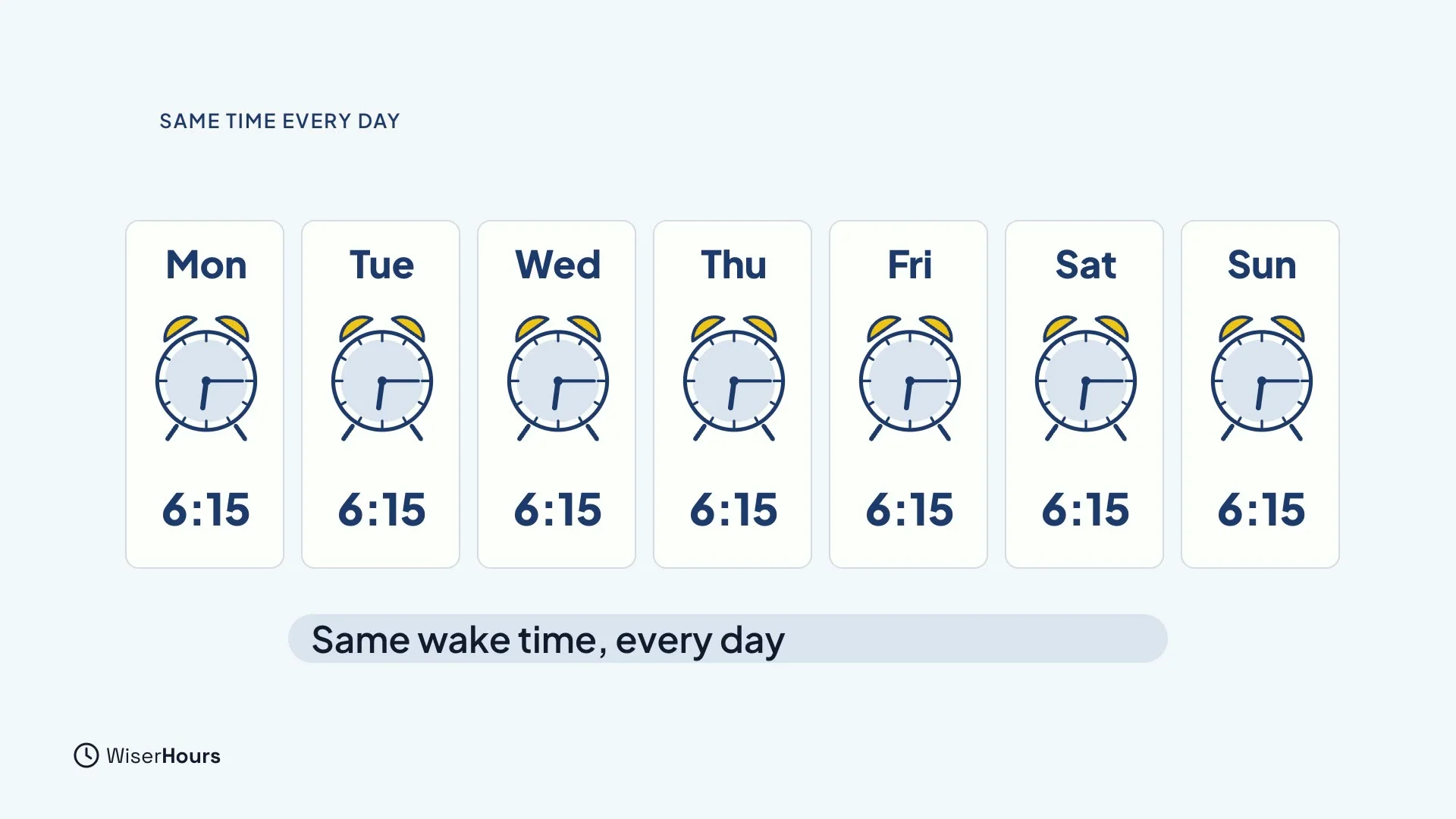
One wake time, every day
Health agencies list going to bed and getting up at the same times each day among the habits that can improve sleep. Start with the wake time, because it is the one you can control with an alarm. You cannot make yourself fall asleep at a set minute, but you can decide when you get up.
 (opens the full-size picture)
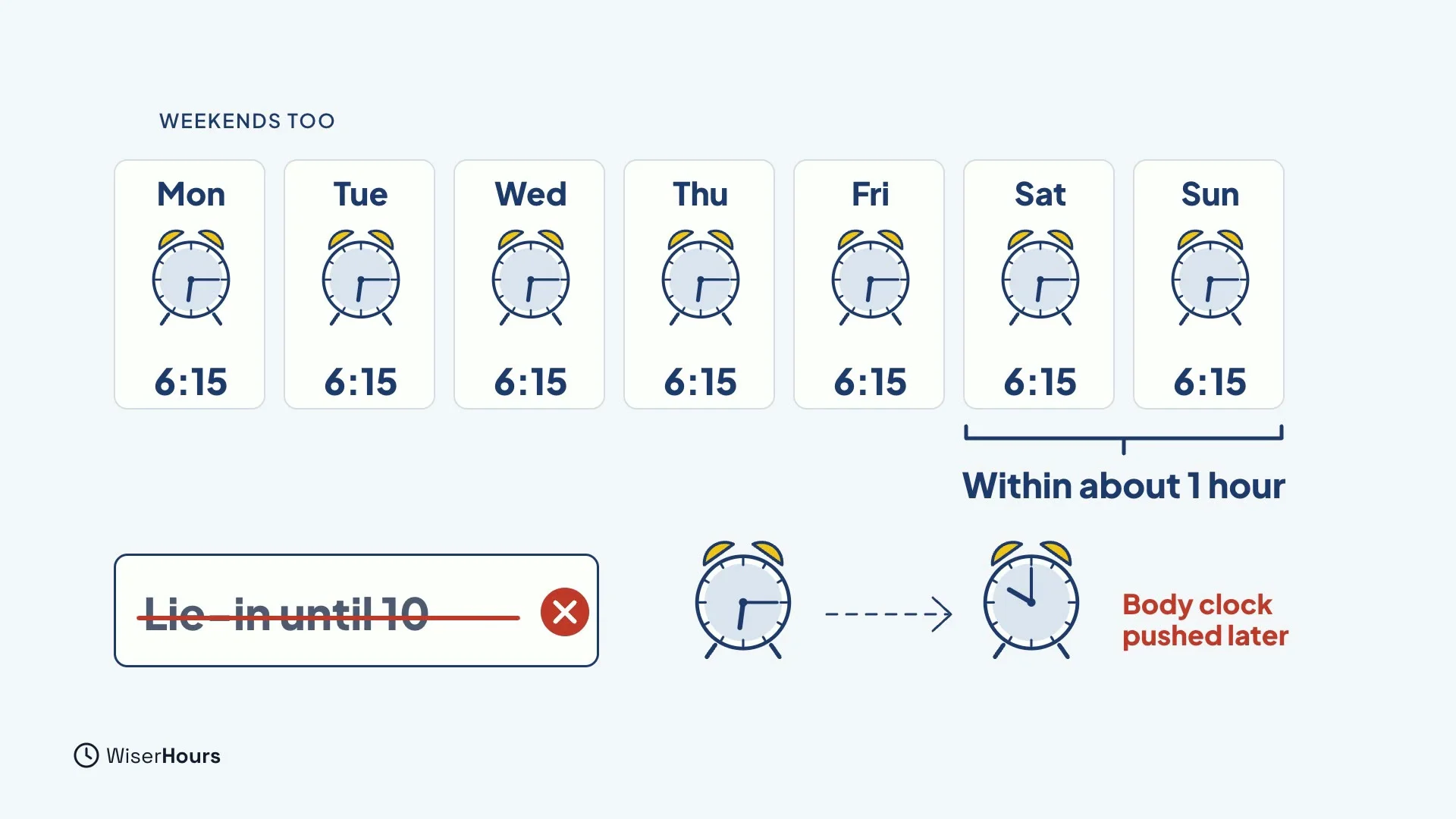
Weekends too
Keep your weekend wake time within about an hour of your weekday one. A long lie-in can push your body clock later, which can make Sunday night and Monday morning harder.
 (opens the full-size picture)
Count back to lights out
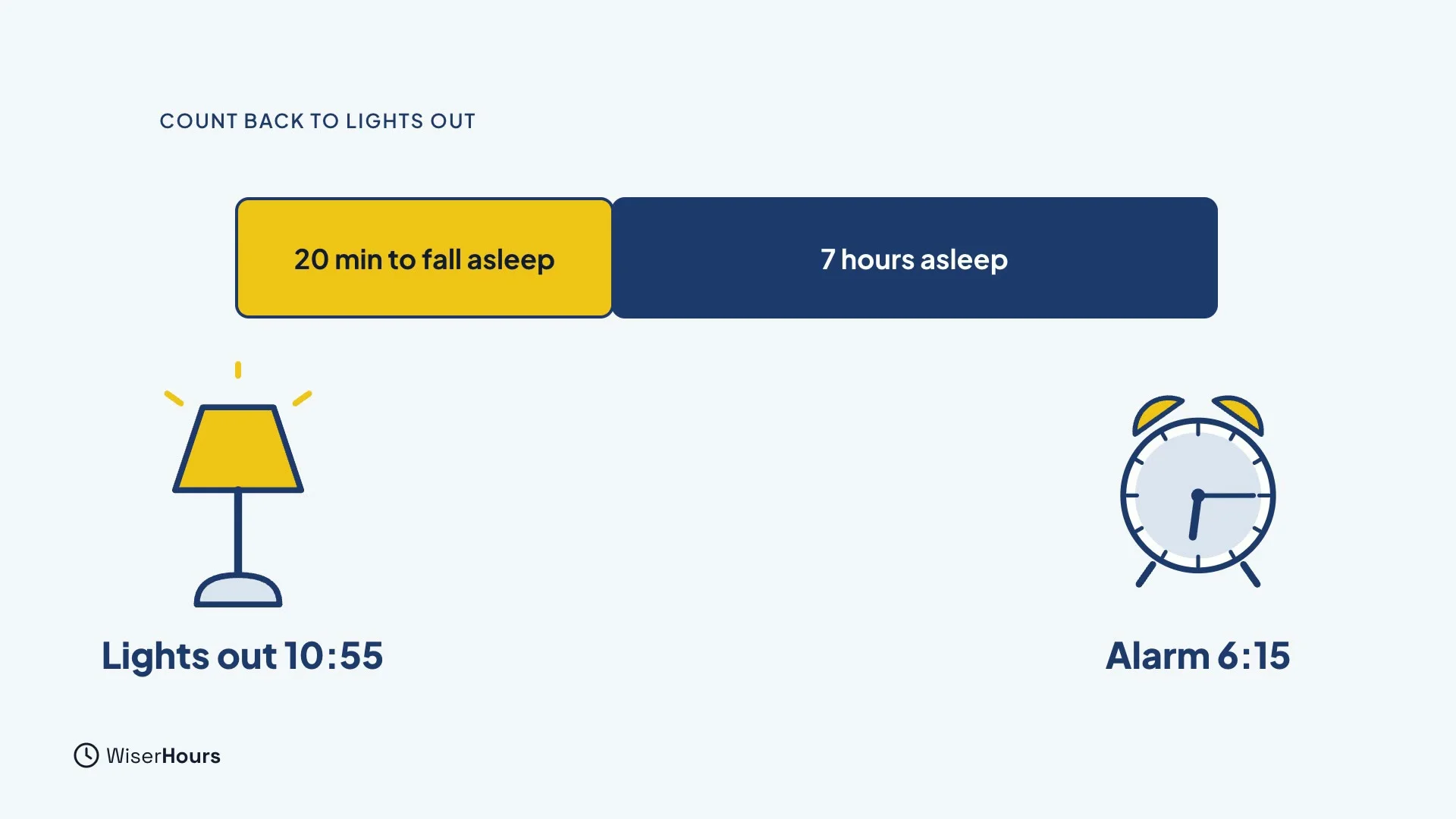
Now find your lights-out time. Take seven hours of sleep, and add the time you usually take to fall asleep. For example, if your alarm is at 6:15, and you take about twenty minutes to drift off, aim for lights out at about 10:55.
 (opens the full-size picture)
Seven hours is the low end of what adults are advised to get, so it is a starting point. Your own diary will show you how it goes.
After a bad night
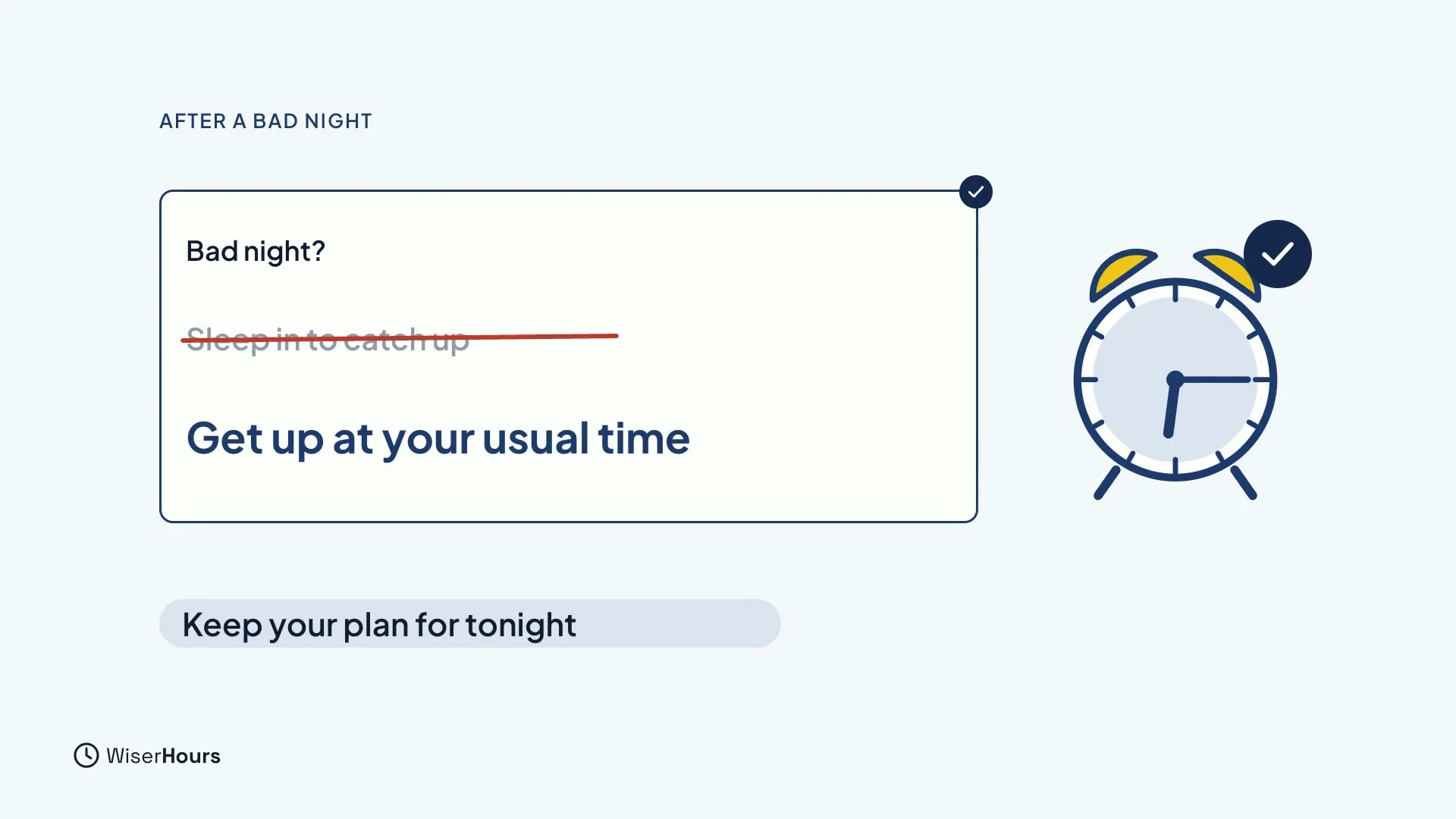
It is tempting to sleep in after a bad night. But the advice is to stick to your regular hours. Get up at your usual time anyway, and keep your plan for tonight.
 (opens the full-size picture)
Never drive when you are drowsy
After a short night, do not drive or use machinery if you feel drowsy. Keep the plan for tonight, and take extra care today.
When real life gets in the way
If you work shifts, or a baby wakes you, a fixed time may not be possible every day. Pick the steadiest time you can, and treat it as an aim, not a test you can fail.
 (opens the full-size picture)
Use your diary
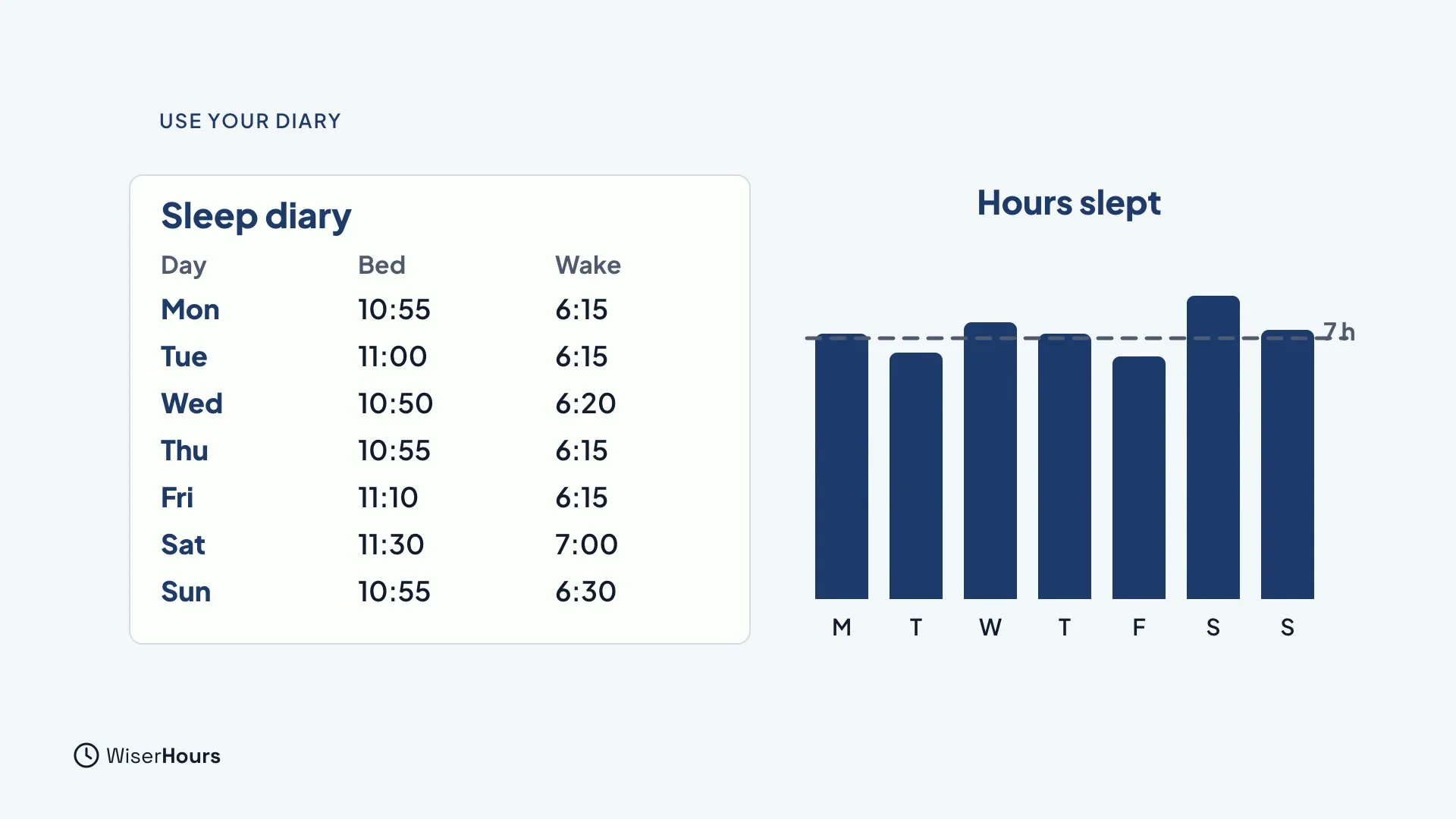
Keep filling in your sleep diary. After a week, you will see whether your wake time is steady, and how long you really sleep.
 (opens the full-size picture)
YOUR TURN
Read more
- How to Sleep Better: the habits health agencies list, in one place
- Sleep Debt Explained: why a lie-in does not fully repay short nights
Read the full lesson script
Tonight's change is simple, and it's one of the most useful. In this lesson, you'll pick one wake time for every day, and work out when to turn the lights off.
Health agencies list going to bed and getting up at the same times each day among the habits that can improve sleep. Start with the wake time, because it's the one you can control with an alarm.
Keep your weekend wake time within about an hour of your weekday one. A long lie-in can push your body clock later, which can make Sunday night and Monday morning harder.
Now count back to find your lights-out time. Take seven hours of sleep, and add the time you usually take to fall asleep. For example, if your alarm is at 6:15, and you take about twenty minutes to drift off, aim for lights out at about 10:55.
What about after a bad night? It's tempting to sleep in, but the advice is to stick to your regular hours. Get up at your usual time anyway, and keep your plan for tonight.
If you work shifts, or a baby wakes you, a fixed time may not be possible every day. Pick the steadiest time you can, and treat it as an aim, not a test you can fail.
Keep filling in your sleep diary. After a week, you'll see whether your wake time is steady, and how long you really sleep.
So remember: pick one wake time for every day, with weekends within about an hour. Count back seven hours of sleep, plus your time to fall asleep. And after a bad night, get up at your usual time. Before the next lesson, set your alarm for your wake time, and write down your lights-out time. In the next lesson, you'll use daylight to set your body clock.
MAKE IT A SMALL WIN
Finished this lesson?
Mark it complete to save your progress on this device.