Nights 4 to 7 · Lesson 8 of 11
What to Do When You Can't Sleep: The 20-Minute Rule
Learn what to do on nights when sleep won't come, how to use the 20-minute rule, and how to handle naps so they do not hurt your night.
 Video coming soon
Everyone has nights when sleep will not come. In this lesson you learn what to do instead of lying there, and how to handle naps. It is general advice for anyone, based on public-health guidance, not medical advice.
Do not fight it
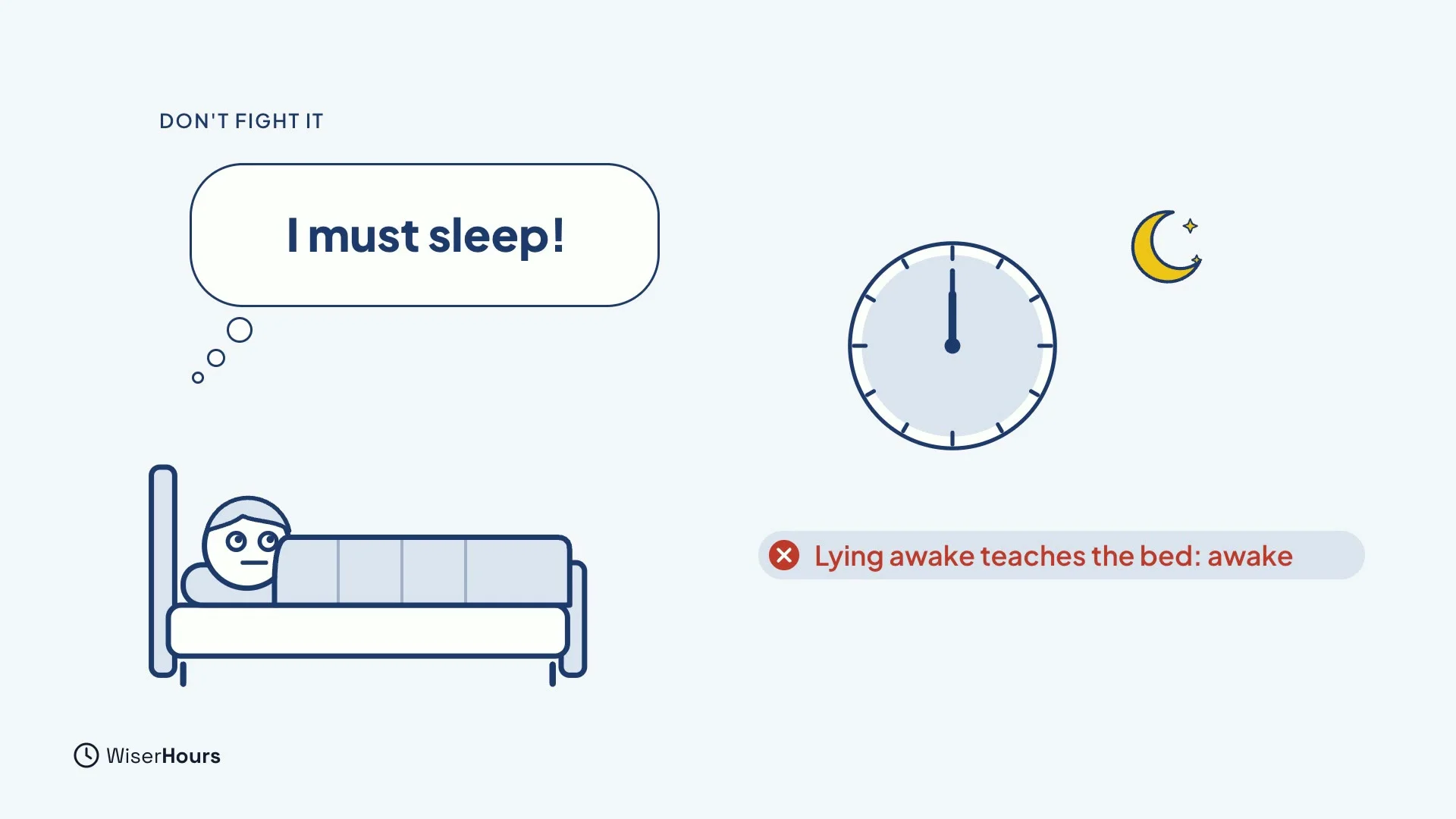
Trying hard to sleep usually does not help. Lying in bed awake, worrying about sleep, can make the bed feel like a place for being awake. The more you watch the clock and tell yourself “I must sleep”, the more awake you feel.
 (opens the full-size picture)
The 20-minute rule
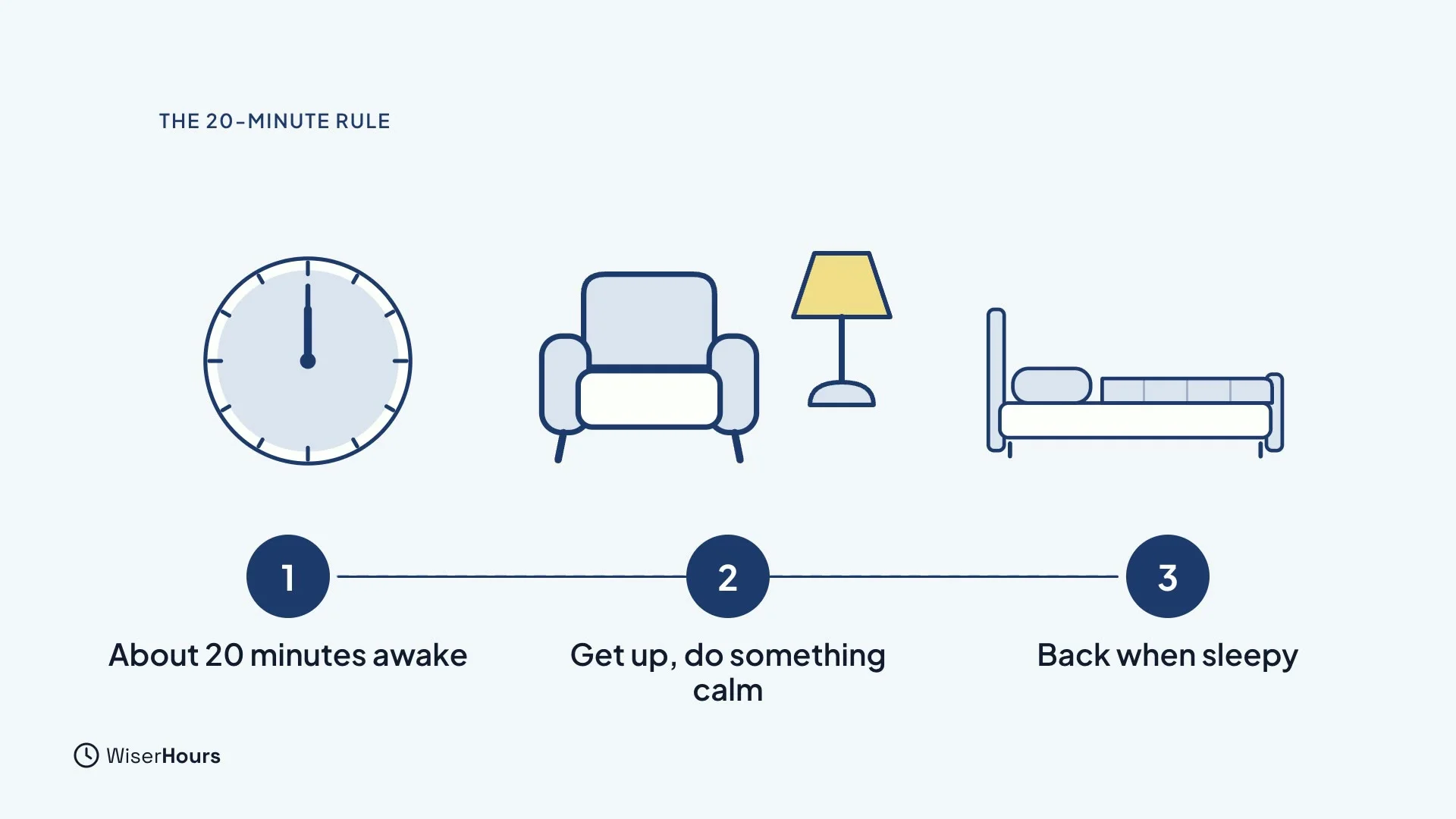
So use the twenty-minute rule. If you are still awake after about twenty minutes, get up. You do not need to time it exactly: a rough guess is fine. Go somewhere else, do something relaxing in dim light, and go back to bed when you feel sleepy.
 (opens the full-size picture)
Keep it calm
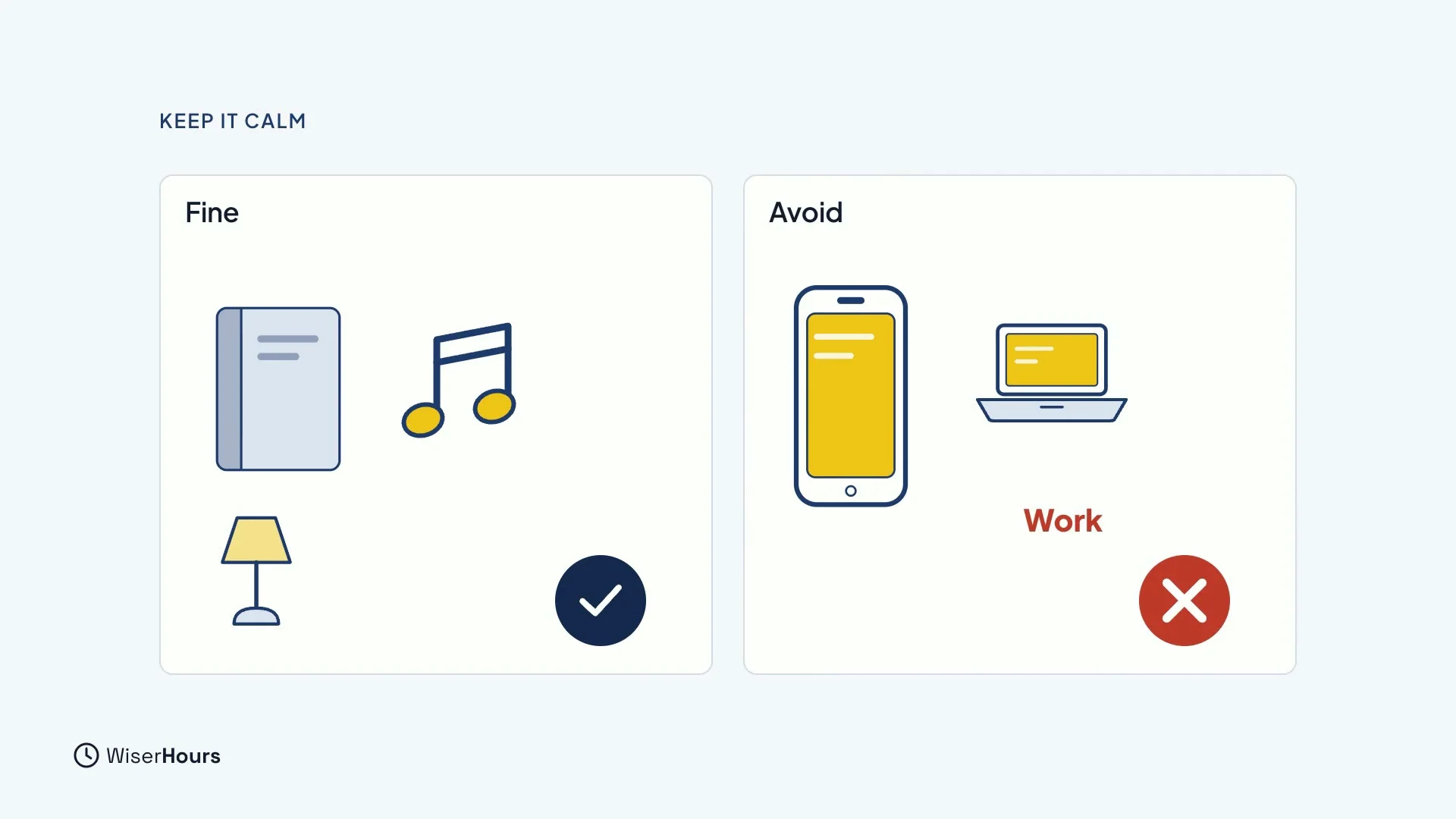
Keep it calm and low-key, in dim light. A book or quiet music is fine. Avoid bright screens, and do not start on work. The point is to let your body settle, not to use the time to get things done.
 (opens the full-size picture)
Do not chase lost sleep
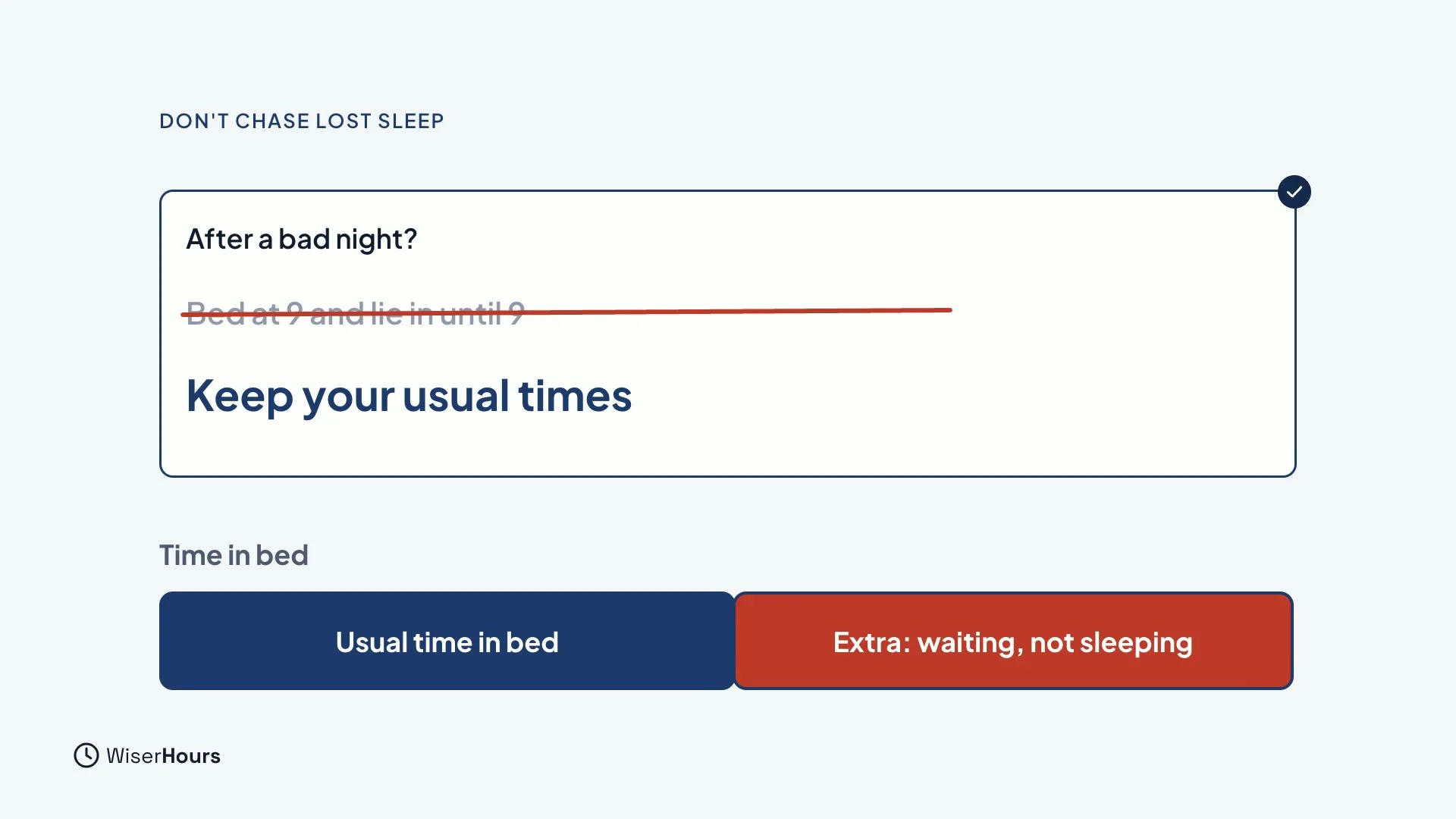
Do not try to make up for a bad night by going to bed much earlier, or lying in. Extra time in bed after a rough week usually brings more waiting, not more sleep. Keep your usual times instead.
 (opens the full-size picture)
Naps
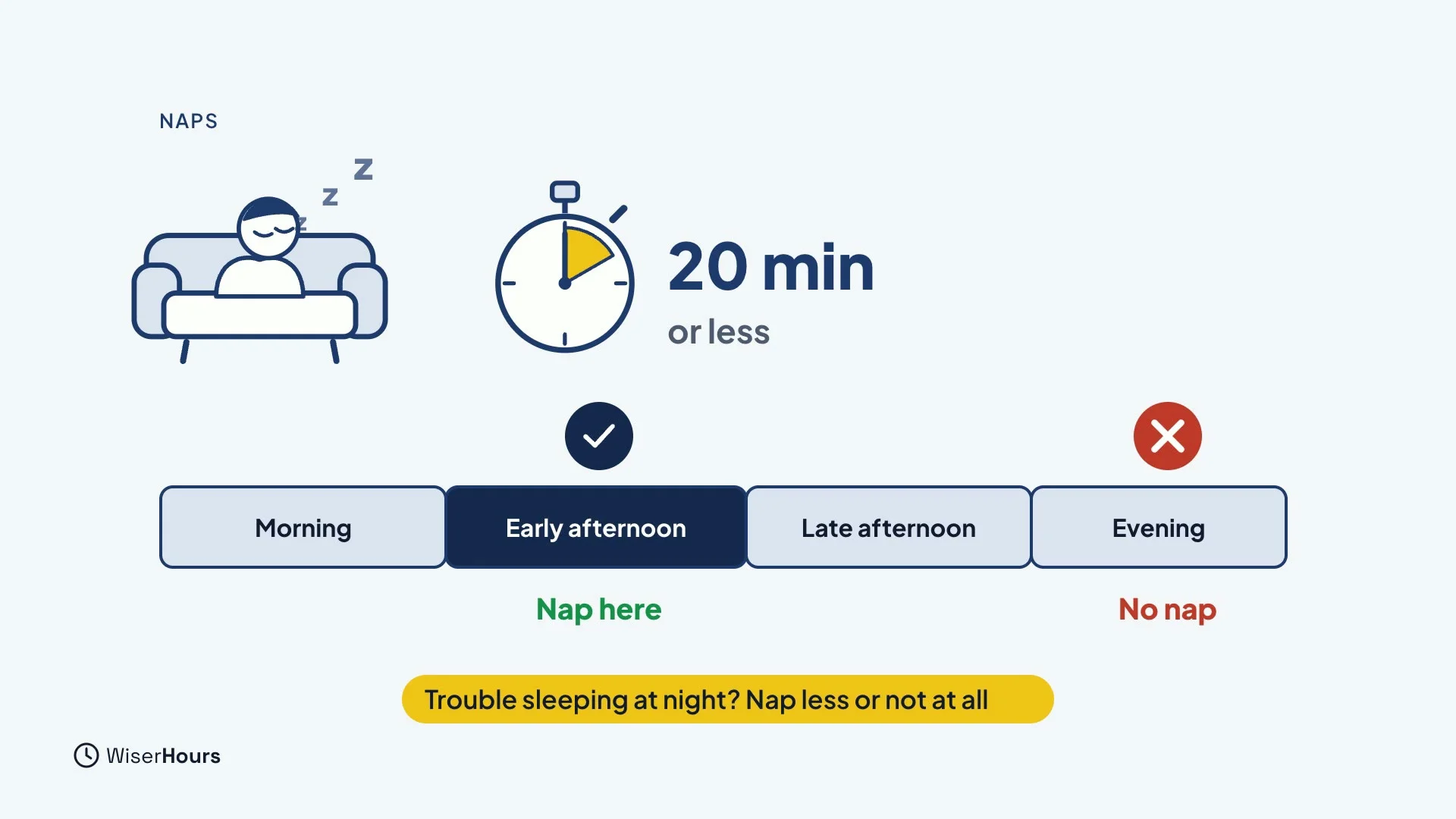
Naps can help you stay alert. Keep them to twenty minutes or less, and earlier in the afternoon. If you struggle to sleep at night, nap less or not at all. The NHS suggests no naps for people with insomnia.
 (opens the full-size picture)
If it keeps happening
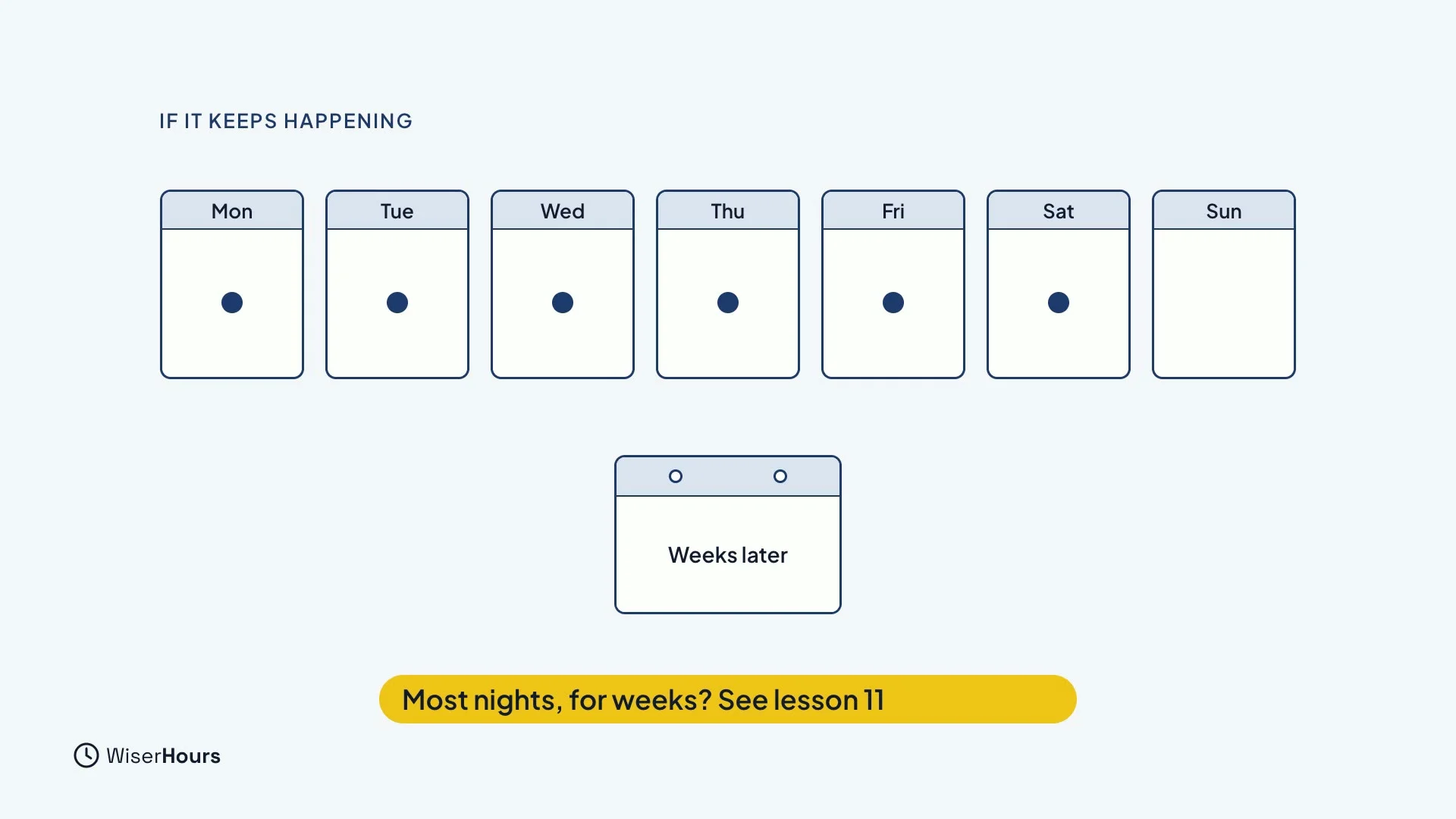
Most people have bad nights now and then. If you cannot sleep on most nights for weeks or months, that may be insomnia. The last lesson explains when to get help.
 (opens the full-size picture)
YOUR TURN
Read more
- Insomnia Explained: what insomnia is and when to see a doctor.
- How to Sleep Better: the full guide, including naps and getting up when you cannot sleep.
- Revenge Bedtime Procrastination: why people stay up late, and how to stop.
Read the full lesson script
Everyone has nights when sleep won't come. In this lesson, you'll learn what to do instead of lying there, and how to handle naps.
Trying hard to sleep usually doesn't help. Lying in bed awake, worrying about sleep, can make the bed feel like a place for being awake.
So use the twenty-minute rule. If you're still awake after about twenty minutes, get up. Go somewhere else, do something relaxing in dim light, and go back to bed when you feel sleepy.
Keep it calm and low-key, in dim light. A book or quiet music is fine. Avoid bright screens, and don't start on work.
Don't try to make up for a bad night by going to bed much earlier, or lying in. Extra time in bed after a rough week usually brings more waiting, not more sleep.
Naps can help you stay alert. Keep them to twenty minutes or less, and earlier in the afternoon. If you struggle to sleep at night, nap less or not at all. The NHS suggests no naps for people with insomnia.
This is general advice for anyone. If you can't sleep on most nights for weeks or months, that may be insomnia, and you'll learn when to get help later in this course.
So remember: if you can't sleep after about twenty minutes, get up and do something calm. Don't chase lost sleep with lie-ins. And keep naps short and early. Before the next lesson, decide where you'll go, and what calm thing you'll do, if you can't sleep. In the next lesson, you'll learn how to catch up after short nights.
MAKE IT A SMALL WIN
Finished this lesson?
Mark it complete to save your progress on this device.