Nights 1 to 3 · Lesson 4 of 11
Find Your Caffeine Cut-Off for Better Sleep
Learn how long caffeine stays in your body and how to pick a cut-off time for your last tea, coffee or cola.
 Video coming soon
Coffee helps many of us through the day. In this lesson you learn how long caffeine stays in your body, and how to pick your own cut-off time. This is general information, not medical advice.
Caffeine fades by halves
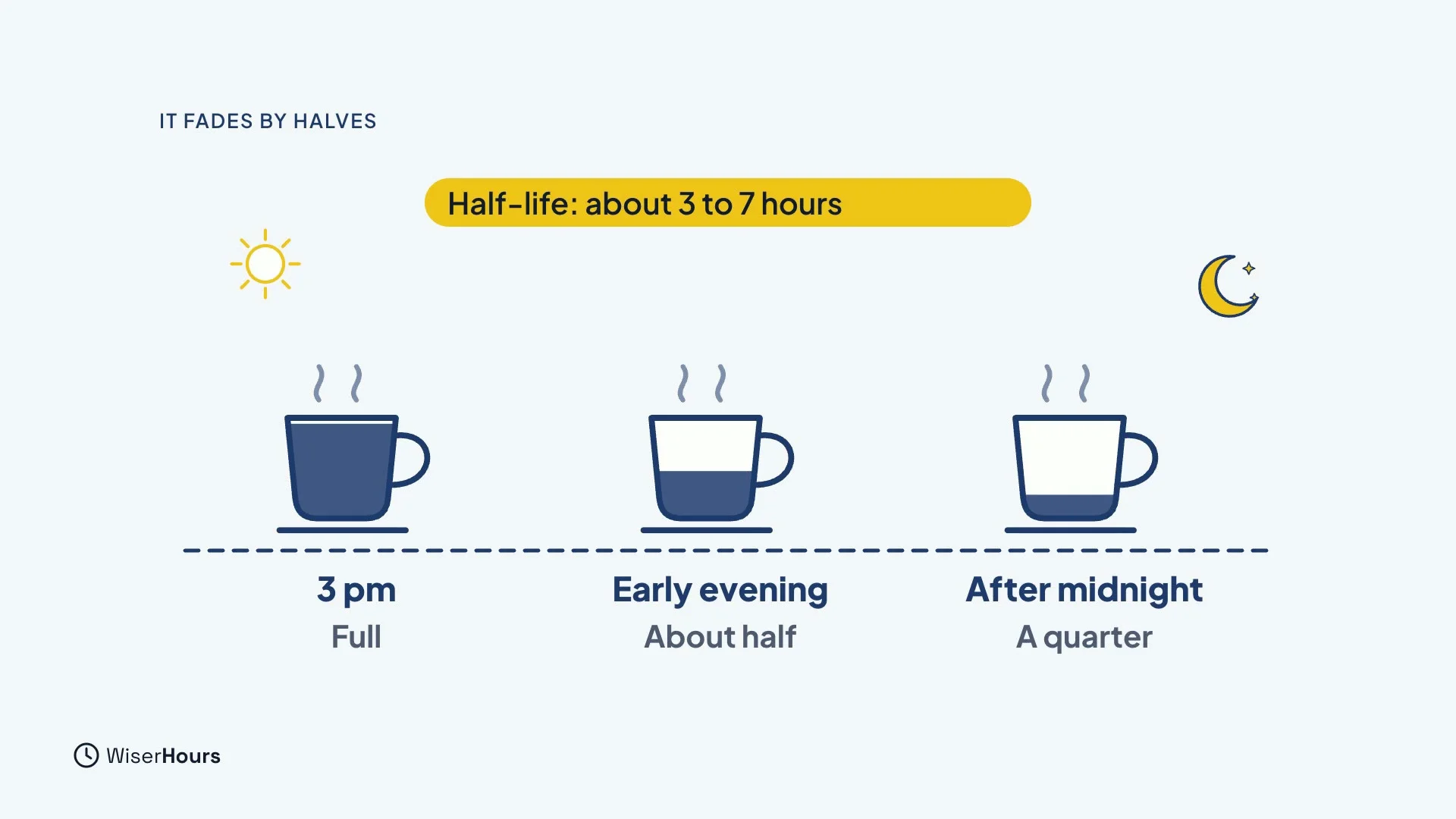
Caffeine does not disappear all at once. It fades by halves. In adults, half of it is gone after about three to seven hours. So after a coffee at 3 p.m., about half may still be in your body in the early evening, and about a quarter after midnight.
 (opens the full-size picture)
What it does to sleep
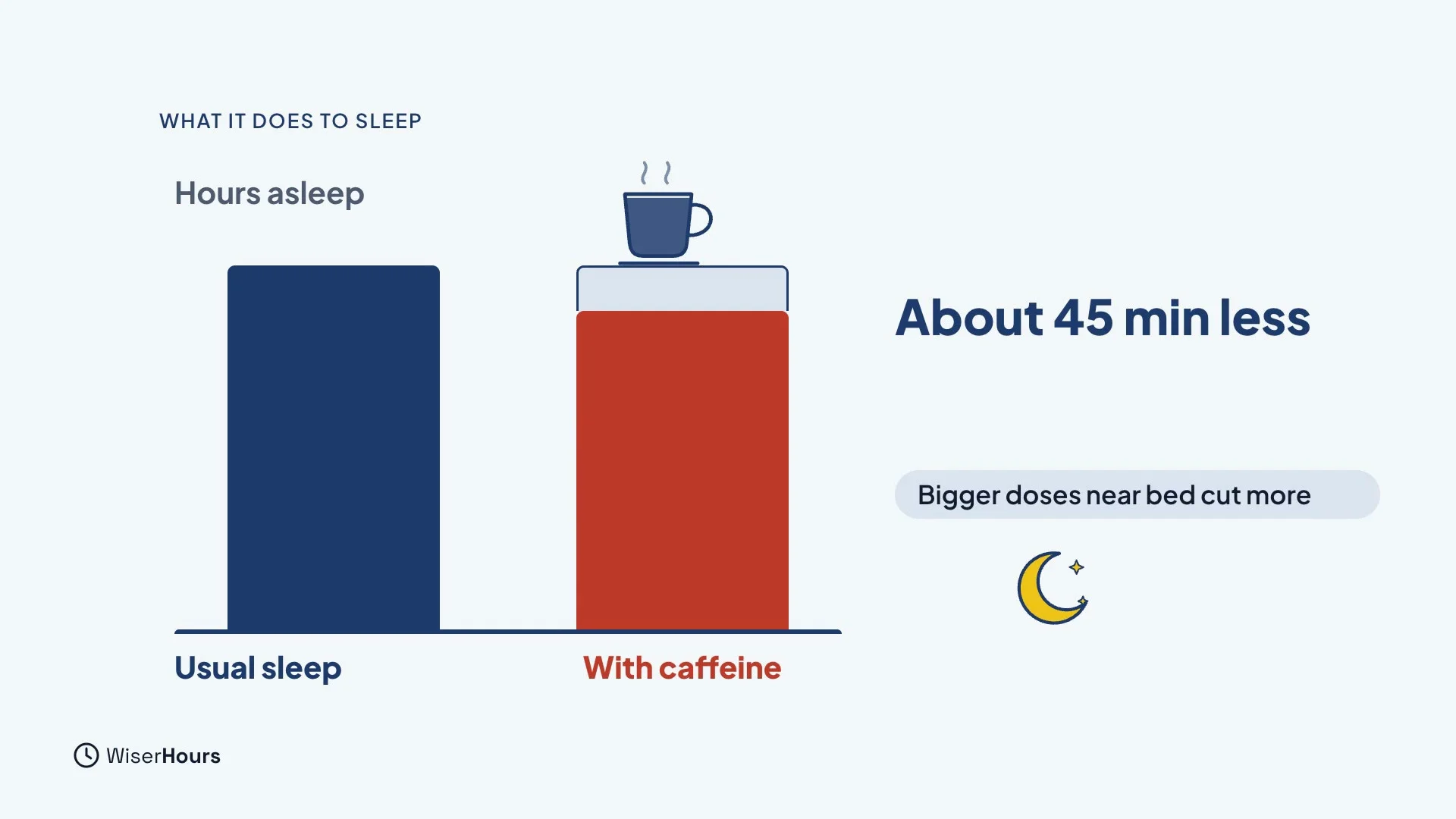
Caffeine blocks a signal that builds up during the day and makes you sleepy. In a review of studies, caffeine taken mostly in the last few hours before bed cut sleep by about 45 minutes on average. Bigger doses closer to bedtime cut more.
 (opens the full-size picture)
Falling asleep is not the test
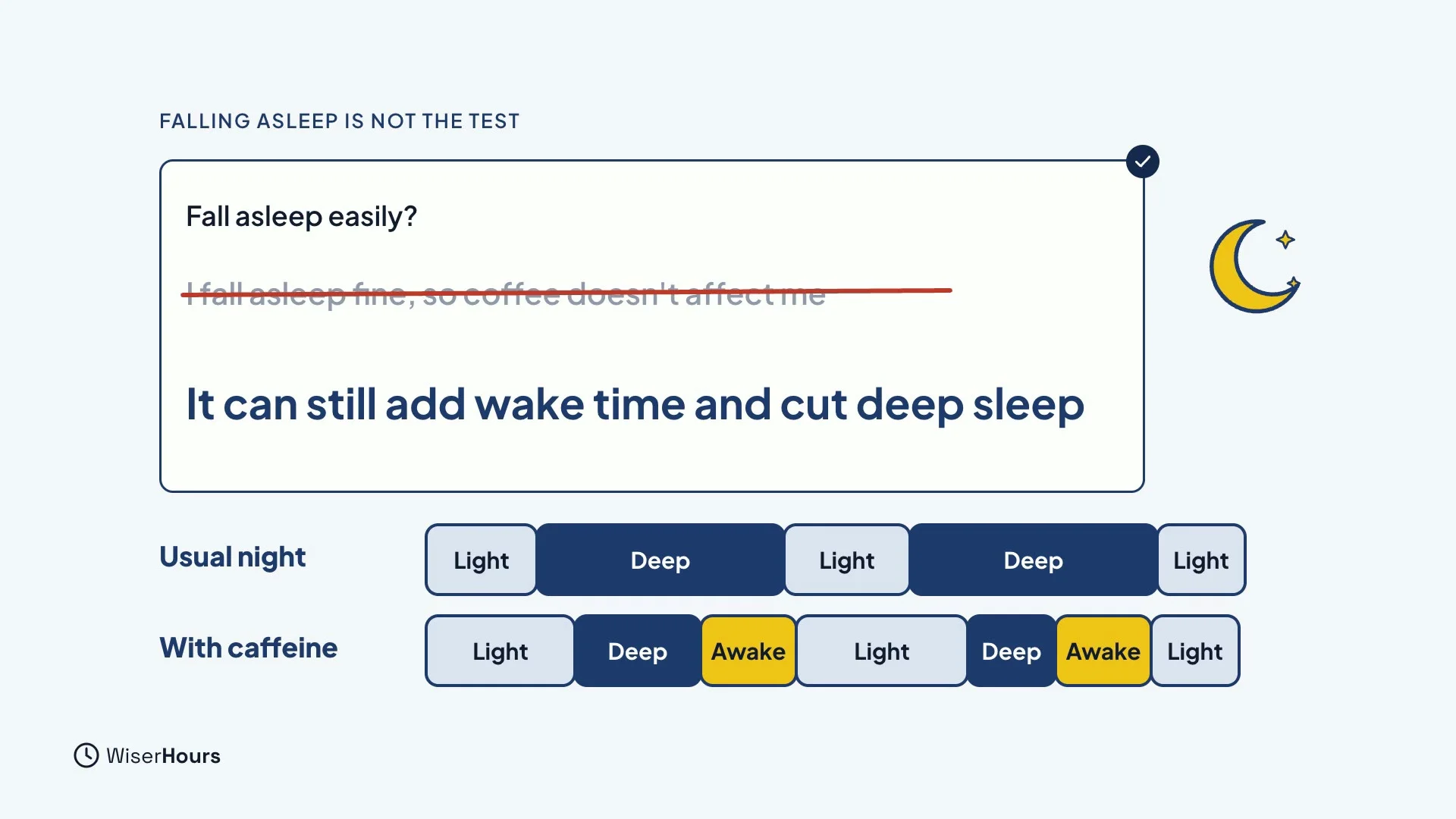
Even if you fall asleep easily, caffeine can still add time awake in the night, and swap some deep sleep for lighter sleep. So “I fall asleep fine” does not mean coffee is not affecting you.
 (opens the full-size picture)
Your cut-off
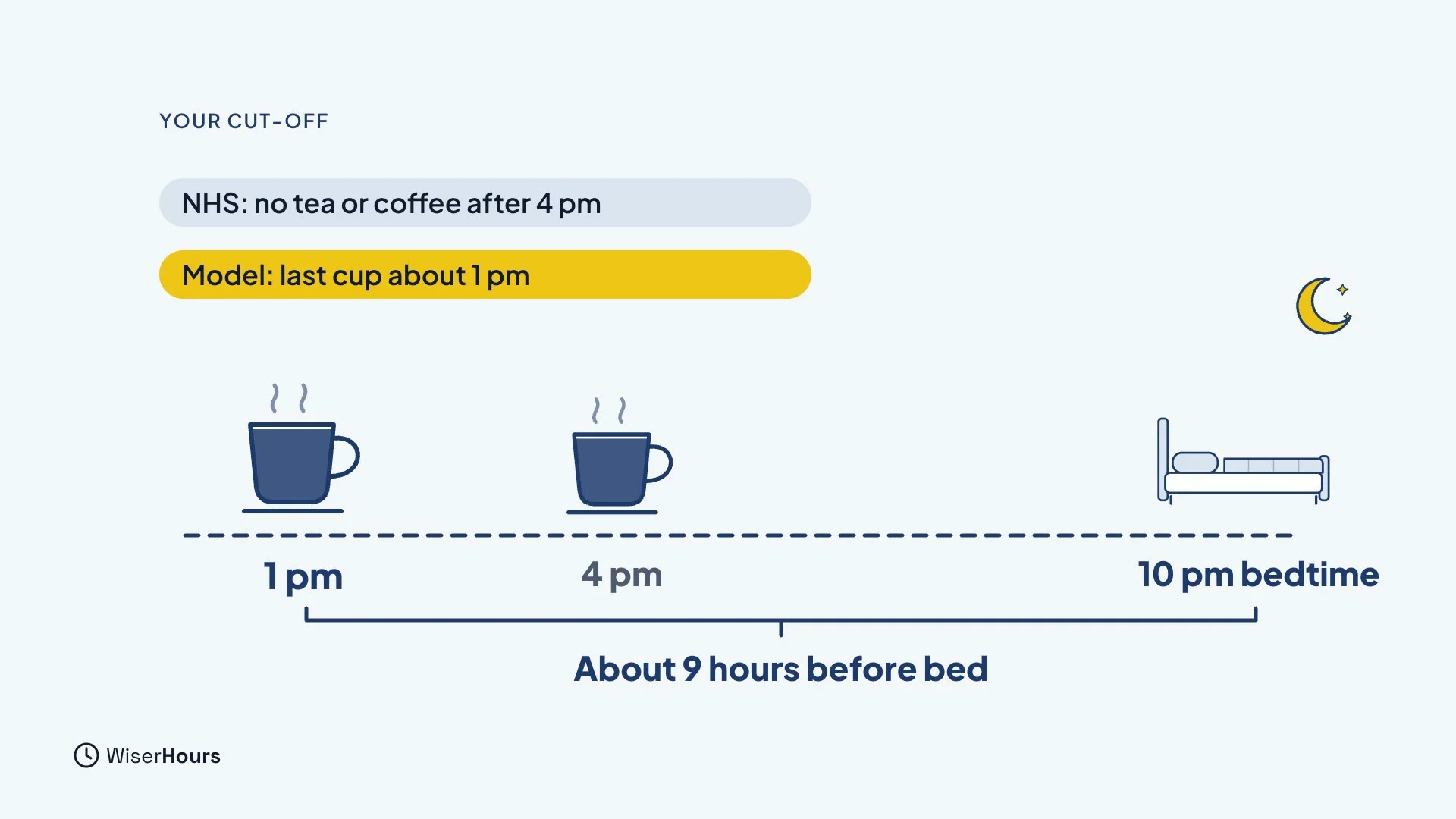
So when should you stop? The UK’s NHS says no tea or coffee in the six hours before bed. One review’s model suggests finishing an ordinary cup about nine hours before bed. For a ten o’clock bedtime, that is about one in the afternoon. Treat these as two ends of a range to try.
 (opens the full-size picture)
Count every source
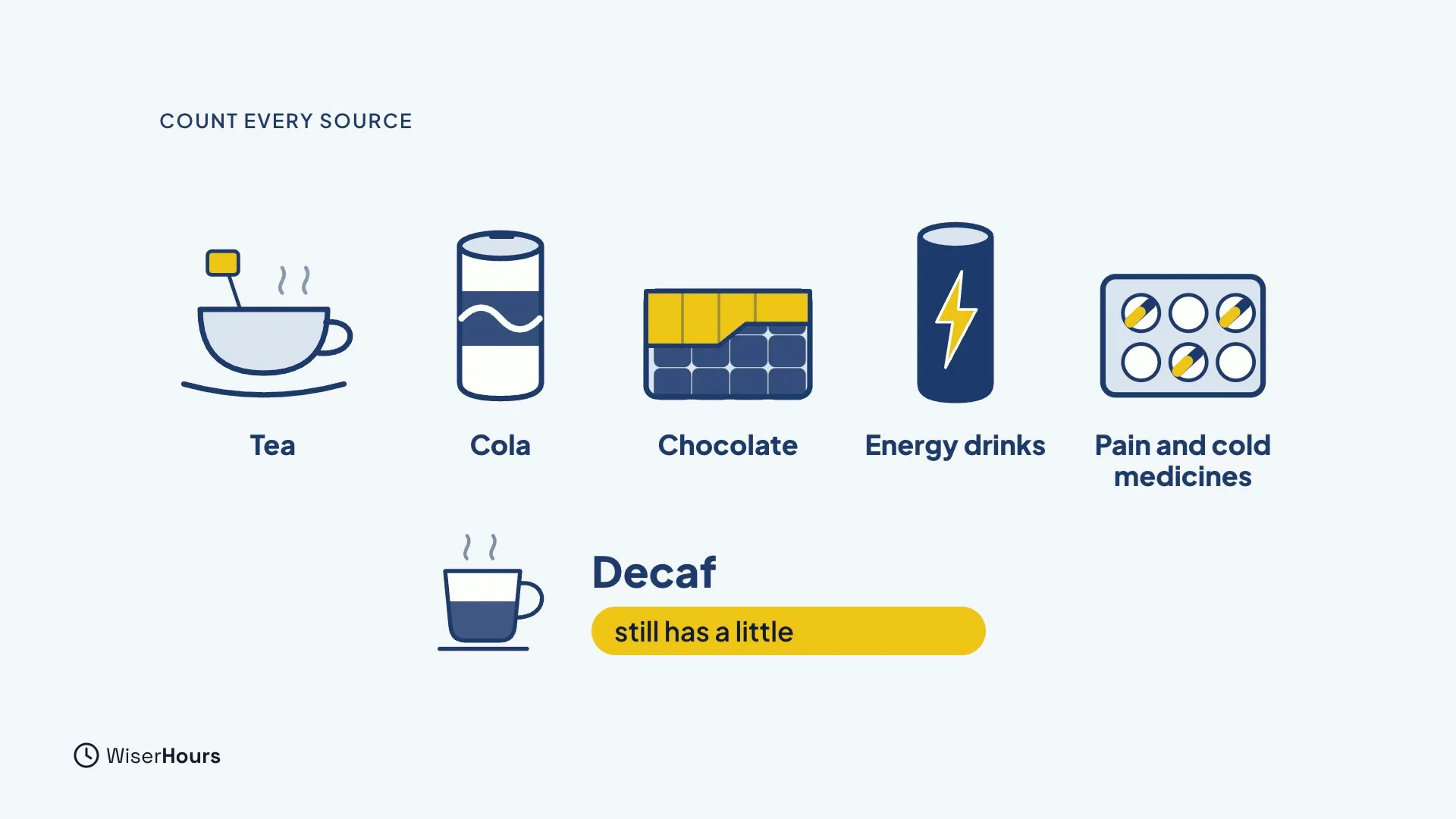
Count every source, not just coffee. Tea, cola, chocolate, energy drinks, and some pain relievers and cold medicines contain caffeine. Even decaf has a little. Check the label on any medicine, or ask a pharmacist.
 (opens the full-size picture)
People differ
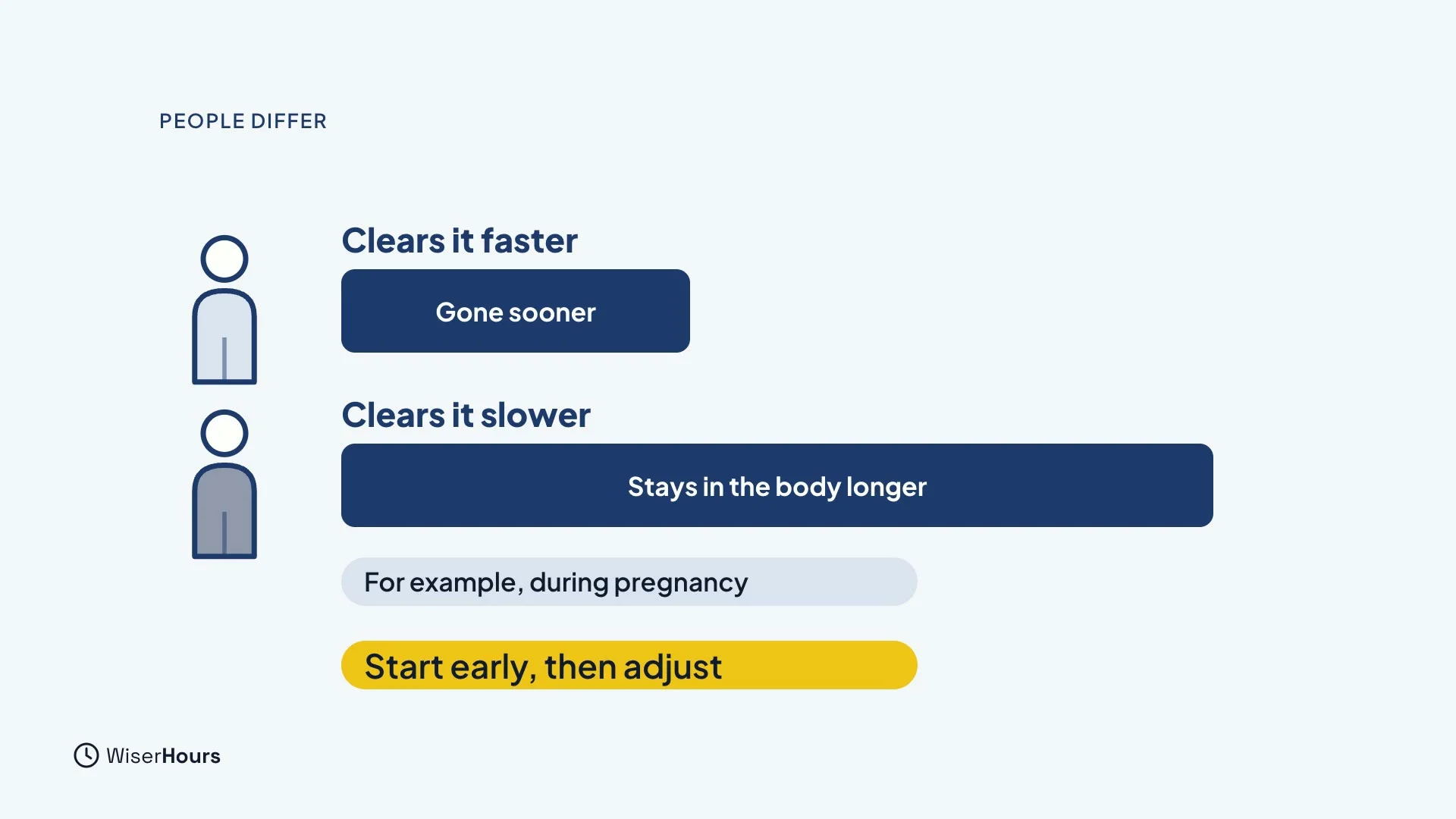
People differ a lot. Some clear caffeine faster, and others much more slowly, for example during pregnancy. Start with the earliest cut-off for your drink and bedtime, then adjust by how you sleep. If you are pregnant or take regular medicines, ask your doctor or pharmacist what is right for you.
 (opens the full-size picture)
YOUR TURN
Read more
- How Late Is Too Late for Coffee?: the half-life, the review and the NHS advice in detail
- How to Sleep Better: where caffeine fits among the other habits
Read the full lesson script
Coffee helps many of us through the day. In this lesson, you'll learn how long caffeine stays in your body, and how to pick your own cut-off time.
Caffeine doesn't disappear all at once. It fades by halves. In adults, half of it is gone after about three to seven hours. So after a coffee at 3 p.m., about half may still be in your body in the early evening, and about a quarter after midnight.
Caffeine blocks a signal that builds up during the day and makes you sleepy. In a review of studies, caffeine taken mostly in the last few hours before bed cut sleep by about 45 minutes on average. Bigger doses closer to bedtime cut more.
Even if you fall asleep easily, caffeine can still add time awake in the night, and swap some deep sleep for lighter sleep.
So when should you stop? The UK's NHS says no tea or coffee in the six hours before bed. One review's model suggests finishing an ordinary cup about nine hours before bed. For a ten o'clock bedtime, that's about one in the afternoon.
Count every source, not just coffee. Tea, cola, chocolate, energy drinks, and some pain relievers and cold medicines contain caffeine. Even decaf has a little.
People differ a lot. Some clear caffeine faster, and others much more slowly, for example during pregnancy. Start with the earliest cut-off for your drink and bedtime, then adjust by how you sleep.
So remember: caffeine fades by halves, and it can cut deep sleep even when you fall asleep fine. Pick a cut-off six to nine hours before bed, and count every source. Before the next lesson, pick your cut-off time, and move your last cup before it. In the next lesson, you'll look at alcohol, late meals and evening exercise.
MAKE IT A SMALL WIN
Finished this lesson?
Mark it complete to save your progress on this device.