Spot the scams · Lesson 7 of 11
Scam Calls and Fake Voices: How to Check Who Is Calling
Learn why a familiar name, number or voice on a call proves nothing, and what to do when a caller asks for money, a PIN or a password.
 Video coming soon
Scam calls borrow a name you trust, and sometimes even a voice you know. In this lesson you learn why the screen can’t tell you who is calling, and the simple routine that works whatever it says. It matters, because these calls are after your money.
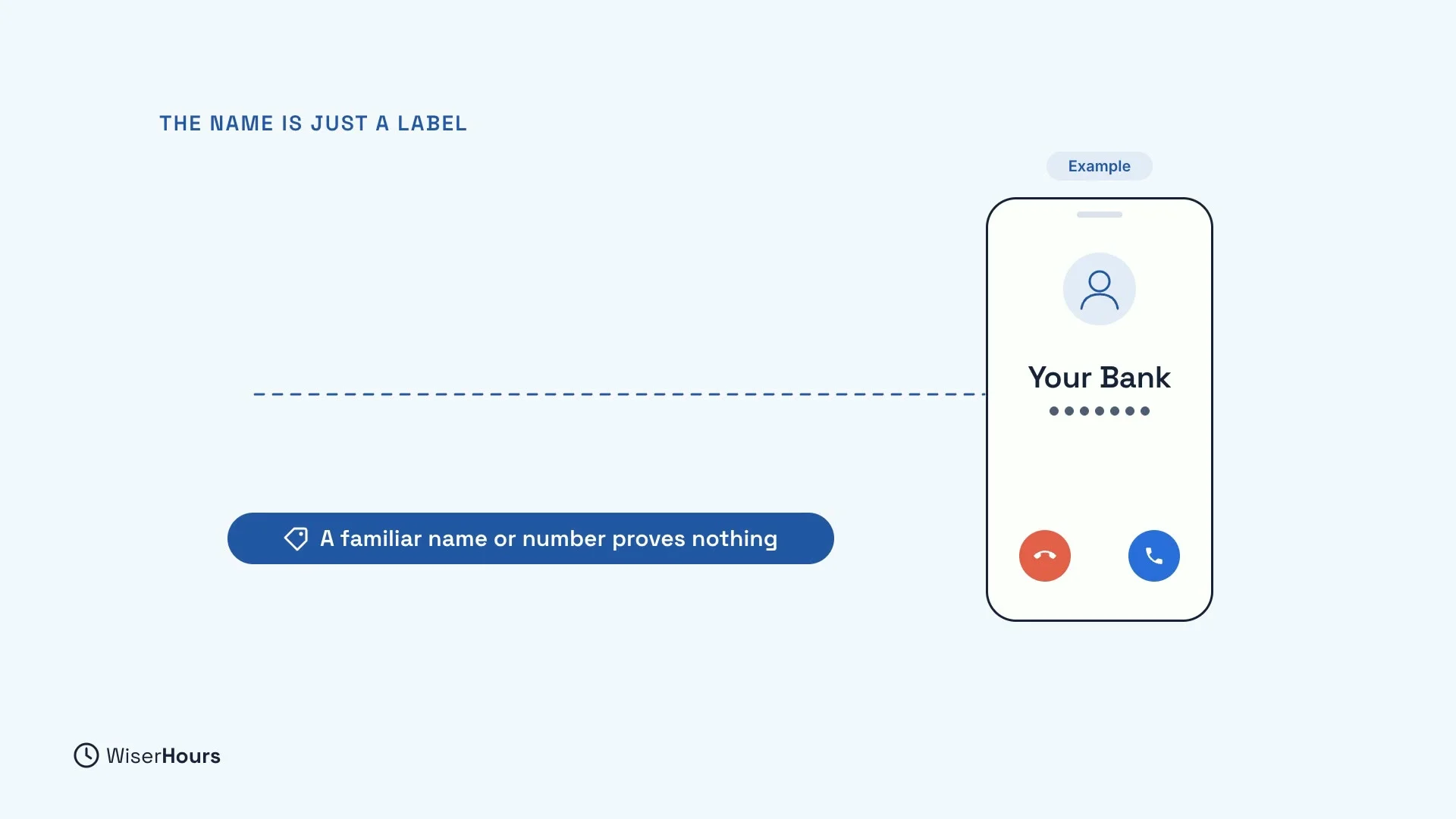
The name on the screen is just a label
When your phone rings, the name and number on the screen are not the result of a check. They are a label that travels with the call, and on many networks the caller gets to write it. Faking it is called caller ID spoofing. Scammers can put any name or number there, so a familiar name or number proves nothing about who is really on the line.
 (opens the full-size picture)
Three common tricks
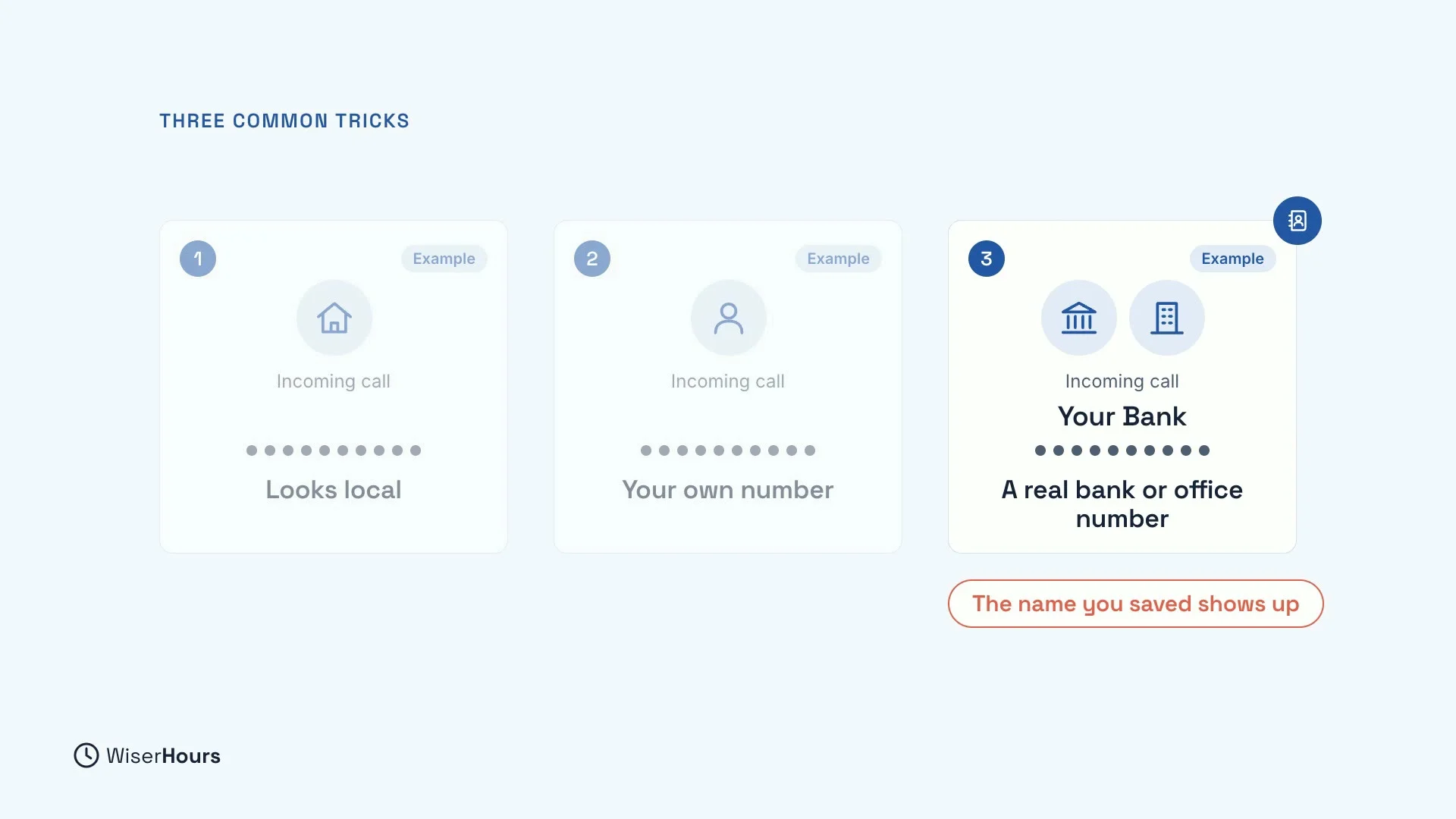
Spoofed calls tend to take one of three shapes:
- A number that looks local, so you think the call comes from nearby.
- Your own number, which is the same trick turned inward.
- The real number of your bank or a government office. If you saved that number in your contacts, your phone may even show the name you gave it, such as “My Bank”, in your own words.
That last one feels like proof, but nobody checked anything. Treat every one of these like an unknown caller.
 (opens the full-size picture)
A call from your bank?
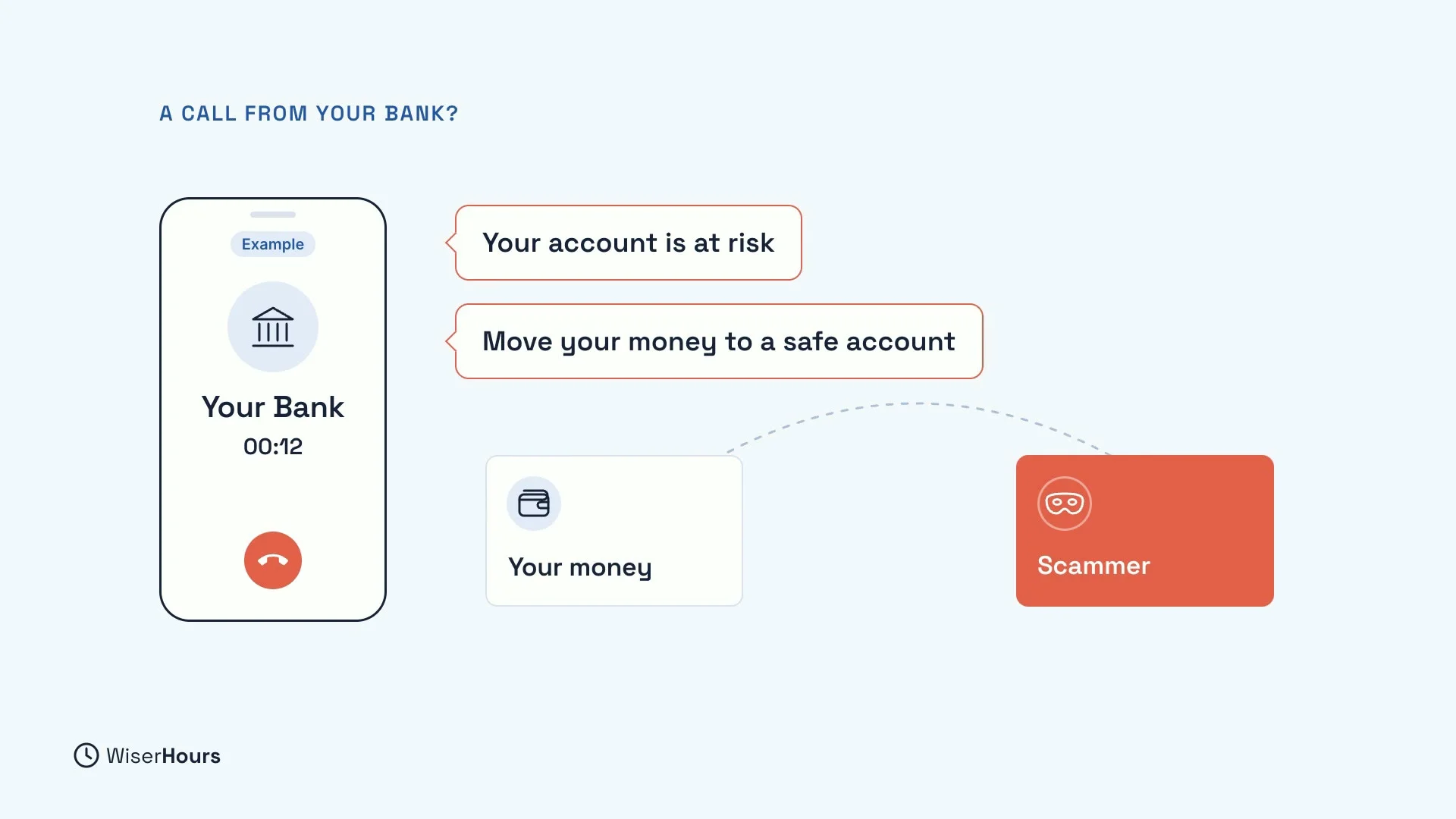
Picture the call. The screen says it is your bank. The caller says your account is at risk, and asks you to move your money to a “safe account”. Every line is built to keep you on the phone and stop you checking. The safe account belongs to the scammer, and once the money arrives there, it is theirs.
 (opens the full-size picture)
What your bank never asks
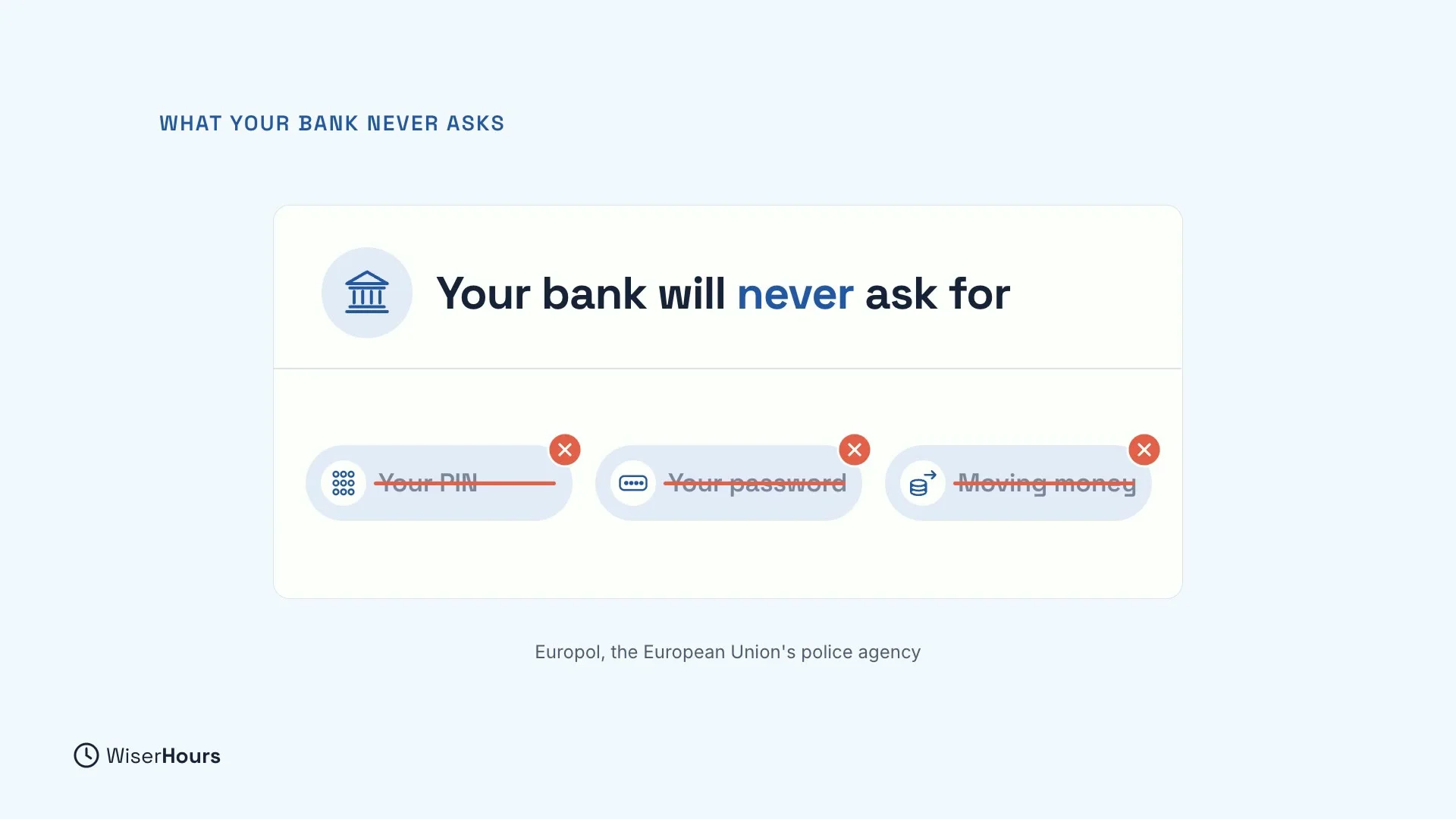
Europol, the European Union’s police agency, puts it simply: your bank will never ask for your PIN or your online banking password, and it will never ask you to move money to another account. The caller may know your name and other details, but scammers can find those online, so that proves nothing either.
 (opens the full-size picture)
Hang up and call back
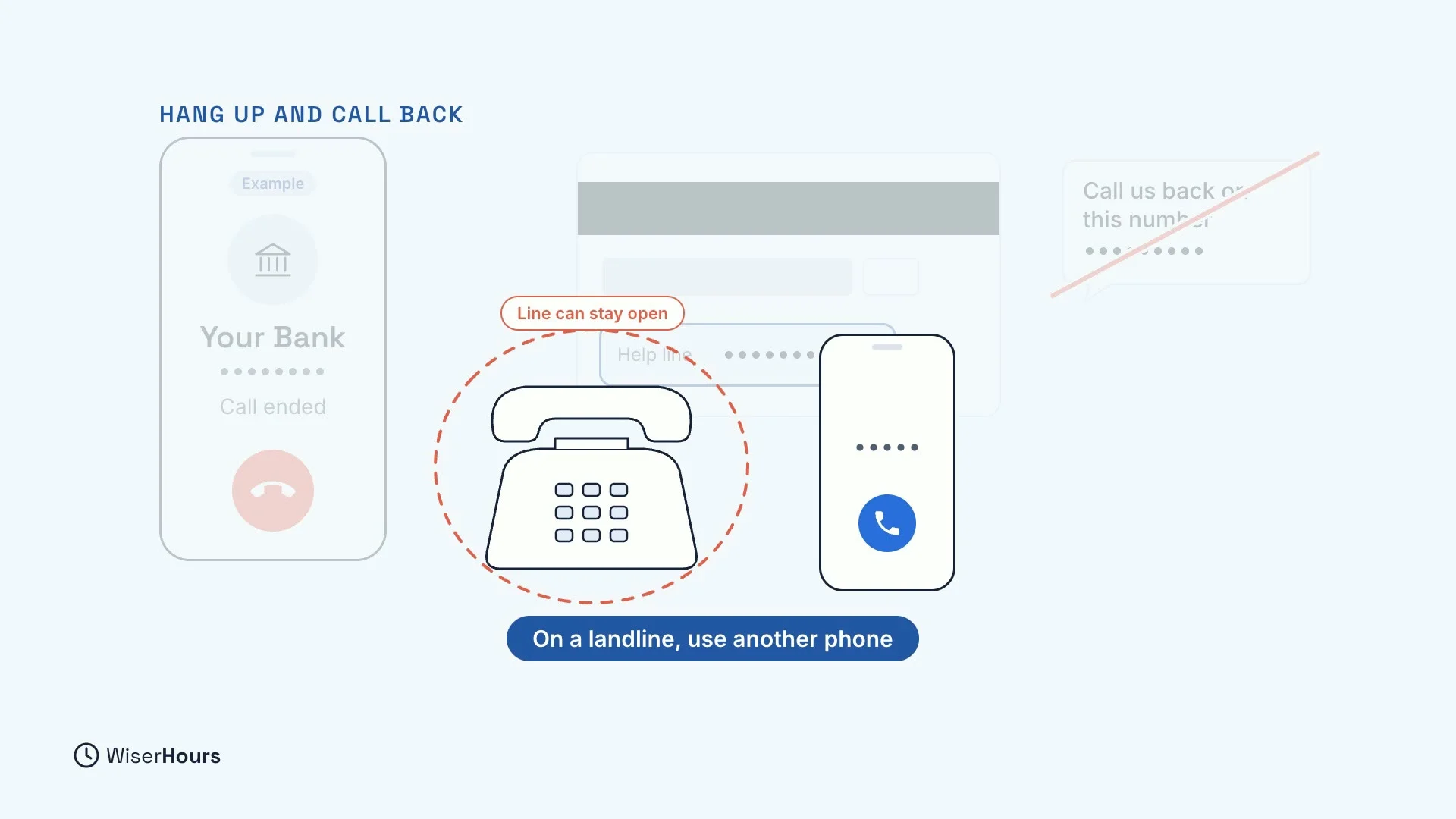
So if a caller asks for money, a PIN or a password, hang up. Hanging up costs you nothing: a real bank loses nothing if you call it back. Then call the number on the back of your card, never a number the caller gives you, because that number can lead straight back to them.
On a landline, use another phone
A scammer can keep a landline connection open after you hang up, so your “new” call goes straight back to them. Call back from a different phone, such as your mobile.
 (opens the full-size picture)
Voices and videos can be faked
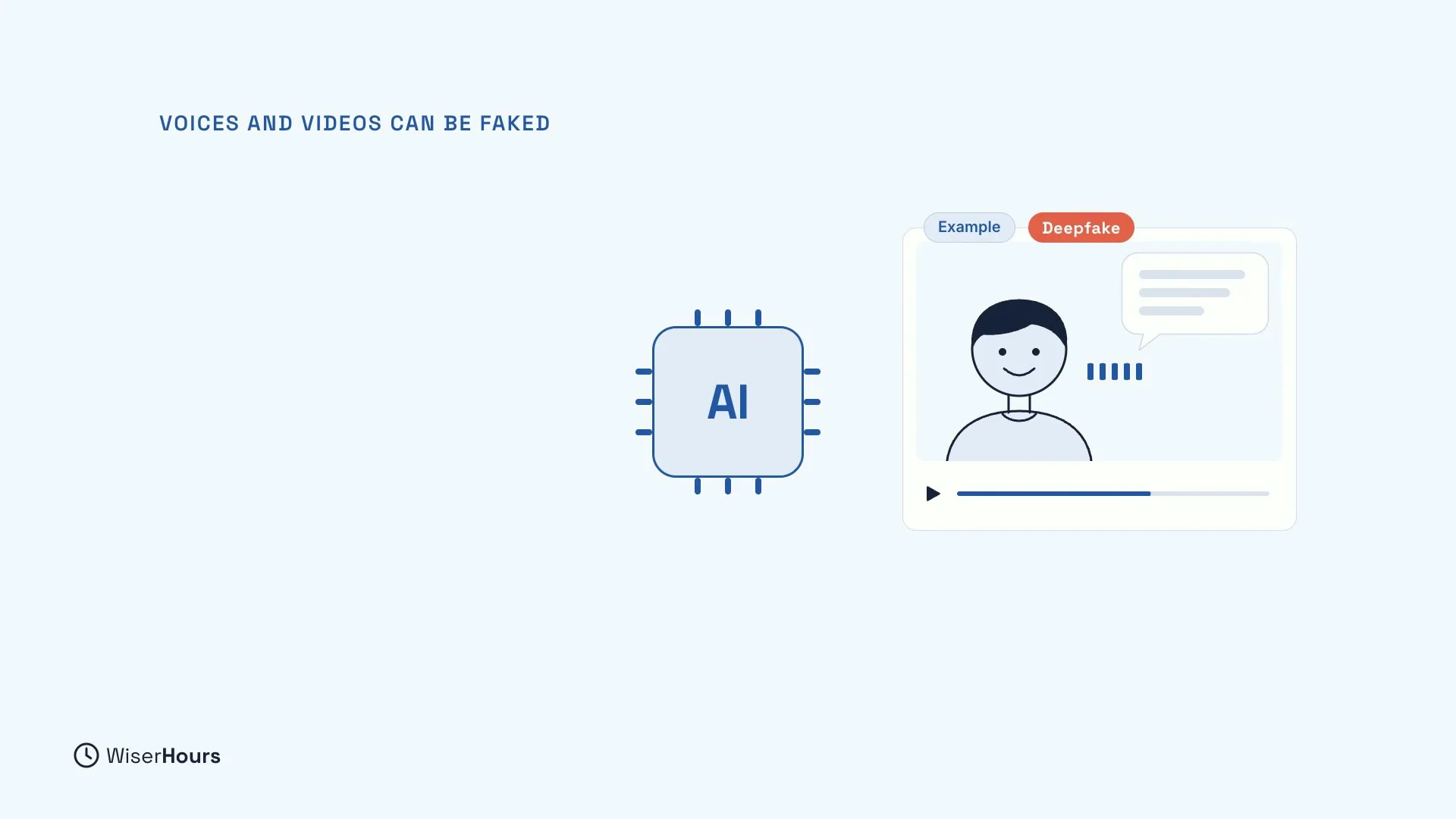
Voices and videos can be faked too. AI software can copy a real person’s face or voice and make them say things they never said. This is called a deepfake. Scammers have used them to pose as a boss or an official on a video call.
 (opens the full-size picture)
Check the request, not the face
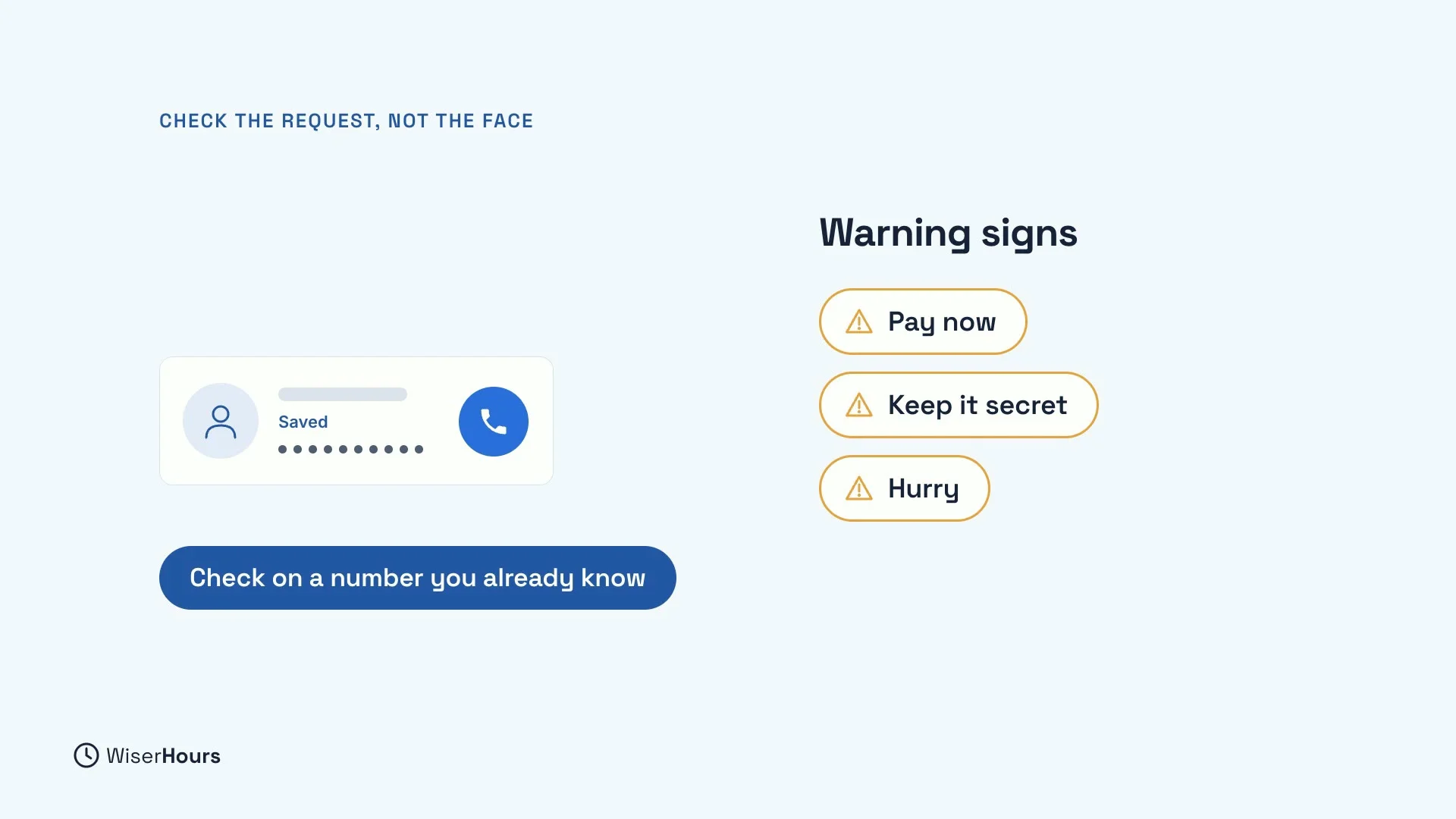
In studies, people spot these fakes little better than a coin flip, and many feel surer than they should. So don’t rely on what you see or hear. Watch for the warning signs instead: pressure to pay, to keep it secret, or to hurry. If you notice them, end the call and check with the real person, on a number you already know.
 (opens the full-size picture)
YOUR TURN
Read more
- Scam Calls: How Caller ID Spoofing Works and What to Do: the three tricks in more detail, and where to report a scam call.
- Deepfakes Explained: How to Spot Fake Videos and Images: why your eyes are a weak detector, and the checks that work better.
Read the full lesson script
In this lesson, you will learn how scam calls borrow a name you trust, even a voice, and how to check who is really calling. It matters, because these calls are after your money.
The name on your phone's screen is just a label, sent with the call. Scammers can put any name or number on it. So a familiar name or number proves nothing.
There are three common tricks. A number that looks local. Your own number. Or the real number of your bank, or a government office. Your phone may even show the name you saved for that number.
Picture that call. The caller says your account is at risk, and asks you to move your money to a safe account. The scammer controls that account.
The European Union's police agency puts it simply. Your bank will never ask for your PIN or password, or ask you to move money.
So if a caller asks for money, a PIN or a password, hang up. Then call the number on your card, never one they give you. On a landline, call back from another phone, because the scammer can keep the line open.
Voices and videos can be faked too. AI software can copy a real person's face or voice, and make them say things they never said. This is called a deepfake.
In studies, people spot these fakes little better than a coin flip. So don't rely on what you see or hear. Pressure to pay, to keep it secret, or to hurry is the warning sign. Then check with the real person, on a number you already know.
So, judge a call by what it asks for, not by the name or the voice. If it wants money, hang up and call back on a number you trust. Today, save your bank's real number from the back of your card in your phone. Next, you will keep your devices up to date.
MAKE IT A SMALL WIN
Finished this lesson?
Mark it complete to save your progress on this device.