Keep going · Lesson 6 of 11
Remove and Add Friction to Start Tasks and Skip Distractions
Change your surroundings before the urge arrives: make distractions harder, the task easier and plan an answer for urges.
 Video coming soon
Willpower is a poor plan when the phone is right next to you. In this lesson you will change your surroundings, so the task gets easier and the distractions get harder.
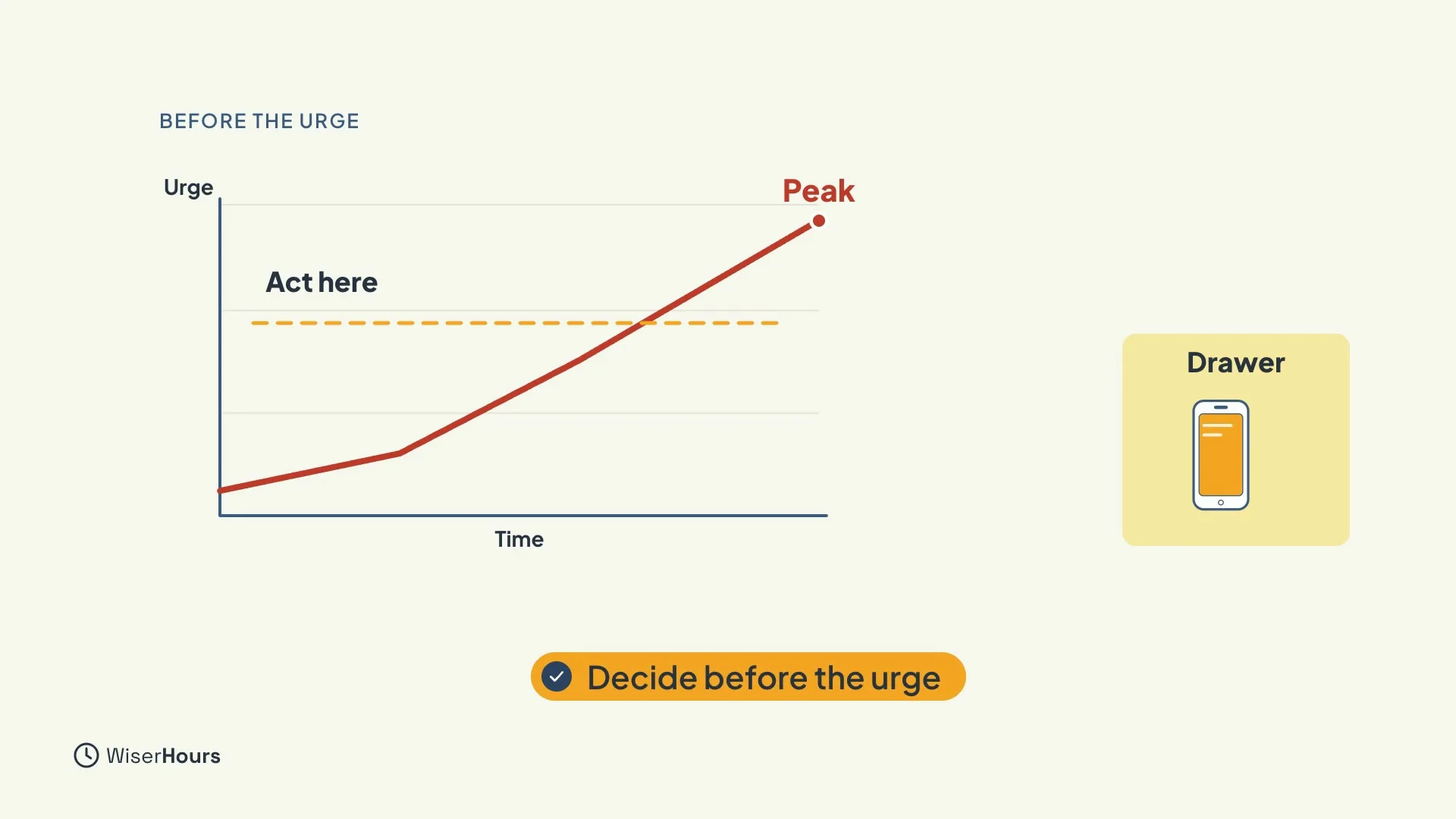
Decide before the urge
The strongest tactics against temptation are settled before the temptation appears. Urges tend to grow stronger over time, so changing your surroundings before one builds may work best. This idea comes from expert reviews and has been only lightly tested, so treat it as a promising approach, not a guarantee.
 (opens the full-size picture)
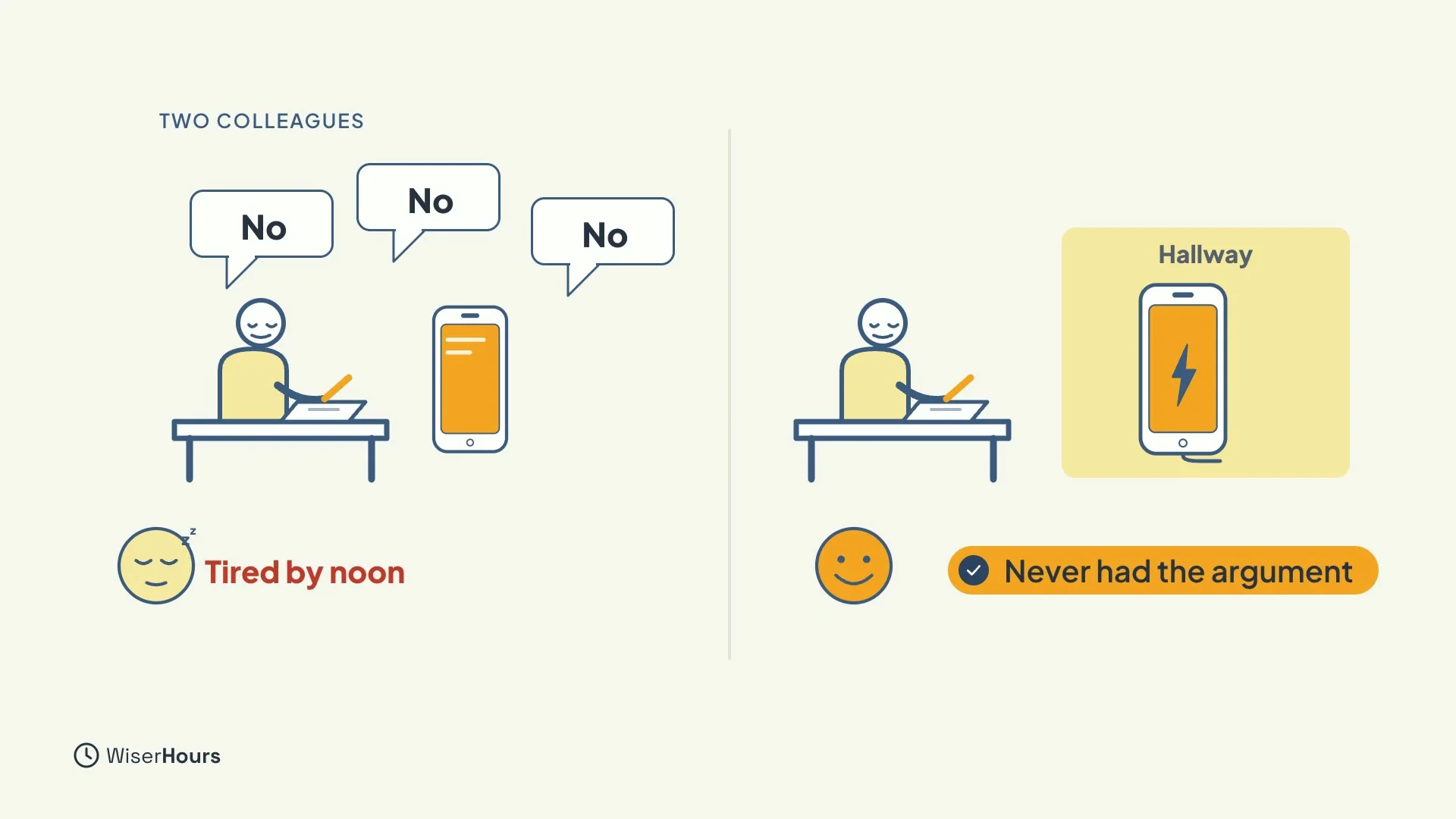
Two colleagues
Picture two people at work. One keeps the phone on the desk and says no, again and again. The other leaves it charging in the hall. By noon, the first has spent real effort and probably lost a few rounds. The second never had the argument.
 (opens the full-size picture)
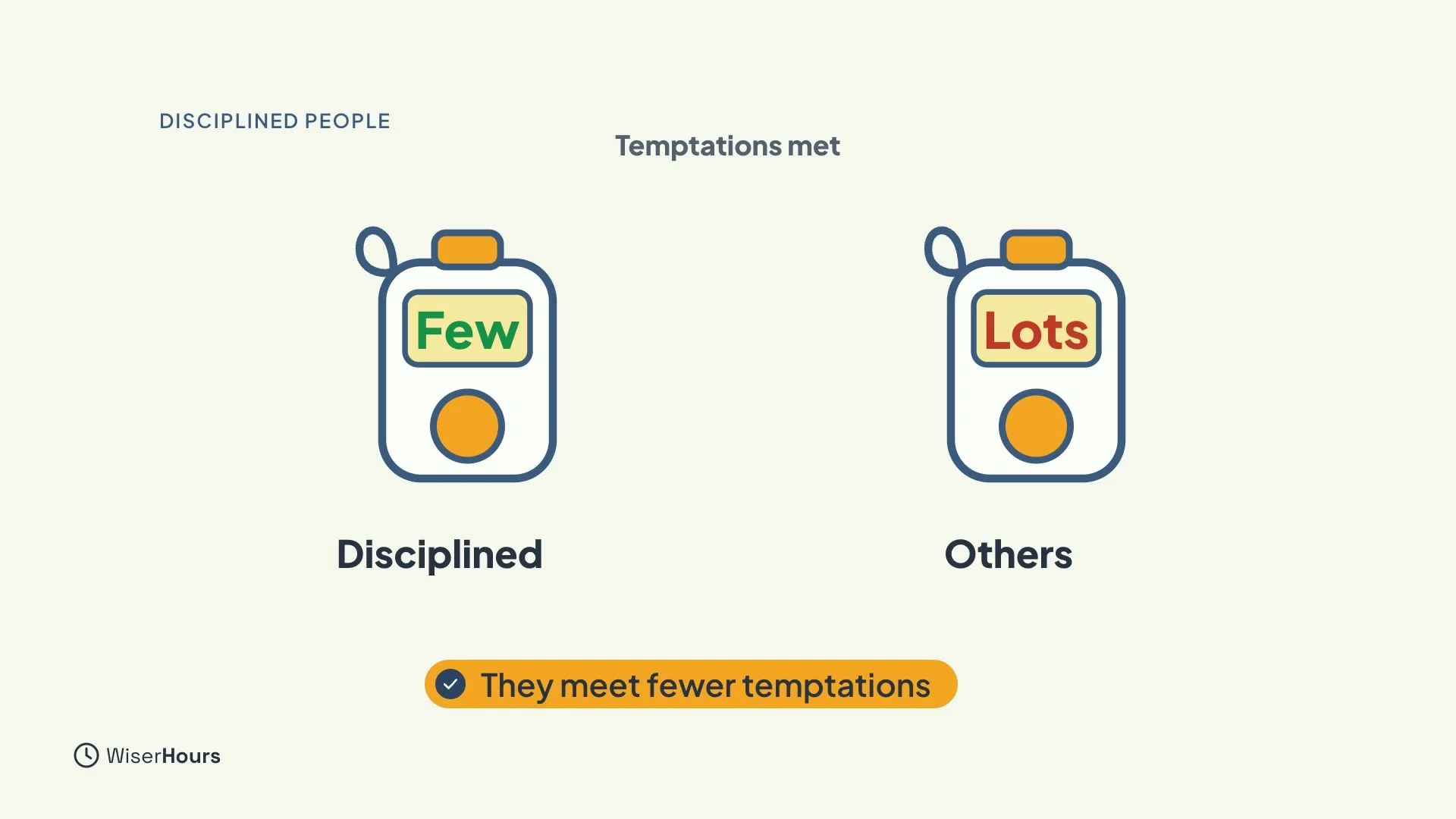
That is what research finds, too. People with strong self-discipline spend less effort resisting temptation, not more. They meet fewer temptations in the first place.
 (opens the full-size picture)
Change the setting
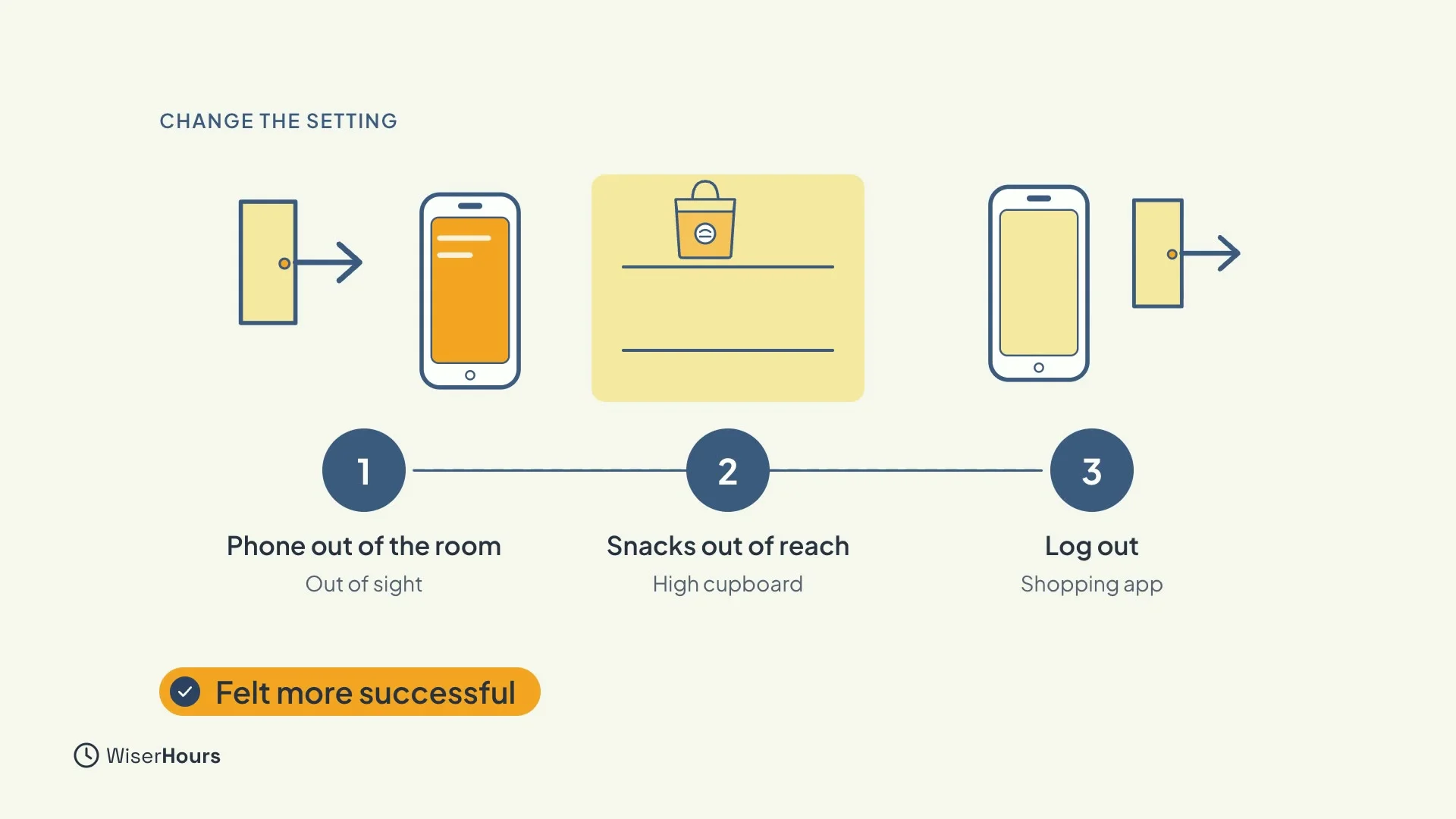
In randomized studies, students who changed their surroundings felt more successful at meeting their study goals over the next week. Study without the phone in the room. Keep snacks in a hard-to-reach cupboard. Log out of the shopping app.
 (opens the full-size picture)
Friction you can live with
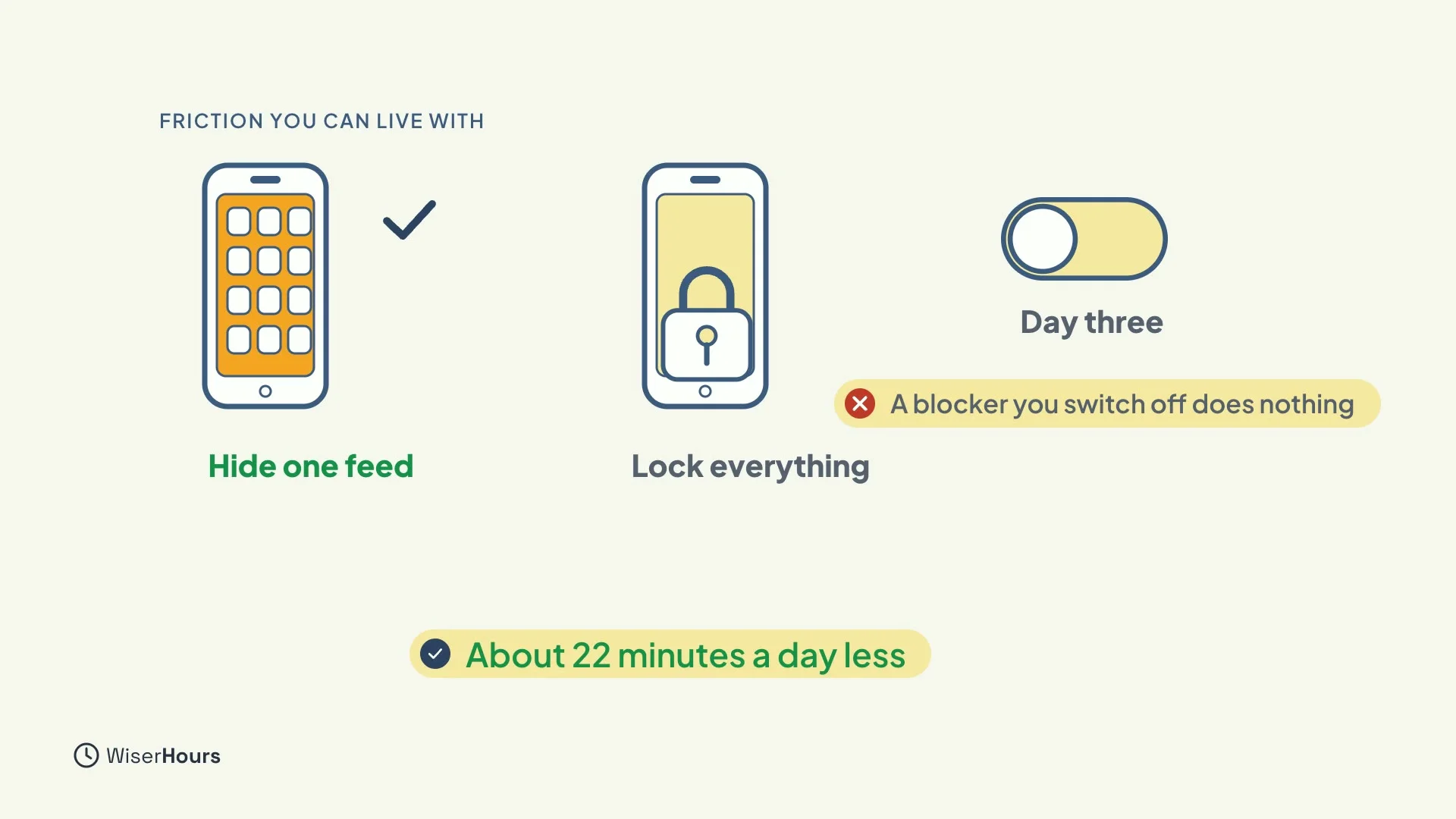
Choose friction you can live with. Hide one feed, rather than locking the whole phone. A blocker you switch off on day three does nothing. In one trial, people who set daily app limits they could not override spent about 22 fewer minutes a day on their most tempting apps.
 (opens the full-size picture)
Slow the bad, speed the good
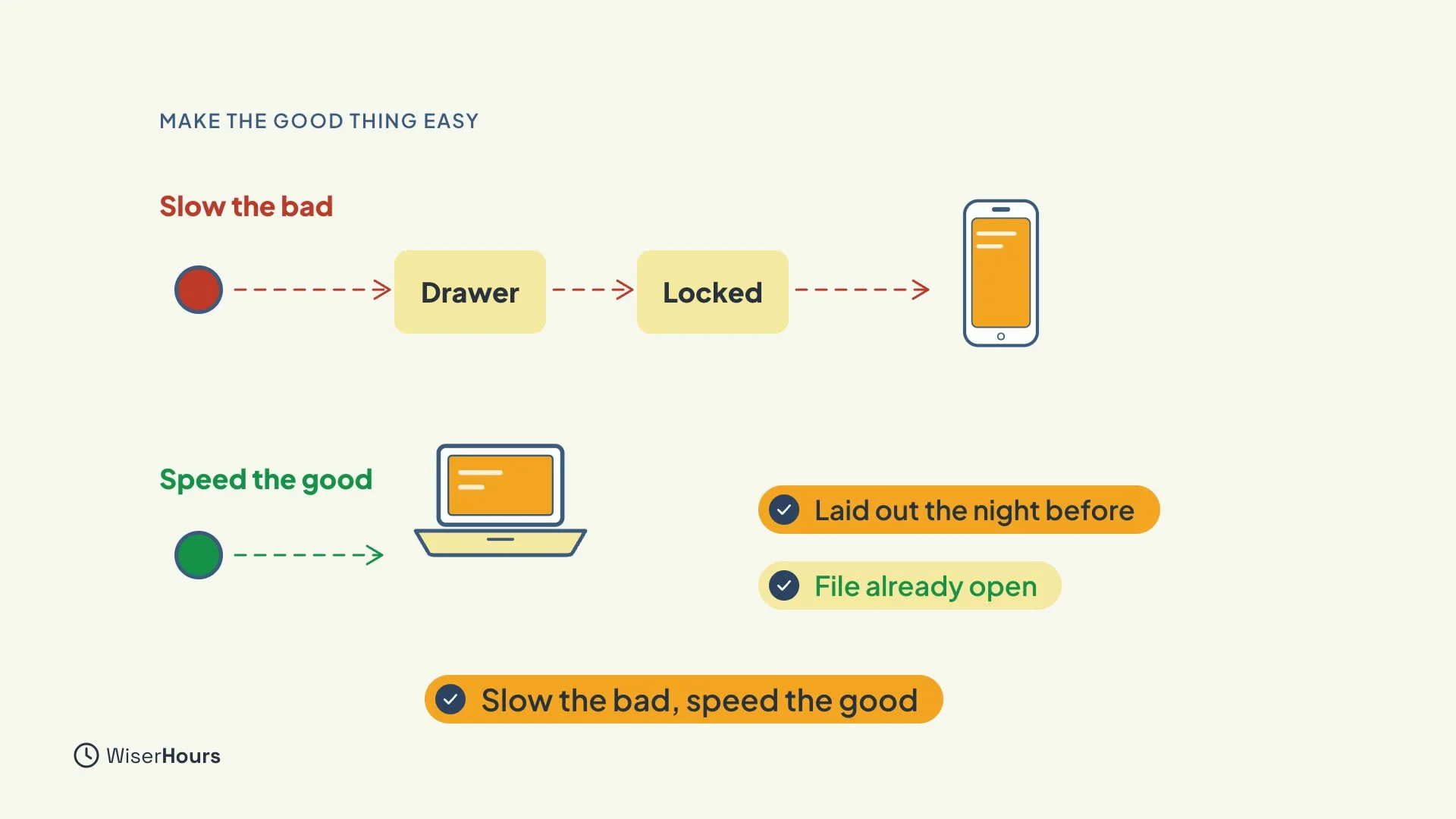
Friction works both ways. Make the unwanted choice slower, and the wanted one faster. Lay out what you need the night before. Open the document before you close the laptop.
 (opens the full-size picture)
Plan for the urges that get through
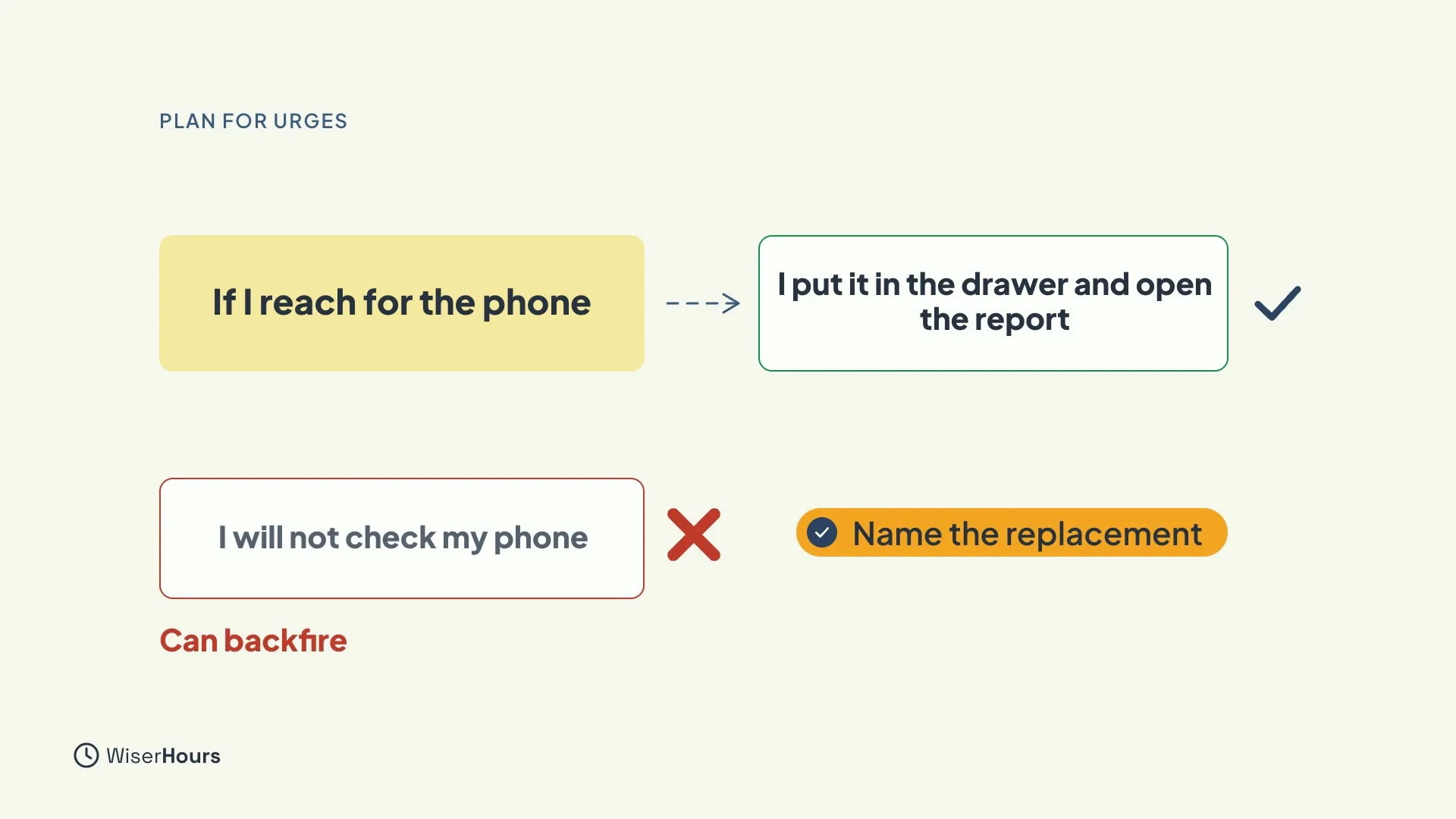
Some urges still get through, so plan your answer. “If I reach for the phone in the first work hour, I put it in the drawer and open the report.” Name what you will do instead. Plans that only say “I will not” can backfire.
 (opens the full-size picture)
Small phone settings
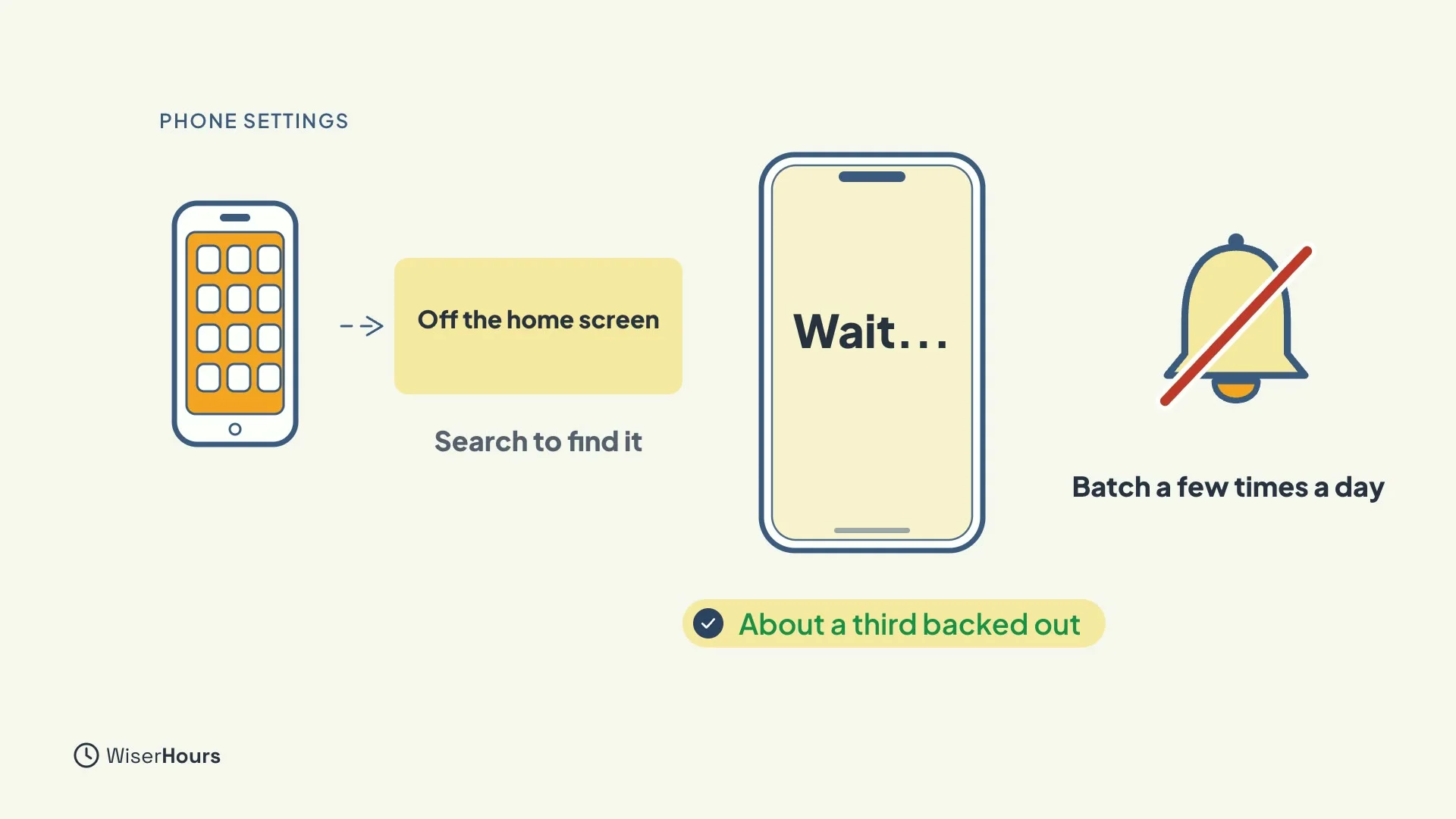
Small phone settings help too. Move tempting apps off your home screen, so you have to search for them. That adds a moment to change your mind. Put a pause in front of an app: in one test, people backed out of about a third of attempts to open it. And turn off notifications you do not need, or batch them a few times a day.
 (opens the full-size picture)
YOUR TURN
Read more
- How to Build Self-Discipline From Scratch: why changing surroundings beats resisting.
- Self-Discipline Explained: Skill, Trait, or Just a Well-Designed Life?: how disciplined people meet fewer temptations.
- How to Stop Procrastinating: 15 Strategies Backed by Research: if-then plans and replacement actions.
- How to Stop Procrastinating on Studying: changing your study setting.
Read the full lesson script
In this lesson, you'll learn to change your surroundings, so the task gets easier and the distractions get harder.
The strongest tactics against temptation are settled before the temptation appears. Urges tend to grow stronger over time, so changing your surroundings before one builds may work best.
Picture two people at work. One keeps the phone on the desk and says no, again and again. The other leaves it charging in the hall. By noon, the first has spent real effort and probably lost a few rounds. The second never had the argument.
That's what research finds, too. People with strong self-discipline spend less effort resisting temptation, not more. They meet fewer temptations in the first place.
In randomized studies, students who changed their surroundings felt more successful at meeting their study goals over the next week. Study without the phone in the room. Keep snacks in a hard-to-reach cupboard. Log out of the shopping app.
Choose friction you can live with. Hide one feed, rather than locking the whole phone. A blocker you switch off on day three does nothing. In one trial, people who set daily app limits they couldn't override spent about twenty two fewer minutes a day on their most tempting apps.
Friction works both ways. Make the unwanted choice slower, and the wanted one faster. Lay out what you need the night before. Open the document before you close the laptop.
Some urges still get through, so plan your answer. If I reach for the phone in the first work hour, I put it in the drawer and open the report. Name what you'll do instead. Plans that only say I will not can backfire.
Small phone settings help too. Move tempting apps off your home screen, so you have to search for them. That adds a moment to change your mind. Put a pause in front of an app: in one test, people backed out of about a third of attempts to open it. And turn off notifications you don't need, or batch them a few times a day.
So remember: decide before the urge, change the setting, and make the good thing easy. Before the next lesson, change one thing in your space before your next work session. Next, you'll learn about temptation bundling and rewards.
MAKE IT A SMALL WIN
Finished this lesson?
Mark it complete to save your progress on this device.