Understand it · Lesson 1 of 11
Why You Procrastinate: Feelings, Not Laziness
Learn what procrastination really is, why it is not laziness, and how naming the feeling a task brings up can help you start.
 Video coming soon
If you keep putting things off, you may have wondered what is wrong with you. This lesson gives a calmer answer. You will see what procrastination really is, why it is not laziness, and why putting things off feels so good in the moment. This course is general information to help with everyday delay.
What procrastination really is
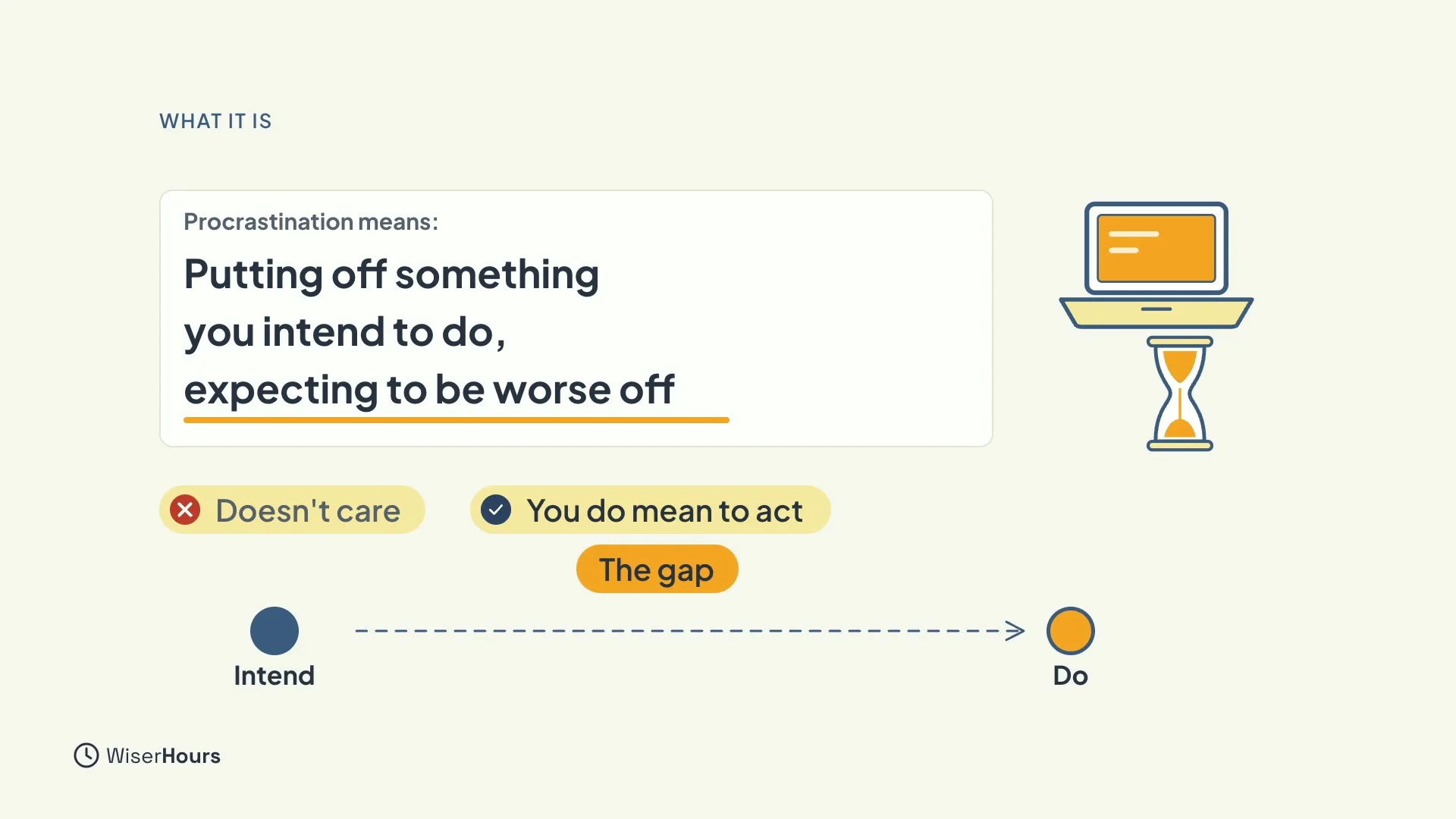
Psychologists define procrastination as putting off something you intend to do, even though you expect to be worse off for the delay. That last part matters. A procrastinator is not someone who does not care. You do mean to act. The problem is the gap between what you intend and what you actually do.
 (opens the full-size picture)
Not laziness
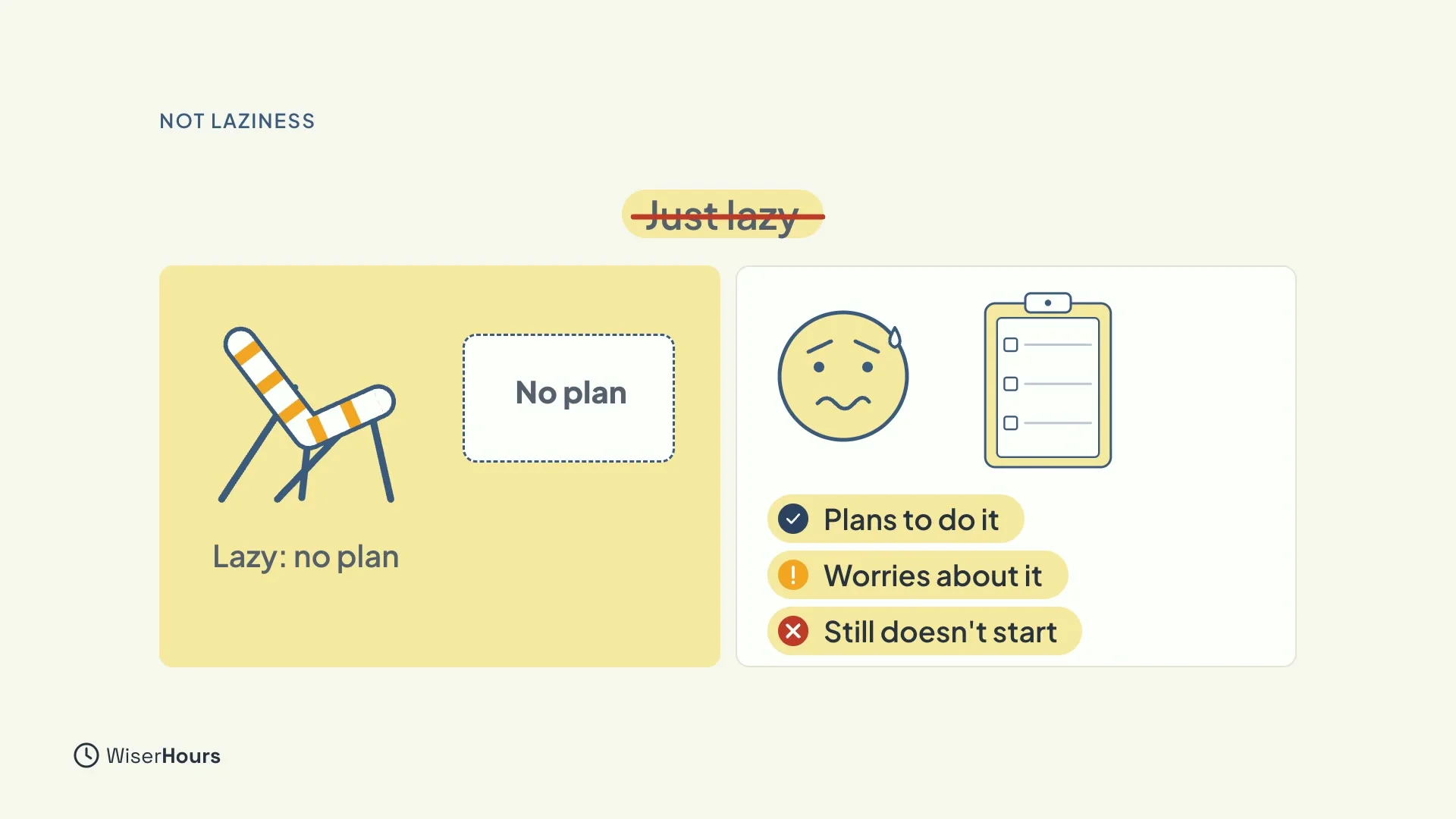
So procrastination is not simply laziness. A lazy person does not plan to do the task. A procrastinator plans to, worries about it, and still does not start. That worry is a clue: you care about the task, and it feels bad to think about.
 (opens the full-size picture)
Delay as a way to feel better
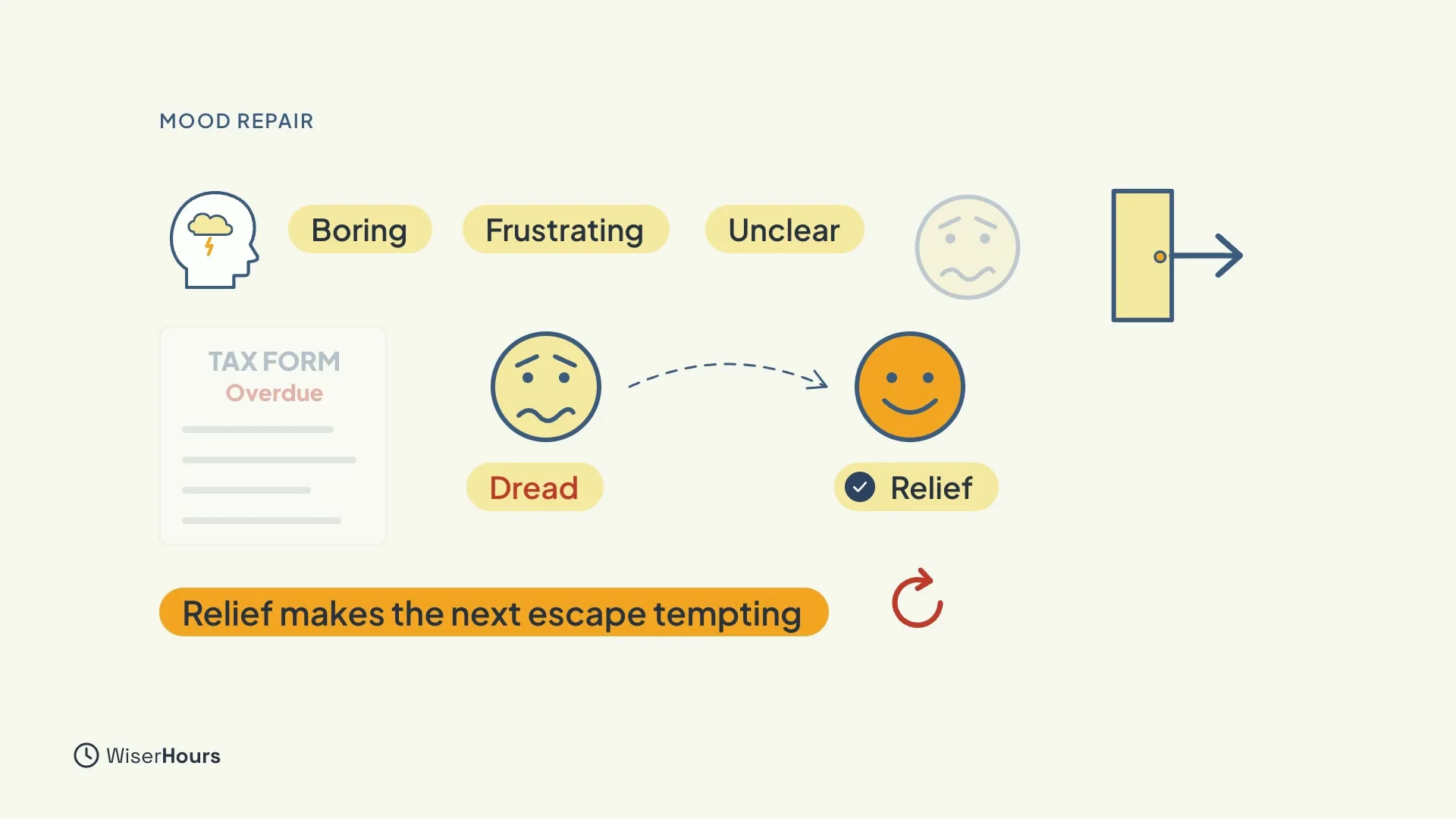
Many researchers now see procrastination as a way of handling feelings. A boring, frustrating or unclear task triggers unpleasant feelings. Stepping away makes those feelings fade, for now.
Picture opening an overdue tax form. You feel dread, close it, and within seconds you feel relief. That relief makes the next escape more tempting.
 (opens the full-size picture)
The loop, and why the relief does not last
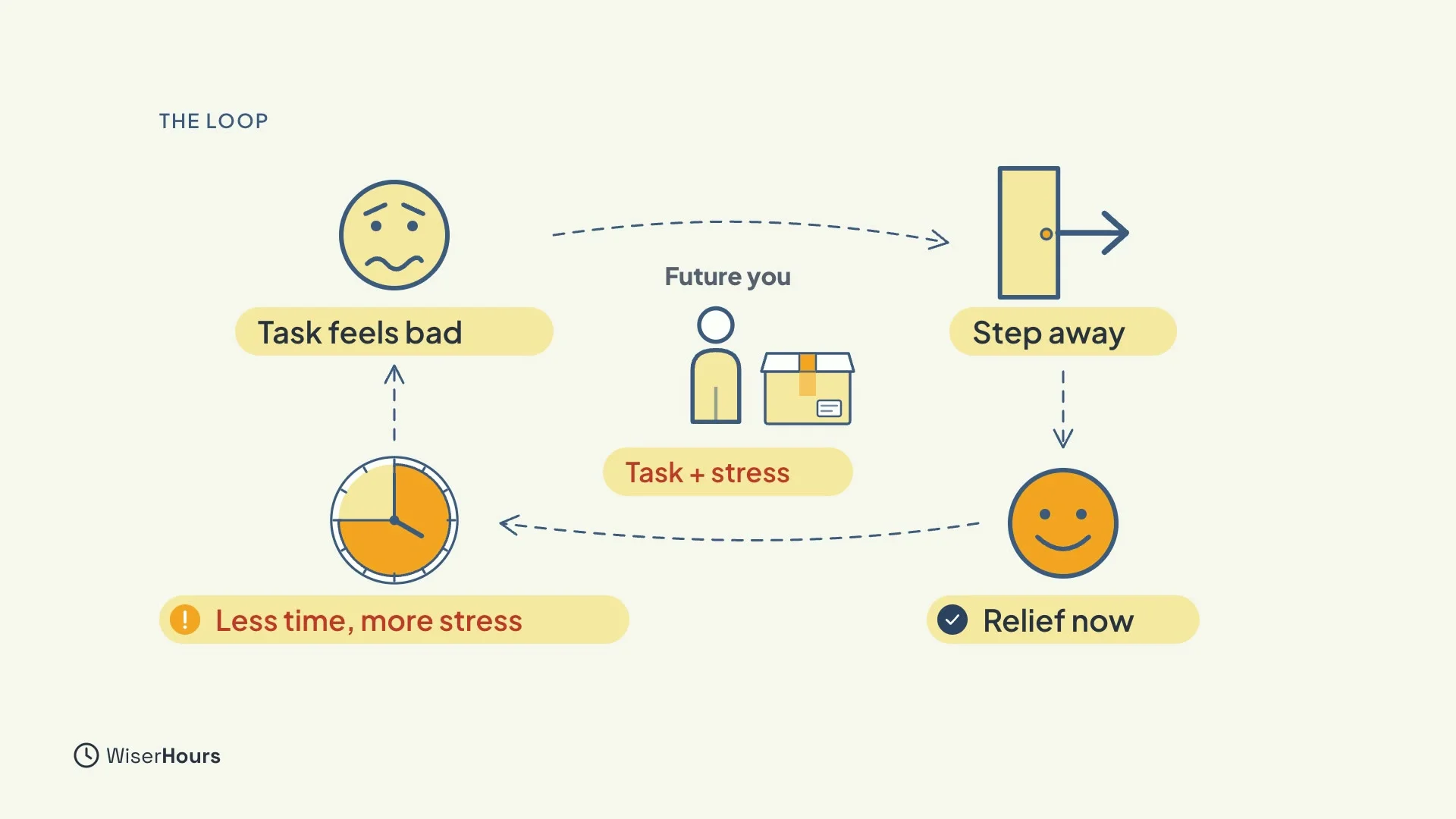
This creates a loop. The task feels bad. You step away. You get relief now. But the task is still there, with less time and more stress. Your future self inherits both the task and the stress.
 (opens the full-size picture)
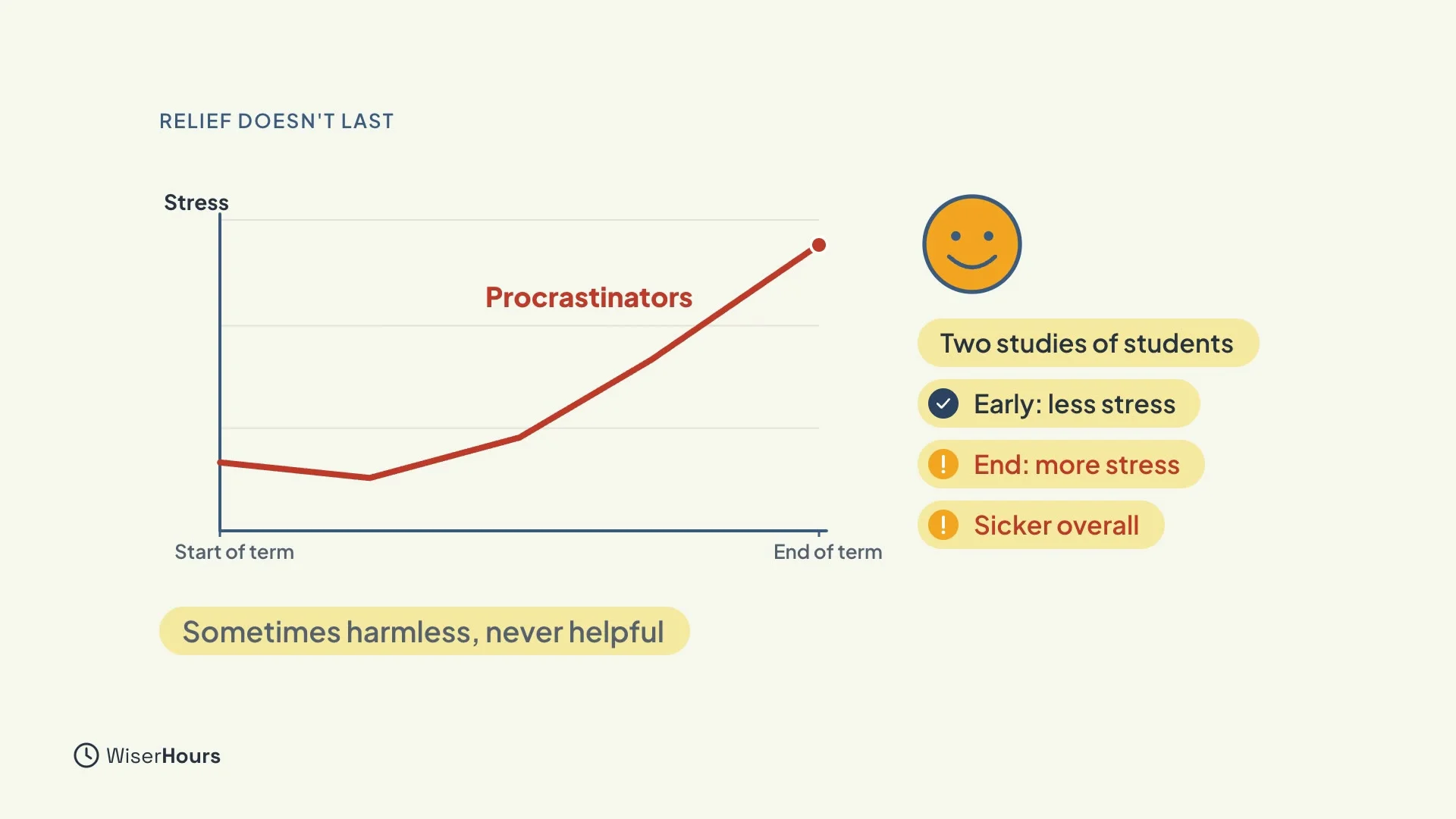
The relief does not last, either. In two studies of students, procrastinators felt less stressed early in the term. By the end, they were more stressed, and sicker overall. Across many studies, delay was sometimes harmless for grades, but never helpful.
 (opens the full-size picture)
Four things that go with delay
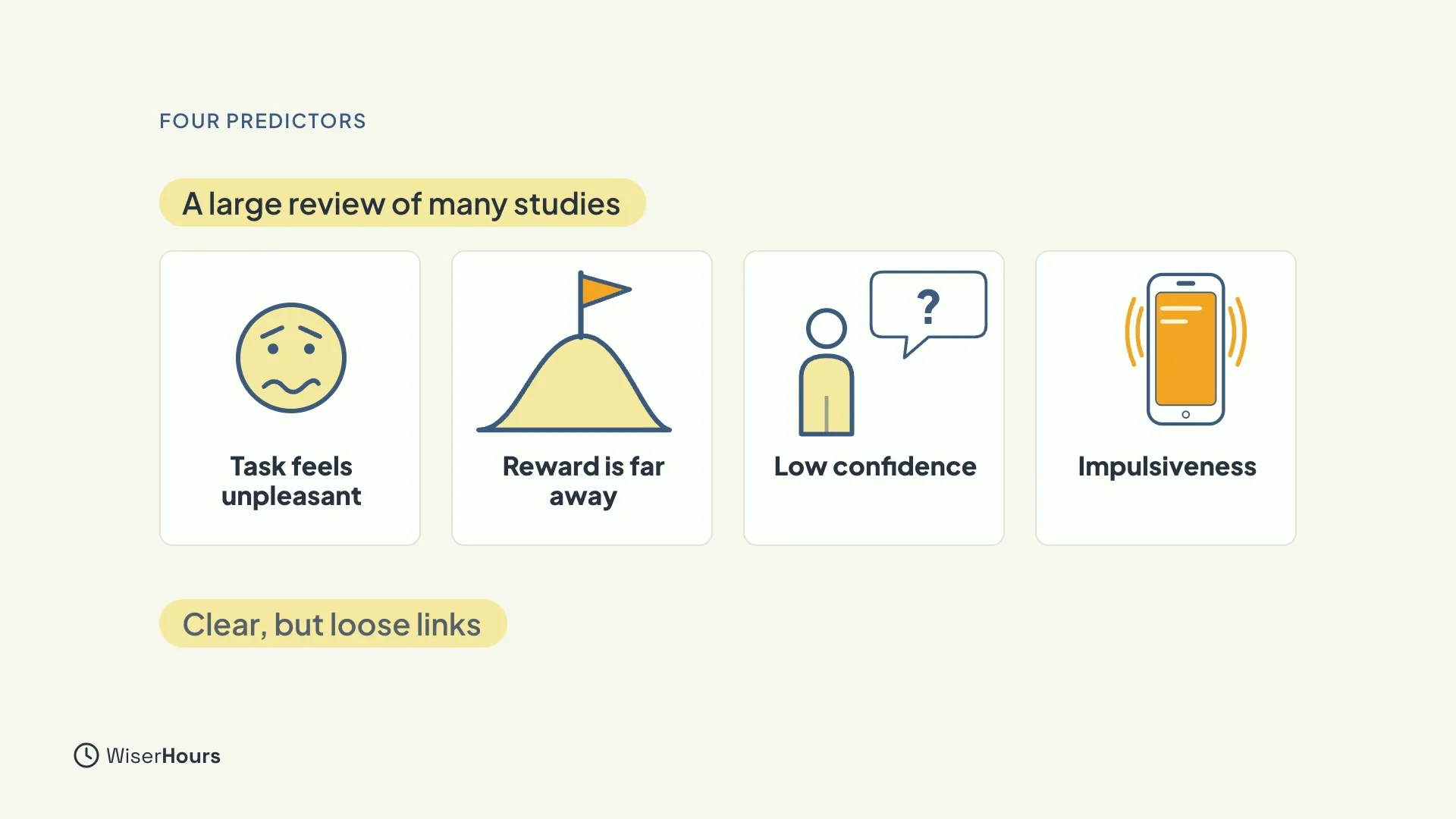
A large review of research found four things that most consistently go with putting things off:
- How unpleasant the task feels.
- How far away its reward is.
- Low confidence that you can do it.
- Impulsiveness: being easily pulled toward something else.
These links are clear, but loose. They are not a diagnosis, and they do not mean that any one of them explains your delay. The next lessons use them to help you find your own pattern.
 (opens the full-size picture)
Name the feeling
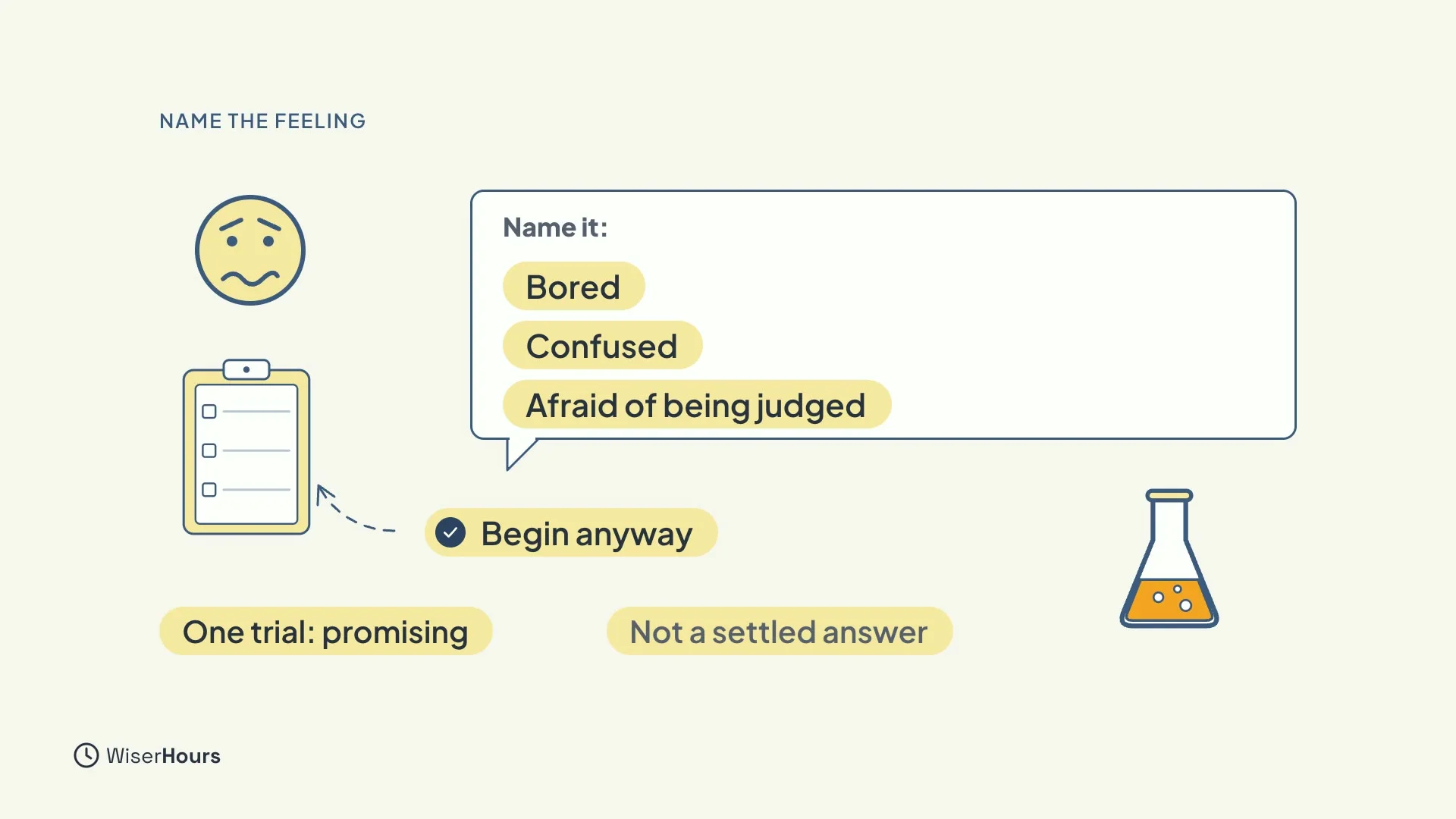
Here is a first step you can use today. When you notice yourself avoiding something, name the feeling the task brings up: bored, confused, or afraid of being judged. Then begin while the feeling is still there.
In one trial, training people to handle unpleasant feelings reduced procrastination. That is a promising start, not a settled answer, so treat this as something to try rather than a guaranteed fix.
 (opens the full-size picture)
What is coming in this course
Next you will see why later wins and spot your own pattern. Then you will make the first step tiny, try a five-minute start and change the friction around you. After that come rewards, deadlines and perfectionism, then getting out of a slump, and your own plan.
YOUR TURN
Read more
- Why Do We Procrastinate? The Psychology Explained: the research on feelings, the loop and the four predictors in more depth.
- How to Stop Procrastinating: 15 Strategies Backed by Research: the full list of tactics, with how well each one is supported.
Read the full lesson script
Welcome to Stop Procrastinating. In this first lesson, you'll see what procrastination really is, why it isn't laziness, and why putting things off feels so good in the moment. This course is general information to help with everyday delay.
Psychologists define procrastination as putting off something you intend to do, even though you expect to be worse off for the delay. That last part matters. A procrastinator isn't someone who doesn't care. You do mean to act. The problem is the gap between what you intend and what you actually do.
So procrastination isn't simply laziness. A lazy person doesn't plan to do the task. A procrastinator plans to, worries about it, and still doesn't start.
Many researchers now see procrastination as a way of handling feelings. A boring, frustrating or unclear task triggers unpleasant feelings. Stepping away makes those feelings fade, for now. Picture opening an overdue tax form. You feel dread, close it, and within seconds feel relief. That relief makes the next escape more tempting.
This creates a loop. The task feels bad. You step away. You get relief now. But the task is still there, with less time and more stress. Your future self inherits both the task and the stress.
And the relief doesn't last. In two studies of students, procrastinators felt less stressed early in the term. By the end, they were more stressed, and sicker overall. Across many studies, delay was sometimes harmless for grades, but never helpful.
A large review of research found four things that most consistently go with putting things off. How unpleasant the task feels. How far away its reward is. Low confidence that you can do it. And impulsiveness: being easily pulled toward something else. These links are clear, but loose.
Here's a first step you can use today. When you notice yourself avoiding something, name the feeling the task brings up: bored, confused, or afraid of being judged. Then begin while the feeling is still there. In one trial, training people to handle unpleasant feelings reduced procrastination. It's a promising start, not a settled answer.
Here's the course. You'll see why later wins and spot your own pattern. Then you'll make the first step tiny, try a five-minute start, and change the friction around you. Next come rewards, deadlines and perfectionism, then getting out of a slump, and your own plan.
So remember: procrastination is about feelings, not laziness. Delay brings quick relief and later stress. And naming the feeling is a good first step. Before the next lesson, notice one task you're avoiding, and name the feeling it brings up. Next, you'll see why later always wins.
MAKE IT A SMALL WIN
Finished this lesson?
Mark it complete to save your progress on this device.