Get started · Lesson 5 of 11
The Five-Minute Start: Begin With Permission to Stop
Try a timed five-minute start for a task you avoid, with permission to stop, and see why it is an experiment, not a proven rule.
 Video coming soon
Starting is often the hardest part. In this lesson you will try the five-minute start: a short, timed beginning, with permission to stop.
The rule
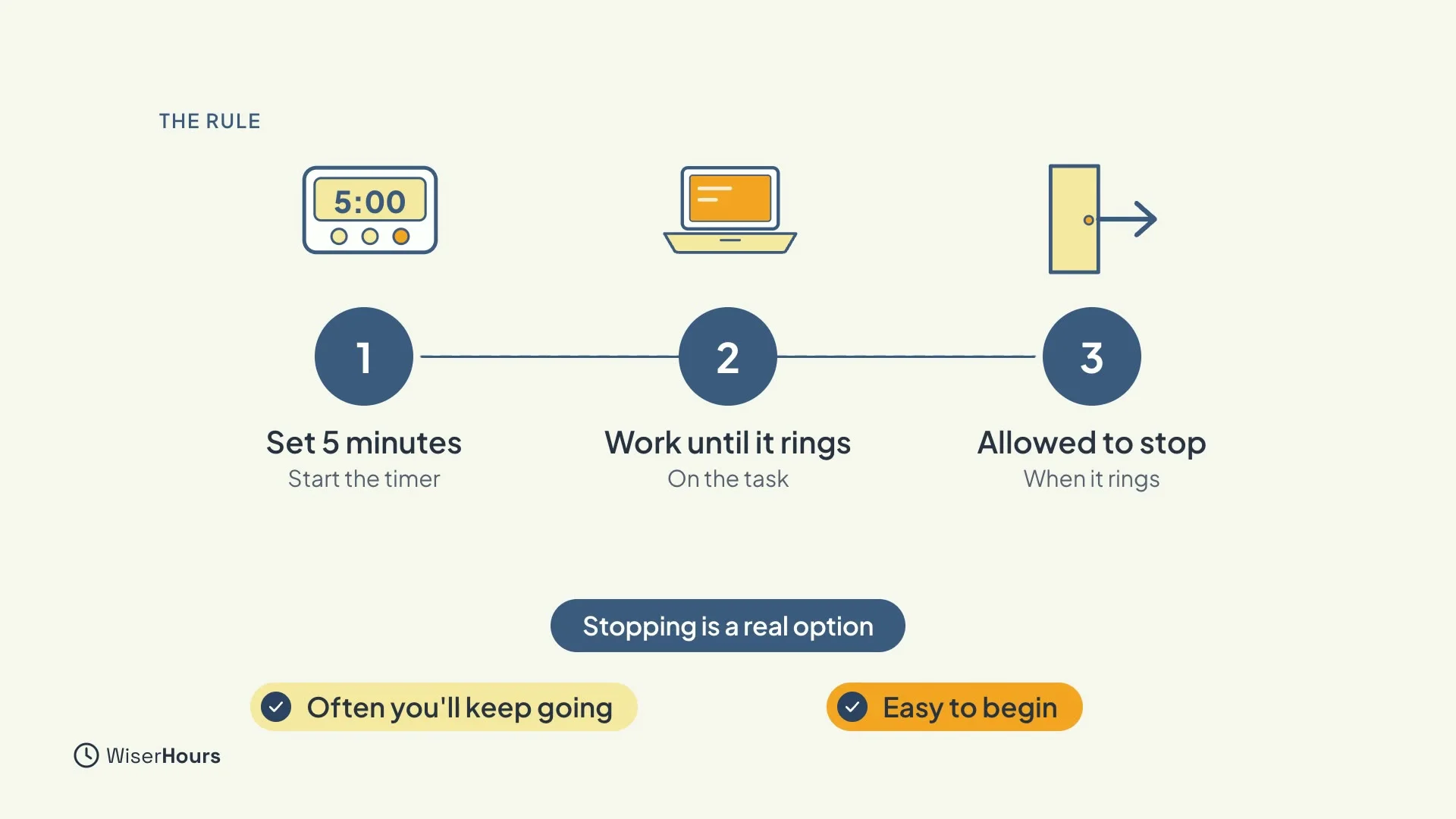
Set a timer for five minutes, and work on the task until it rings. When it does, you are allowed to stop. Often you will keep going, but stopping is a real option, and that is what makes it easy to begin.
 (opens the full-size picture)
An honest status
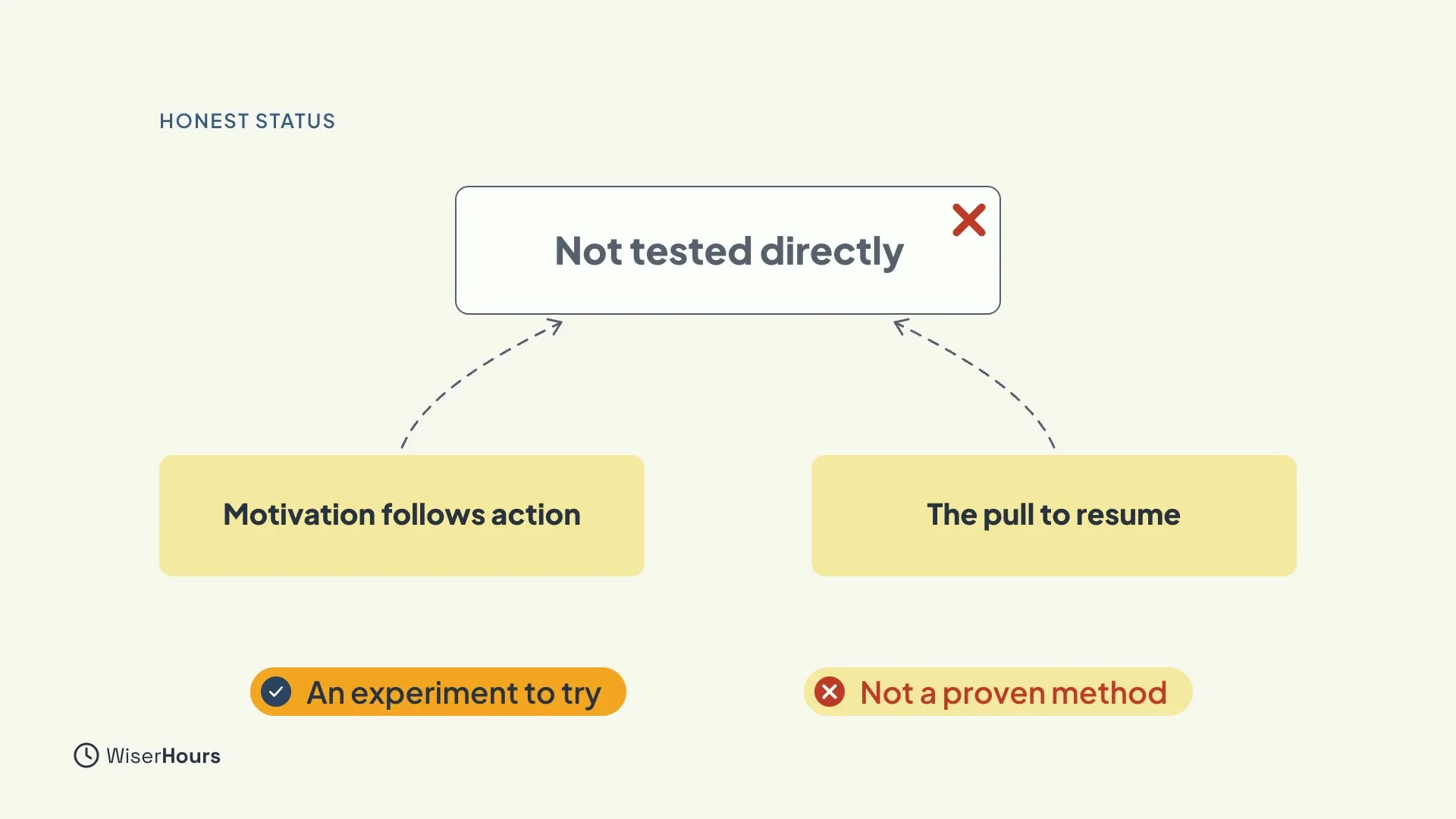
Be clear about one thing. No study has tested the five-minute rule directly. It borrows from two better-supported ideas, which you will see next. So treat it as an experiment worth trying, not a proven method.
 (opens the full-size picture)
Untested as a rule
The five-minute start is a way to begin, not a guaranteed fix. If it does not suit you, drop it and try another tactic from this course.
Idea one: motivation follows action
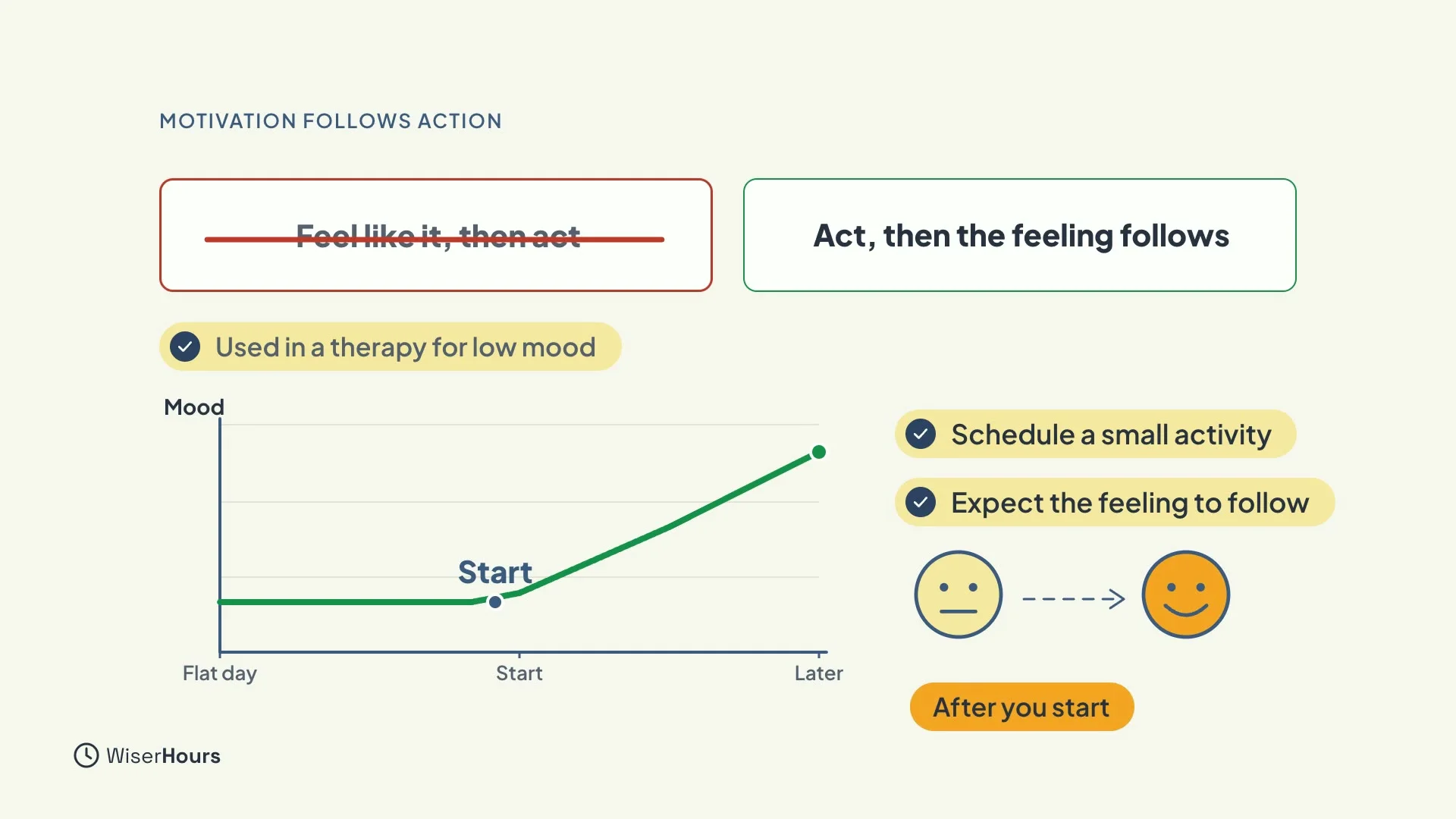
The first idea is that motivation often follows action, rather than the other way round. A talking therapy for low mood is built on this. You schedule a small activity first, and expect the feeling to follow. On a flat day, motivation often arrives after you start, not before.
 (opens the full-size picture)
Idea two: the pull to resume
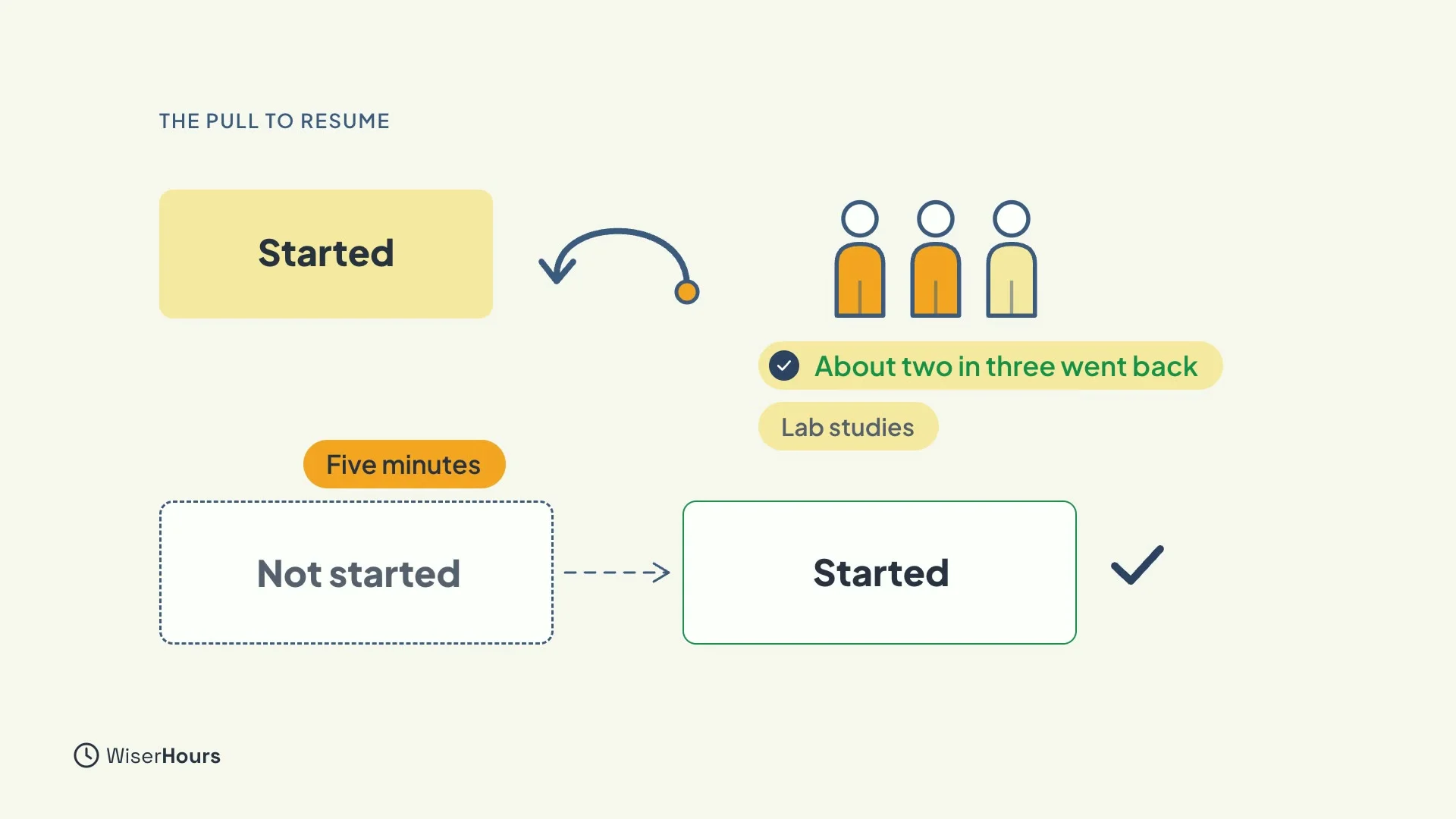
The second idea is that once something is started, there is a pull to go back to it. In lab studies, about two thirds of people returned to a task they had been interrupted in. Five minutes turns a task you have not started into one you have started.
 (opens the full-size picture)
Sessions, not moods
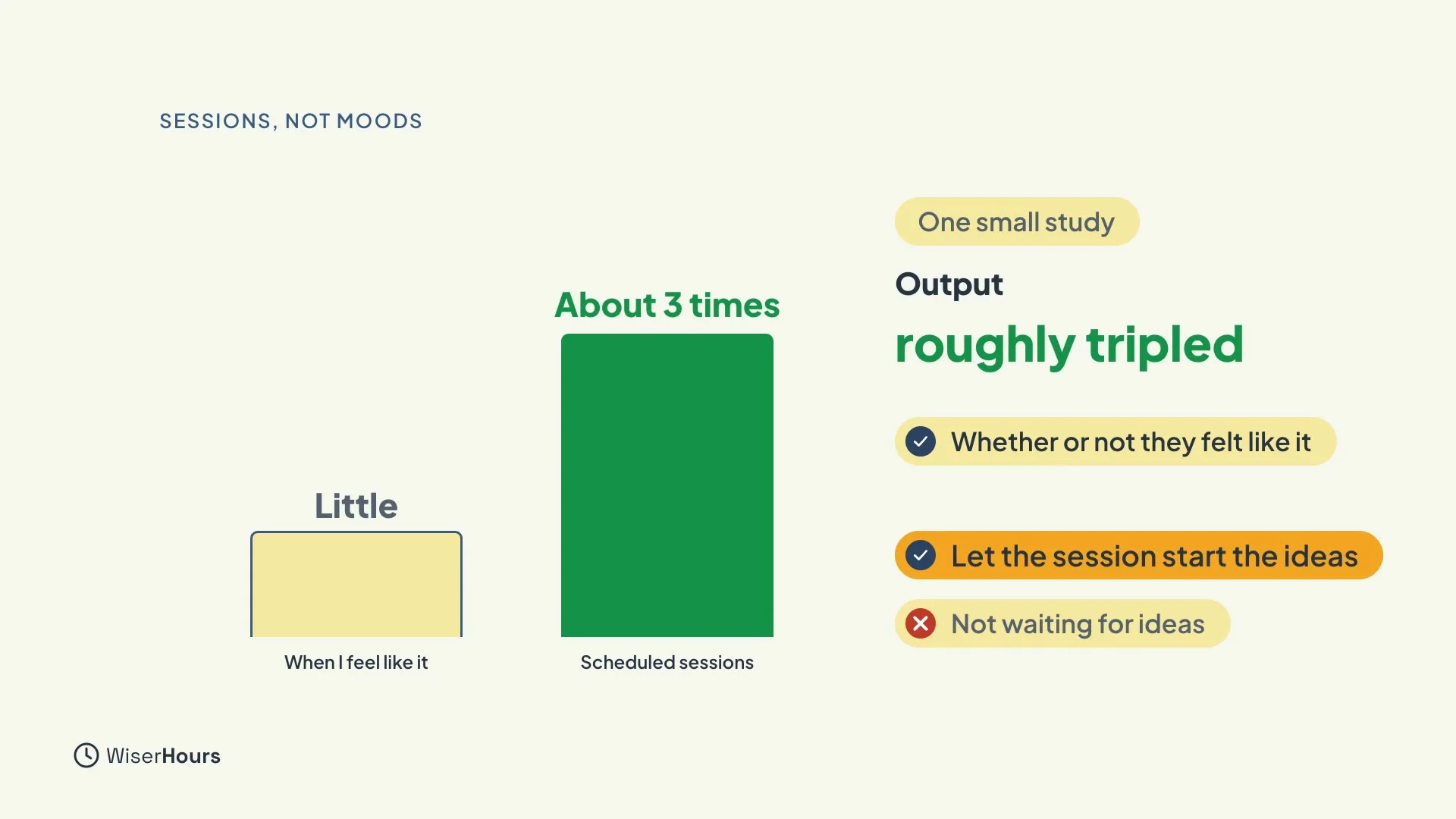
Writers show the same pattern. In one small experiment with academics, writing only when they felt like it produced little. Writing in scheduled sessions, whether or not they felt like it, roughly tripled their output. Let the session start the ideas, rather than waiting for ideas to start the session. It was one small study, so take it as a hint, not a rule.
 (opens the full-size picture)
Start with the feeling
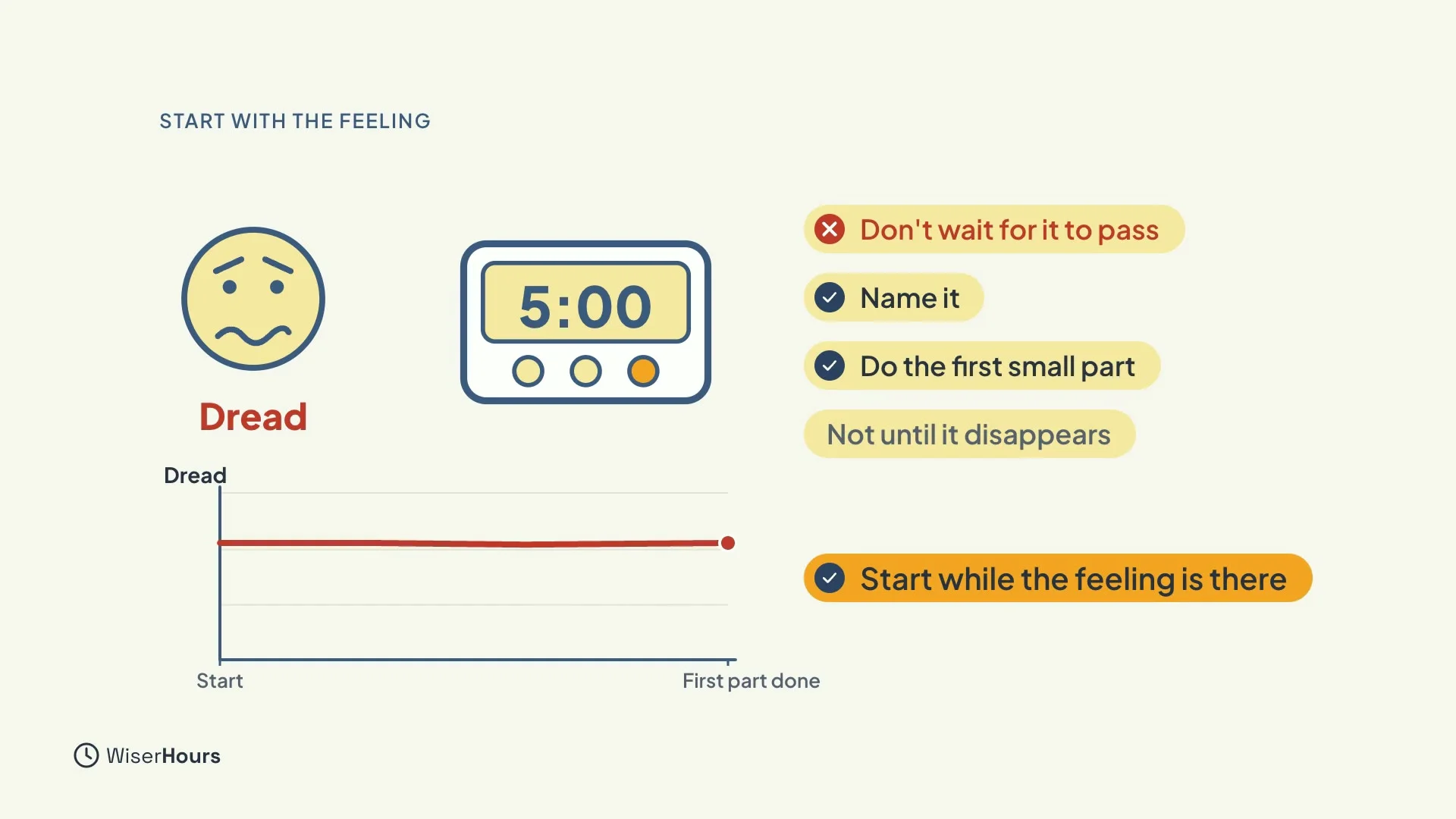
If you feel dread, do not wait for it to pass. Name it, then start while it is still there. Aim to sit with the feeling long enough to do the first small part, not until it disappears.
 (opens the full-size picture)
Timers and breaks
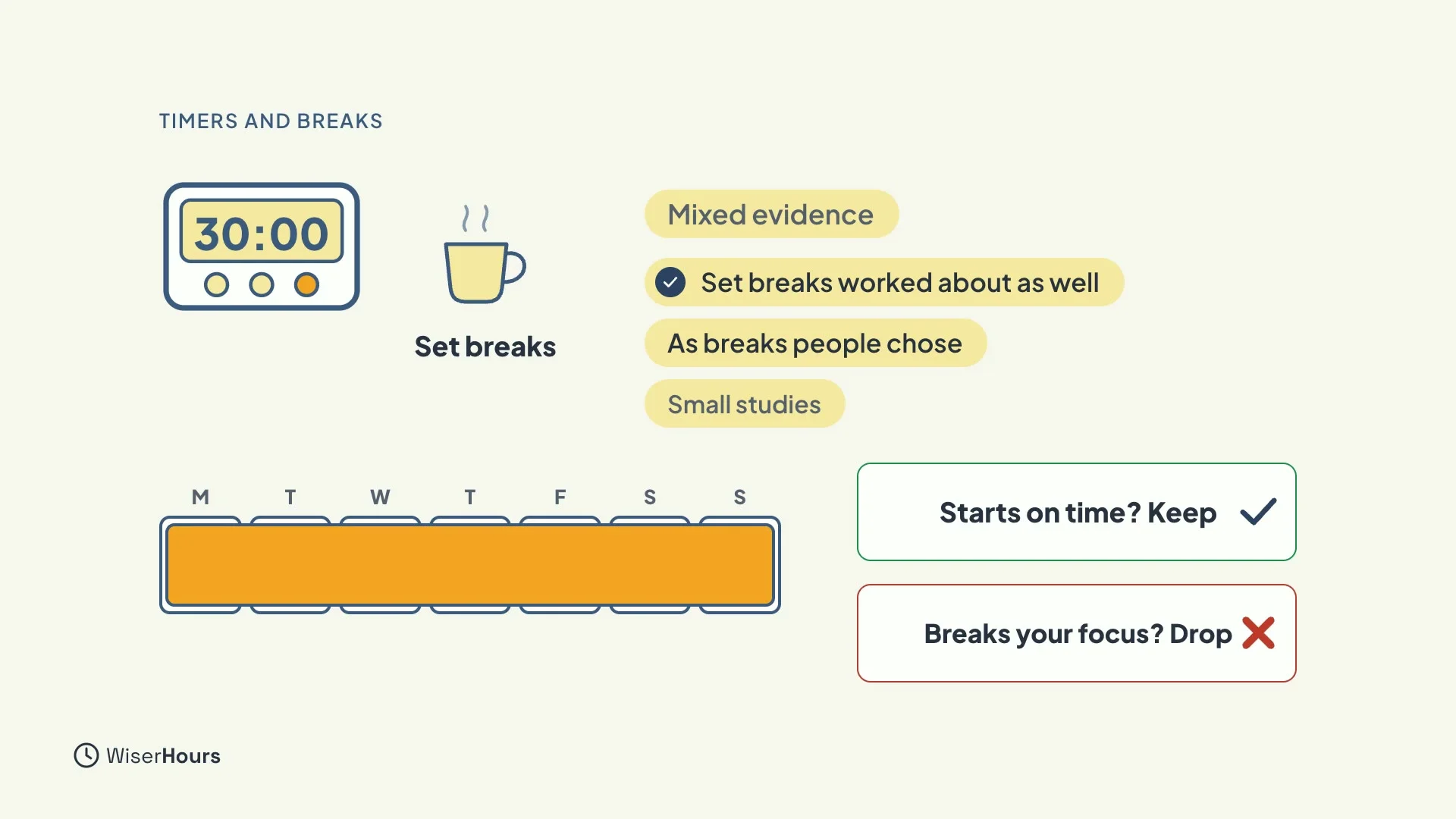
What about timers with fixed breaks? The evidence is mixed. In small studies, set breaks worked about as well as breaks people chose themselves. So test a timer for a week. Keep it if your sessions start on time, and drop it if the alarm keeps breaking your focus.
 (opens the full-size picture)
The ten-minute question
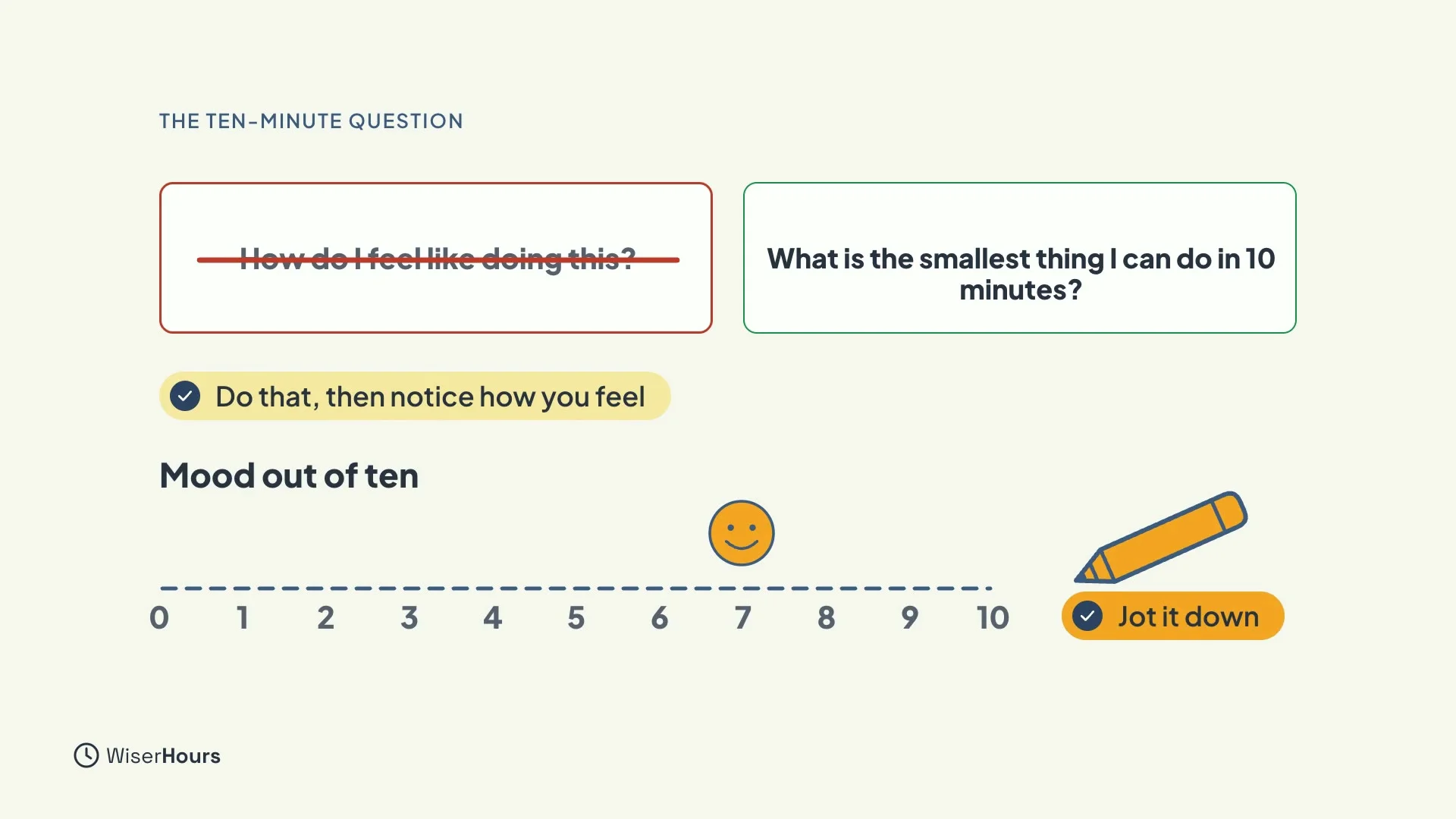
On a flat day, swap the question “how do I feel like doing this?” for “what is the smallest thing I can do in the next ten minutes?” Do that, then notice how you feel. Rate your mood out of ten afterwards, and jot it down.
 (opens the full-size picture)
YOUR TURN
Read more
- How to Stop Procrastinating: 15 Strategies Backed by Research: the five-minute rule and its honest evidence rating.
- How to Get Motivated When You Don’t Feel Like Doing Anything: why motivation often follows action.
- Writer’s Block: What Research Says About Causes and Fixes: scheduled sessions versus waiting for ideas.
- How to Stop Procrastinating on Studying: testing timers and breaks for a week.
Read the full lesson script
In this lesson, you'll try the five-minute start: a short, timed beginning, with permission to stop.
Here's how it works. Set a timer for five minutes, and work on the task until it rings. When it does, you're allowed to stop. Often you'll keep going, but stopping is a real option, and that's what makes it easy to begin.
Be clear about one thing. No study has tested the five-minute rule directly. It borrows from two better-supported ideas. So treat it as an experiment worth trying, not a proven method.
The first idea: motivation often follows action, rather than the other way round. A talking therapy for low mood is built on this. You schedule a small activity first, and expect the feeling to follow. On a flat day, motivation often arrives after you start, not before.
The second idea: once something is started, there's a pull to go back to it. In lab studies, about two thirds of people returned to a task they'd been interrupted in. Five minutes turns a task you haven't started into one you've started.
Writers show the same pattern. In one small experiment with academics, writing only when they felt like it produced little. Writing in scheduled sessions, whether or not they felt like it, roughly tripled their output. Let the session start the ideas, rather than waiting for ideas to start the session.
If you feel dread, don't wait for it to pass. Name it, then start while it's still there. Aim to sit with the feeling long enough to do the first small part, not until it disappears.
What about timers with fixed breaks? The evidence is mixed. In small studies, set breaks worked about as well as breaks people chose themselves. So test a timer for a week. Keep it if your sessions start on time, and drop it if the alarm keeps breaking your focus.
On a flat day, swap the question how do I feel like doing this, for what is the smallest thing I can do in the next ten minutes. Do that, then notice how you feel. Rate your mood out of ten afterwards, and jot it down.
So remember: five minutes with permission to stop, action often comes before motivation, and treat it as an experiment. Before the next lesson, do five minutes on the task you're avoiding today. Next, you'll learn to remove and add friction.
MAKE IT A SMALL WIN
Finished this lesson?
Mark it complete to save your progress on this device.