Get started · Lesson 4 of 11
Make the First Step Tiny to Start a Task You Avoid
Shrink a task to a first physical step you can start without deciding anything else, then give it a when and a where.
 Video coming soon
A big task is easy to avoid because you do not know where to begin. In this lesson you will make the first step of a task so small that starting feels easy.
Confidence comes from doing
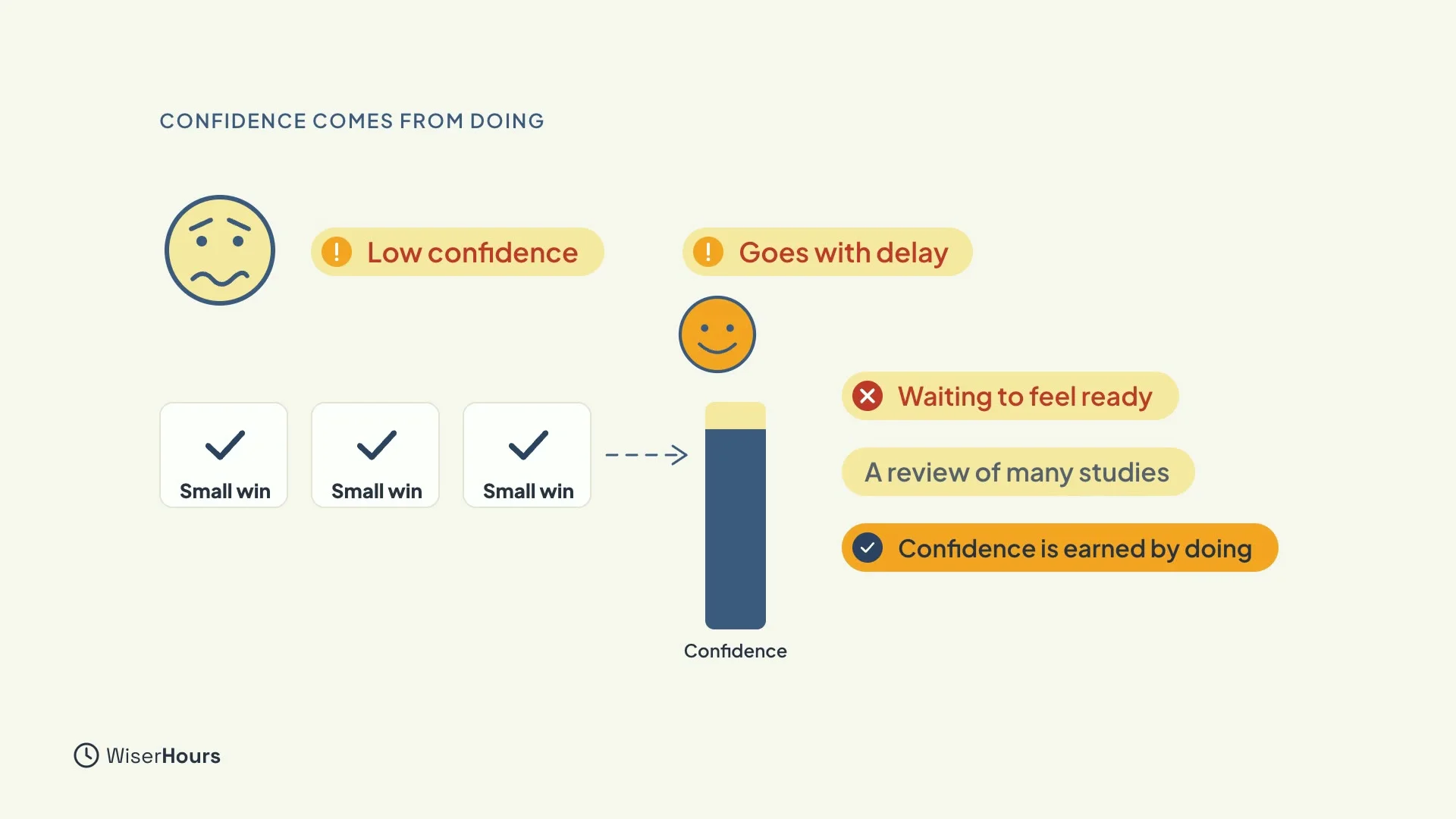
Low confidenceself-efficacy: A person's belief in their ability to carry out a particular task or reach a particular goal. It is specific to the task, so someone can feel capable at work and unsure with money, and it goes with how readily people start and keep going.Full entry in the glossary is one of the things that goes with delay. And confidence mostly grows from succeeding, not from waiting to feel ready. In a review of many studies, confidence followed what people had already done far more than it predicted the next result. So each small thing you finish is a way of building the confidence you are waiting for.
 (opens the full-size picture)
Shrink the start
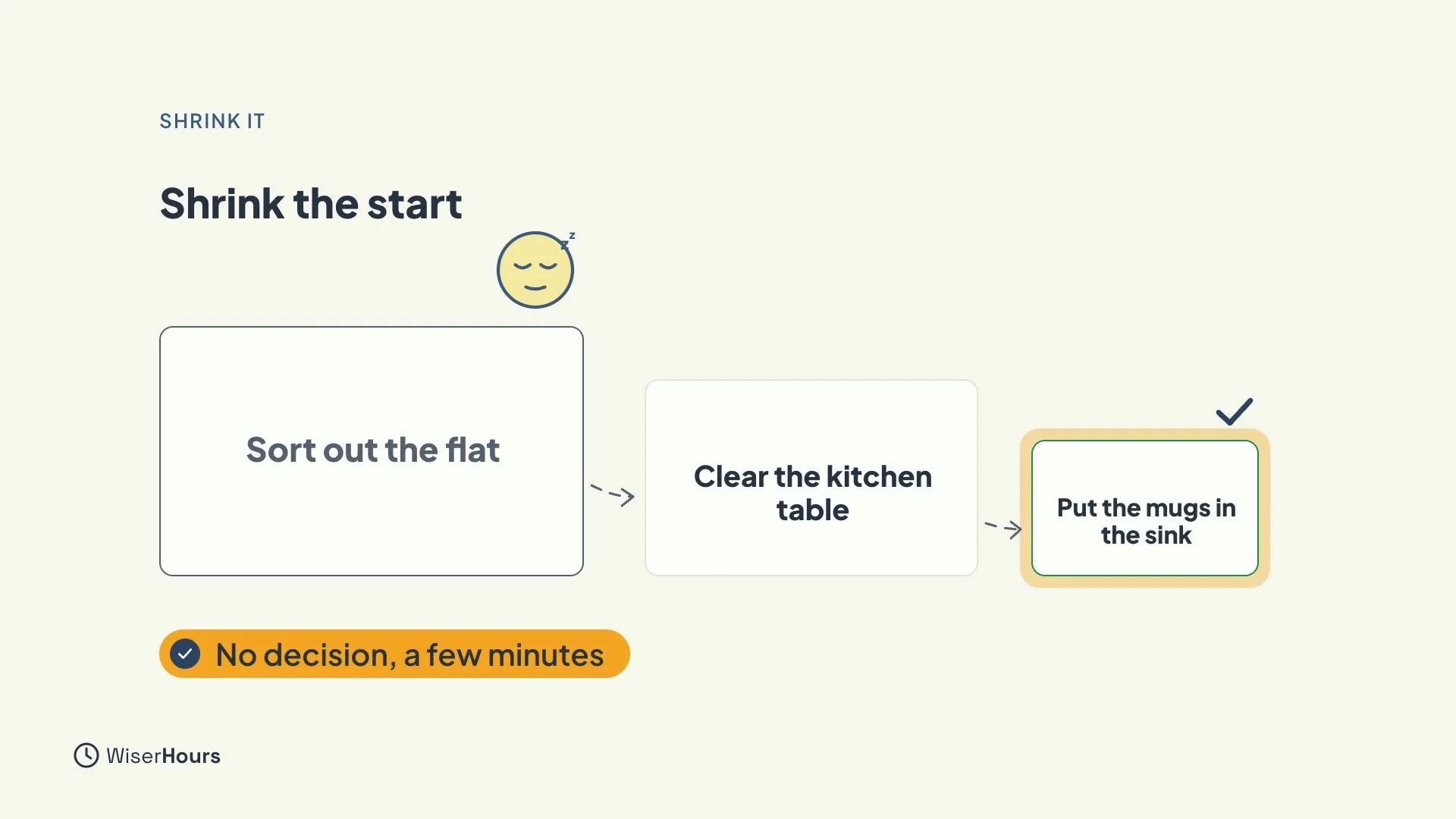
Shrink the start until you are sure of it. “Sort out the flat” gives a tired mind nothing to grab. “Clear the kitchen table” is better. “Put the mugs in the sink” is better still. Keep shrinking until the first step needs no decision, and takes a few minutes at most.
 (opens the full-size picture)
Write the first physical action
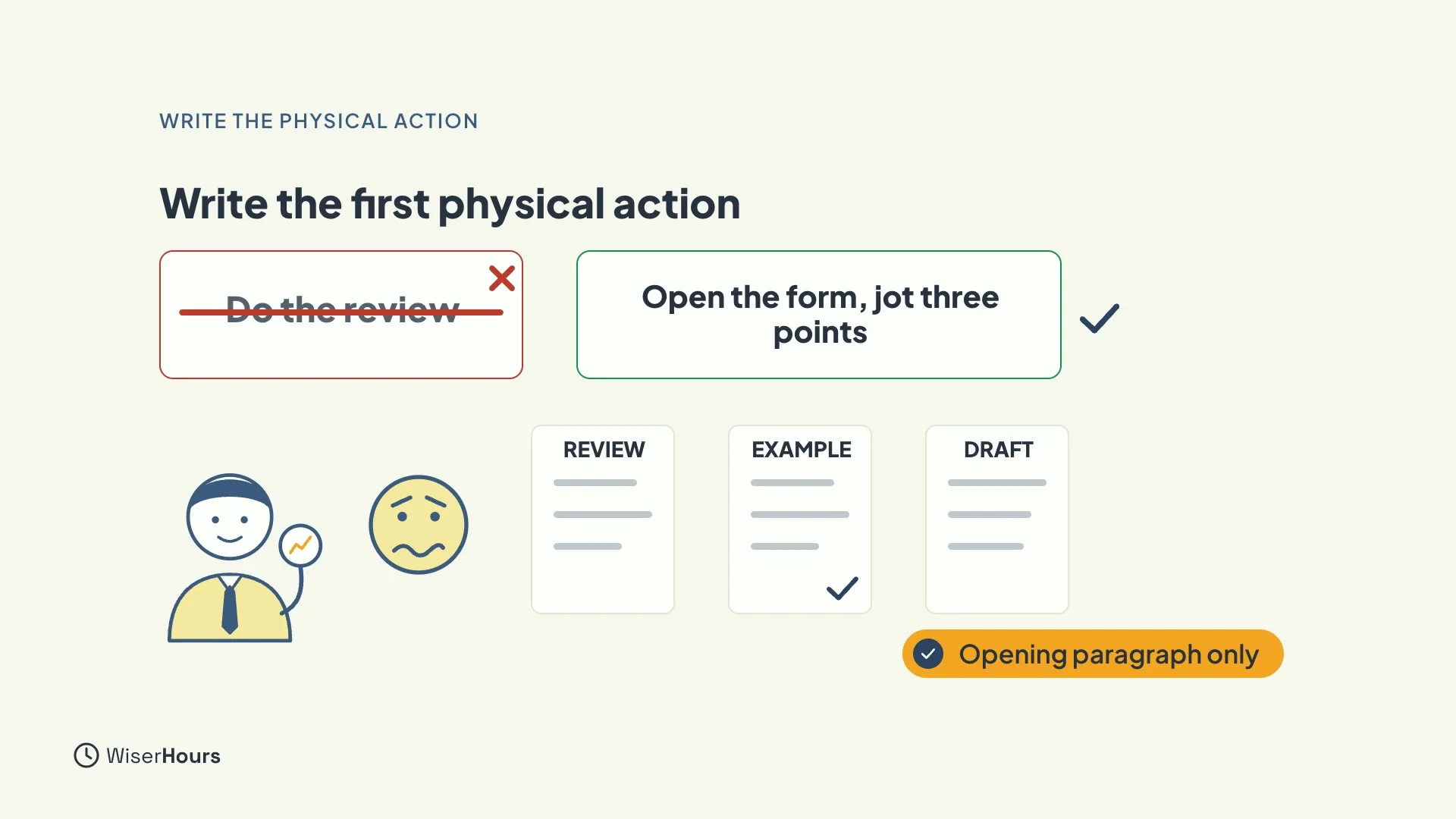
Write the first physical action, not the topic. Not “do the review”, but “open the review form and jot three points about the year”. A new manager putting off her first review could read one good example, then draft only the opening paragraph.
 (opens the full-size picture)
Give the step a when and a where
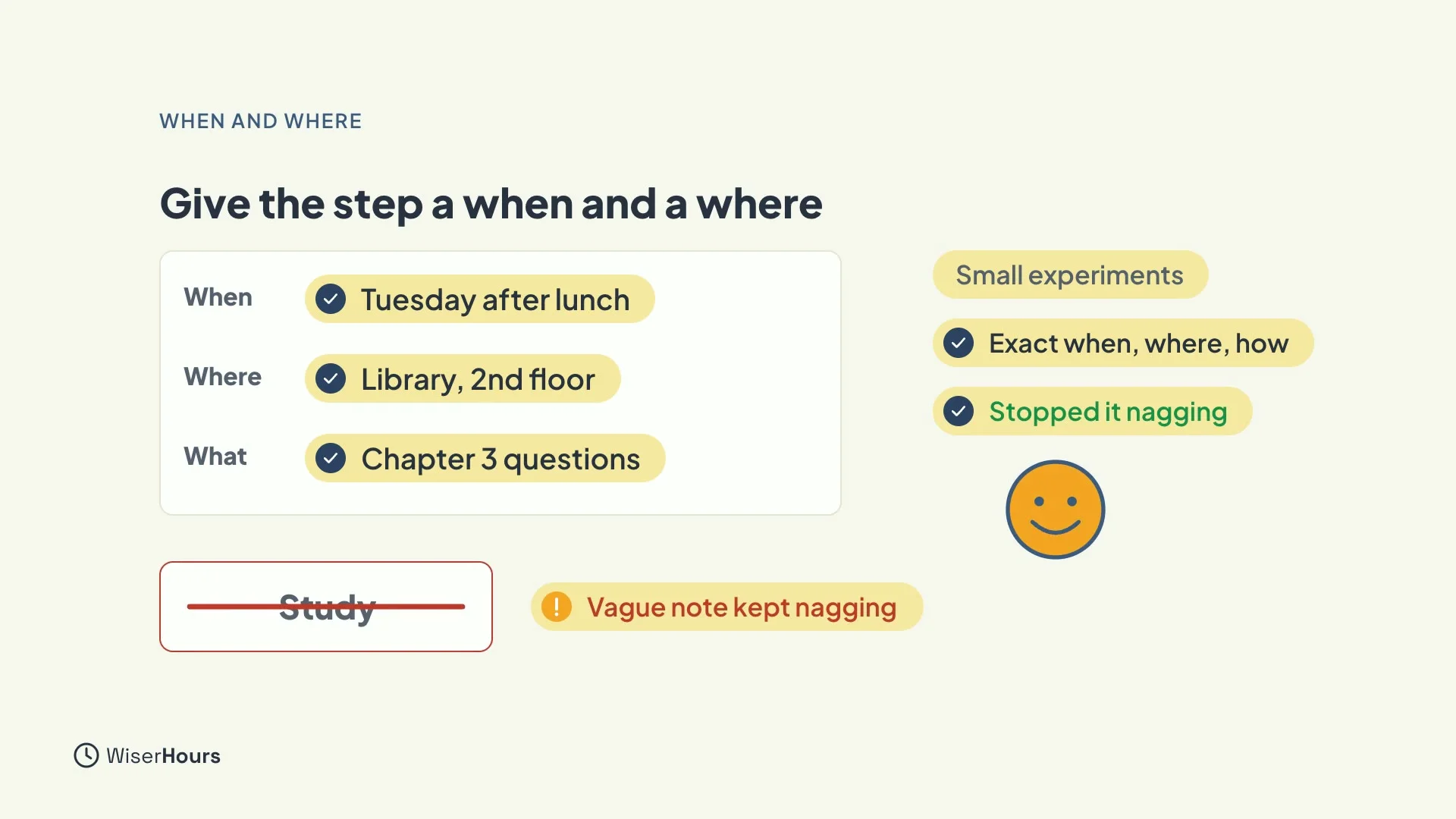
Then give the step a when and a where: “Tuesday after lunch, library second floor, the practice questions at the end of chapter three.” A plan like this is called an if-then planimplementation intention: A plan in if-then form that ties a specific action to a specific situation, such as 'if it is nine o'clock, then I open the report.' It hands the decision about when and where to act to the situation itself.Full entry in the glossary. In small experiments, writing exactly when, where and how to do a pending task stopped it nagging, even before the work began. A vague note kept nagging.
 (opens the full-size picture)
Stop with a next step
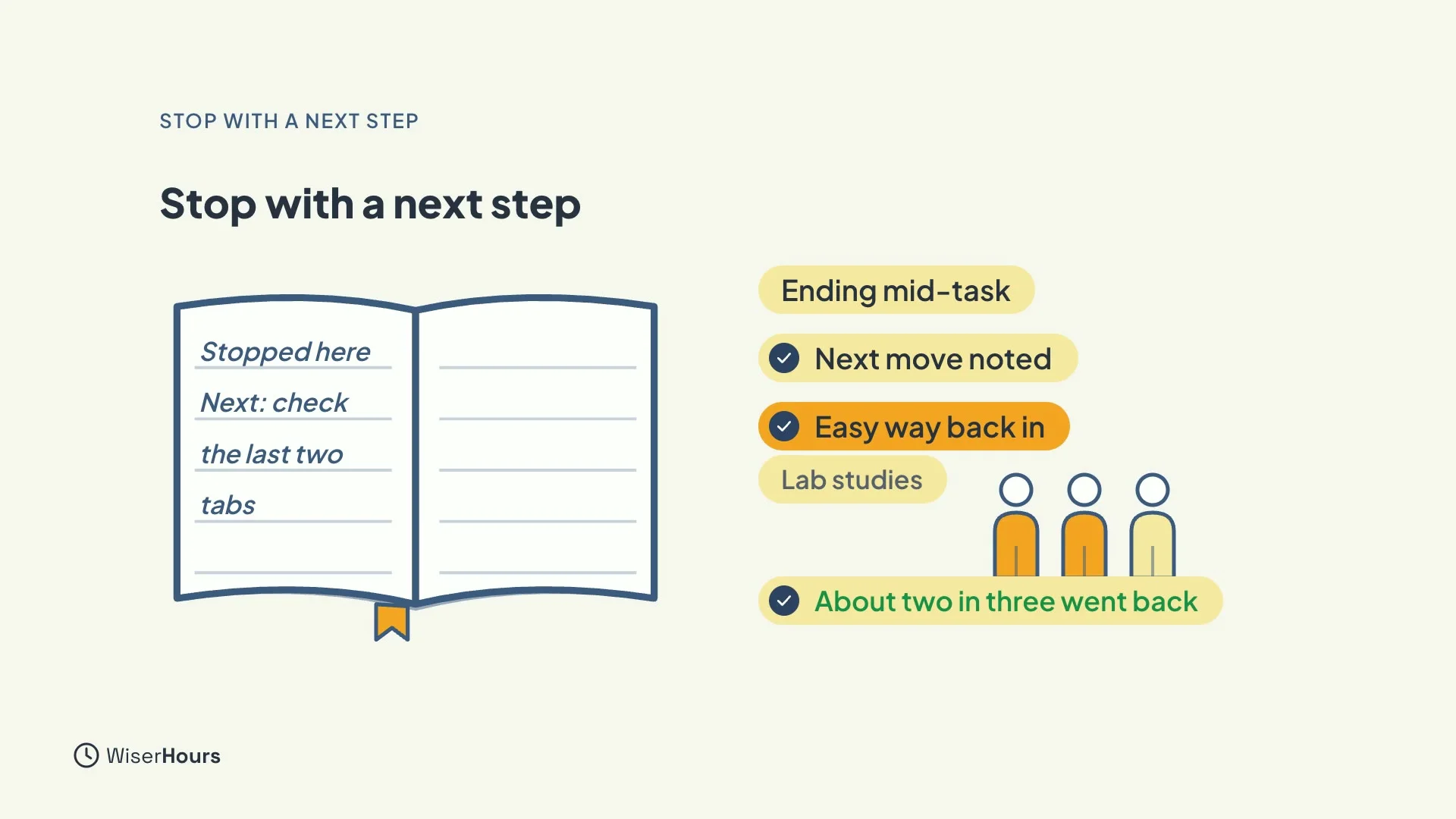
When you stop for the day, write down the very next step. Ending mid-task, with the next move noted, leaves an easy way back in. In lab studies, about two thirds of people went back to an interrupted task.
 (opens the full-size picture)
An honest note
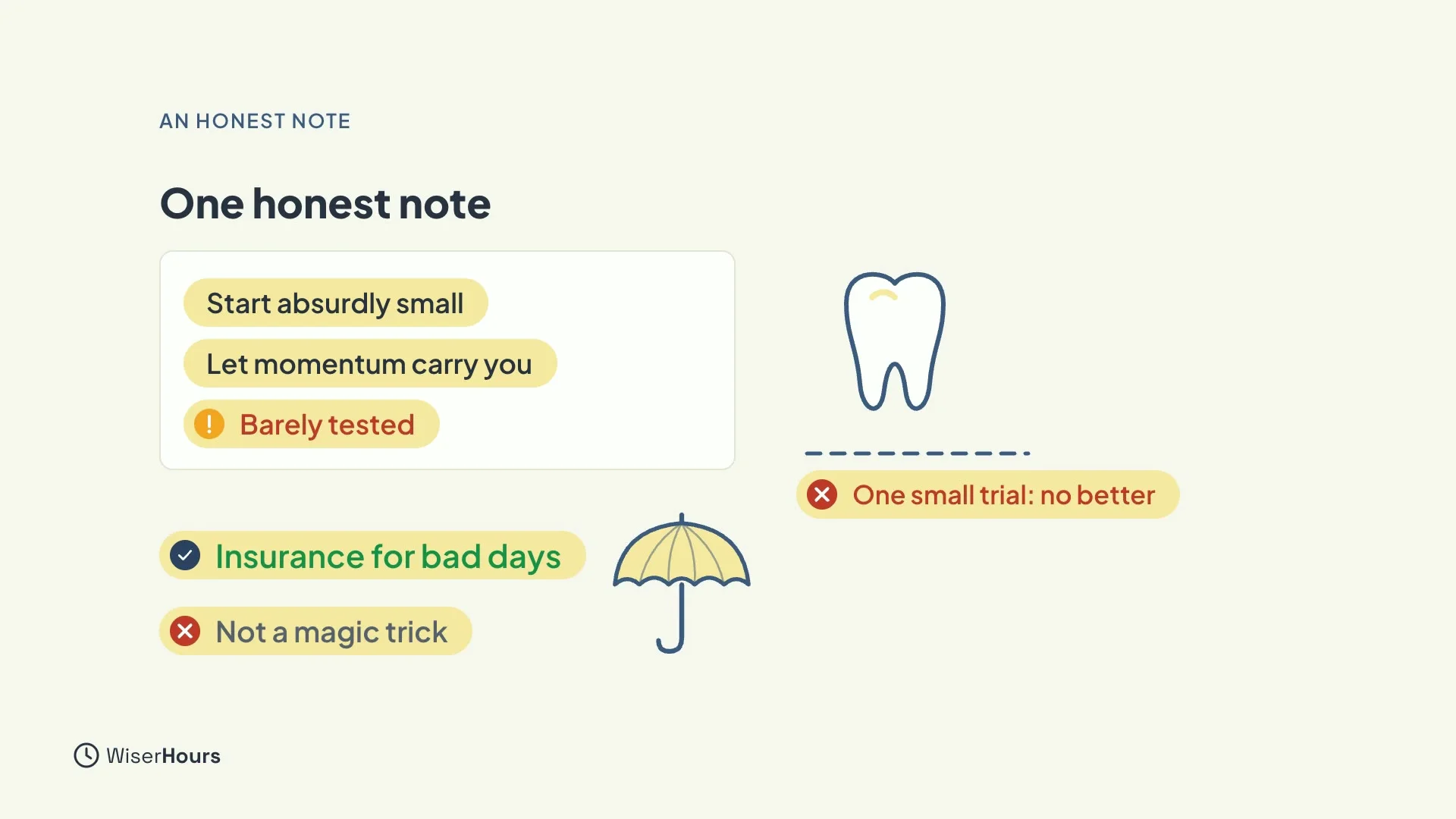
One honest note. The popular version, start absurdly small and let momentum carry you, has barely been tested. In one small trial, students told to floss just one tooth did no better than the others. So treat the tiny step as insurance for bad days, not a magic trick.
 (opens the full-size picture)
Small wins and the week ahead
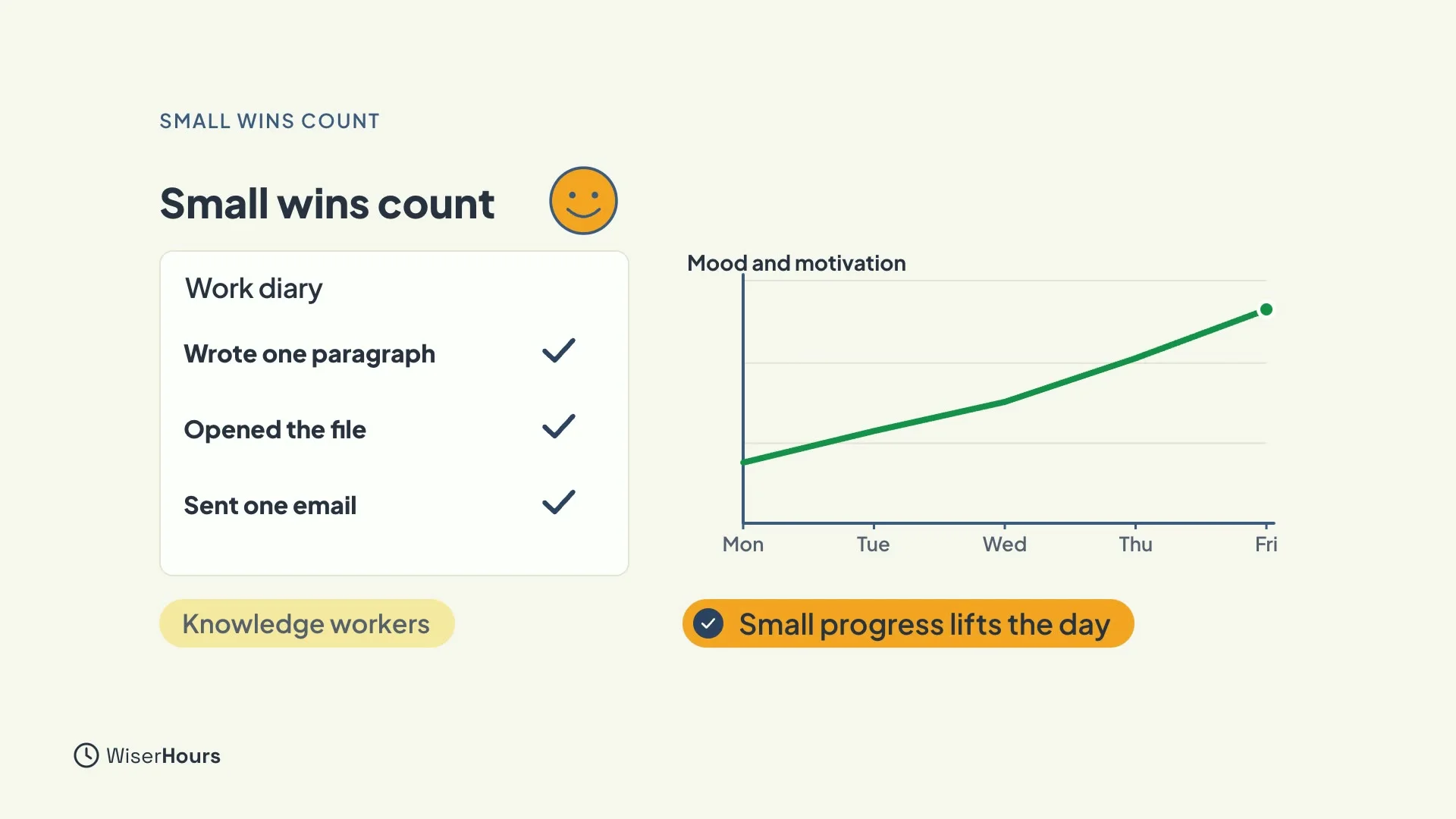
Small wins still matter for how the day feels. In a diary study of knowledge workers, making progress in meaningful work, even small progress, gave the biggest lift to mood and motivation.
 (opens the full-size picture)
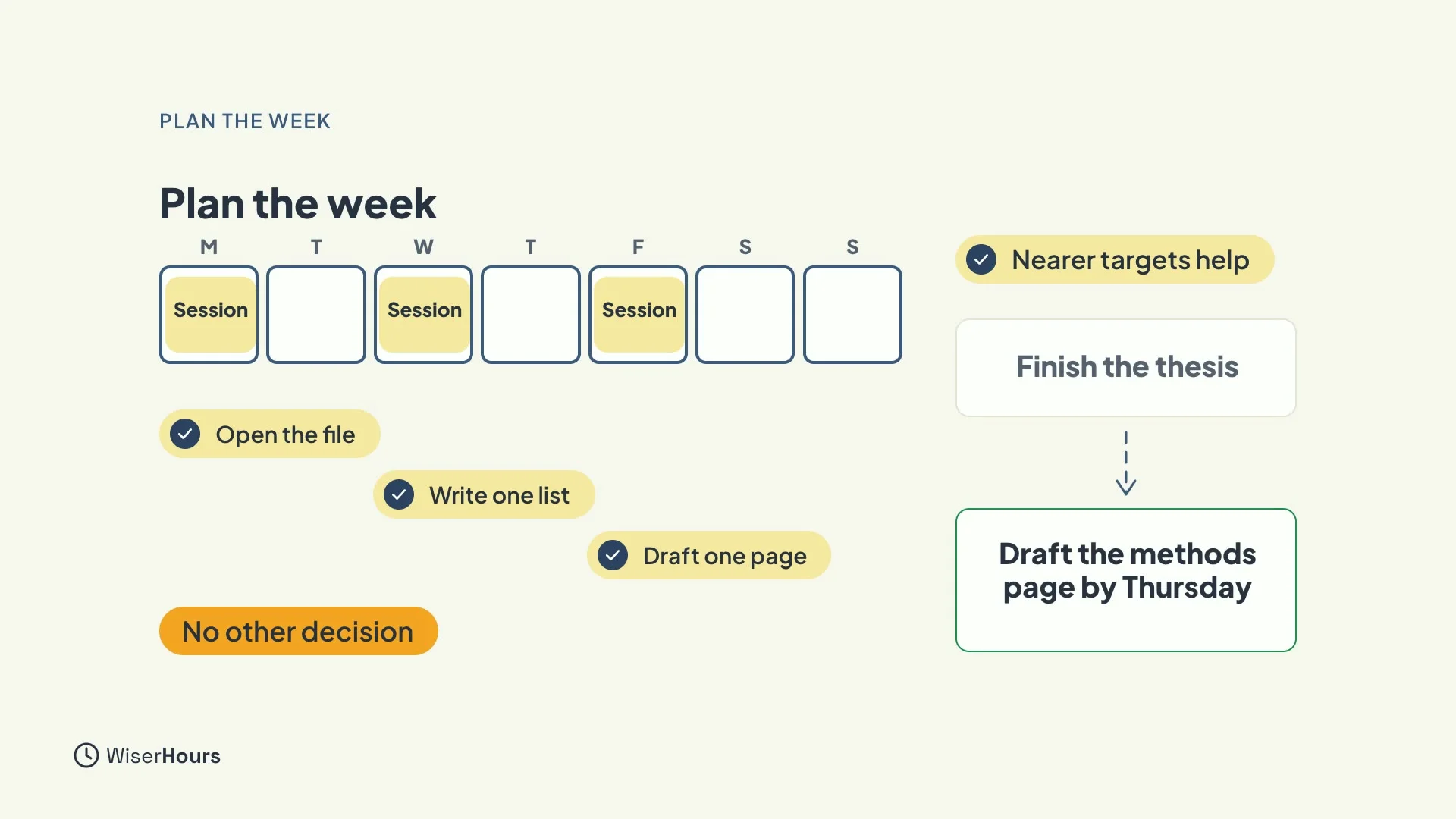
It helps to plan the week too. As each week begins, plan your sessions, and give every session a first task small enough to begin without deciding anything else. Nearer targets help as well: turn “finish the thesis” into “draft the methods page by Thursday”.
 (opens the full-size picture)
YOUR TURN
Read more
- How to Stop Procrastinating: 15 Strategies Backed by Research: the confidence research and how to shrink the start.
- How to Get Motivated When You Don’t Feel Like Doing Anything: making the first step small enough to take.
- The Daily Review: Five Minutes to Stay on Track: writing down tomorrow’s first step.
- Eat the Frog: Should You Really Do the Hardest Task First?: small wins and first actions.
- How to Build a New Habit: A Step-by-Step Guide: planning when and where.
Read the full lesson script
In this lesson, you'll learn to make the first step of a task so small that starting feels easy.
Low confidence is one of the things that goes with delay. And confidence mostly grows from succeeding, not from waiting to feel ready. In a review of many studies, confidence followed what people had already done far more than it predicted the next result.
So shrink the start until you're sure of it. Sort out the flat gives a tired mind nothing to grab. Clear the kitchen table is better. Put the mugs in the sink is better still. Keep shrinking until the first step needs no decision, and takes a few minutes at most.
Write the first physical action, not the topic. Not do the review, but open the review form and jot three points about the year. A new manager putting off her first review could read one good example, then draft only the opening paragraph.
Then give the step a when and a where. Tuesday after lunch, library second floor, the practice questions at the end of chapter three. In small experiments, writing exactly when, where and how to do a pending task stopped it nagging, even before the work began. A vague note kept nagging.
When you stop for the day, write down the very next step. Ending mid-task, with the next move noted, leaves an easy way back in. In lab studies, about two thirds of people went back to an interrupted task.
One honest note. The popular version, start absurdly small and let momentum carry you, has barely been tested. In one small trial, students told to floss just one tooth did no better than the others. So treat the tiny step as insurance for bad days, not a magic trick.
Still, small wins matter for how the day feels. In a diary study of knowledge workers, making progress in meaningful work, even small progress, gave the biggest lift to mood and motivation.
It helps to plan the week too. As each week begins, plan your sessions, and give every session a first task small enough to begin without deciding anything else. Nearer targets help as well. Turn finish the thesis into draft the methods page by Thursday.
So remember: confidence comes from doing, write the first physical step, and give it a when and a where. Before the next lesson, write the very first physical step of your avoided task. Next, you'll try the five-minute start.
MAKE IT A SMALL WIN
Finished this lesson?
Mark it complete to save your progress on this device.