When it's hard · Lesson 9 of 11
Perfectionism and the Fear of Starting: How to Begin Anyway
Tell high standards from fear of mistakes, write a rough first draft, and be kind to yourself without lowering the bar.
 Video coming soon
If you are afraid your work will not be good enough, starting can feel impossible. In this lesson you learn to tell the helpful kind of perfectionism from the kind that stalls you, and a few ways to begin anyway.
Two sides of perfectionism
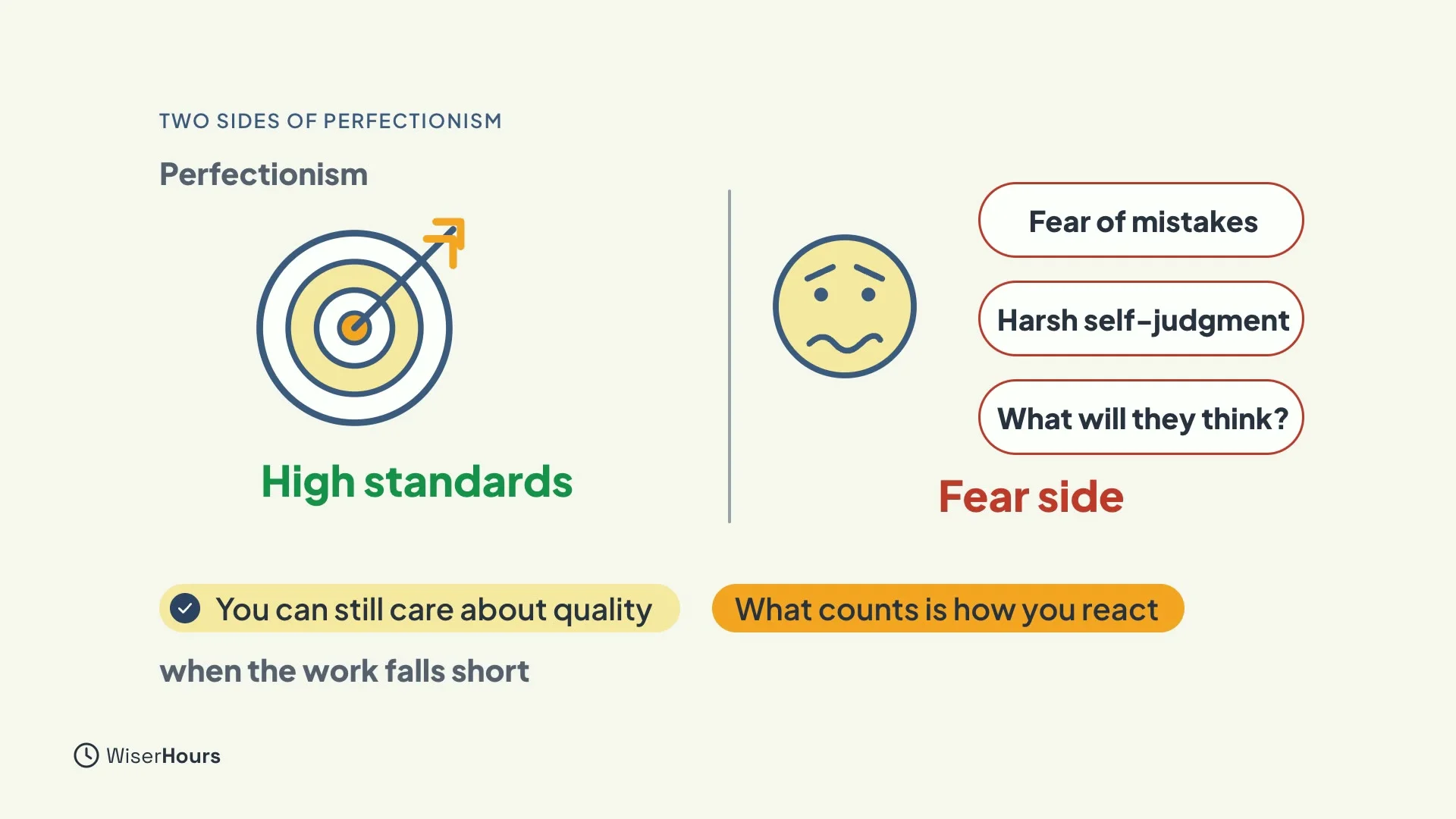
Perfectionism has two sides. One is reaching for very high standards. The other is fearing mistakes, judging yourself harshly and worrying about what others will think. You do not have to stop caring about quality. What counts is how you react when the work falls short.
 (opens the full-size picture)
Which side causes delay
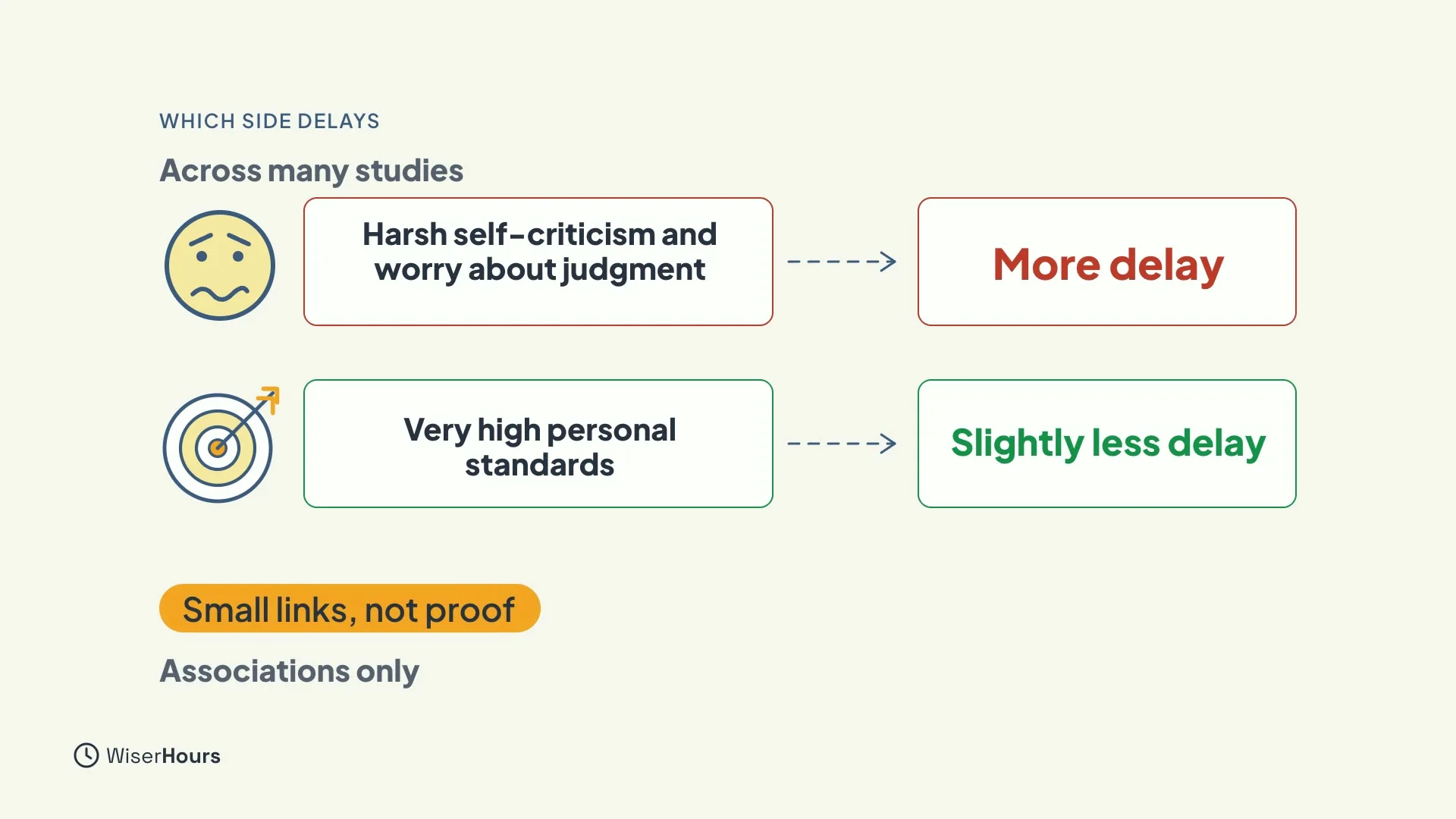
The two sides go in different directions. Across many studies, harsh self-criticism and worry about judgment went with more procrastination. Very high personal standards went with slightly less. Both links are small, and they are associationscorrelation: A measure of how closely two things move together, running from minus one, where one rises as the other falls, through zero, meaning no link, to plus one. It says how strong the relationship is, not what causes it, and it is not a percentage.Full entry in the glossary, not proof that one causes the other.
 (opens the full-size picture)
Spot the difference
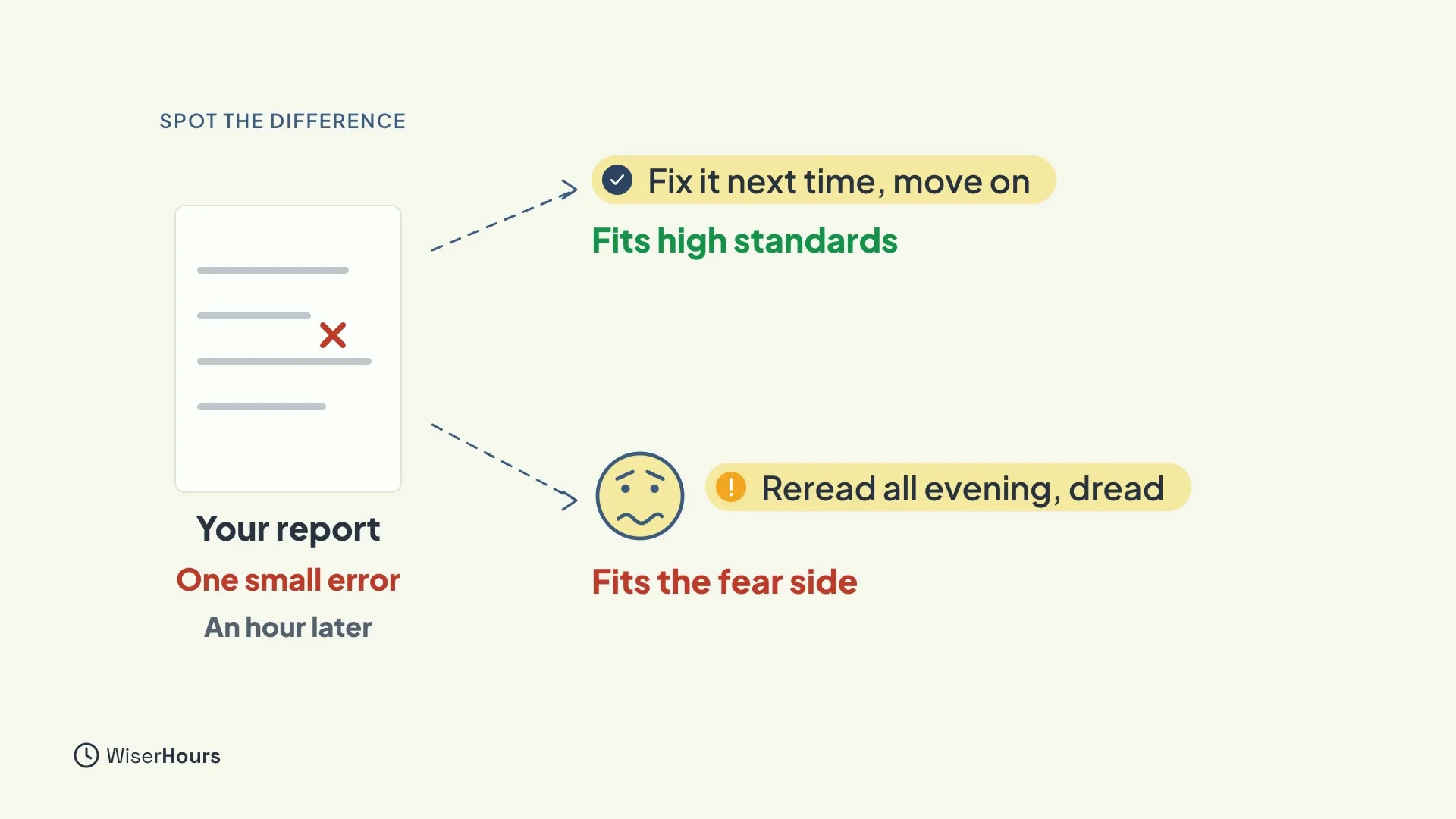
Here is how to tell them apart. Say you send a report and spot a small error an hour later. Fixing it in the next version and moving on fits high standards. Rereading it all evening and dreading what your manager thinks fits the fear side.
 (opens the full-size picture)
Stuck at the first line
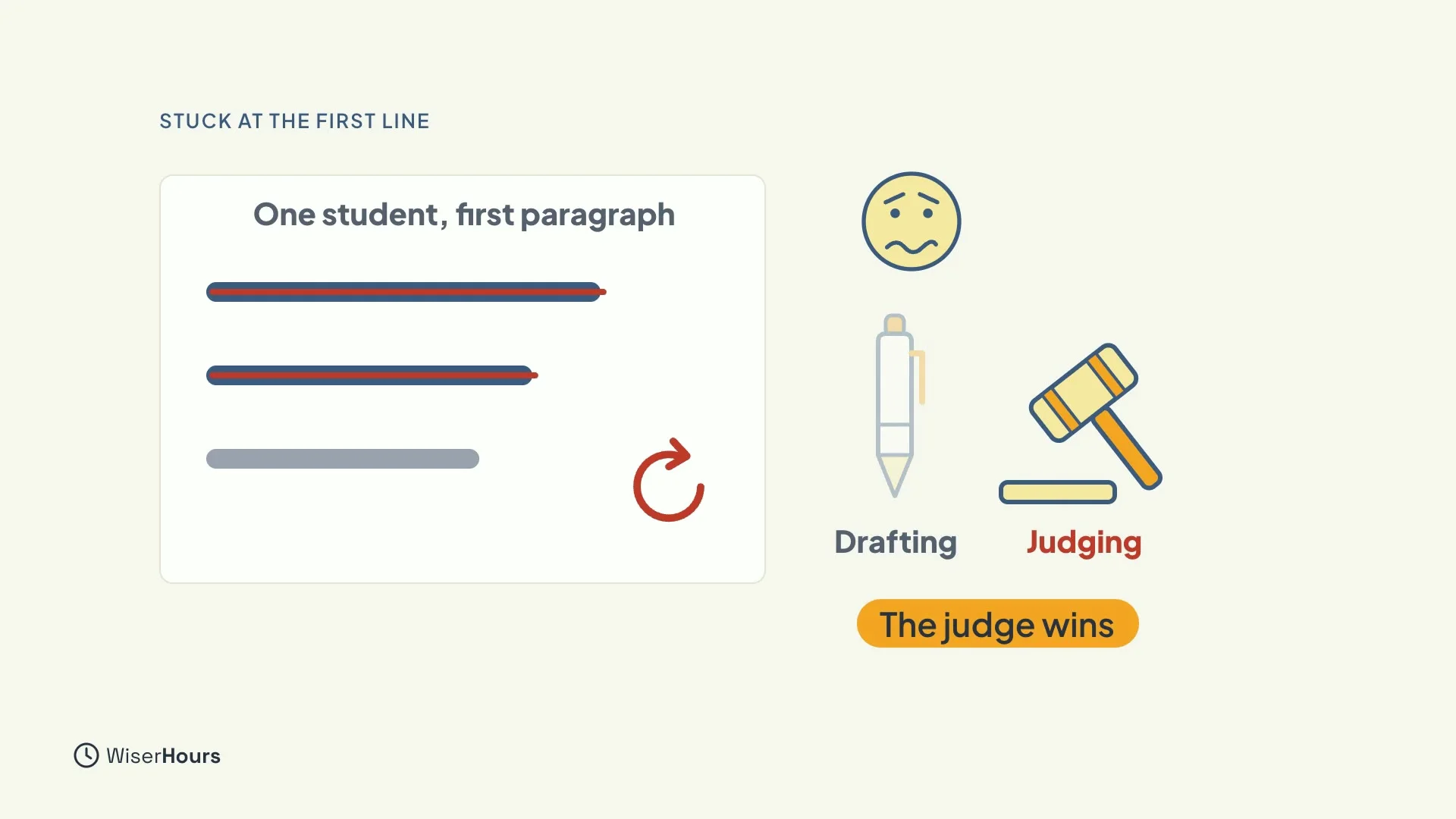
Fear often shows up at the very start. Picture someone who spends hours on the first paragraph of an essay: write a sentence, erase it, try again. Drafting and judging happen at the same time, and the judge wins.
 (opens the full-size picture)
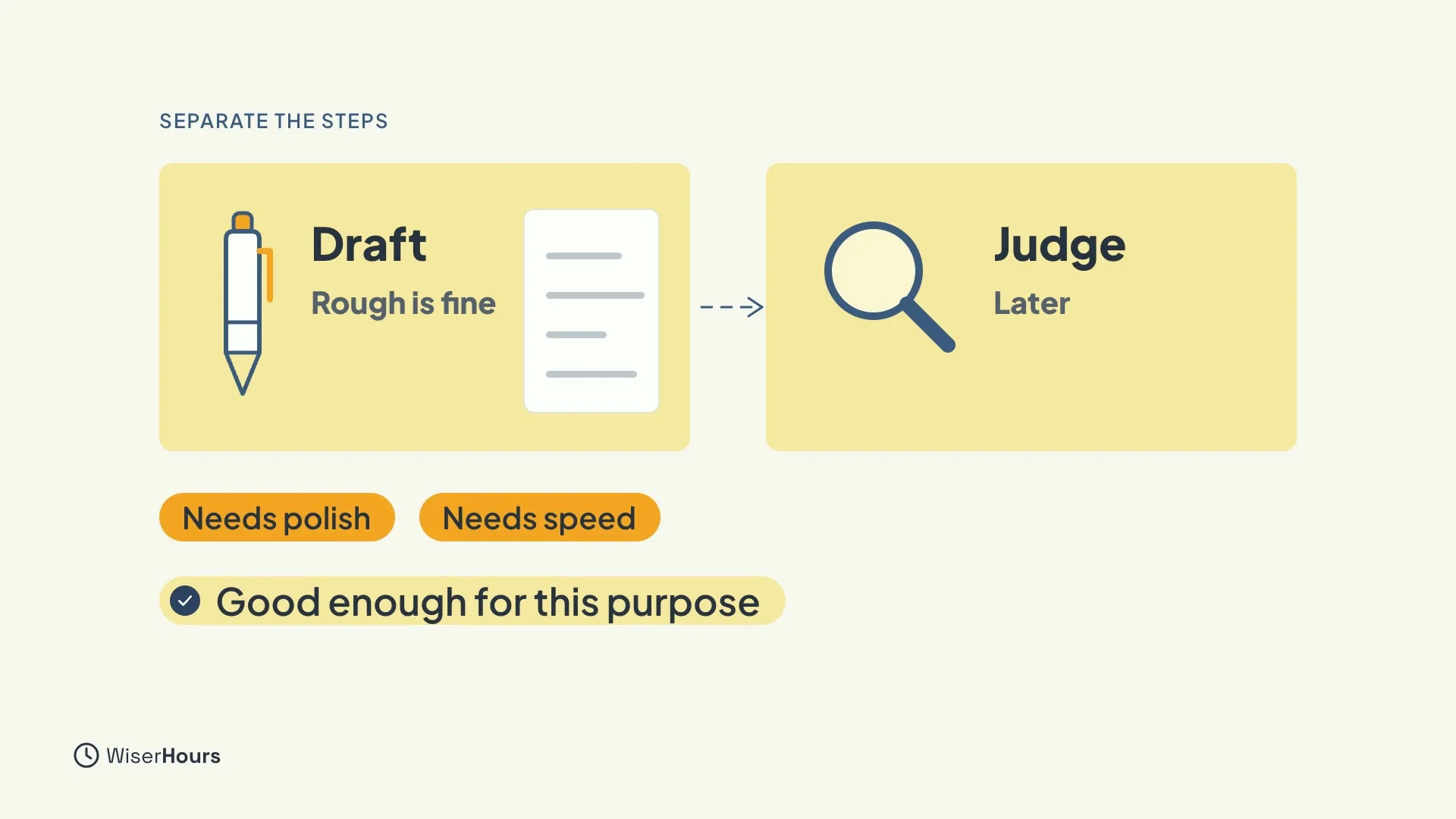
Separate drafting from judging
So separate the two. Write a deliberately rough first draft, knowing you will fix it later. And say out loud which work needs polish and which needs speed: good enough for this purpose.
 (opens the full-size picture)
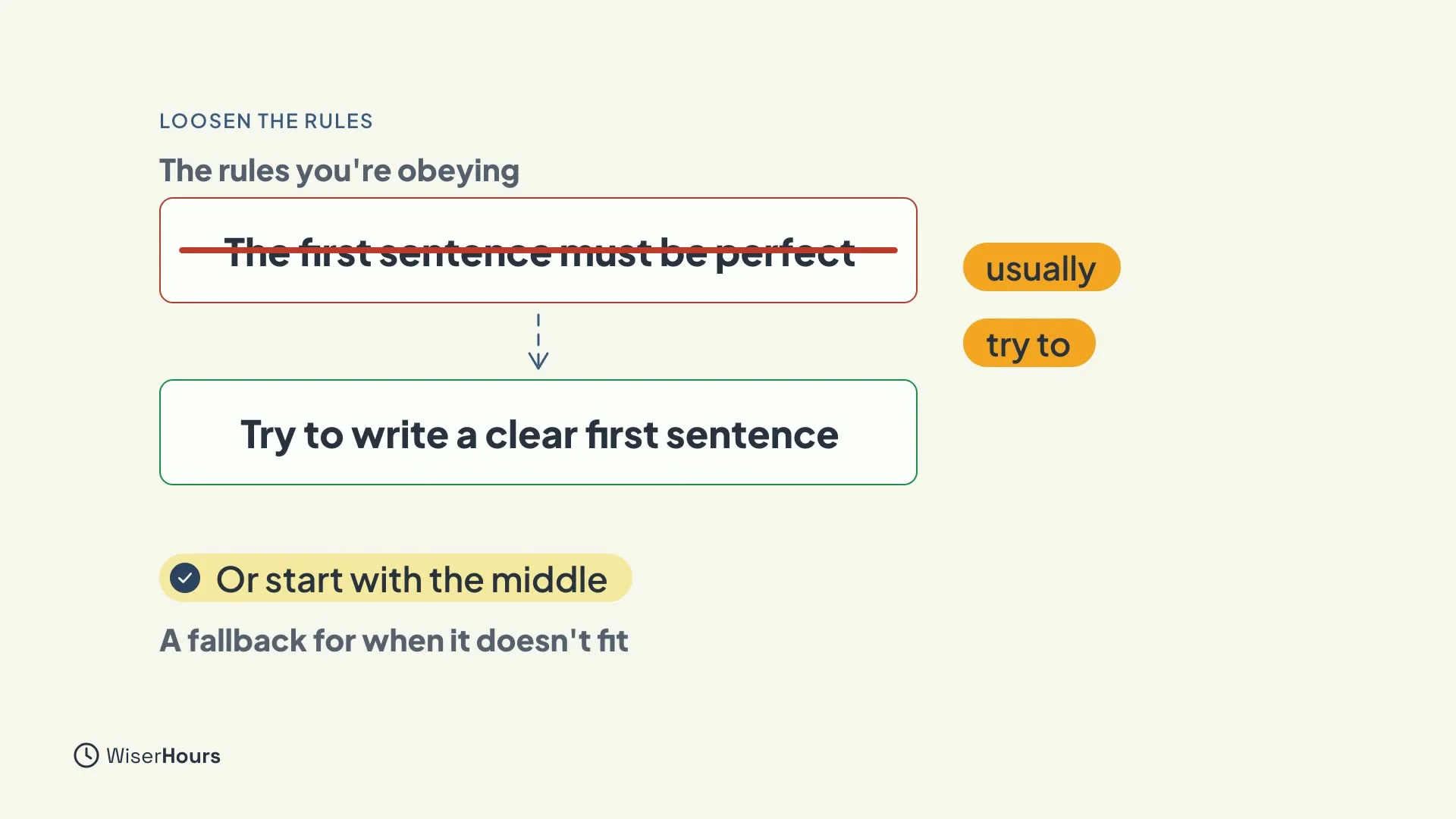
Loosen the rules
If you are stuck, write down the rules you are obeying. For example, “the first sentence must be perfect.” Rewrite each one with “usually” or “try to”, and pick a fallback for when it does not fit, such as starting with the middle.
 (opens the full-size picture)
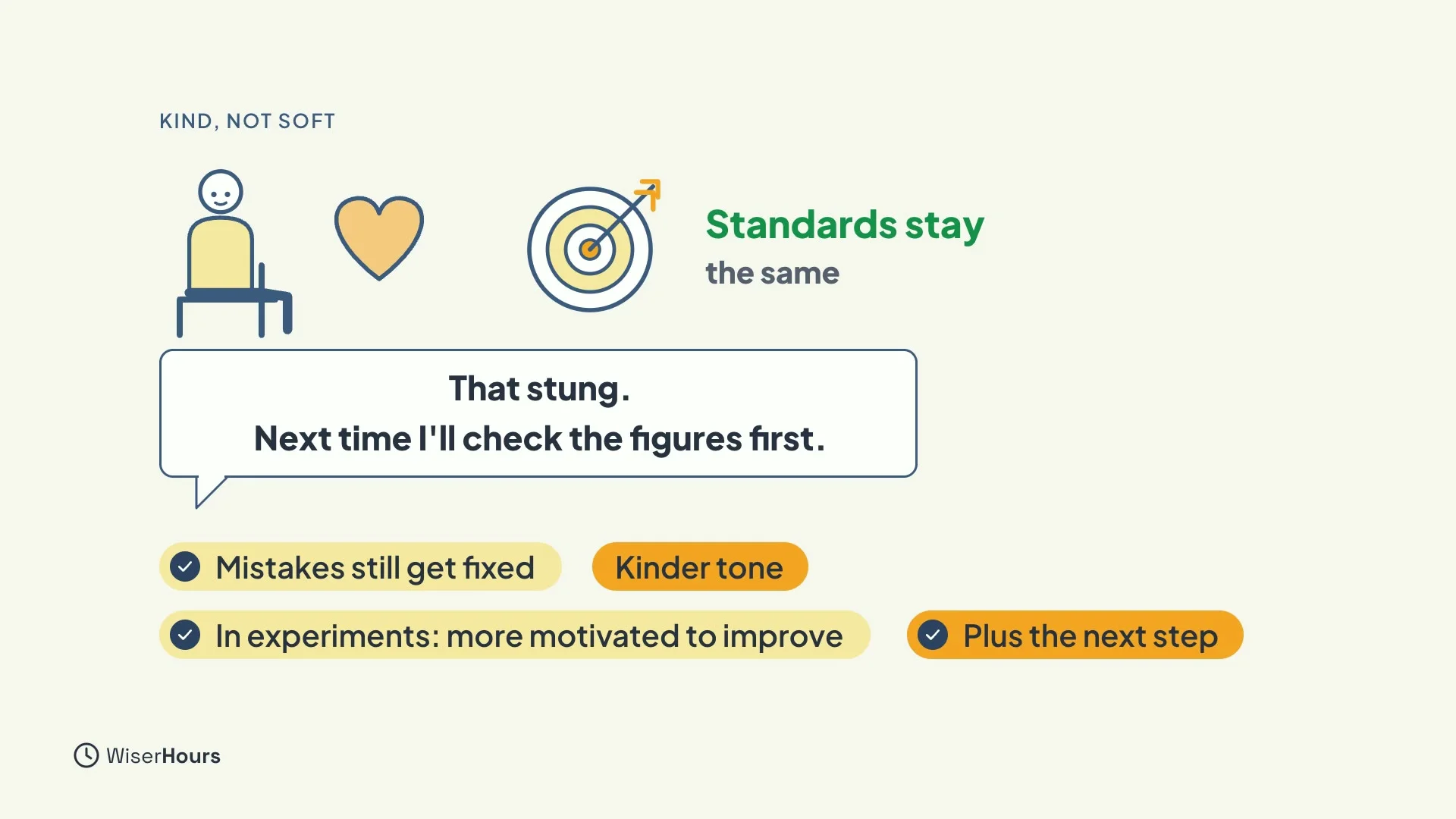
Kind, not soft
Being kinder to yourself is not lowering your standards. Mistakes still get noticed and fixed. What changes is the tone. In experiments, people encouraged to be kind to themselves after a failure were more motivated to improve. Pair the kind words with the next concrete step, such as “That stung. Next time I will check the figures first.”
 (opens the full-size picture)
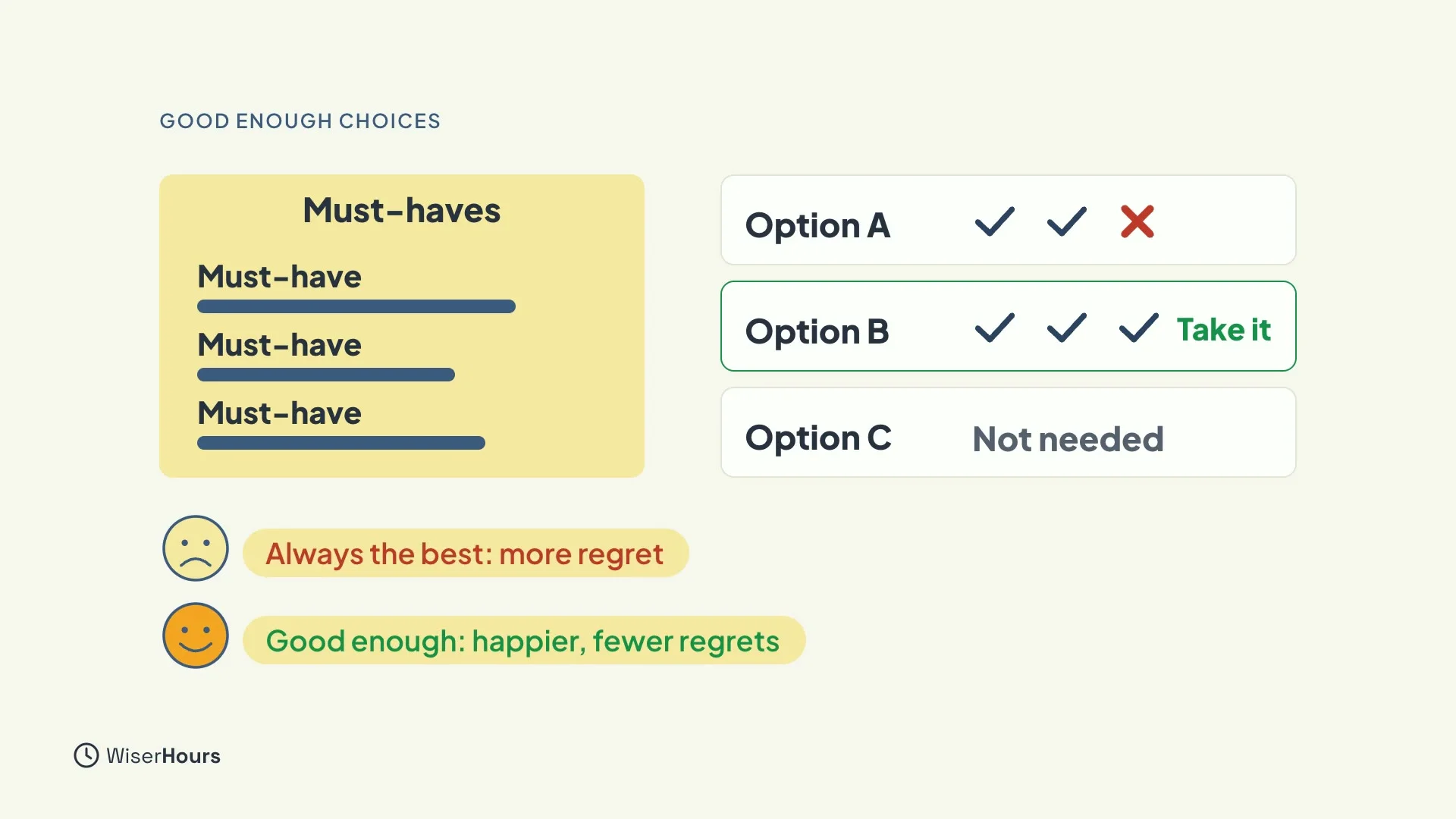
Good enough choices
Fear of choosing wrong can stall a start too. Write down two or three must-haves, with a bar for each, then take the first option that clears them all. In surveys, people who always aimed for the best felt less happy and more regretful than people who aimed for good enough.
 (opens the full-size picture)
YOUR TURN
Read more
- Perfectionism Explained: Healthy Striving vs. the Kind That Hurts: the two sides in more depth.
- Why Do We Procrastinate? The Psychology Explained: what the research links to delay.
- Writer’s Block: What Research Says About Causes and Fixes: rough drafts and loosening the rules.
- Self-Compassion Explained: What Kristin Neff’s Research Shows: being kind without lowering standards.
- How to Stop Procrastinating: 15 Strategies Backed by Research: good-enough choices and other tactics.
Read the full lesson script
In this lesson, you'll look at perfectionism and the fear of starting, and how to begin when you're afraid it won't be good enough.
Perfectionism has two sides. One is reaching for very high standards. The other is fearing mistakes, judging yourself harshly, and worrying about what others will think. You don't have to stop caring about quality. What counts is how you react when the work falls short.
The two sides go in different directions. Across many studies, harsh self-criticism and worry about judgment went with more procrastination. Very high personal standards went with slightly less. Both links are small, and they're associations, not proof.
Here's how to tell them apart. You send a report and spot a small error an hour later. Fixing it in the next version and moving on fits high standards. Rereading it all evening, and dreading what your manager thinks, fits the fear side.
Fear often shows up at the very start. One student could spend hours on the first paragraph of an essay: write a sentence, erase it, try again. Drafting and judging happen at once, and the judge wins.
So separate drafting from judging. Write a deliberately rough first draft, knowing you'll fix it later. And say out loud which work needs polish and which needs speed: good enough for this purpose.
If you're stuck, write down the rules you're obeying. For example, the first sentence must be perfect. Rewrite each one with usually or try to, and pick a fallback for when it doesn't fit.
Being kinder to yourself isn't lowering your standards. Mistakes still get noticed and fixed. What changes is the tone. In experiments, people encouraged to be kind to themselves after a failure were more motivated to improve. Pair the kind words with the next concrete step.
Fear of choosing wrong can stall a start too. Write down two or three must-haves, with a bar for each, then take the first option that clears them all. In surveys, people who always aimed for the best felt less happy and more regretful than people who aimed for good enough.
So remember: high standards are fine, fear is the part that delays, and draft before you judge. Before the next lesson, write a deliberately rough first draft of something for ten minutes. Next, you'll learn how to get out of a slump.
MAKE IT A SMALL WIN
Finished this lesson?
Mark it complete to save your progress on this device.