Keep going · Lesson 8 of 11
Deadlines and Accountability That Help You Start
See what deadlines, commitment devices and other people can and cannot do, and set one deadline with a start plan behind it.
 Video coming soon
Deadlines, promises and other people can all help you start, but not always in the ways the popular advice says. In this lesson you look at what the evidence supports, what it does not, and how to use each one without relying on it alone.
A famous tip does not hold up
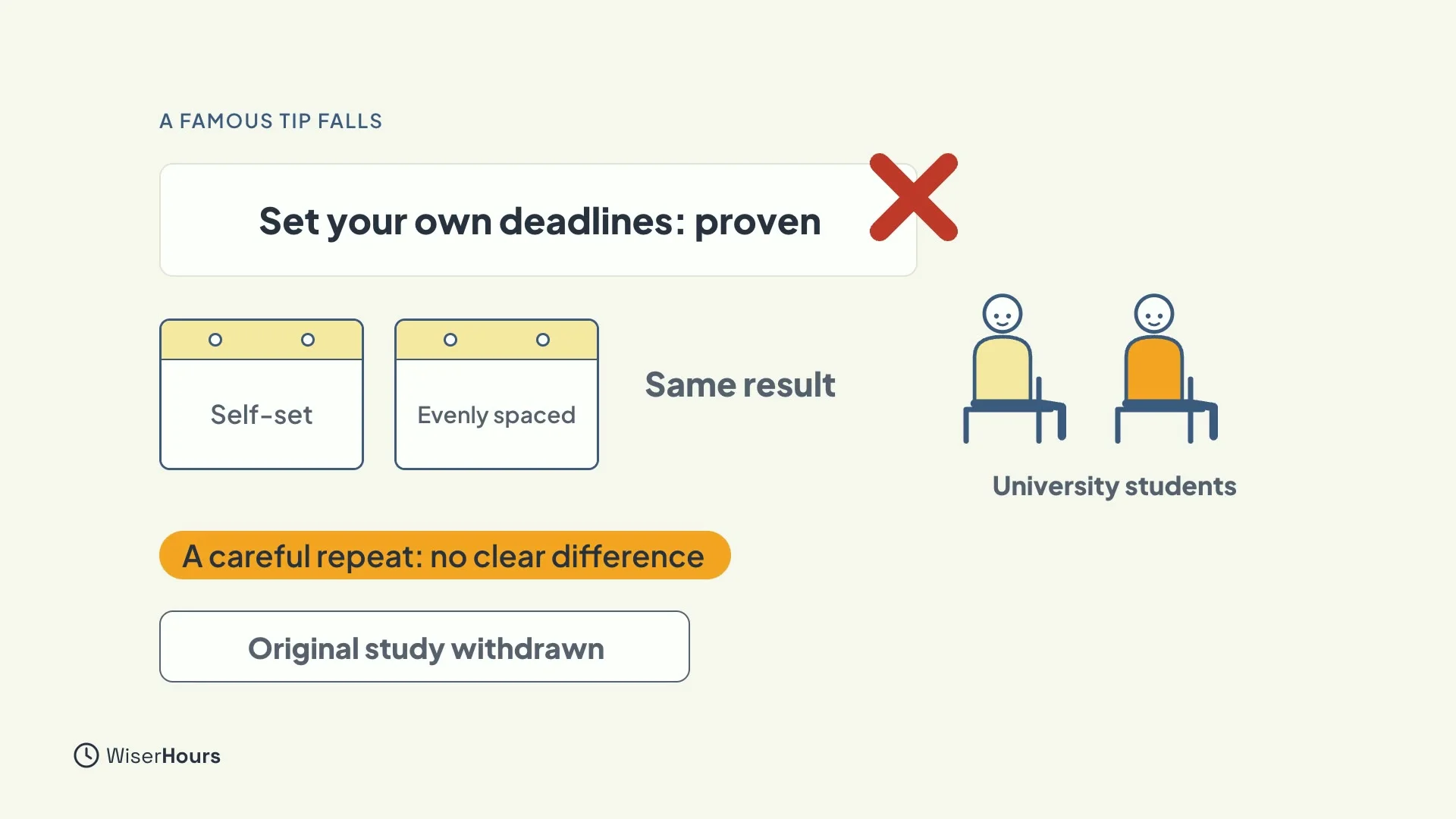
You may have heard that setting your own deadlines cures procrastination. That advice rested on one famous study. A careful repeat with university students found that neither self-set nor evenly spaced deadlines made a clear difference. The original study has since been withdrawn, so do not count on that tip.
 (opens the full-size picture)
What is left of deadlines
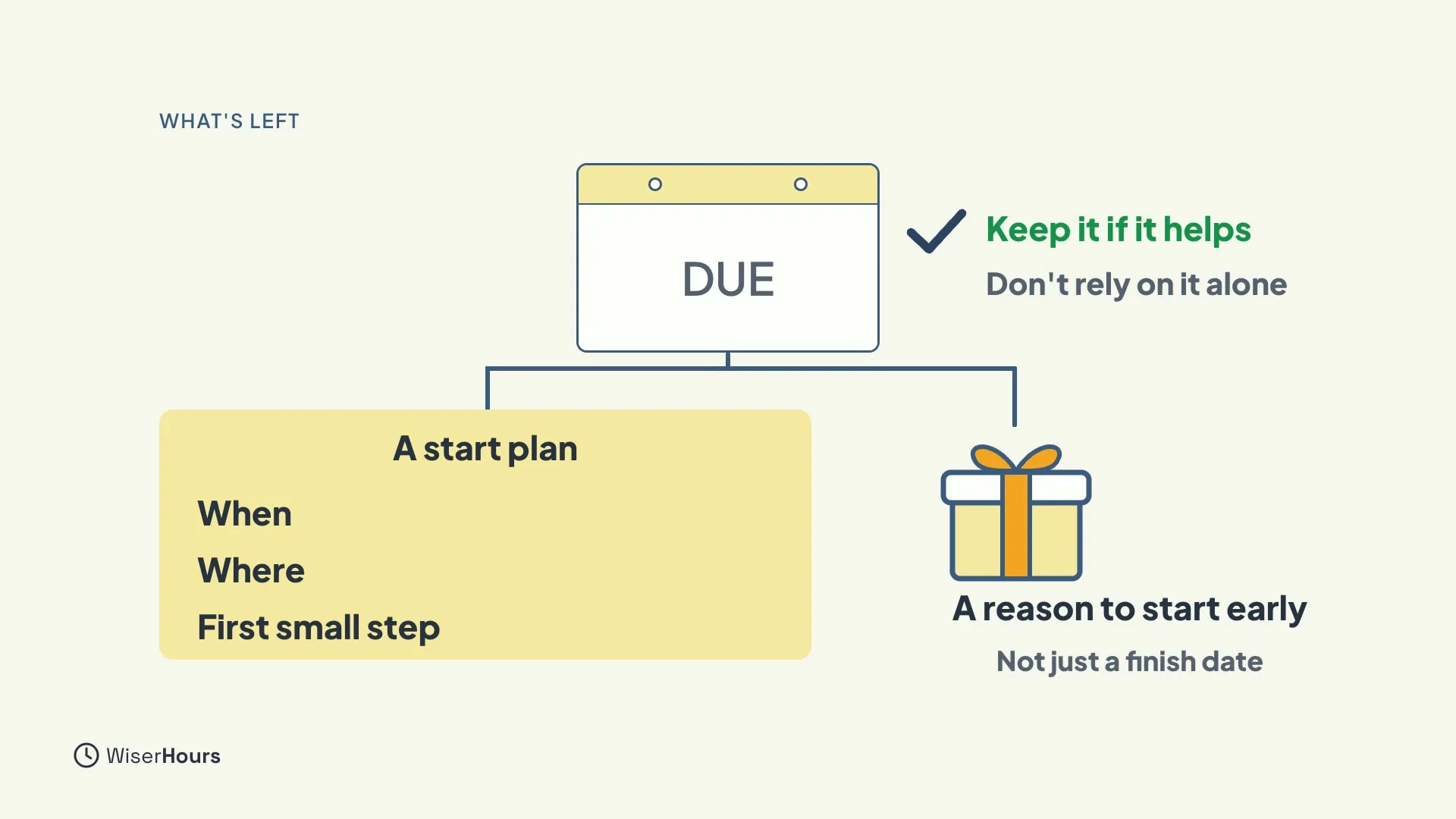
Keep a deadline if it helps you, but do not rely on it alone. Back it with a start plan: when, where and the first small step. And give yourself a reason to start early, not just a date to finish by.
 (opens the full-size picture)
Put something at stake
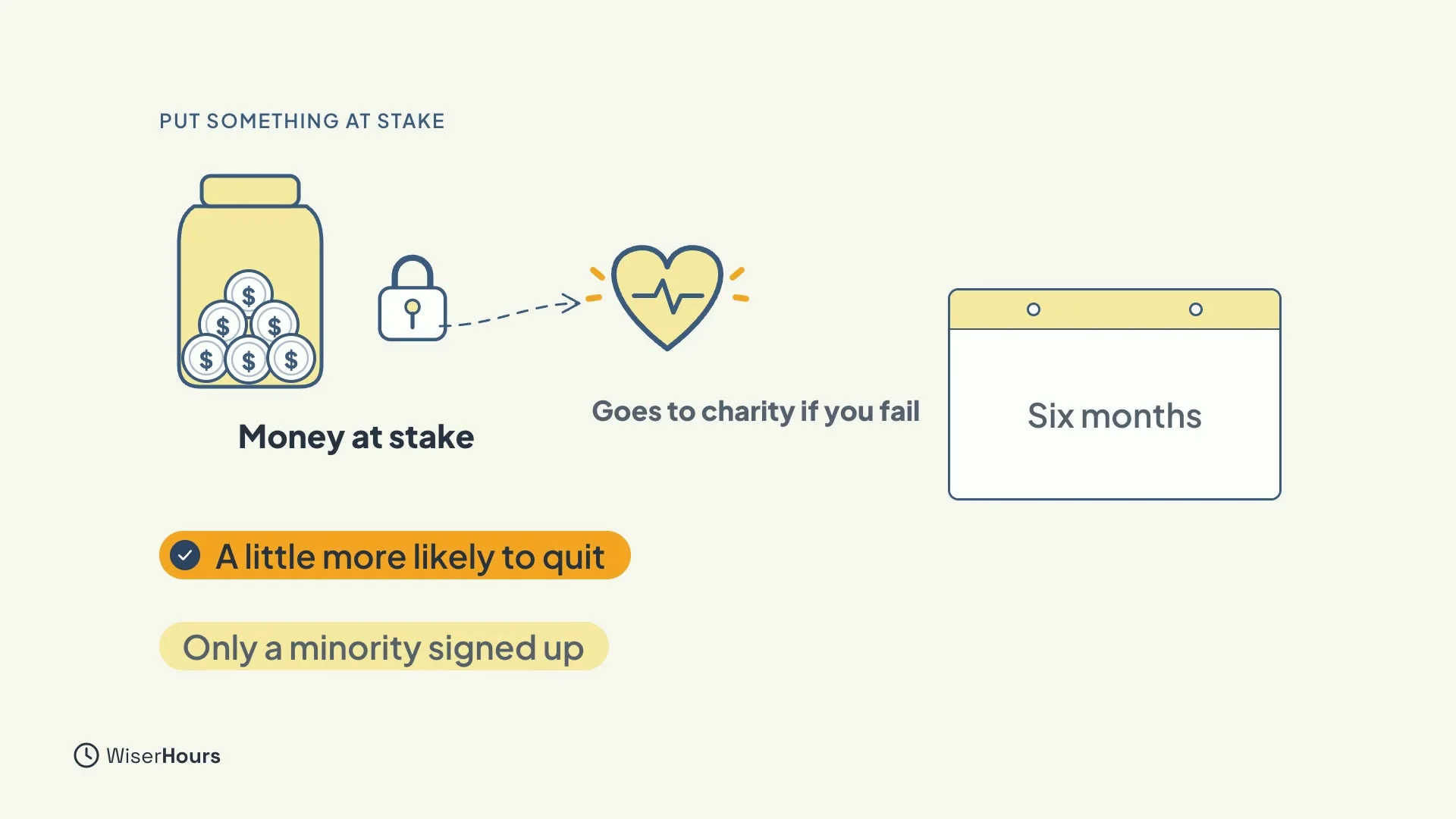
A commitment device puts something at stake in advance. In one trial, smokers could put money in an account that went to charity if they failed a test. They were a little more likely to have quit after six months. Only a minority chose to sign up, which is worth remembering: a device only helps if you will actually use it.
 (opens the full-size picture)
Lighter versions
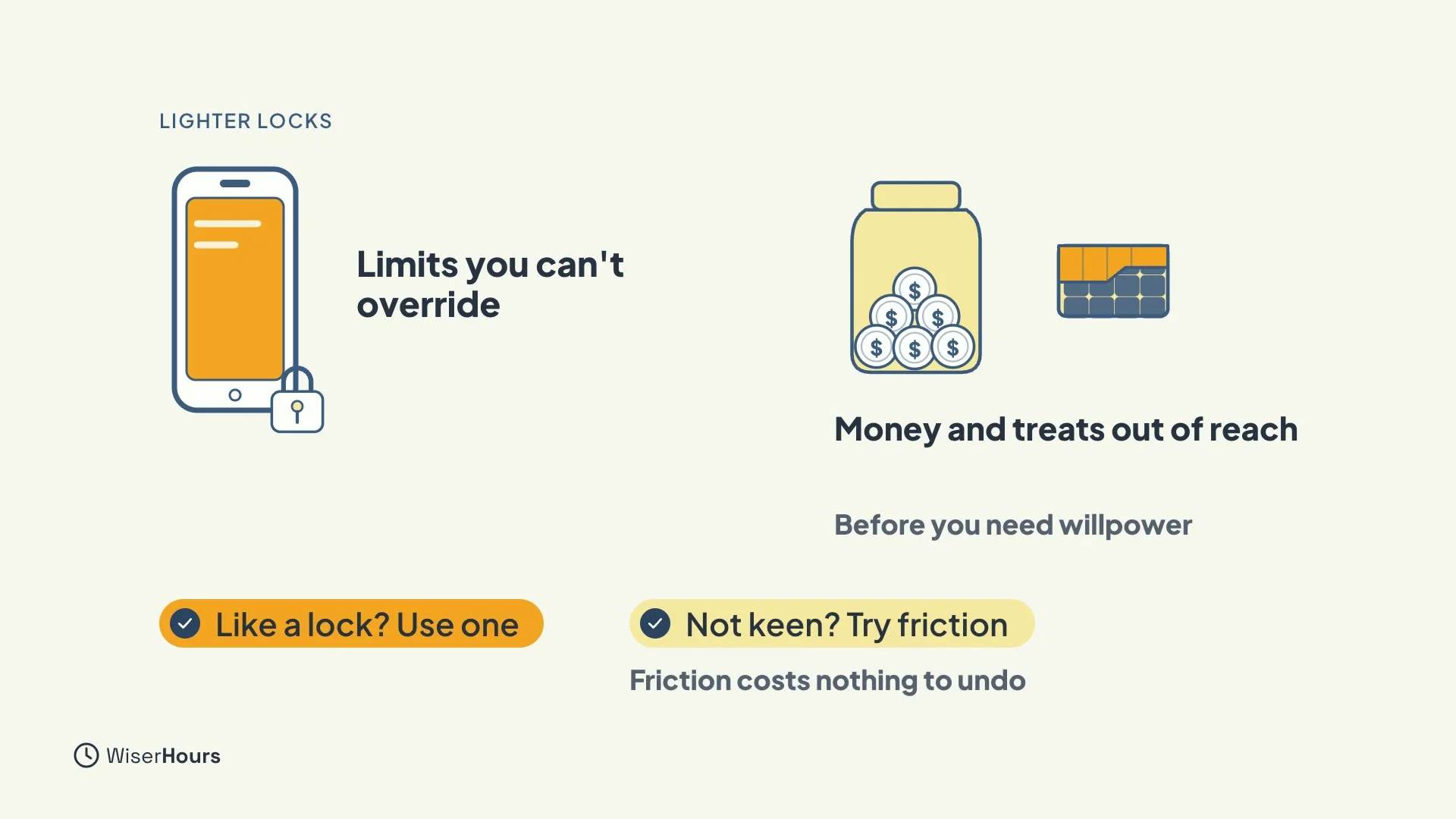
There are lighter versions. You can set daily app limits that you cannot override. You can move money or tempting things out of reach before you need willpower. If a lock appeals to you, use one. If it puts you off, start with friction, which costs nothing to undo.
 (opens the full-size picture)
Other people
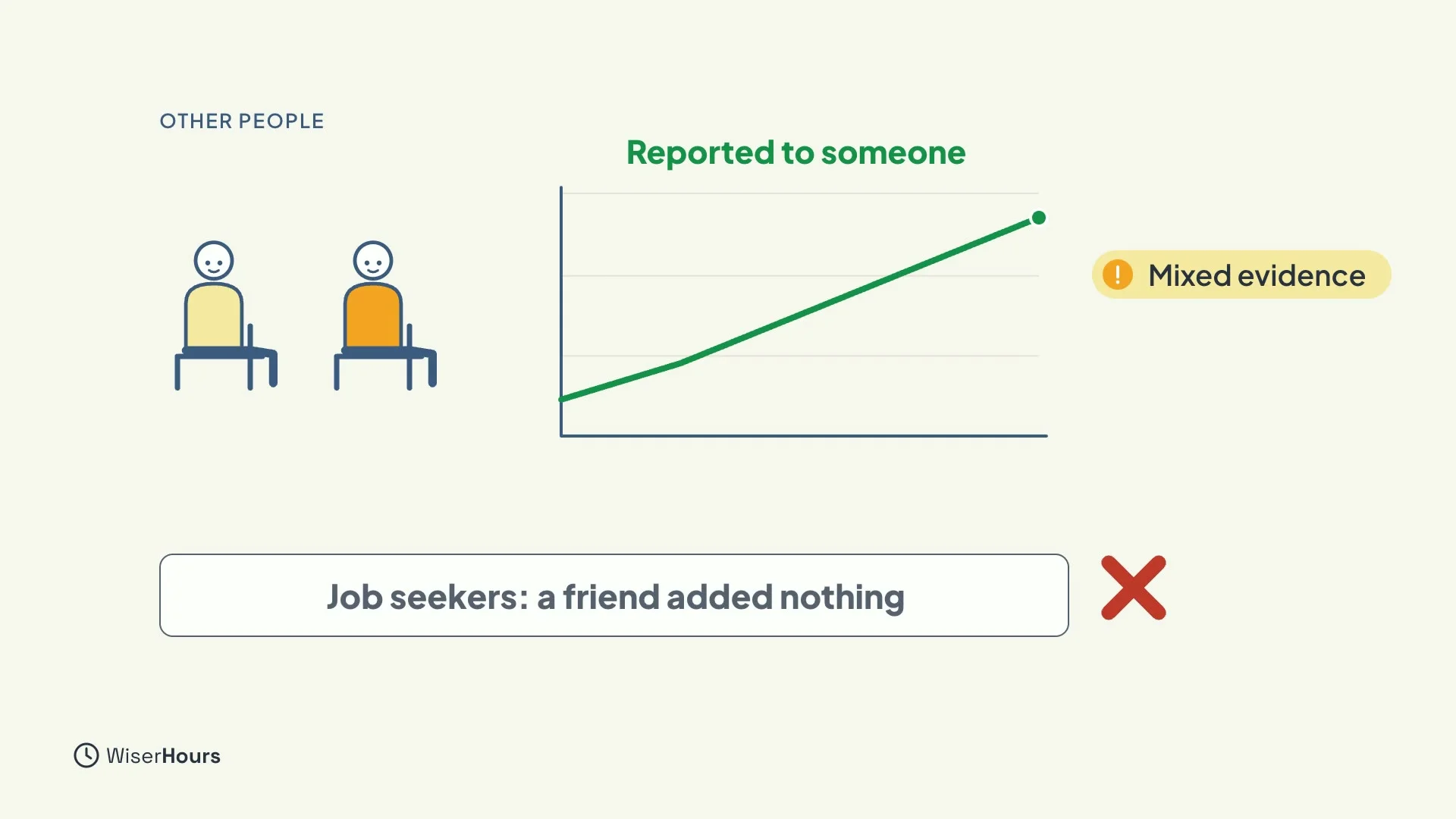
What about other people? In many studies of health goals, tracking progress worked better when it was reported to someone. But the evidence is mixed. In one trial with job seekers, adding a friend who saw the plan did not help beyond writing the plan.
 (opens the full-size picture)
Accountability partners are untested as a fix
Telling someone your plan is a sensible thing to try, but it is not a proven fix for procrastination. Treat it as an experiment and watch whether you actually start.
Group work: support, not pressure
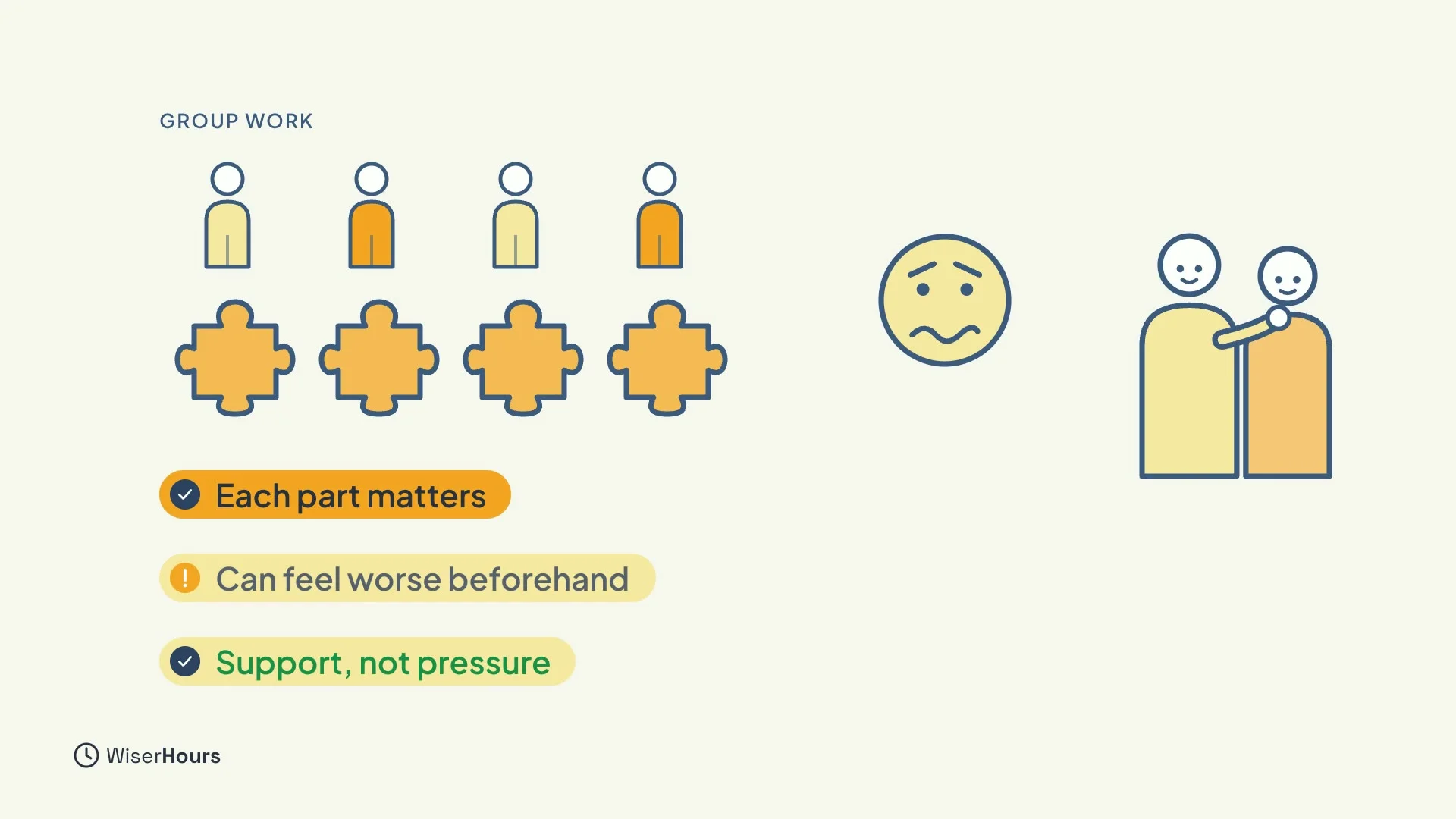
Group work can help a little when everyone’s part really matters. But in one study with students who habitually procrastinated, the group setup also made people feel worse about the task beforehand. So use people for support, not pressure.
 (opens the full-size picture)
Tell one named person
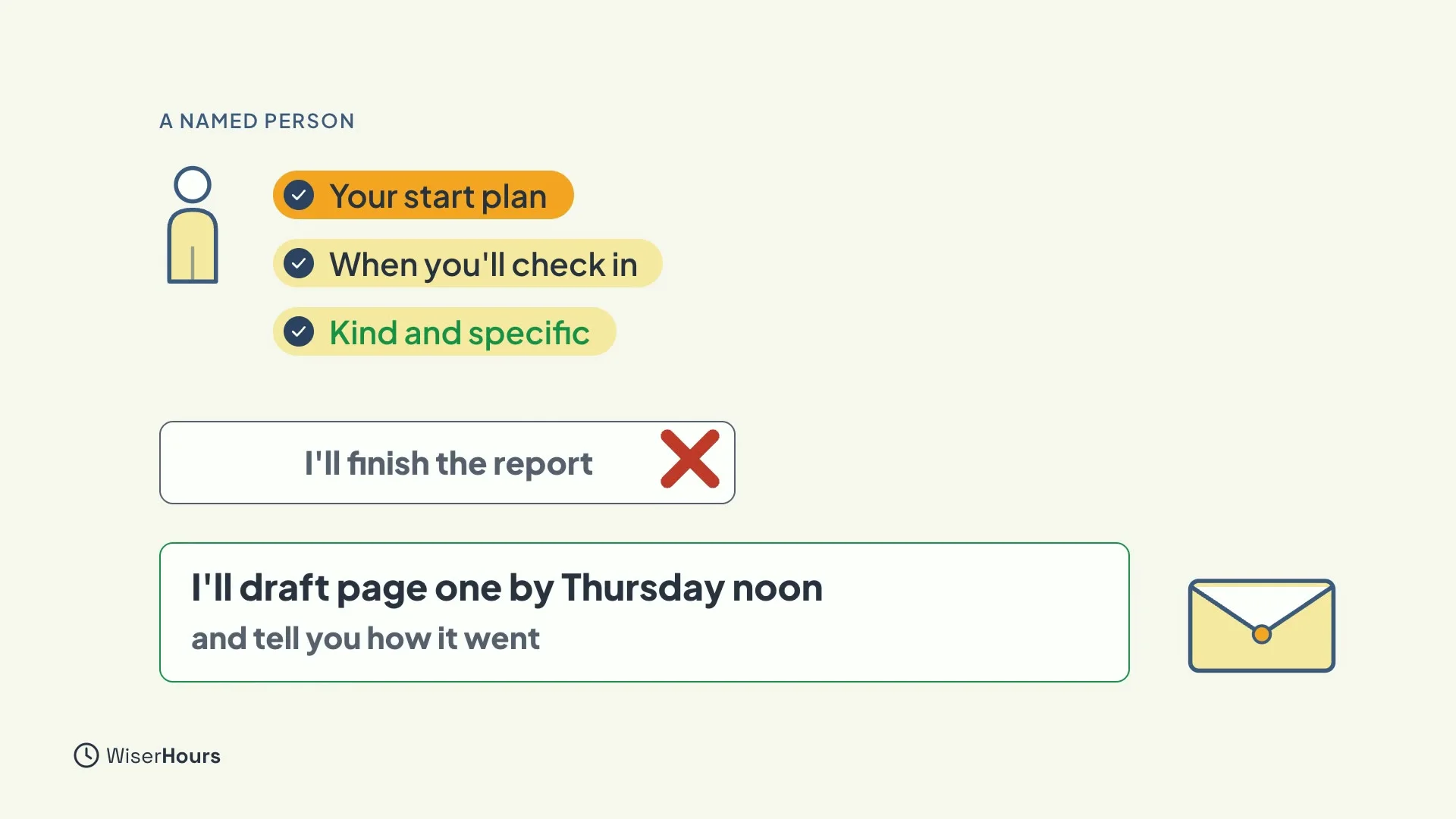
A simple version is to tell one named person your start plan, and when you will check in. Keep it kind and specific. Not “I will finish the report”, but “I will draft the first page by Thursday at noon, and tell you how it went.”
 (opens the full-size picture)
Nearer targets
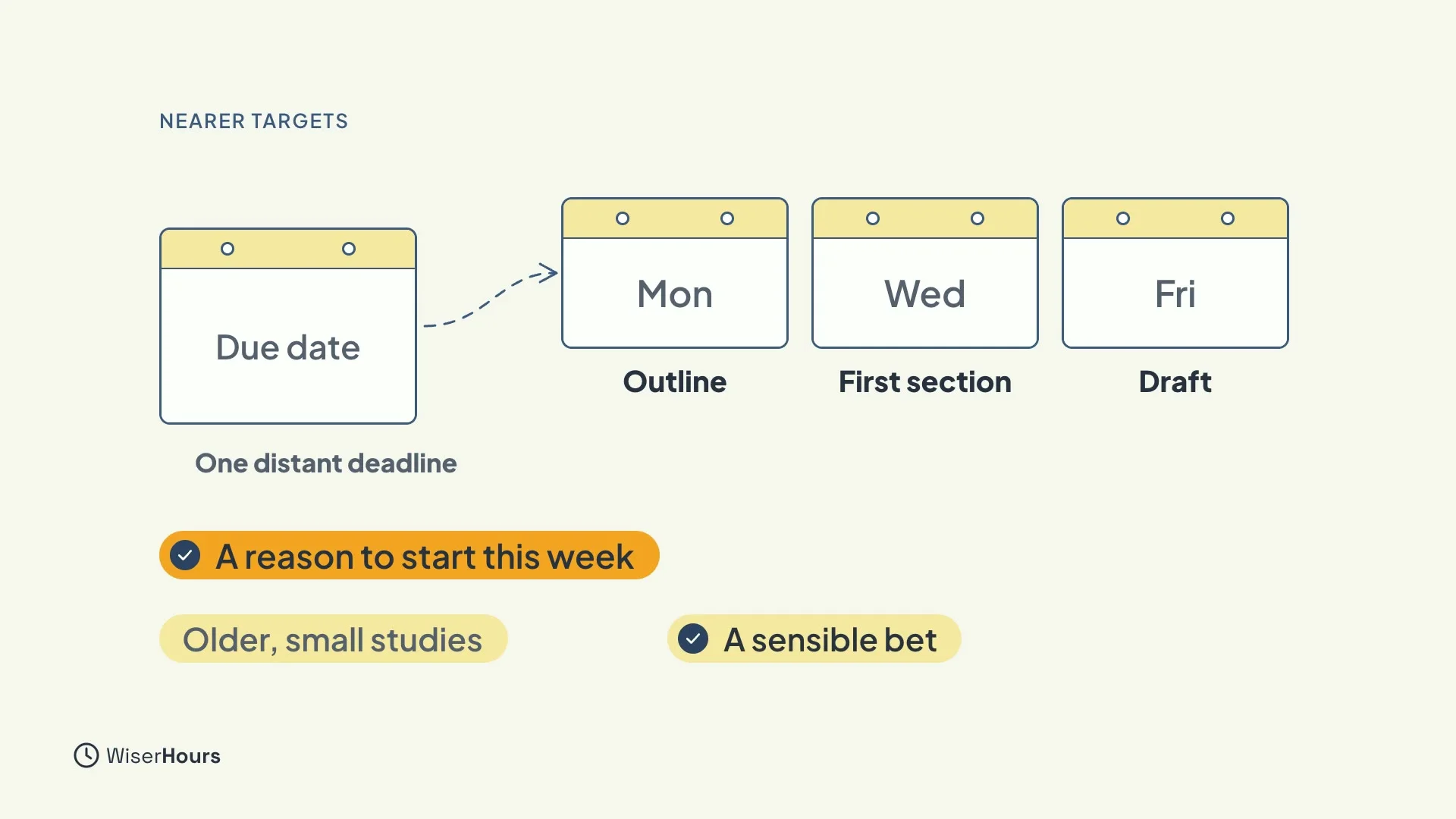
Nearer targets can help more than one distant deadline. Split a big due date into small steps with their own dates: an outline by Monday, a first section by Wednesday, a draft by Friday. That gives you a reason to start this week. Older, small studies support this, so treat it as a sensible bet, not a sure thing.
 (opens the full-size picture)
YOUR TURN
Read more
- How to Stop Procrastinating: 15 Strategies Backed by Research: what the research says about deadlines and groups.
- Parkinson’s Law: Why Work Expands to Fill the Time You Give It: how deadlines shape the time work takes.
- Delayed Gratification: How to Get Better at Waiting for What You Want: commitment devices and when a lock suits you.
- How to Build a New Habit: A Step-by-Step Guide: why reporting your progress to someone can help.
Read the full lesson script
In this lesson, you'll look at deadlines, commitments and other people, and what actually helps you start.
You may have heard that setting your own deadlines cures procrastination. That advice rested on one famous study. A careful repeat with university students found that neither self-set nor evenly spaced deadlines made a clear difference. The original study has since been withdrawn.
So keep a deadline if it helps you, but don't rely on it alone. Back it with a start plan: when, where, and the first small step. And give yourself a reason to start early, not just a date to finish by.
A commitment device puts something at stake in advance. In one trial, smokers could put money in an account that went to charity if they failed a test. They were a little more likely to have quit after six months. Only a minority chose to sign up.
There are lighter versions. Daily app limits you can't override. Moving money or tempting things out of reach before you need willpower. If a lock appeals to you, use one. If it puts you off, start with friction, which costs nothing to undo.
What about other people? In many studies of health goals, tracking progress worked better when it was reported to someone. But the evidence is mixed. In one trial with job seekers, adding a friend who saw the plan didn't help beyond writing the plan.
Group work can help a little when everyone's part really matters. But in one study with students who habitually procrastinated, the group setup also made people feel worse about the task beforehand. So use people for support, not pressure.
A simple version: tell one named person your start plan, and when you'll check in. Keep it kind and specific. Not I'll finish the report, but I'll draft the first page by Thursday at noon, and tell you how it went.
Nearer targets can help more than one distant deadline. Split a big due date into small steps with their own dates: an outline by Monday, a first section by Wednesday. That gives you a reason to start this week. Older, small studies support this, so treat it as a sensible bet.
So remember: deadlines alone aren't proven, back them with a start plan, and use people for support, not pressure. Before the next lesson, set one deadline someone else can see, with a start plan behind it. Next, you'll look at perfectionism and the fear of starting.
MAKE IT A SMALL WIN
Finished this lesson?
Mark it complete to save your progress on this device.