Keep going · Lesson 7 of 11
Rewards and Temptation Bundling to Start Tasks
Bring a small payoff into today, pair a treat with the task you dread, and learn why rewards help you start but habits keep you going.
 Video coming soon
A payoff that is far away is one of the main reasons we delay. In this lesson you learn to bring a small, good thing into today, so the work does not feel like all cost and no payoff. You also learn where rewards stop working, so you can use them wisely.
Bring the payoff closer
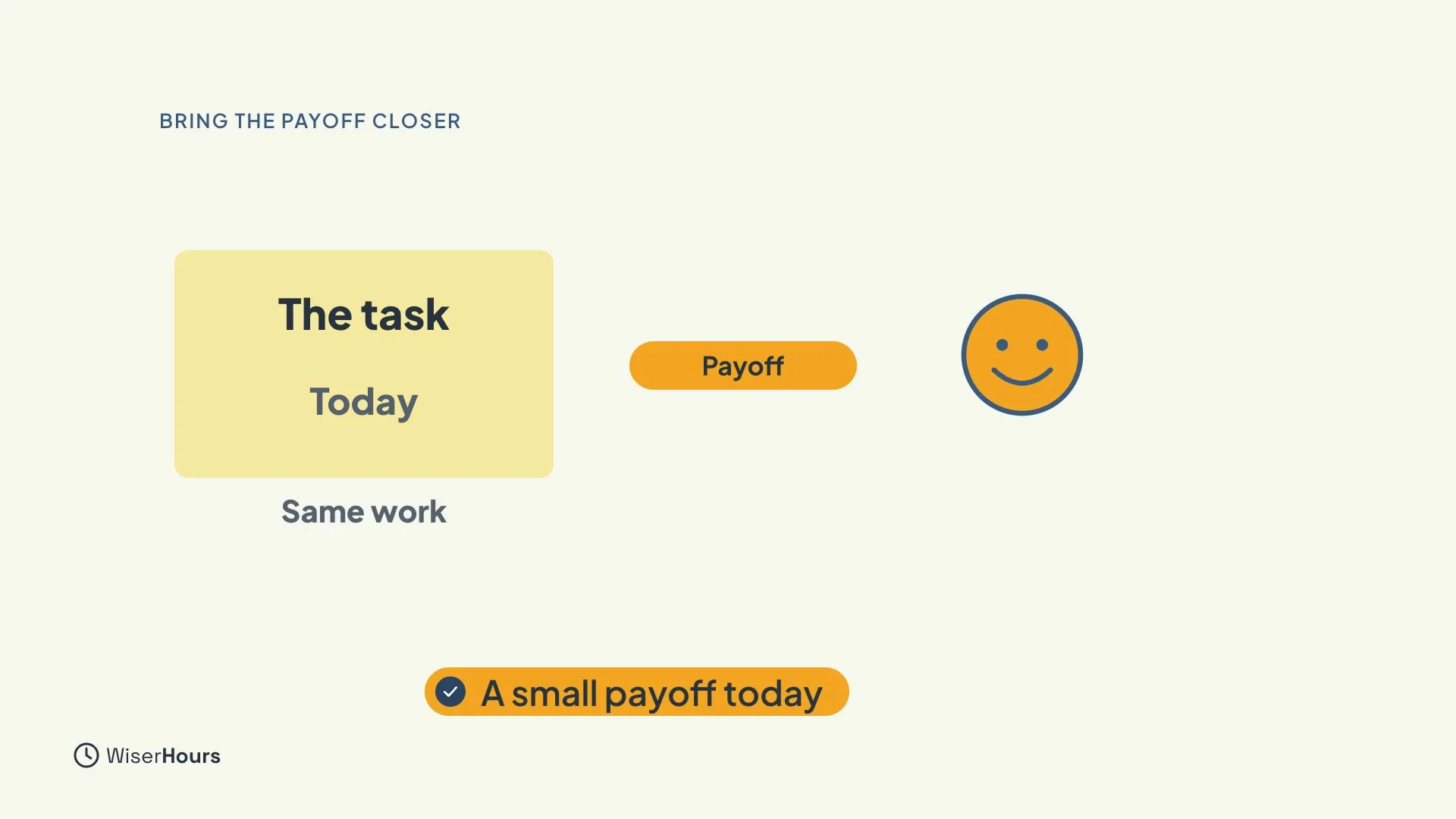
The work stays the same. What changes is that something good happens today, not only at the end. Finishing a report may pay off next month, but a small treat can arrive this afternoon.
 (opens the full-size picture)
Keep a treat just for the task
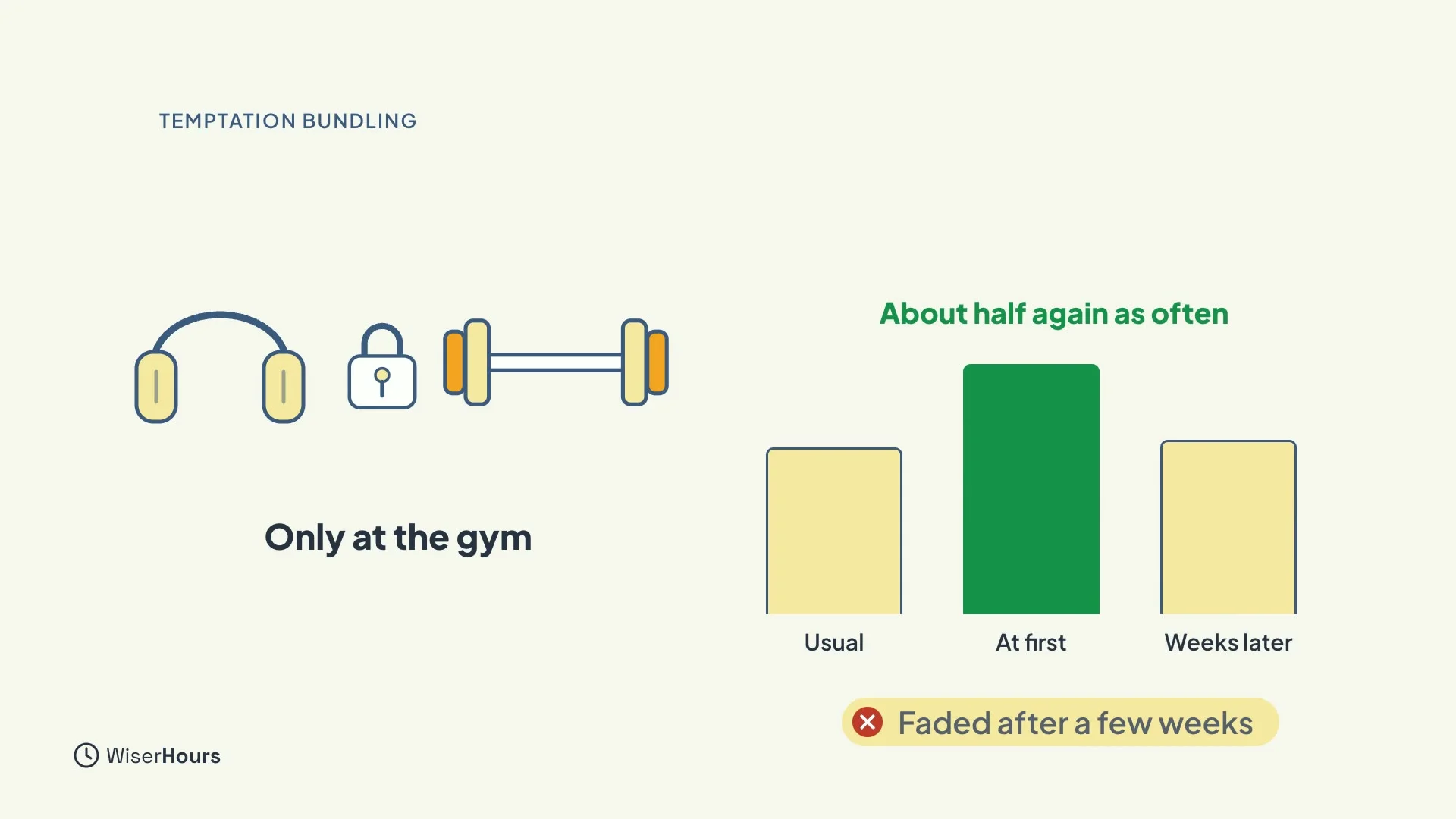
One way to do this is called temptation bundling. You keep a pleasure only for the task. In one trial at a university gym, people who could listen to gripping audiobooks only at the gym went about half again as often at first. The effect faded after a few weeks.
 (opens the full-size picture)
Use it for the work you dread
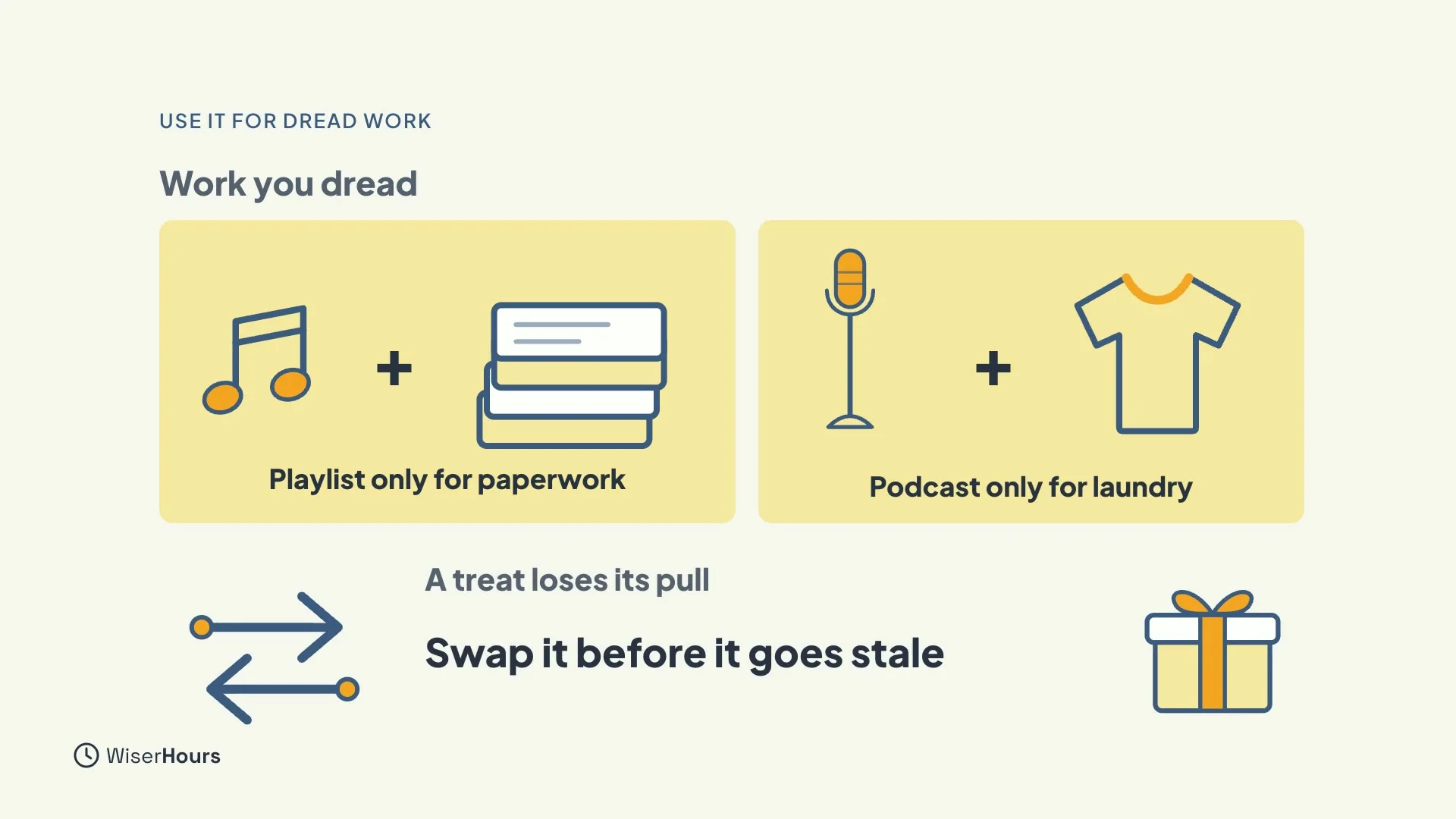
Try it with the work you dread. For example, a favourite playlist only while you do the paperwork, or a podcast only while you fold laundry. Because a treat loses its pull, plan to swap it for a new one before it goes stale.
 (opens the full-size picture)
Keep rewards small and soon
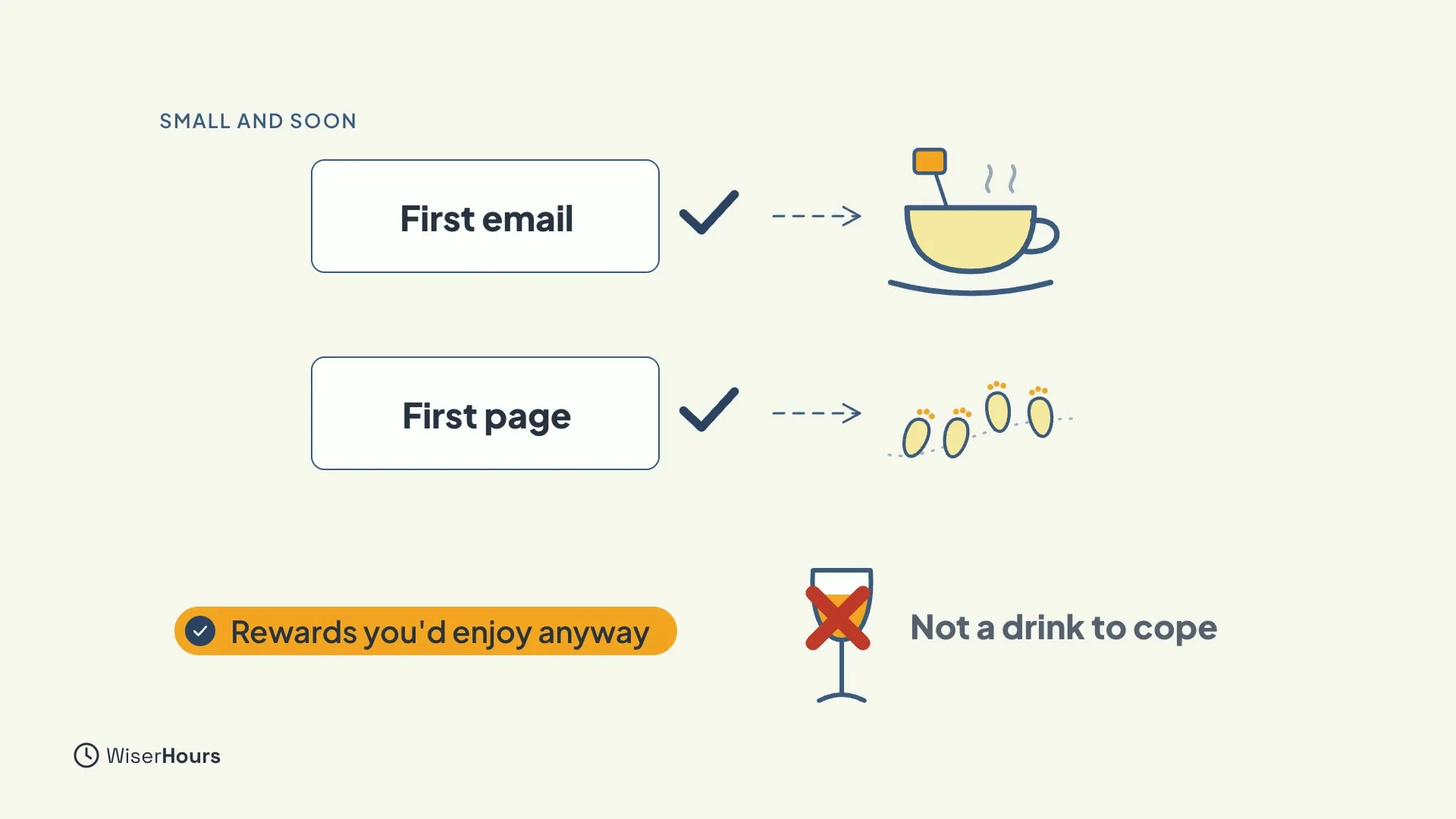
A good reward is small and comes right after the first step. A cup of tea after the first email. A short walk after the first page. Pick rewards you would enjoy anyway, and skip ones that undo the step, like a drink to cope with the mood.
 (opens the full-size picture)
Pick a reward that does not undo the step
A drink to cope with the mood can work against the very step you just took. Choose something you would be glad to have done afterwards.
Find the part you enjoy
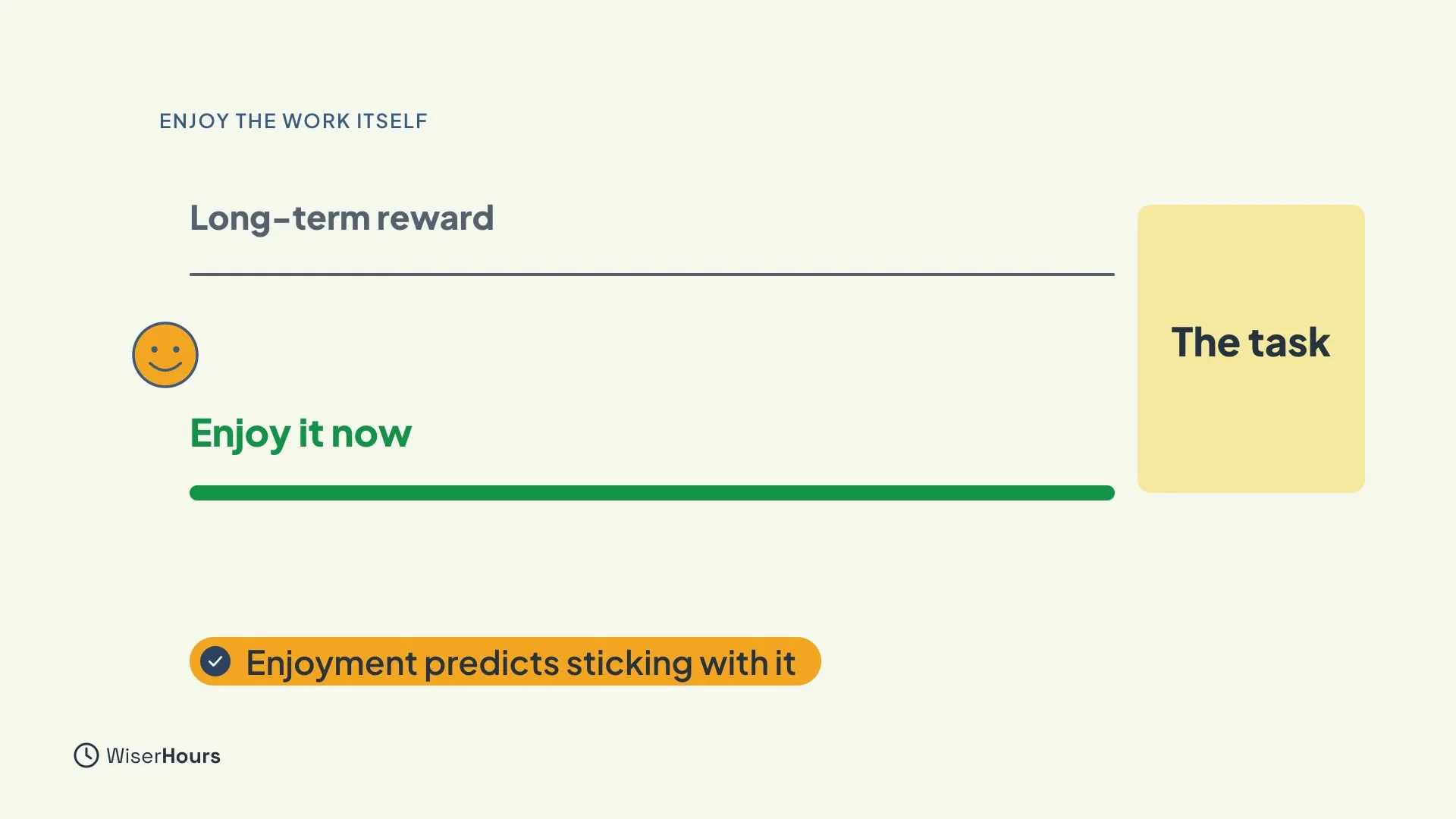
Better still, look for the part of the work you enjoy. Across several studies, enjoying an activity predicted sticking with it better than the long-term rewards people said they were after. So choose the version of the task you like best.
 (opens the full-size picture)
Rewards have limits
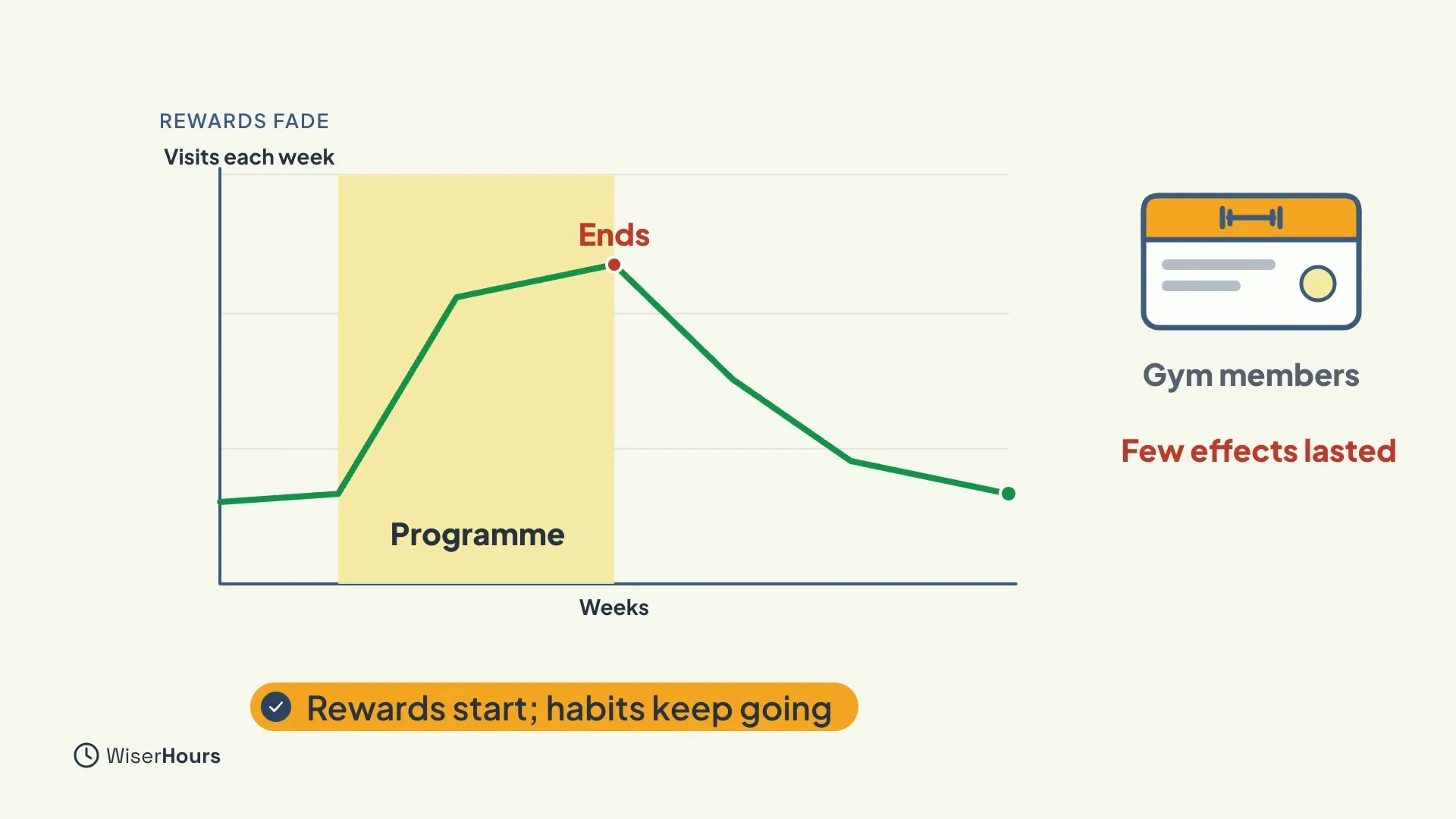
In a huge study of gym members, many small programmes raised visits for a few weeks, but few effects lasted once they ended. So rewards are a way to get started. A habit is what keeps you going once the rewards stop.
 (opens the full-size picture)
Tick the box and reward the doing
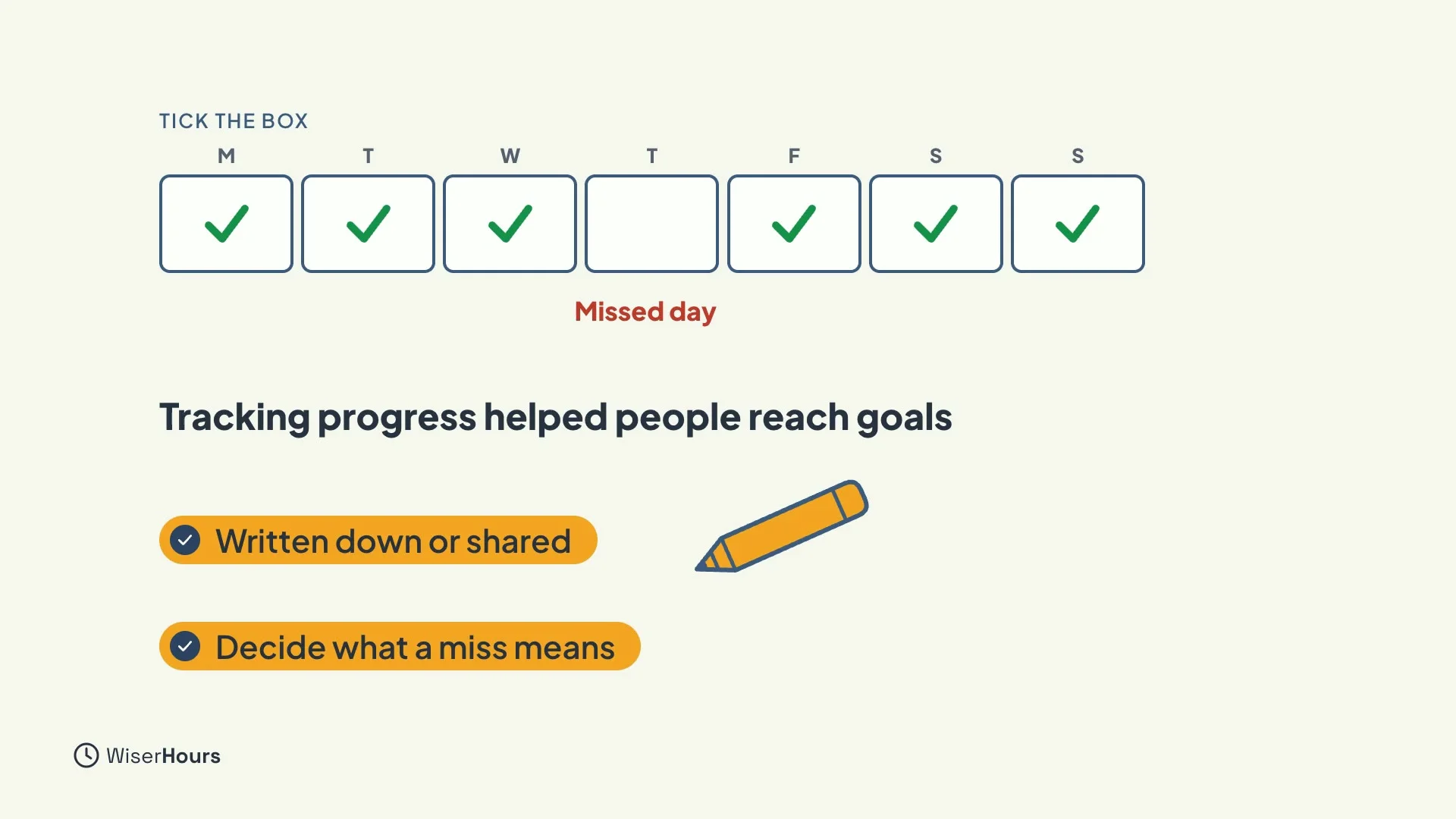
A simple tick sheet can be a reward too. In many studies, tracking progress helped people reach goals, especially when it was written down or shared. Decide in advance what a missed day means, so one break does not make you quit.
 (opens the full-size picture)
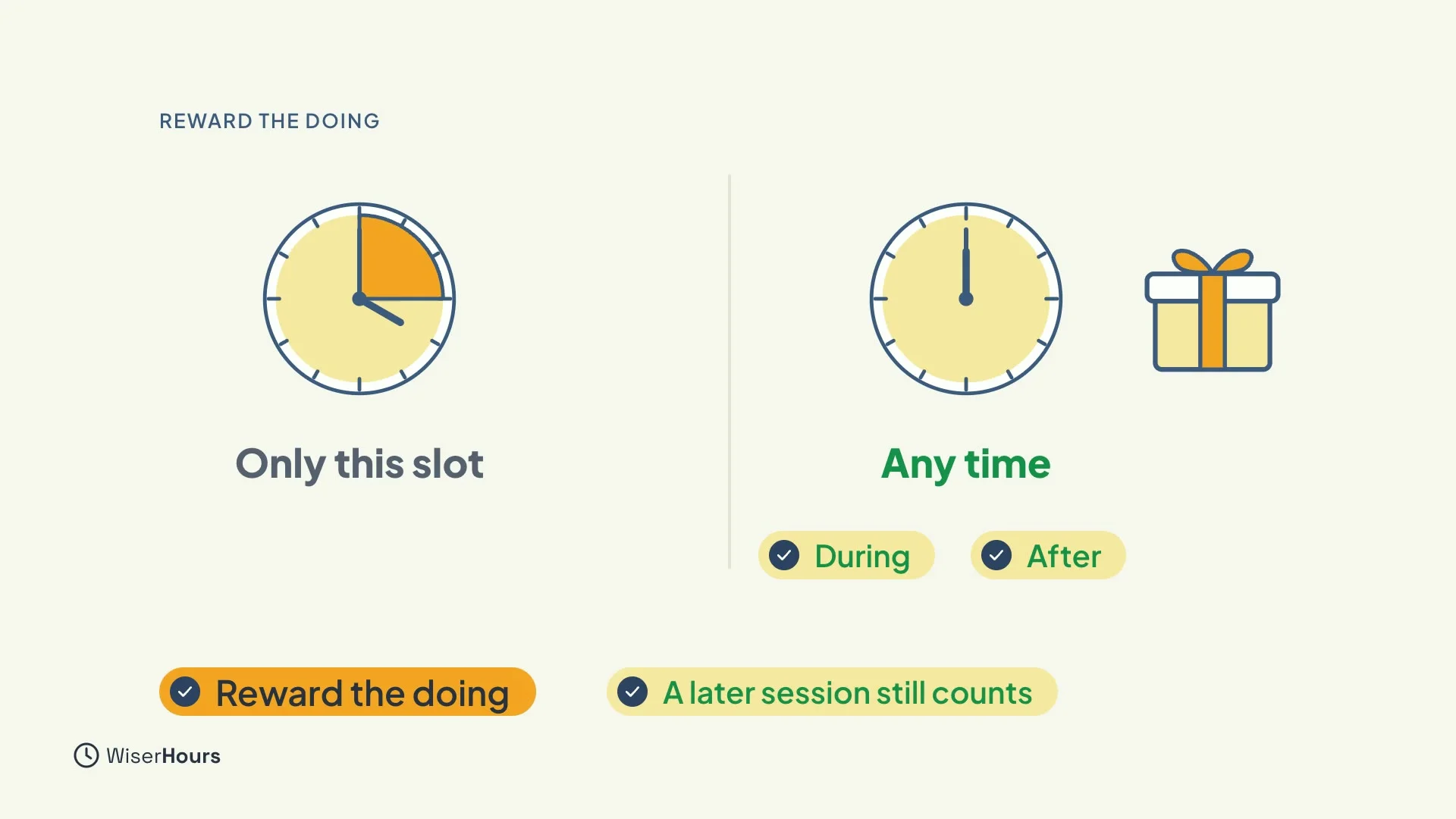
One more tip comes from a workplace trial. Paying people for workouts at any time worked better than paying them only for workouts in a fixed time slot, both during the payments and after. So reward the doing, not the time slot. If you miss your planned time, a session later in the day still counts.
 (opens the full-size picture)
YOUR TURN
Read more
- How to Stop Procrastinating: 15 Strategies Backed by Research: the gym trial and the research on enjoyment.
- How to Get Motivated When You Don’t Feel Like Doing Anything: small rewards and pairing a treat with a chore.
- How to Build a New Habit: A Step-by-Step Guide: why rewards fade and habits last.
- Habit Trackers: Do They Work, and Which Kind Should You Use?: what tracking adds, and how to handle a missed day.
Read the full lesson script
In this lesson, you'll learn to bring a reward into today, so the task isn't all cost and no payoff.
Remember, a far-off payoff is one of the main reasons we delay. So bring a small payoff into the present. The work stays the same, but now something good happens today, not just at the end.
One way is called temptation bundling. Keep a pleasure only for the task. In one trial at a university gym, people who could listen to gripping audiobooks only at the gym went about half again as often at first. The effect faded after a few weeks.
Try it with the work you dread. A favourite playlist only while you do the paperwork. A podcast only while you fold laundry. And because a treat loses its pull, swap it for a new one before it goes stale.
Keep rewards small and soon. A cup of tea after the first email. A short walk after the first page. Pick rewards you'd enjoy anyway, and skip ones that undo the step, like a drink to cope with the mood.
Better still, find the part you enjoy. Across several studies, enjoying an activity predicted sticking with it better than the long-term rewards people said they were after. So choose the version you like best.
Rewards have limits. In a huge study of gym members, many small programmes raised visits for a few weeks, but few effects lasted once they ended. Rewards can get you started. A habit keeps you going once they stop.
A simple tick sheet can be a reward too. In many studies, tracking progress helped people reach goals, especially when it was written down or shared. But decide in advance what a missed day means, so one break doesn't make you quit.
In a workplace trial, paying people for workouts at any time worked better than paying them only for workouts in a fixed time slot, both during the payments and after. So reward the doing, not the time slot. If you miss your planned time, a session later in the day still counts.
So remember: bring a payoff into today, keep a treat just for the task, and let rewards start what habits keep going. Before the next lesson, pick one pleasure you'll only allow while you do the task. Next, you'll learn about deadlines and accountability.
MAKE IT A SMALL WIN
Finished this lesson?
Mark it complete to save your progress on this device.