Understand it · Lesson 3 of 11
Spot Your Delay Pattern and Pick the Right Fix
Learn the four main causes of putting things off and how to find yours with one question and a one-week log.
 Video coming soon
Before you pick a fix, it helps to know what you are fixing. This lesson shows you how to spot your own delay pattern, because the right fix depends on why you are putting a task off.
One cause, one fix
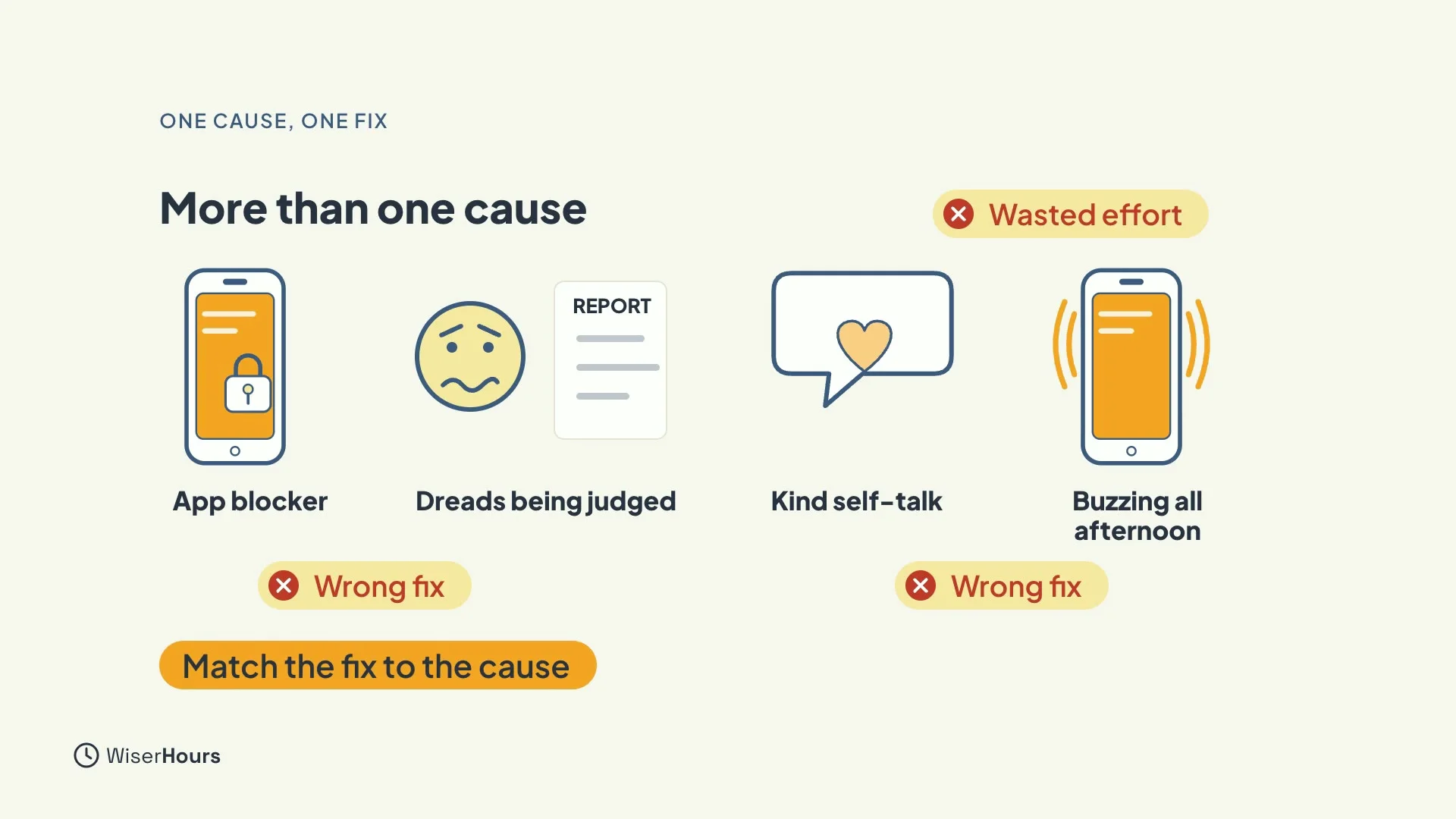
Procrastination has more than one cause, so a fix aimed at the wrong one wastes effort. An app blocker does nothing for someone who dreads how a report will be judged. And kind self-talk does little against a phone that lights up all afternoon.
 (opens the full-size picture)
Four main causes
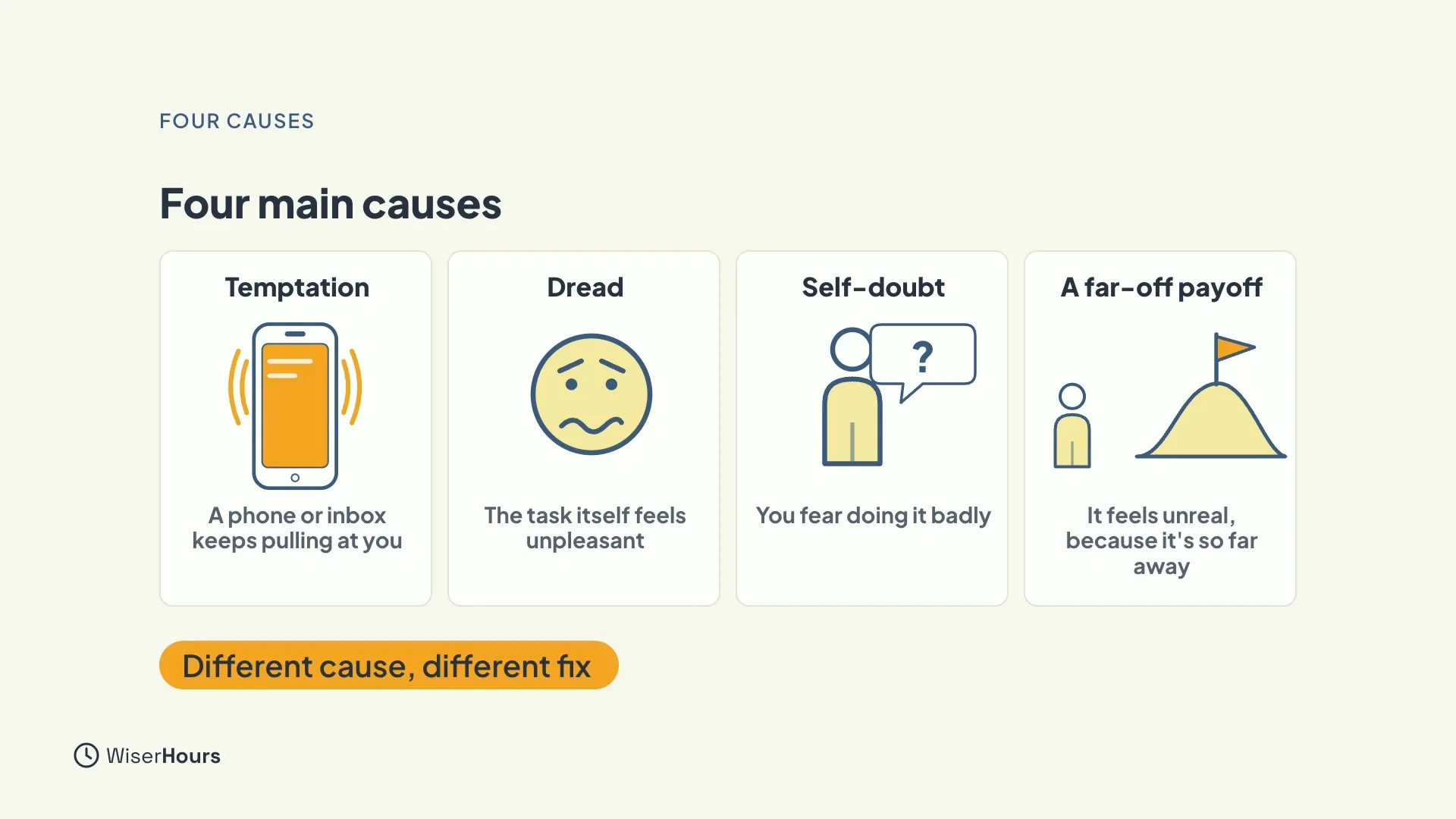
There are four main causes:
- Temptation: a phone or inbox keeps pulling at you.
- Dread: the task itself feels unpleasant.
- Self-doubt: you fear doing it badly.
- A far-off payoff: the reward feels unreal, because it is so far away.
 (opens the full-size picture)
Ask one question
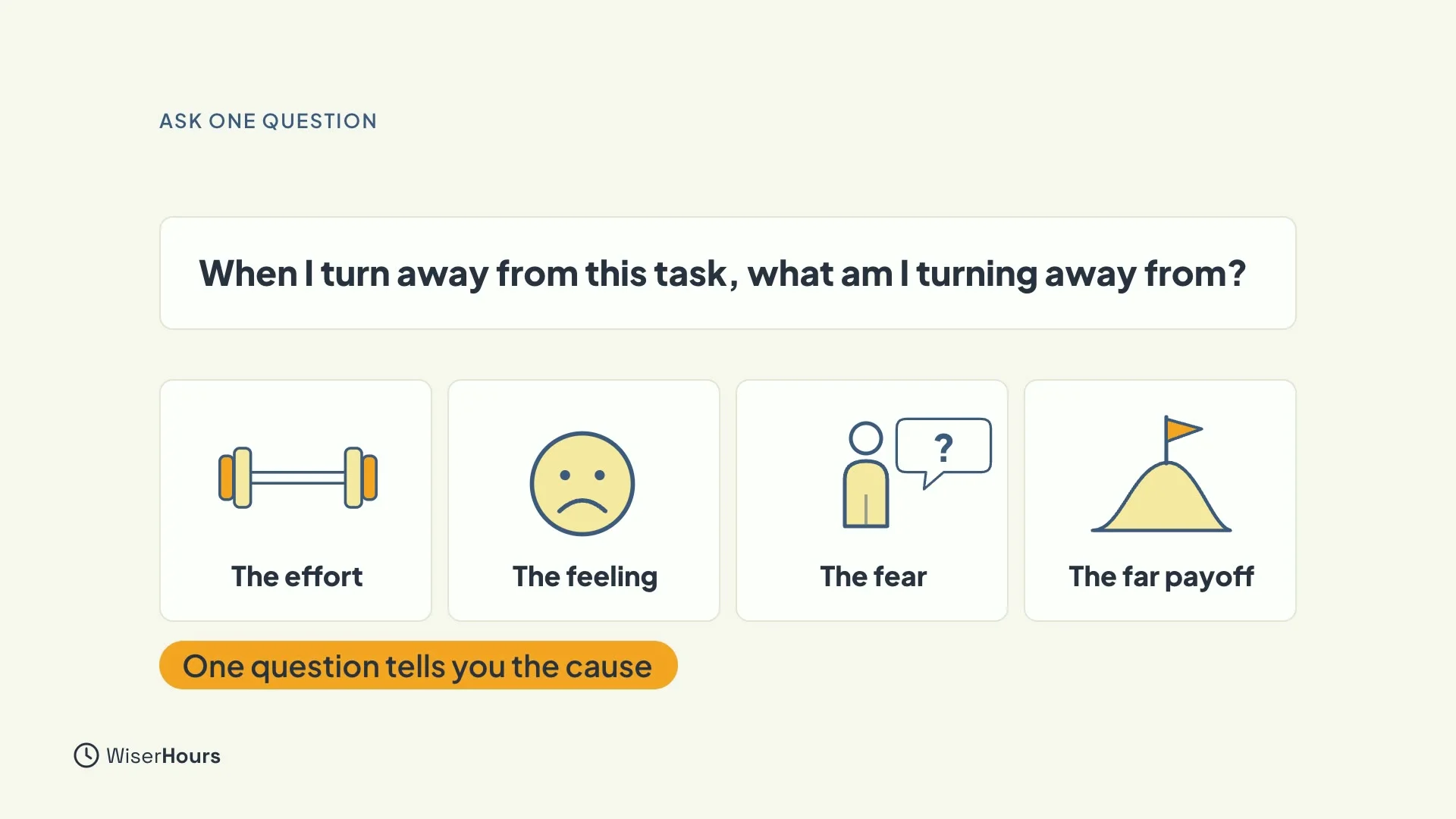
So ask yourself one question: “When I turn away from this task, what am I turning away from?” The effort, the feeling, the fear of doing it badly, or a payoff that feels unreal? Your answer usually points to one of the four causes. You may find that more than one fits, and that is fine. Start with the one that feels strongest.
 (opens the full-size picture)
The easy-task trap
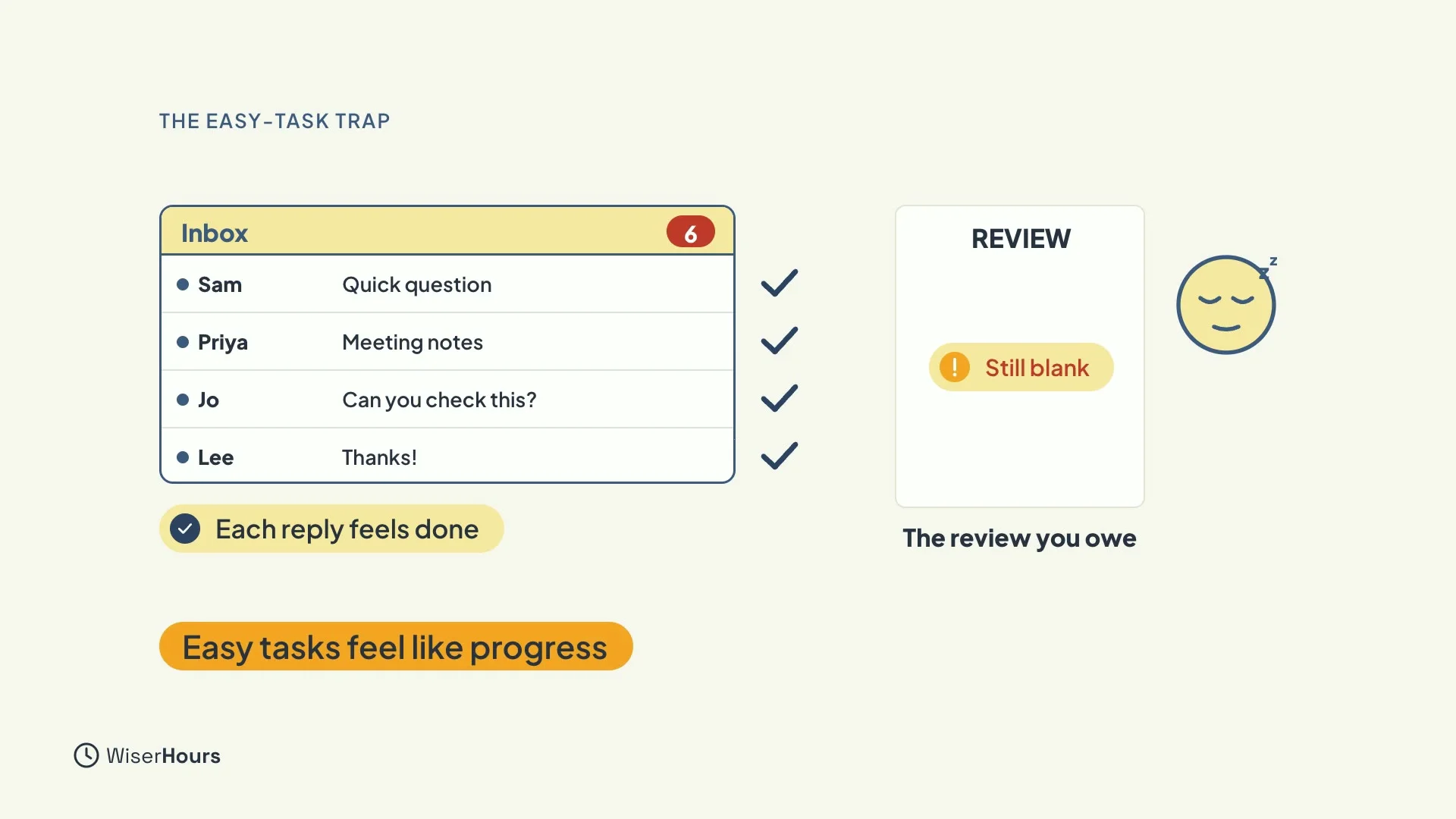
Watch for one common pattern. Picture a morning with a review you owe someone, and a full inbox. Each reply takes a couple of minutes and feels done. By late morning the inbox is half empty, the review is still blank, and you are more tired. Under a heavy load, people drift toward the easier tasks.
 (opens the full-size picture)
Distractions often start with you
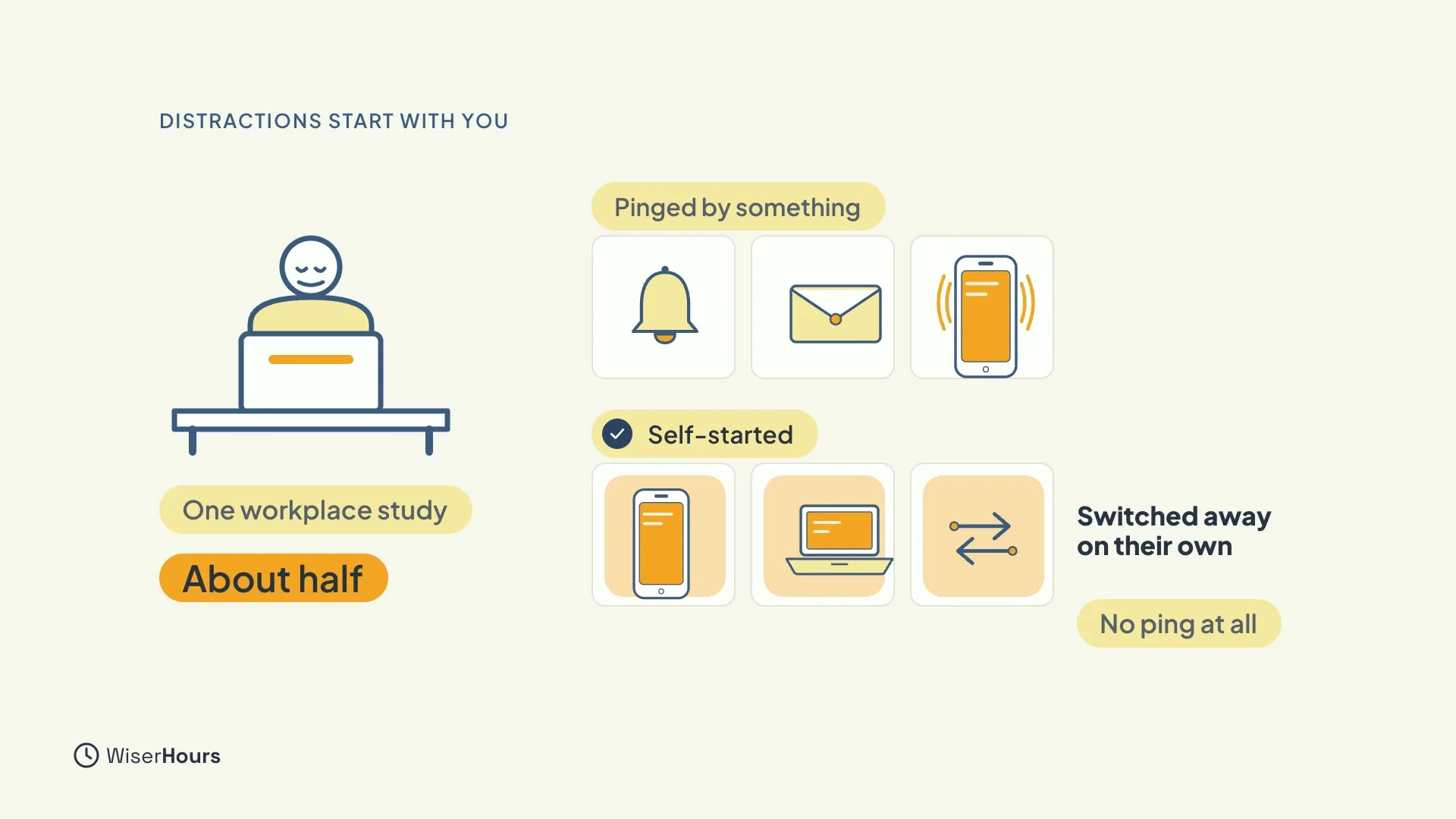
In one workplace study, about half of all interruptions were self-started: people switched away on their own, with no ping at all. So if you blame your phone, check first whether you reached for it yourself.
 (opens the full-size picture)
Keep a one-week log
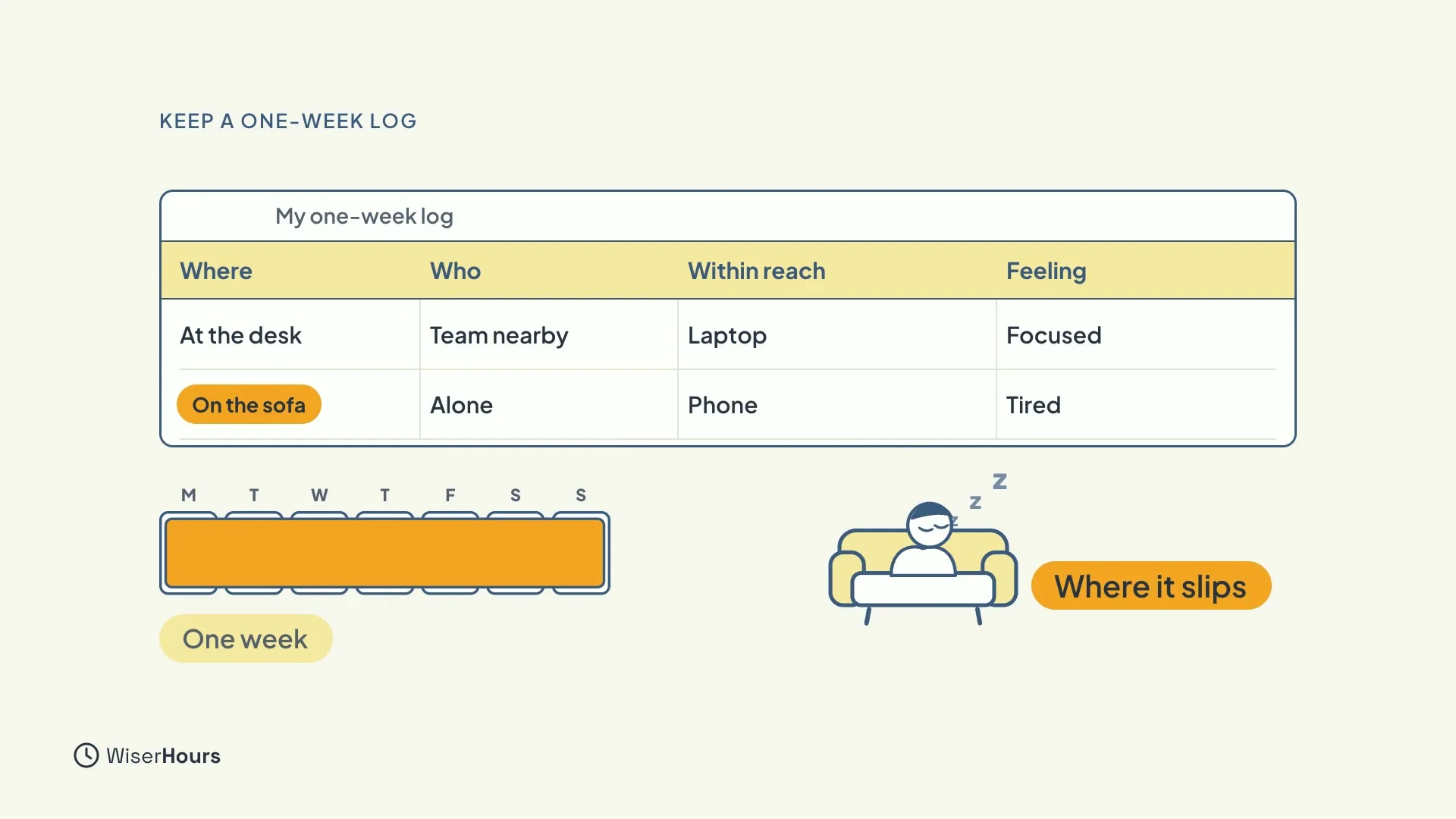
To find your pattern, keep a simple log for one week. Each time the task slips, note where you were, who was around, what was within reach, and how you felt. You may find that it does not fail at the desk, but on the sofa, the moment you sit down.
 (opens the full-size picture)
Notice your excuses
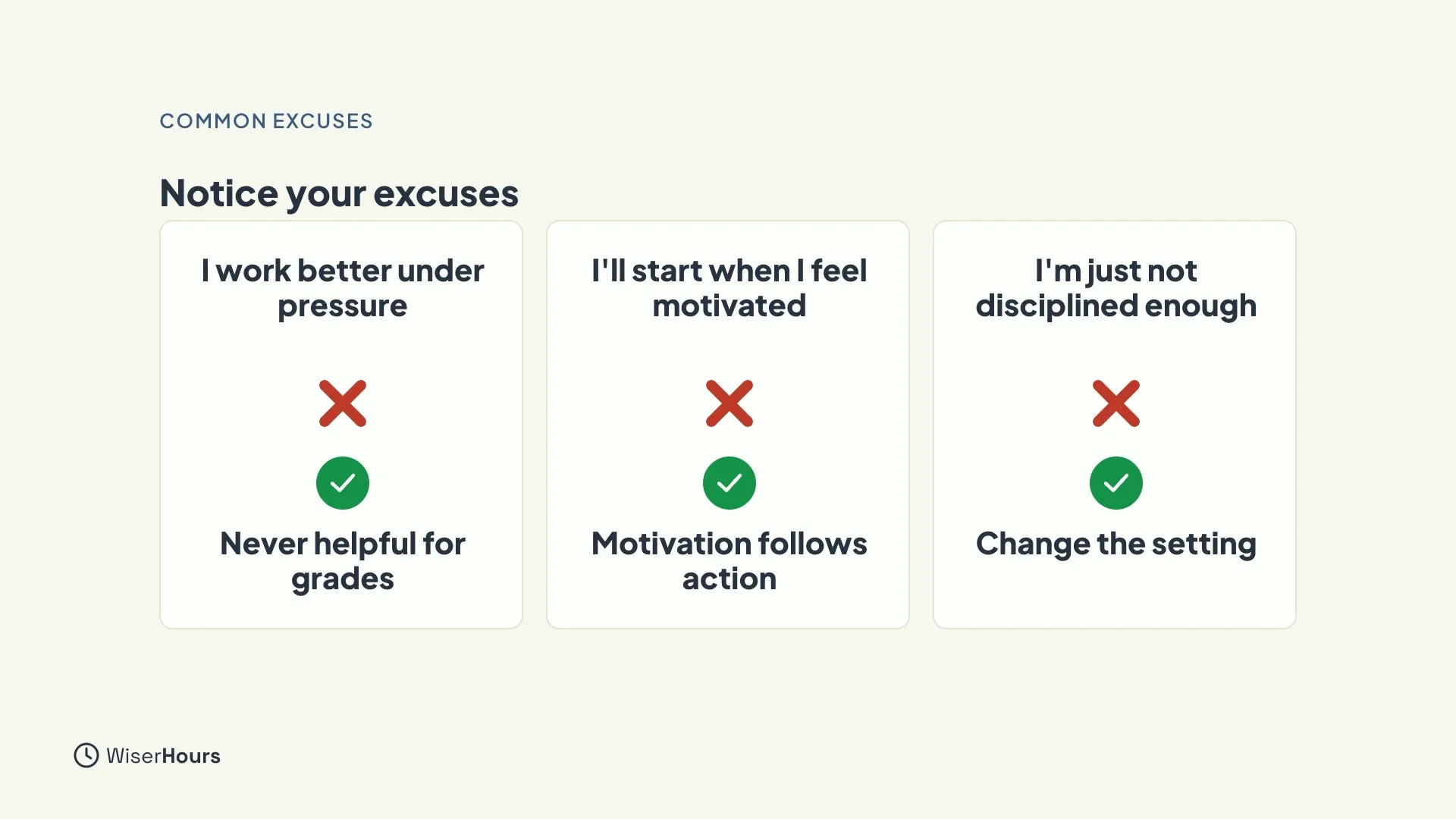
As you log, notice your excuses.
- “I work better under pressure.” For grades, delay is sometimes harmless and never helpful.
- “I will start when I feel motivated.” Motivation often follows action.
- “I am just not disciplined enough.” Your setting may be making delay easy, and settings can be changed.
 (opens the full-size picture)
Not every delay is procrastination
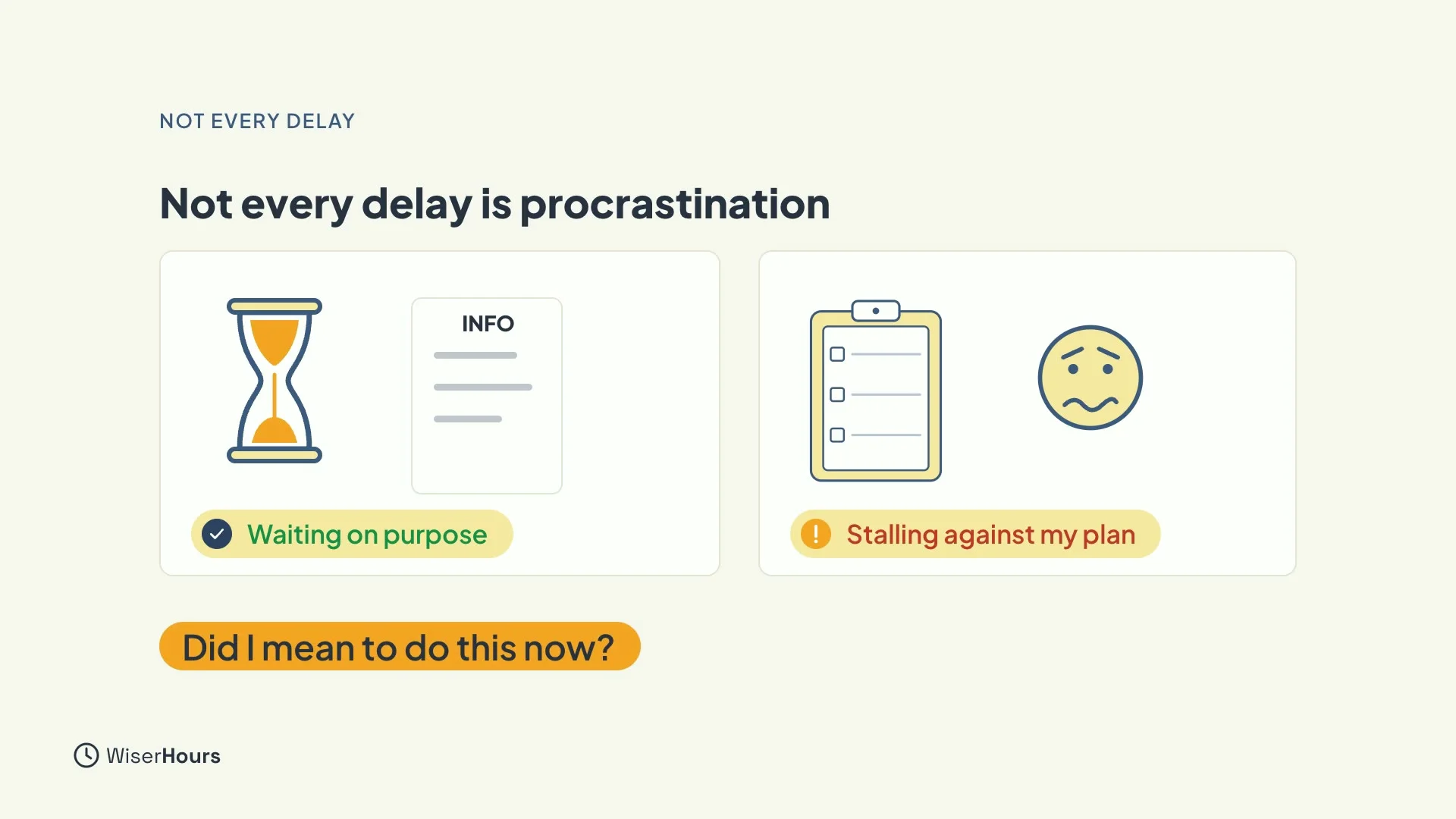
Putting off a decision can sometimes fit what you intend, like waiting for information you need. Procrastination means intending to act, and stalling against that intention. So before you blame yourself, ask: did I actually mean to do this now?
 (opens the full-size picture)
YOUR TURN
Read more
- How to Stop Procrastinating: 15 Strategies Backed by Research: the four causes and the question to ask.
- Eat the Frog: Should You Really Do the Hardest Task First?: the easy-task trap in more depth.
- How to Focus: A Research-Backed Guide to Concentrating on What Matters: self-started interruptions.
- How to Build Self-Discipline From Scratch: the one-week log.
- How to Get Motivated When You Don’t Feel Like Doing Anything: why motivation often follows action.
Read the full lesson script
In this lesson, you'll learn to spot your own delay pattern, because the right fix depends on why you're putting a task off.
Procrastination has more than one cause, so a fix aimed at the wrong one wastes effort. An app blocker does nothing for someone who dreads how a report will be judged. And kind self-talk does little against a phone that lights up all afternoon.
There are four main causes. Temptation, when a phone or inbox keeps pulling at you. Dread, when the task itself feels unpleasant. Self-doubt, when you fear doing it badly. And a payoff that feels unreal, because it's so far away.
So ask yourself one question. When I turn away from this task, what am I turning away from? The effort, the feeling, the fear of doing it badly, or a payoff that feels unreal?
Watch for one common pattern. Picture a morning with a review you owe someone, and a full inbox. Each reply takes a couple of minutes and feels done. By late morning the inbox is half empty, the review is still blank, and you're more tired. Under a heavy load, people drift toward the easier tasks.
Distractions often start with you, too. In one workplace study, about half of all interruptions were self-started: people switched away on their own, with no ping at all.
To find your pattern, keep a simple log for one week. Each time the task slips, note where you were, who was around, what was within reach, and how you felt. You may find it doesn't fail at the desk, but on the sofa, the moment you sit down.
As you log, notice your excuses. I work better under pressure? For grades, delay is sometimes harmless and never helpful. I'll start when I feel motivated? Motivation often follows action. I'm just not disciplined enough? Your setting may be making delay easy, and settings can be changed.
Not every delay is procrastination, though. Putting off a decision can sometimes fit what you intend, like waiting for information you need. Procrastination means intending to act, and stalling against that intention. So before you blame yourself, ask: did I actually mean to do this now?
So remember: four causes, one question, and a one-week log. Before the next lesson, pick one task you're avoiding, and write which cause fits best. Next, you'll learn to make the first step tiny.
MAKE IT A SMALL WIN
Finished this lesson?
Mark it complete to save your progress on this device.