Understand it · Lesson 2 of 11
Why Later Wins: The Pull of Now and How to Beat It
See why near rewards beat far ones, why we guess time too short, and how picturing a good moment after the task can help.
 Video coming soon
Why does the video win over the exam, again and again, even when you know better? This lesson shows why “later” keeps beating “now”, and gives you one simple way to bring the future a little closer.
Near beats far
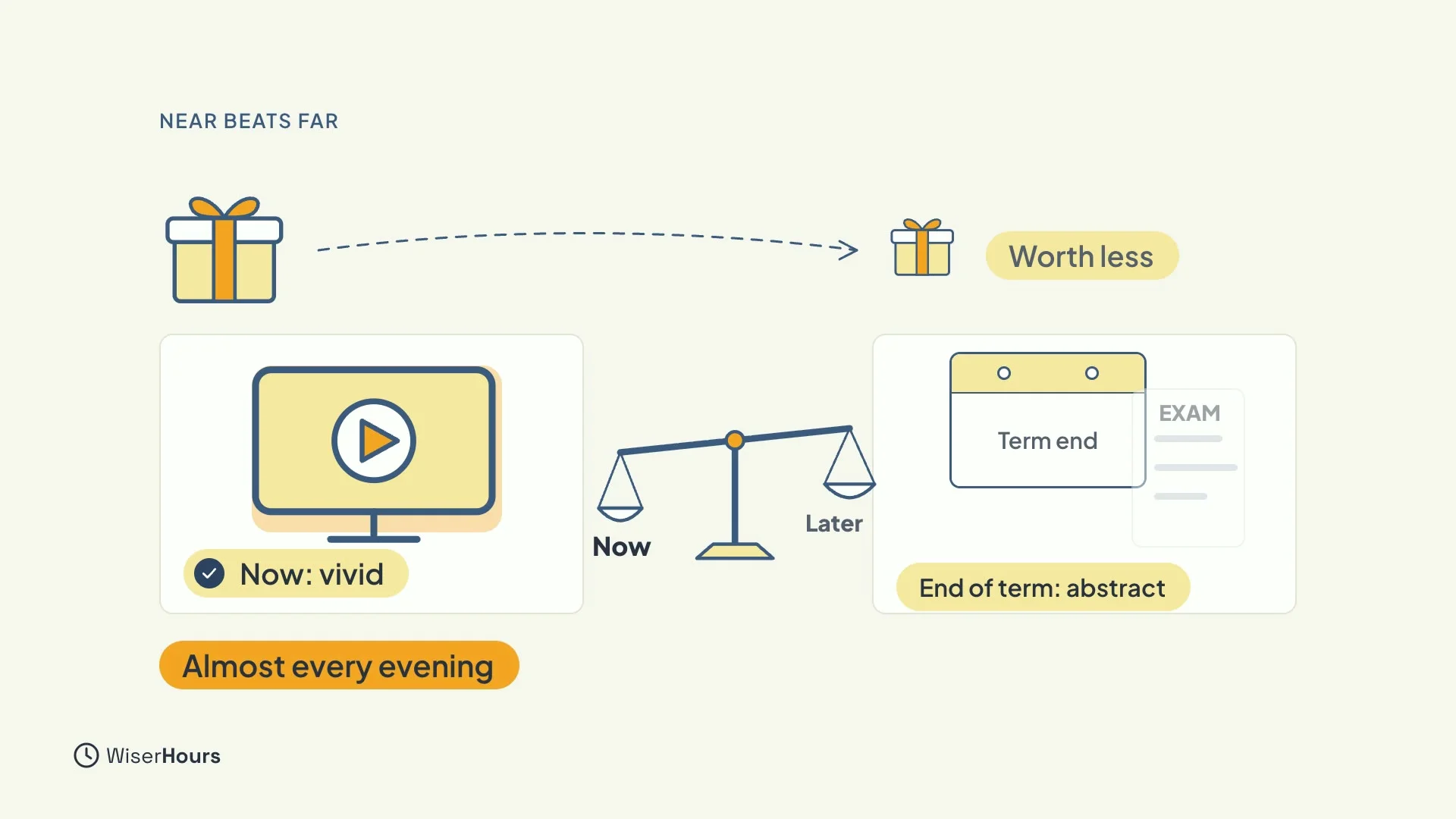
Here is the core idea. A reward feels less valuable the further away it is. The reward in front of you is vivid, and the one later on is abstract. So a video that pays off now beats an exam that pays off at the end of term, almost every evening.
 (opens the full-size picture)
What makes a task pull
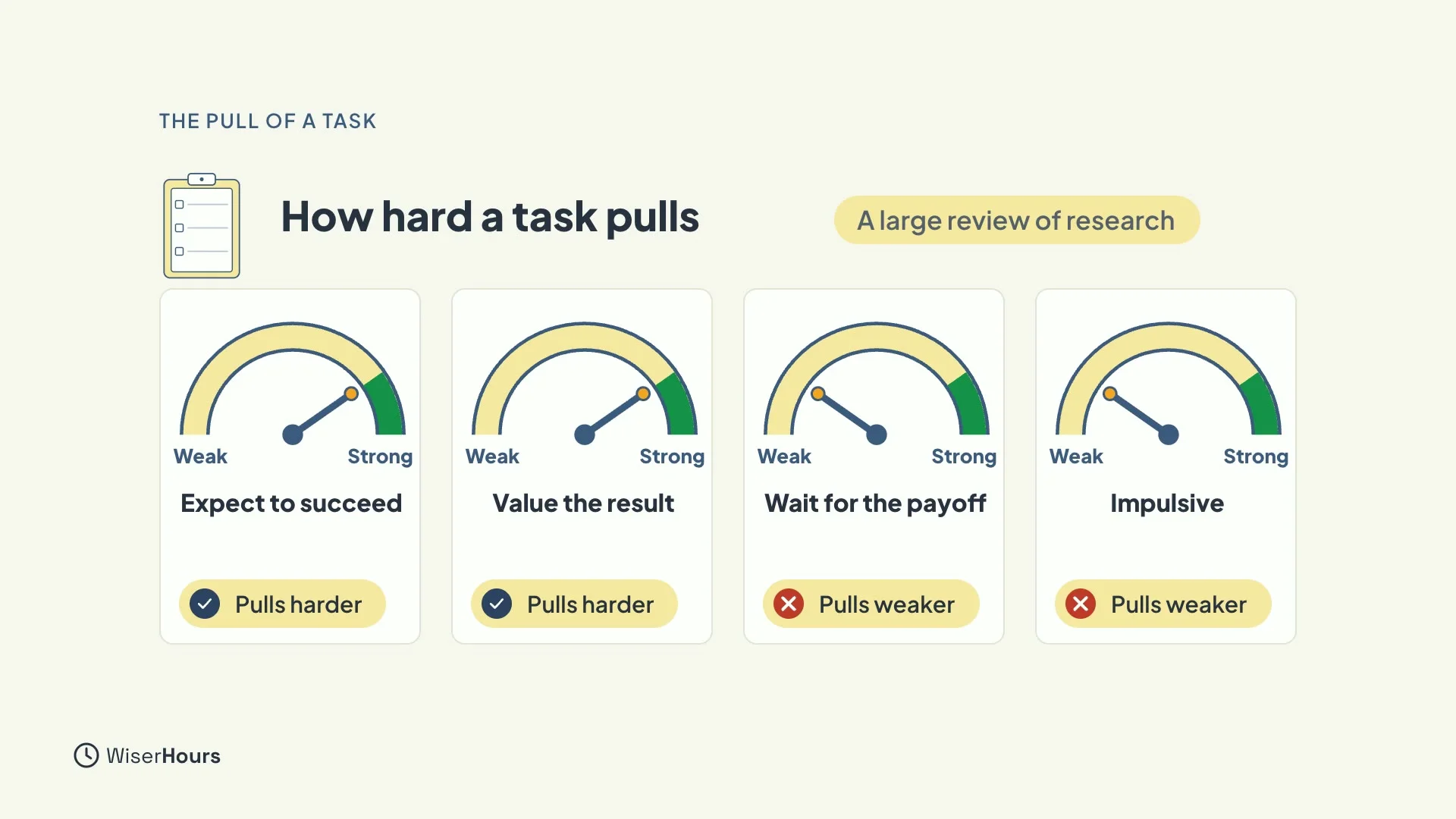
A large review of research put it like this. A task pulls harder the more you expect to succeed and the more you value the result. It pulls weaker the longer you must wait for the payoff, and the more impulsive you are.
 (opens the full-size picture)
How an essay gets left late
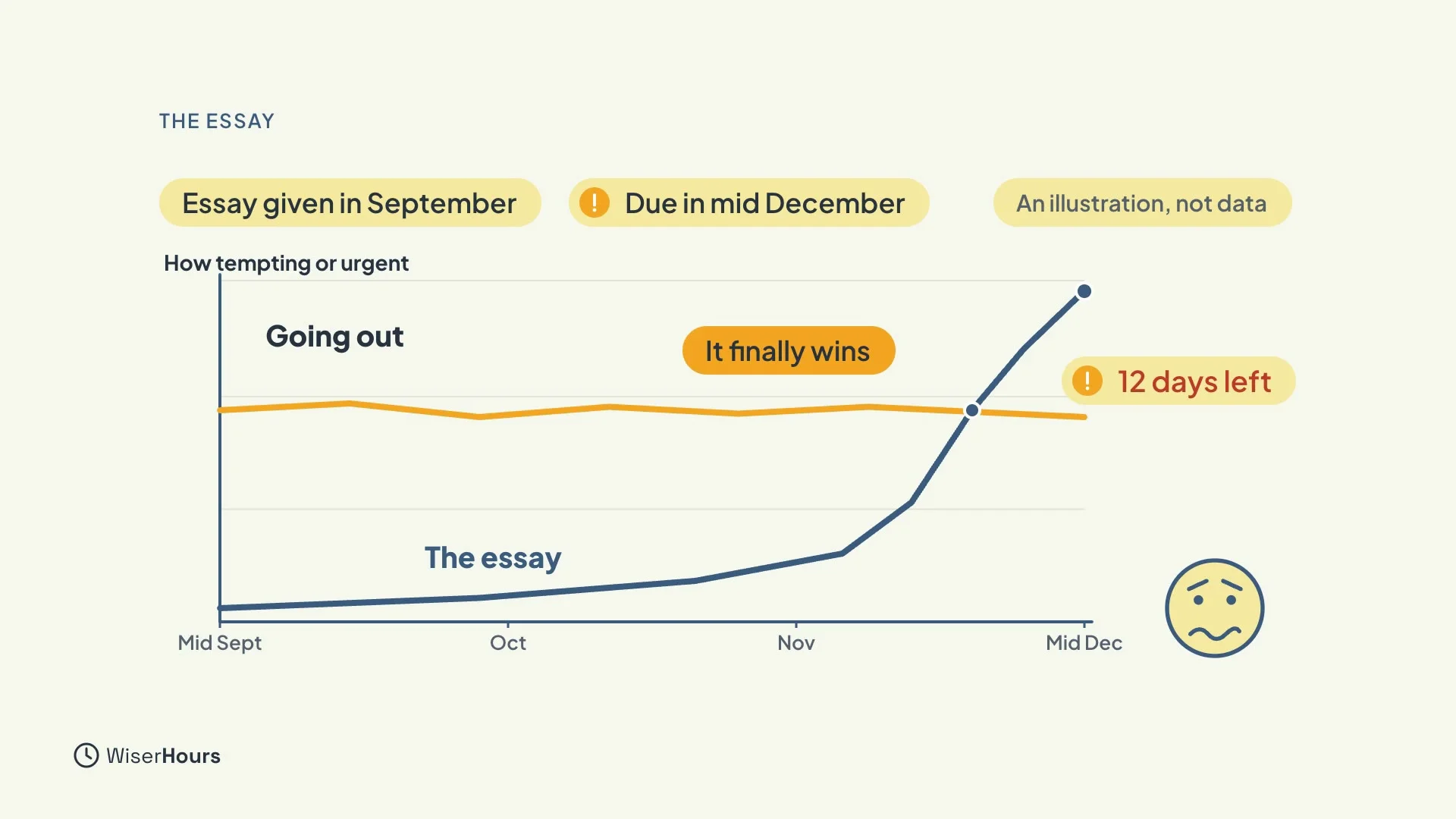
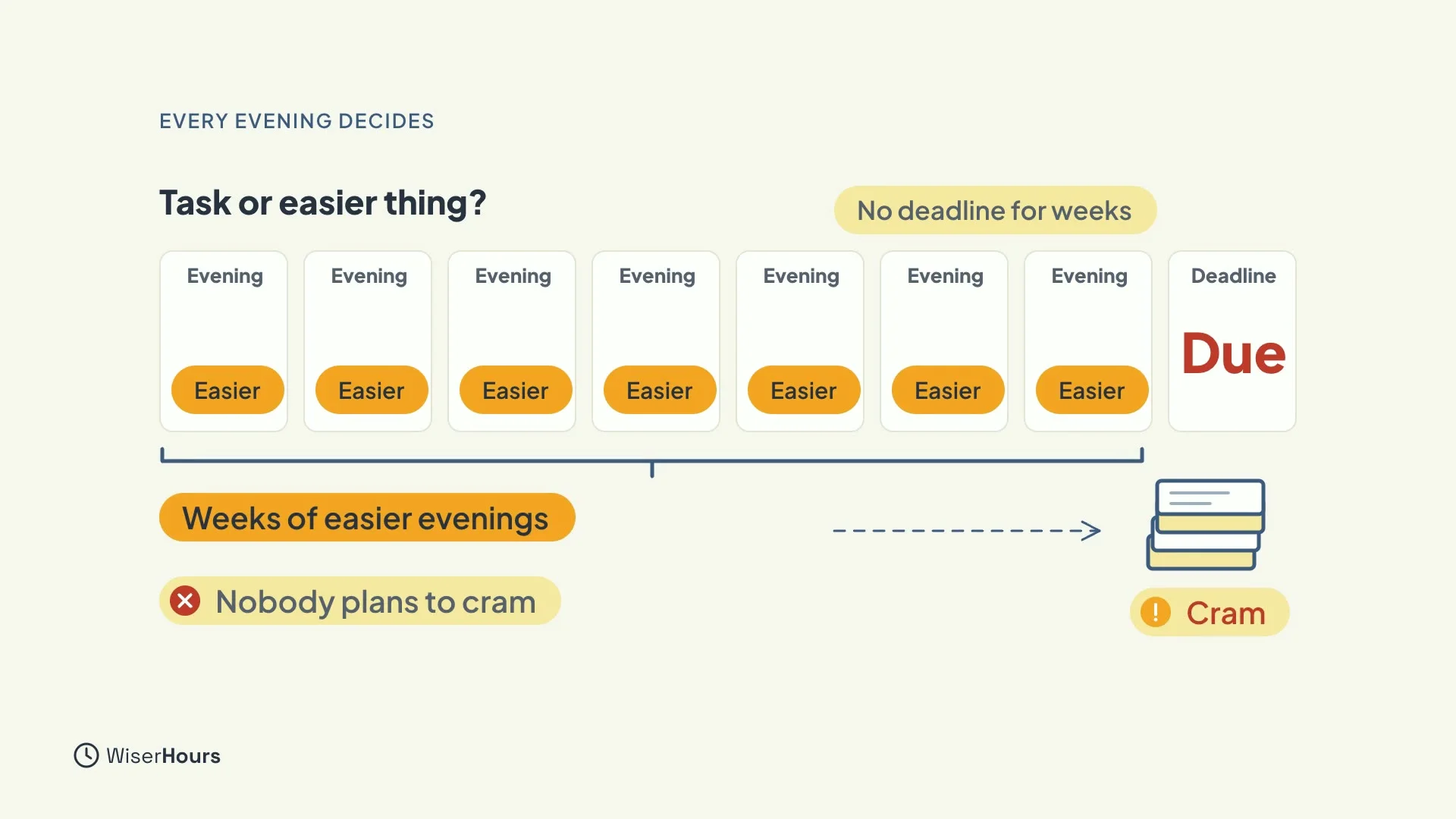
Picture a student given an essay in September, due in mid December. Going out pays off tonight, so it stays tempting all term. The essay only starts to feel urgent as the deadline gets close. It finally wins in early December, leaving about twelve days of rushed work. That is an illustration, not data, but it may feel familiar.
 (opens the full-size picture)
For weeks there is no deadline, so every evening is a fresh decision, made against something easier. Nobody plans to cram. Cramming is what is left after weeks of evenings decided the easy way.
 (opens the full-size picture)
We guess time too short
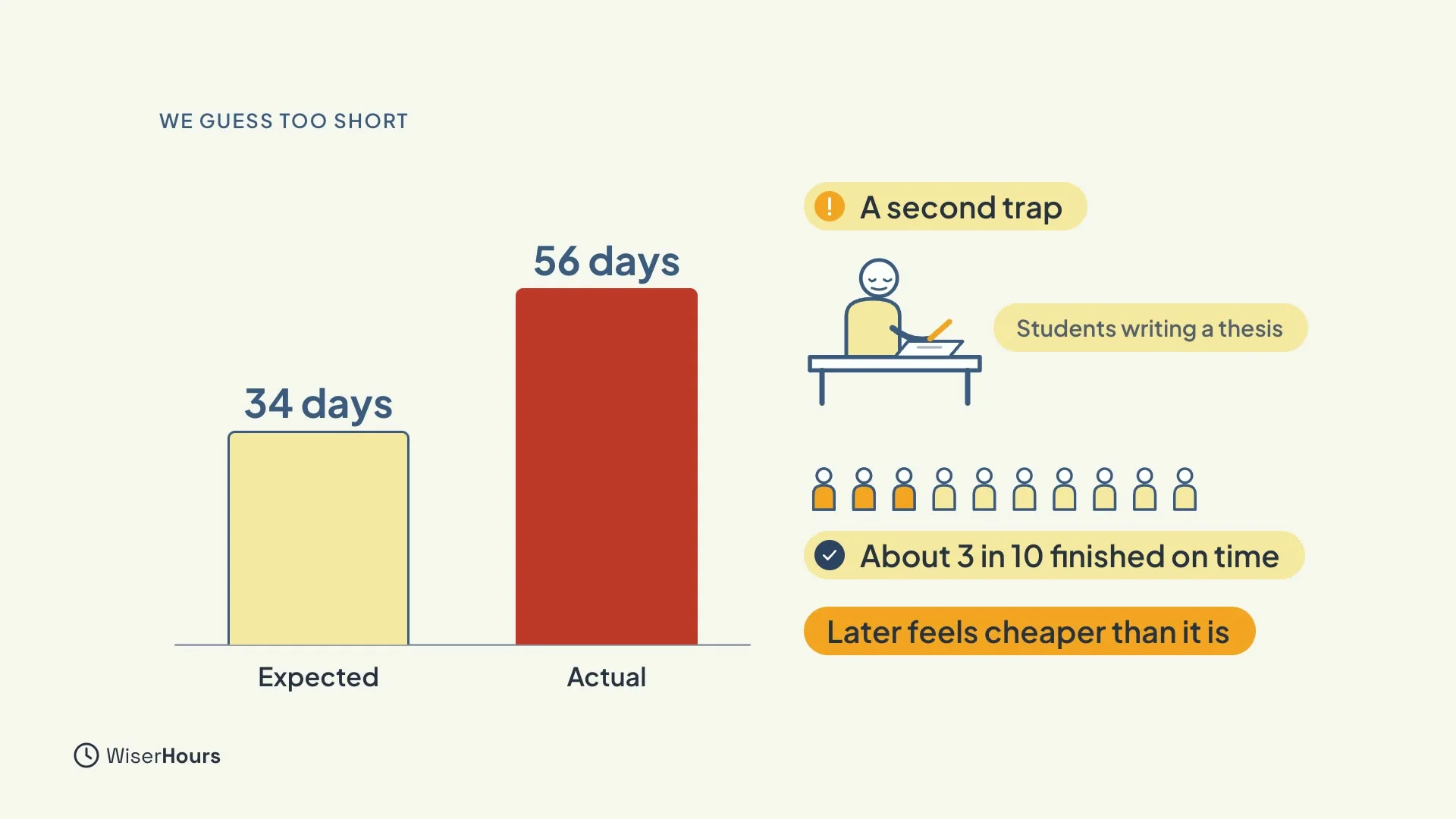
There is a second trap: we guess too short. In one study, students writing a thesis expected to finish in about 34 days. They took about 56. Only about three in ten finished by the date they predicted. So later feels cheaper than it really is.
 (opens the full-size picture)
Your future self
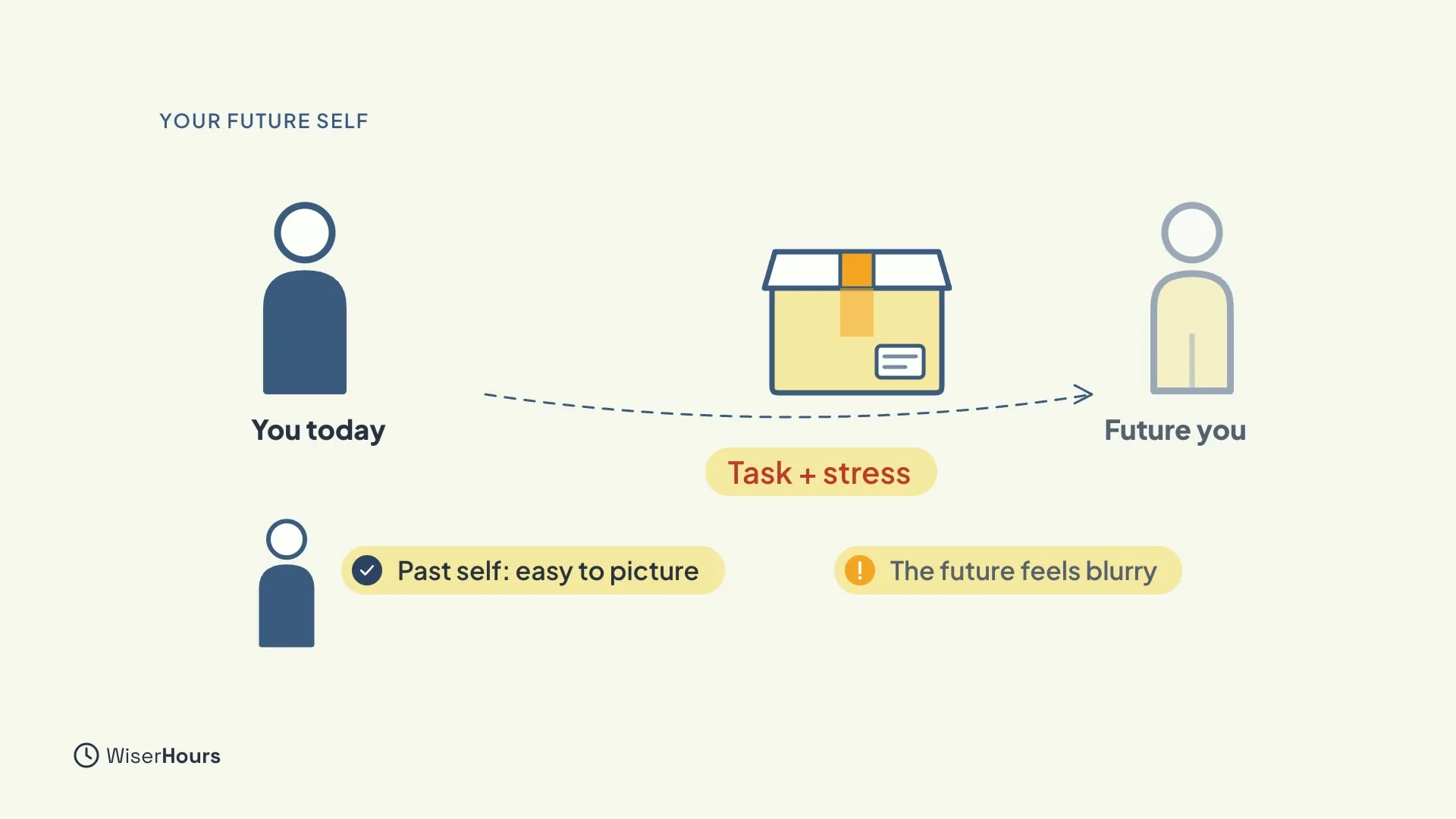
When you delay, your future self inherits both the task and the stress. And picturing that future self is harder than remembering your past self, so the cost stays blurry. That is one more reason the pull of now feels so strong.
 (opens the full-size picture)
Bring the future closer
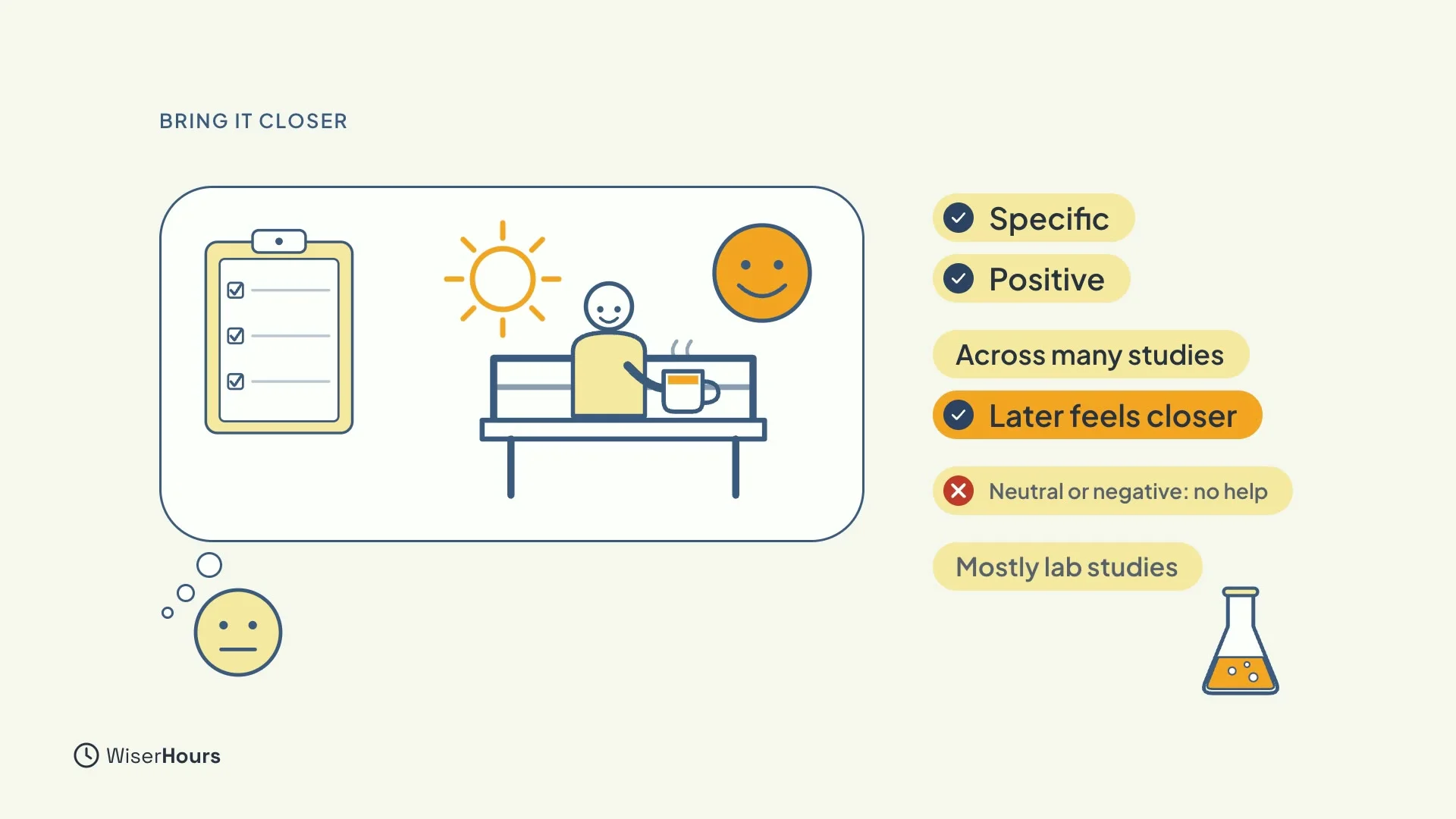
Here is one tool with some support. Picture, in detail, a specific good moment after the task is done. Where you are, what you will do, how it feels. Across many studies, imagining a positive future scene made later rewards feel less distant. Neutral or negative scenes did not help, and most tests were in the lab, so treat it as a helpful nudge, not a guarantee.
 (opens the full-size picture)
The pull of now is real
This is not only about homework. In a field study, people who strongly preferred having things now were more likely to carry credit card debt, and more of it, even after accounting for their income. The pull of now is real and measurable, so going easy on yourself about feeling it is fair.
YOUR TURN
Read more
- Why Do We Procrastinate? The Psychology Explained: how expectation, value, delay and impulsiveness shape the pull of a task.
- Delayed Gratification: How to Get Better at Waiting for What You Want: why near rewards feel bigger, and imagining the future.
- How to Stop Procrastinating on Studying: the essay and the evenings that decide.
- Time Management for Beginners: Where to Start and What to Ignore: why we guess time too short.
Read the full lesson script
In this lesson, you'll see why later always seems to win against now, and one simple way to bring the future a little closer.
Here's the core idea. A reward feels less valuable the further away it is. The reward in front of you is vivid, and the one later on is abstract. So a video that pays off now beats an exam that pays off at the end of term, almost every evening.
A large review of research put it like this. A task pulls harder the more you expect to succeed and the more you value the result. It pulls weaker the longer you must wait for the payoff, and the more impulsive you are.
Picture a student given an essay in September, due in mid December. Going out pays off tonight, so it stays tempting all term. The essay only starts to feel urgent as the deadline gets close. It finally wins in early December, leaving about twelve days of rushed work. That's an illustration, not data, but it may feel familiar.
For weeks there's no deadline, so every evening is a fresh decision, made against something easier. Nobody plans to cram. Cramming is what's left after weeks of evenings decided the easy way.
There's a second trap. We guess too short. In one study, students writing a thesis expected to finish in about thirty-four days. They took about fifty-six. Only about three in ten finished by the date they predicted. So later feels cheaper than it really is.
When you delay, your future self inherits both the task and the stress. And picturing that future self is harder than remembering your past self, so the cost stays blurry.
Here's one tool with some support. Picture, in detail, a specific good moment after the task is done. Where you are, what you'll do, how it feels. Across many studies, imagining a positive future scene made later rewards feel less distant. Neutral or negative scenes didn't help, and most tests were in the lab.
The same pull shows up with money. In a field study, people who strongly preferred having things now were more likely to carry credit card debt, and more of it, even after accounting for their income. It's one sign that the pull of now is real, and measurable.
So remember: near rewards feel louder, we guess time too short, and a vivid picture can bring later closer. Before the next lesson, write how your future self will feel when your avoided task is done. Next, you'll spot your own delay pattern.
MAKE IT A SMALL WIN
Finished this lesson?
Mark it complete to save your progress on this device.