When it's hard · Lesson 10 of 11
How to Restart After a Slip and Get Out of a Slump
Slips are normal. Learn to protect the day after a miss, forgive yourself, restart small and handle flat days without giving up.
 Video coming soon
Almost everyone slips. This lesson is about what you do next, because slipping is part of the process, not the end of it. You will see why one miss matters so little, how to protect the day after, and how to restart without guilt.
Slips are normal
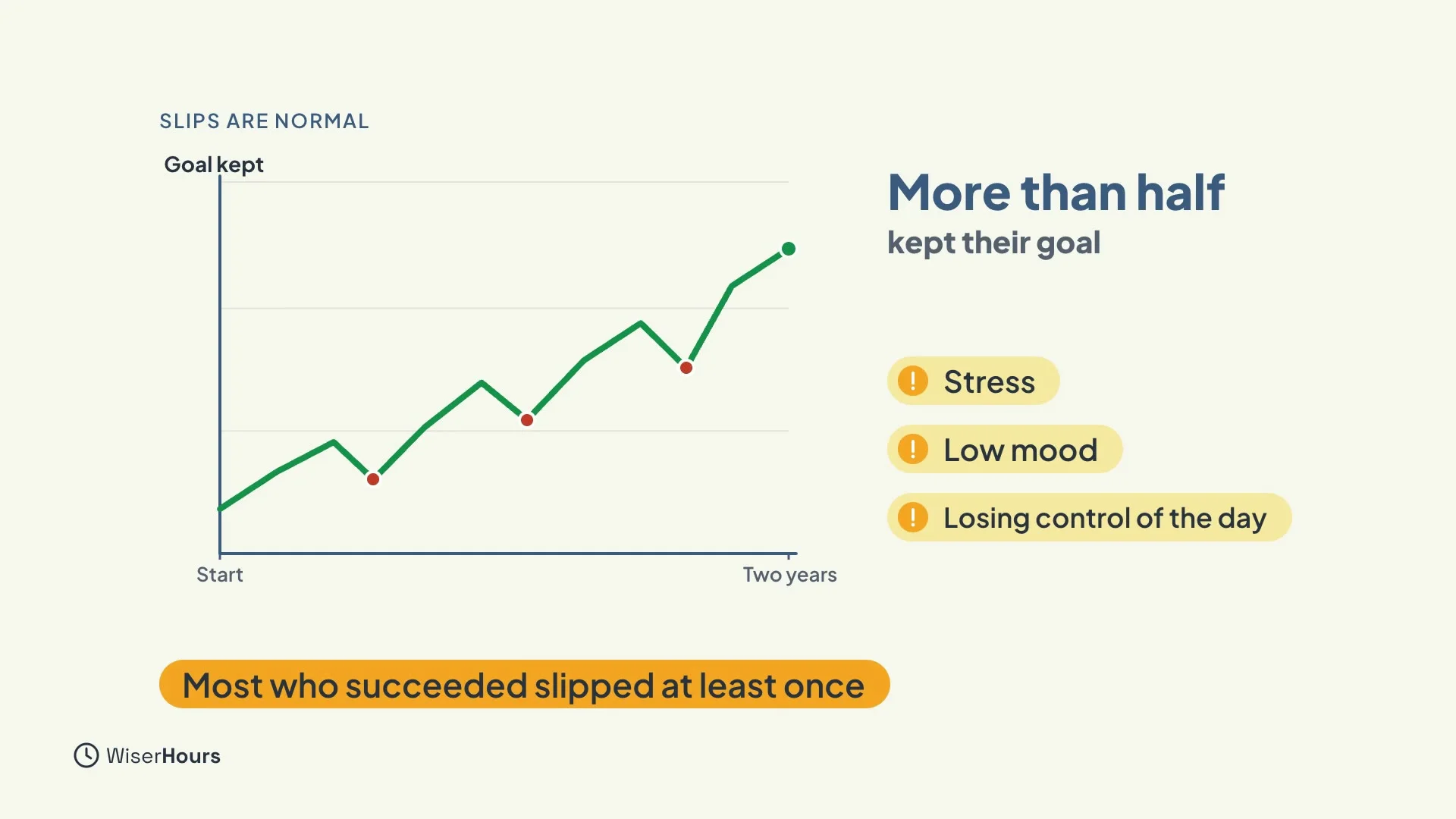
In one long study of New Year’s resolutions, more than half of the people who kept their goal for two years had slipped at least once. Slips often followed stress, low mood, or losing control of the day.
 (opens the full-size picture)
One miss barely matters
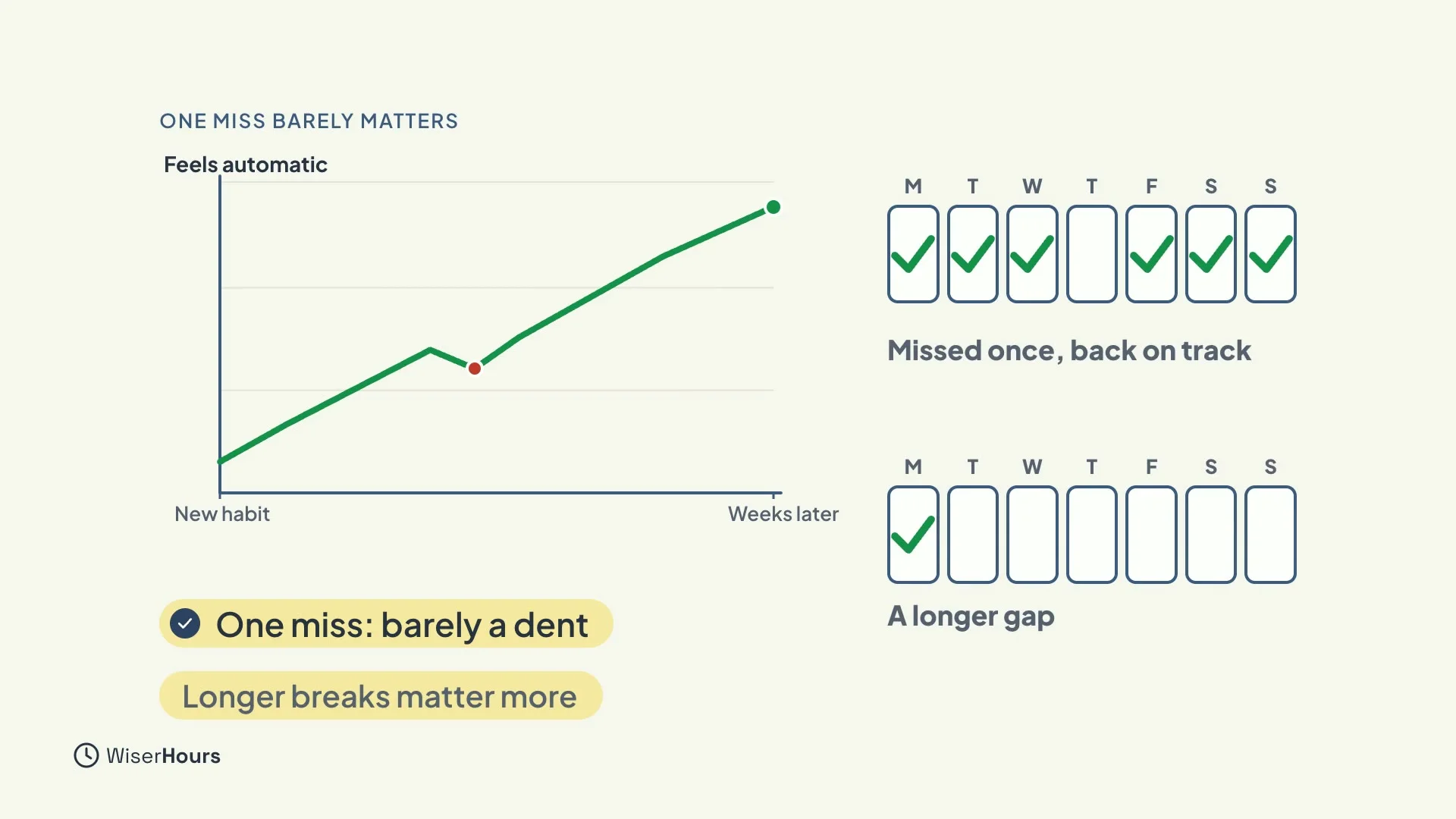
In a study of new daily habits, one missed day hardly changed how automatic the habit felt, and progress carried on once people resumed. Longer breaks may matter more.
 (opens the full-size picture)
The gap is the risk
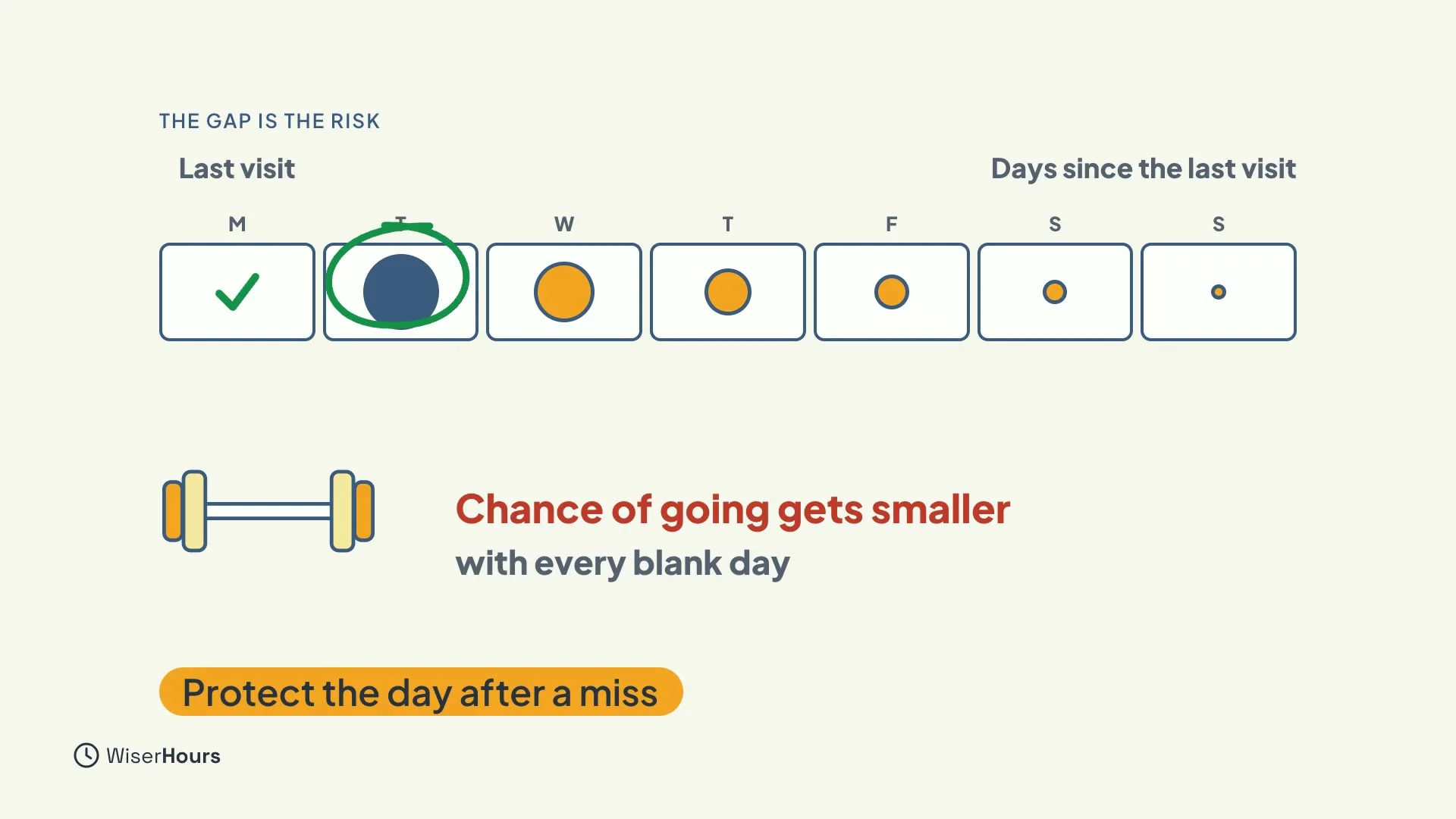
The real risk is the gap getting longer. In gym records, the longer since someone’s last visit, the less likely they were to go on any given day. So the day after a miss is the one to protect.
 (opens the full-size picture)
Forgive, then plan
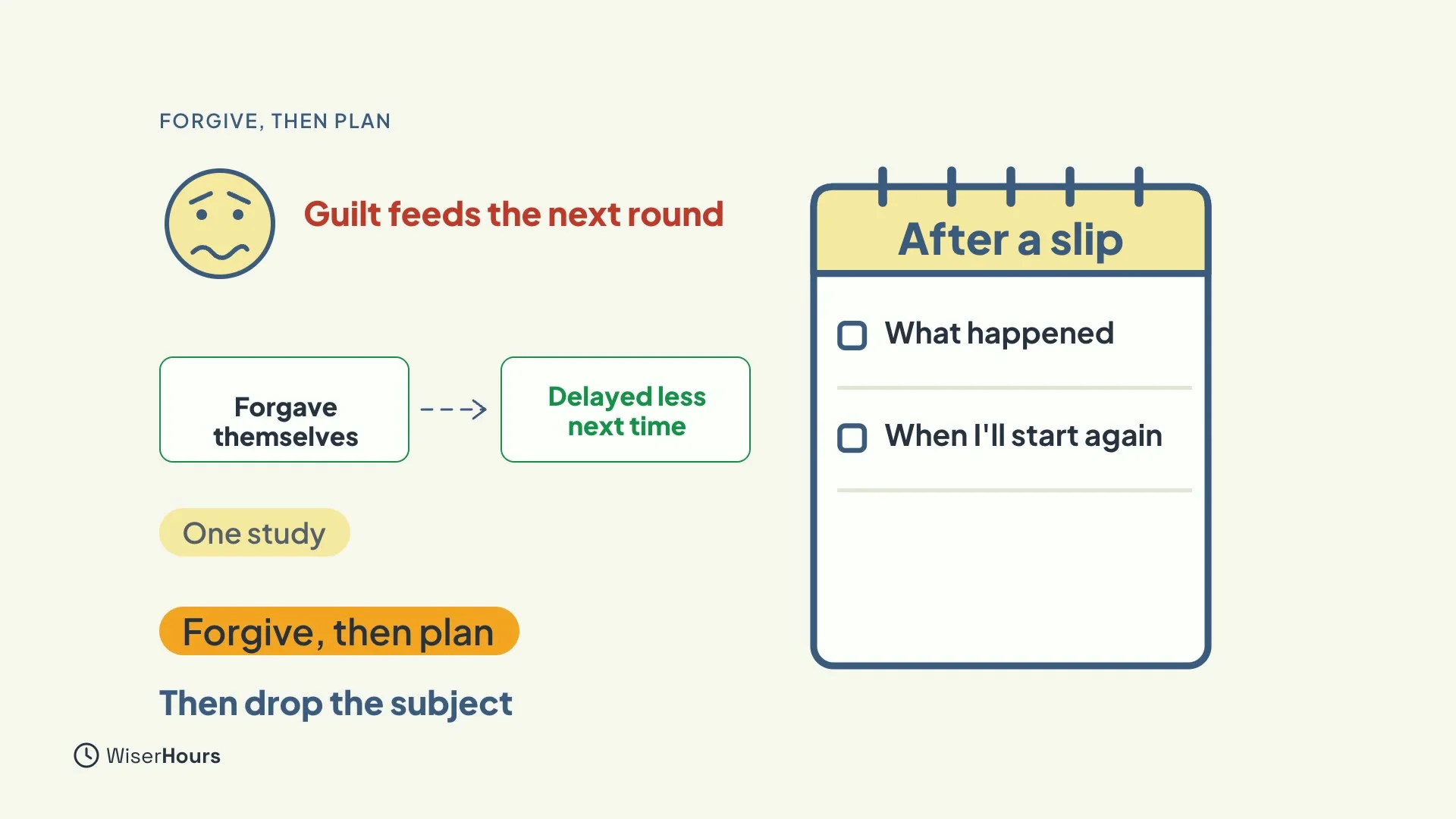
Guilt about past delay can feed the next round. In one study, students who forgave themselves for putting off studying before a first exam procrastinated less before the second. That study only observed students, so it shows a link, not a guarantee. After a slip, write one line on what happened, and one on when you will start again. Then drop the subject.
 (opens the full-size picture)
Fix the setup, not yourself
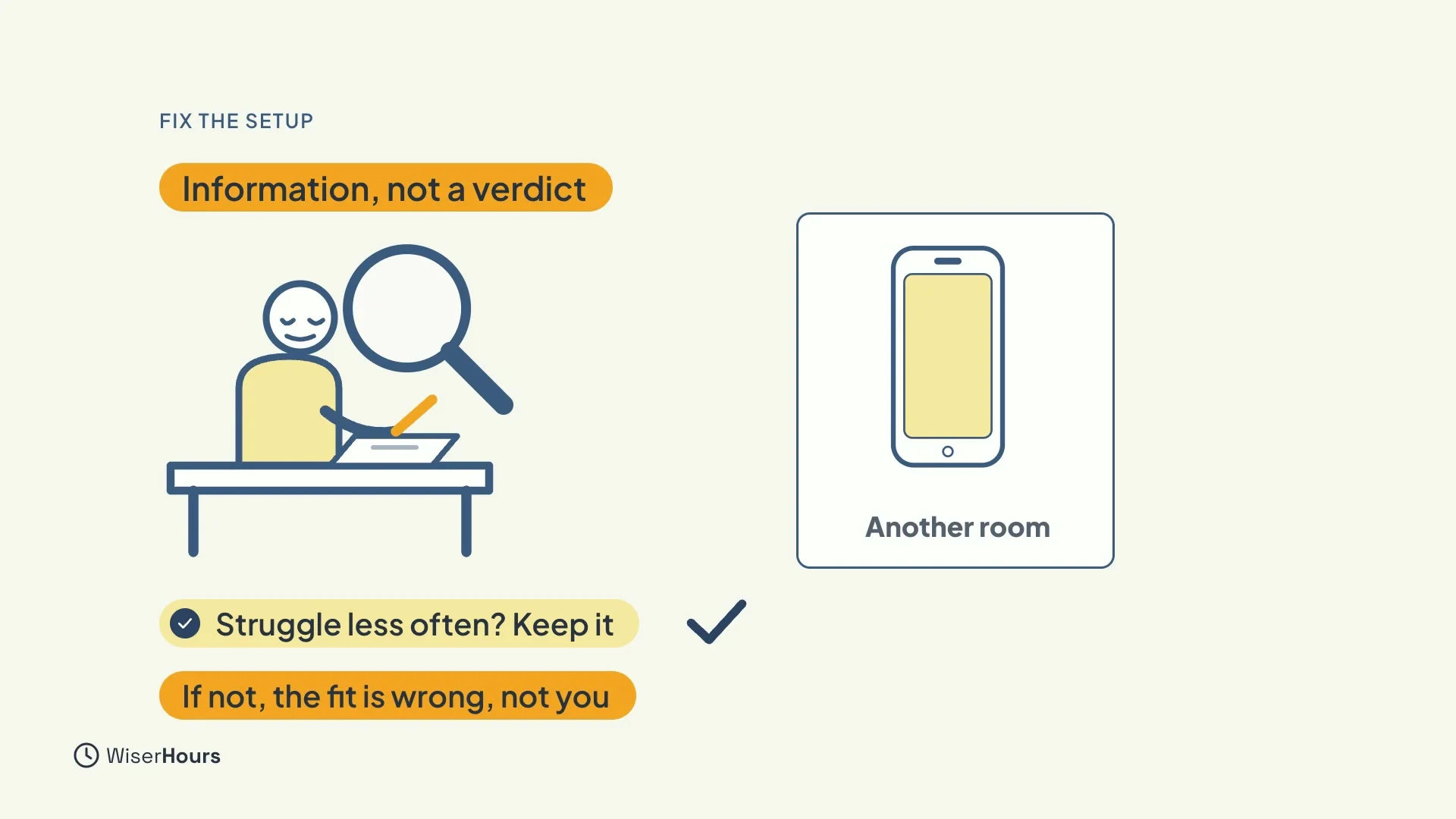
Treat a lapse as information about your setup, not about your character. Look at where it slipped, and change one thing about that place, such as moving your phone to another room. If you struggle less often, keep the change. If not, the fit is wrong, not you.
 (opens the full-size picture)
Settle your restart in advance
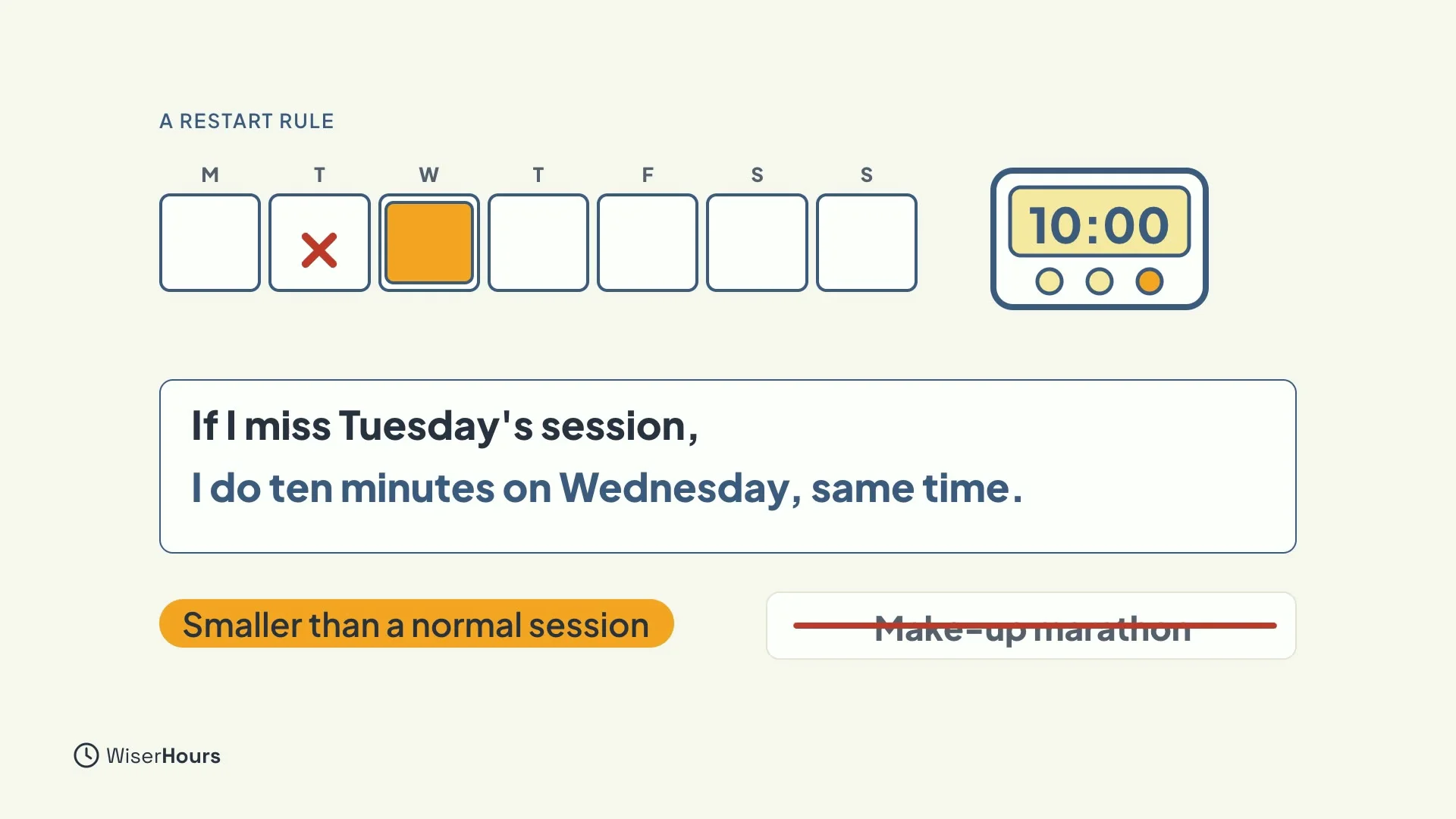
Decide your restart before you need it, and make it smaller than a normal session, so it is easy to agree to. For example: “If I miss Tuesday’s session, I do ten minutes on Wednesday at the same time.” No make-up marathon is needed.
 (opens the full-size picture)
Untested idea
Making the restart smaller than a normal session is a sensible idea, but it has not been tested as a rule. Treat it as an experiment and adjust it to suit you.
Fresh starts and flat days
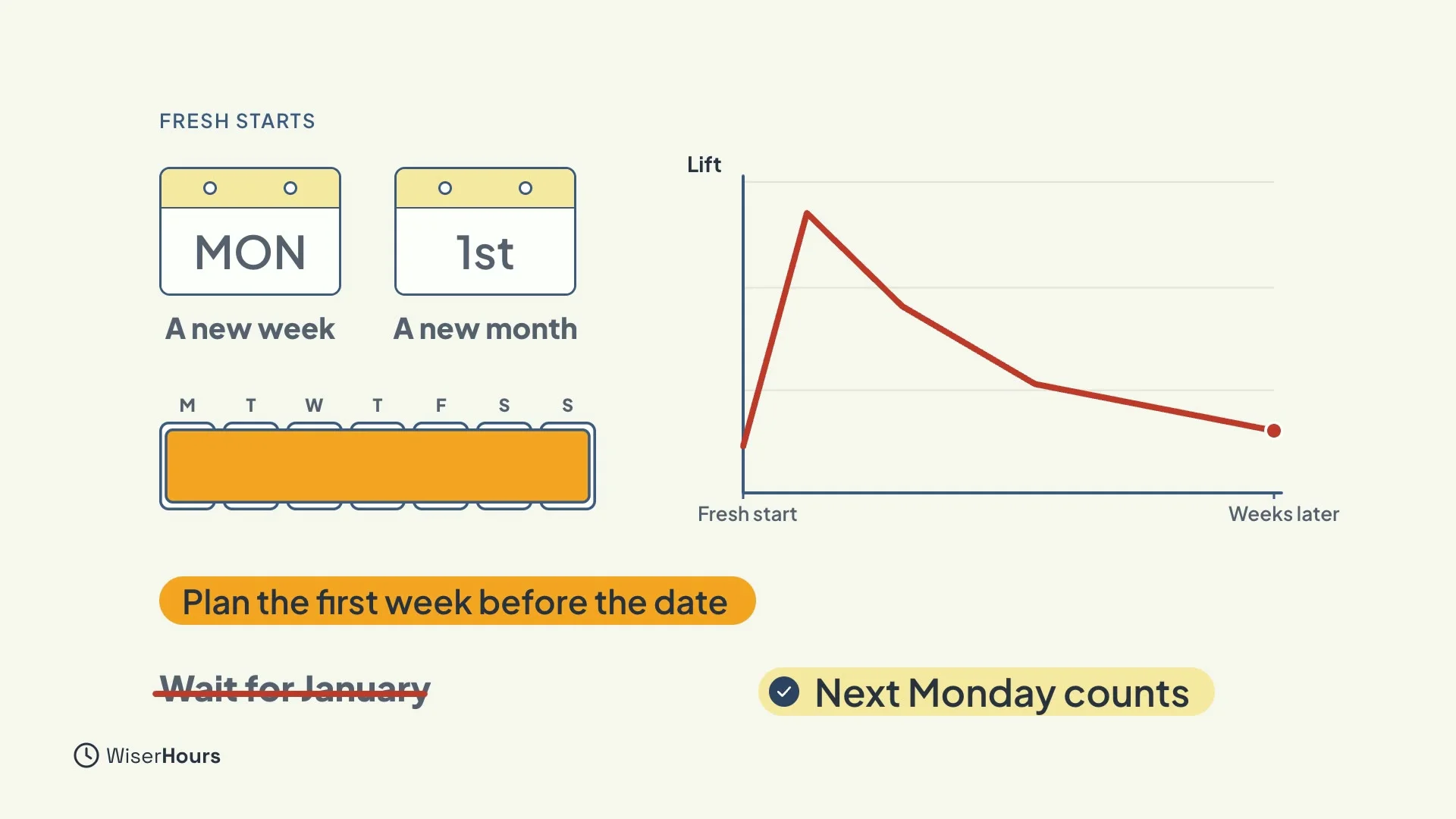
Fresh starts can help, like a new week or a new month. People tend to begin goals around these dates. But the lift fades, so have your first week planned before the date arrives. And you do not need to wait for January. Next Monday counts.
 (opens the full-size picture)
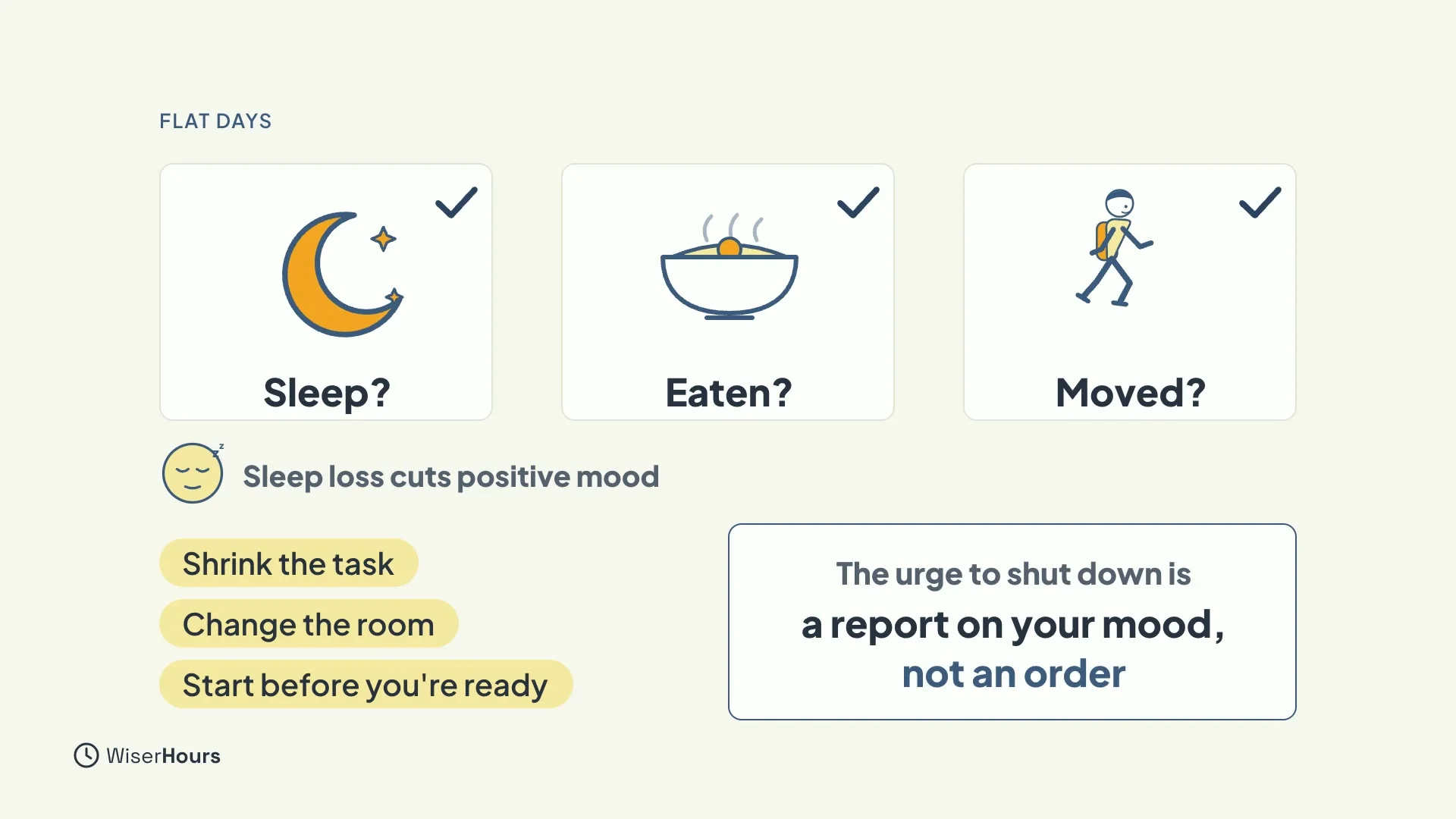
On a flat day, run a quick check. Did I sleep, have I eaten, have I moved today? Sleep loss in particular cuts positive mood. Then pick one or two small steps: shrink the task, change the room, or start before you feel ready. Read the urge to shut down as a report on your mood, not an order.
 (opens the full-size picture)
YOUR TURN
Read more
- How to Stop Procrastinating: 15 Strategies Backed by Research: self-forgiveness and the cost of guilt.
- How to Build a New Habit: A Step-by-Step Guide: how a missed day affects a new habit.
- Self-Discipline Explained: Skill, Trait, or Just a Well-Designed Life?: treating a lapse as information about your setup.
- How to Get Motivated When You Don’t Feel Like Doing Anything: the flat-day check and small steps.
- New Year’s Resolutions: Why They Fail and How to Fix Them: slips and fresh starts.
Read the full lesson script
In this lesson, you'll learn how to restart after you slip, because slipping is part of the process, not the end of it.
Slips are normal. In one long study of New Year's resolutions, more than half of the people who kept their goal for two years had slipped at least once. Slips often followed stress, low mood, or losing control of the day.
Missing once barely matters. In a study of new daily habits, one missed day hardly changed how automatic the habit felt, and progress carried on once people resumed. Longer breaks may matter more.
The real risk is the gap getting longer. In gym records, the longer since someone's last visit, the less likely they were to go on any given day. So the day after a miss is the one to protect.
Guilt about past delay can feed the next round. In one study, students who forgave themselves for putting off studying before a first exam procrastinated less before the second. After a slip, write one line on what happened, and one on when you'll start again. Then drop the subject.
Treat a lapse as information about your setup, not about your character. Look at where it slipped, and change one thing about that place. If the struggle comes up less often, keep the change. If not, the fit is wrong, not you.
Settle your restart in advance. Make it smaller than a normal session, so it's easy to agree to. If I miss Tuesday's session, I do ten minutes on Wednesday at the same time. No make-up marathon needed.
Fresh starts can help, like a new week or a new month. People tend to begin goals around these dates. But the lift fades, so have your first week planned before the date arrives. And you don't need to wait for January. Next Monday counts.
On a flat day, run a quick check. Did I sleep, have I eaten, have I moved today? Sleep loss in particular cuts positive mood. Then pick one or two small steps: shrink the task, change the room, or start before you feel ready. Read the urge to shut down as a report on your mood, not an order.
So remember: slips are normal, protect the day after a miss, and restart small. Before the next lesson, write your restart rule for the next time you slip. Next, you'll make your own anti-procrastination plan.
MAKE IT A SMALL WIN
Finished this lesson?
Mark it complete to save your progress on this device.