When it's hard · Lesson 11 of 11
Your Anti-Procrastination Plan and When to Get Help
Match the fix to the cause, write an if-then plan, use a six-step checklist, and learn when trouble starting may need more than self-help.
 Video coming soon
This is the last lesson. You will pull everything together into one simple plan for the next time you sit down to a task you have been avoiding. You will also learn when trouble starting may need more than self-help.
Match the fix to the cause
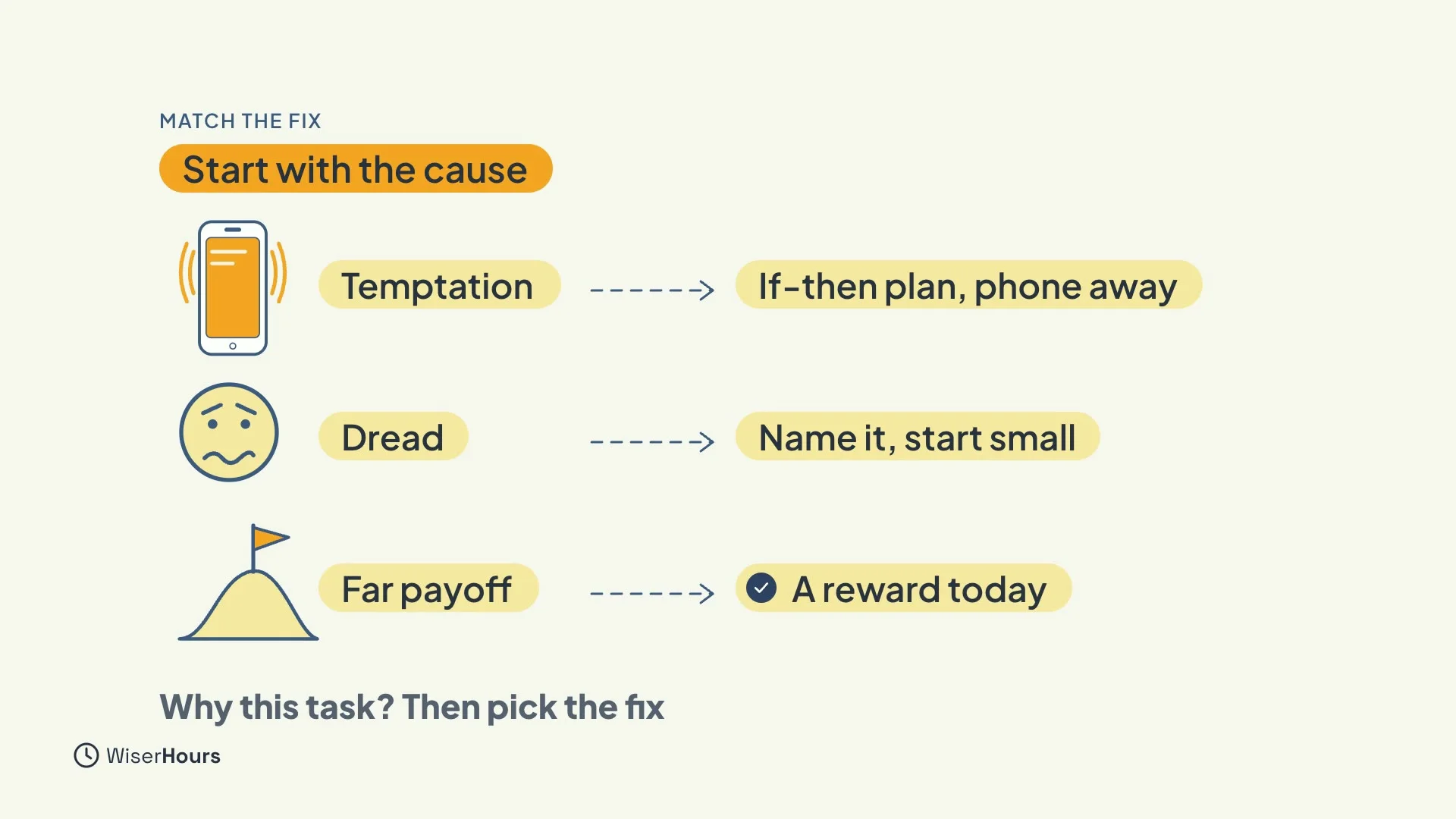
Start with the cause. Work out why you are putting off this particular task, and choose a strategy aimed at that cause. For temptation, use an if-then plan and keep your phone in another room. For dread, name the feeling and start small. For a far-off payoff, bring a reward into today.
 (opens the full-size picture)
The if-then plan
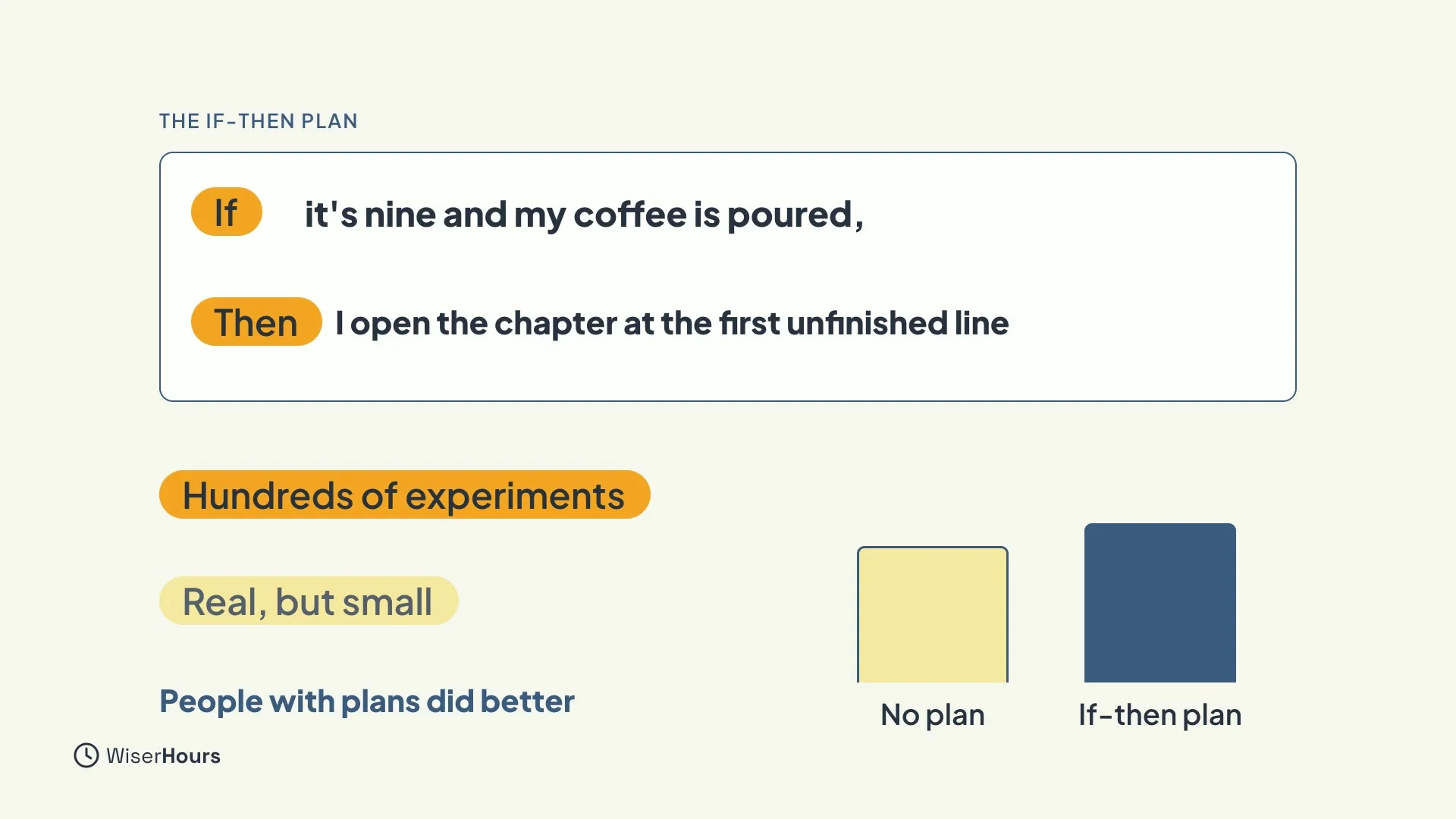
The best tested tool is the if-then planimplementation intention: A plan in if-then form that ties a specific action to a specific situation, such as 'if it is nine o'clock, then I open the report.' It hands the decision about when and where to act to the situation itself.Full entry in the glossary. For example: “If it is nine and my coffee is poured, then I open the chapter at the first unfinished line.” Across hundreds of experiments, people with plans like this did better than people without. The benefit is real, but small.
 (opens the full-size picture)
Six steps for your plan
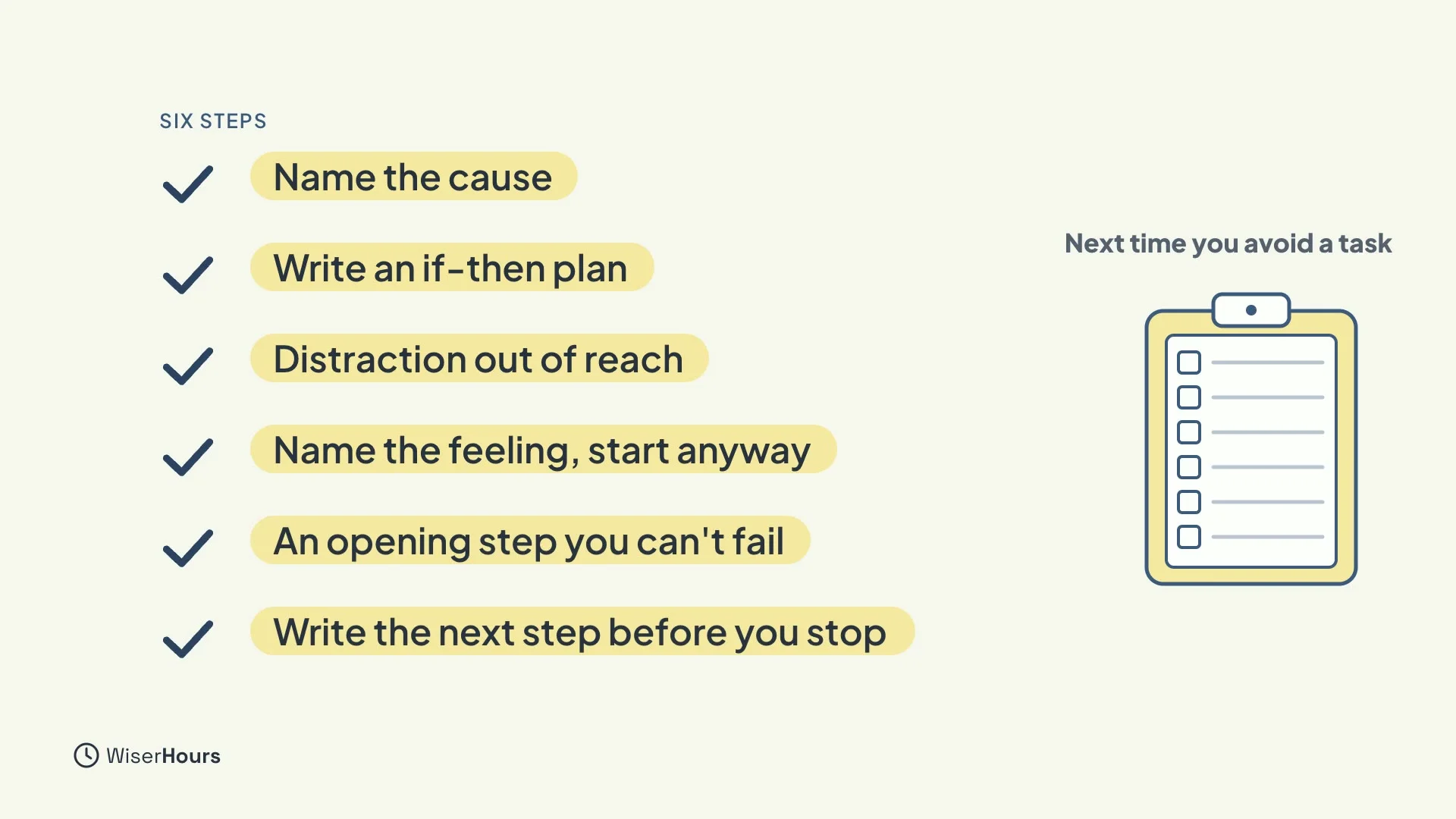
Here is a checklist for the next time you sit down to a task you have been avoiding:
- Name which cause fits best.
- Write one if-then plan.
- Move the likeliest distraction out of reach.
- Put a word to the feeling, then start anyway.
- Pick an opening step you cannot fail.
- Write down the next step before you stop.
 (opens the full-size picture)
My anti-procrastination plan
Test it for a week
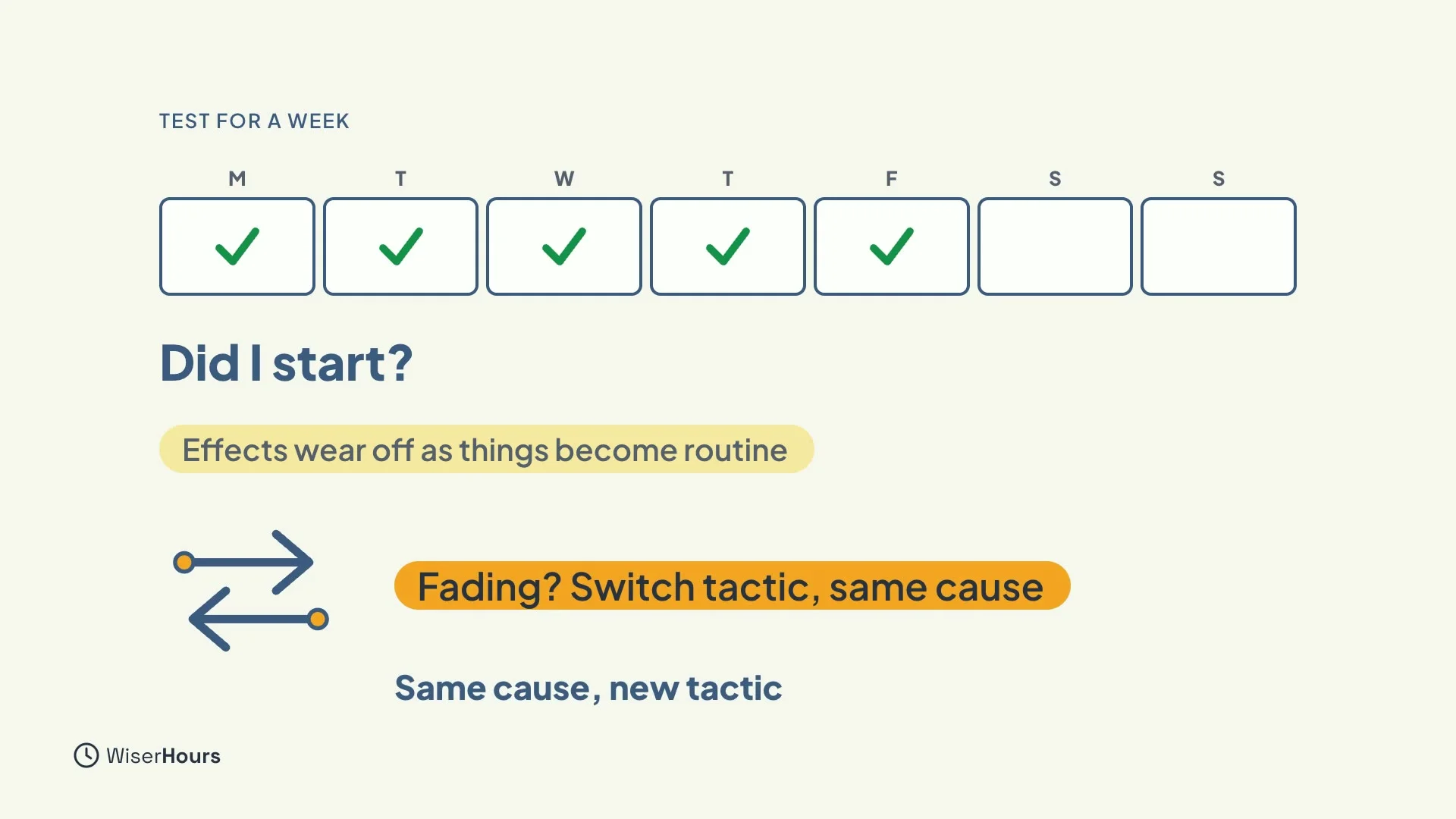
Try your plan for one week on a real task, and judge it by one thing: did you start? Effects wear off as things become routine, so when one tactic fades, switch to another aimed at the same cause.
 (opens the full-size picture)
When it is more than everyday delay
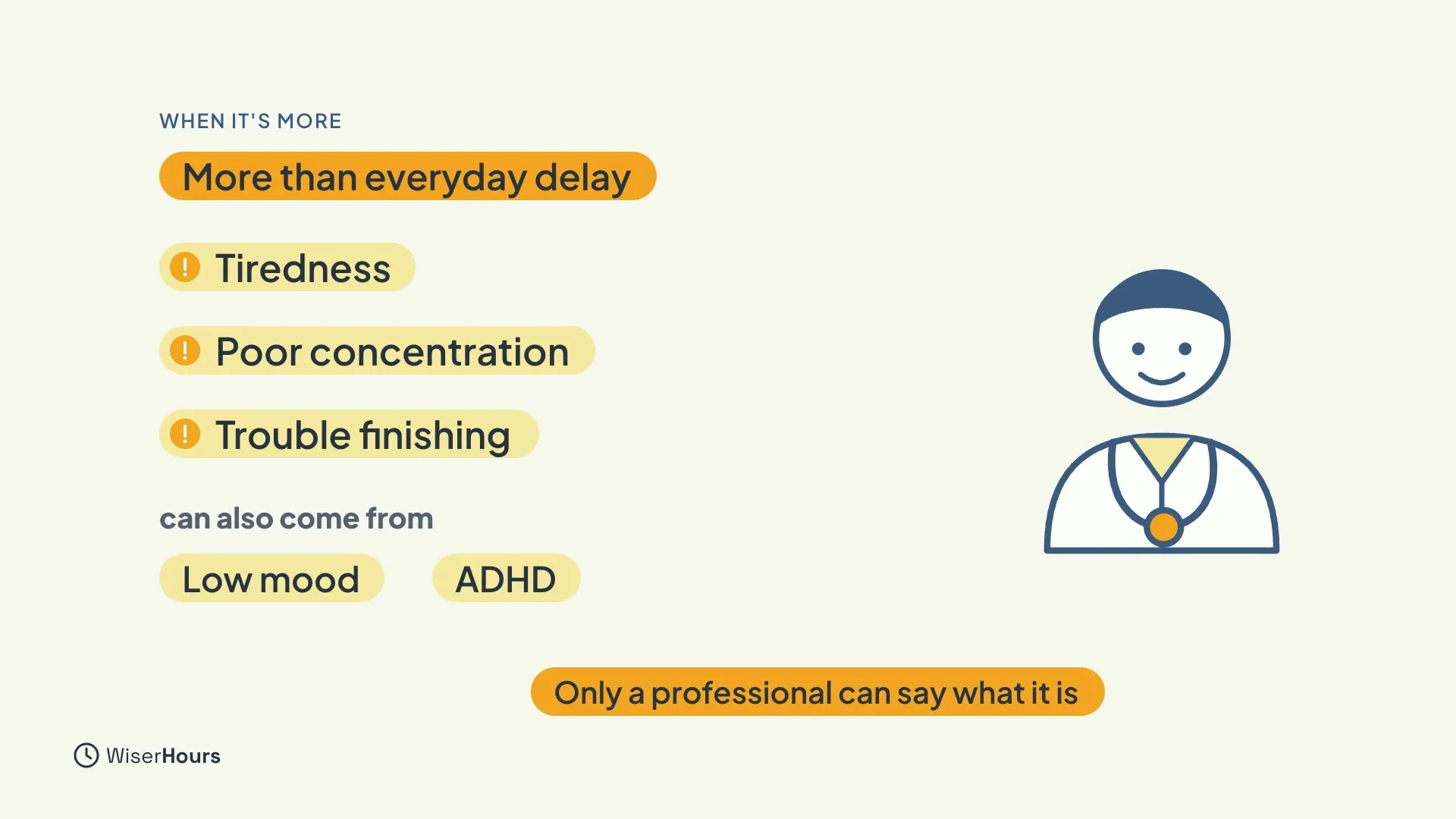
Sometimes trouble starting is more than everyday delay. Tiredness, poor concentration and trouble finishing tasks can also come from low mood or from ADHDADHD: Attention deficit hyperactivity disorder: a condition, usually present from childhood, marked by persistent inattention, hyperactivity or impulsiveness that affects daily life. In adults it can show up as disorganization or trouble finishing tasks, and a specialist makes the diagnosis.Full entry in the glossary. We cannot tell you what it is. A health professional can.
 (opens the full-size picture)
Signs to see a doctor
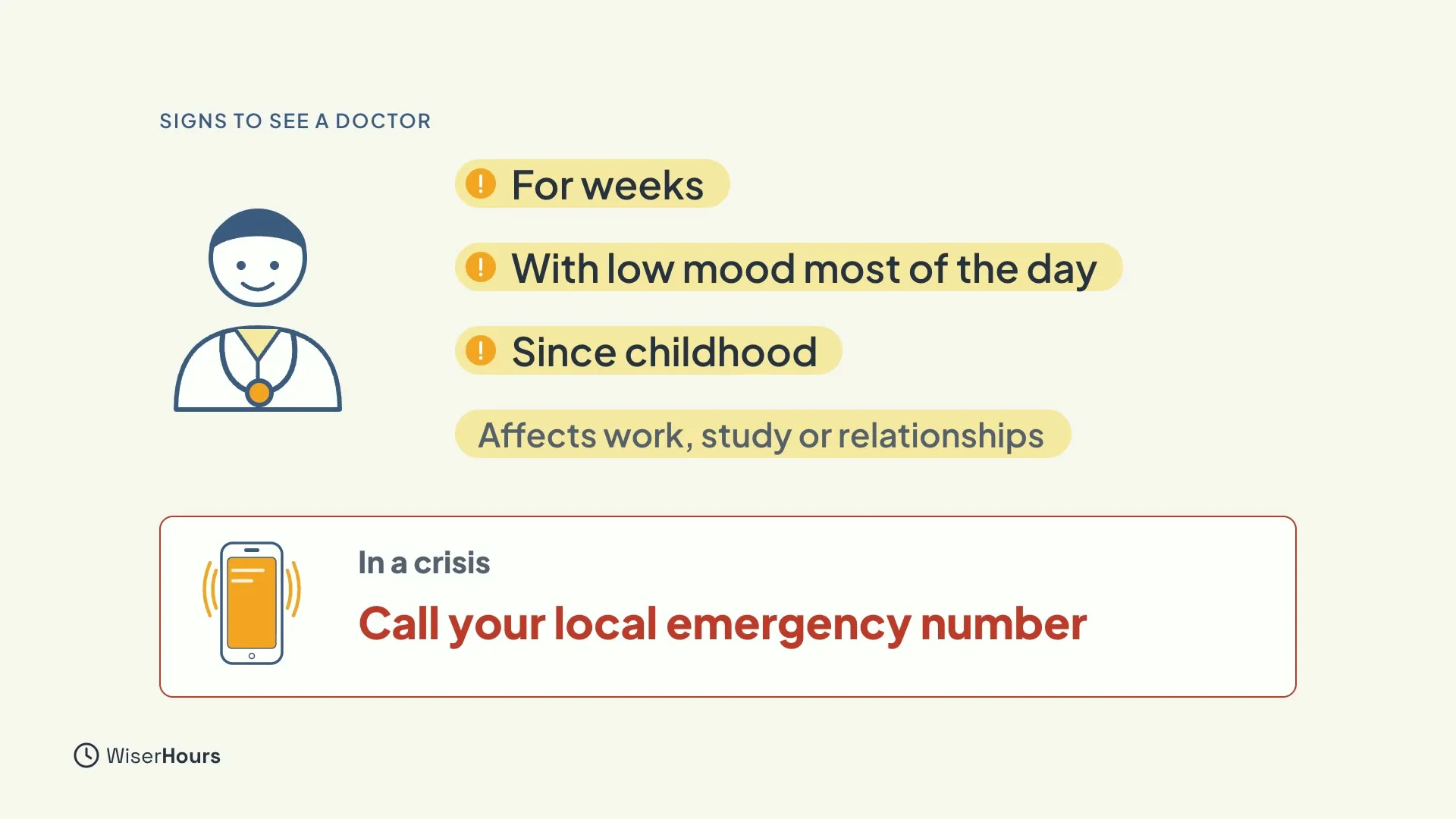
See a doctor if trouble starting has gone on for weeks, comes with low mood most of the day, or has been there since childhood and affects your work, study or relationships. And if you ever think you may harm yourself, call your local emergency number right away.
 (opens the full-size picture)
In a crisis
If you ever think you may harm yourself, call your local emergency number right away.
If self-help stalls
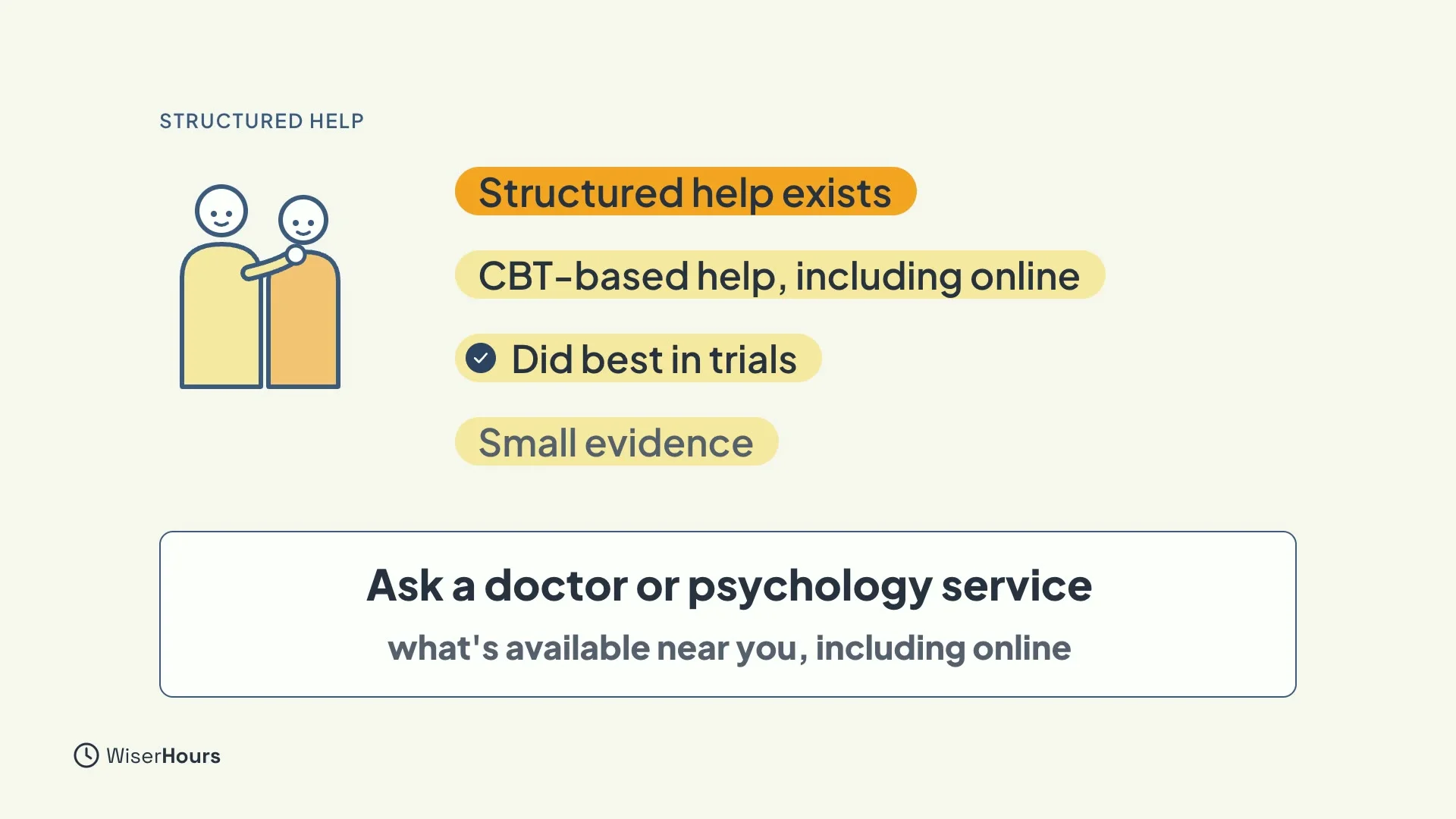
If self-help stalls, structured help exists. In trials, talking therapy based on CBTcognitive behavioral therapy: A structured talking therapy that works on the links between thoughts, feelings and behavior, usually over a set number of sessions with practice between them. It is given by a trained therapist or through guided programs, and versions exist for specific problems.Full entry in the glossary did best for procrastination, though the evidence is still small. A doctor or psychology service can tell you what is available near you, including online programmes.
 (opens the full-size picture)
YOUR TURN
Read more
- How to Stop Procrastinating: 15 Strategies Backed by Research: the strategies behind this plan, and when to seek help.
- Why Do We Procrastinate? The Psychology Explained: the causes behind delay.
- How to Get Organized With ADHD: what ADHD can look like, and tools that help.
You have finished the course. Thank you for taking it, and good luck getting started.
Read the full lesson script
In this last lesson, you'll pull everything together into a simple plan, and learn when trouble starting may need more than self-help.
Start with the cause. Work out why you're putting off this particular task, and choose a strategy aimed at that cause. For temptation, an if-then plan and a phone in another room. For dread, name the feeling and start small. For a far-off payoff, bring a reward into today.
The best tested tool is the if-then plan. If it's nine and my coffee is poured, then I open the chapter at the first unfinished line. Across hundreds of experiments, people with plans like this did better than people without. The benefit is real, but small.
Here's a checklist for the next time you sit down to a task you've been avoiding. Name which cause fits best. Write one if-then plan. Move the likeliest distraction out of reach. Put a word to the feeling, then start anyway. Pick an opening step you can't fail. And write down the next step before you stop.
Try your plan for one week on a real task, and judge it by one thing: did you start? Effects wear off as things become routine, so when one tactic fades, switch to another aimed at the same cause.
Sometimes trouble starting is more than everyday delay. Tiredness, poor concentration and trouble finishing tasks can also come from low mood or from ADHD. We can't tell you what it is. A health professional can.
See a doctor if trouble starting has gone on for weeks, comes with low mood most of the day, or has been there since childhood and affects your work, study or relationships. And if you ever think you may harm yourself, call your local emergency number right away.
If self-help stalls, structured help exists. In trials, talking therapy based on CBT did best for procrastination, though the evidence is still small. A doctor or psychology service can tell you what's available near you, including online programmes.
So remember: match the fix to the cause, write an if-then plan, and judge your week by whether you started. Before you go, fill in your anti-procrastination plan. Thank you for taking this course, and good luck getting started.
MAKE IT A SMALL WIN
Finished this lesson?
Mark it complete to save your progress on this device.