Getting things done · Lesson 7 of 10
Clear Next Steps and Recap Emails That Get Done
Write next steps with one owner, a verb and a date, name one person even in a group email, and send a short recap that people confirm.
 Video coming soon
Many emails and meetings end with “let’s look into it”, and then nothing happens. In this lesson you learn to write next steps that actually get done, and a short recap that keeps everyone on the same page.
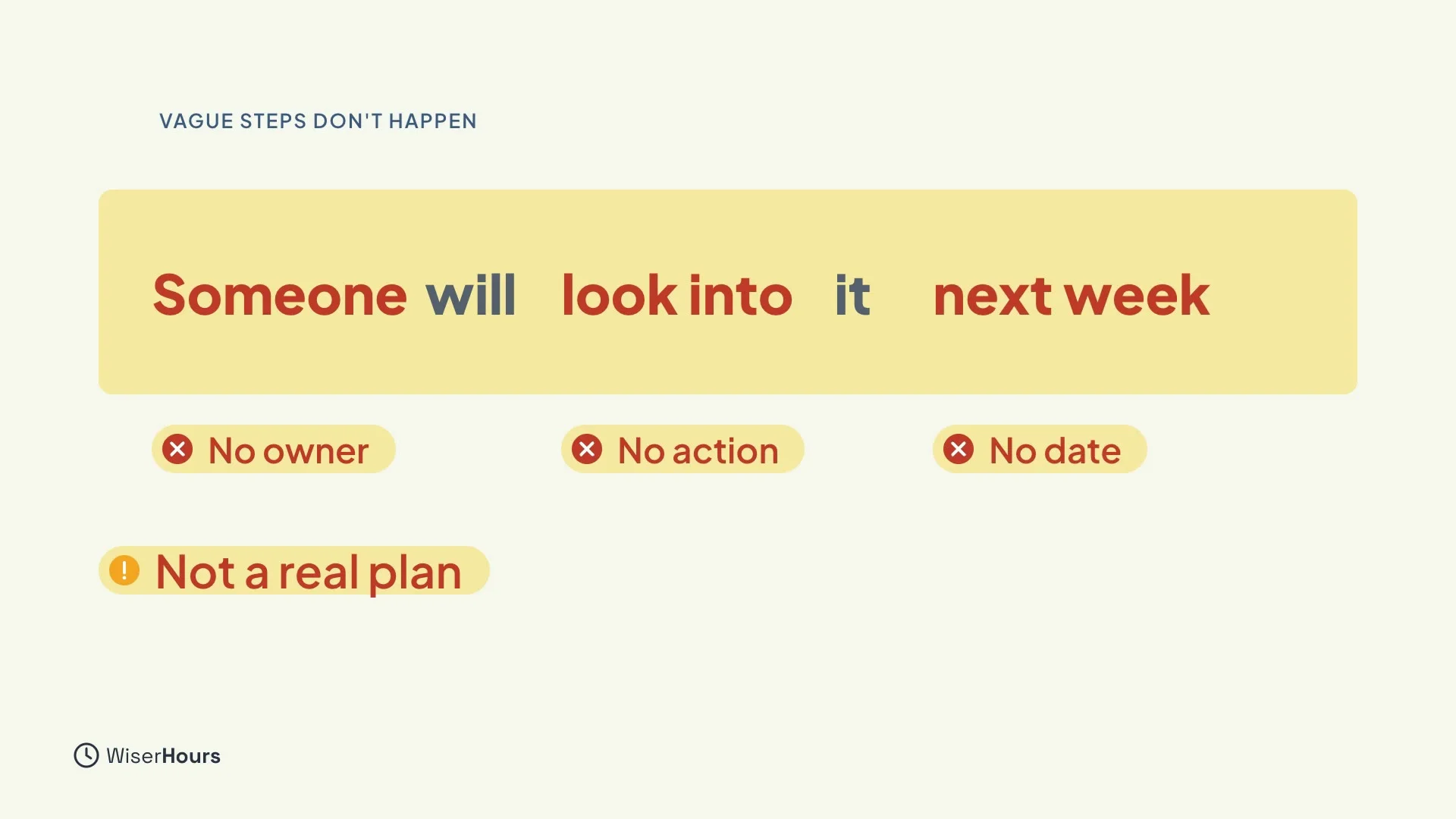
Vague steps don’t happen
“Someone will look into it next week” sounds like a plan, but it isn’t one. Nobody owns it, nobody knows what “look into” means, and “next week” quietly slides away. Each of those three words is a gap where the task can disappear.
 (opens the full-size picture)
Owner, verb, date
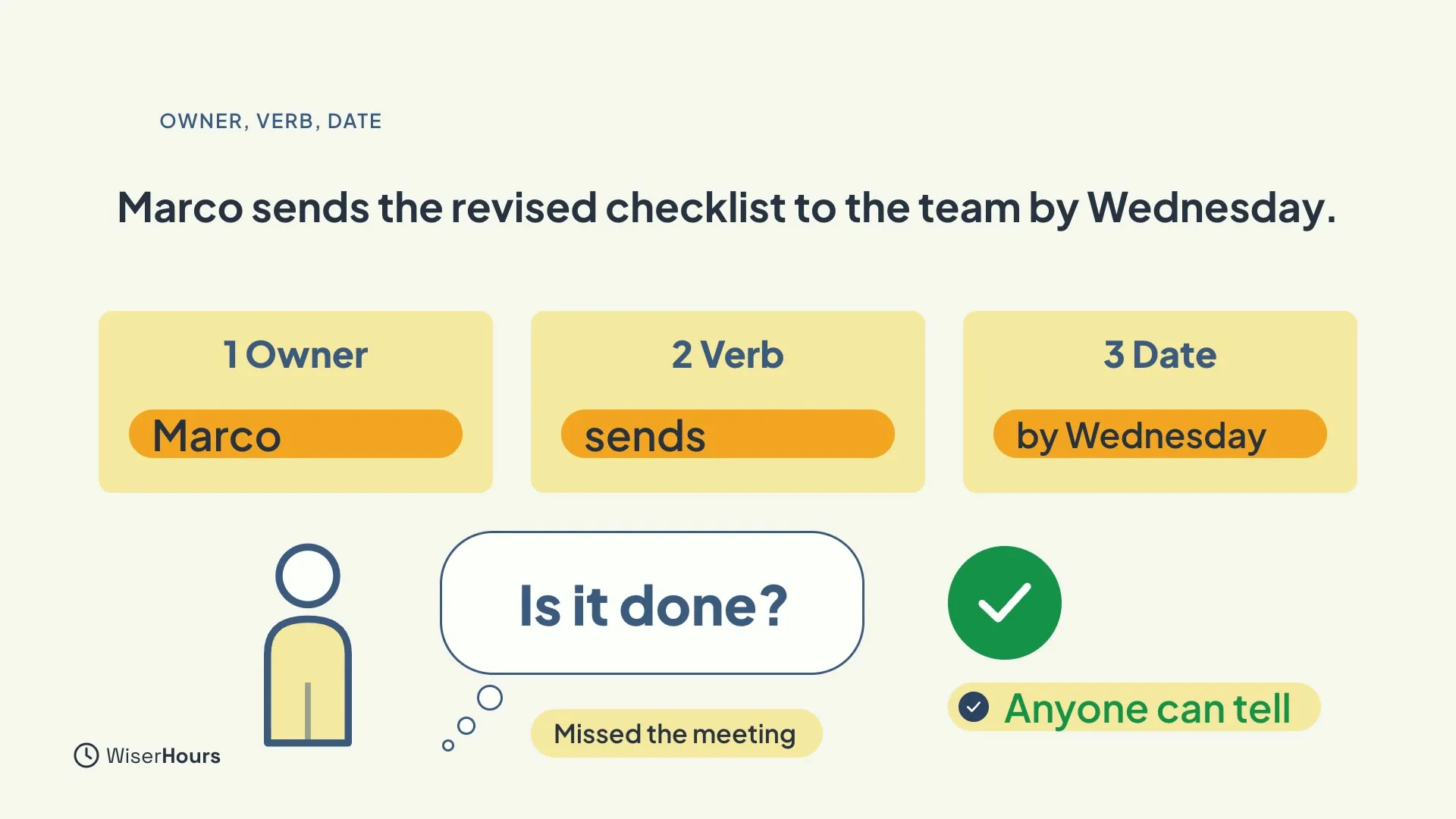
A clear next step has three parts: one named owner, a verb, and a date. For example: “Marco sends the revised checklist to the team by Wednesday.”
Test it with one question: could someone who missed the meeting tell whether it is done? If yes, the step is clear. If you wrote “next week”, turn it into a named day.
 (opens the full-size picture)
Name one person
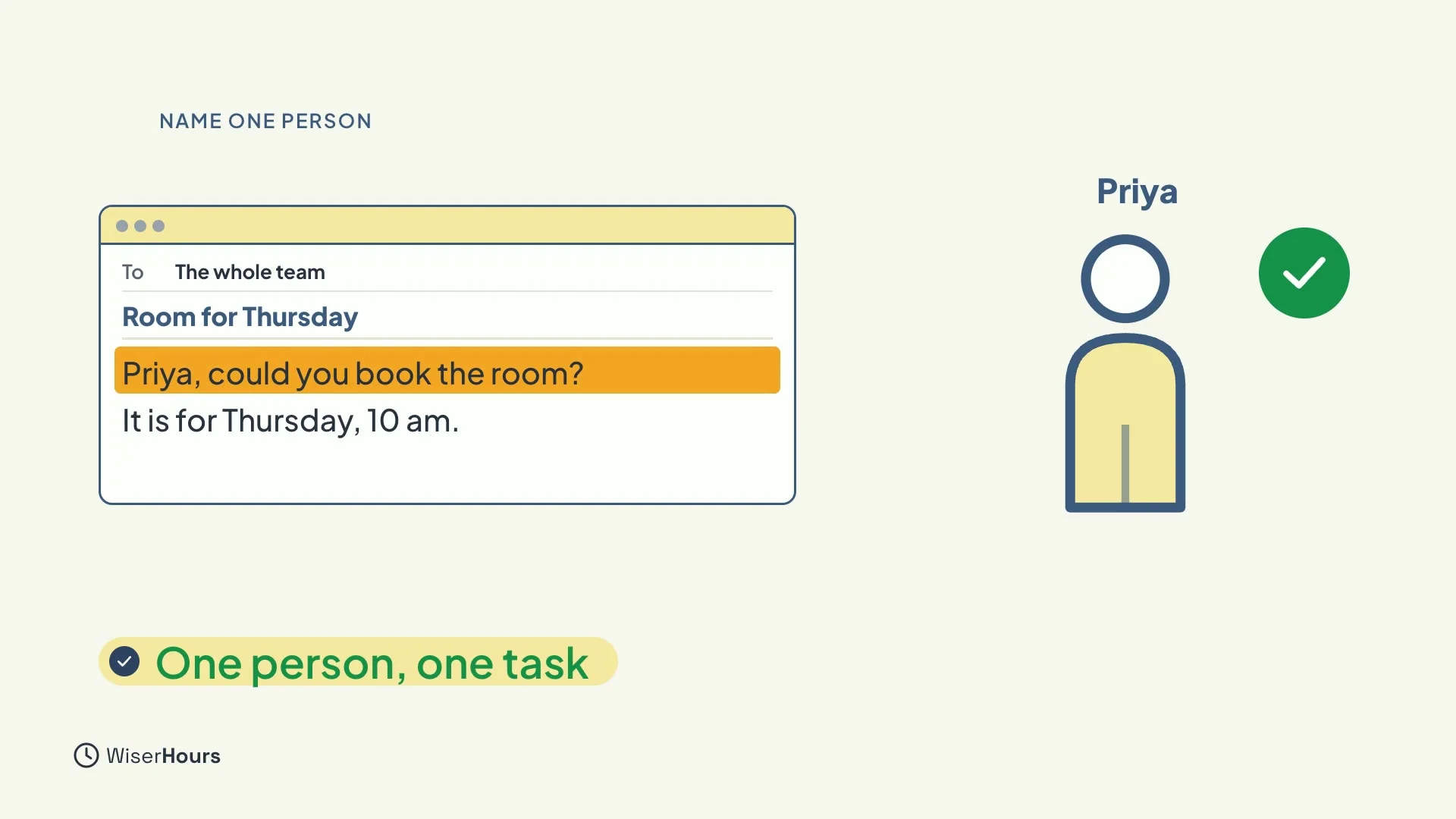
When a request goes to a whole group, each person feels a little less responsible, and fewer people help. So name one person for each task, even in a group email: “Priya, could you book the room?” Everyone else can then relax, and Priya knows it is hers.
 (opens the full-size picture)
Send a short recap
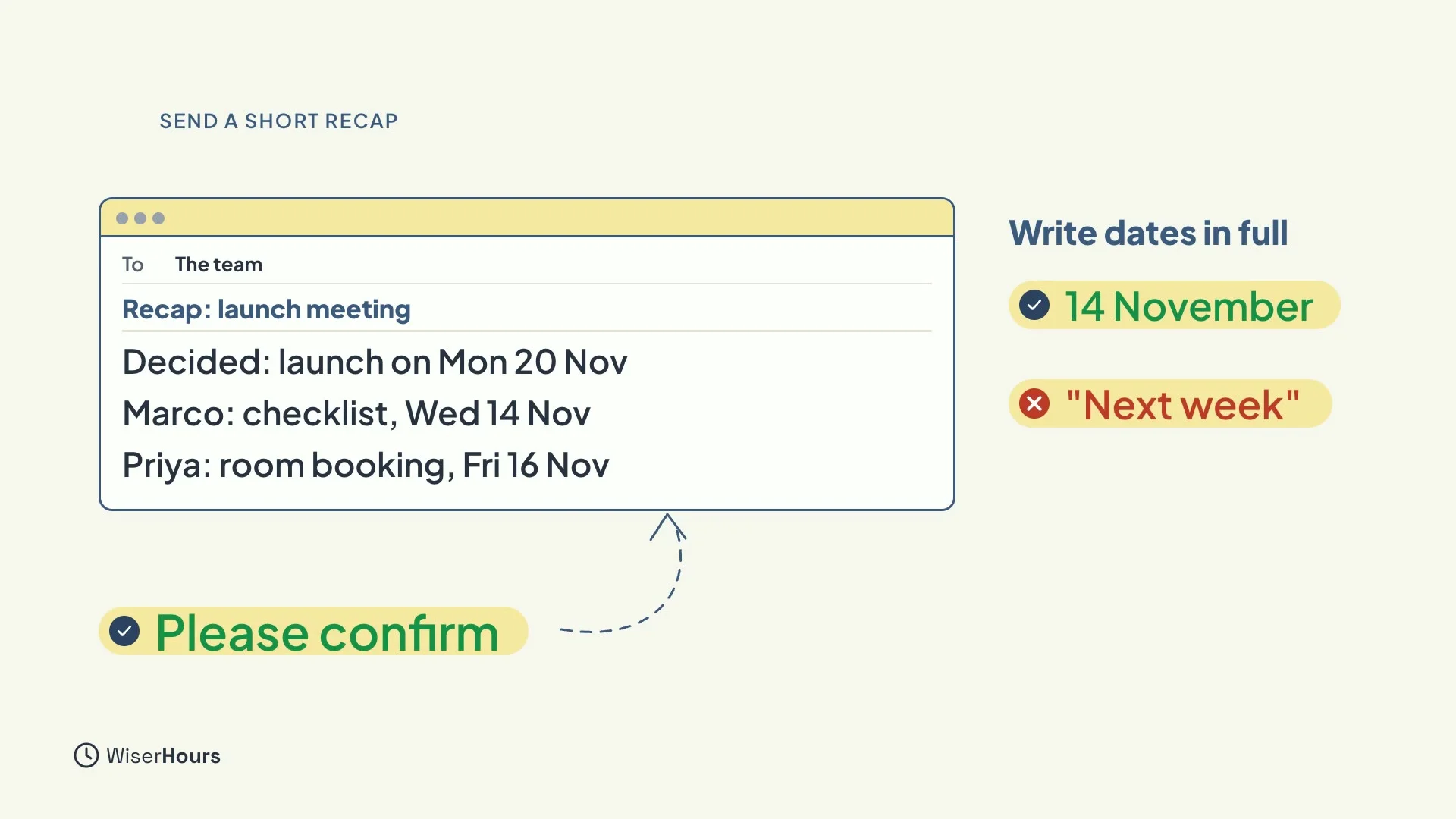
After a meeting or a call, send a short recap: what was decided, who does what, and by when. Write dates and figures in full, like 14 November, not “next week”. Then ask everyone to confirm. If someone disagrees, you find out now, not later.
 (opens the full-size picture)
Check it next time
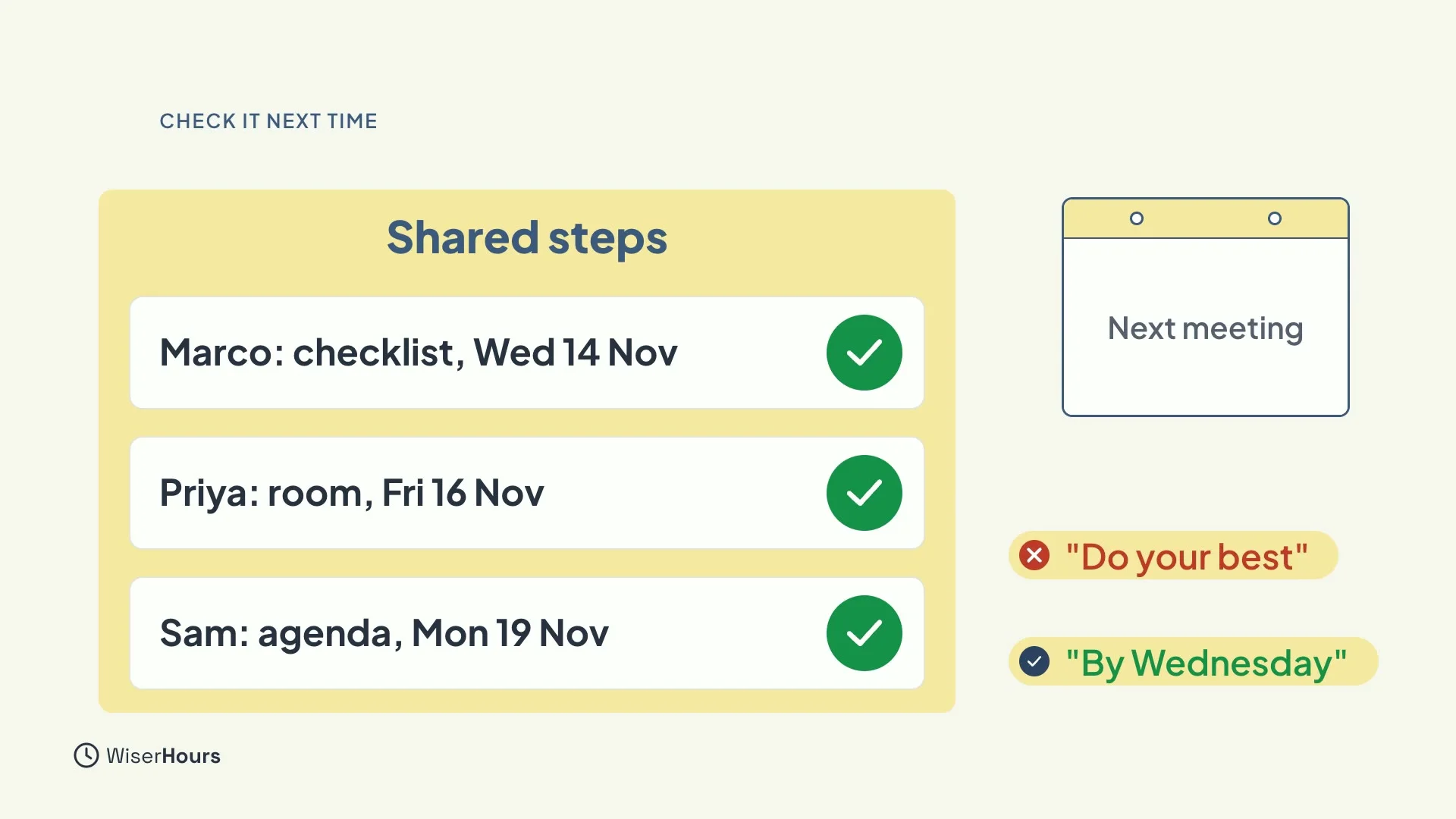
Keep the steps where everyone can see them, and look at them at the start of the next meeting. Clear goals with real dates get done far more often than “do your best”.
 (opens the full-size picture)
YOUR TURN
Read more
- How to Write Action Items That Actually Get Done: the five parts of a good action item.
- Negotiating by Email: why a summary email that the other side confirms helps.
- How to Negotiate Your Workload With Your Manager: how clear steps and dates help when workload is the topic.
Read the full lesson script
Welcome back. Many emails and meetings end with "let's look into it", and then nothing happens. In this lesson, you'll learn to write next steps that actually get done, and a short recap that keeps everyone on the same page.
"Someone will look into it next week" sounds like a plan, but it isn't one. Nobody owns it, nobody knows what "look into" means, and "next week" quietly slides away.
A clear next step has three parts: one named owner, a verb, and a date. "Marco sends the revised checklist to the team by Wednesday." Test it: could someone who missed the meeting tell whether it's done?
When a request goes to a whole group, each person feels a little less responsible, and fewer people help. So name one person for each task, even in a group email. "Priya, could you book the room?"
After a meeting or a call, send a short recap: what was decided, who does what, and by when. Write dates and figures in full, like fourteen November, not "next week". Then ask everyone to confirm.
Keep the steps where everyone can see them, and look at them at the start of the next meeting. Clear goals with real dates get done far more often than "do your best".
So remember: vague steps don't happen. Give each step one owner, a verb, and a date, and name one person even in a group email. Then send a short recap, and ask people to confirm. Before the next lesson, rewrite one open task as an owner, a verb, and a date. Next, you'll handle tricky messages: feedback, disagreement, and saying no.
MAKE IT A SMALL WIN
Finished this lesson?
Mark it complete to save your progress on this device.