Getting read · Lesson 3 of 10
Short, Not Curt: Keep Emails Brief but Warm
Learn how to keep emails short enough to get read while staying friendly, polite and accurate, with one warm line and a quick check.
 Video coming soon
Short emails get read. But short can go too far and sound cold. In this lesson you will learn how to keep your emails tight, how to keep them kind, and which details to check before you press send.
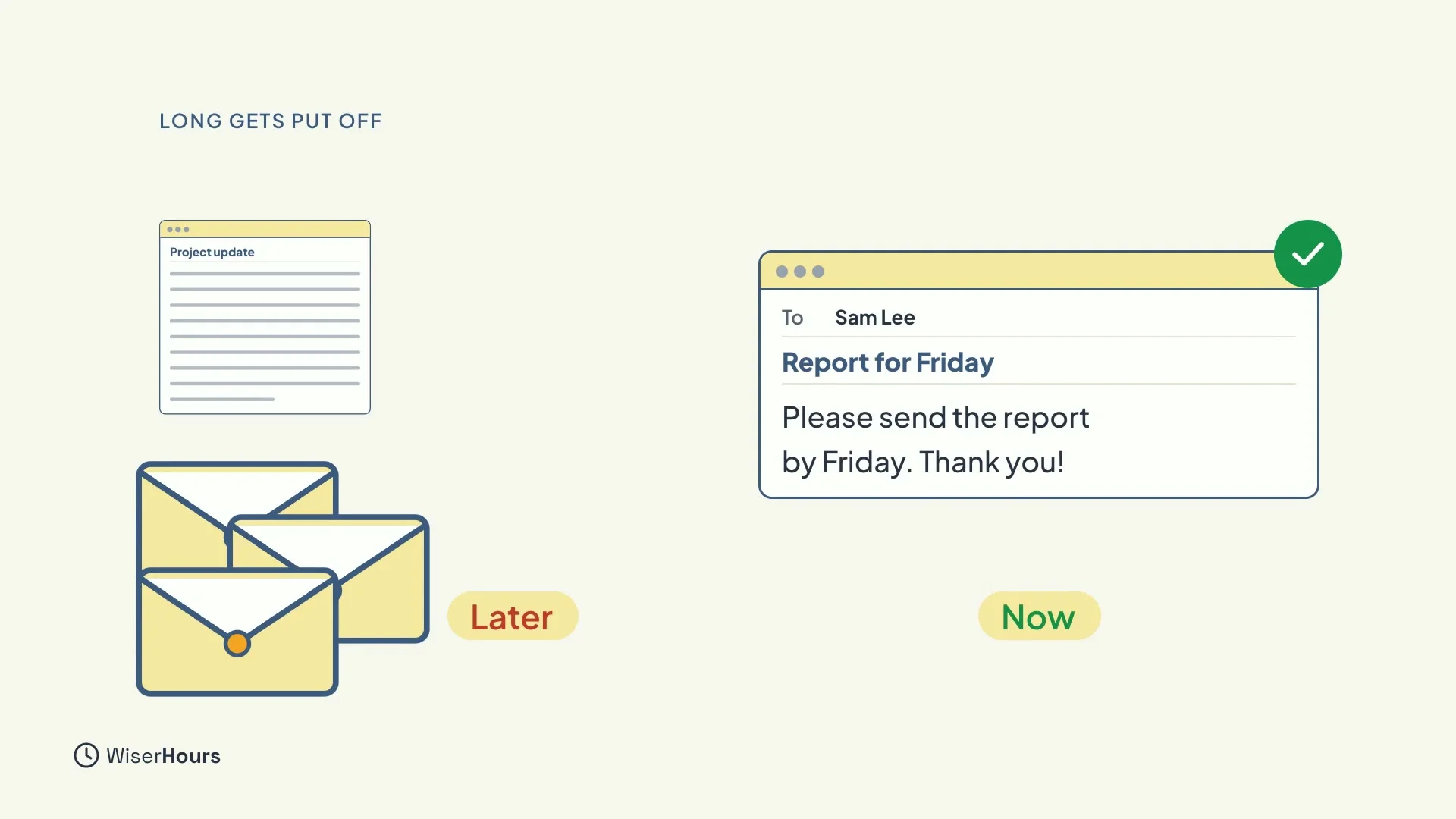
Long gets put off
In a study of tens of thousands of email users, an email’s length was one of the strongest signs that it would be put off. A message that looks like hard work gets left for later, and a short one gets handled now.
 (opens the full-size picture)
How short is short?
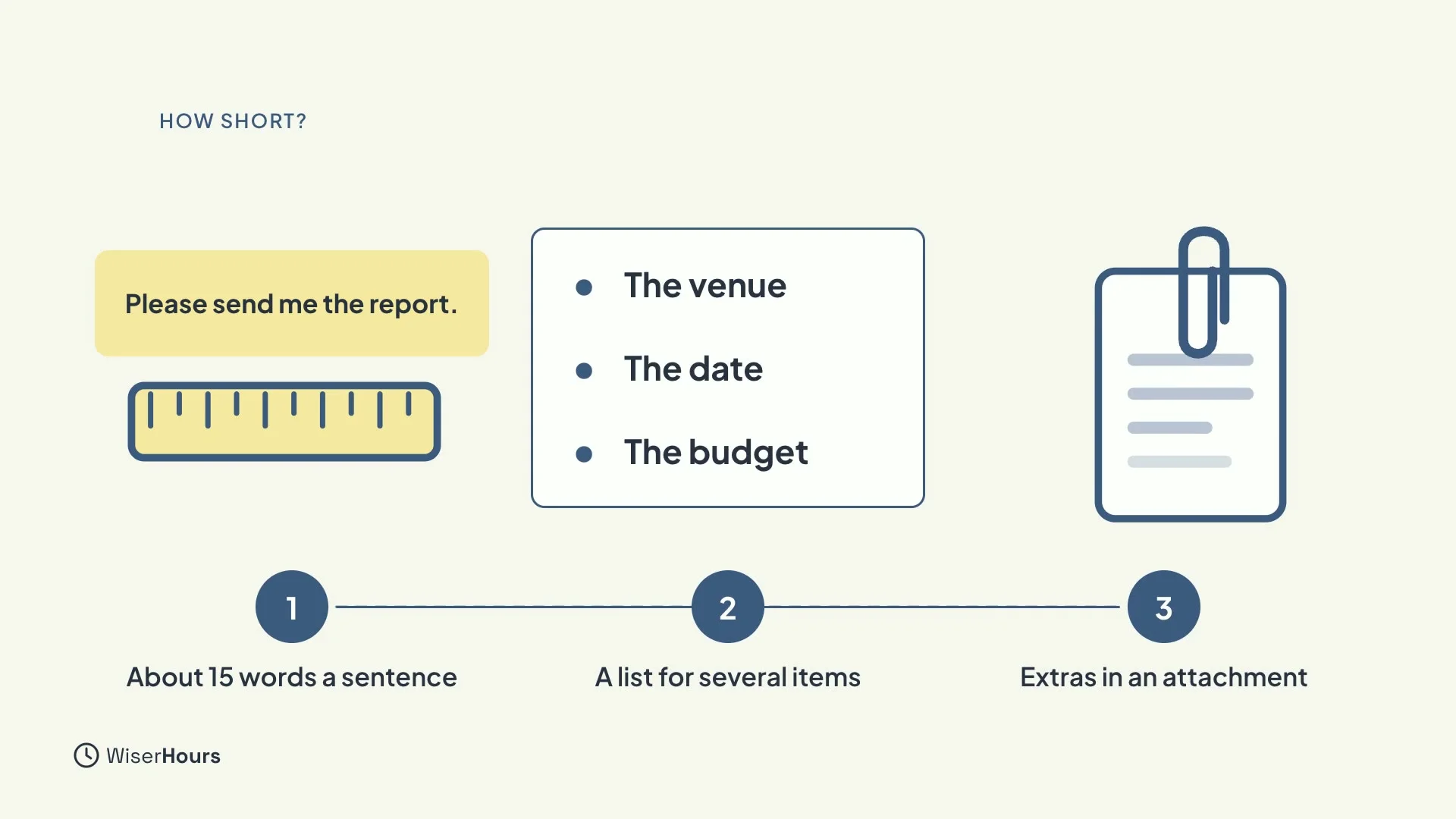
Keep it tight. Aim for sentences of about fifteen words on average, and short paragraphs. If you need to cover several things, use a simple list. Put the extras, like reports or notes, in an attachment instead of the body of the email.
 (opens the full-size picture)
Short is not curt
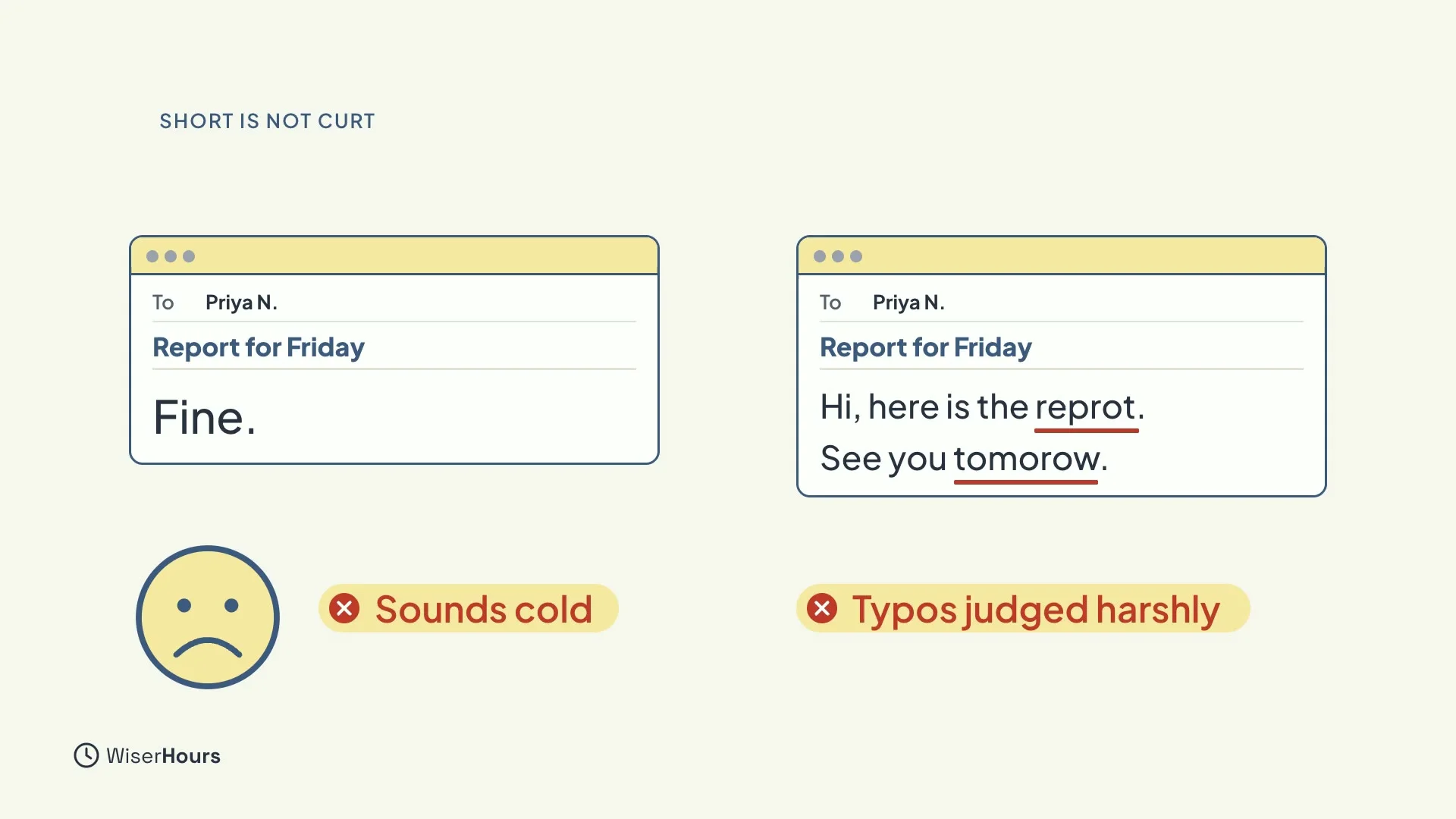
But short can go too far. In experiments, very brief emails with no friendly tone, or with typos, were judged more harshly. A reply that just says “Fine.” can sound cold, even when you meant nothing by it.
 (opens the full-size picture)
Add one warm line
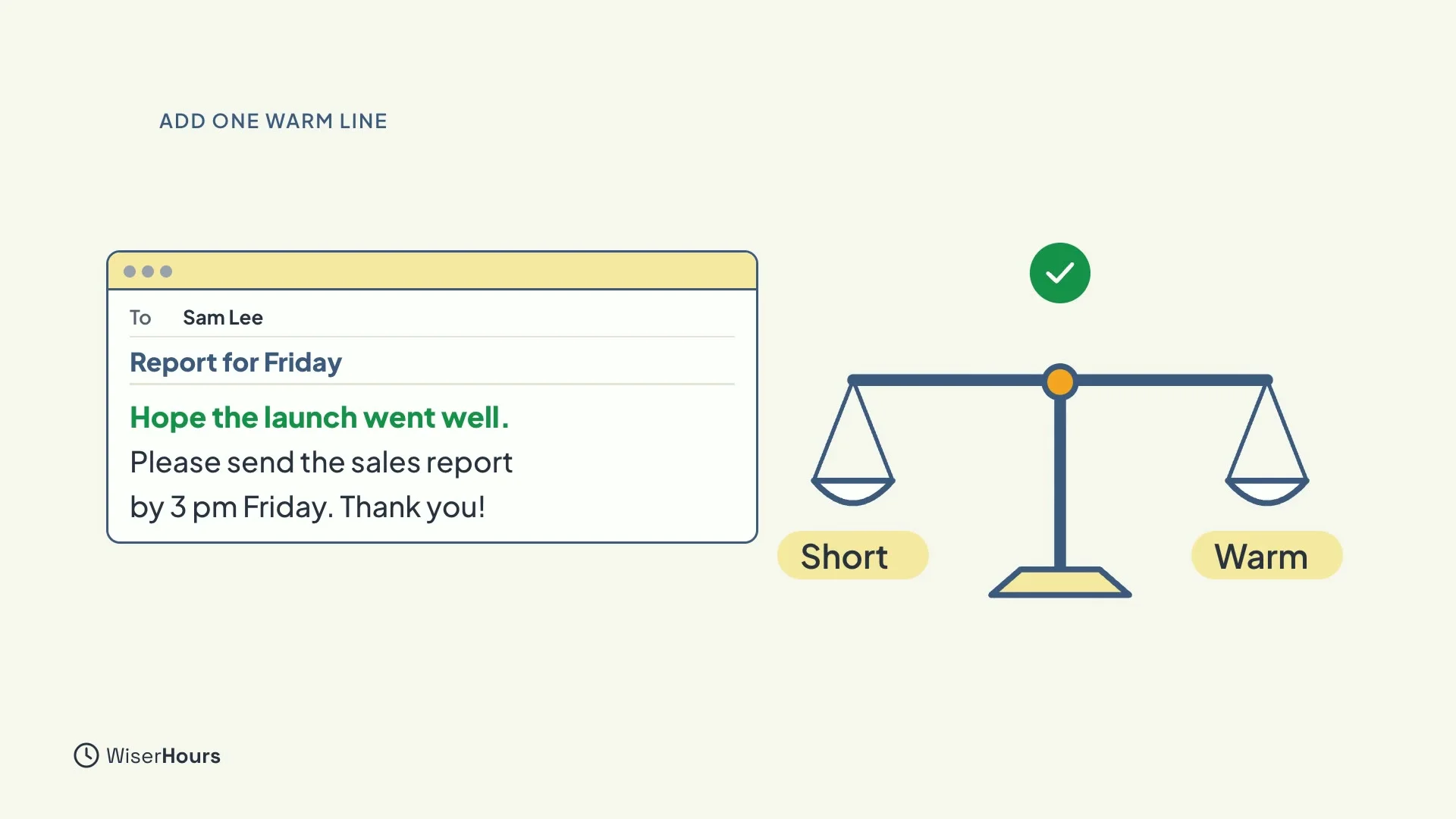
The fix is small. Add one warm sentence, like “Thanks for pulling this together” or “Hope the launch went well.” One line is enough to make a short email sound kind without making it long.
 (opens the full-size picture)
Check before you send
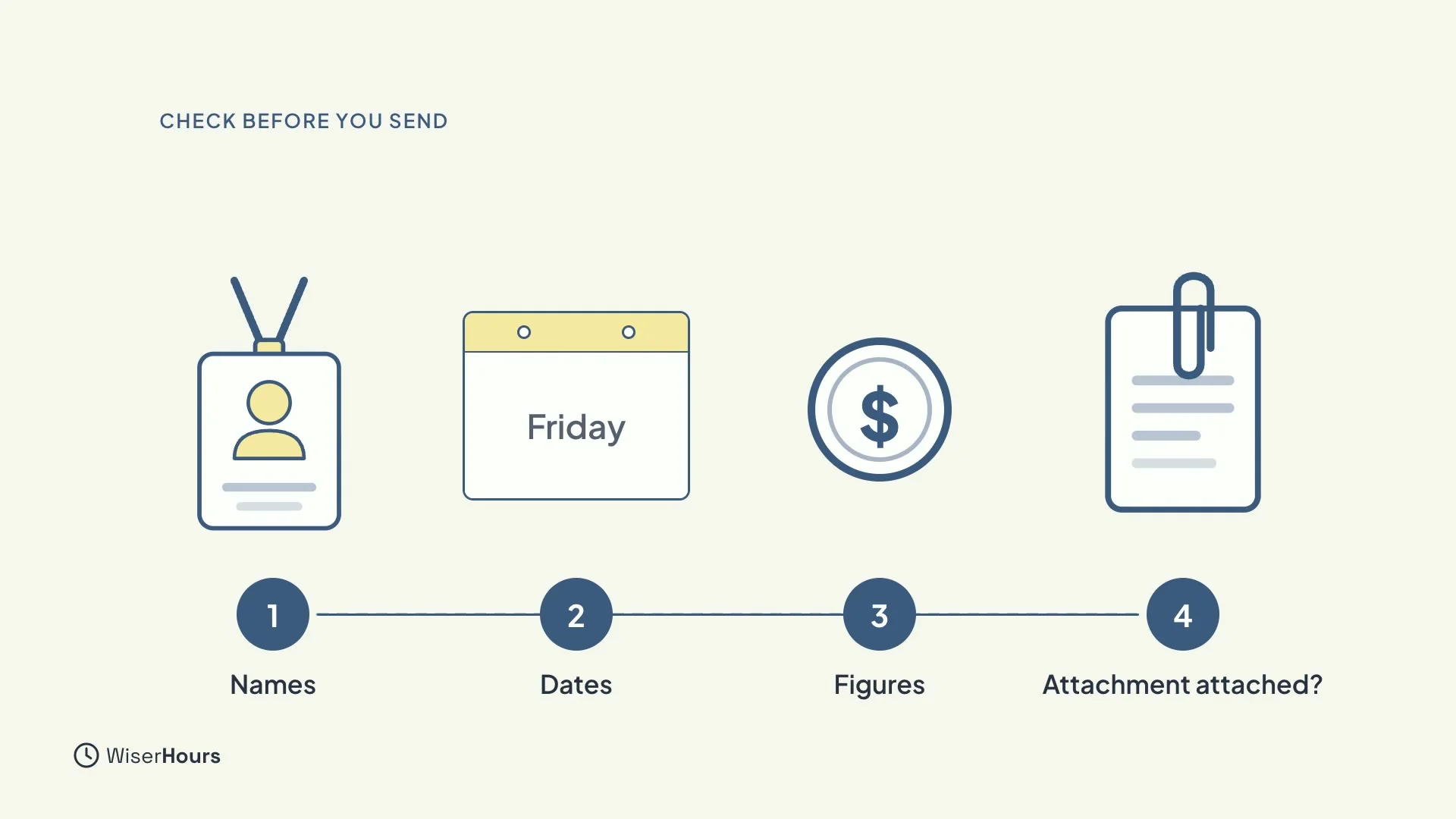
Then check the details that matter most: names, dates, figures, and whether the attachment is really attached. These are the mistakes that take the most time to fix later.
 (opens the full-size picture)
YOUR TURN
Read more
- How to write a professional email: length, structure and tone, with the research on short and brief emails.
Read the full lesson script
Welcome back. In this lesson, you'll learn to keep emails short enough to get read, while still sounding friendly, polite, and careful.
In a study of tens of thousands of email users, an email's length was one of the strongest signs that it would be put off. A message that looks like hard work gets left for later. Short messages get handled now.
So keep it tight. Aim for sentences of about fifteen words, and short paragraphs. If you need to list several things, use a simple list. And put the extras, like reports or notes, in an attachment instead of the body.
But short can go too far. In experiments, very brief emails with no friendly tone, or with typos, were judged more harshly. A reply that just says "Fine." can sound cold, even when you meant nothing by it.
The fix is small. Add one warm sentence, like "Thanks for pulling this together" or "Hope the launch went well." One line is enough to make a short email sound kind, without making it long.
Then check the details that matter most: names, dates, figures, and whether the attachment is really attached. These are the mistakes that cost the most time to fix later.
So remember: long emails get put off, so keep sentences and paragraphs short, and attach the extras. Short should never sound cold, so add one warm line. And always check names, dates, figures and attachments. Before the next lesson, cut your next email by a third, then add one friendly line. Next, you'll see why your tone is less clear than you think.
MAKE IT A SMALL WIN
Finished this lesson?
Mark it complete to save your progress on this device.