Getting read · Lesson 1 of 10
Why Clear Writing at Work Matters for Every Message
See how people really read work messages, and learn the four habits that help yours get read, understood and answered.
 Video coming soon
Most of us write work messages as if the reader will sit down and read every word. They almost never do. In this lesson you will see how people really read email and chat at work, why that makes clear writing a kindness, and what this short course will help you do about it.
A flood of messages
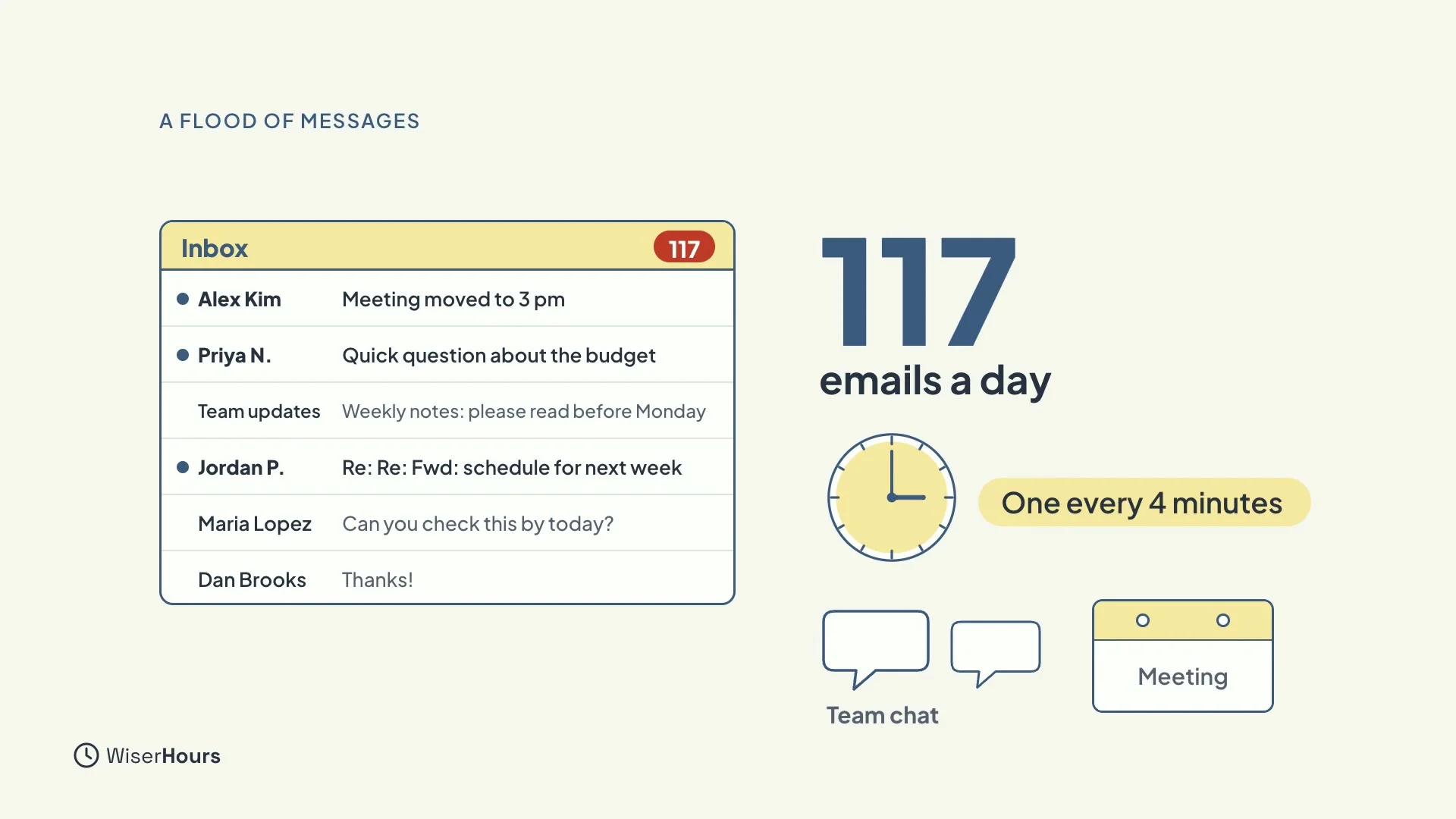
Work email never stops. One large workplace survey found that the average worker gets about 117 emails a day. That is roughly one every four minutes, and it comes on top of team chat and meetings. Your message is never alone: it lands in the middle of a crowd.
 (opens the full-size picture)
Messages are read in seconds
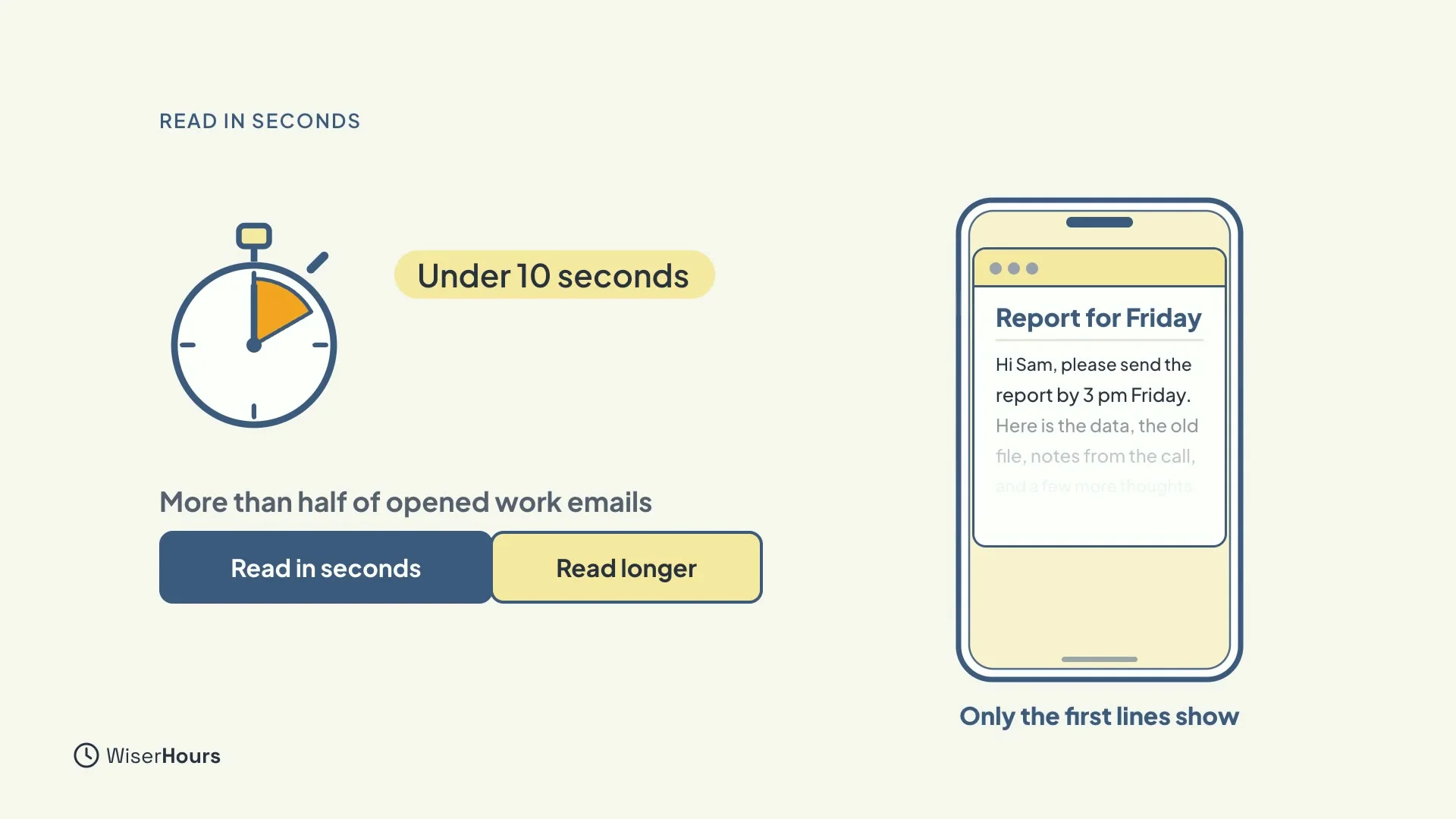
So people skim. In a study of more than a million email users, over half of the work emails that were opened were read for less than ten seconds. Many are also opened first on a phone, where only the subject and the first few lines show on the screen.
 (opens the full-size picture)
Long messages get left for later
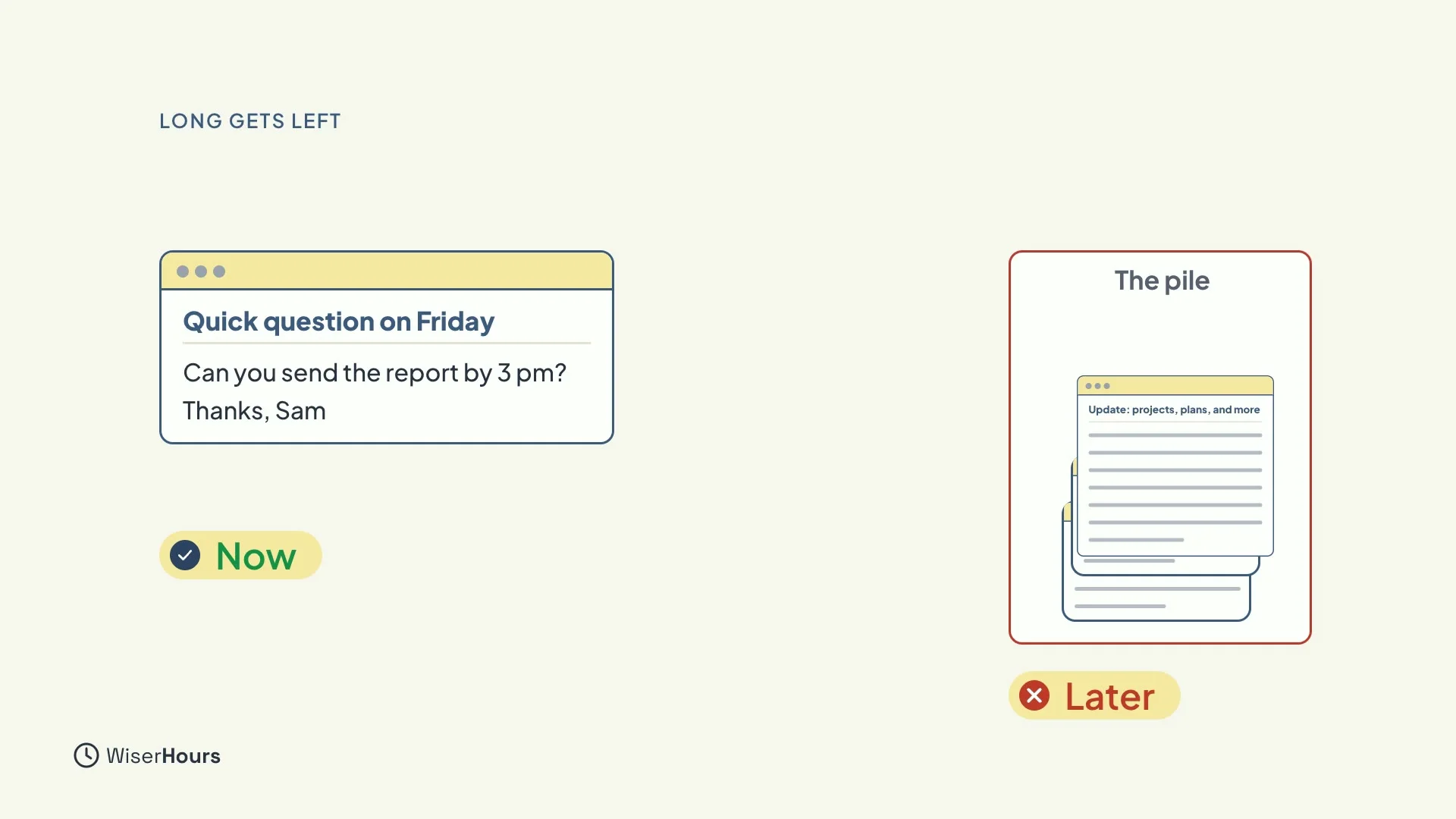
Length matters too. In one study, an email’s length was one of the strongest signs that the reader would leave it for later. A message that looks like hard work waits at the bottom of the pile, and a short one gets dealt with now.
 (opens the full-size picture)
Unclear messages cost more than time
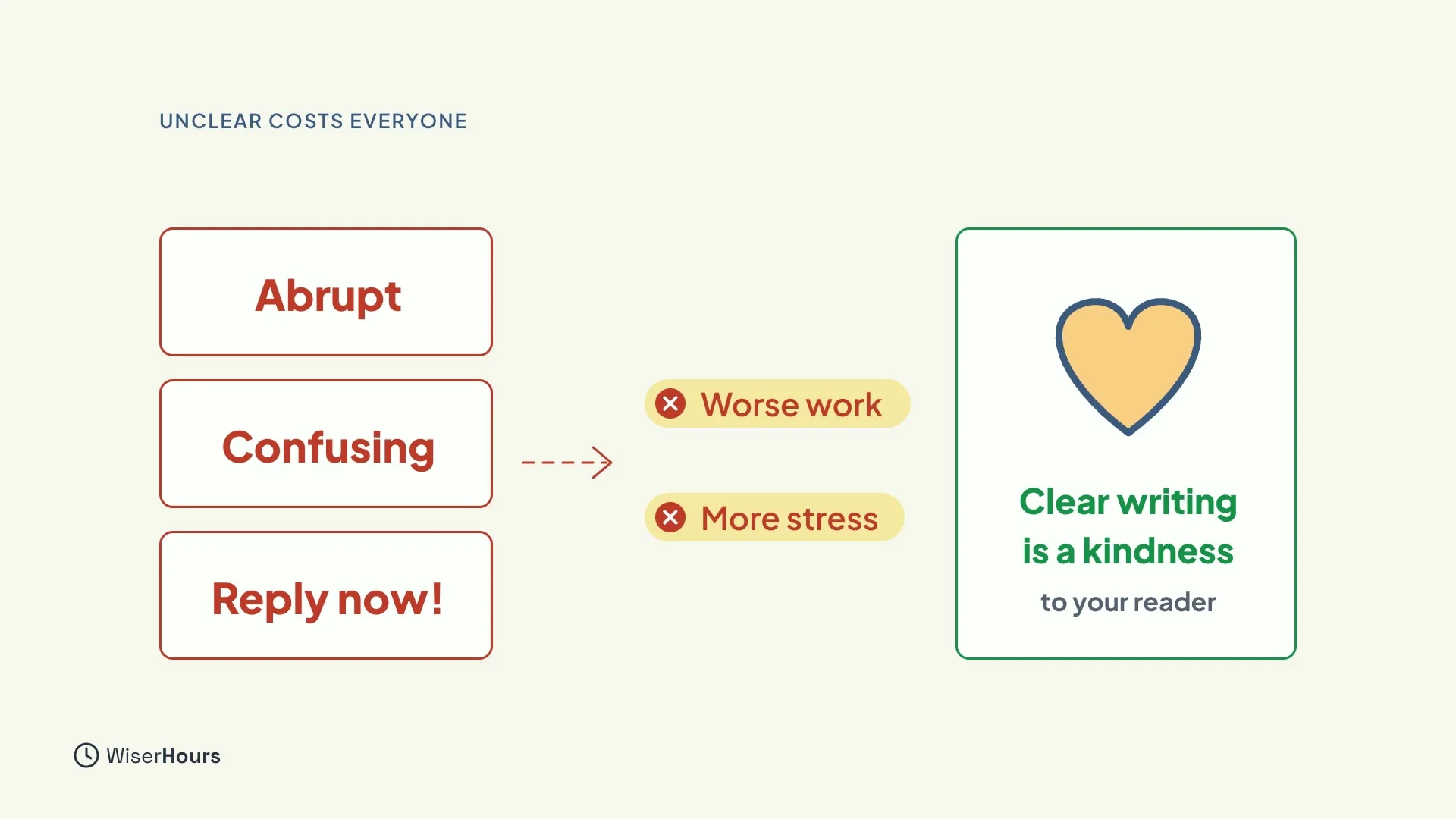
Unclear messages cost more than minutes. A review of dozens of studies found that abrupt, confusing or rude emails, and pressure to reply instantly, were linked to worse work and more stress. That is why we say clear writing is a kindness to your reader: it saves their time and it is easier on them.
 (opens the full-size picture)
Habits, not talent
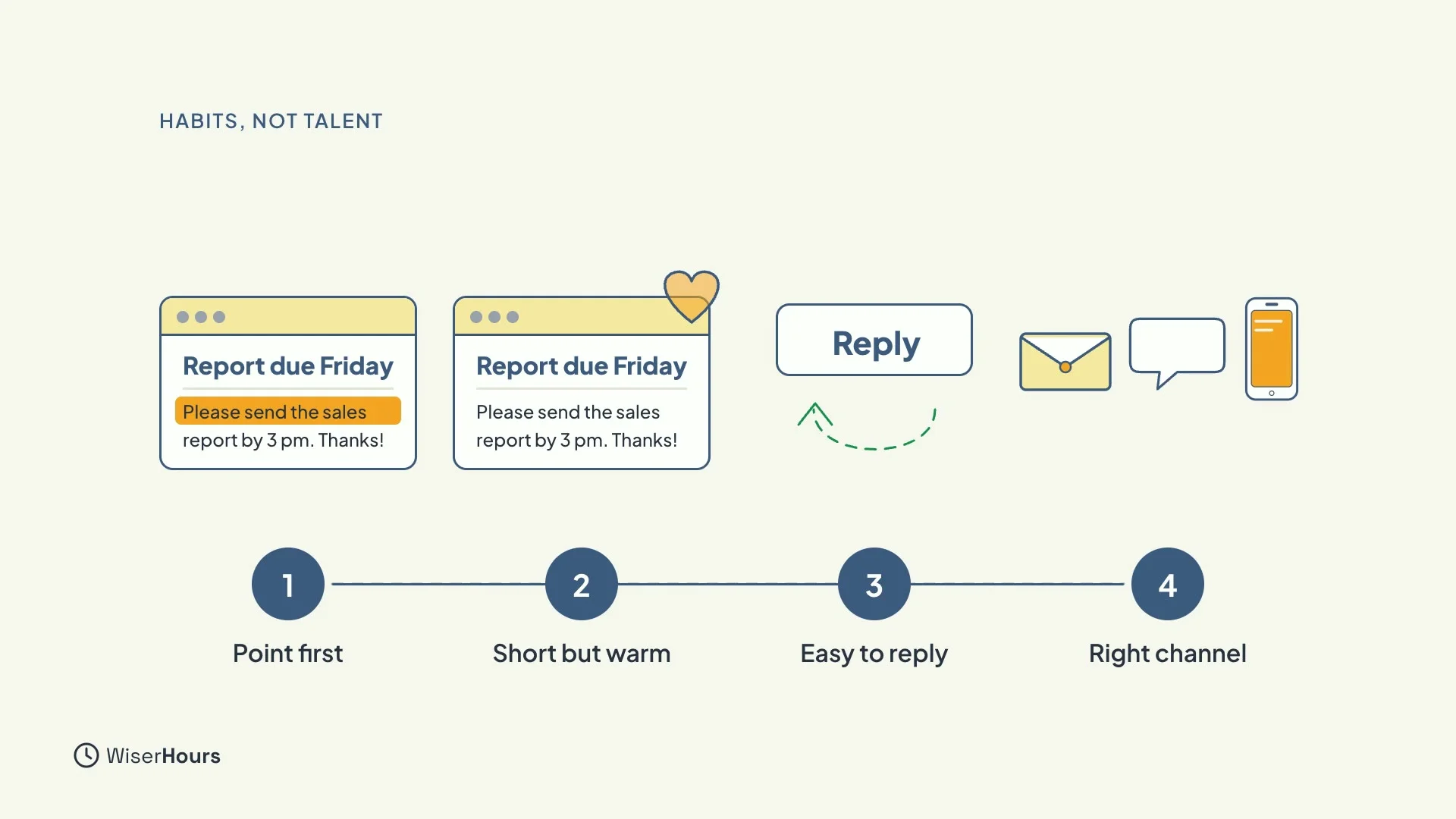
The good news is that you do not need a gift for writing. Clear writing is a set of simple habits: put the point first, keep it short but warm, make replying easy, and choose the right channel for the message. This course teaches them one at a time.
 (opens the full-size picture)
The course ahead
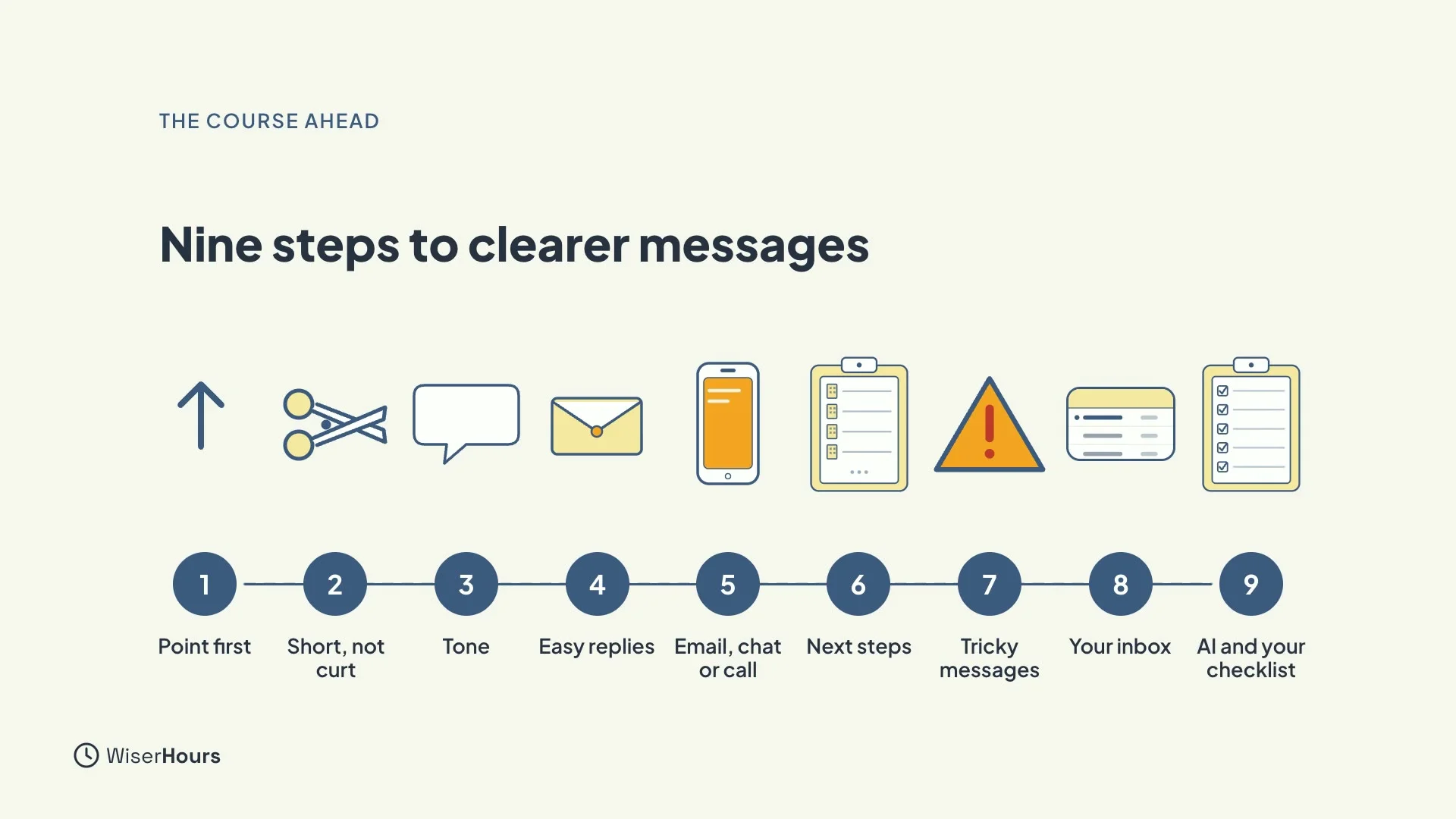
There are ten lessons. First you put the point first, keep it short but warm, and check your tone. Then you make replies easy and choose between email, chat and a call. Next come clear next steps and tricky messages, then taming your inbox, and finally using AI safely and making your own writing checklist.
 (opens the full-size picture)
YOUR TURN
Read more
- How to write a professional email: how people read, defer and answer work email, and how to write for them.
- Email filters and rules: how many emails a day workers get, and how to make your inbox sort itself.
Read the full lesson script
Welcome to Write Clear Emails and Messages at Work. In this first lesson, you'll see how people really read work messages, why clear writing saves everyone time, and how this short course will help you write messages that get answered.
Work email never stops. One large workplace survey found that the average worker gets about a hundred and seventeen emails a day. That's roughly one every four minutes, on top of team chat and meetings.
So people skim. In a study of more than a million email users, over half of the work emails that were opened were read for less than ten seconds. And many are opened first on a phone, where only the first few lines show.
Long emails get put off. In one study, an email's length was one of the strongest signs that the reader would leave it for later. A message that looks like hard work waits at the bottom of the pile.
Unclear messages cost more than time. A review of dozens of studies found that abrupt, confusing or rude emails, and pressure to reply instantly, were linked to worse work and more stress. Clear writing is a kindness to your reader.
The good news is that clear writing is a set of simple habits, not a talent. Put the point first. Keep it short but warm. Make replying easy. And choose the right channel for the message.
Here's the course. First, you'll put the point first, keep it short but warm, and check your tone. Then you'll make replies easy, and choose between email, chat and a call. Next, you'll write clear next steps, and handle tricky messages. After that, you'll tame your inbox. Finally, you'll use AI safely, and make your writing checklist.
So remember: people get lots of messages, and they skim them in seconds. Long or unclear messages get left for later or misread. And clear writing is a set of habits you can learn. Before the next lesson, open your sent folder, and read your last email as if you had only ten seconds. Next, you'll learn to put the point first.
MAKE IT A SMALL WIN
Finished this lesson?
Mark it complete to save your progress on this device.