Getting understood · Lesson 5 of 10
Make It Easy to Reply: Ask Clearly and Follow Up
Learn to ask in a way that gets a quick reply, with one ask per email, easy answers and a friendly follow-up when nothing comes back.
 Video coming soon
You have put your point first. Now make it easy to answer. In this lesson you will learn how to ask in a way that gets a quick reply, and how to follow up when it does not come.
One ask per email
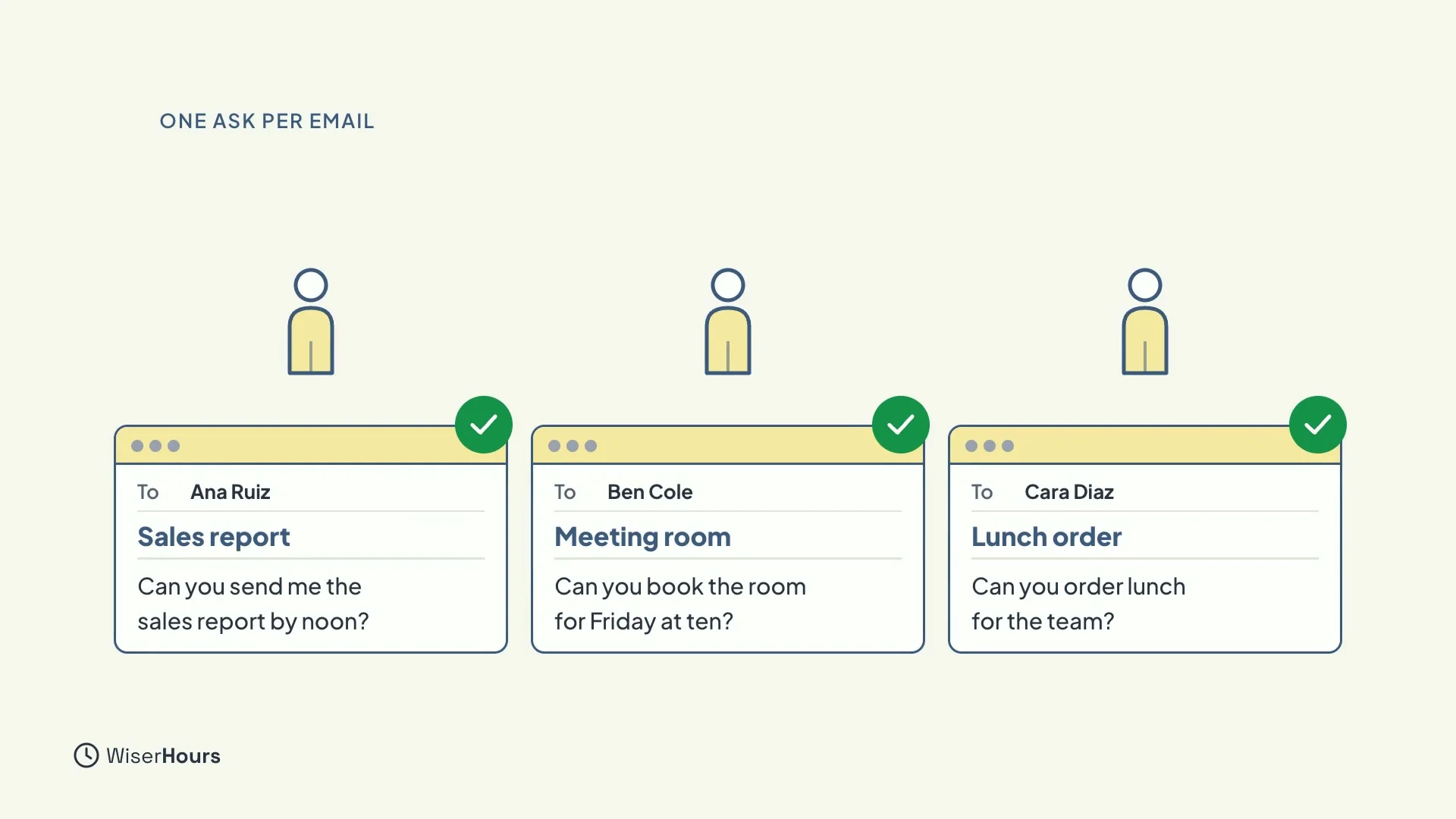
Start with one ask per email. When a message holds three requests, people tend to answer the easiest one and forget the rest. If you need three things from three people, send three short emails.
 (opens the full-size picture)
Make the answer easy
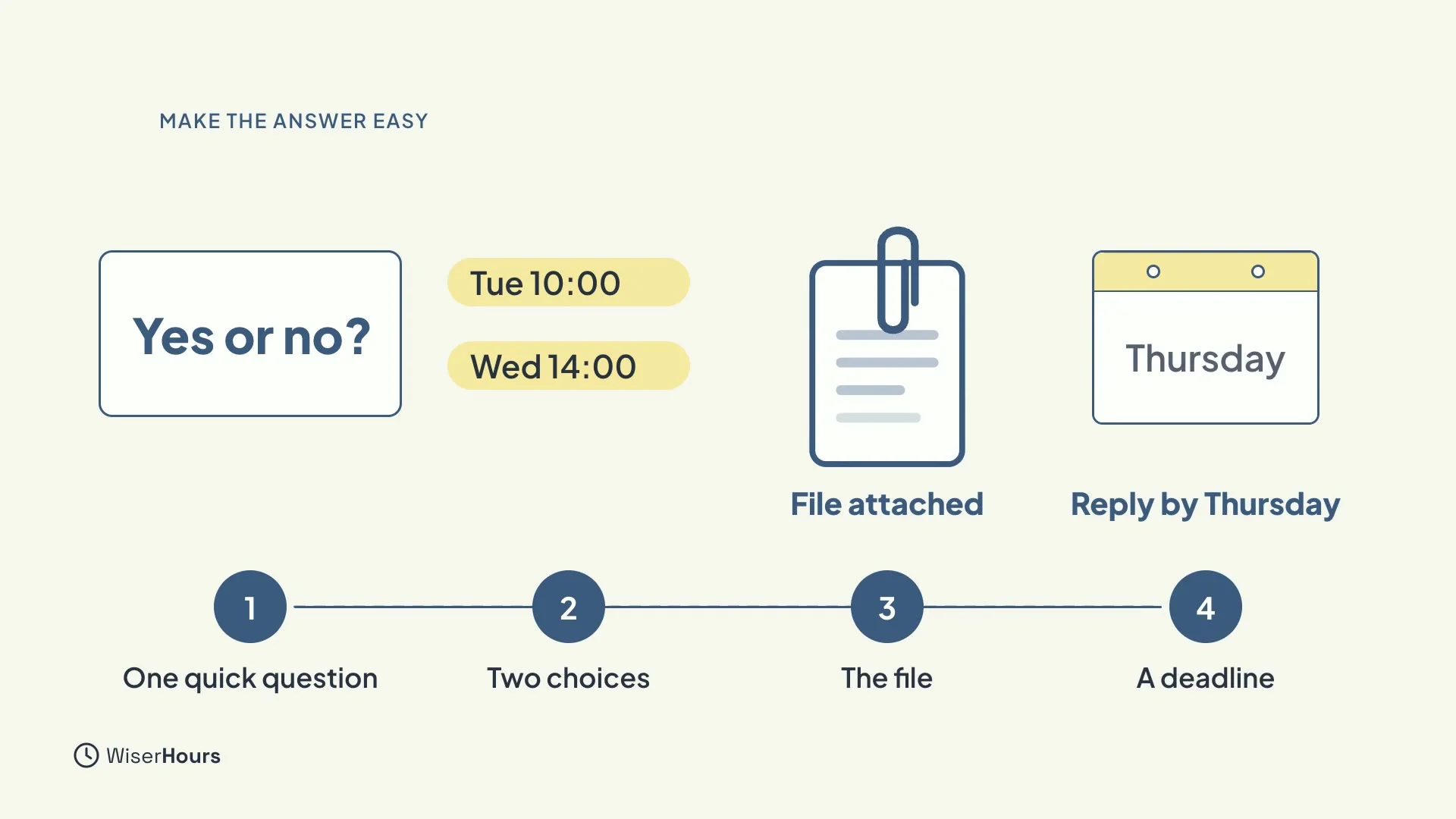
Then make the answer easy to give. Ask a yes or no question, or offer two choices: “Tuesday at ten, or Wednesday at two?” Attach the file they will need. And say when you need the answer by.
 (opens the full-size picture)
Shorter asks get answered
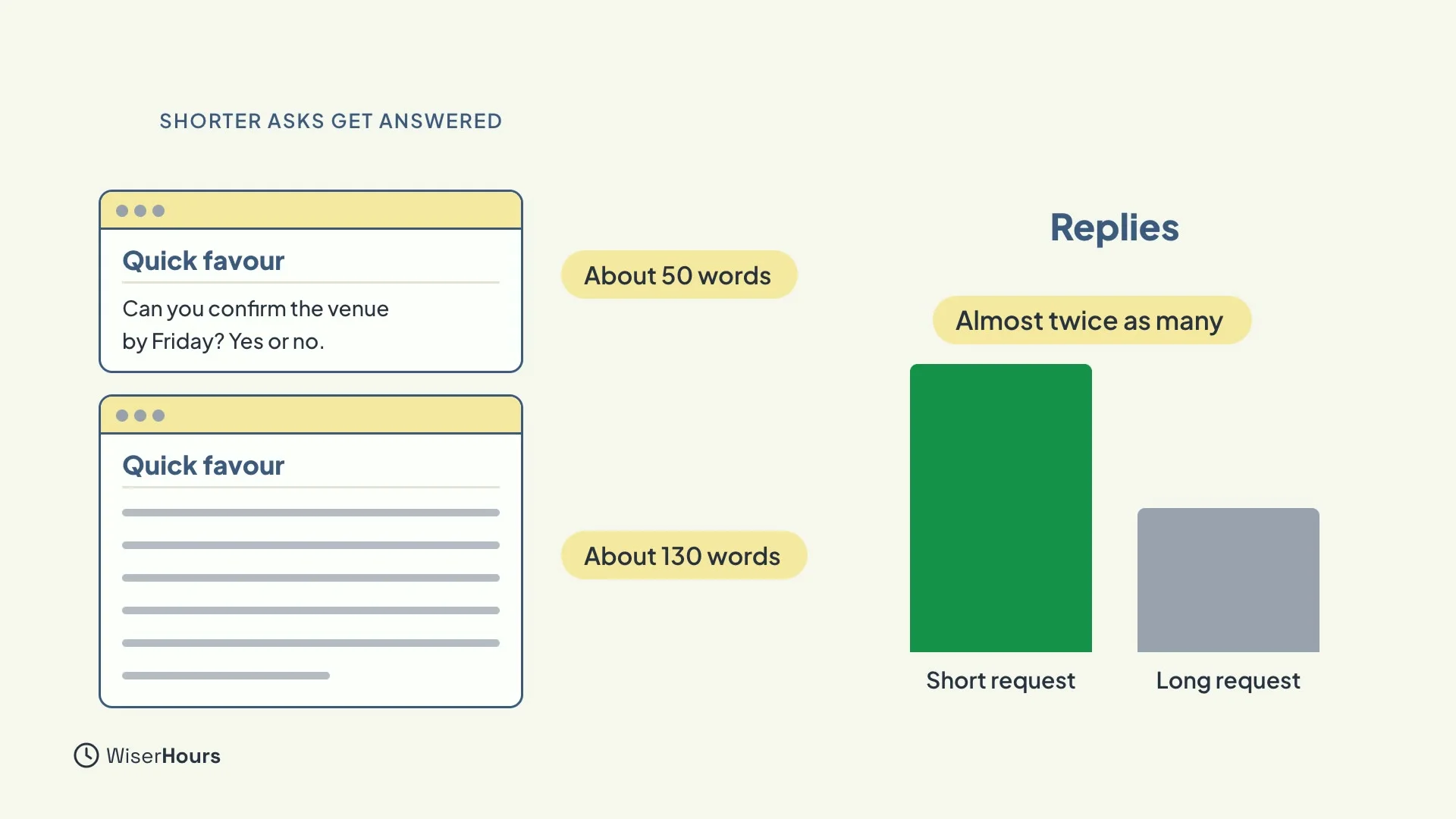
Short requests get more replies. In one large field test, a short request of about fifty words got almost twice as many responses as a longer version of the same request. That test is reported by its authors rather than published in a peer-reviewed journal, so treat it as a useful sign, not a promise.
 (opens the full-size picture)
Make it stand alone
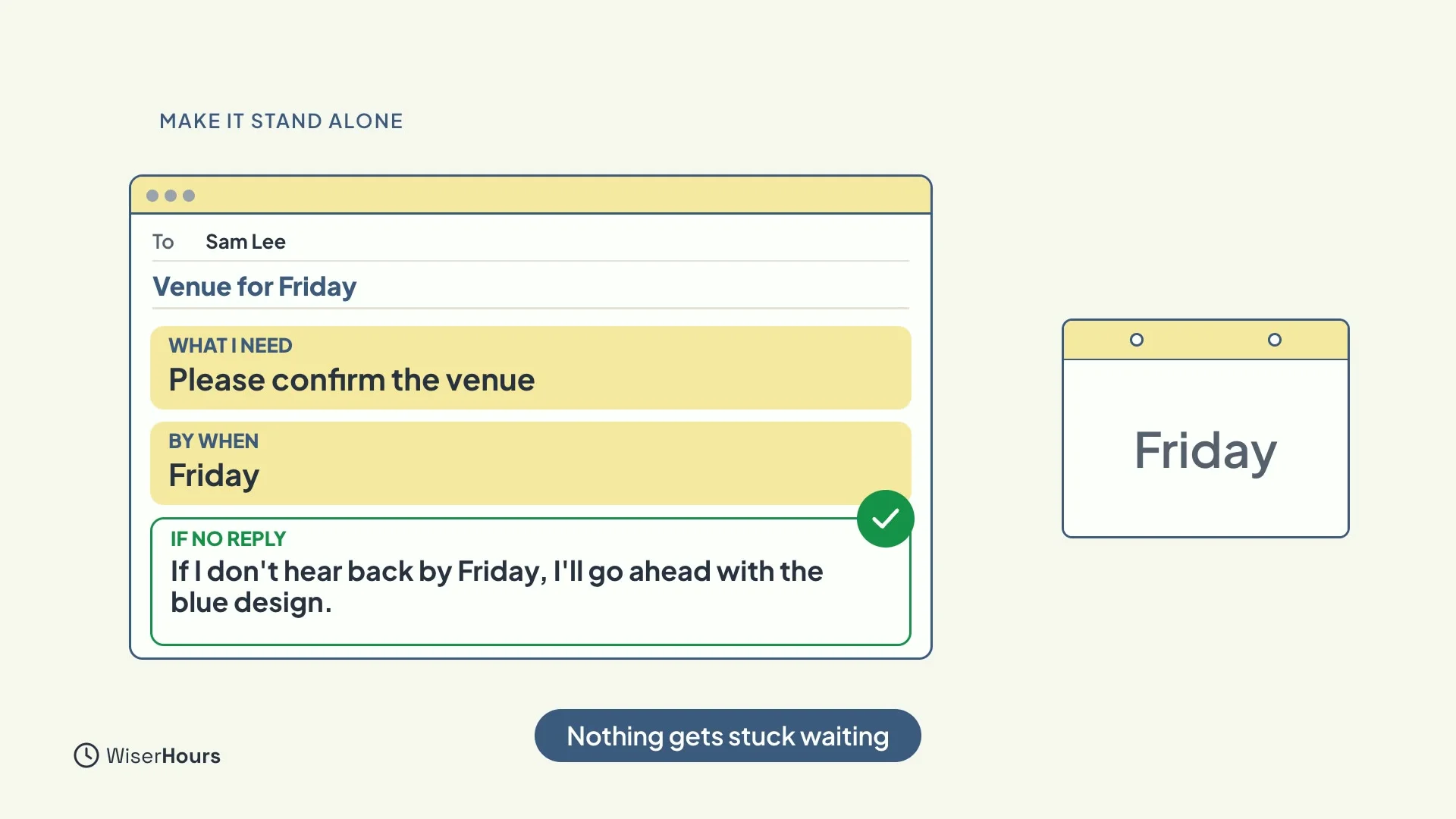
Write each request so it works on its own. Say what you need, by when, and what happens if nobody answers. For example: “If I don’t hear back by Friday, I’ll go ahead with the blue design.” Then nothing gets stuck waiting.
 (opens the full-size picture)
Follow up without guilt
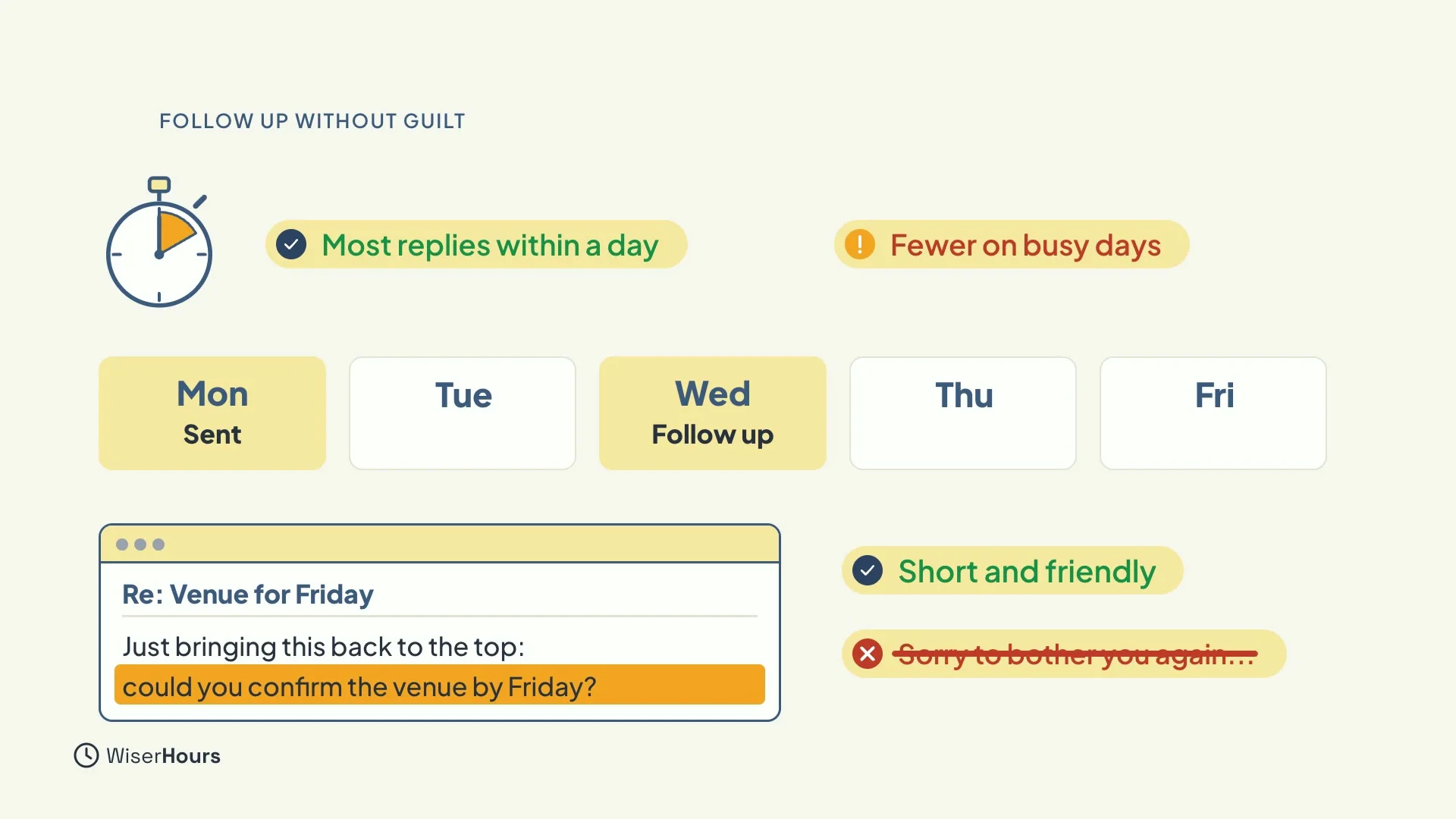
Most replies come within a day, and people answer less on busy days. So if nothing comes after a couple of working days, send a short, friendly follow-up. Restate the ask in one line. No apology and no guilt. The couple of working days is a sensible rule of thumb, not a tested number.
 (opens the full-size picture)
YOUR TURN
Read more
- How to write a professional email: how to make a reply easy and state a deadline.
- How to use AI to write emails: the field test on short requests, and a follow-up prompt.
- Asynchronous communication explained: messages that stand alone, with the request and date.
Read the full lesson script
Welcome back. You've put your point first. Now make it easy to answer. In this lesson, you'll learn how to ask in a way that gets a quick reply, and how to follow up when it doesn't come.
Start with one ask per email. When a message holds three requests, people answer the easiest one and forget the rest. If you need three things from three people, send three short emails.
Then make the answer easy to give. Ask a yes or no question, or offer two choices: Tuesday at ten, or Wednesday at two? Attach the file they'll need. And say when you need the answer by.
Short requests get more replies. In one large field test, a short request of about fifty words got almost twice as many responses as a longer version of the same request.
Write each request so it works on its own. Say what you need, by when, and what happens if nobody answers. "If I don't hear back by Friday, I'll go ahead with the blue design." Then nothing gets stuck waiting.
Most replies come within a day, and people answer less on busy days. So if nothing comes after a couple of working days, send a short, friendly follow-up. Restate the ask in one line. No apology, and no guilt.
So remember: one ask per email, and make the answer easy with a yes or no, two options, the file, and a date. Short requests get more replies. And follow up after a couple of working days, without guilt. Before the next lesson, end your next request with a yes or no question, or two options, and a date. Next, you'll choose between email, chat and a call.
MAKE IT A SMALL WIN
Finished this lesson?
Mark it complete to save your progress on this device.