Getting things done · Lesson 8 of 10
Tricky Messages: Feedback, Disagreement and Saying No
Handle feedback, disagreement and a no calmly: talk first, describe one event, say no with a reason and an option, and sleep on angry replies.
 Video coming soon
Some messages are harder to write: feedback, a disagreement or a “no”. In this lesson you learn how to handle them calmly, in writing and out of it. The aim is to be clear and kind at the same time.
Talk first when it matters
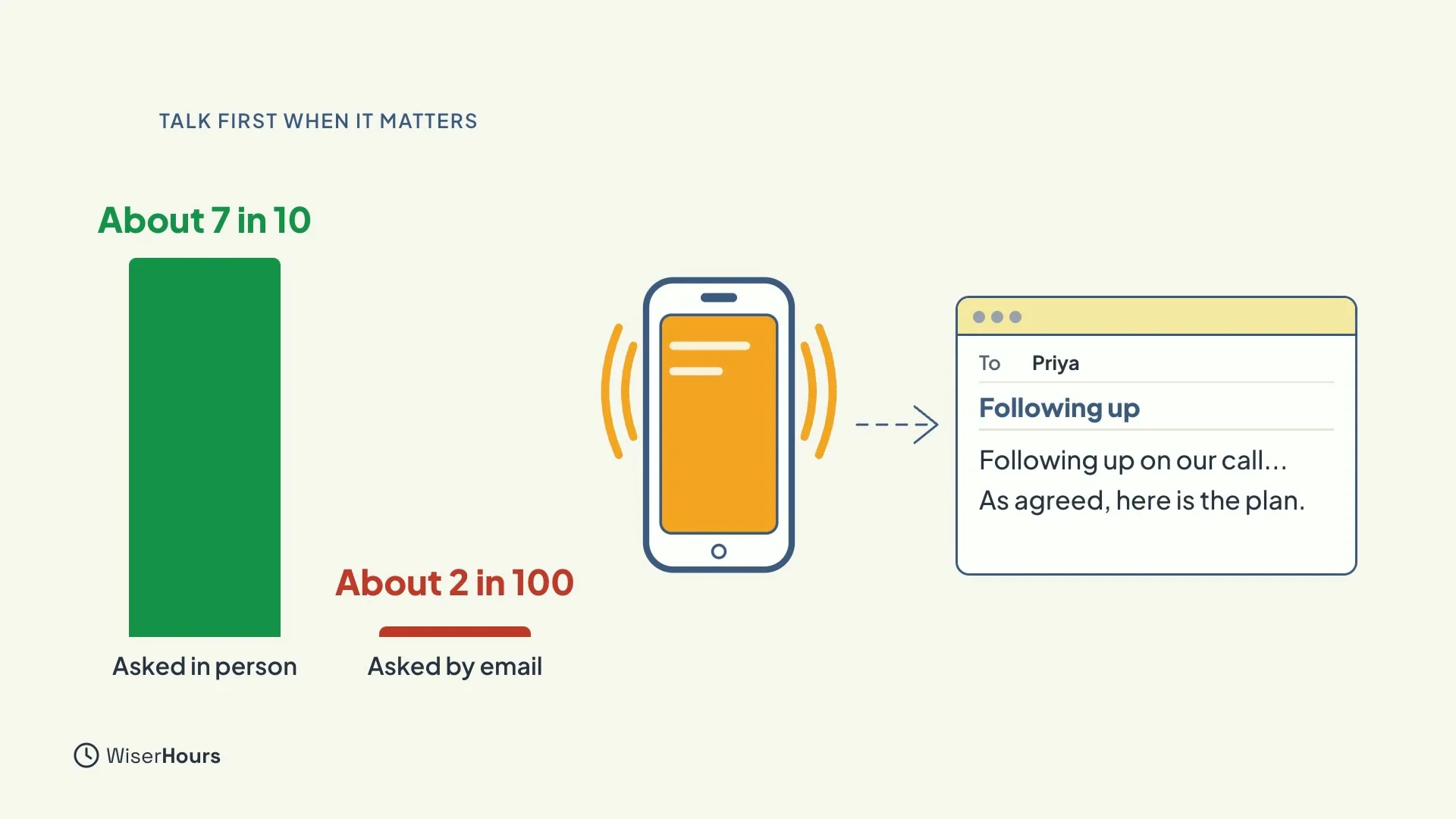
When tone really matters, writing is the riskiest channel. In experiments, people were far more likely to agree to a favor asked in person than one asked by email: about 7 in 10 in person, against about 2 in 100 by email. The same words land differently when the other person cannot see or hear you.
So for hard conversations, talk first, then follow up in writing.
 (opens the full-size picture)
Feedback: one event, not a label
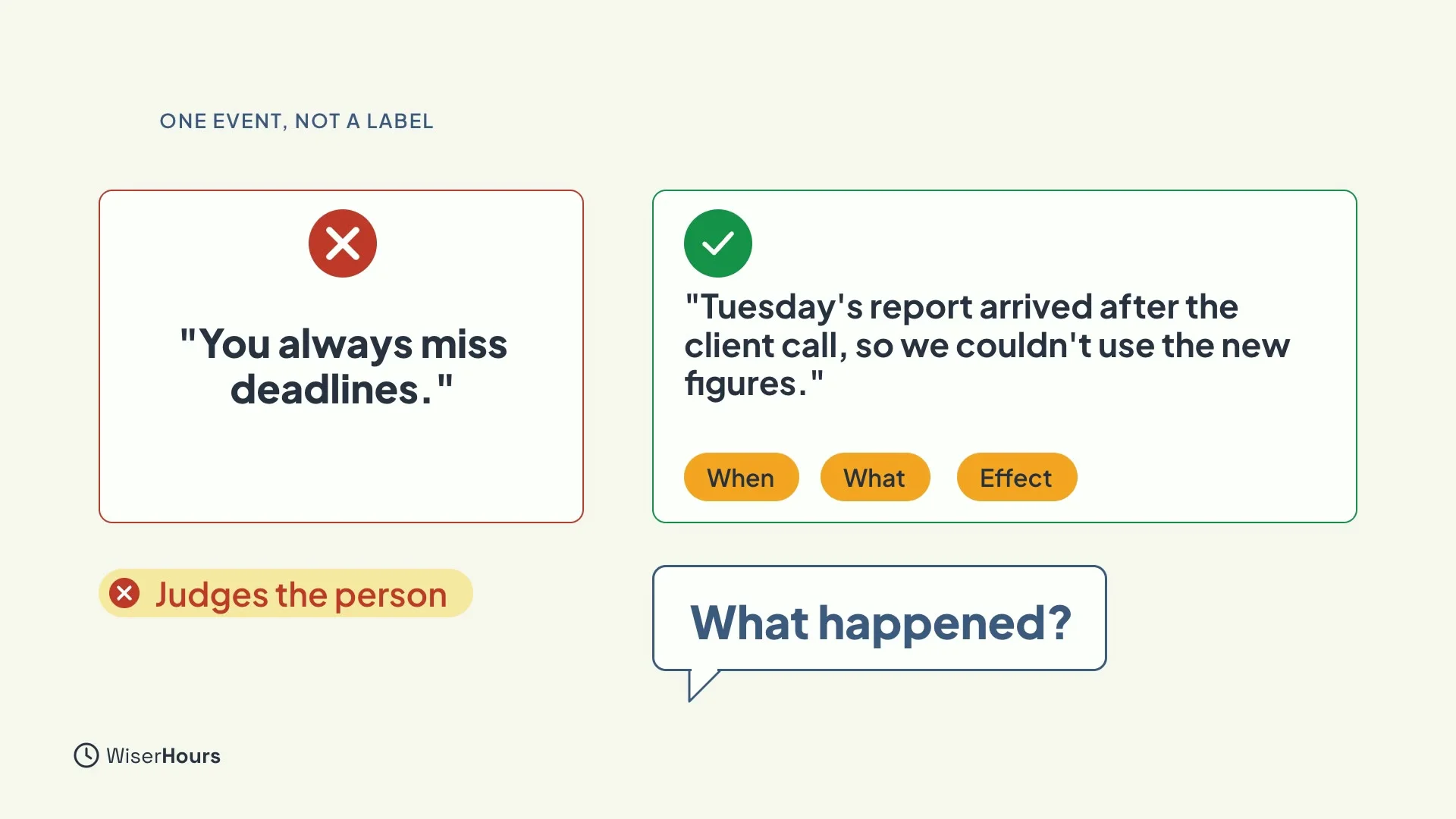
When you do give feedback in writing, describe one specific event and its effect. Not “you always miss deadlines”, which judges the person. Instead: “Tuesday’s report arrived after the client call, so we couldn’t use the new figures.” That names when it happened, what happened and the effect. Then ask what happened, because there may be a reason you cannot see.
 (opens the full-size picture)
Saying no with an option
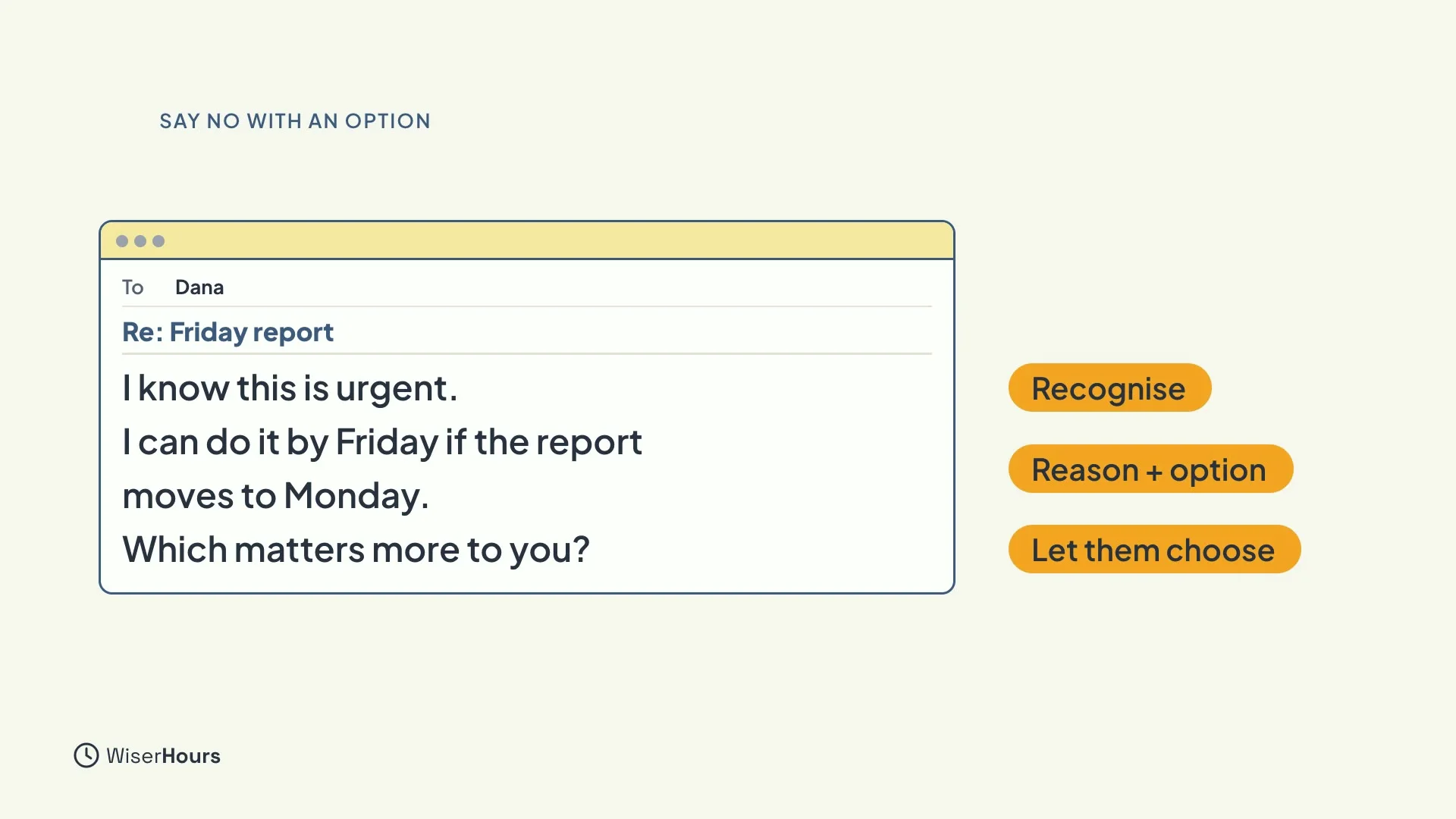
To say no without damaging the relationship, give a reason and an option. For example: “I can do it by Friday if the report moves to Monday. Which matters more to you?” One line of recognition first, like “I know this is urgent”, softens it further.
 (opens the full-size picture)
Why this works
A plain no ends the conversation. A reason plus an option keeps it going, and it gives the other person a real choice.
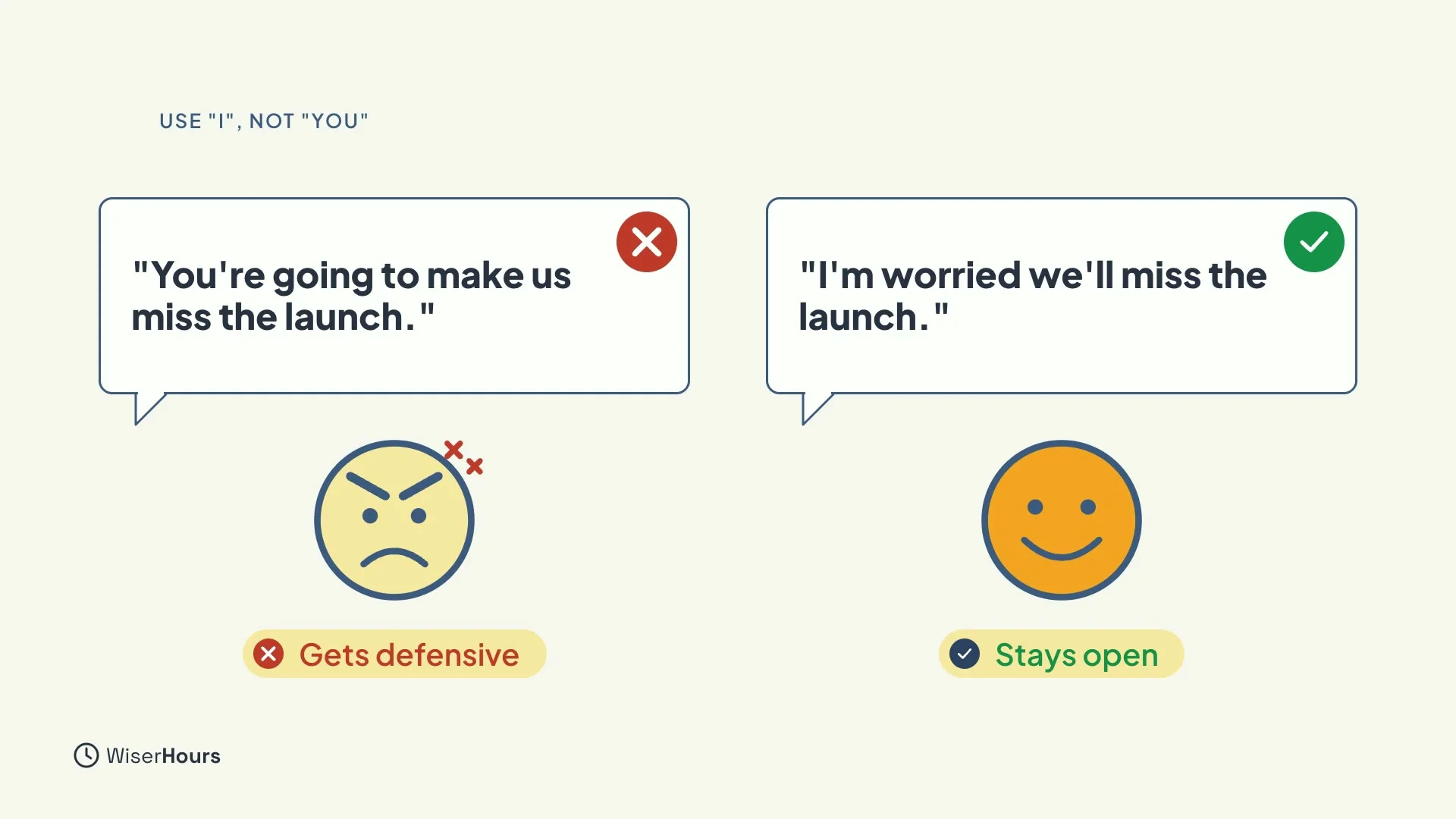
Use “I”, not “you”
Phrase concerns from your side. “I’m worried we’ll miss the launch” draws less defensiveness than “You’re going to make us miss the launch”. It says the same thing, without an attack.
 (opens the full-size picture)
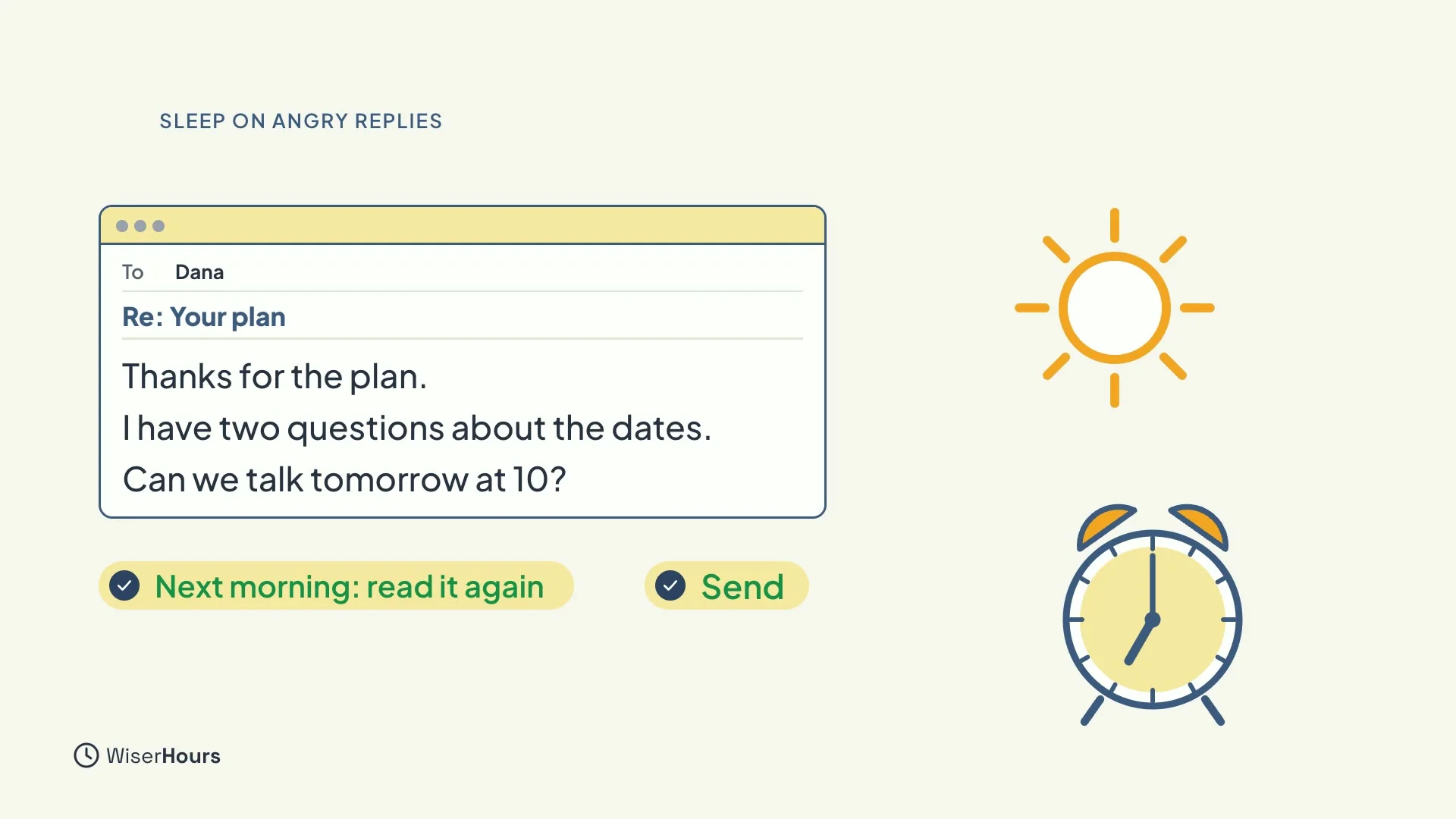
Sleep on angry replies
If a message makes you angry, write your reply if you like, but don’t send it. Read it again the next morning. Most angry replies look very different after a night’s sleep, and the calm version is the one you want on record.
 (opens the full-size picture)
YOUR TURN
Read more
- How to Give Constructive Feedback Using the SBI Model: a simple way to describe one event and its impact.
- Communication Styles Explained: how to say no firmly and kindly.
- Negotiating by Email: what to write, and what to leave until you can talk.
- Asynchronous Communication Explained: which channel suits feedback and disagreements.
Read the full lesson script
Welcome back. Some messages are harder to write: feedback, a disagreement, or a "no". In this lesson, you'll learn how to handle them calmly, in writing and out of it.
When tone really matters, writing is the riskiest channel. In experiments, people were far more likely to agree to a favour asked in person than one asked by email. So for hard conversations, talk first, then follow up in writing.
When you do give feedback in writing, describe one specific event and its effect. Not "you always miss deadlines", but "Tuesday's report arrived after the client call, so we couldn't use the new figures". Then ask what happened.
To say no without damaging the relationship, give a reason and an option. "I can do it by Friday if the report moves to Monday. Which matters more to you?" One line of recognition first, like "I know this is urgent", softens it further.
Phrase concerns from your side. "I'm worried we'll miss the launch" draws less defensiveness than "You're going to make us miss the launch". It says the same thing, without an attack.
And if a message makes you angry, write your reply if you like, but don't send it. Read it again the next morning. Most angry replies look very different after a night's sleep.
So remember: when tone really matters, talk first, then write. Give feedback about one specific event, and say no with a reason and an option. And never send an angry reply the same day. Before the next lesson, rewrite one "no" you need to send as a reason plus an option. Next, you'll take control of your inbox.
MAKE IT A SMALL WIN
Finished this lesson?
Mark it complete to save your progress on this device.