Getting understood · Lesson 4 of 10
Your Tone Is Less Clear Than You Think in Writing
See why readers often miss your tone in emails and chat, and use three simple habits to make yours clear and avoid misreading others.
 Video coming soon
When you write a message, you can hear your own tone in your head. Your reader cannot. In this lesson you will see how often tone gets lost in writing, and how to make yours clear.
Senders are too sure
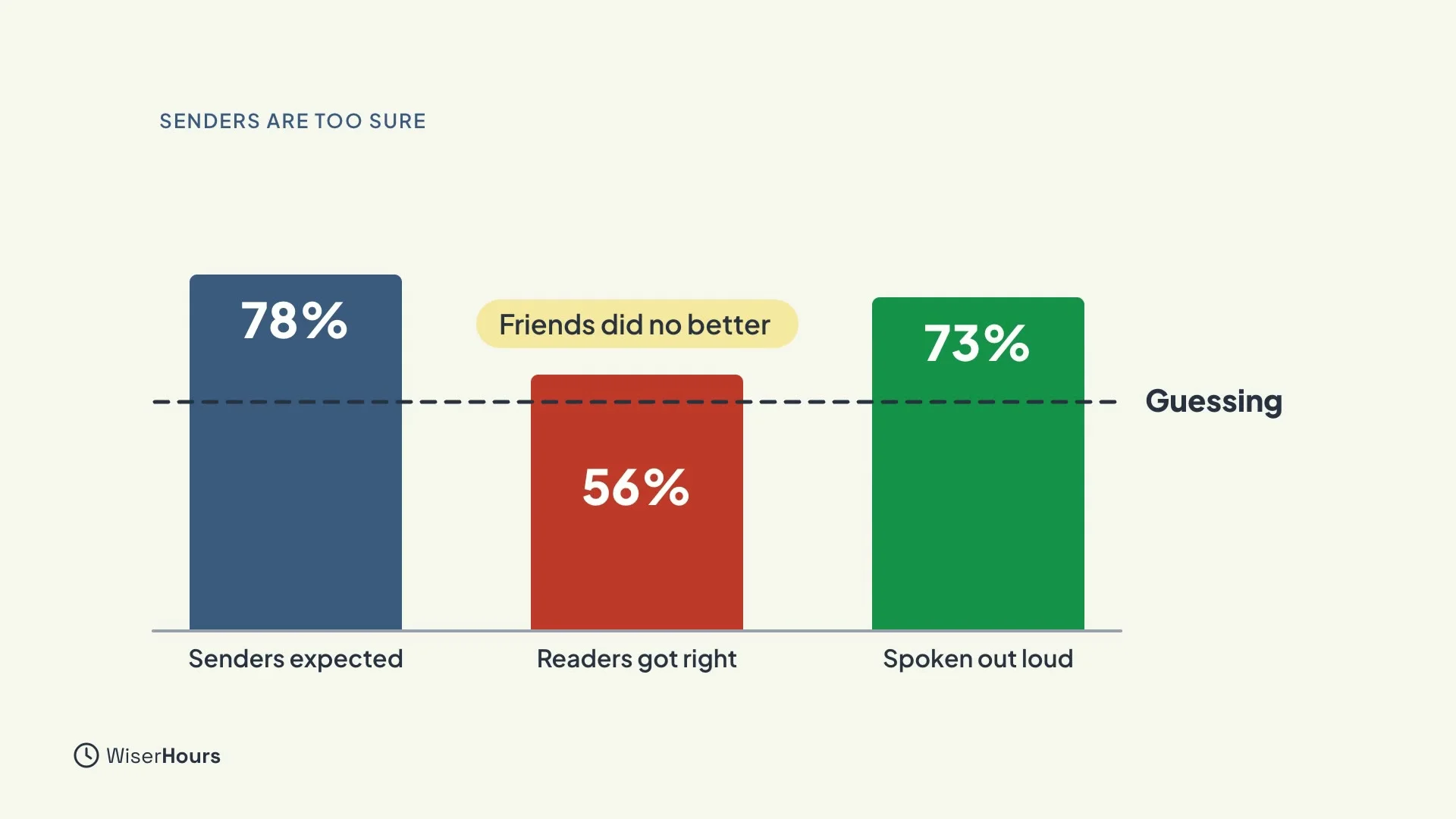
In one set of experiments, people wrote short messages meant to sound serious or sarcastic. The senders expected 78% of their lines to be read as intended. The readers got only 56% right, which is close to guessing. Lines said out loud were understood much better, at 73%. Friends did no better than strangers.
 (opens the full-size picture)
Sarcasm gets lost
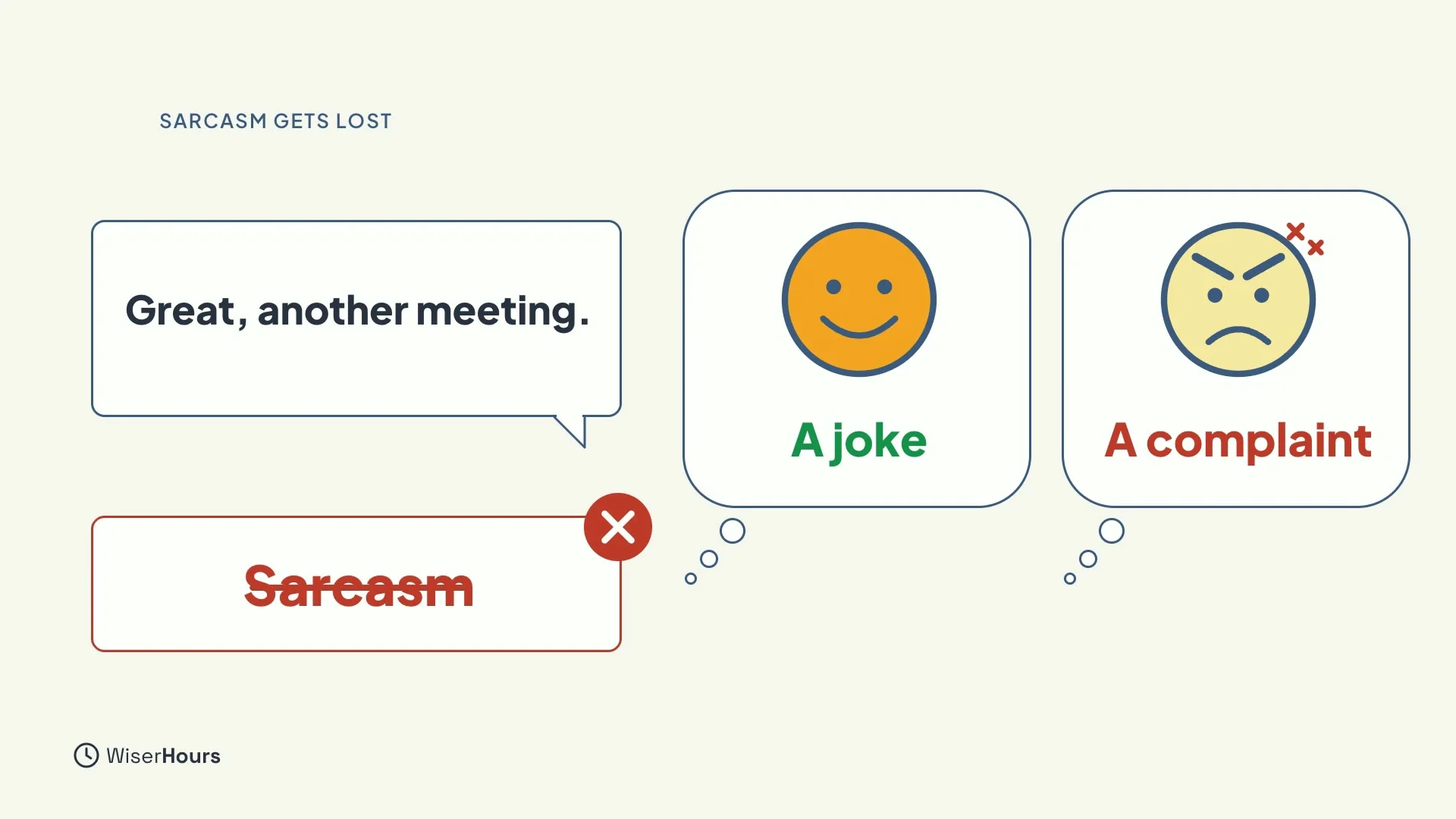
Sarcasm was the hardest of all. A dry joke that sounds obvious to you can read as a real complaint. So in work messages, leave out sarcasm and jokes that depend on tone.
 (opens the full-size picture)
Read it in the opposite tone
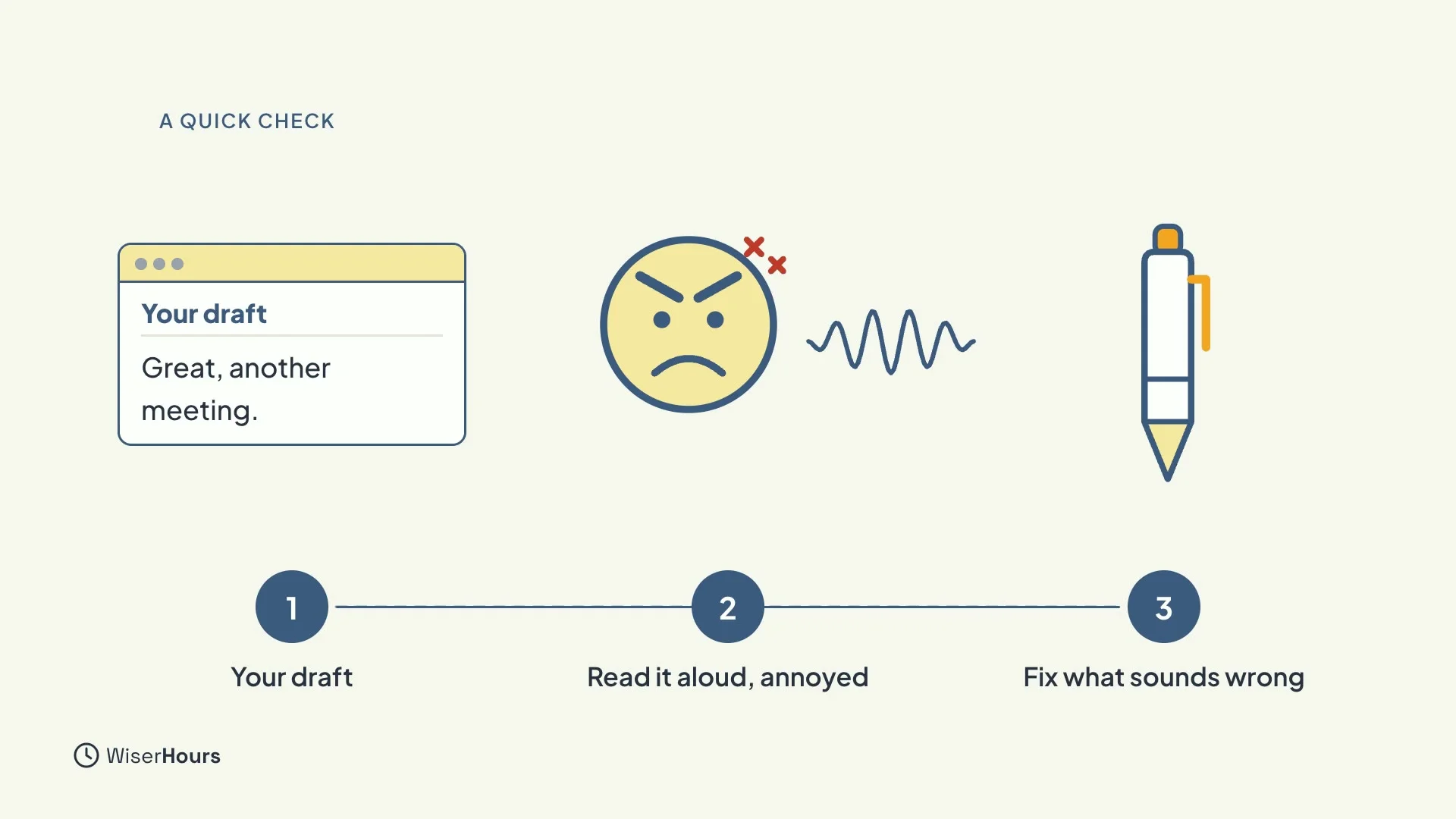
Here is a quick check. Before you send a tricky message, read it aloud in the opposite tone, for example in an annoyed voice. In the experiments, this simple step made senders far less overconfident. If something sounds wrong, fix it.
 (opens the full-size picture)
Say how you feel, plainly
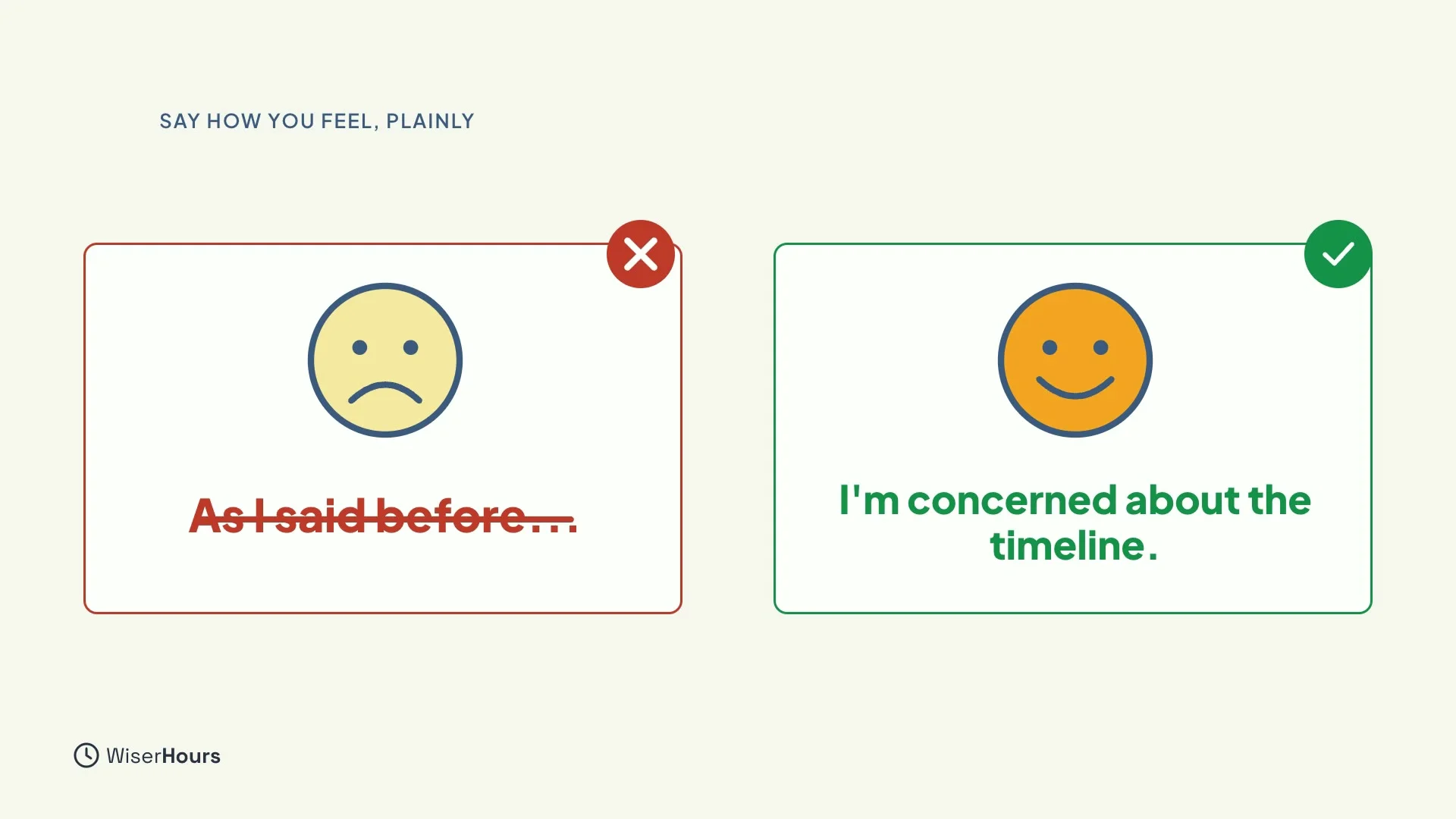
When feelings matter, name them plainly. “I’m concerned about the timeline” is clearer than a sharp “As I said before”. Phrases like that, or a pointed slow reply, can read as passive-aggressive even if you did not mean it.
 (opens the full-size picture)
When you are on the receiving end
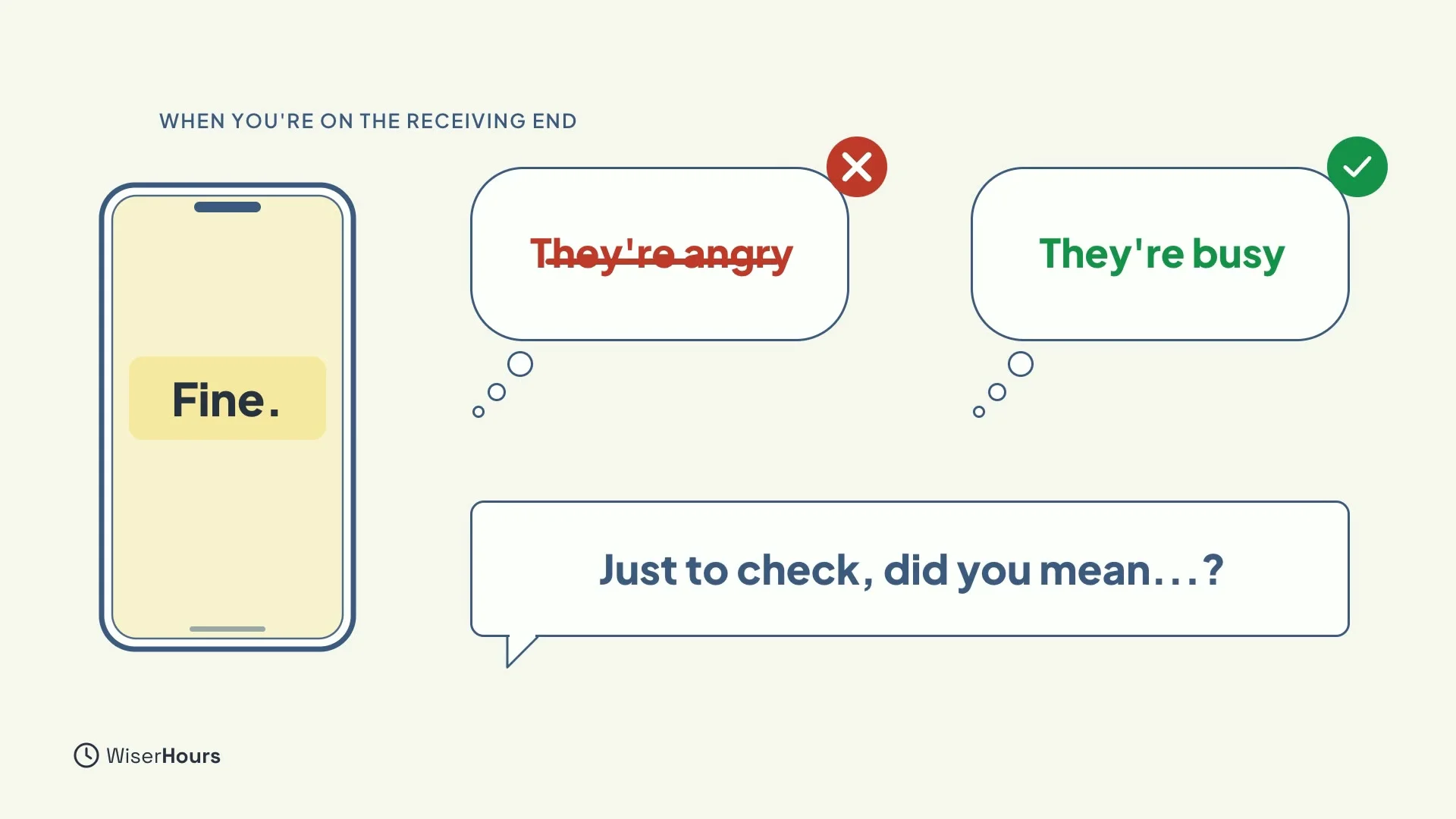
The same problem works in reverse. When a message reads badly to you, assume the writer was in a hurry, not hostile. Then ask what they meant before you react. A short “Just to check, did you mean…?” is enough.
 (opens the full-size picture)
YOUR TURN
Read more
- What are communication skills?: why senders overrate how clear their tone is, and what helps.
- Negotiating by email: how to name feelings plainly in writing.
- Hanlon’s razor: why assuming haste before bad intent is usually right.
Read the full lesson script
Welcome back. When you write a message, you can hear your own tone in your head. Your reader can't. In this lesson, you'll see how often tone gets lost, and how to make yours clear.
In one set of experiments, people wrote short messages meant to sound serious or sarcastic. The senders expected most of their lines to be read as intended. The readers got only about half right, close to guessing. Lines said out loud were understood much better.
Sarcasm was the hardest of all. A dry joke that sounds obvious to you can read as a real complaint. So in work messages, leave out sarcasm and jokes that depend on tone.
Here's a quick check. Before you send a tricky message, read it aloud in the opposite tone, for example in an annoyed voice. In the experiments, that simple step made senders far less overconfident.
When feelings matter, name them plainly. "I'm concerned about the timeline" is clearer than a sharp "As I said before". Phrases like that, or a pointed slow reply, can read as passive-aggressive, even if you didn't mean it.
And when a message reads badly to you, remember the same problem works in reverse. Assume the writer was in a hurry, not hostile. Ask what they meant before you react.
So remember: readers guess your tone right only about half the time. Leave out sarcasm, and read tricky messages aloud in the opposite tone before you send. And when a message reads badly, assume haste, and ask. Before the next lesson, read your next tricky message aloud in an annoyed voice before you send it. Next, you'll learn to make replying easy.
MAKE IT A SMALL WIN
Finished this lesson?
Mark it complete to save your progress on this device.