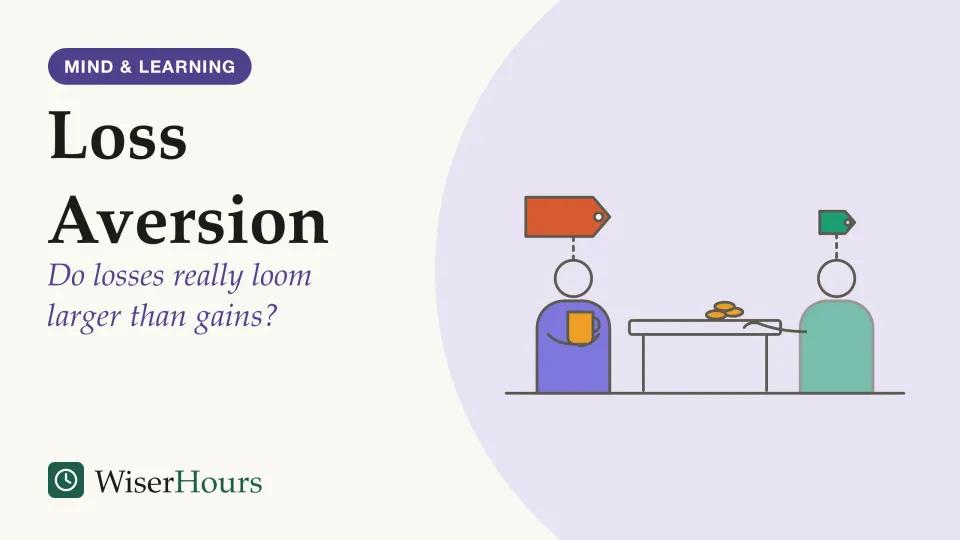
Loss Aversion: Do Losses Really Loom Larger Than Gains?
Loss aversion makes a loss sting more than an equal gain pleases. Evidence since 1979 says it is real on average, but weak or absent when stakes are small.
Mental models, cognitive biases and better ways to decide.
Loss aversion makes a loss sting more than an equal gain pleases. Evidence since 1979 says it is real on average, but weak or absent when stakes are small.
Overconfidence bias has 3 forms. In studies reviewed in 2008, ranges people were 90% sure of held the answer under half the time. What helps.
Hindsight bias makes outcomes look predictable once you know them. Fischhoff's 1975 experiments, its three levels, and the one fix with evidence.
The sunk cost fallacy lets spent money decide. A 2012 review of 166 samples found the pull shrinks when you separate it from being nearly done.
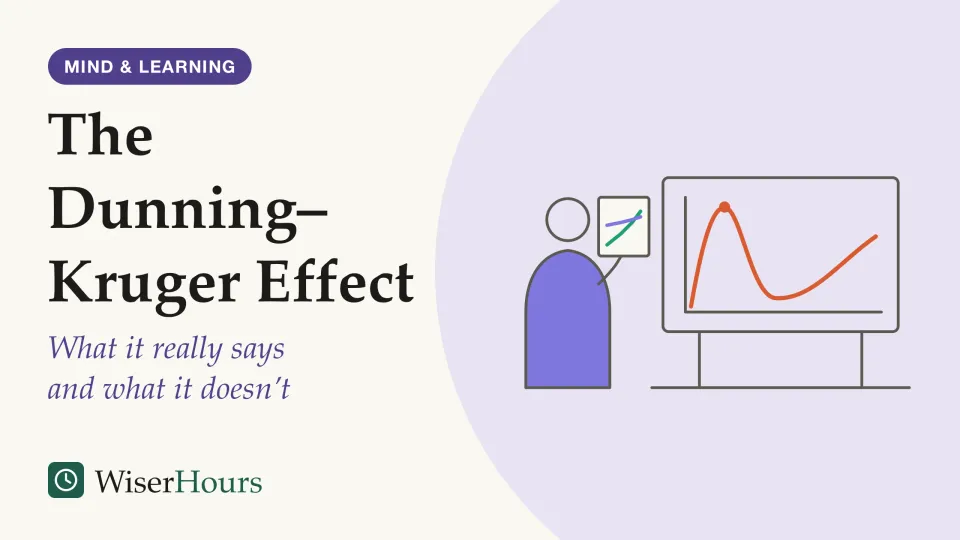
The 1999 Dunning-Kruger paper never drew 'Mount Stupid'. Statistics explain part of its pattern, but two 2021 studies of about 4,000 people each found a gap.
Cognitive biases are shortcuts that misfire. Anchoring and framing survived a retest in 36 samples; bias scores barely correlate.
The slippery slope fallacy explained: 3 kinds of slope argument, everyday and work examples, and 3 questions that separate a weak chain from a fair warning.
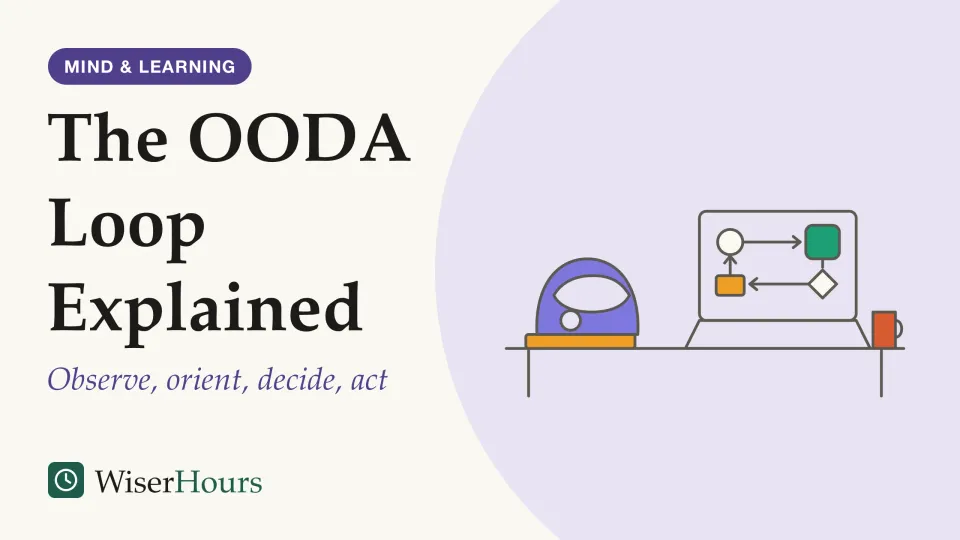
The OODA loop's 4 steps in plain words: where John Boyd's model came from, why Orient matters most, and how to use it at work, plus its limits.
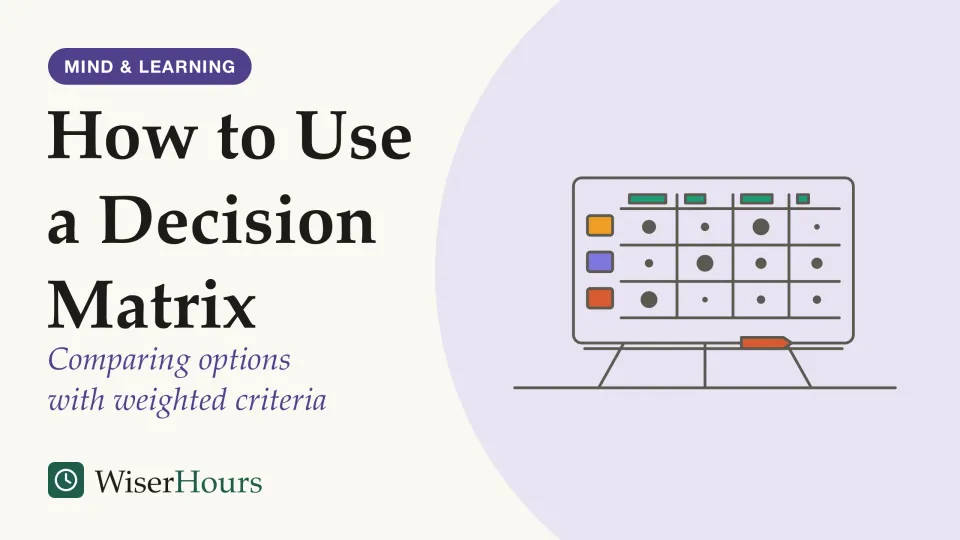
How to build a decision matrix in 6 steps: pick criteria that don't overlap, score one column at a time, weight the gaps, then test the winner.
What is opportunity cost? The value of the best option you give up. A simple formula, time and money examples, and a 5-step check before you decide.
Hanlon's razor: don't assume malice when a mistake explains it. Its 1980 origin, the bias it corrects, a 4-step routine and its limits.
Occam's razor says prefer the explanation with fewer unsupported assumptions. 4 worked examples, and when the simple story loses.
Mental models have 2 meanings: the mind's inner simulations and a popular toolkit. What research says about which thinking tools carry over.
Correlation vs causation: the 4 other explanations for any link, and the questions from Bradford Hill's 1965 paper that help tell a cause from a coincidence.
Analysis paralysis ties to hard trade-offs and fear of regret. Why choices stall, how solid the research is, and 5 ways to get unstuck.
Groupthink is a group's wish to agree overriding its judgment. Janis's 8 warning signs, the Bay of Pigs and Challenger, and what research says prevents it.
How we make decisions: fast impressions, slower checks and mental shortcuts, plus which classic findings held up across 36 samples and which did not.