Leadership & Management Skills
What Is Leadership? Definitions That Actually Help You Lead
What is leadership? Nearly every definition centers on influence, and a 2011 meta-analysis found behaviors tend to explain more of effectiveness than traits.
What is leadership? Nearly every definition centers on influence, and a 2011 meta-analysis found behaviors tend to explain more of effectiveness than traits.
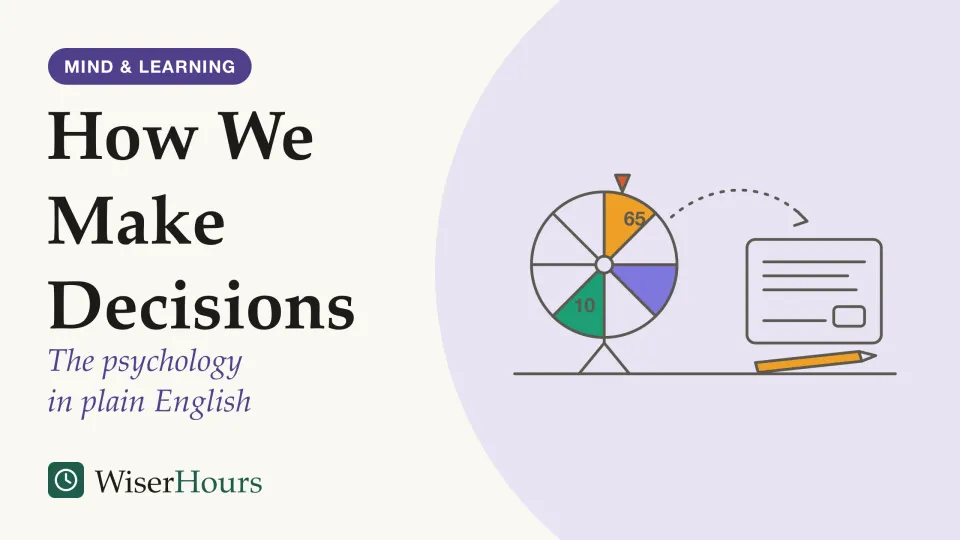
How we make decisions: fast impressions, slower checks and mental shortcuts, plus which classic findings held up across 36 samples and which did not.
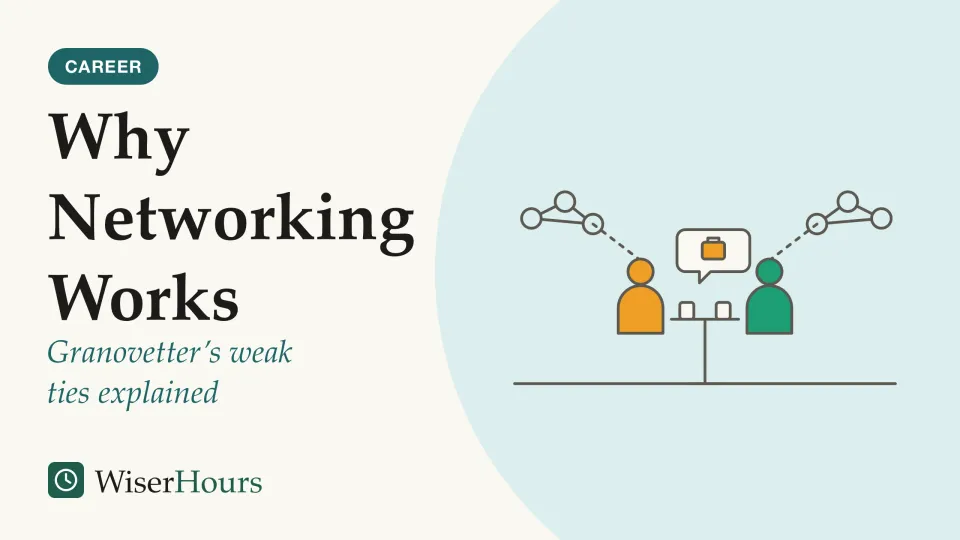
In Granovetter's job study, over 4 in 5 who found work via a contact saw that person only occasionally or rarely. Why weak ties work and when strong ties win.
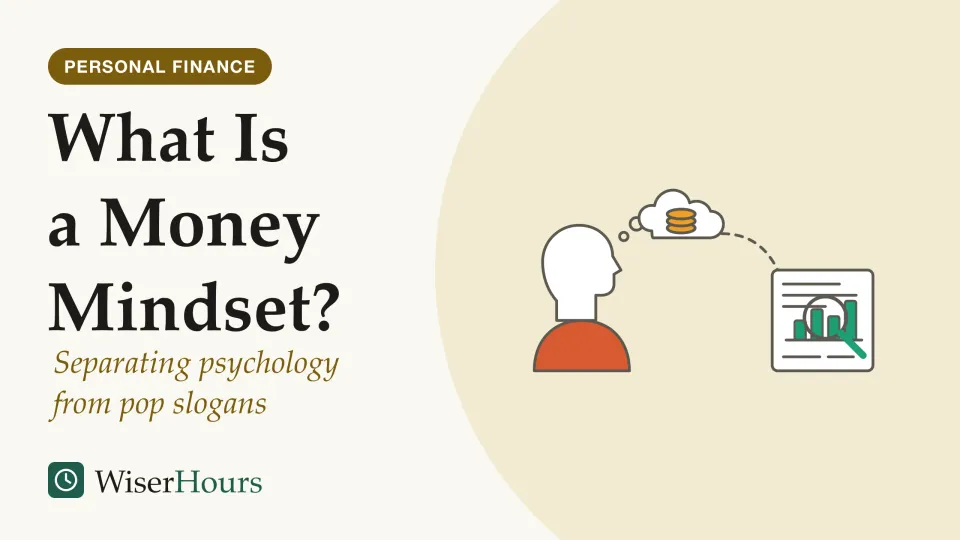
What is a money mindset? What psychologists actually measure, the 4 money scripts in Klontz's research, and how to test your beliefs against your numbers.
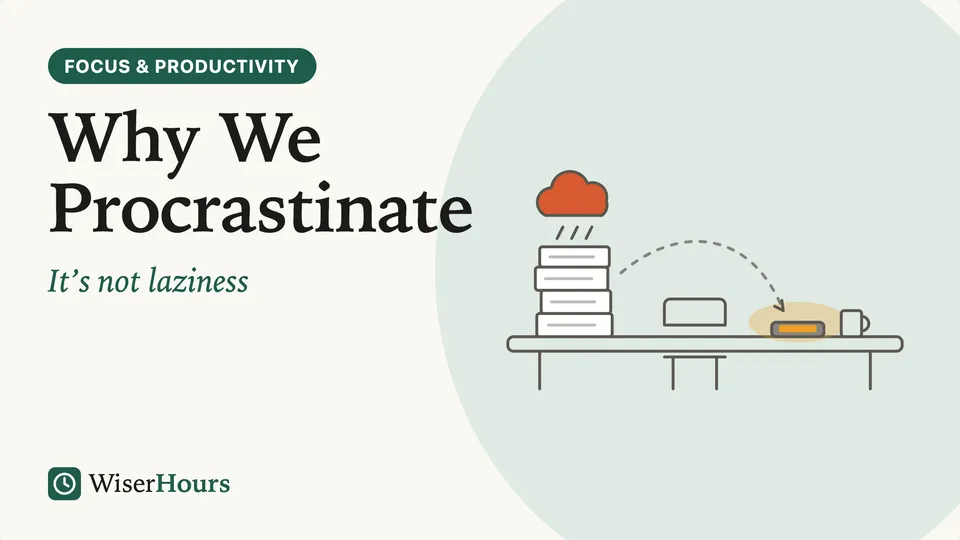
Why do we procrastinate? A 2007 meta-analysis of 691 correlations points to unpleasant tasks, distant rewards, self-doubt and impulsiveness.
Researchers define employee engagement as vigor, dedication and absorption; Gallup's Q12, given to nearly 64 million employees, measures work conditions.
How to start a job search in 7 steps, built on a 2014 meta-analysis of 47 job search programs, a LinkedIn experiment and US labor data.
What is creativity? Psychologists define it as work that is both original and effective. How it is measured, what tests miss, and 3 myths to drop.
How habits work: repetition links a setting to an action until the setting starts it. Why the reward matters less than the loop says, and what 66 days means.
What is mindfulness? A plain definition, what 47 randomized trials found it does and doesn't do, the side effects, and who should check with a clinician first.
How to set goals in 5 steps. In a 2017 meta-analysis of 384 randomized tests, difficult goals had larger effects than easy or moderate ones.
AI assistants for beginners: in a 758-consultant experiment, AI help improved work on 18 tasks but cut correct answers on another. What they do well and badly.
How to focus: 6 steps ranked by evidence, from if-then plans (642 experimental tests) to batched alerts, plus signs poor focus needs a doctor.
Investing for beginners: how stocks, bonds and funds work, what 126 years of US returns show, and 7 steps based on US and UK regulators' guidance.
Switching tasks leaves part of your mind behind. What research since 2009 shows about attention residue, and a 3-line plan that reduces it.
How EU law, the OECD and the US Labor Department define AI literacy, the 5 things every employee should understand, and what the EU asks of employers.
Emotional intelligence names two ideas; in a 2010 meta-analysis, ability EI tests explained an extra 0.2% of job-performance variance beyond IQ and personality.
Why am I always tired? In a review of 26 primary-care studies, depression was found in about 1 in 5 tired patients, serious physical disease in about 4 in 100.
Digital minimalism explained: Cal Newport's idea, what randomized trials found about cutting back on social media, and a 5-step plan to start.
How debt works: principal, interest and time. In a Canadian regulator's example, paying C$60 instead of C$160 a month cost C$793 in interest, against C$231.
Communication skills explained: the core six, the two tests they are judged on, and why email senders in a 2005 study expected 78 percent accuracy but got 56.