Pick a method · Lesson 5 of 12
The 50/30/20 Rule: A Simple Way to Split Your Pay
Learn the 50/30/20 rule: split take-home pay into needs, wants and savings, adjust it when life is costly, and use it as a quick check.
 Video coming soon
The 50/30/20 rule is the simplest budget method there is. It splits your take-home pay into three parts, so you only have to remember three numbers. In this lesson you see how it works, how to bend it when life is expensive, and how to use it as a quick check.
The split
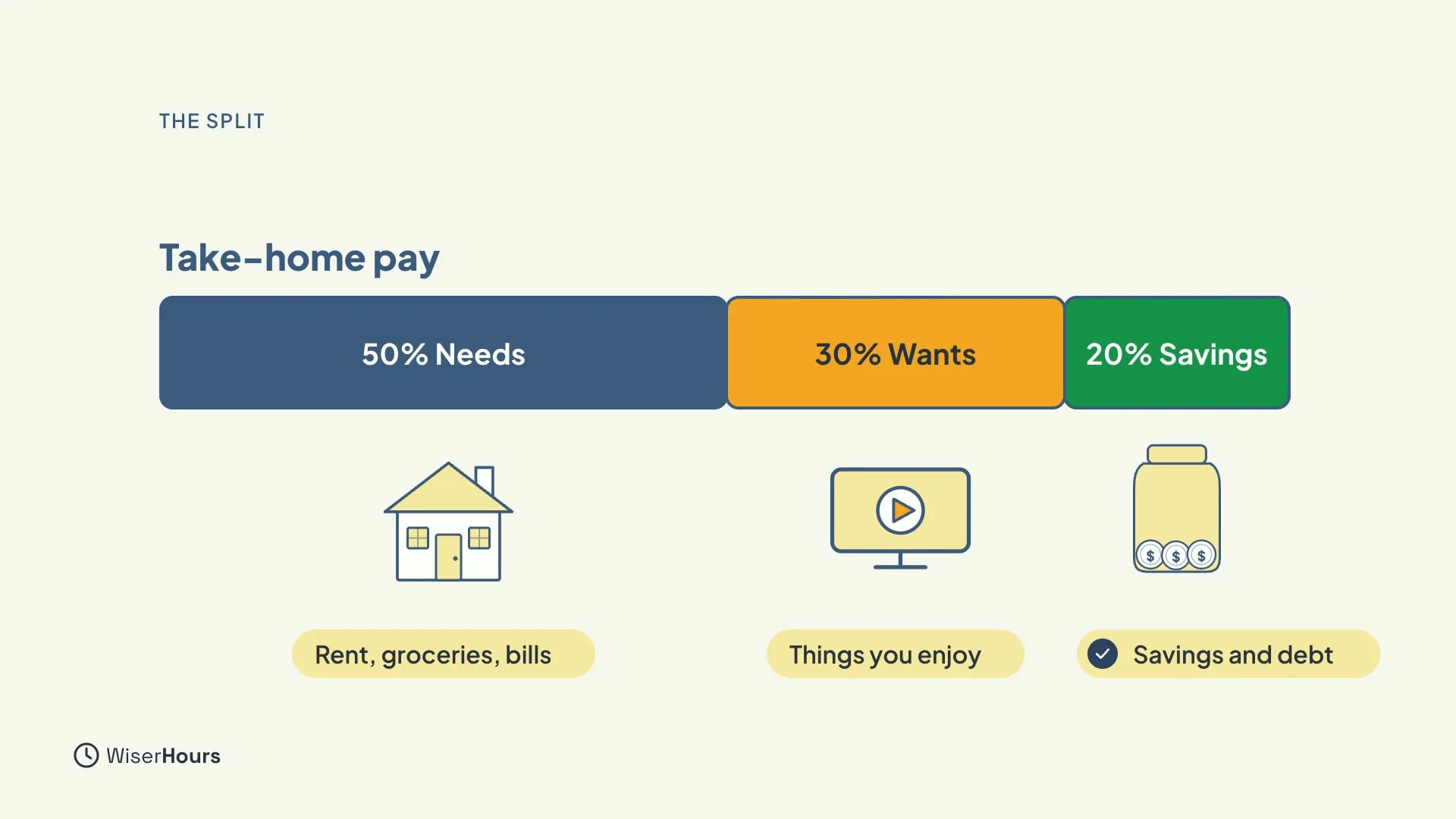
Here is how it works. Fifty percent of your take-home pay goes to needs. Thirty percent goes to wants. Twenty percent goes to savings and to paying down debt.
If you need a reminder of the difference between needs and wants, see needs, wants, fixed and variable costs earlier in this course.
 (opens the full-size picture)
An example
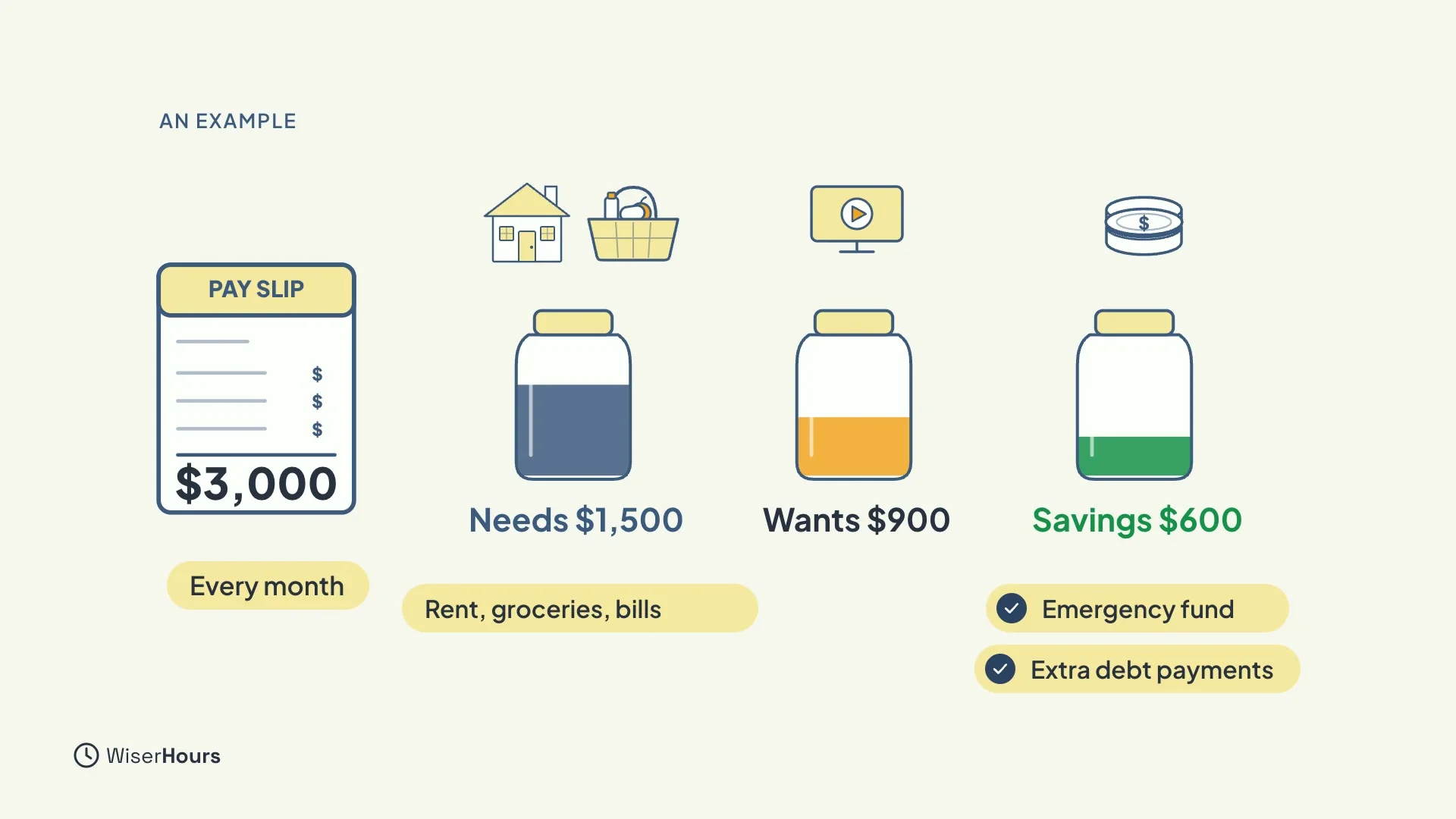
Say you take home $3,000 a month. Then $1,500 goes to needs, like rent, groceries and bills. $900 goes to wants. And $600 goes to savings, an emergency fund or extra debt payments.
These are round example numbers. Your own numbers will differ, and the next sections show how to adjust them.
 (opens the full-size picture)
Net, not gross
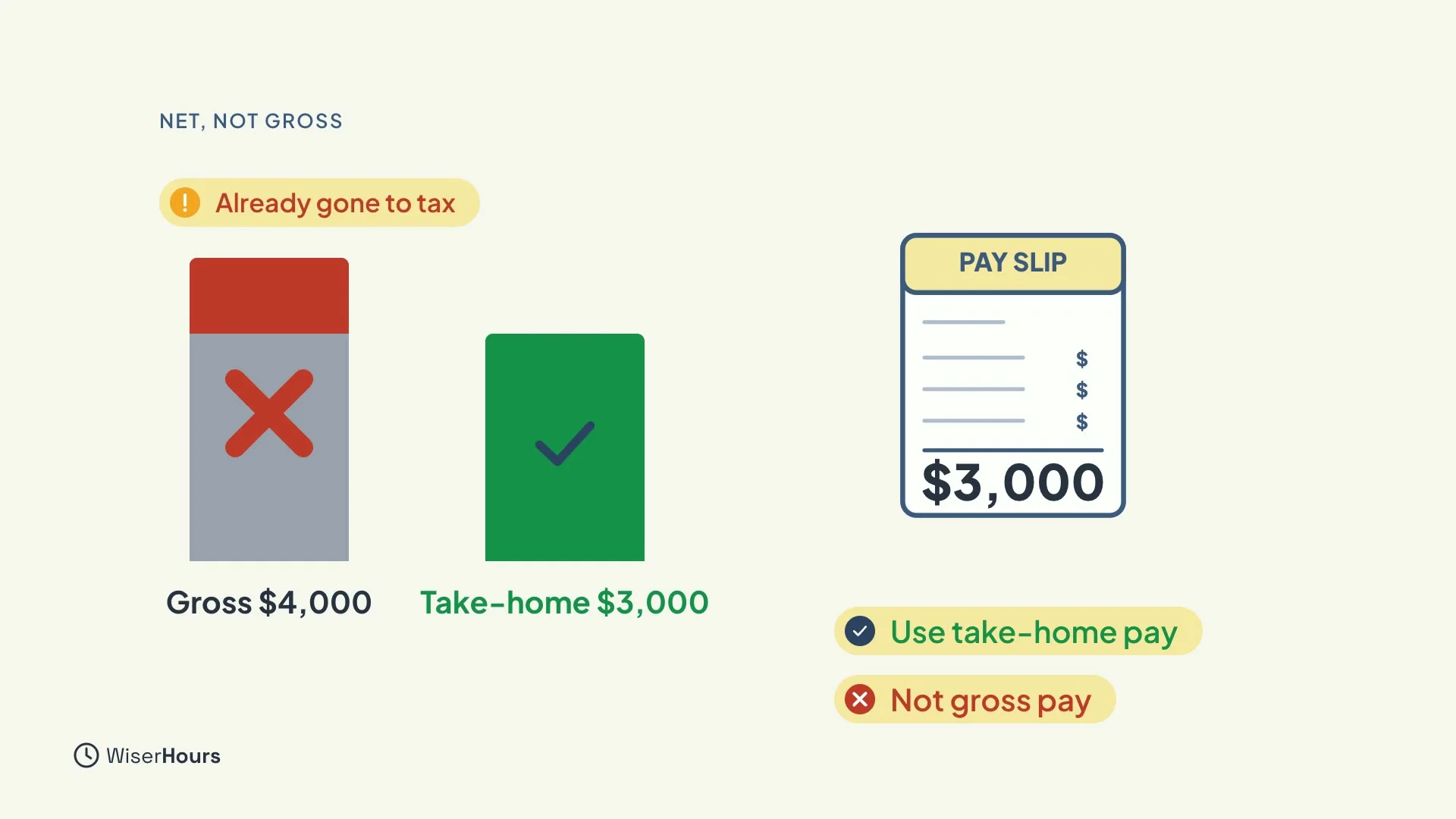
One important detail: use your take-home pay, not your gross pay. If you split your gross pay, you would be planning to spend money that has already gone to tax. If you are not sure of your number, go back to finding your real take-home pay.
 (opens the full-size picture)
A guide, not a law
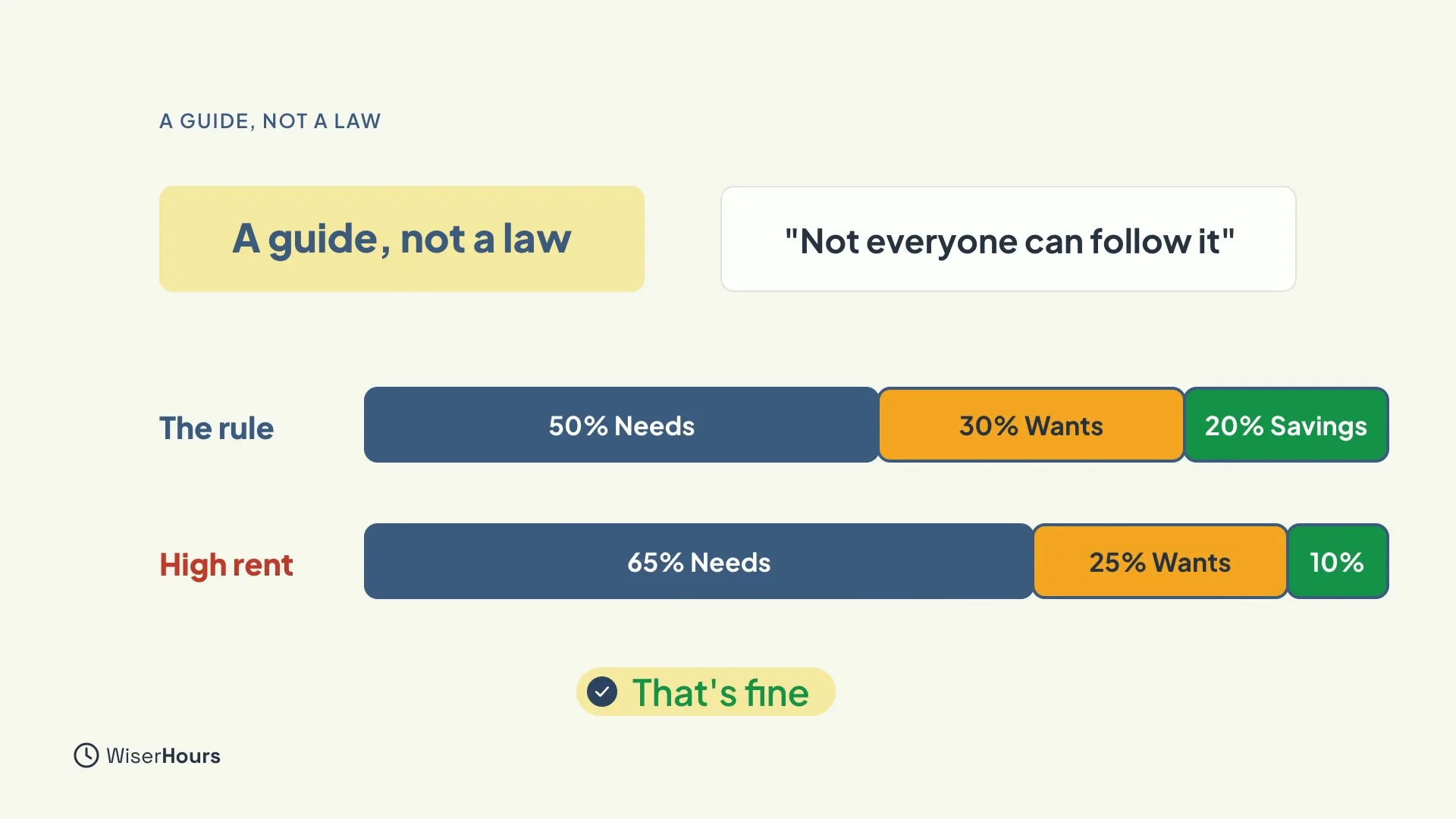
The rule is a teaching guide, not a tested law. A government consumer agency that teaches it says plainly that not everyone can follow it.
If your rent alone takes half your pay, your needs might be 65 percent. That is fine. In that example, wants might be 25 percent and savings 10 percent. The numbers are an illustration, not a target to hit.
 (opens the full-size picture)
Adjusting the split
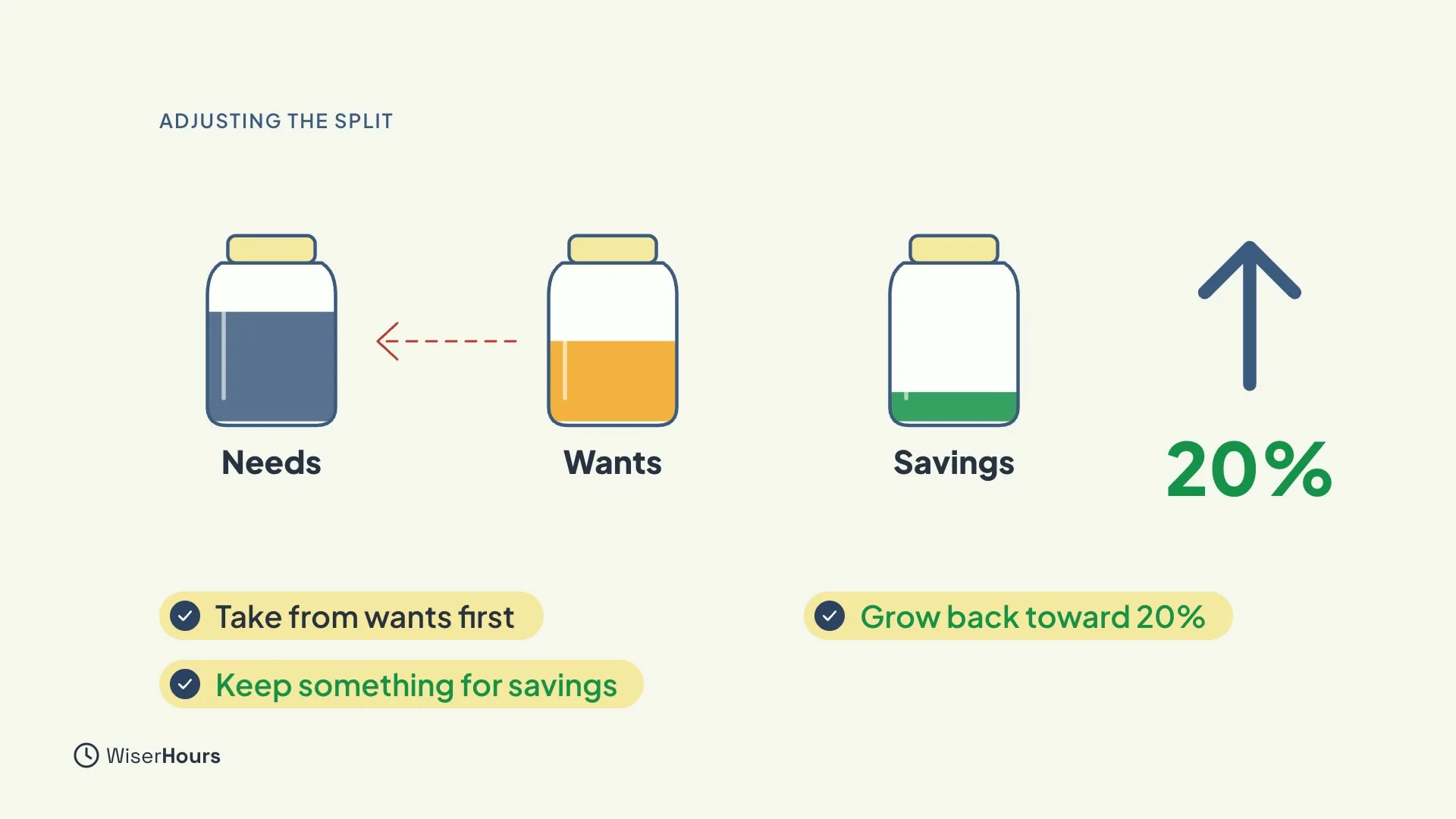
When needs take more, take the difference from wants first, and keep something going to savings, even if it is small. A small habit is worth keeping because it is the one you can grow.
As your income grows or your costs fall, move back toward 20 percent for savings and debt.
 (opens the full-size picture)
If you are in debt
The savings part of the rule includes paying down debt. If debts are the bigger worry, a free money or debt advice service in your country can help you plan.
Use it as a check
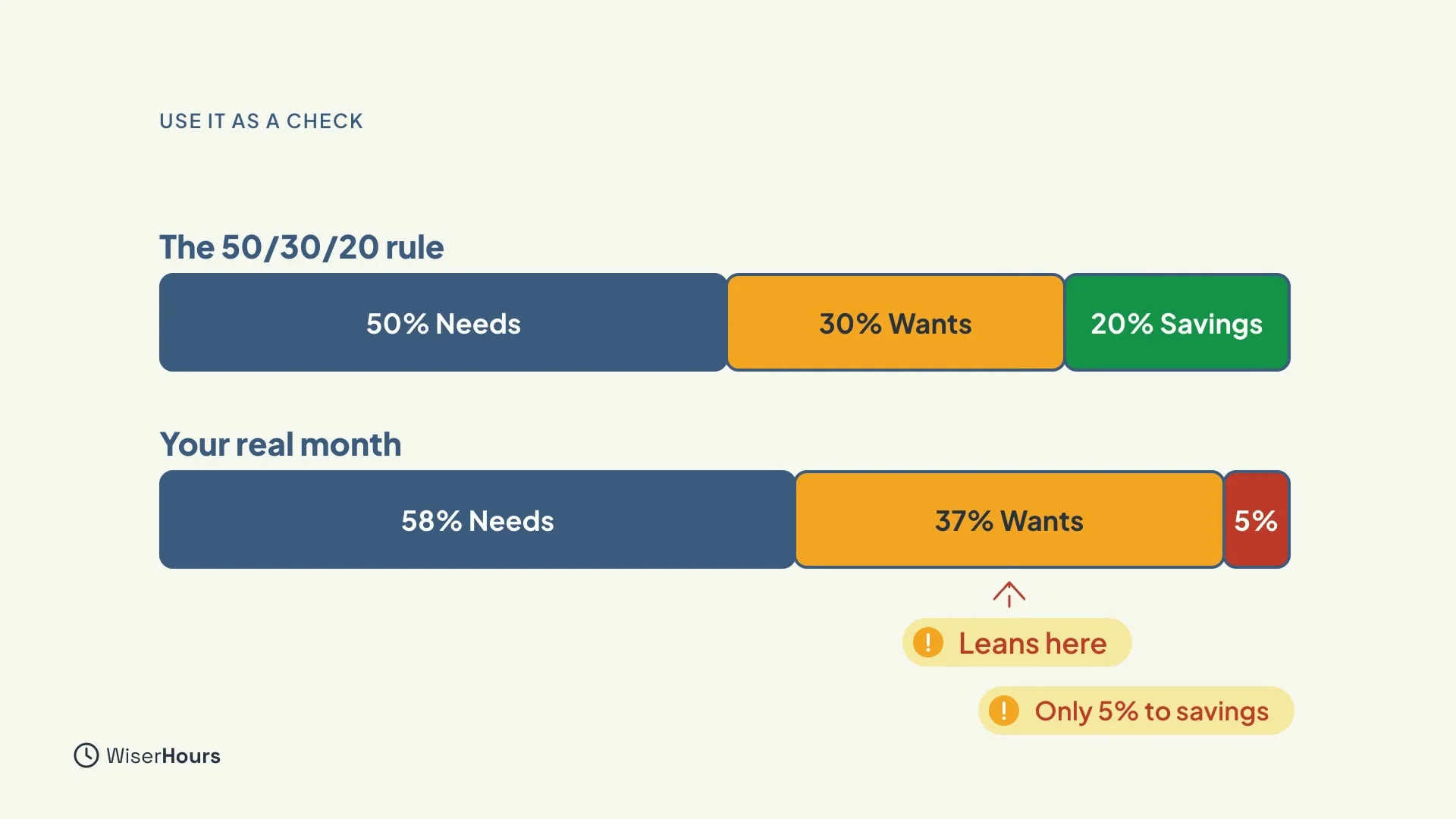
The best use of the rule is as a check. Add up your real needs, wants and savings from your categories, and compare them with 50/30/20. It shows you at a glance where your money leans.
In the example below, needs are 58 percent, wants 37 percent and savings only 5 percent. That tells you where to look first: the wants, and the small savings.
 (opens the full-size picture)
YOUR TURN
Read more
- How to Make a Budget: the 50/30/20 rule and other methods, side by side.
- Gross vs. Net Income: why the rule uses take-home pay.
- Zero-Based Budgeting: a more detailed method, covered in the next lesson.
Read the full lesson script
Welcome back. In this lesson, you'll try the simplest budget method there is: the fifty thirty twenty rule. It splits your take-home pay into three parts.
Here's how it works. Fifty percent of your take-home pay goes to needs. Thirty percent goes to wants. And twenty percent goes to savings and paying down debt.
Say you take home three thousand dollars a month. Fifteen hundred goes to needs, like rent, groceries and bills. Nine hundred goes to wants. And six hundred goes to savings, an emergency fund, or extra debt payments.
One important detail: use your take-home pay, not your gross pay. If you split your gross pay, you'd be planning to spend money that already went to tax.
The rule is a teaching guide, not a tested law. A government consumer agency that teaches it says plainly that not everyone can follow it. If your rent alone takes half your pay, your needs might be sixty-five percent. That's fine.
When needs take more, take the difference from wants first, and keep something going to savings, even if it's small. As your income grows or your costs fall, move back toward twenty percent.
The best use of the rule is as a check. Add up your real needs, wants and savings from your categories, and compare them with fifty thirty twenty. It shows you at a glance where your money leans.
So remember: fifty percent needs, thirty wants, twenty savings. Split your take-home pay, not your gross pay. And treat it as a guide to check against, not a law. Before the next lesson, compare your own needs, wants and savings with fifty thirty twenty. Next, you'll try zero-based budgeting, and give every dollar a job.
MAKE IT A SMALL WIN
Finished this lesson?
Mark it complete to save your progress on this device.