Know your numbers · Lesson 3 of 12
Needs, Wants, Fixed and Variable Costs Explained
Sort every cost two ways, needs and wants, and fixed and variable, to see where in your budget you have room to change.
 Video coming soon
Every cost you have can be sorted in two simple ways: needs and wants, and fixed and variable. Together they show you where you have room to change. This lesson teaches both, with plain examples you can match to your own life.
Needs and wants
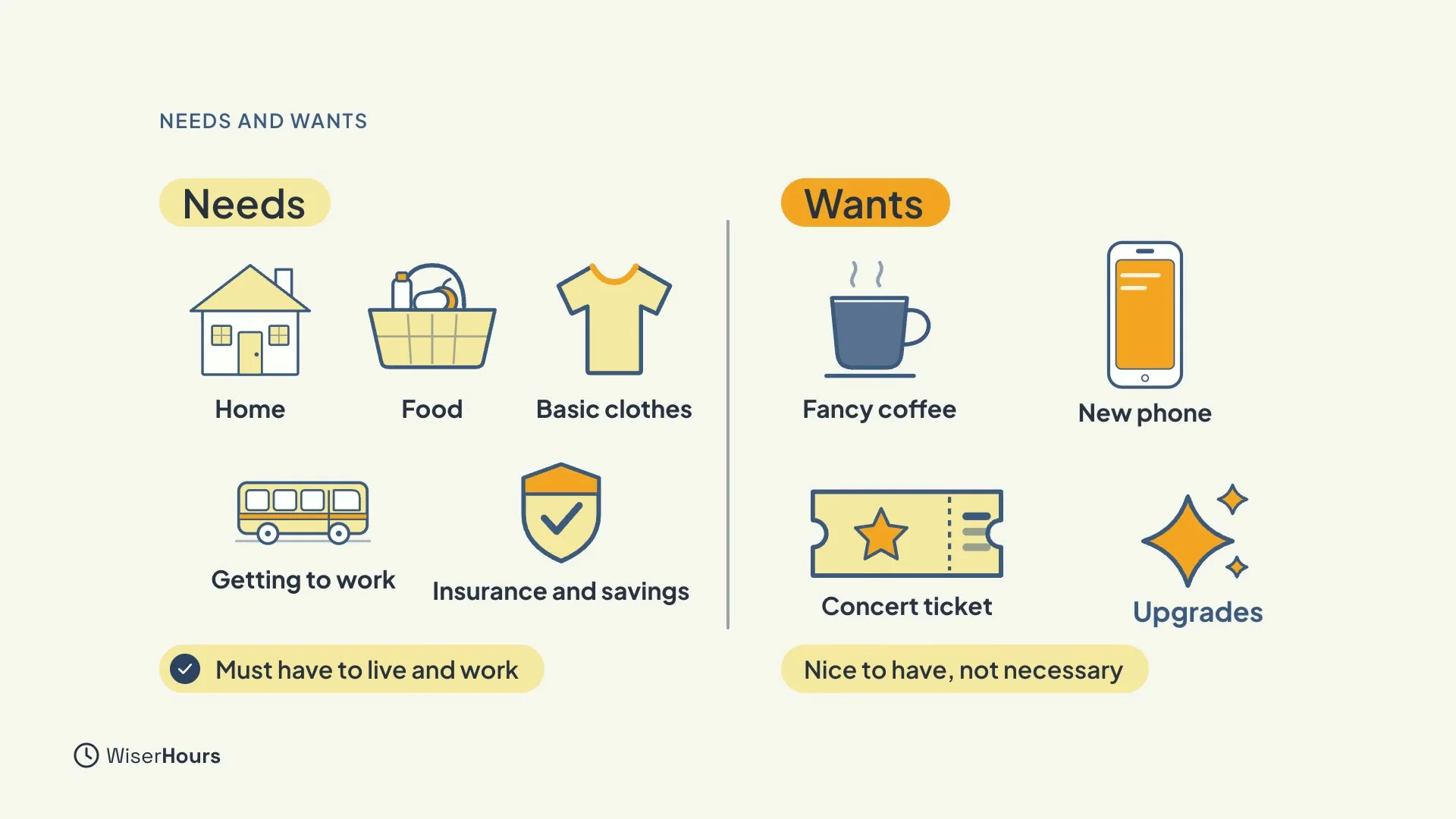
Needs are the things you must have to live and to work: a home, food, basic clothes and getting to your job. They also include things that protect your money, like insurance and an emergency fundemergency fund: Money kept in an account you can reach quickly, to cover unexpected costs or a drop in income without borrowing. How much to hold depends on your circumstances, and official guidance differs by country.Full entry in the glossary.
Wants are upgrades. They are nice to have, but not necessary. Official consumer guides from agencies such as the US Consumer Financial Protection Bureau use the same split.
 (opens the full-size picture)
The line is not the same for everyone
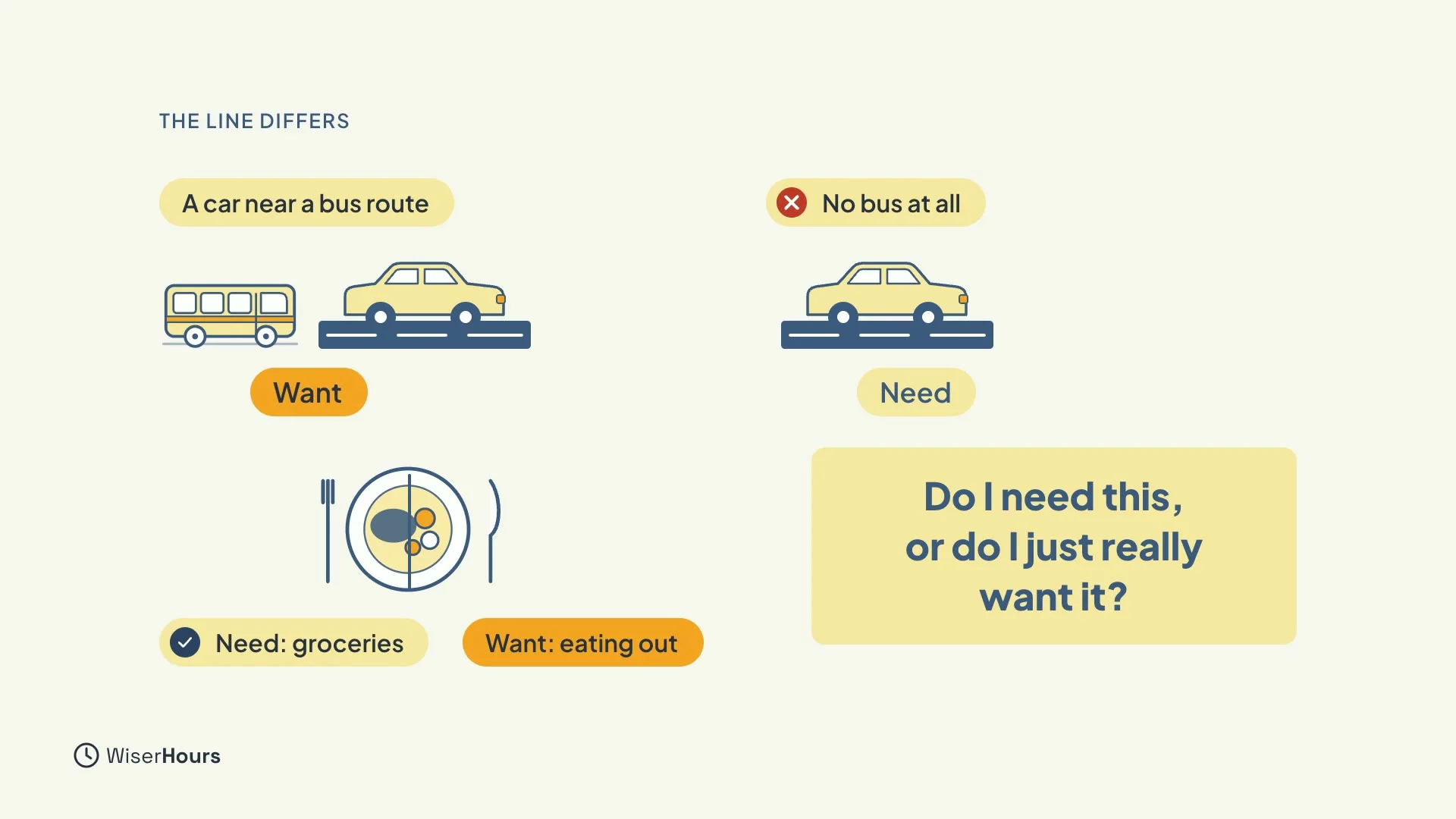
The line between a need and a want is not the same for everyone. A car can be a want if you live near a bus route, and a need if there is no bus at all. A consumer agency in Canada makes the same point: needs and wants are not the same for everyone.
Many costs are part need, part want. Food is a need, but eating out is mostly a want. When you are unsure, ask a simple question: do I need this, or do I just really want it?
 (opens the full-size picture)
Fixed and variable
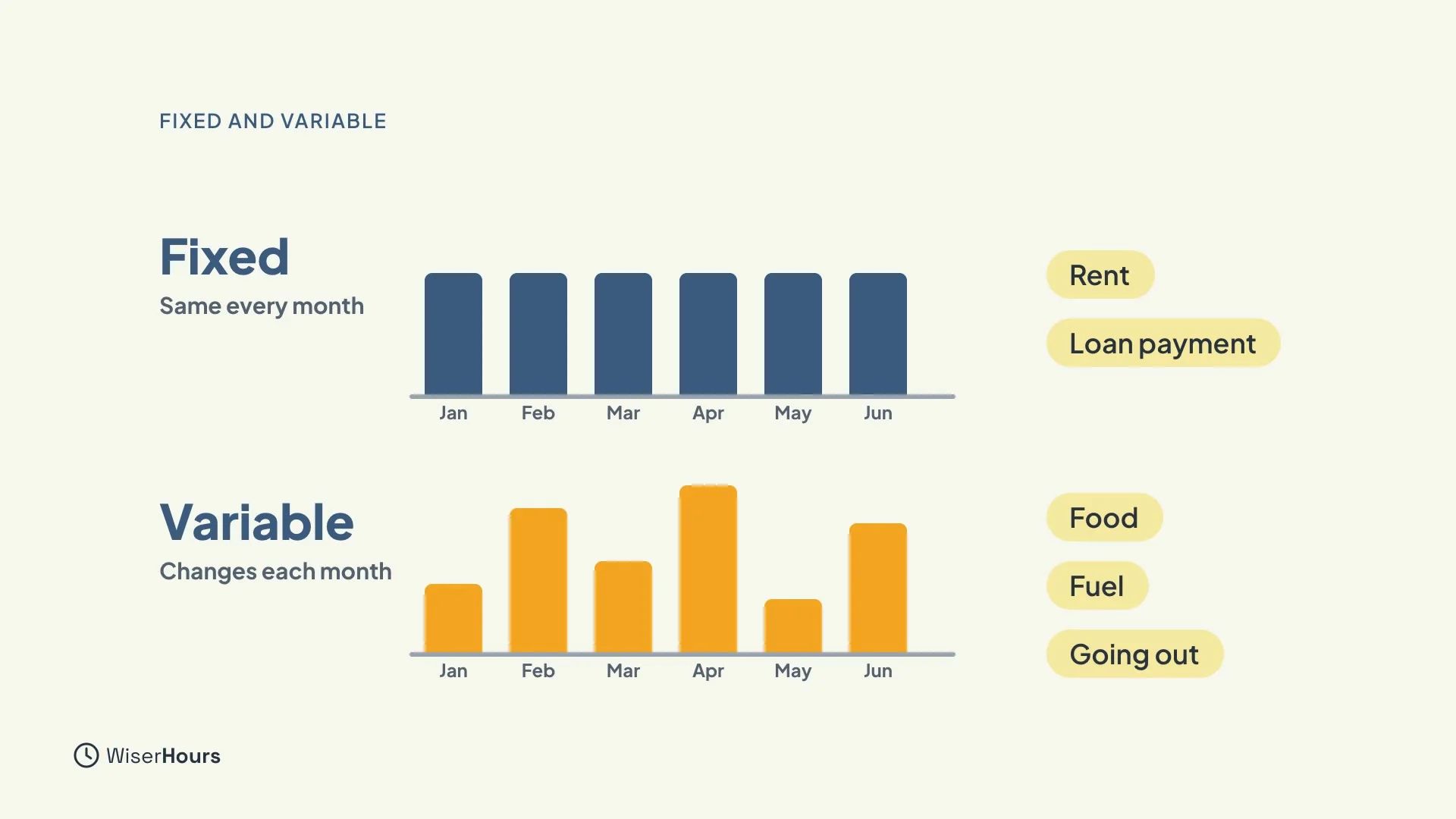
The second way to sort costs is by how they behave. Fixed costs are the same every month, like rent or a loan payment. Variable costs change from month to month, like food, fuel and going out.
This matters for planning. You can count on a fixed cost, but you need to estimate a variable one, and that is where your tracking from the next lesson helps.
 (opens the full-size picture)
Four boxes
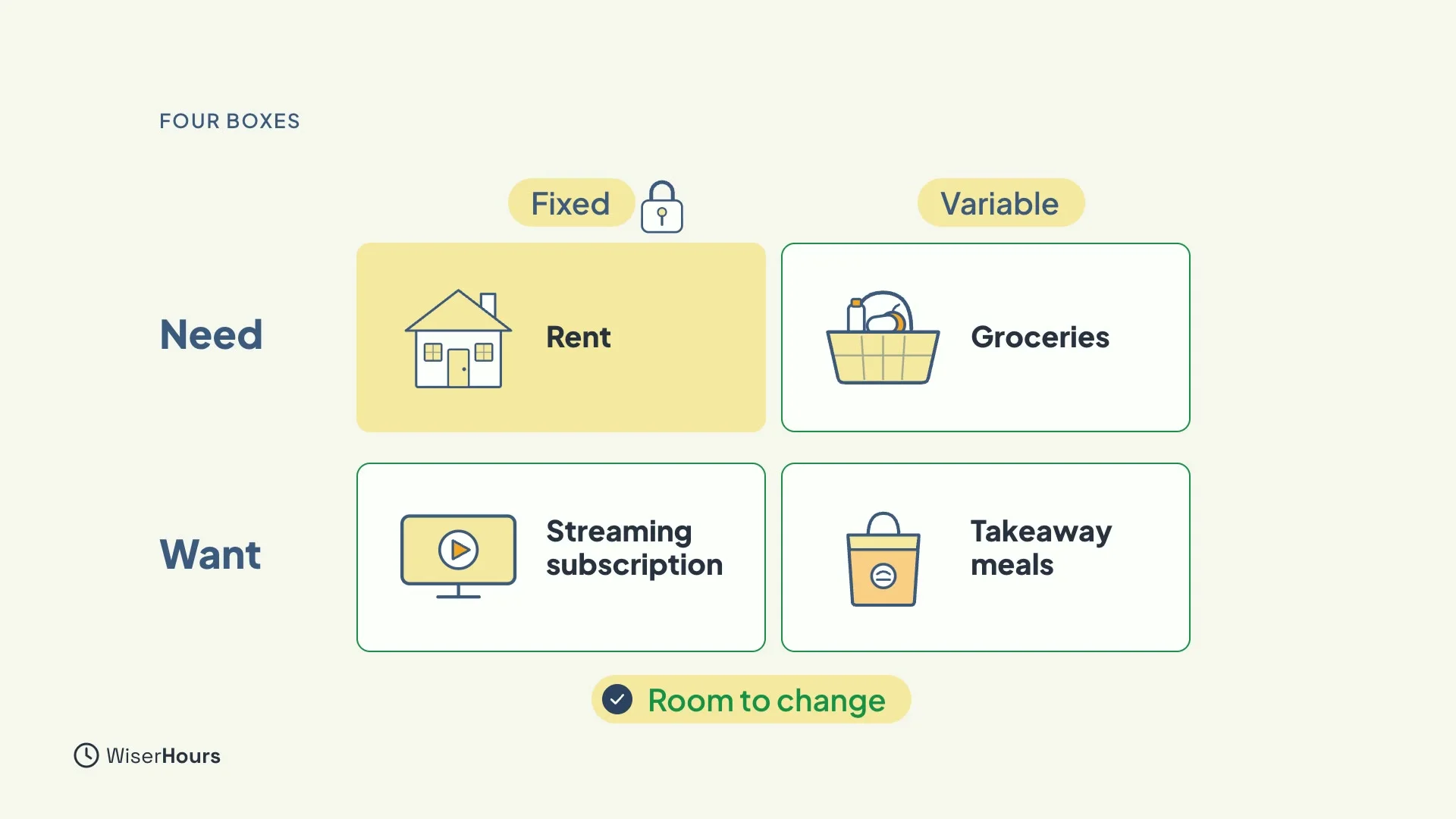
Put the two ways together and you get four boxes. Rent is a fixed need. Groceries are a variable need. A streaming subscription is a fixed want. Takeaway meals are a variable want.
Fixed costs are hard to change quickly. Variable costs and wants are usually where you have room. That is reasoning from what the words mean, not a research finding, so check it against your own costs.
 (opens the full-size picture)
Small and forgotten costs
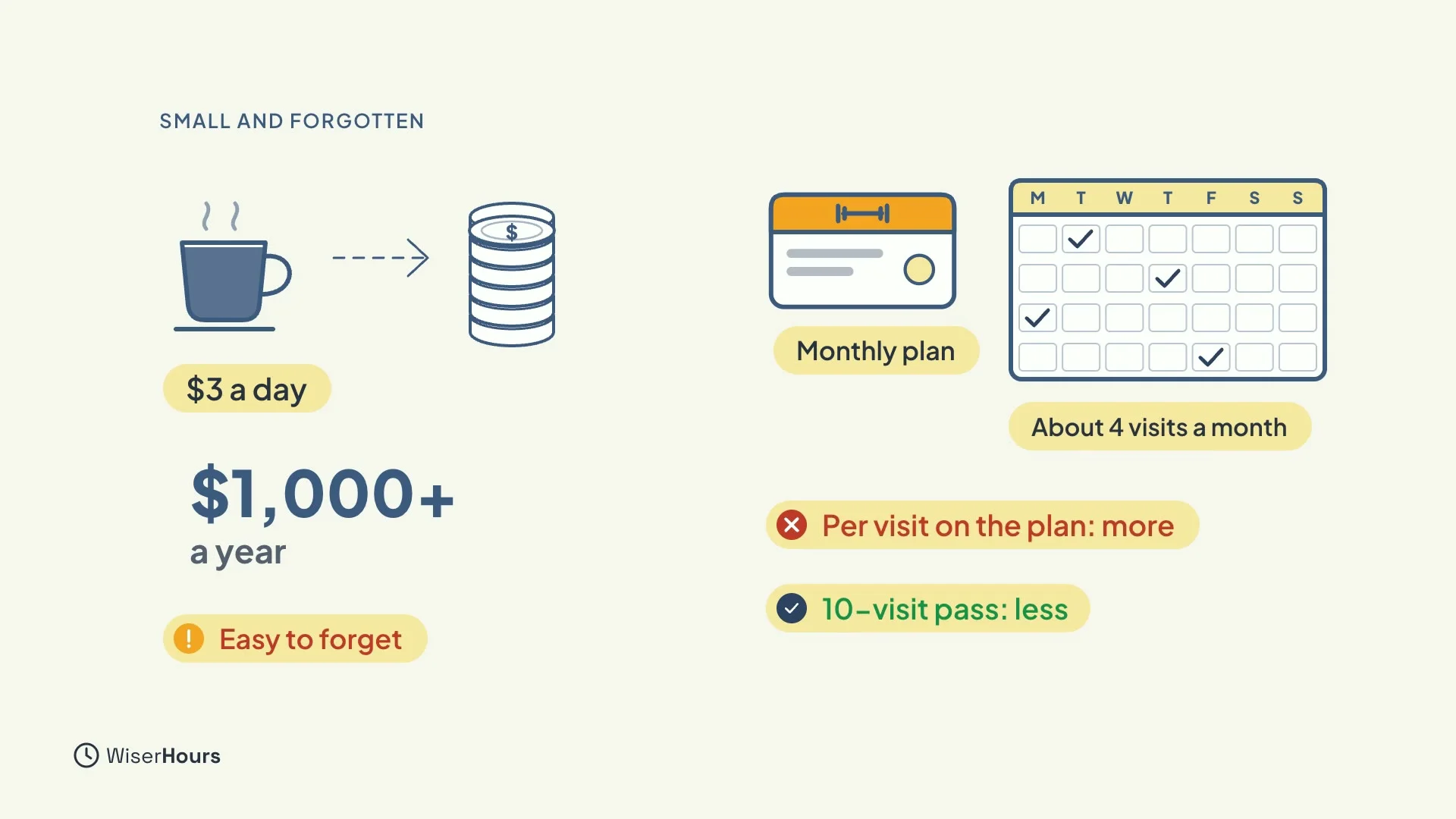
Small, repeating costs add up. A Canadian consumer agency’s worked example shows that three dollars a day on coffee is more than $1,000 a year.
It is also easy to keep paying for things you do not use. In one study of gym members on a monthly plan, people went about four times a month. They paid more per visit than a ten-visit pass would have cost. You can read the study abstract if you are curious.
 (opens the full-size picture)
This is not about guilt
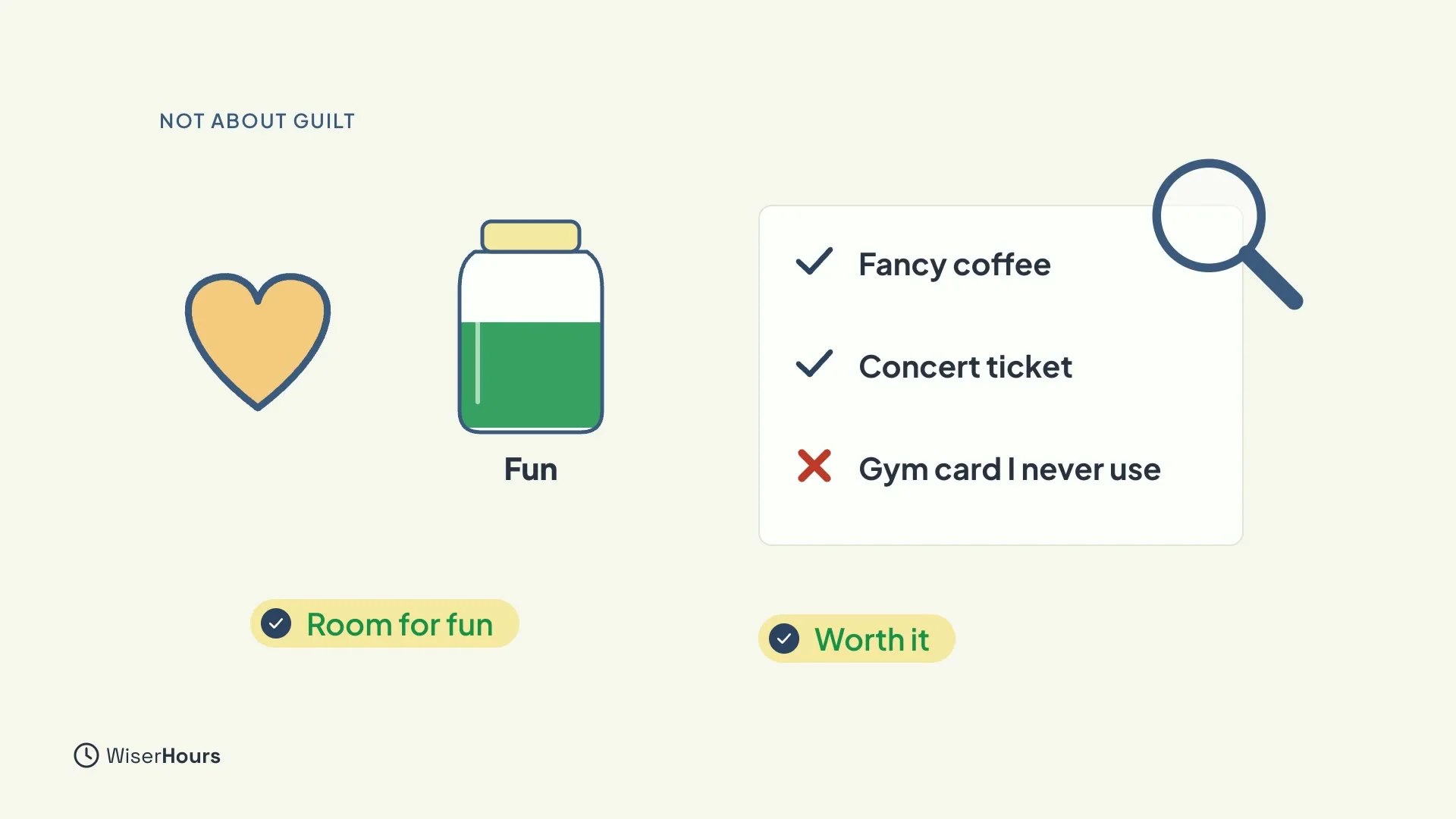
This is not about cutting every want. Wants make life enjoyable, and a budget with no room for fun is hard to keep. The goal is to see clearly, then choose the wants that are worth it to you.
If a coffee or a concert ticket is worth it, keep it. If you have a gym card you never use, that is a cost to look at.
 (opens the full-size picture)
YOUR TURN
Read more
- Track Your Spending: how to see what you really spend, so you can sort it.
- Zero-Based Budgeting: how needs, wants and one-off costs fit into a full plan.
Read the full lesson script
Welcome back. In this lesson, you'll learn two simple ways to sort every cost you have: needs and wants, and fixed and variable. Together, they show you where you have room to change.
Needs are the things you must have to live and to work: a home, food, basic clothes, getting to your job, and things that protect your money, like insurance and emergency savings. Wants are upgrades: nice to have, but not necessary.
But the line isn't the same for everyone. A car can be a want if you live near a bus route, and a need if there's no bus at all. And many costs are part need, part want. Food is a need. Eating out is mostly a want. A simple test: do I need this, or do I just really want it?
The second way to sort costs is by how they behave. Fixed costs are the same every month, like rent or a loan payment. Variable costs change from month to month, like food, fuel, and going out.
Put the two together, and you get four boxes. Rent is a fixed need. Groceries are a variable need. A streaming subscription is a fixed want. And takeaway meals are a variable want. Fixed costs are hard to change quickly. Variable costs and wants are usually where you have room.
Small, repeating costs add up. Three dollars a day on coffee is more than a thousand dollars a year. And it's easy to keep paying for things you don't use. In one study of gym members on a monthly plan, people went about four times a month, paying more per visit than a ten-visit pass would have cost.
This isn't about cutting every want. Wants make life enjoyable, and a budget with no room for fun is hard to keep. The goal is to see clearly, then choose the wants that are worth it to you.
So remember: needs keep you housed, fed, safe and working, and wants are upgrades. Fixed costs stay the same, and variable costs change. And the most room is usually in variable costs and forgotten ones. Before the next lesson, mark each cost from last month as a need or a want, and as fixed or variable. Next, you'll see where your money really goes.
MAKE IT A SMALL WIN
Finished this lesson?
Mark it complete to save your progress on this device.