Know your numbers · Lesson 4 of 12
Where Your Money Really Goes: Track Spending Simply
Find out where your money really goes with your own statements, five or six simple categories and a ten-minute weekly check.
 Video coming soon
You cannot plan your money well until you know where it really goes. In this lesson you find out, using your own statements, a few simple categories and a short weekly check. No guessing needed.
Memory is a poor guide
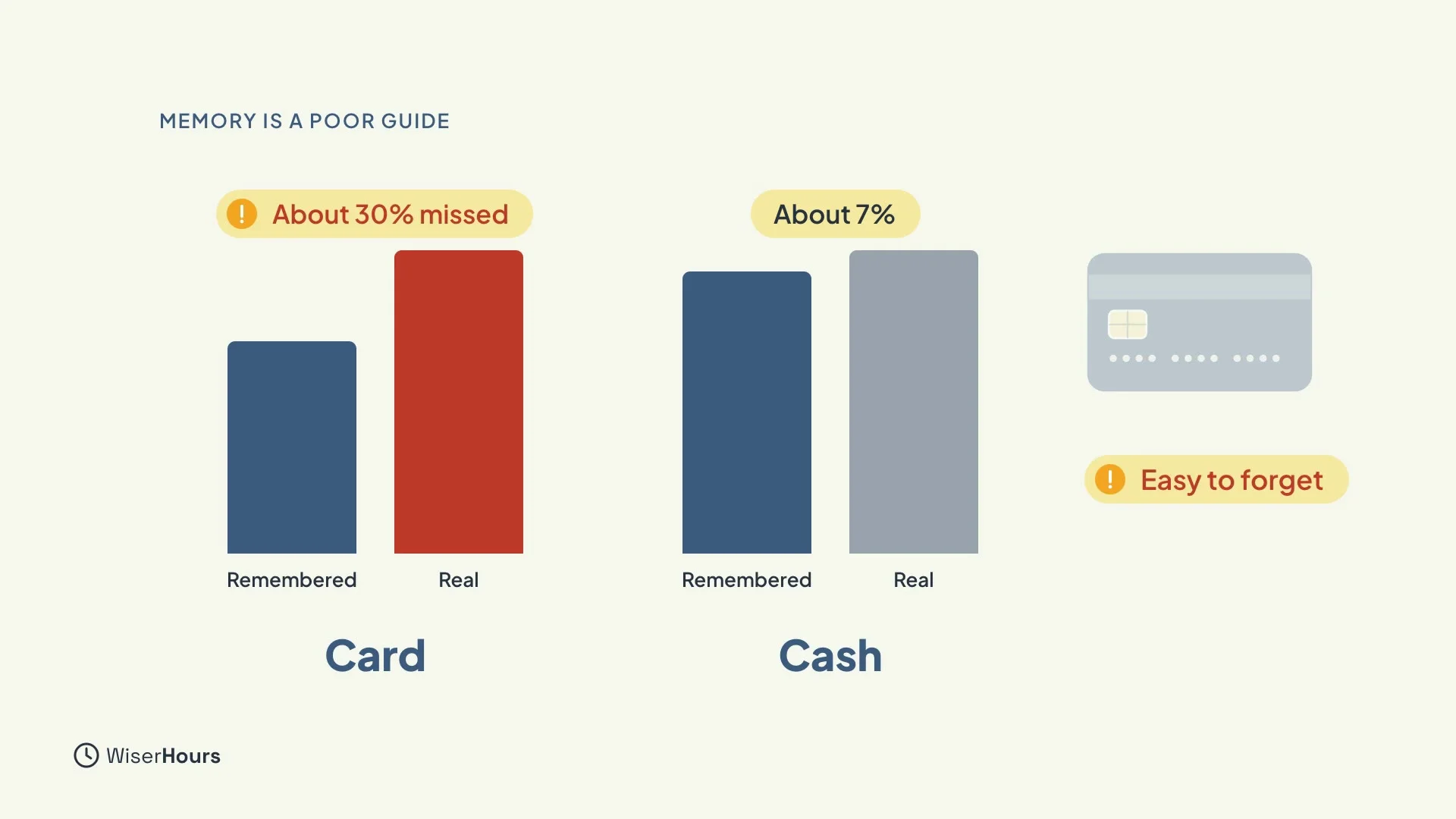
Most of us think we know what we spend. But memory is a poor guide. In one small study, people underestimated their card spending by about 30 percent, but their cash spending by only about 7 percent.
Card payments are easy to forget because no money visibly leaves your hand. That is why the first step is to look at what actually happened.
 (opens the full-size picture)
Start with your statements
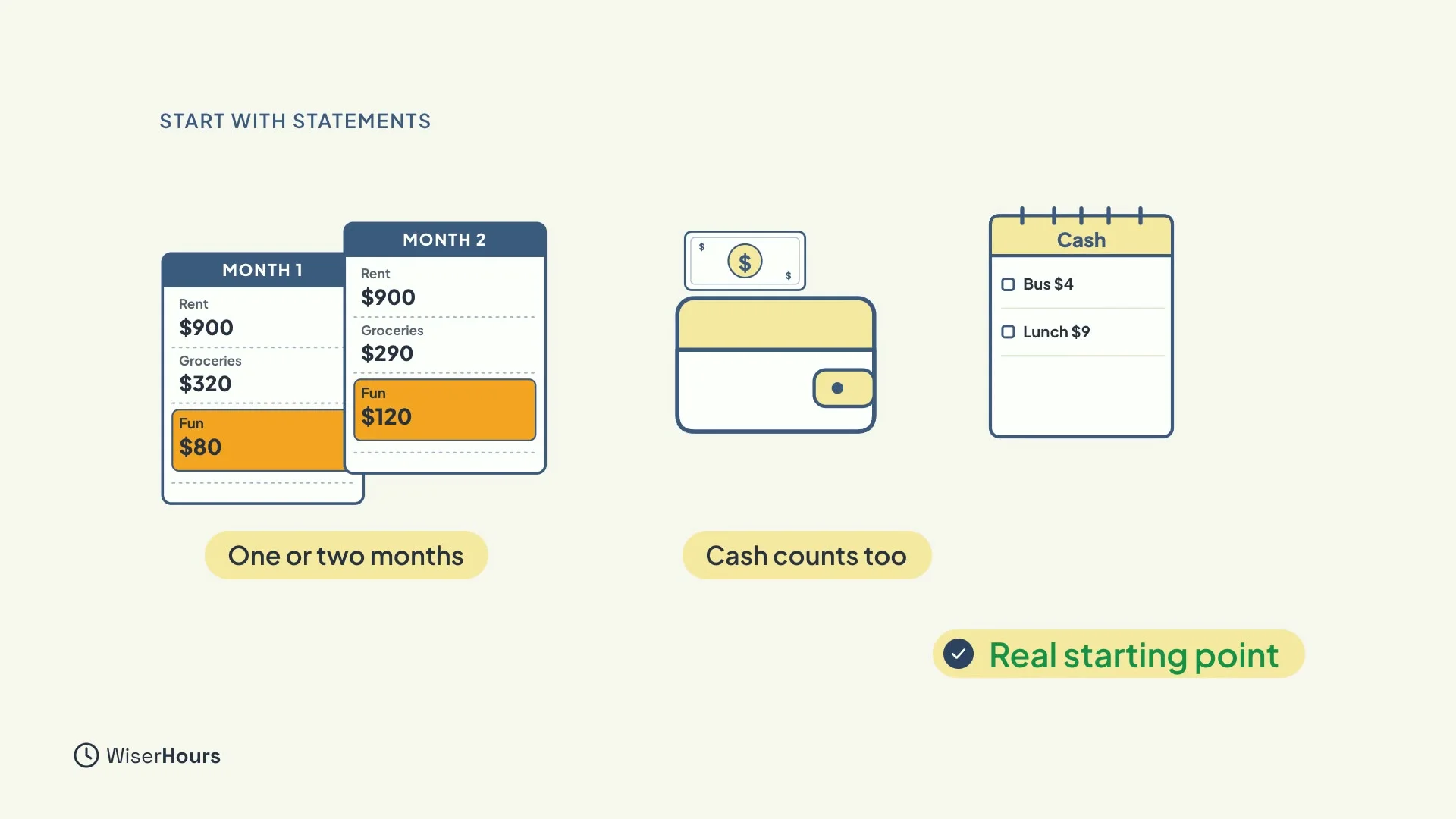
So start with what has already happened. Go back through one or two months of your bank and card statements, and note your cash spending too. If you pay with cash, jot down what you remember, or keep a small note for the next few weeks.
That gives you a real starting point, with no guessing.
 (opens the full-size picture)
Five or six categories
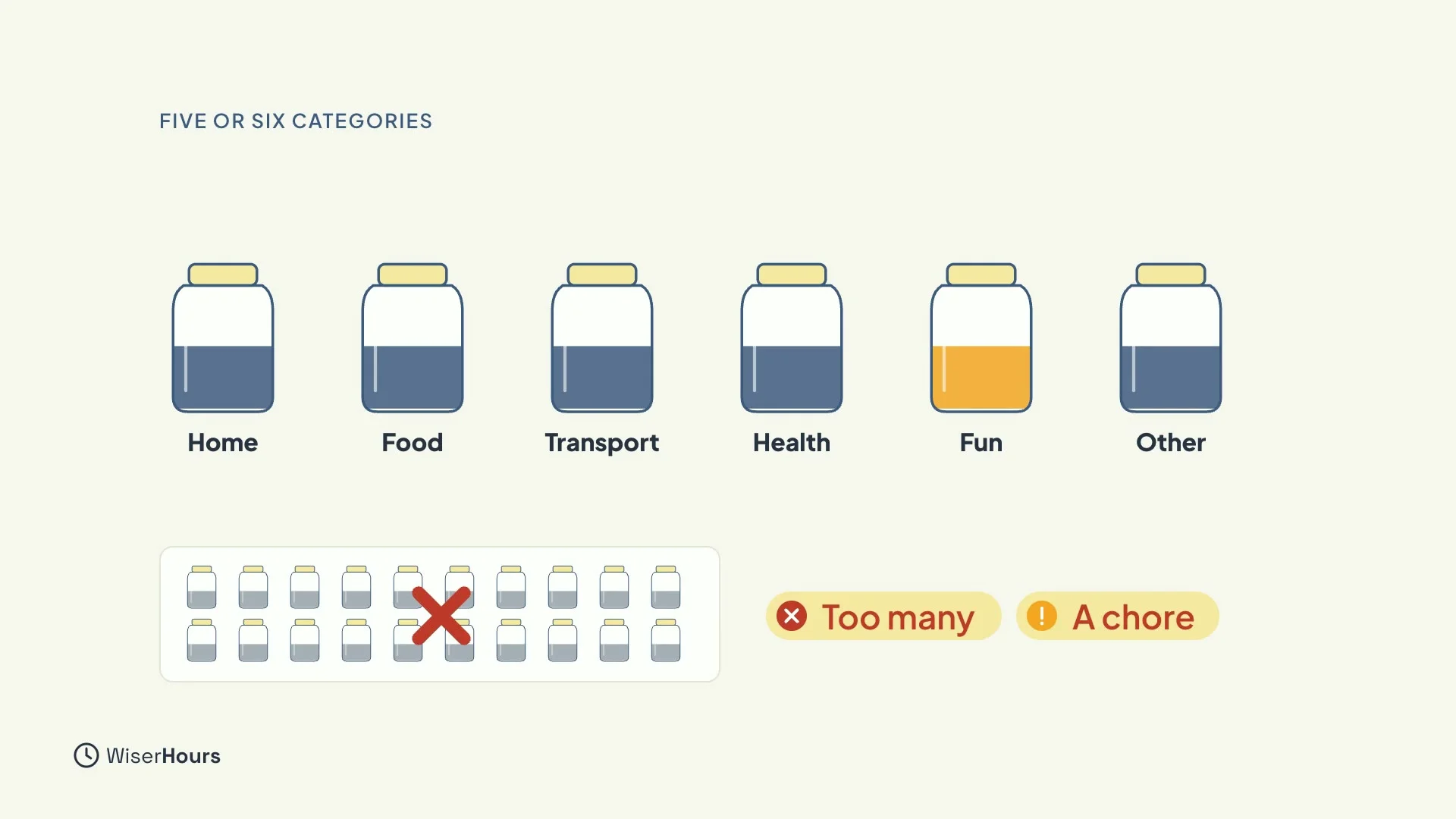
Next, sort every line into five or six categories. For example: home, food, transport, health, fun and other. Keep it simple.
Too many categories turn tracking into a chore, and a chore does not last. A few broad jars are enough to show you where the money goes.
 (opens the full-size picture)
Why checking works
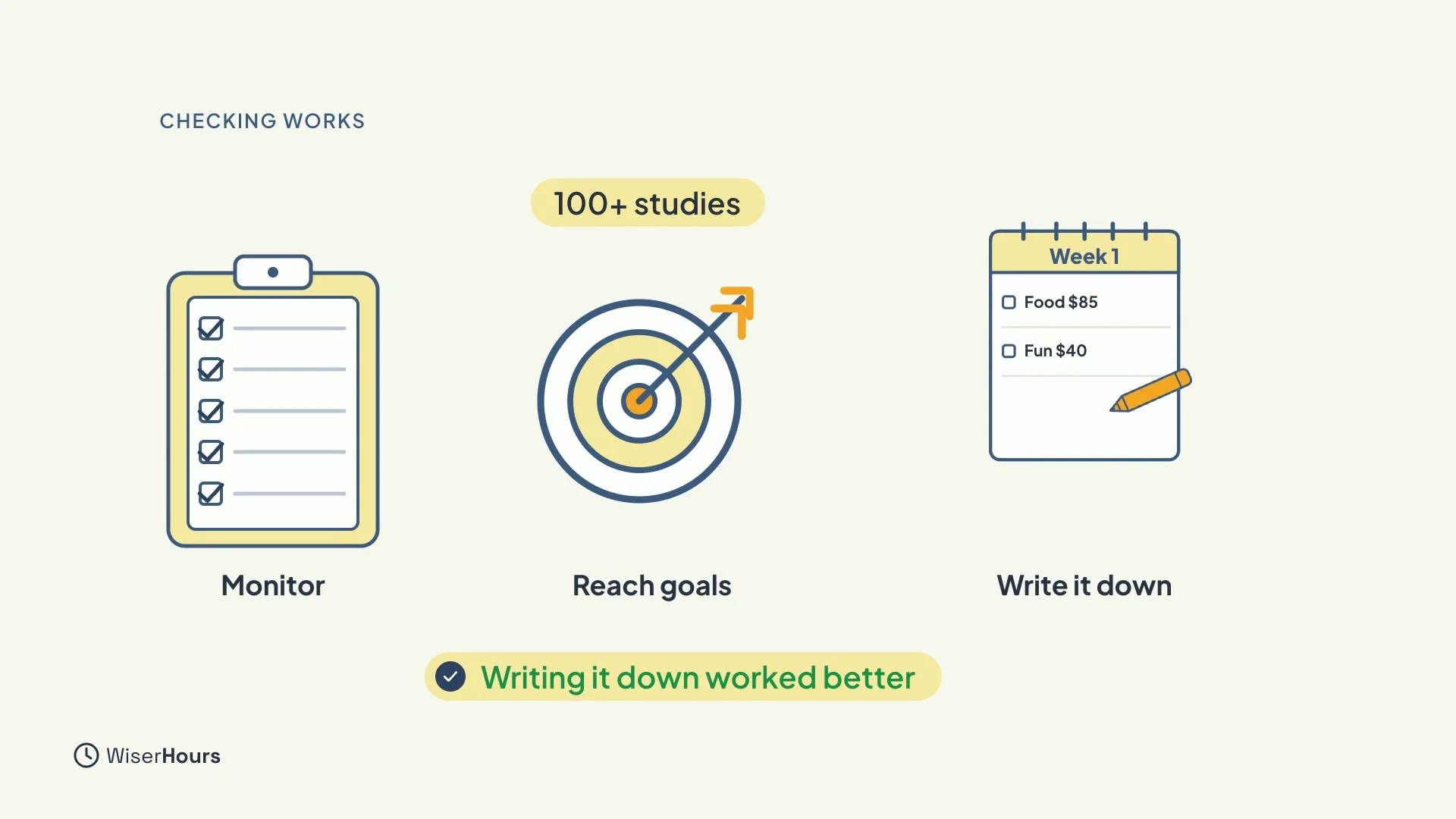
Checking your progress helps. In a review of more than a hundred studies, mostly about health goals, people who monitored their progress were more likely to reach their goals. It worked better when they wrote the results down.
Those studies were not about money, so treat the finding as a good sign rather than a promise. But it fits common sense: what you look at, you can change.
 (opens the full-size picture)
Look without judgment
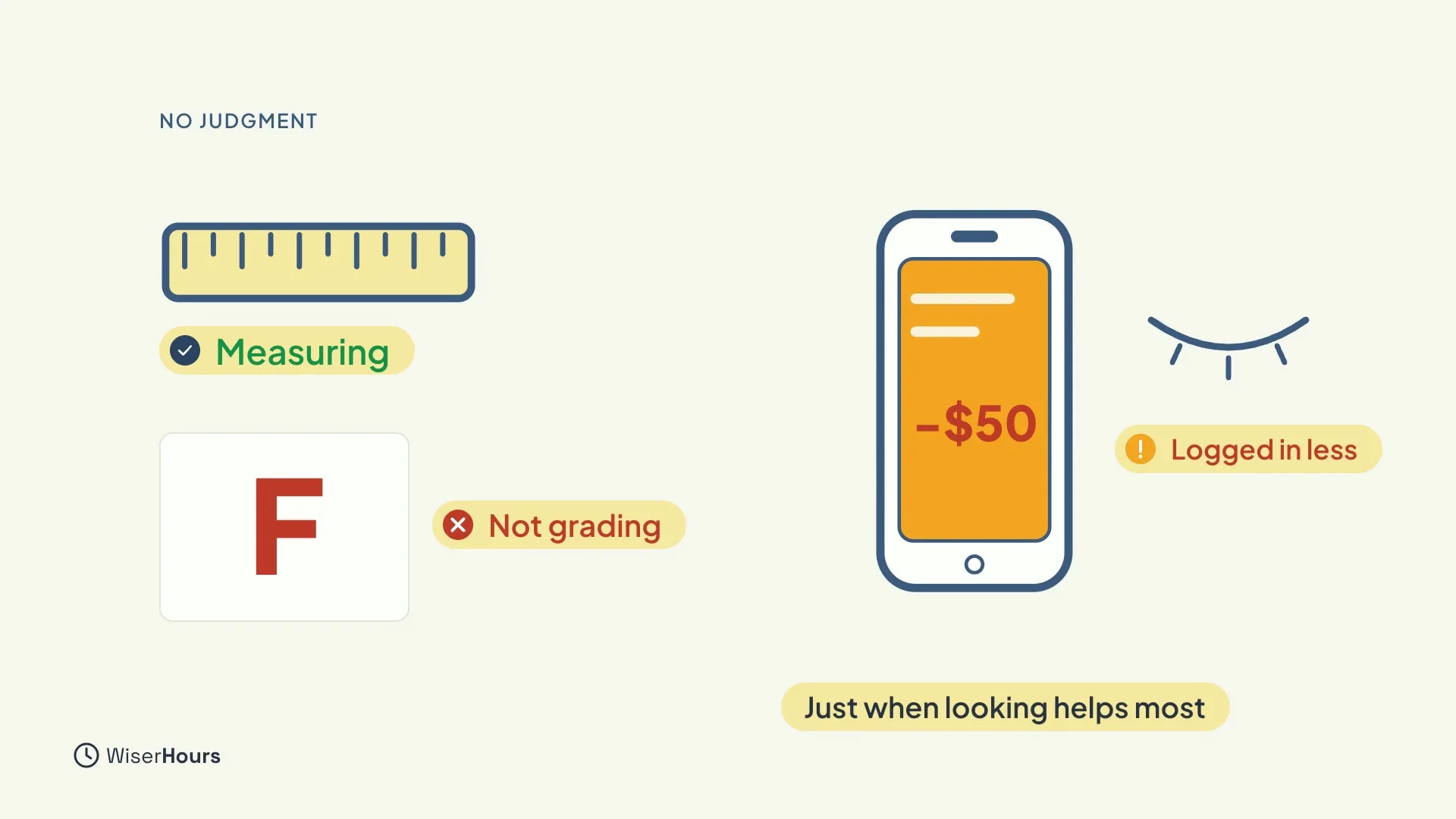
Do it without judgment. You are measuring, not grading yourself. That matters, because people tend to look less when money is tight. In one country’s money app data, people logged in less often once they were overdrawn, just when looking would help most.
If a number surprises you, that is useful information, not a verdict on you. A ruler does not tell you off.
 (opens the full-size picture)
If looking feels heavy
Money worry is common and it can make us avoid our accounts. If it is wearing you down, the guide on money anxiety can help. If you are struggling to pay bills, contact your country’s free money advice service early.
A weekly check
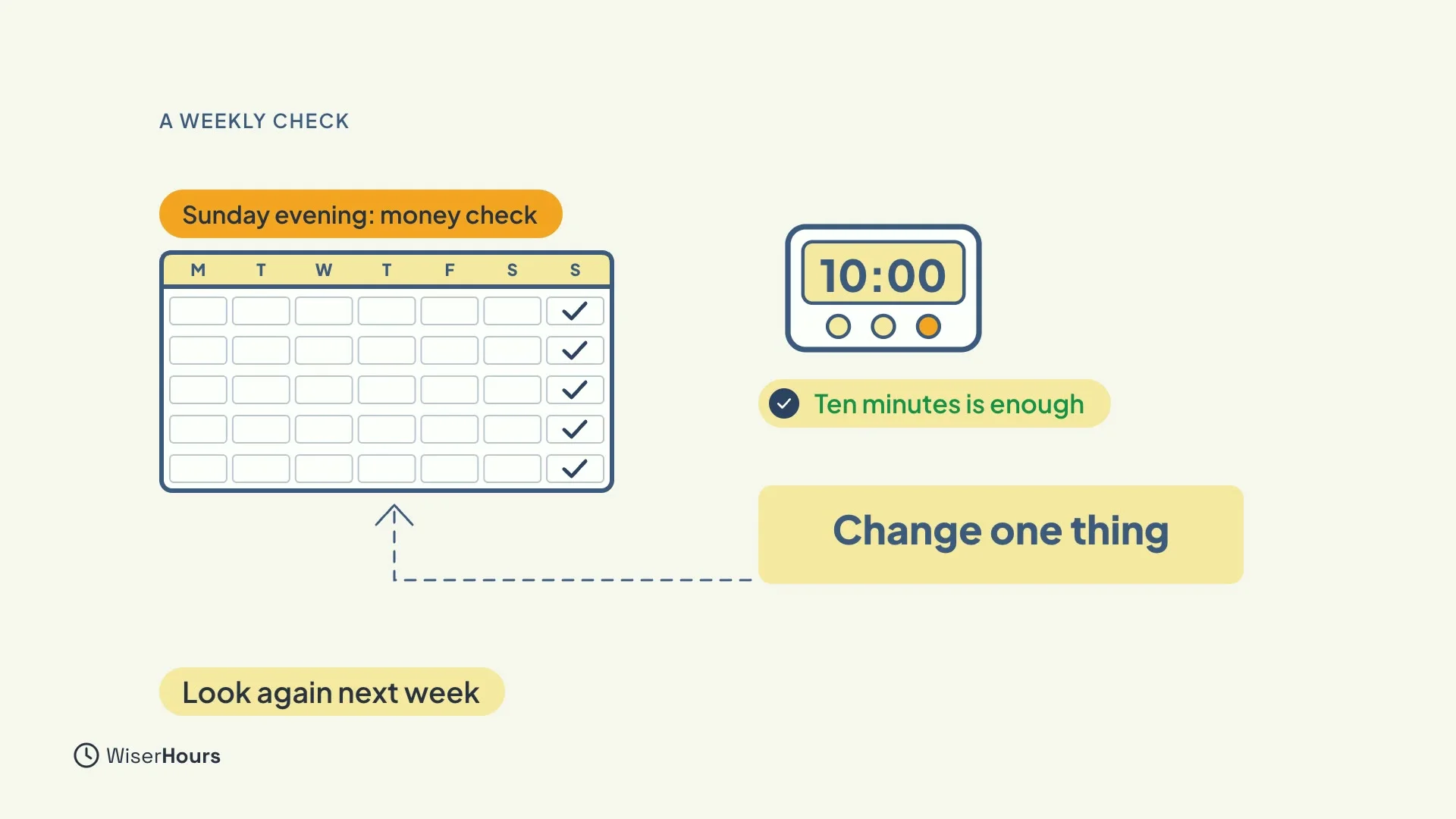
Pick a fixed time each week, say Sunday evening, and look at your totals, whatever the balance. Ten minutes is enough. Then change one thing, and look again next week.
One small change a week is easier to keep than a big reset, and each check shows you whether the change worked.
 (opens the full-size picture)
YOUR TURN
Read more
- Track Your Spending: the full guide to tracking, with the evidence behind it.
- How to Make a Budget: how your categories turn into a budget.
- Money Anxiety: why we avoid looking at our money, and what helps.
Read the full lesson script
Welcome back. In this lesson, you'll find out where your money really goes, using your own statements, a few simple categories, and a short weekly check.
Most of us think we know what we spend. But memory is a poor guide. In one small study, people underestimated their card spending by about thirty percent, but their cash spending by only about seven percent. Card payments are easy to forget.
So start with what already happened. Go back through one or two months of your bank and card statements, and note your cash spending too. That's your real starting point, with no guessing.
Then sort every line into five or six categories, for example home, food, transport, health, fun, and other. Keep it simple. Too many categories turn tracking into a chore, and a chore doesn't last.
Checking your progress helps. In a review of more than a hundred studies, mostly about health goals, people who monitored their progress were more likely to reach their goals, and it worked better when they wrote the results down.
Do it without judgment. You're measuring, not grading yourself. That matters, because people tend to look less when money is tight. In one country's money app data, people logged in less often once they were overdrawn, just when looking would help most.
So pick a fixed time each week, say Sunday evening, and look at your totals, whatever the balance. Ten minutes is enough. Then change one thing, and look again next week.
So remember: start from real statements, not memory. Use five or six simple categories. And check at a fixed time each week, without judgment. Before the next lesson, sort last month's statement into five or six categories. Next, you'll try your first budget method: the fifty thirty twenty rule.
MAKE IT A SMALL WIN
Finished this lesson?
Mark it complete to save your progress on this device.