Build it · Lesson 8 of 12
How to Build Your First Budget in One Sitting
Gather your numbers, fill in one page, subtract, and plan savings and a buffer, so you finish with a first budget you can use.
 Video coming soon
You already know your take-home pay and where your money goes. Now you put it all on one page. In this lesson you will build your first budget in one sitting, with paper or a simple sheet, and check it with one last question.
Gather what you need
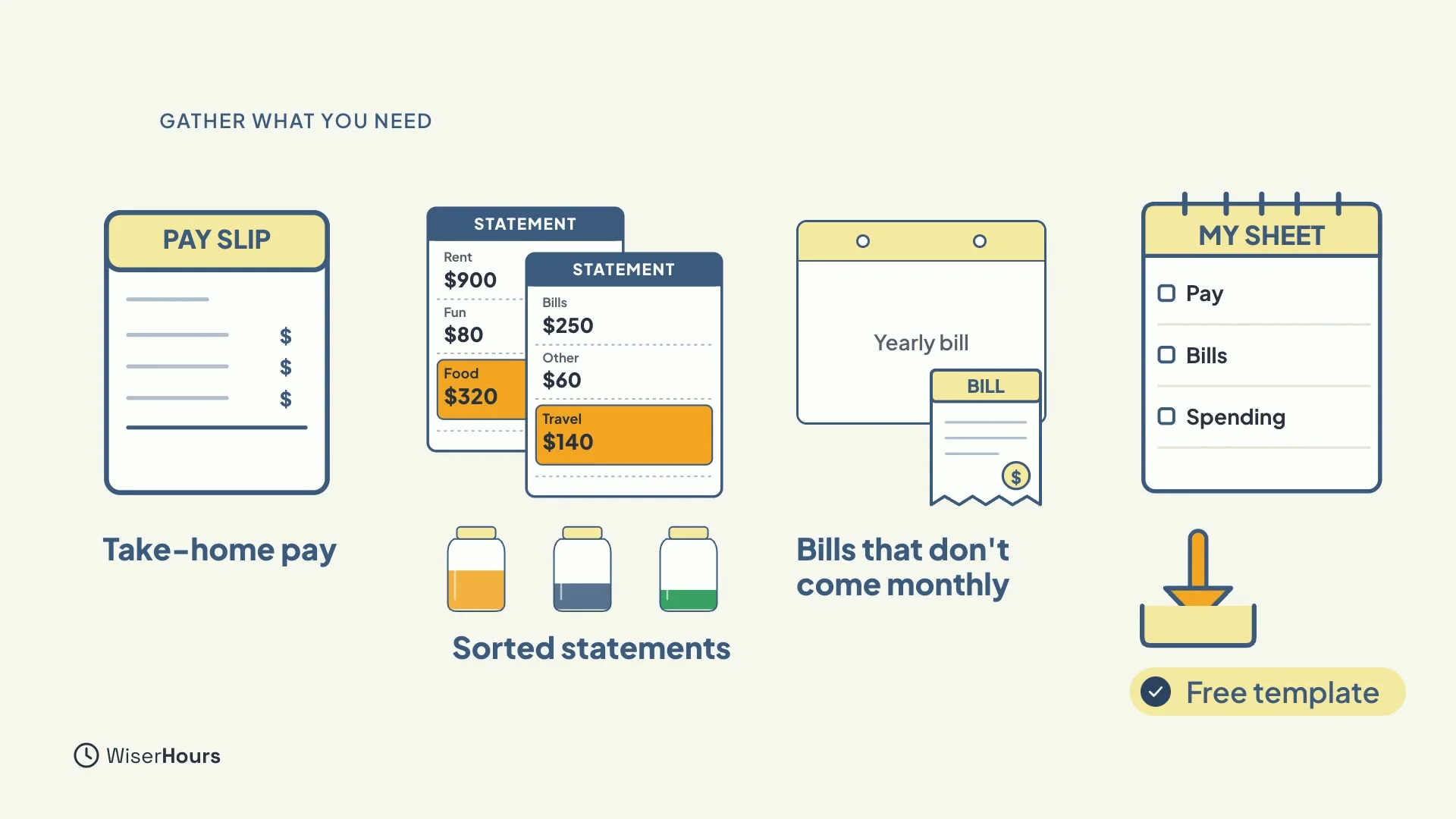
First, gather three things: your take-home pay, your sorted statements, and a list of the bills that do not come every month, like a yearly subscription. Paper or a simple sheet is enough.
Free template
Download the free one-page budget template (PDF) and print it, or copy its rows onto your own sheet.
 (opens the full-size picture)
Fill it in
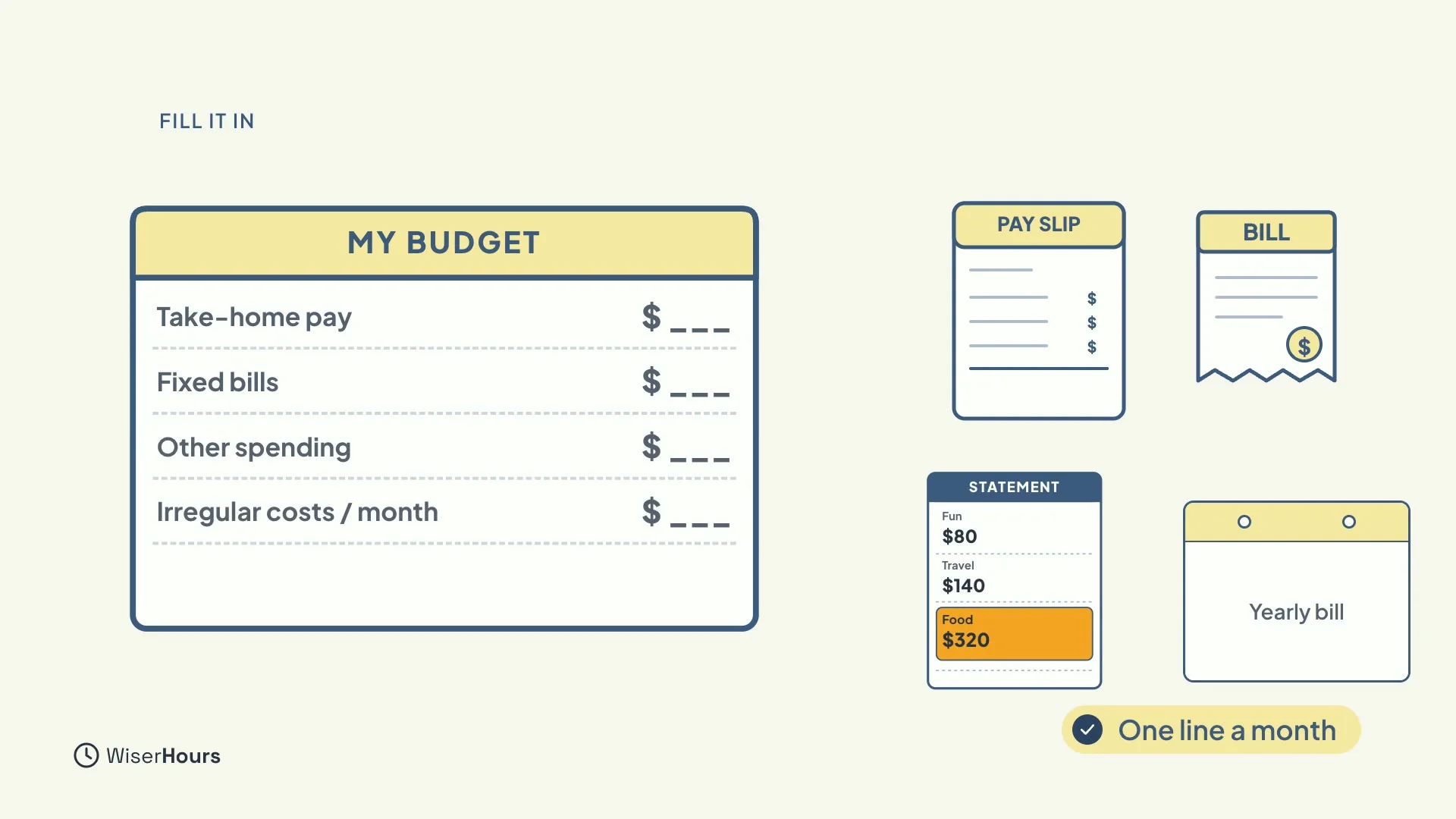
Then fill it in, line by line. Write your monthly take-home pay at the top. Below it, list your fixed bills, the ones that are the same every month. Then your other spending, taken from your statements. Last, your irregular costs. Add up a year of them and divide by 12, so they become one line a month.
 (opens the full-size picture)
Subtract and plan
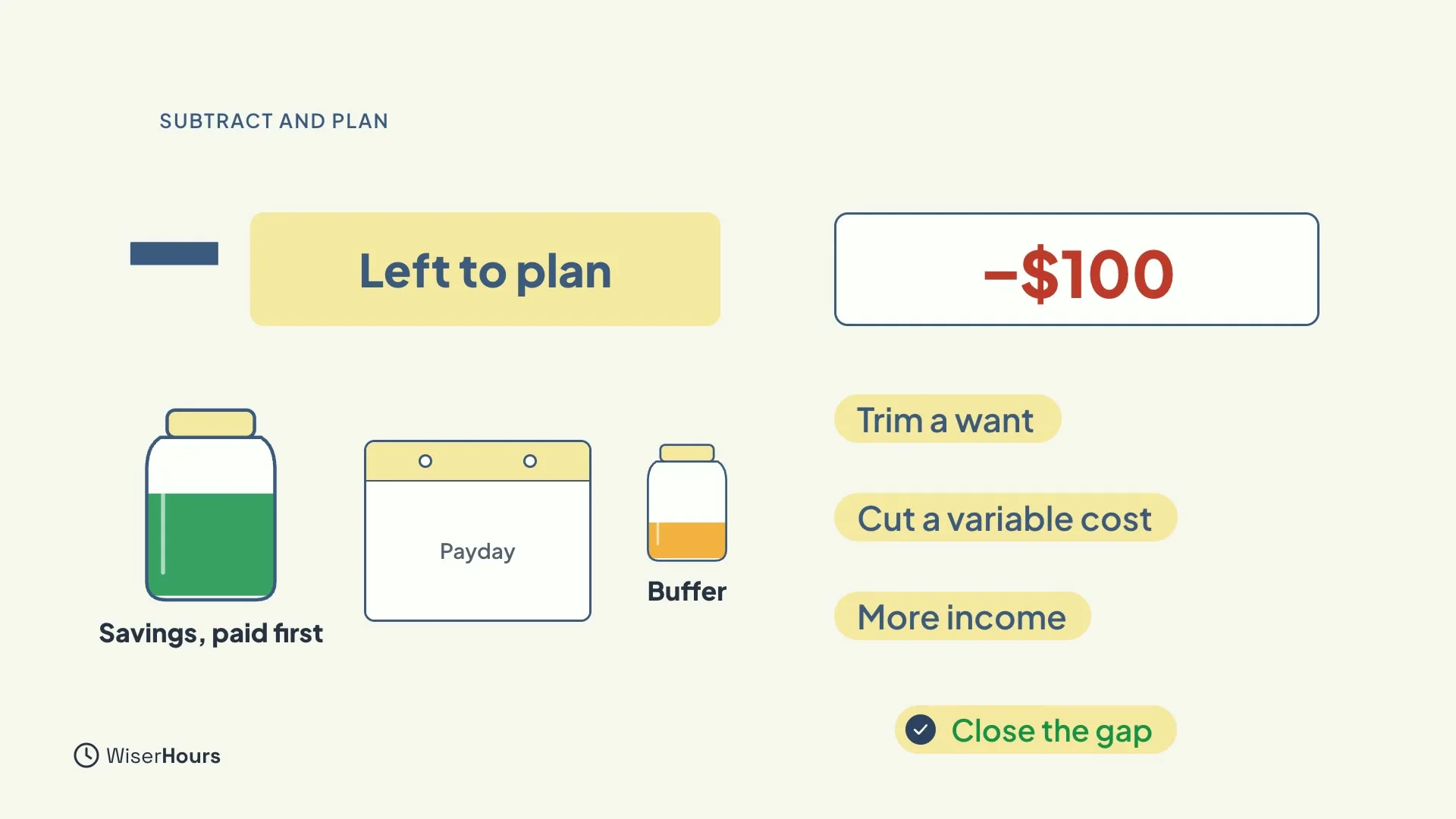
Now subtract. What is left is yours to plan. Pay savings first, as if it were a bill on payday, and keep a small buffer for the unexpected. If the number is negative, close the gap: trim a want, cut a variable cost, or look for more income.
 (opens the full-size picture)
An example
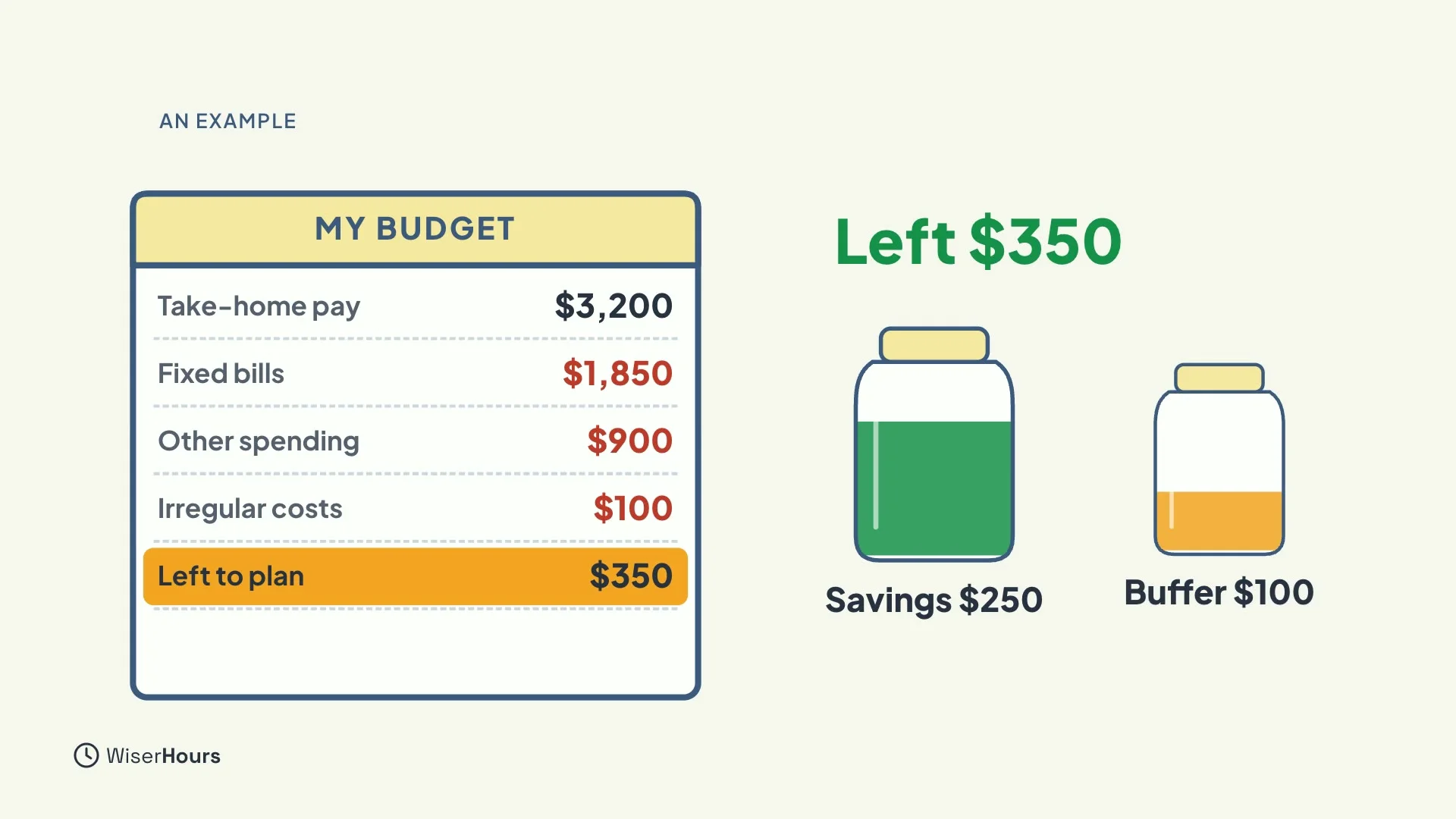
Here is an example with made-up numbers. Take-home pay is $3,200. Fixed bills are $1,850. Other spending is $900. Irregular costs are $100 a month. That leaves $350: $250 to savings, and $100 as a buffer.
 (opens the full-size picture)
Timing, not amount
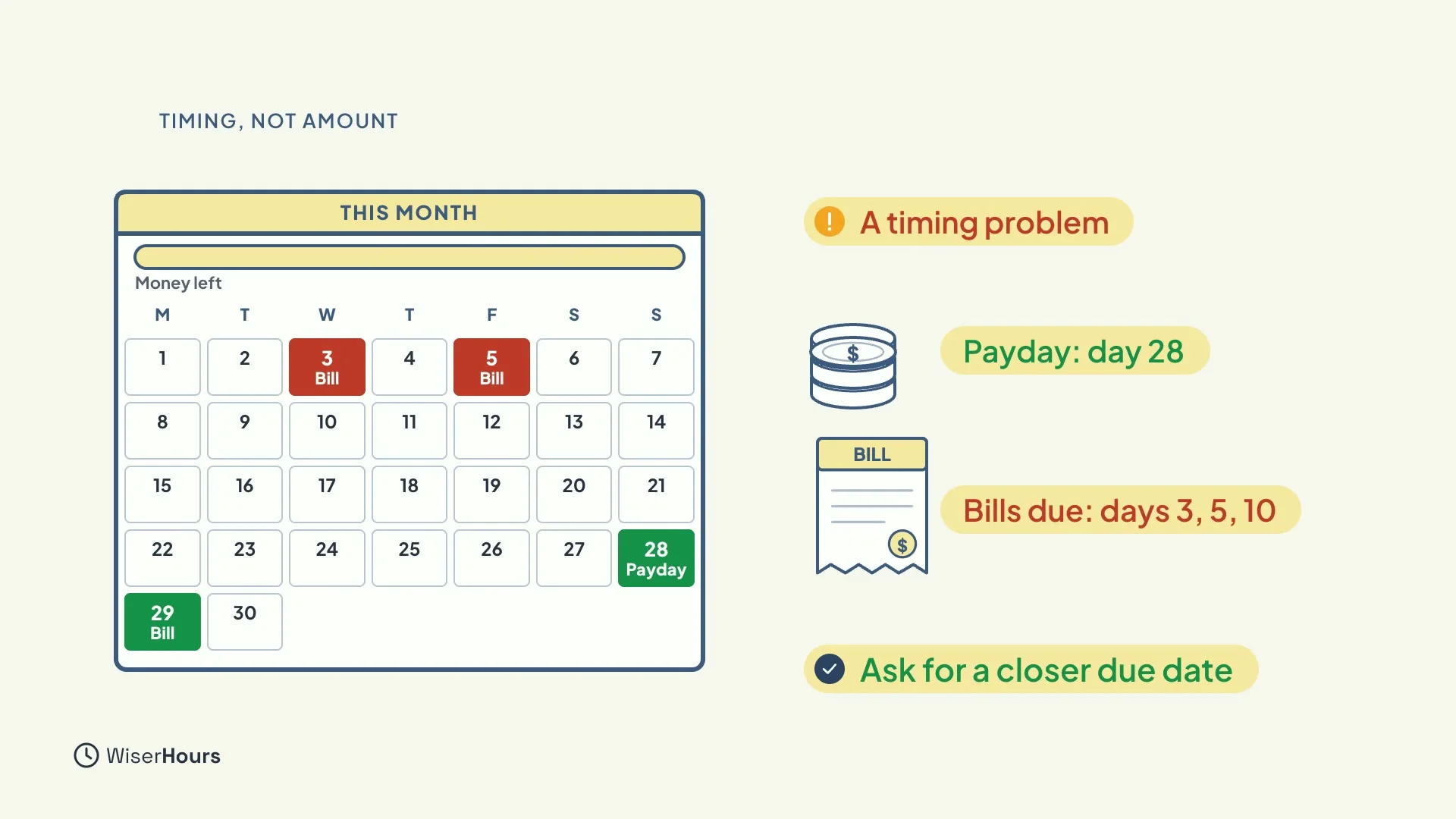
If money runs short before payday, it may be a timing problem, not an amount problem. Put your paydays and bill due dates on one calendar. You may be able to ask for a due date closer to payday.
 (opens the full-size picture)
One last question
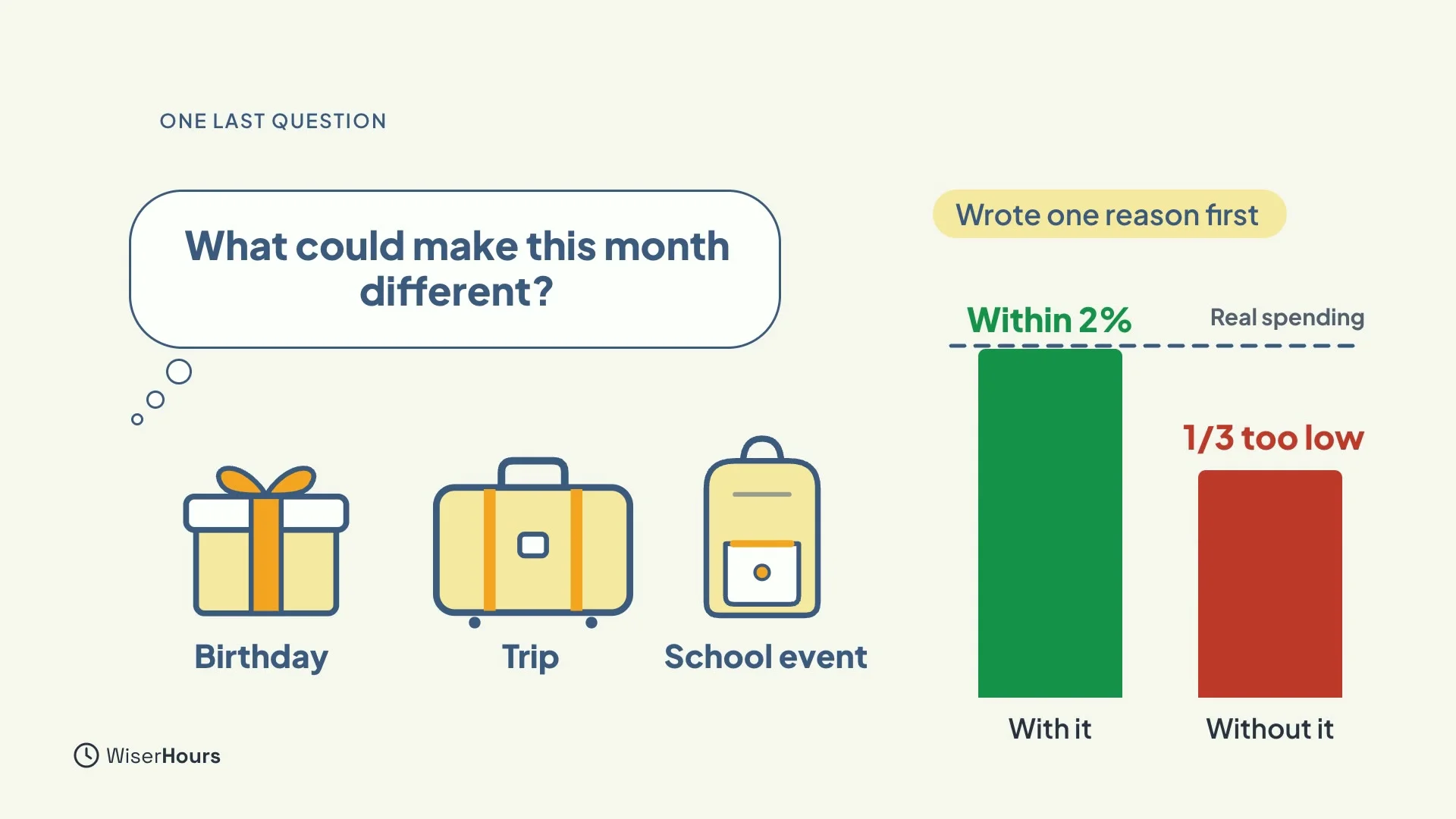
Before you finish, ask one question: what could make this month different? A birthday, a trip, a school event. In a set of studies, people who first wrote down one reason their week might be different predicted their spending within about 2 percent, instead of about a third too low.
 (opens the full-size picture)
YOUR TURN
Read more
- How to Make a Budget: A Step-by-Step Guide for Beginners: the six steps in more detail, with a worked example.
- Zero-Based Budgeting for Beginners: How to Plan Where Every Dollar Goes: giving every dollar a job, and what to do when the plan is short.
Read the full lesson script
Welcome back. In this lesson, you'll put everything together, and build your first budget, in one sitting, on one page.
First, gather what you need: your take-home pay, your sorted statements, and a list of the bills that don't come every month. Paper or a simple sheet is enough, and there's a free template on the lesson page.
Then fill it in, line by line. Write your monthly take-home pay at the top. Below it, list your fixed bills. Then your other spending, from your statements. Then your irregular costs, as one monthly line.
Now subtract. What's left is yours to plan. Pay savings first, as if it were a bill on payday, and keep a small buffer. If the number is negative, close the gap: trim a want, cut a variable cost, or look for more income.
Here's an example. Take-home pay, thirty-two hundred dollars. Fixed bills, eighteen hundred and fifty. Other spending, nine hundred. Irregular costs, one hundred a month. That leaves three hundred and fifty: two hundred and fifty to savings, and one hundred as a buffer.
If money runs short before payday, it may be a timing problem, not an amount problem. Put your paydays and bill due dates on one calendar. You may be able to ask for a due date closer to payday.
Before you finish, ask one question: what could make this month different? A birthday, a trip, a school event. In a set of studies, people who first wrote one reason their week might be different predicted their spending within about two percent, instead of about a third too low.
So remember: start from take-home pay, then fixed bills, other spending, and irregular costs. Pay savings first, like a bill. And ask what could make this month different. Before the next lesson, build your first budget, on paper or with the free template. Next, you'll plan for the bills that don't come every month.
MAKE IT A SMALL WIN
Finished this lesson?
Mark it complete to save your progress on this device.