Pick a method · Lesson 7 of 12
Envelope Budgeting: Paper, Cash or Digital Pots
Give the categories where you overspend a set amount in an envelope or pot, and learn when to stop or move money on purpose.
 Video coming soon
Envelope budgeting is a simple way to stop overspending in the categories where it happens most. You give each category its own envelope, and you let the envelope say when you are done. In this lesson you will see how it works, whether cash really helps, and how to try it without turning your whole budget upside down.
How it works
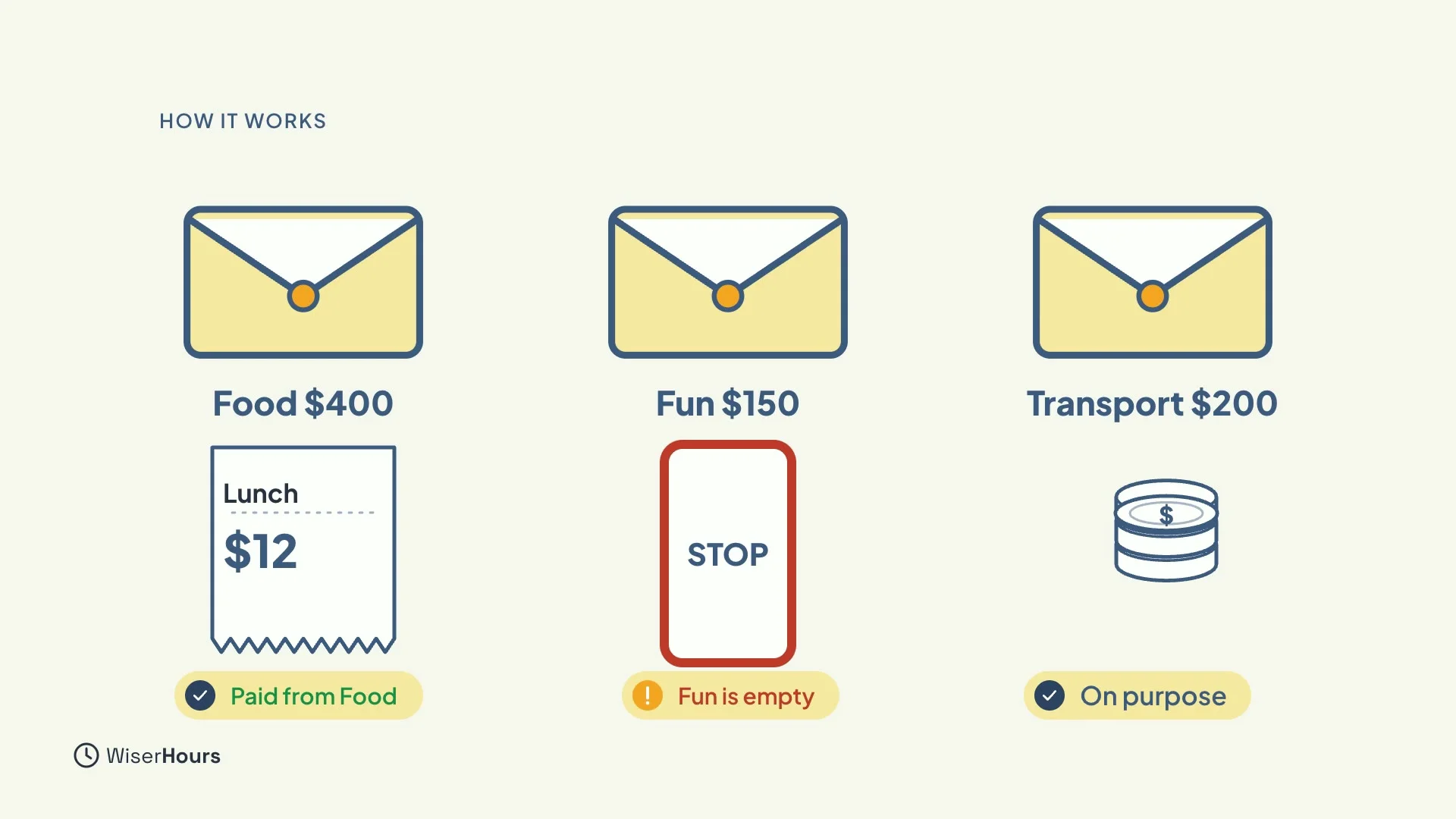
On payday, you put a set amount into an envelope for each category. For example, food, fun and transport. When you buy lunch, you pay from the food envelope and only from that one. Each envelope is a small, clear limit that you can see.
When an envelope is empty, you have two choices. You stop spending in that category, or you move money from another envelope, on purpose. The words “on purpose” matter. You decide to take from one place, knowing what it will cost you elsewhere.
 (opens the full-size picture)
Does paying with cash really help?
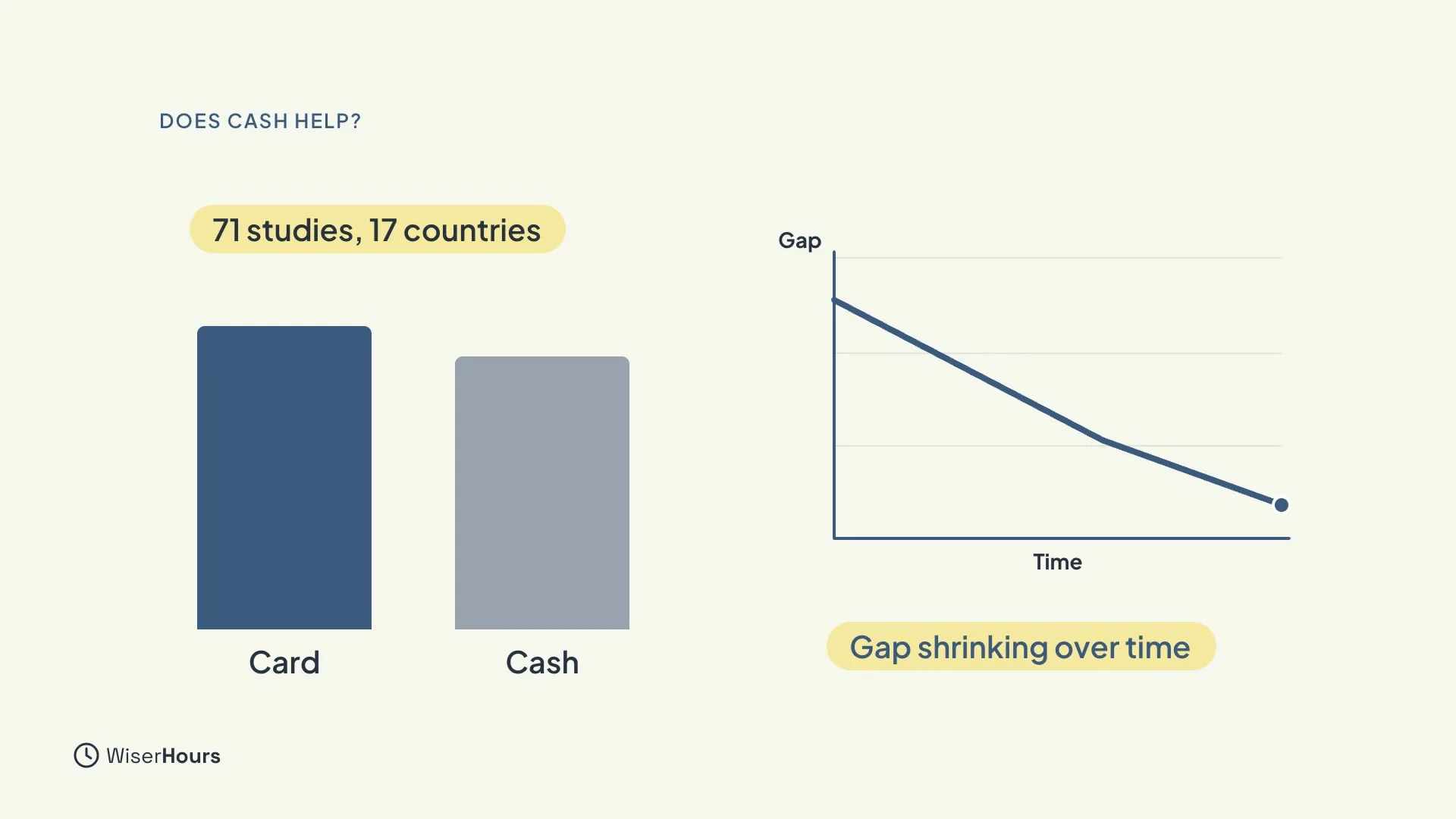
Many people think cash makes you spend less. A review of 71 studies across 17 countries found that paying by card goes with slightly more spending than paying cash. But the difference is small, and it has been shrinking over time. So cash is not a magic fix.
 (opens the full-size picture)
The labels matter
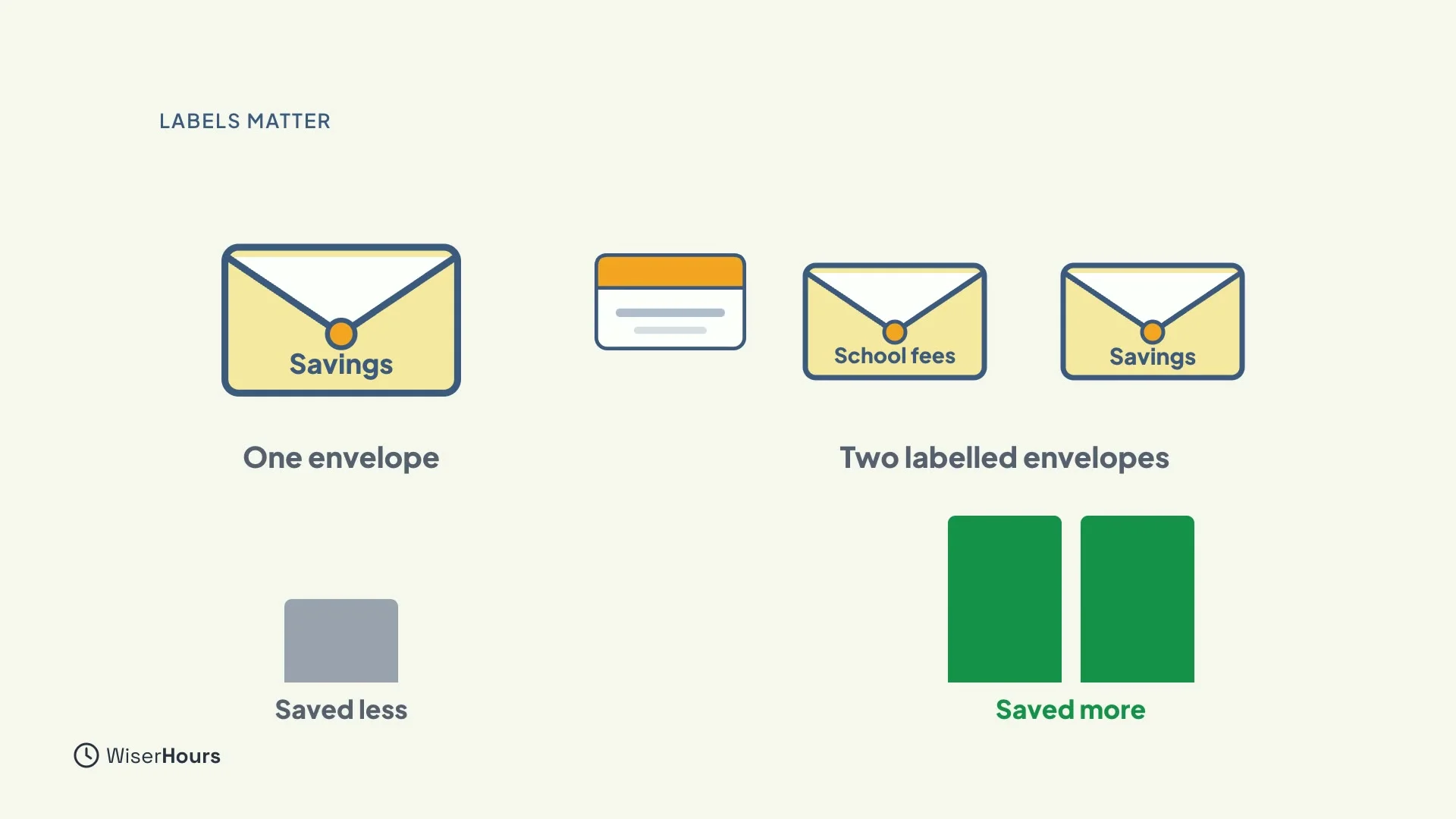
The labels may matter more than the cash. In one field study, workers who split their savings into two labelled envelopes saved more than those who used just one. Giving money a name makes it easier to protect, because “school fees” feels different from “whatever is left”.
 (opens the full-size picture)
Cash has risks
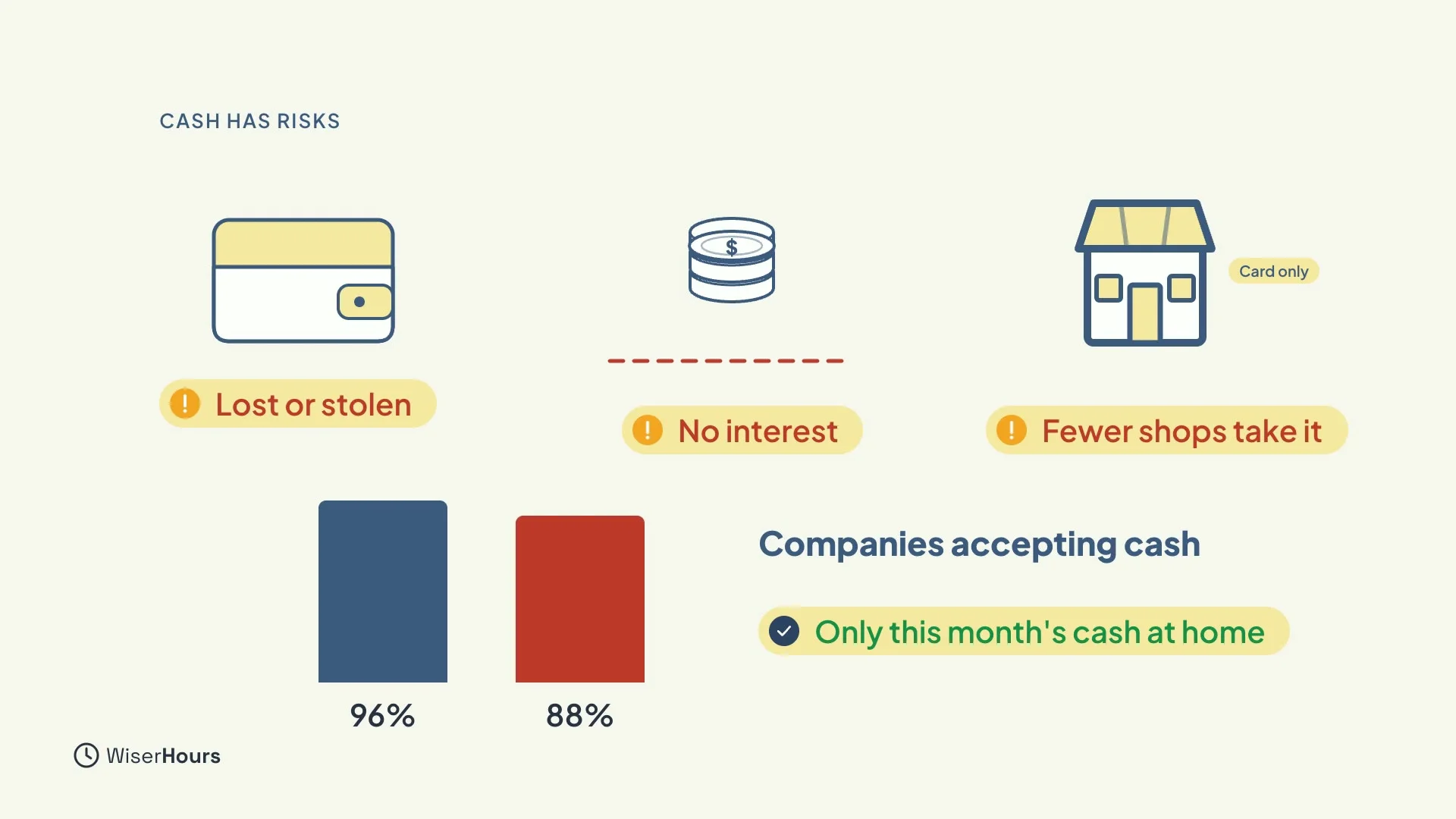
Cash also has risks. It can be lost or stolen, it earns no interest, and fewer shops take it. In the euro area, the share of companies accepting cash fell from 96 to 88 percent in three years. So keep only this month’s cash at home.
 (opens the full-size picture)
You do not need cash
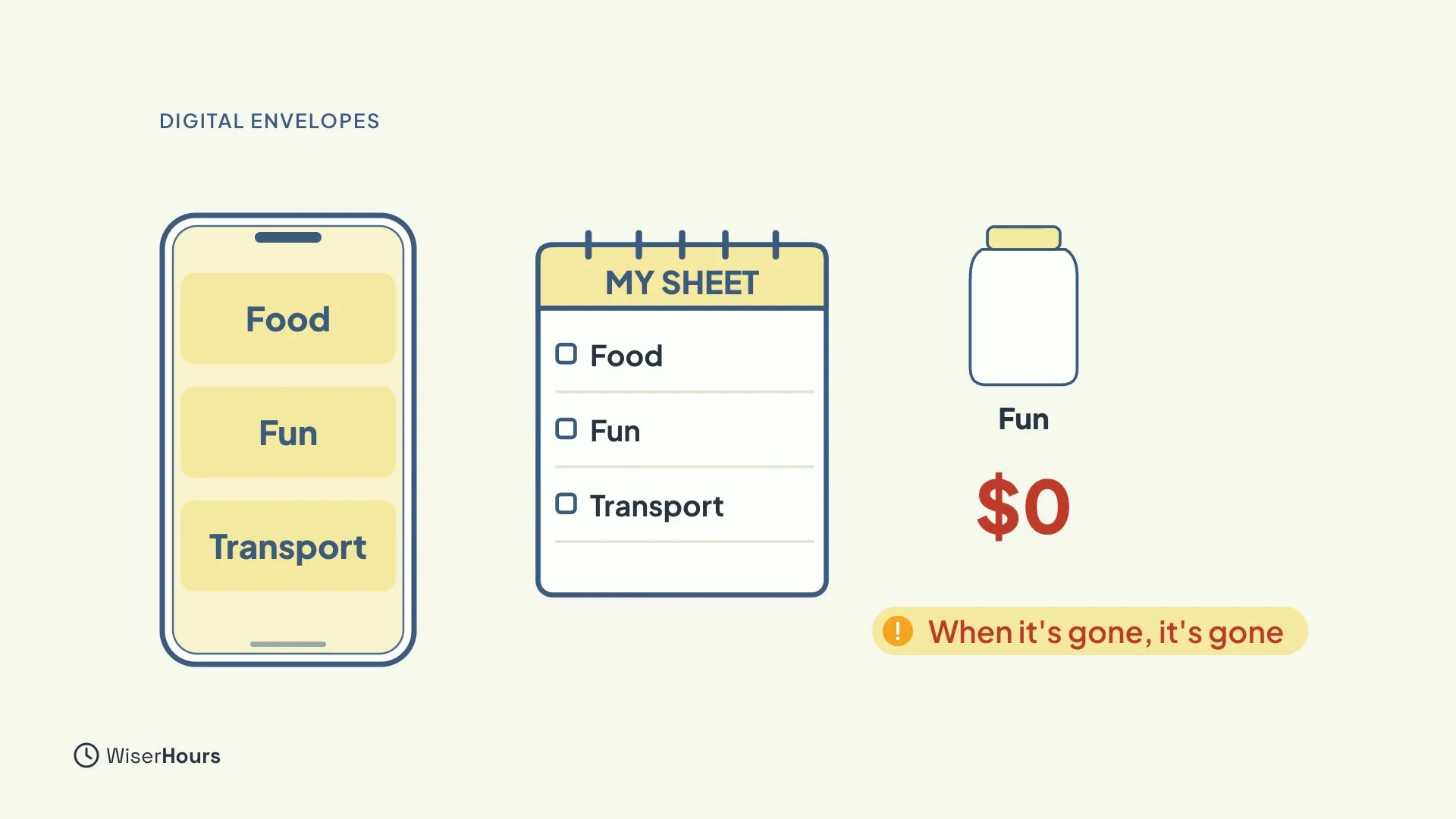
You can run the same system without any cash. Many bank accounts let you split money into separate pots, and a simple sheet works too. The rule stays the same: a set amount for each category, and when it is gone, it is gone.
 (opens the full-size picture)
Start small
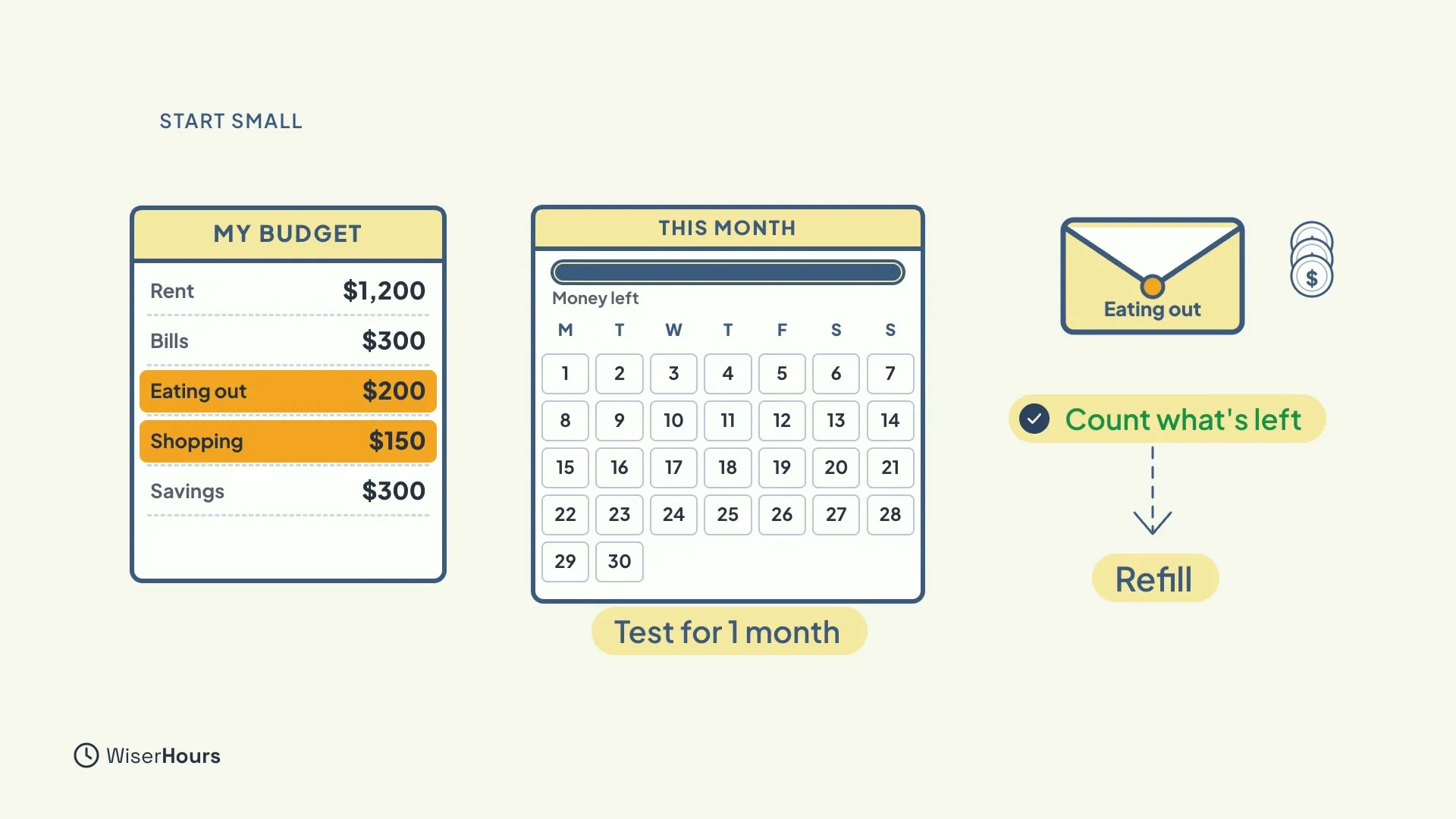
Do not put your whole budget in envelopes. Pick one or two flexible categories where you tend to overspend, like eating out or shopping, and test them for one month. At the end of the month, count what is left before you refill.
 (opens the full-size picture)
A method, not a rule
If envelopes feel like too much, a plain note on your phone with one number per category does the same job. What matters is the set amount and the stop.
YOUR TURN
Read more
- Cash Stuffing Explained: Does Paying With Cash Really Cut Spending?: how the method works and what the research says about cash.
- How to Stop Impulse Buying: Strategies That Hold Up in Studies: ways to slow down the spending that happens on a whim.
Read the full lesson script
Welcome back. In this lesson, you'll try envelope budgeting: a simple way to stop overspending in the categories where it happens most, with paper, cash, or your phone.
Here's how it works. On payday, you put a set amount into an envelope for each category, like food, fun or transport. You pay only from the matching envelope. When an envelope is empty, you stop, or you move money from another one, on purpose.
Does paying cash really help? A review of seventy-one studies across seventeen countries found that paying by card goes with slightly more spending than paying cash. But the difference is small, and it has been shrinking over time.
The labels may matter more than the cash. In one field study, workers who split their savings into two labelled envelopes saved more than those who used just one. Giving money a name makes it easier to protect.
Cash also has risks. It can be lost or stolen, it earns no interest, and fewer shops take it. In the euro area, the share of companies accepting cash fell from ninety-six to eighty-eight percent in three years. So keep only this month's cash at home.
You don't need cash for this. Many bank accounts let you split money into separate pots, and a simple sheet works too. The rule is the same: a set amount for each category, and when it's gone, it's gone.
Don't put your whole budget in envelopes. Pick one or two flexible categories where you tend to overspend, like eating out or shopping, and test them for one month. Then count what's left before you refill.
So remember: a set amount goes in each envelope, and when it's empty, you stop, or move money on purpose. The labels matter more than the cash. And start with one or two categories where you overspend. Before the next lesson, pick one category you overspend on, and give it an envelope or a pot for a month. Next, you'll build your first budget in one sitting.
MAKE IT A SMALL WIN
Finished this lesson?
Mark it complete to save your progress on this device.