Build it · Lesson 9 of 12
Sinking Funds: Plan for Bills That Aren't Monthly
Turn irregular costs like insurance, repairs and gifts into a small monthly amount, using a list, a division and a labelled pot.
 Video coming soon
Many budgets break on costs you knew were coming. They just did not come every month. In this lesson you will plan for those bills with a simple tool called a sinking fund, so that a big bill becomes a small monthly amount instead of a surprise.
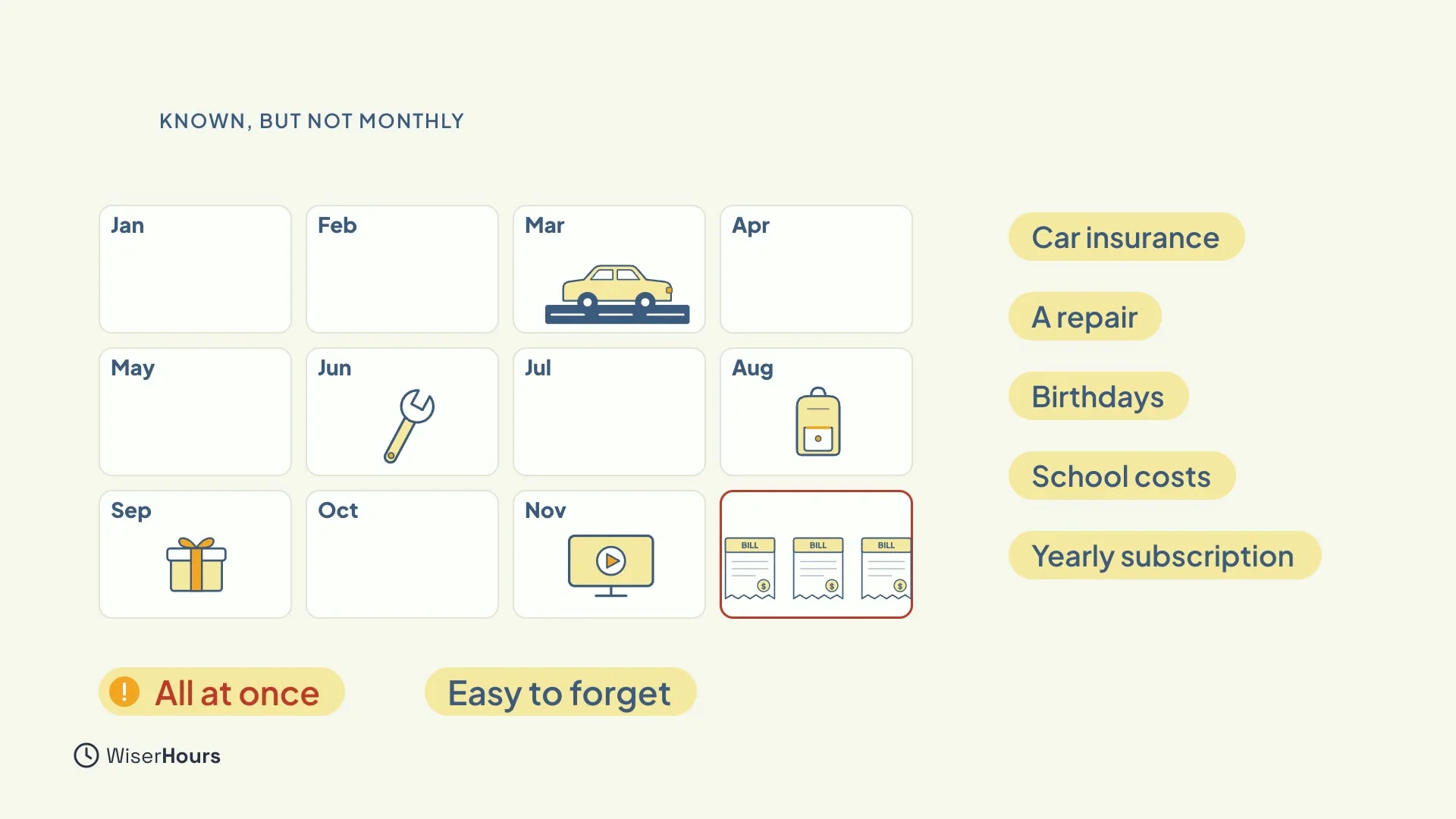
Known, but not monthly
Think of car insurance, a repair, birthdays, school costs or a yearly subscription. They do not come every month, so they are easy to forget, until several of them arrive all at once.
 (opens the full-size picture)
The calendar test
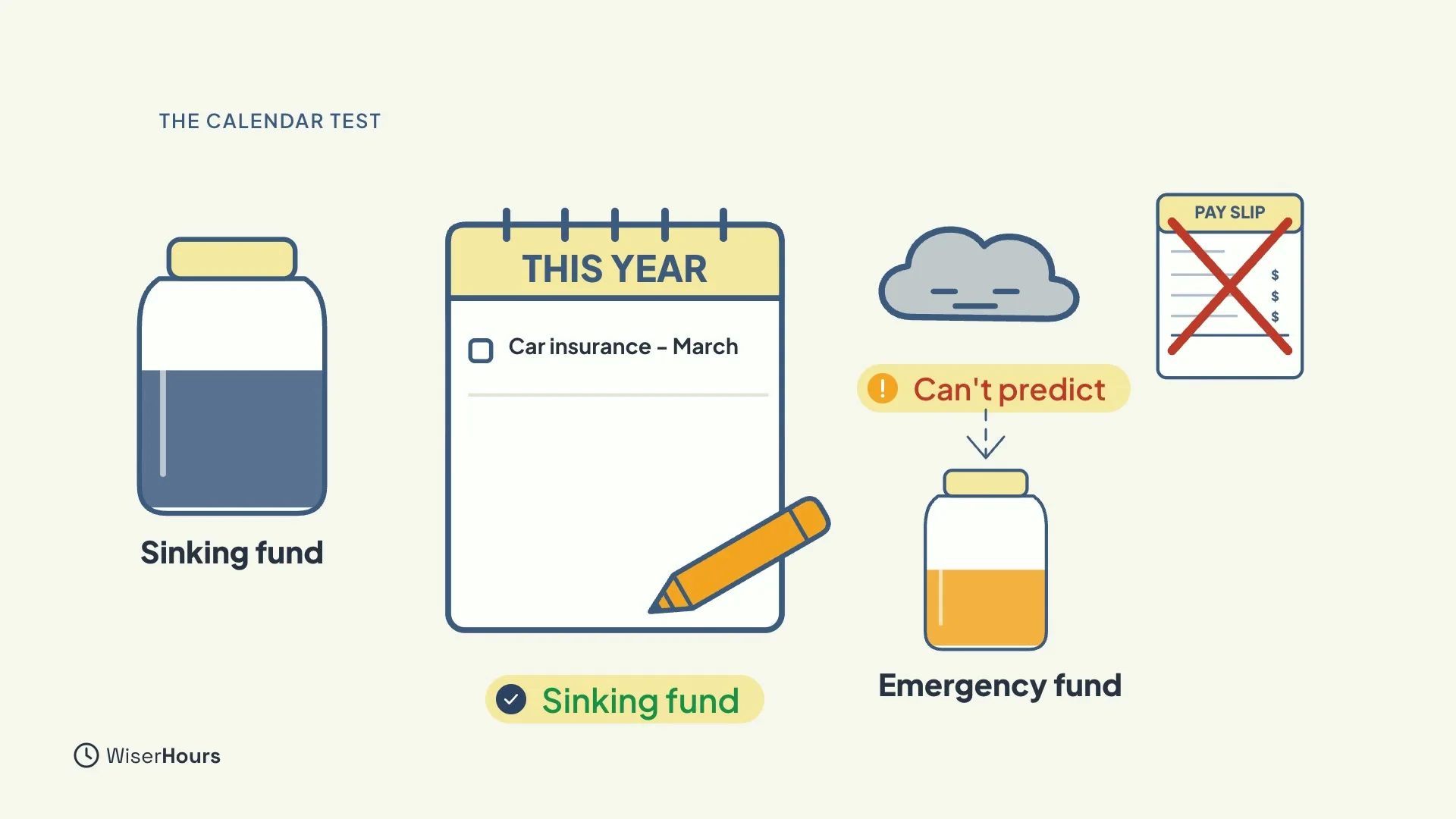
A sinking fund is money you save a little at a time for a known cost. Here is the test: if you could write it on this year’s calendar, it is a sinking fund. If you cannot predict it, like losing your job, that is what an emergency fundemergency fund: Money kept in an account you can reach quickly, to cover unexpected costs or a drop in income without borrowing. How much to hold depends on your circumstances, and official guidance differs by country.Full entry in the glossary is for.
 (opens the full-size picture)
Make the list
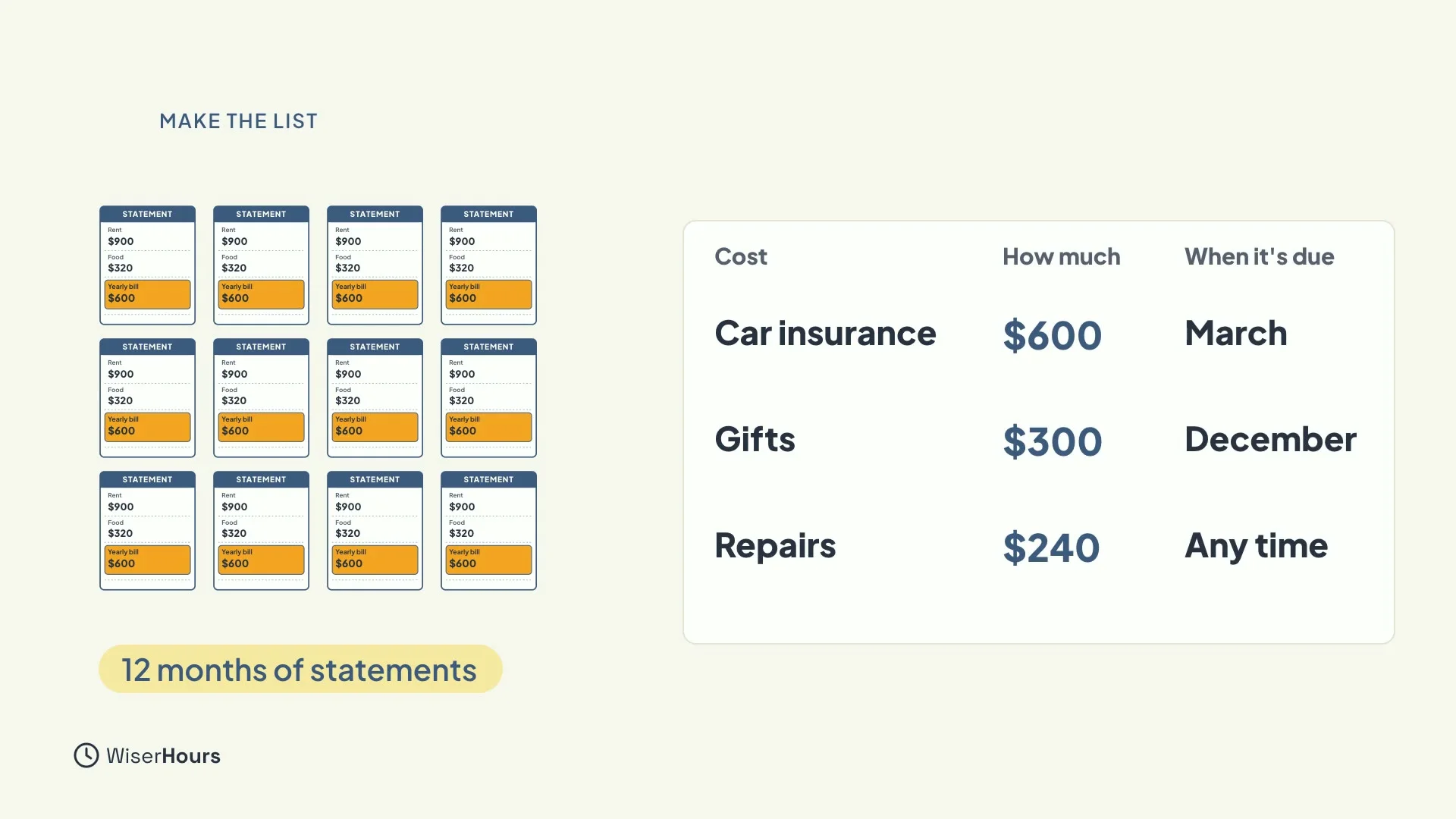
To start, go through the last twelve months of statements, and list every cost that did not come monthly. Next to each, write how much it was, and when it is due.
 (opens the full-size picture)
Divide by the months left
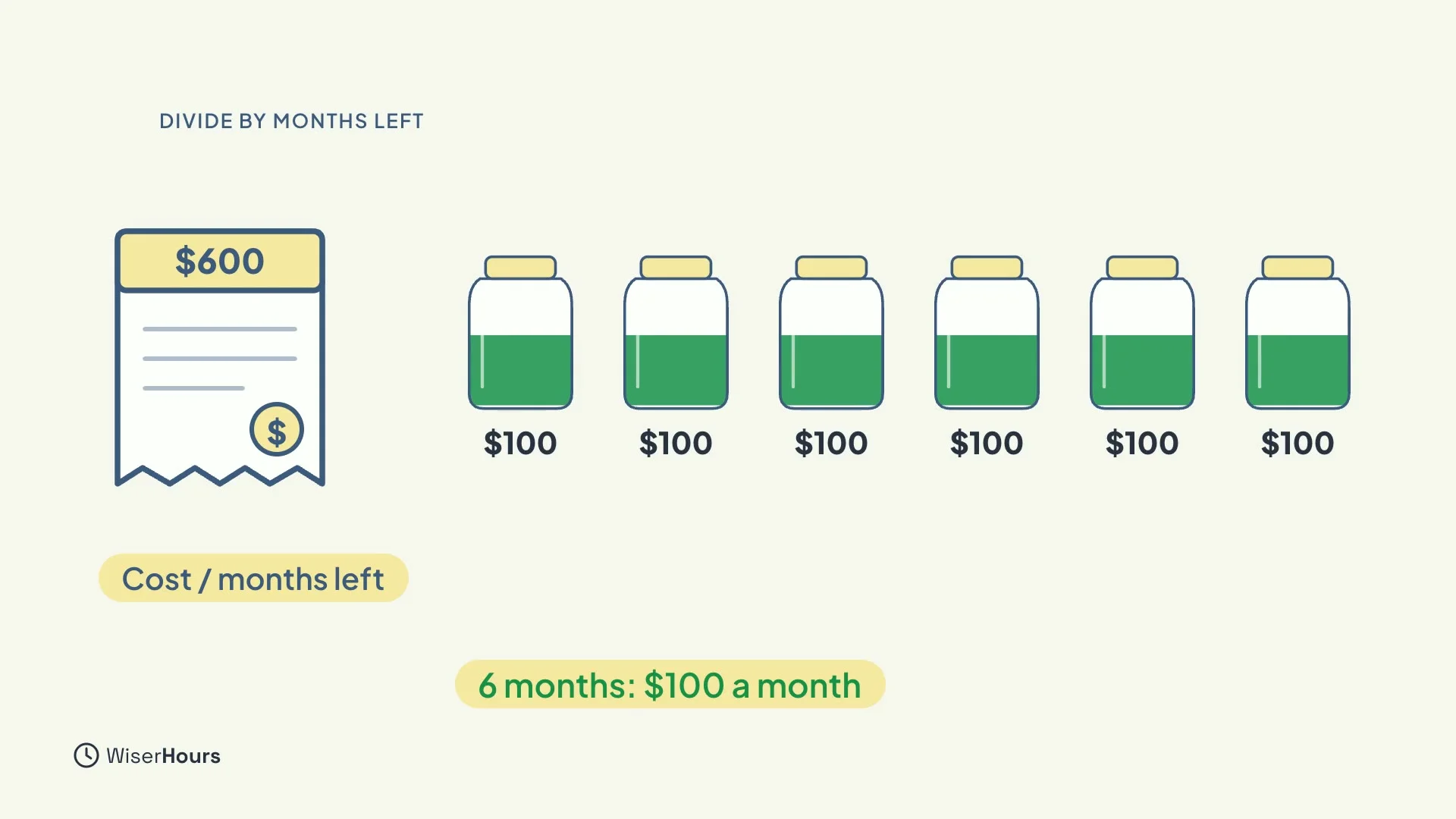
Then divide each cost by the months left until it is due. A $600 insurance bill due in twelve months needs $50 a month. If it is due in six months, you will need $100 a month.
 (opens the full-size picture)
Keep it in labelled pots
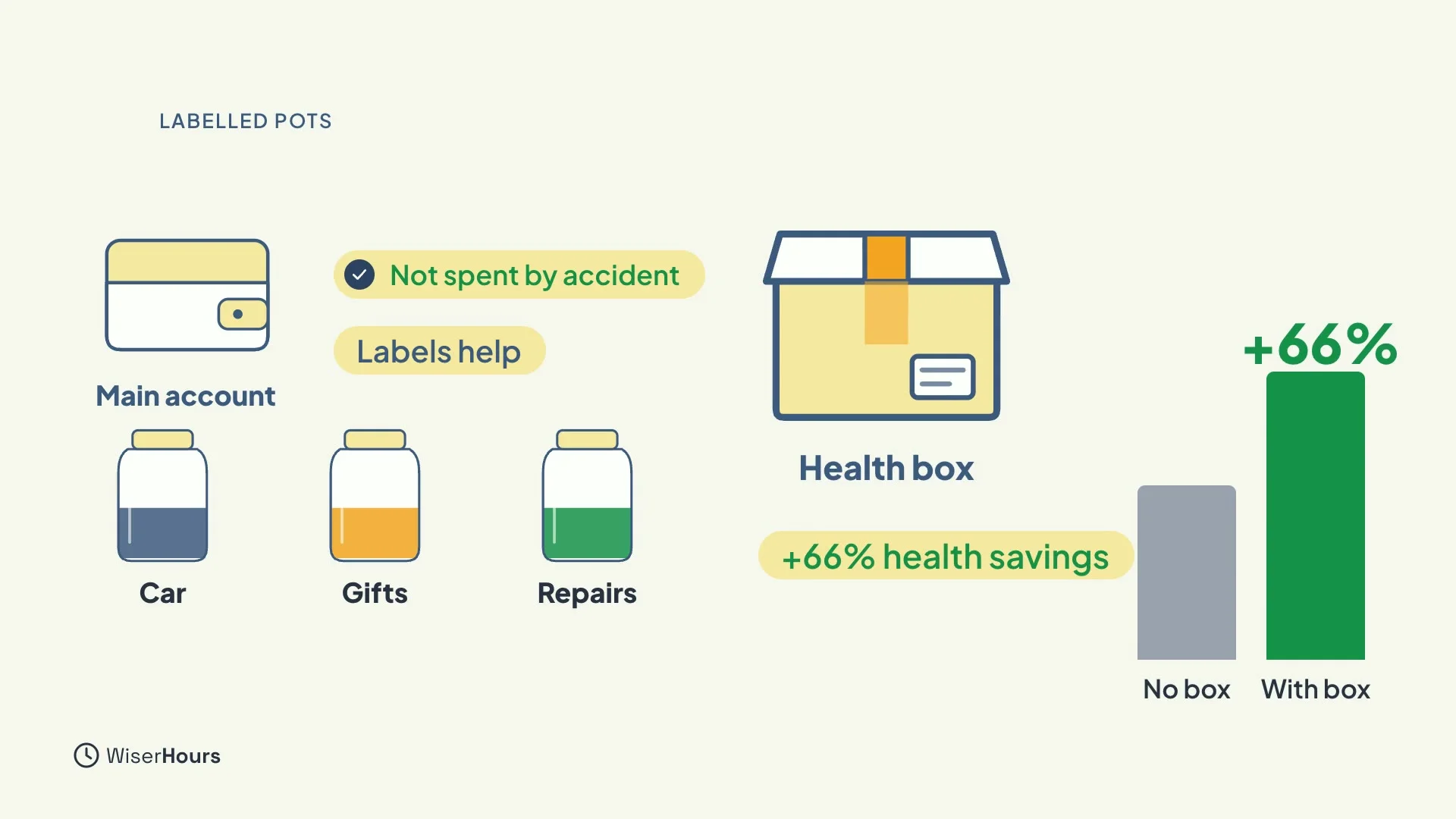
Keep the money in a separate account or a labelled pot, so it does not get spent by accident. Labels help. In one trial, simply giving people a labelled box for health costs raised their health savings by 66 percent.
 (opens the full-size picture)
It gets easier
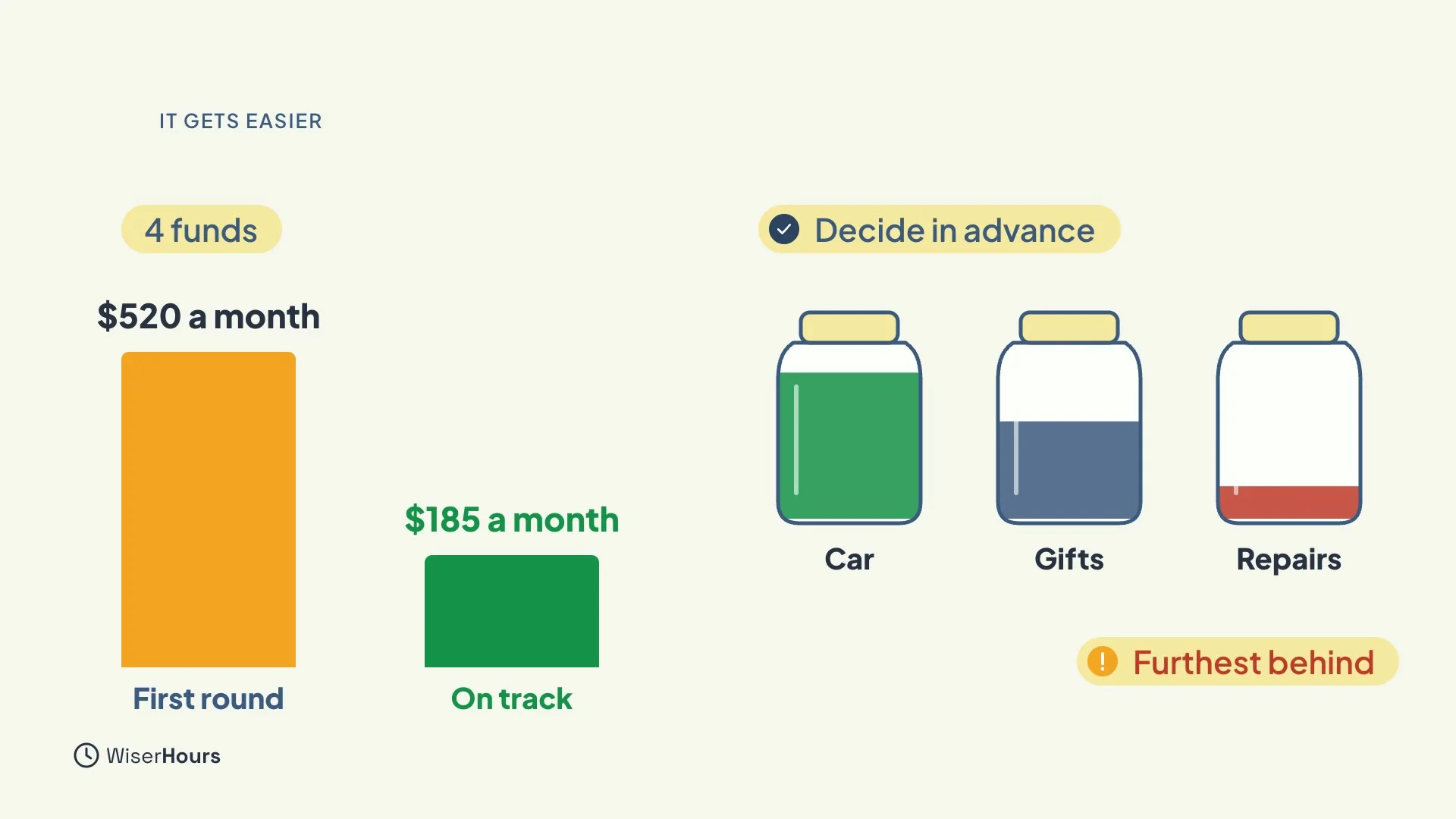
The first year can feel heavy, because you are catching up. In one example, four funds cost $520 a month at first, then just $185 a month once they were on track. Also decide in advance what to do with leftovers, like moving them to the fund that is furthest behind.
 (opens the full-size picture)
YOUR TURN
Read more
- Sinking Funds Explained: Saving Ahead for Expenses You Know Are Coming: the full method, with examples.
- Emergency Fund Basics: What It’s For, How Big, and Where to Keep It: the cushion for costs you cannot predict.
- How to Make a Budget: A Step-by-Step Guide for Beginners: where irregular costs fit into the whole budget.
Read the full lesson script
Welcome back. In this lesson, you'll plan for the bills that don't come every month, with a simple tool called a sinking fund.
Many budgets break on costs you knew were coming: car insurance, a repair, birthdays, school costs, a yearly subscription. They don't come every month, so they're easy to forget, until they arrive all at once.
A sinking fund is money you save a little at a time for a known cost. Here's the test: if you could write it on this year's calendar, it's a sinking fund. If you can't predict it, like losing your job, that's what an emergency fund is for.
To start, go through the last twelve months of statements, and list every cost that didn't come monthly. Next to each, write how much it was, and when it's due.
Then divide each cost by the months left until it's due. A six hundred dollar insurance bill due in twelve months needs fifty dollars a month. If it's due in six months, you'll need a hundred.
Keep the money in a separate account or a labelled pot, so it doesn't get spent by accident. Labels help. In one trial, simply giving people a labelled box for health costs raised their health savings by sixty-six percent.
The first year can feel heavy, because you're catching up. In one example, four funds cost five hundred and twenty dollars a month at first, then just one hundred and eighty-five once they were on track. And decide in advance what to do with leftovers, like moving them to the fund that's furthest behind.
So remember: if it fits on this year's calendar, it gets a sinking fund. Divide each cost by the months left. And keep the money in a labelled pot. Before the next lesson, list every bill you pay less often than monthly, and work out its monthly amount. Next, you'll learn what to do when you overspend.
MAKE IT A SMALL WIN
Finished this lesson?
Mark it complete to save your progress on this device.