Know your numbers · Lesson 2 of 12
Find Your Real Take-Home Pay
Learn the difference between gross and net pay and find the take-home number every budget starts from, even if your pay changes.
 Video coming soon
Every budget starts from one number: the money that really reaches your account each month. In this lesson you find that number, whether you are paid a steady wage, paid every two weeks, paid unevenly or working for yourself.
Two numbers on every payslip
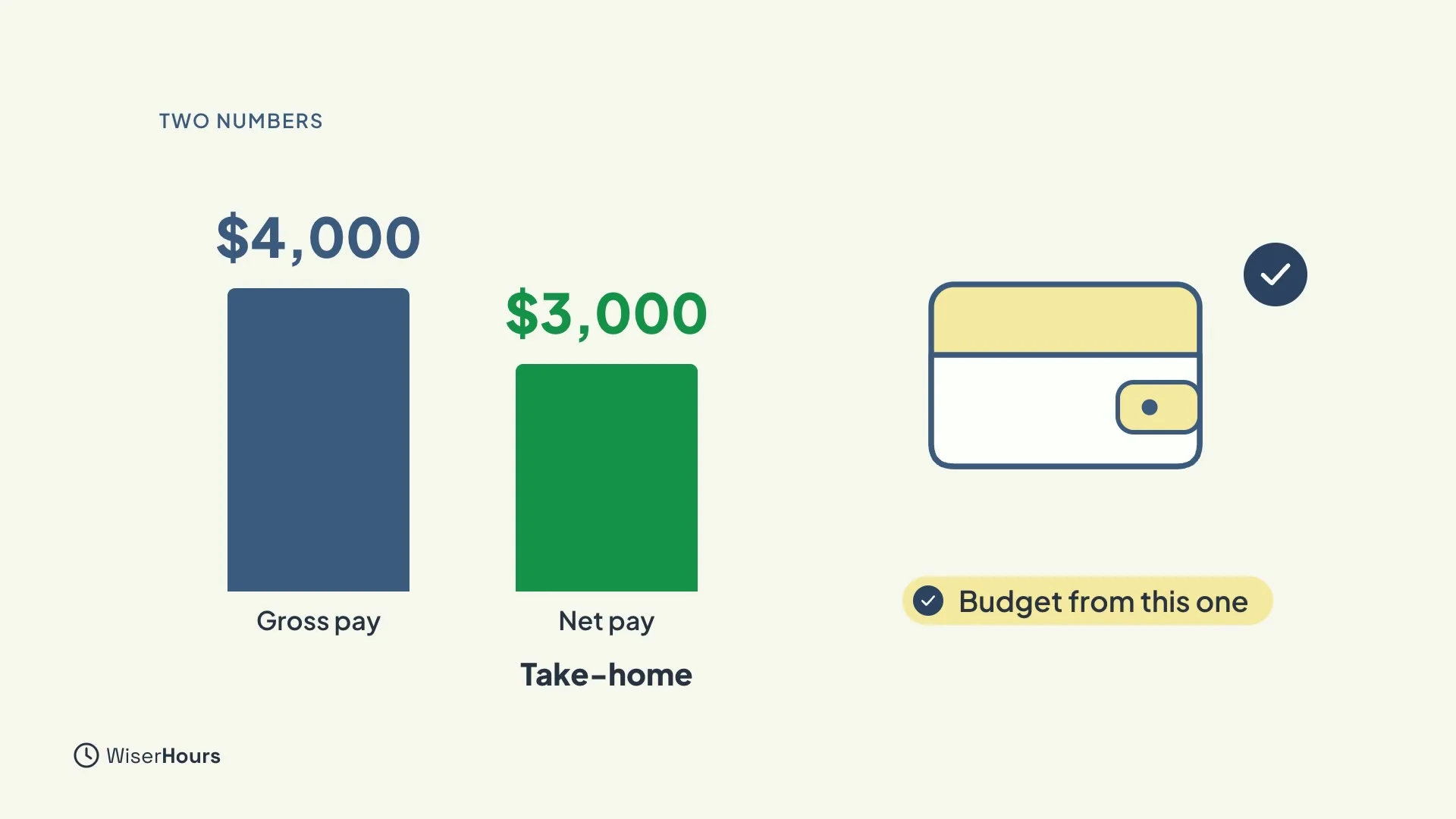
Your pay has two numbers. Gross pay is what you earn before anything is taken out. Net pay, also called take-home pay, is what is left afterwards, and it is what actually lands in your account.
Your budget starts from net pay, because that is the money you can spend. Gross pay is only a starting point on the way to it.
 (opens the full-size picture)
How big the gap is
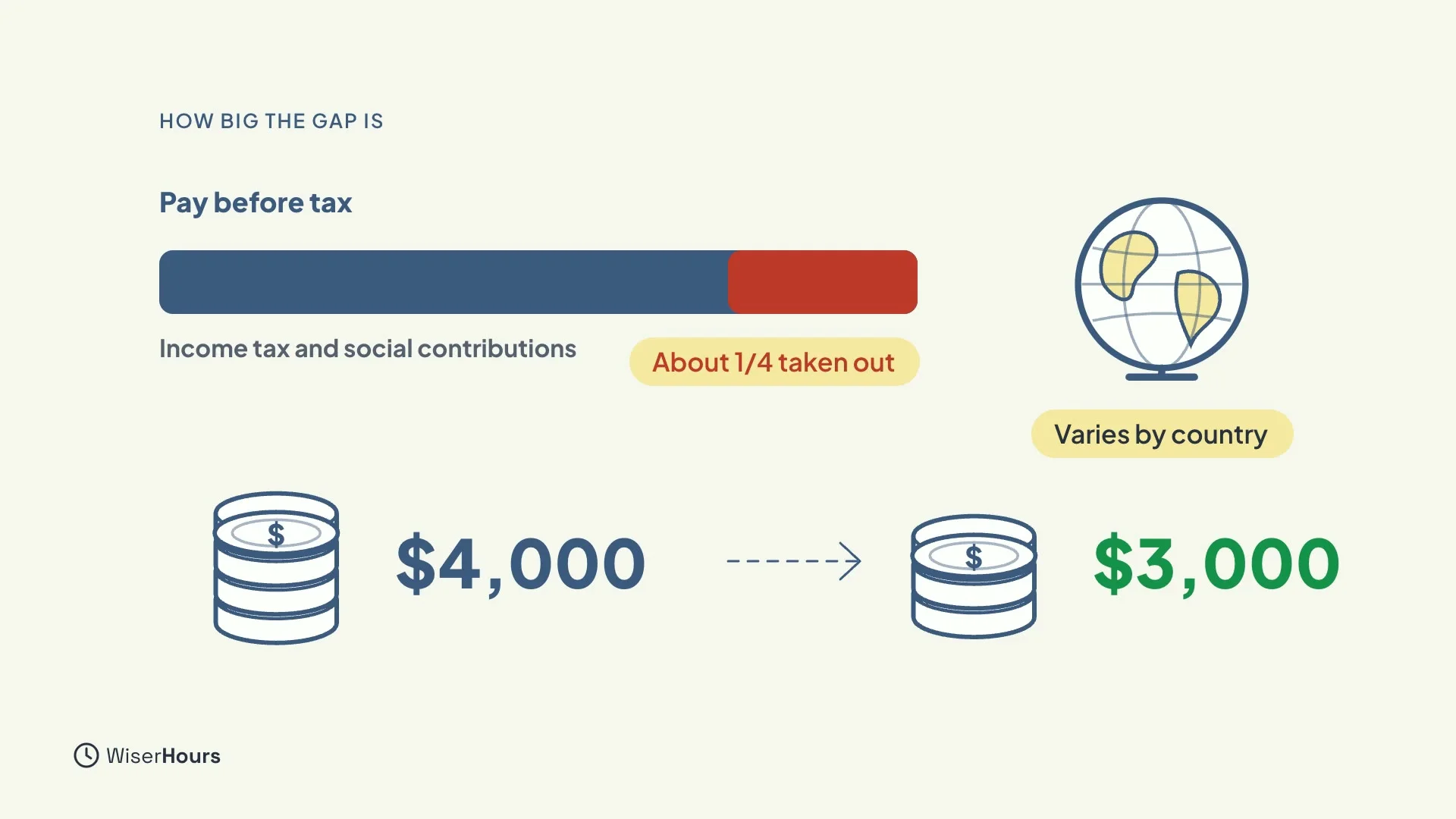
The gap can be large. Across the OECD, a group of mostly richer countries, income tax and social contributions took about a quarter of an average worker’s pay. It varies a lot from country to country, so your own gap may be smaller or bigger.
For example, a job paying $4,000 a month might bring home about $3,000. That is a round example, not a rule: your payslip shows your real numbers.
 (opens the full-size picture)
Read your payslip
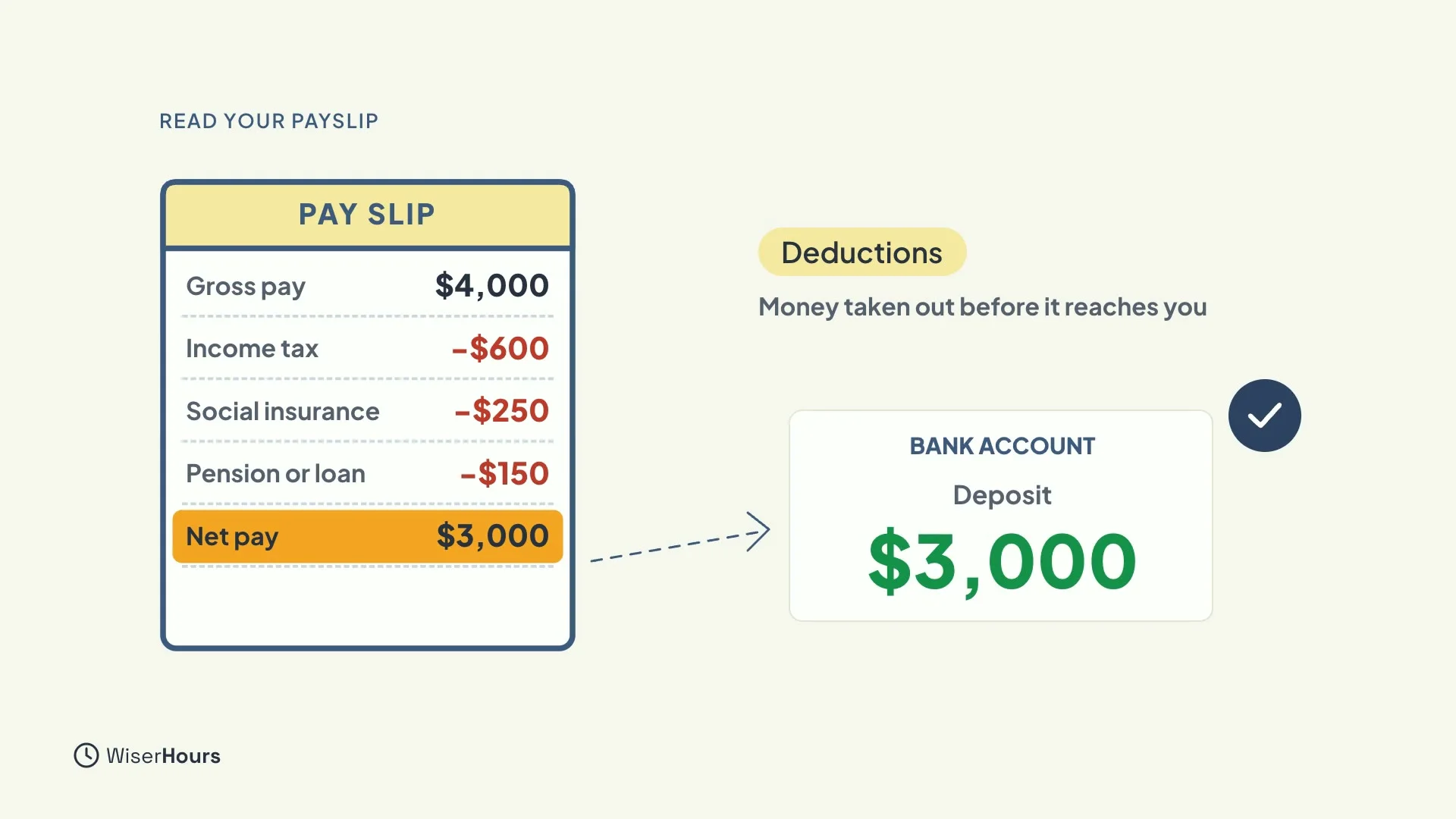
To find your number, read your payslip line by line. Near the top is gross pay. Below it come the deductions, which are amounts taken out before the money reaches you: income tax, social insurance, and things like pension or loan payments. At the bottom is net pay.
Then check that net pay matches what reached your bank account. If it does not, ask your employer or payroll team to explain the difference.
 (opens the full-size picture)
When your pay changes
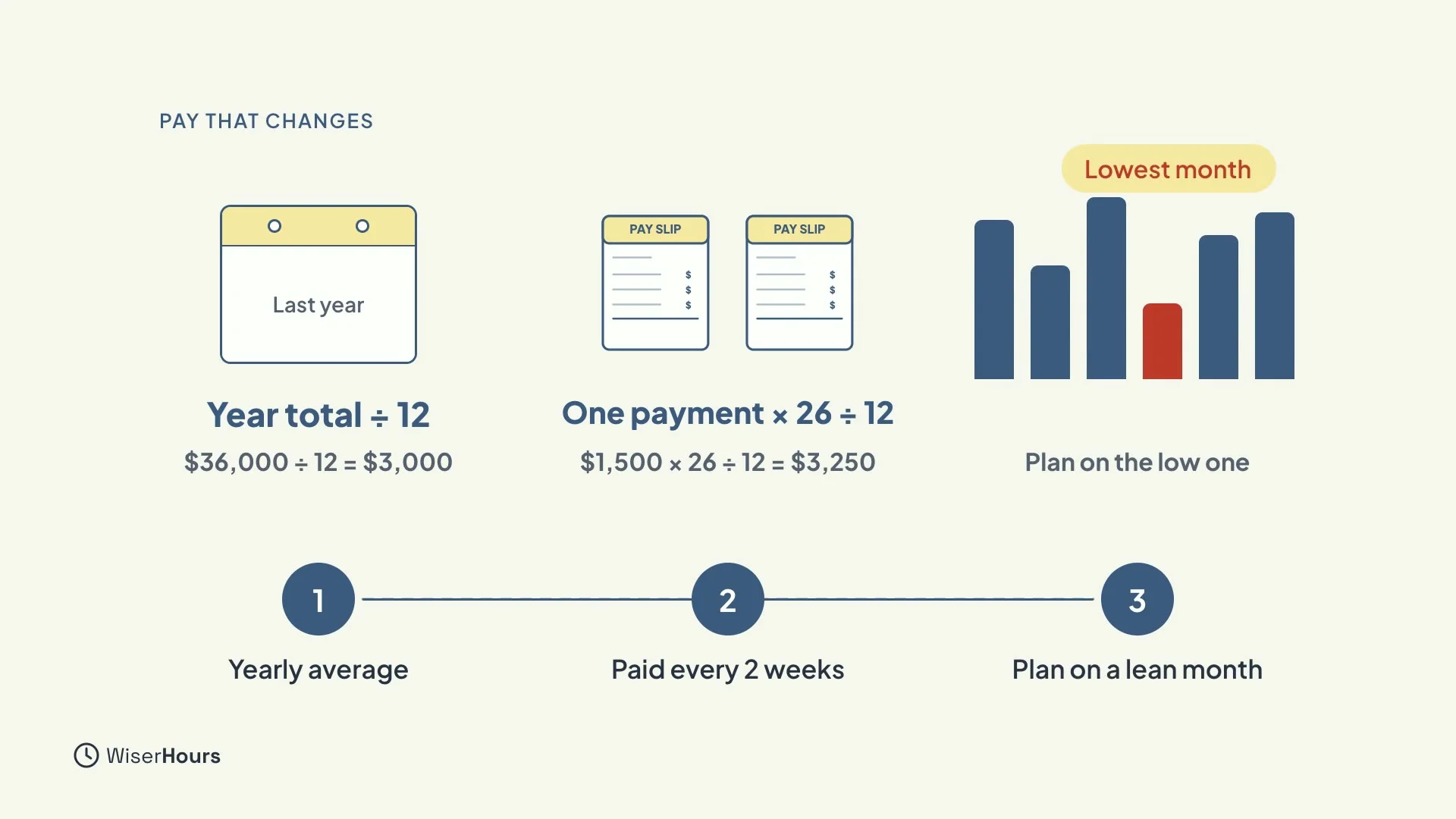
If your pay is not the same every month, add up your take-home pay for the last year and divide it by twelve. If you are paid every two weeks, multiply one payment by 26, then divide by 12. That is because 26 payments make a year, while a year has 12 months.
And if your income swings a lot, plan on a lean month, not an average one. One way to do that is to take the lowest month of the last six as your baseline. Better months can then go into savings.
 (opens the full-size picture)
Working for yourself
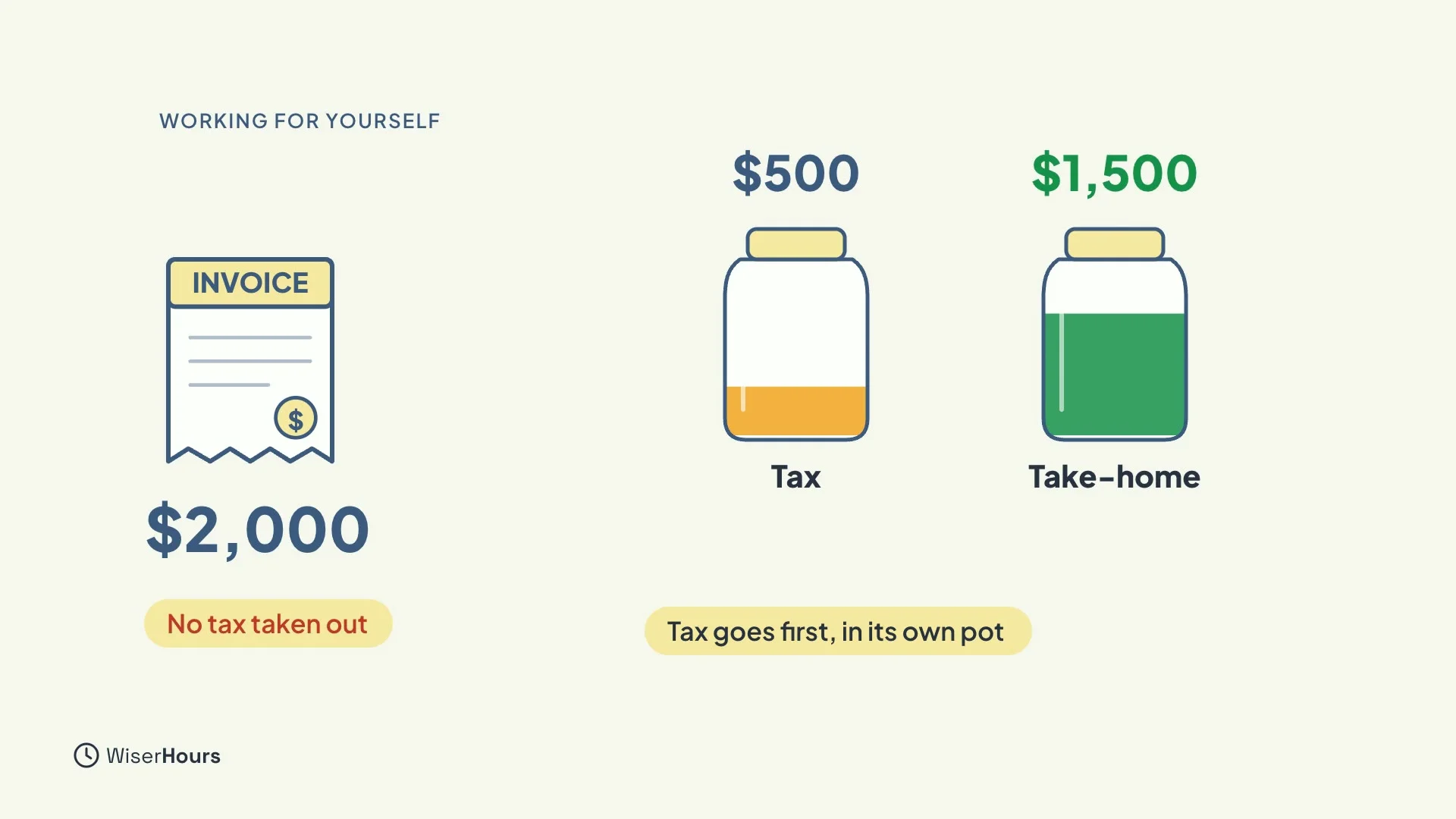
If you work for yourself, nobody takes tax out for you. So set tax aside first, in a separate pot, every time you are paid. Only what is left is your take-home pay.
How much to set aside depends on the tax rules where you live, so check them or ask a local adviser.
 (opens the full-size picture)
Why gross can mislead you
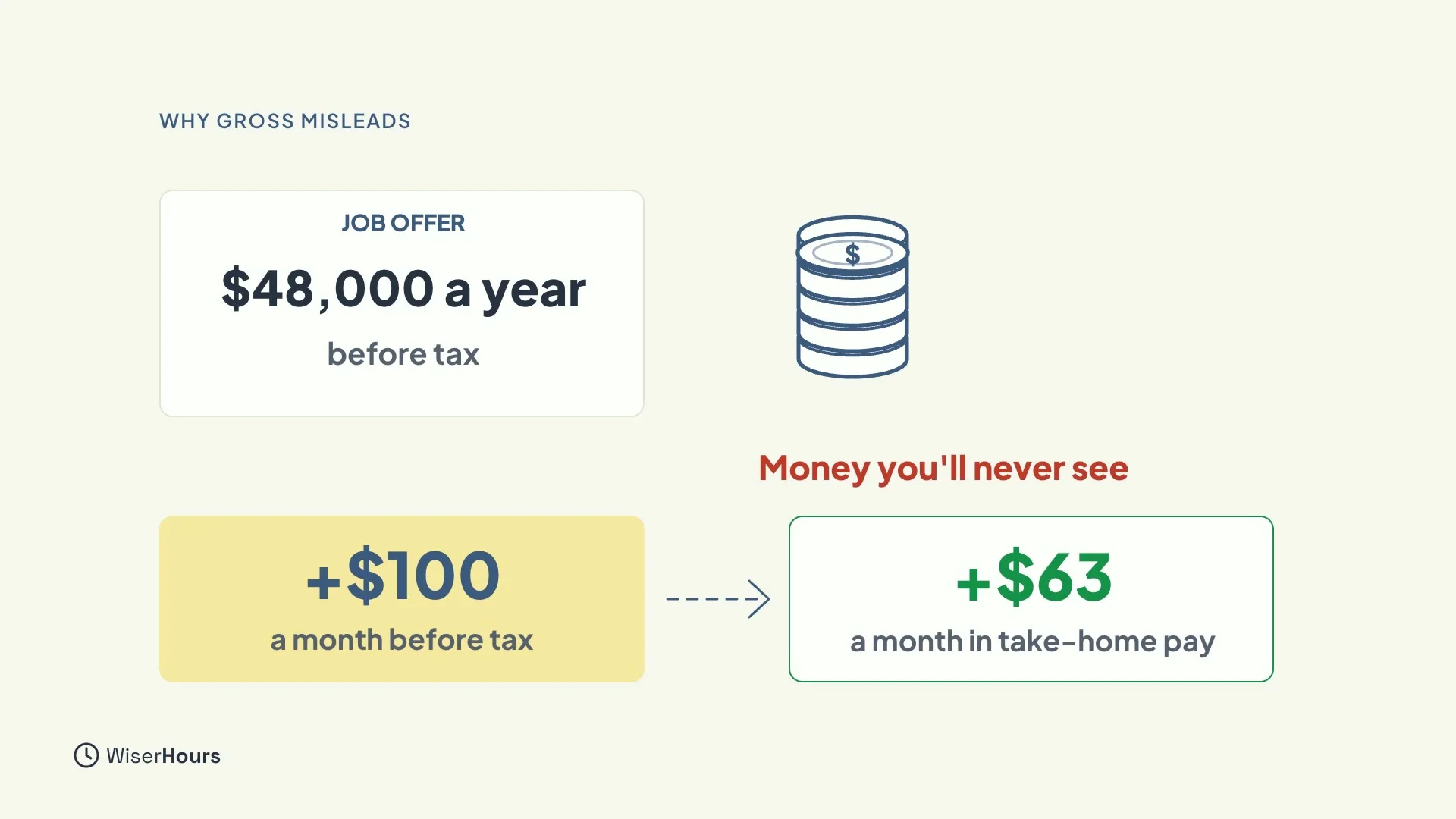
Pay offers and loan limits are often quoted in gross pay, so it is easy to plan with money you will never see. In one worked example, a raise of $100 a month before tax added only about $63 to take-home pay.
A raise is still a raise. But before you plan to spend it, find out what it adds to your net pay.
 (opens the full-size picture)
YOUR TURN
Read more
- Gross vs. Net Income: what comes out of your pay and why the two numbers differ.
- How to Make a Budget: how to work out a monthly figure when your pay is not monthly.
- Irregular Income: how to budget when your pay swings, and why to plan on a lean month.
Read the full lesson script
Welcome back. In this lesson, you'll find the one number every budget starts from: your real take-home pay, the money that actually reaches your account each month.
Your pay has two numbers. Gross pay is what you earn before anything is taken out. Net pay, or take-home pay, is what's left, and what actually lands in your account. Your budget starts from net pay, because that's the money you can spend.
The gap can be large. Across the OECD, a group of mostly richer countries, income tax and social contributions took about a quarter of an average worker's pay. It varies a lot from country to country. So a job paying four thousand dollars a month might bring home about three thousand.
To find your number, read your payslip line by line. Near the top is gross pay. Below it come the deductions: income tax, social insurance, and things like pension or loan payments. At the bottom is net pay. Check that it matches what reached your bank account.
If your pay isn't the same every month, add up your take-home pay for the last year and divide it by twelve. If you're paid every two weeks, multiply one payment by twenty-six, then divide by twelve. And if your income swings a lot, plan on a lean month, not an average one.
If you work for yourself, nobody takes tax out for you. So set tax aside first, in a separate pot, every time you're paid. Only what's left is your take-home pay.
Why does this matter? Pay offers and loan limits are often quoted in gross pay, so it's easy to plan with money you'll never see. In one worked example, a raise of one hundred a month before tax added only about sixty-three to take-home pay.
So remember: budget from net pay, the money that actually reaches your account. Read your payslip, and check it matches. And if your pay changes, use a yearly average, or a lean month. Before the next lesson, find your last payslip or deposit, and write down your monthly take-home pay. Next, you'll sort your costs into needs and wants.
MAKE IT A SMALL WIN
Finished this lesson?
Mark it complete to save your progress on this device.