Keep it going · Lesson 12 of 12
Your Monthly Budget Review and Budgeting Checklist
Keep your budget going with a monthly review, a short weekly check and an eight-point checklist you can tick off.
 Video coming soon
A budget is not a document you finish. It is a habit you keep going. In this last lesson you will learn the monthly review that keeps your budget useful, a short weekly check, and a checklist that sums up the whole course.
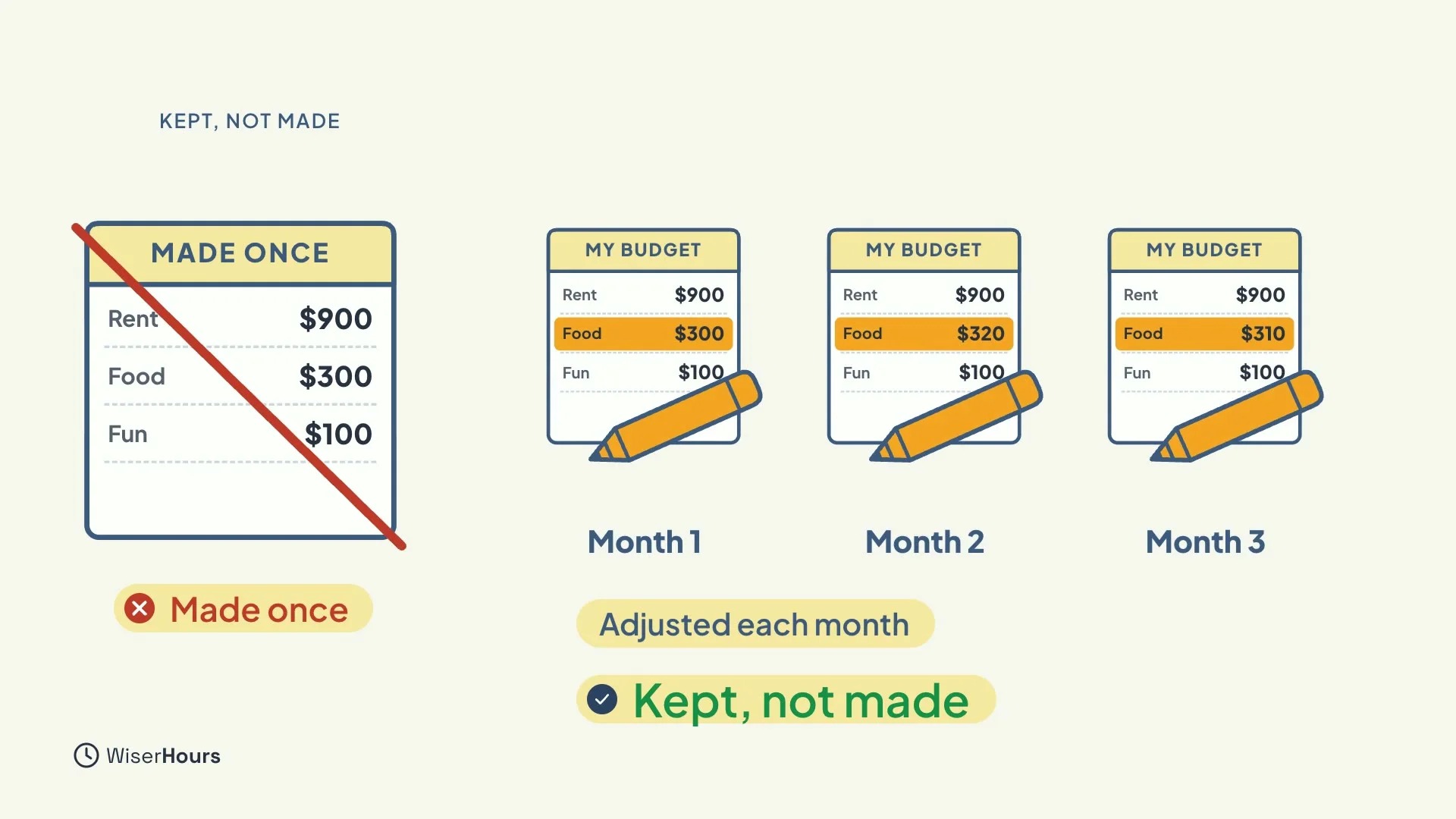
Kept, not made
A budget is not something you make once. It is something you keep. A budget lasts when you check it against real life, and adjust it, month after month. The plan at the start of the month, the record during it, and the comparison at the end of it make one loop that you repeat.
 (opens the full-size picture)
Compare and fix
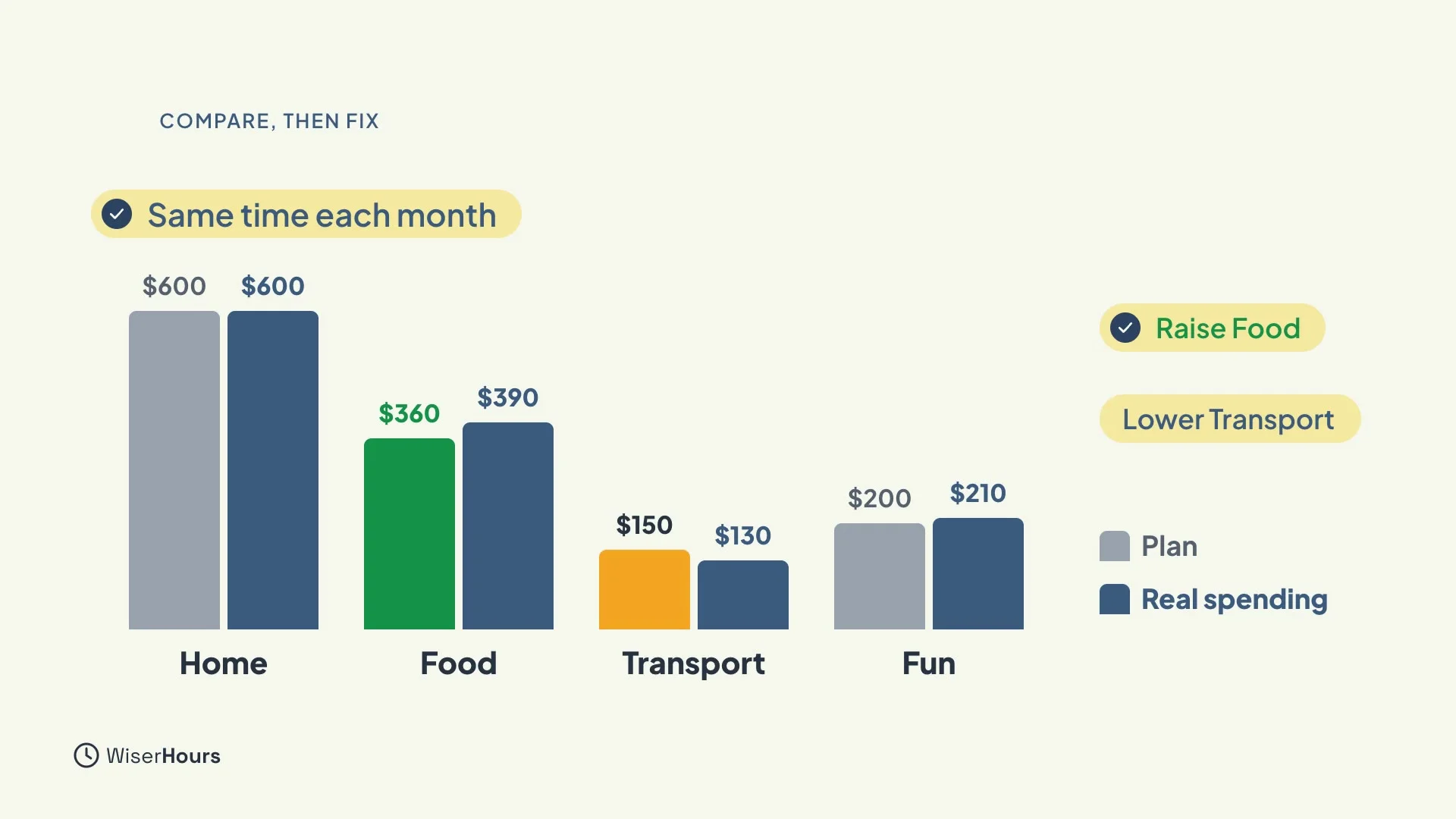
Once a month, set a regular time. First, compare your plan with what you really spent, line by line. Then fix the lines that were off: raise the ones that always run short, and lower the ones you never use up.
 (opens the full-size picture)
Move it, then look ahead
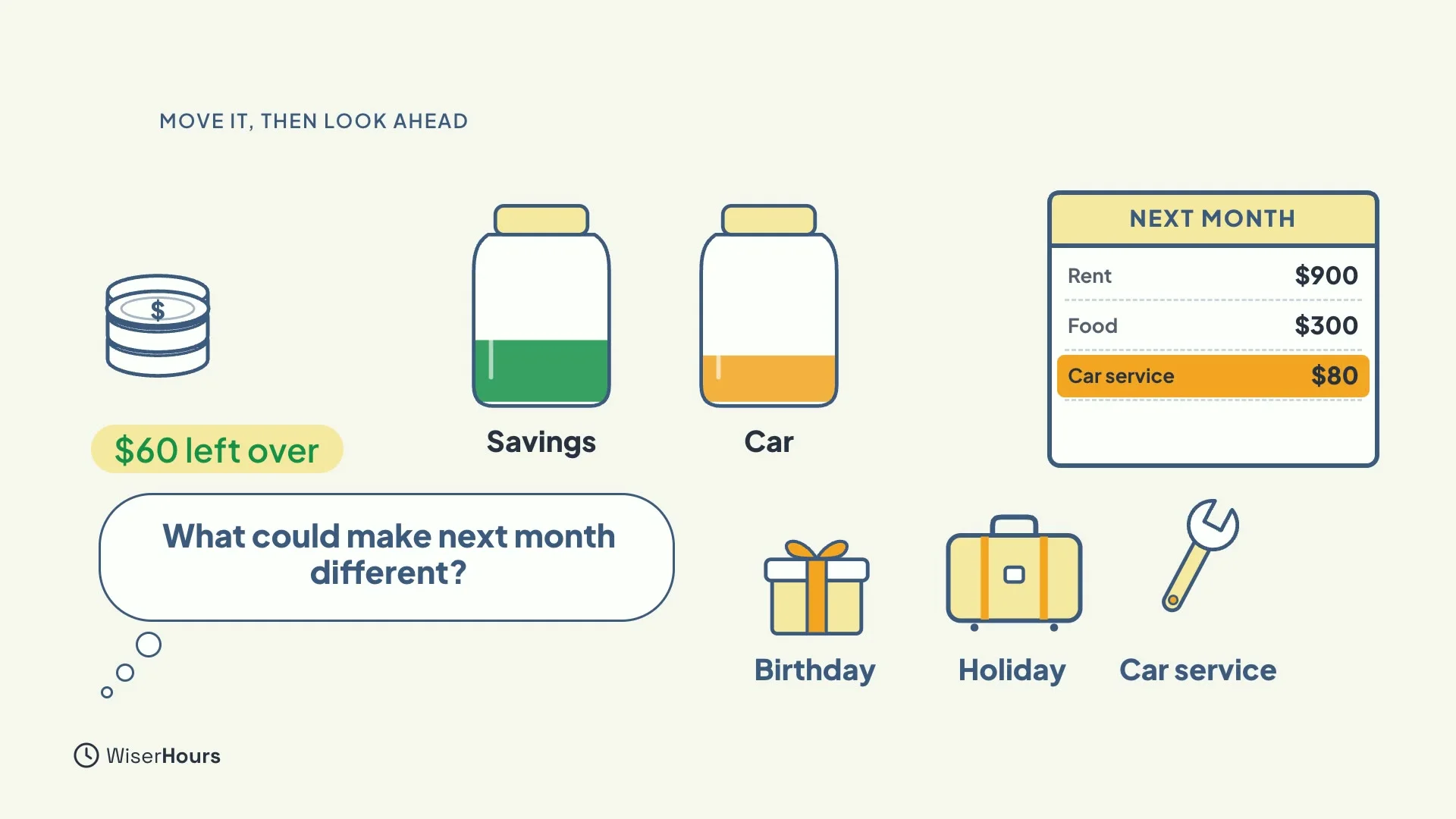
Next, move any money left over to savings, or to a sinking fund. Then look ahead, and ask: what could make next month different? A birthday, a holiday, a car service. Add it to the plan now, so it does not arrive as a surprise.
 (opens the full-size picture)
A weekly check
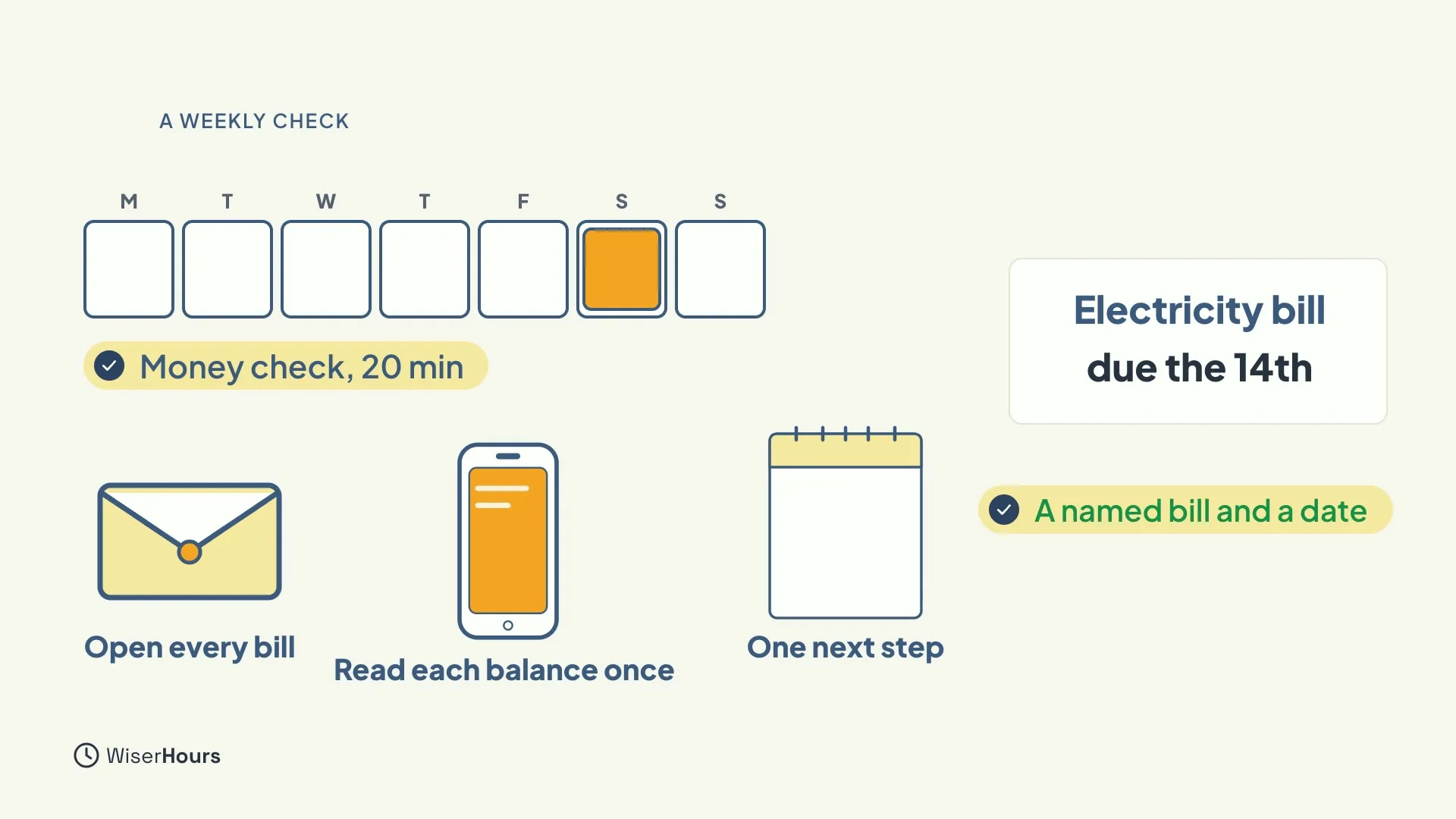
Between reviews, keep a short weekly check. Open every bill, read each balance once, and write down one next step. It turns a vague worry into a named bill and a date. Put it in your calendar at the same time each week and keep it short.
 (opens the full-size picture)
When life changes
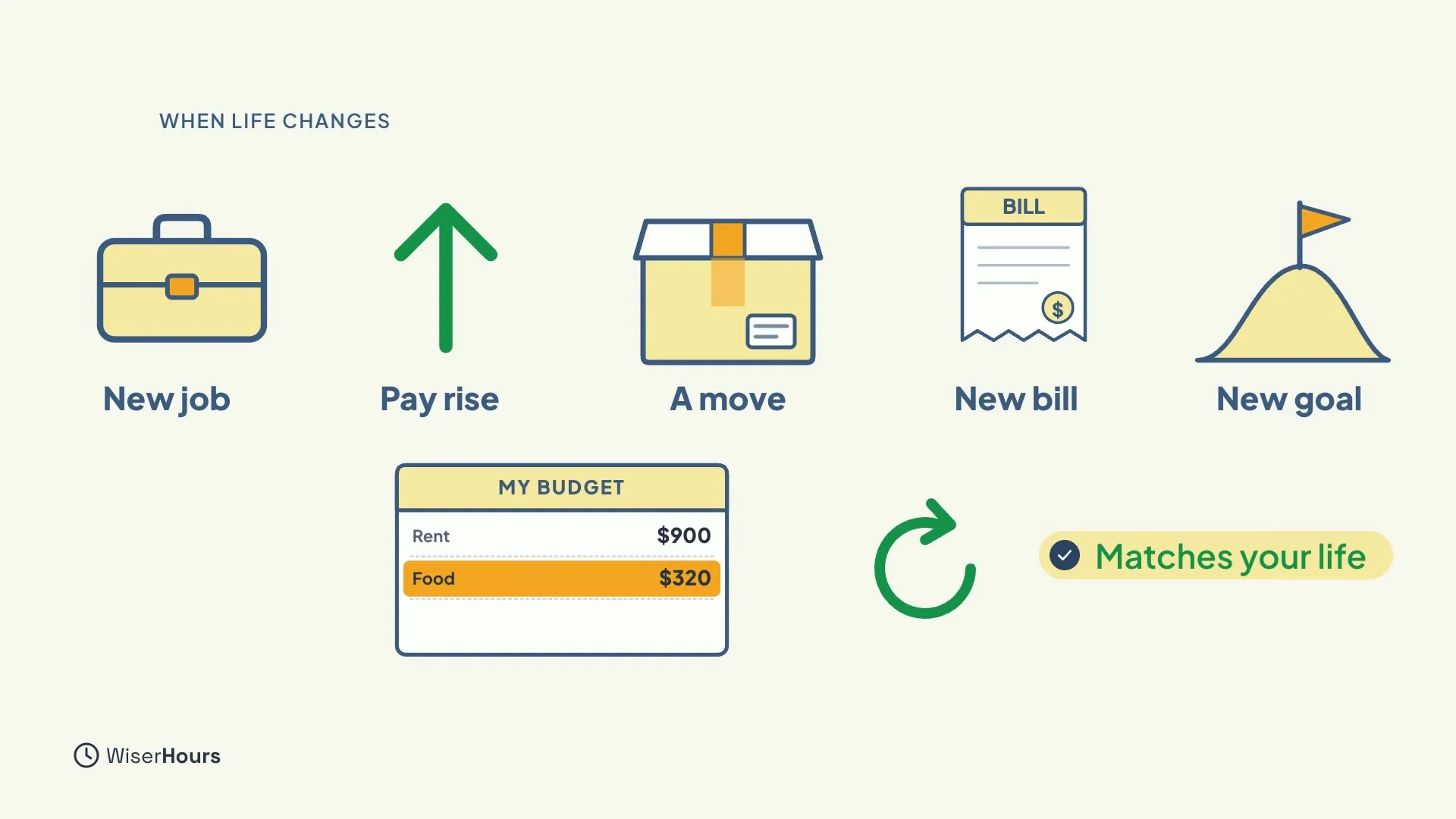
Update your budget whenever your life changes: a new job, a pay rise, a move, a new bill, or a new goal. Your plan should always match the life you are living now.
 (opens the full-size picture)
Your checklist
Here is the whole course in eight lines. Tick each one as you do it. Your ticks stay on this page in your browser.
Your budgeting checklist
YOUR TURN
Thank you for taking this course.
Read more
- How to Make a Budget: A Step-by-Step Guide for Beginners: the plan, record, compare and adjust cycle.
- How to Track Your Spending Without Losing Your Mind: a weekly check you can stick to.
- Money Anxiety: Why It Happens, How It Shows Up, and What Helps: turning vague money dread into a named bill and a date.
- Sinking Funds Explained: Saving Ahead for Expenses You Know Are Coming: where leftover money can go.
Read the full lesson script
Welcome to the last lesson. You'll learn the monthly review that keeps your budget going, and you'll finish with a simple budgeting checklist.
A budget isn't something you make once. It's something you keep. A budget lasts when you check it against real life, and adjust it, month after month.
Once a month, set a regular time. First, compare your plan with what you really spent, line by line. Then fix the lines that were off: raise the ones that always run short, and lower the ones you never use up.
Next, move any money left over to savings, or to a sinking fund. Then look ahead, and ask: what could make next month different? A birthday, a holiday, a car service. Add it to the plan now.
Between reviews, keep a short weekly check. Open every bill, read each balance once, and write down one next step. It turns a vague worry into a named bill and a date.
And update your budget whenever your life changes: a new job, a pay rise, a move, a new bill, or a new goal. Your plan should always match the life you're living now.
Here's your budgeting checklist. Know your take-home pay. Sort your costs into needs and wants. Track from real statements. Pick a method that suits you. Plan for irregular bills. Pay savings first. Adjust when you overspend. And review every month.
So remember: a budget is kept, not made once. Review it every month, and check in for a few minutes each week. And update it when your life changes. Your last task: put a monthly budget review on your calendar, and print the checklist from the lesson page. Thanks for taking this course. Spend your hours wisely, and your money too.
MAKE IT A SMALL WIN
Finished this lesson?
Mark it complete to save your progress on this device.