Know your numbers · Lesson 1 of 12
Why Budgets Fail and What Works Instead
Learn what a budget really is, why guesses make budgets fail, and what to build instead: a plan from real numbers that you check every month.
 Video coming soon
This lesson explains what a budget really is and why so many of them fail. It also shows you what to build instead: a budget from real numbers that you can keep. It is the start of a 12-lesson course, so you will also see the road ahead.
A plan, not a diet
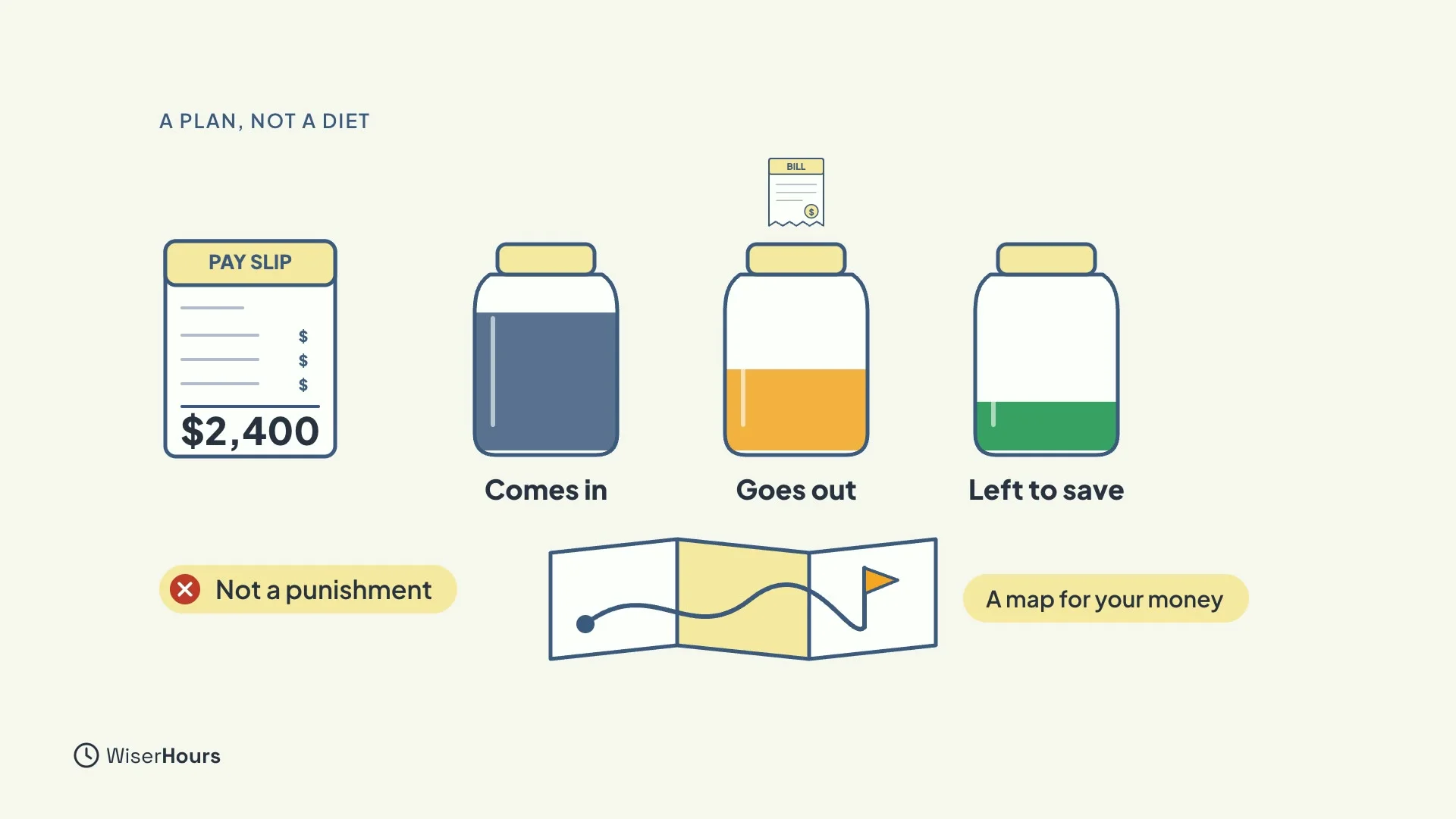
A budget is simply a plan for your money before it arrives. It shows three things: how much comes in, where it goes, and what is left to save. That is all.
A budget is not a punishment and it is not a diet for your wallet. Think of it as a map. A map does not tell you where you are allowed to go. It just shows you the road, so you can get where you want to be.
 (opens the full-size picture)
You are not alone
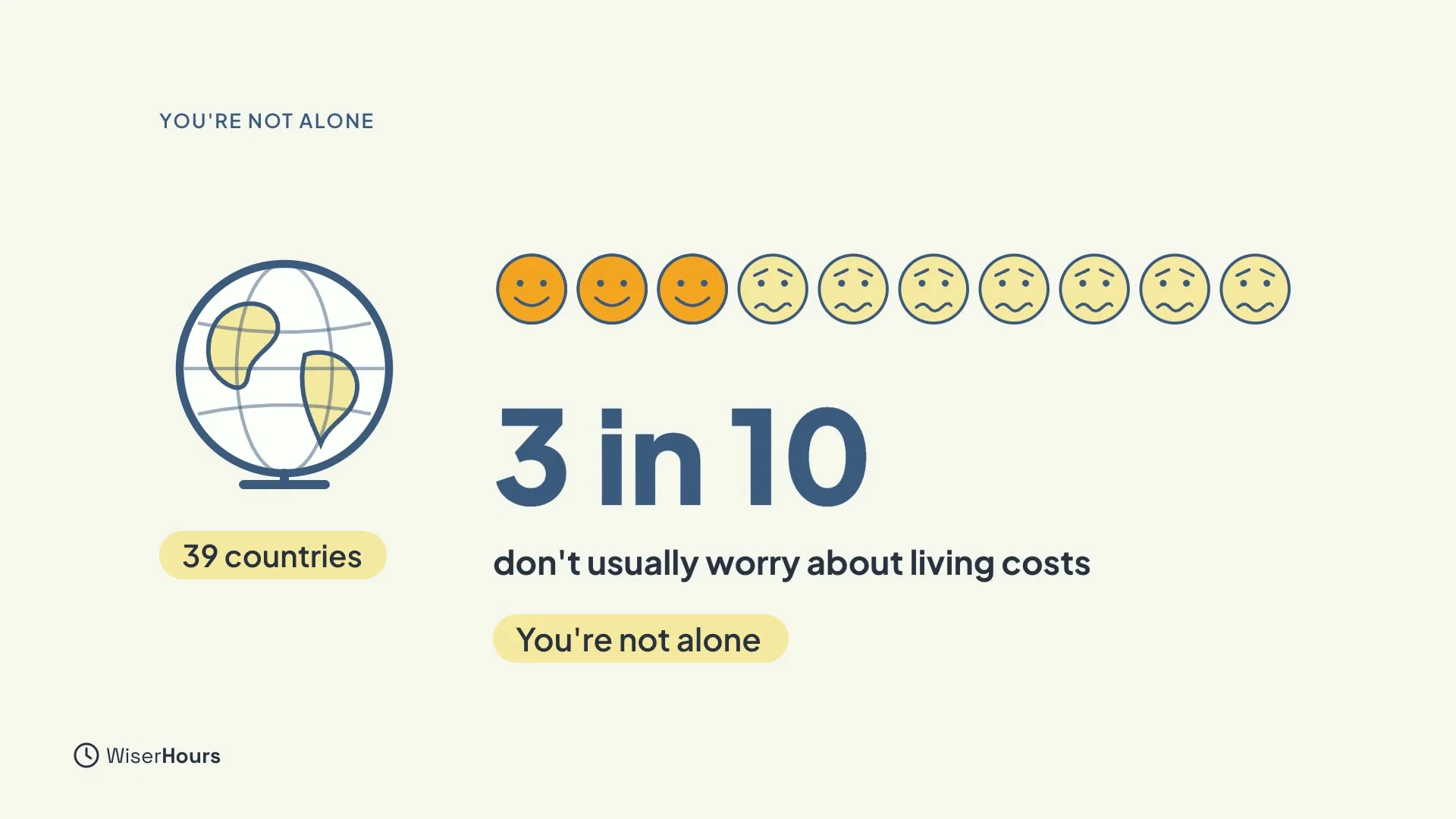
If money feels stressful, you are in good company. In a survey across 39 countries, only about three in ten adults said they do not usually worry about paying their living costs. So most adults worry at least some of the time.
That is a useful thing to know before you start. Worry about money is common, and a plan is one of the best ways to take some of the weight off. If the worry is wearing you down, the money anxiety guide goes deeper.
 (opens the full-size picture)
Budgets built on guesses
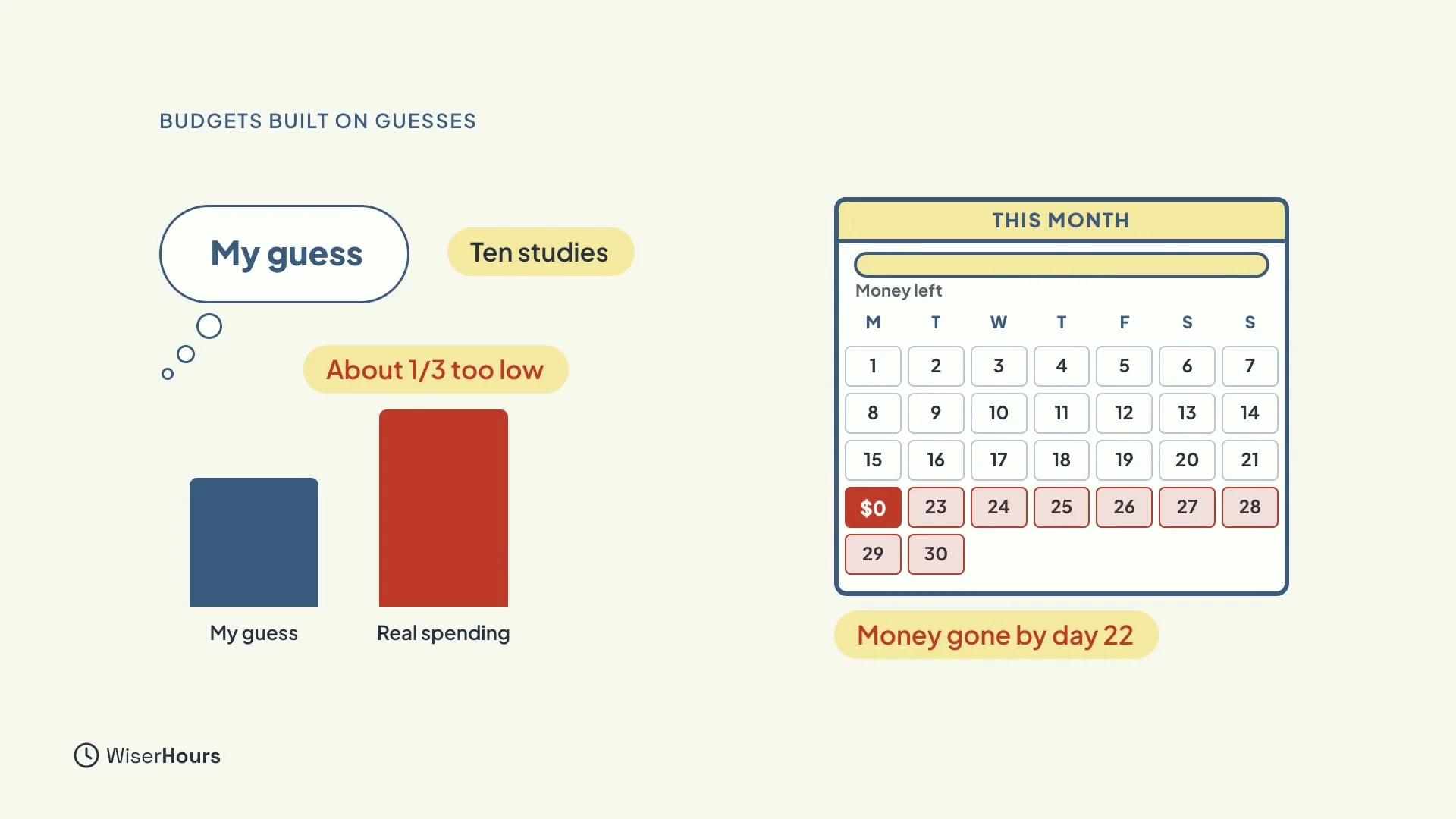
Most budgets fail for a simple reason: they are guesses. We tend to remember our spending as smaller than it really is. In a set of ten studies, people’s forecasts of what they would spend online the next week came out about a third too low.
Now picture a budget built on a guess like that. The numbers on paper are smaller than the numbers in real life, so the money runs out before the month does.
 (opens the full-size picture)
A guess is not a failing
These studies were about online shopping. They show that forecasting spending is hard, not that people are careless. The fix is simple: use real numbers.
What works instead
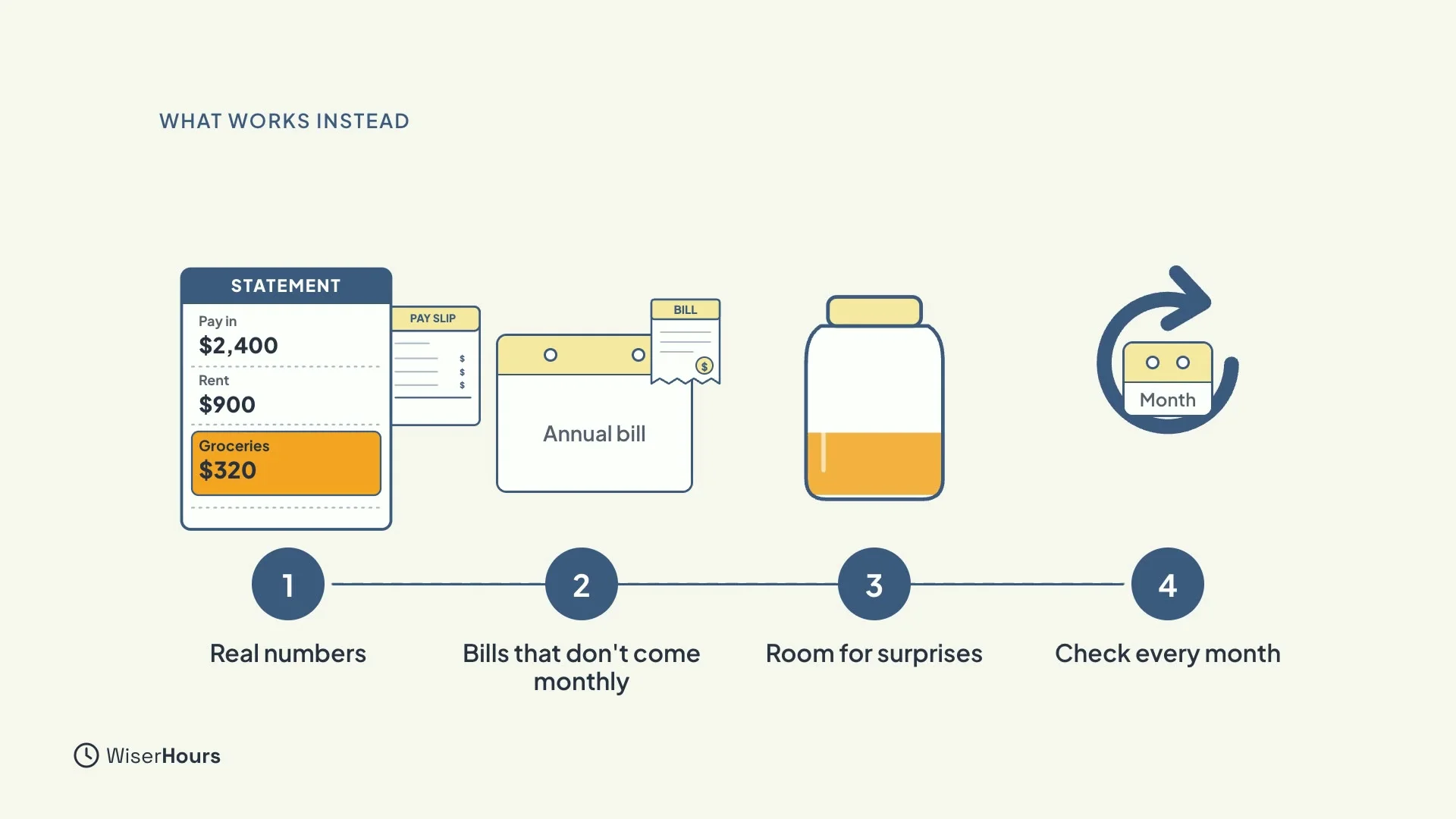
A budget that lasts has four habits. Each one fixes a way that guesses go wrong:
- Real numbers. Use your bank statements and payslips, not your memory.
- Bills that do not come monthly. Include yearly and occasional costs, so they do not surprise you.
- Room for surprises. Leave a little space for the costs nobody saw coming.
- A monthly check. Look at the budget every month and adjust it.
 (opens the full-size picture)
Where it can take you
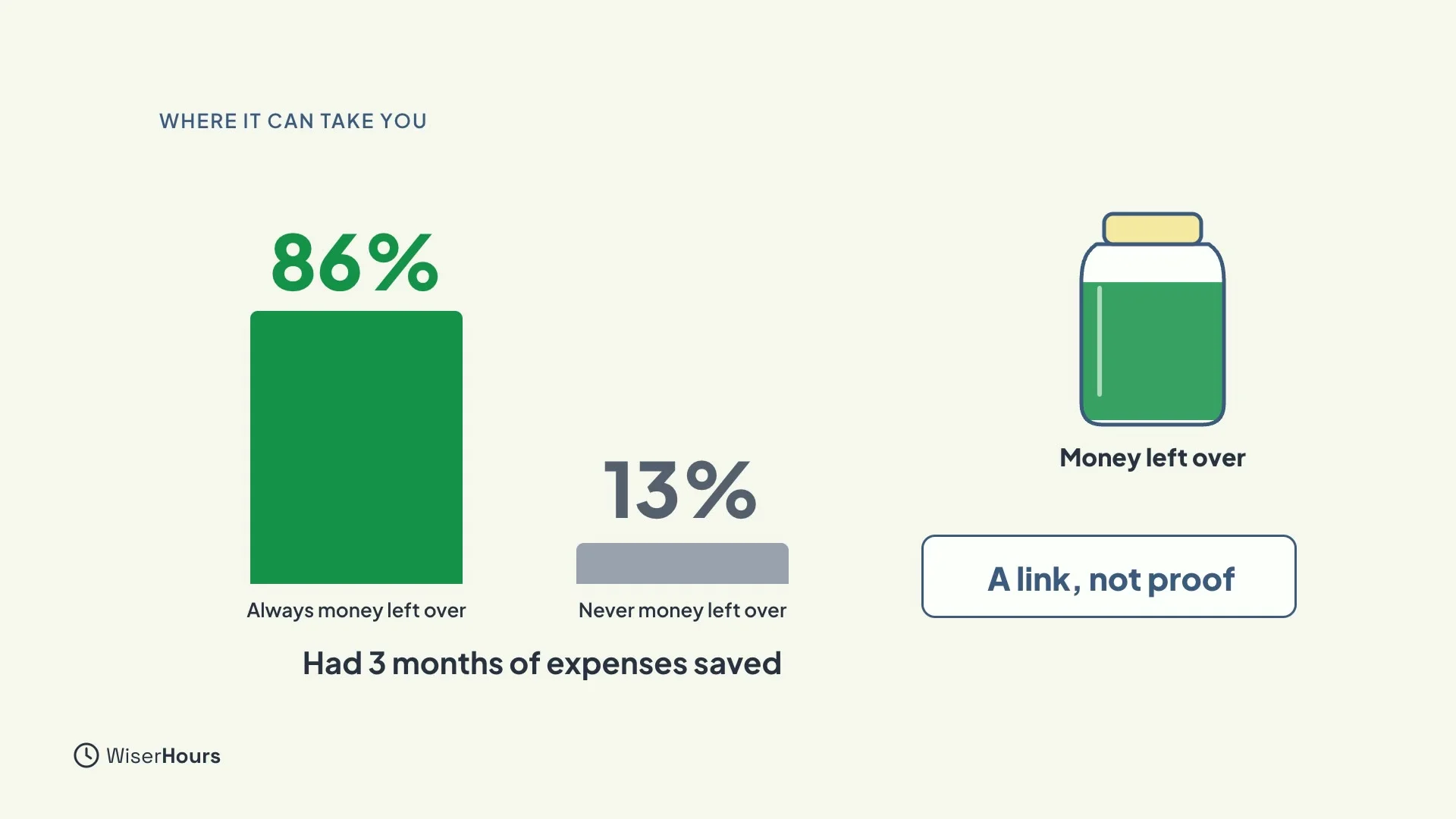
Money left over each month adds up over time. In one large survey, 86 percent of people who always had money left over had three months of expenses saved. Among people who never had money left over, it was 13 percent.
Be careful with that result. It is a link, not proof. It does not show that budgeting caused the savings. But it does show where a budget can take you: toward some room in your month, and some money set aside.
 (opens the full-size picture)
The course ahead
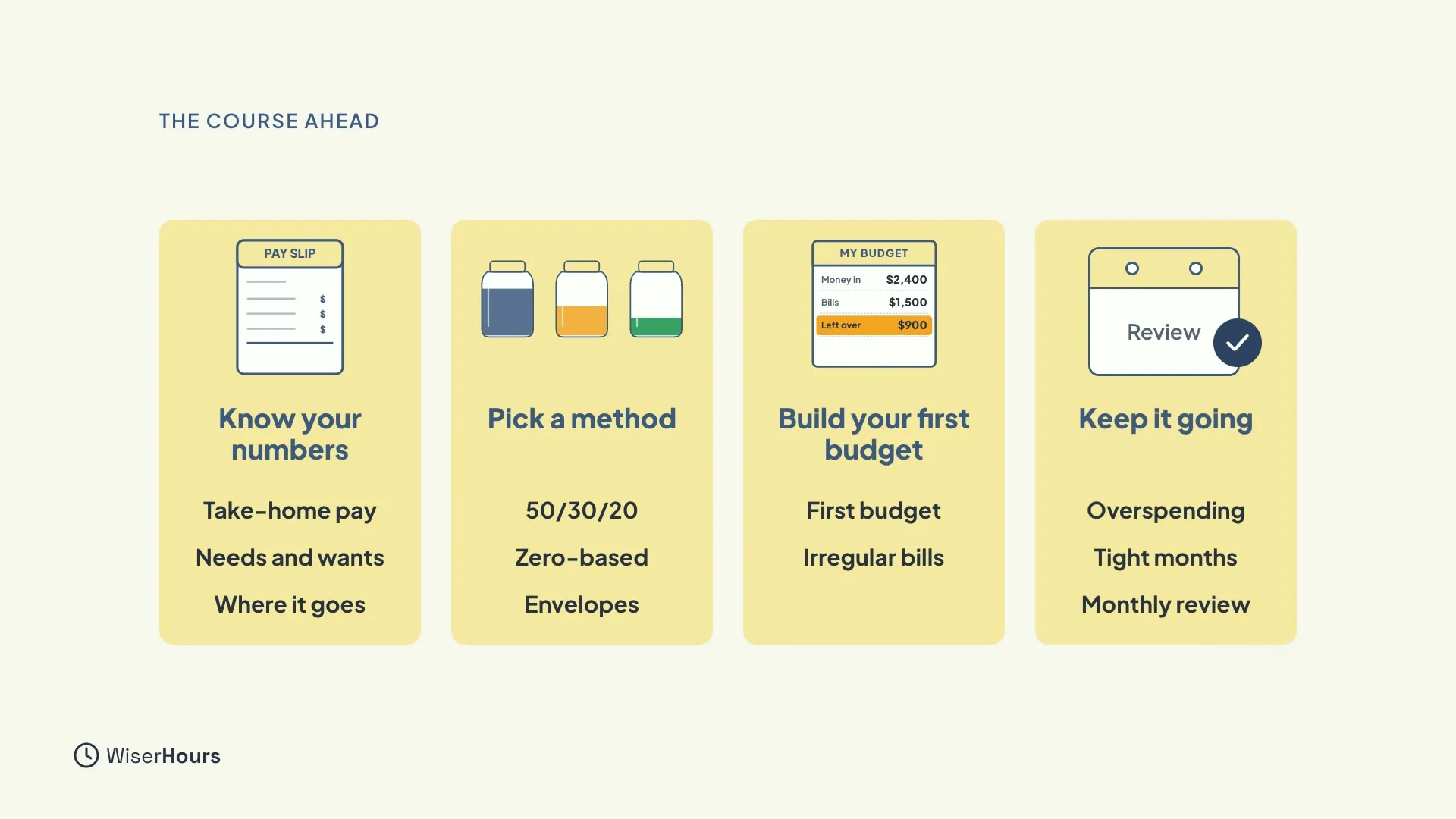
This course has four steps. First you will know your numbers: your real take-home pay, your needs and wants, and where your money goes. Then you will pick a method: the 50/30/20 rule, zero-based budgeting or envelopes. Next you will build your first budget and plan for irregular bills. Finally you will keep it going, for the times you overspend, the tight months, and with a monthly review.
 (opens the full-size picture)
YOUR TURN
Read more
- How to Make a Budget: the full step-by-step guide behind this course.
- Money Anxiety: why money worries are common and what helps.
Read the full lesson script
Welcome to Budgeting for Beginners. In this first lesson, you'll see what a budget really is, why so many budgets fail, and how this short course will help you build one you can keep.
A budget is simply a plan for your money before it arrives. It shows how much comes in, where it goes, and what's left to save. It isn't a punishment. It's a map for your money.
If money feels stressful, you're not alone. In a survey across thirty-nine countries, only about three in ten adults said they don't usually worry about paying their living costs.
Most budgets fail for a simple reason: they're guesses. In a set of ten studies, people's forecasts of what they would spend online the next week came out about a third too low. A budget built on a guess runs out before the month does.
Budgets that last are built from real numbers, from your statements and payslips, not from memory. They include the bills that don't come every month, and leave a little room for surprises. And they get checked and adjusted, month after month.
Money left over each month adds up. In one large survey, eighty-six percent of people who always had money left over had three months of expenses saved, compared with thirteen percent of people who never did. That's a link, not proof, but it shows where a budget can take you.
Here's the course. First, you'll know your numbers: your real take-home pay, your needs and wants, and where your money goes. Then you'll pick a method: the fifty thirty twenty rule, zero-based budgeting, or envelopes. Next, you'll build your first budget, and plan for irregular bills. Finally, you'll keep it going: when you overspend, when money is tight, and with a monthly review.
So remember: a budget is a plan for your money before it arrives. Budgets fail when they're guesses, and last when they're built from real numbers. And you adjust them every month. Before the next lesson, write down what you think you spent last month, before you look. Next, you'll find your real take-home pay.
MAKE IT A SMALL WIN
Finished this lesson?
Mark it complete to save your progress on this device.